
“Chosen solitude nurtures the soul.”
-David W. Berner
Editor’s Note: This interview discusses personal themes such as aging, solitude, and self-reflection. Reader discretion is advised for those sensitive to introspective or existential topics.
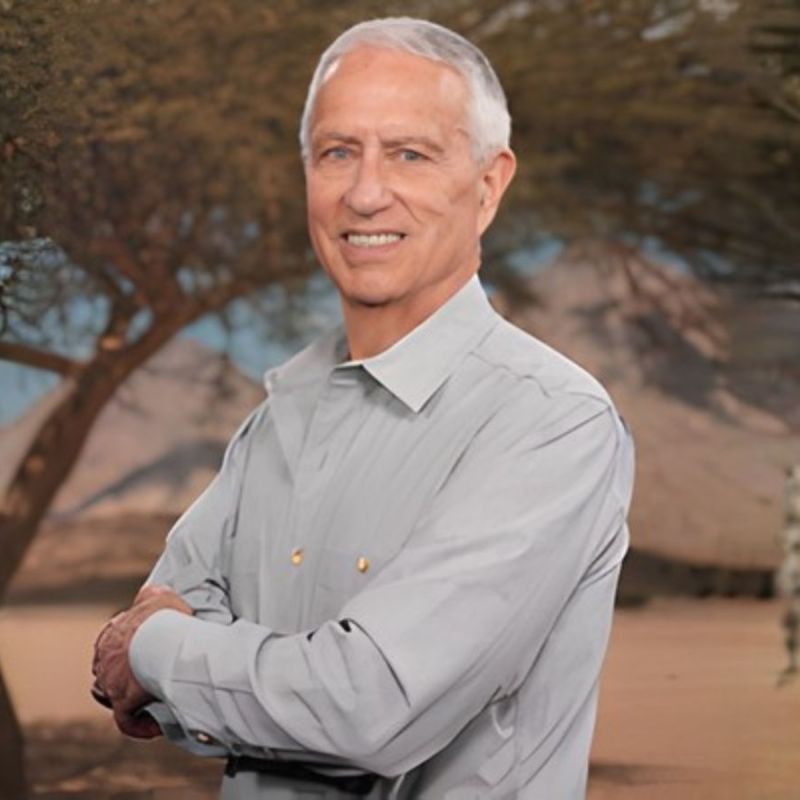
David, thank you so much for joining us today. To start, could you please introduce yourself in your own words—what do you do, what led you here, and what do you hope readers take from your work?
I have been writing stories since the 2nd grade of elementary school. My teacher encouraged us to write stories in class that we eventually turned into handmade books of cardboard and paste. My book was entitled The Cyclops. I still have that book. It is an undersea adventure, a subject I was quite excited about at that young age. Later in life, I became a journalist and told more stories every day for radio and print publications. My first published book was Accidental Lessons, the story of my one-year teaching assignment in an underserved school district outside Chicago. I later published several memoirs and novels and was soon honored as the Writer-in-Residence at the Jack Kerouac Project in Florida and at the Ernest Hemingway Birthplace Home and Museum in Illinois. In 2026, my novella American Moon, winner of the 2025 Fugere Book Prize, is due out from Regal House Publishing.
My work has been described as quiet and contemplative. I think that’s a good description. I hope that readers find the mostly character-driven tales to be evocative, meaningful, and poignant.
Your novella The Islander has earned several awards. Can you tell us about these recognitions and what they personally mean to you?
I am always humbled and grateful when my work is recognized. The last step in any artistic process is sharing that work. But for most that’s the most frightening part. Will it be accepted? Will it have an impact? Will people care as much about this story as I do? So, when my work is recognized by readers or through professional reviews, it’s validation. And that sometimes is difficult to access for a writer who, for the most part, works alone.
Solitude, memory, and the passage of time are key threads in The Islander. What inspired you to centre the story around these themes, and how much of it echoes your own reflections or experiences?
Solitude is a blessing. I find being alone in nature—in whatever way that manifests—to be a remarkable experience. Chosen solitude nurtures the soul. But with it comes contemplation and reflection that many times leads one to consider aspects of a life that may not always be pleasant. Still, reflection is healthy and many times necessary. For the main character in The Islander—Seamus Damp—solitude is necessary to rediscover what is important in his life—in the present and in his past. It’s solitude that brings him back to life with friends and family, but only after a prolonged period of hermit-like existence.
Seamus, the protagonist, lives in isolation on a remote island, surrounded by nature and thought. How did you approach creating such a vividly internal yet universally resonant character?
There’s a lot of me in Seamus. I love solitude. I love the sea. I love Ireland. I love literature. I love remote places—sometimes called “thin places”—those landscapes touched with searingly stark beauty that appear to be one notch below heaven. All these things evoke emotions that promote contemplation, and they promote the “examined” life. That is what makes life worth living. I think in some way all of us share this. It’s universal.
Your writing style in The Islander is often described as lyrical and meditative. How do you shape your prose to reflect the tone of a story—and has your approach evolved over time?
I’m not sure you would call my first novel—A Well-Respected Man—“meditative” or “lyrical” but it does have a touch of poetry in it. What I mean by that is that when the prose has a touch of poetry in it, the tone comes alive. It’s in craft—place, setting, mood, and interior thought that one discovers the true mood of a story. It also has to do with the main characters. Where are they in the human experiment? Where is their heart? Their head? I believe my writing is much more contemplative than it was when I first began publishing, and that is simply a matter of finding my voice. It took time to do that. It took a lot of writing.
You’ve written both memoirs and fiction. How do you decide which form best serves a story or idea, and in what ways has your experience with nonfiction influenced your fictional work like The Islander?
I don’t think I am the one who decides. I think the story decides for me. I recently began a longish short story that was originally going to be a personal essay about my ancestry and searching for it. But I found that I could say more about what I wanted to say—the theme and the tone—with a fictionalized story. So, although much of this short story is “true,” other aspects are fiction, directly relating to the themes I wanted to address through memoir. Many great writers have based their fiction on real-life stories and events. Hemingway did it frequently. But this approach is about the tired adage of “write what you know.” I like to think “write what you believe” is the better way to move forward in shaping a narrative—fiction or memoir.
The book gently explores ageing and our relationship with the past. What do you think literature can contribute to society’s conversation about growing older and reflecting on life?
We don’t talk about ageing enough. Societies in most parts of the world are mostly about youth and the present. But time spent, accepting our ageing, and accepting and recognizing our past is key to giving life its richness. I hope The Islander helps make that point.
Nature plays a significant, almost spiritual role in The Islander. Was this a deliberate metaphor, or did the setting take on that role organically during the writing process?
From the first drafts of The Islander, I knew I wanted “place” and “setting” to act as fully realized characters. The weather, the landscape, the living creatures on the island where the main character lives are all key to the characters’ development. All the characters in this story. Place is very important. This story could not have been fully and authentically told in the way I envisioned without the existence of the island and everything that comes with it.
Sustainability, introspection, and creativity often intersect in meaningful ways. How do you see your storytelling as contributing to more mindful, reflective, or even sustainable ways of living or thinking?
I never consciously thought about that as I was writing The Islander, meaning that I didn’t deliberately try to accomplish this, if in fact I have. But I wanted all the characters in this story to see and feel the interconnective tissue that links all of us to nature and what it can give us. Holding tight to the natural world keeps us grounded, and I believe the characters in this story experience that in many ways. I’m thrilled that the prose delivers that message, even though it was not a stated goal in the early going and developed almost unintentionally.
Finally, with The Islander finding its way into the hearts of readers and receiving awards, what’s next for you—and how do you hope your work continues to engage, challenge, or uplift readers?
I will keep writing. Poetry, short stories, and novels. If you liked The Islander, I think the reader will be similarly interested in my next novel, American Moon from Regal House Publishing. It explores similar themes but this time in a road trip narrative that takes place in the vast landscape of the American Southwest, linking modern-day crises—like the opioid epidemic and political angst—with the healing power of nature. I’m encouraged that readers will find it engaging.
To wrap up, how would you like yourself to be remembered?
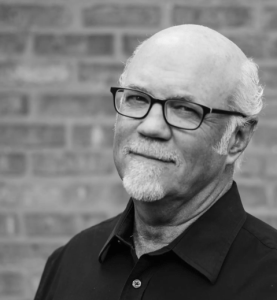
I am an acclaimed, award-winning author of fiction, creative nonfiction, memoir, short stories, and poetry. My work includes the novels A Well-Respected Man, The Islander, Night Radio, Sandman, and Rainbow Man, and the nonfiction books Accidental Lessons, Any Road Will Take You There, Walks with Sam, The Consequence of Stars, and Daylight Saving Time.
My work was awarded/shortlisted at the Eric Hoffer Book Award, the NYC Big Book Award, the National Association of Independent Writers and Editors Award for Literary Fiction, and the Book of the Year Award from the Chicago Writers Association. I’ve also been recognized by the Paris Book Festival, The Society of Midland Authors, the Hawthorne Prize, the Royal Dragonfly Awards, and the Readers’ Choice Awards.
In 2011, I was named the Writer-in-Residence at the Jack Kerouac Project in Orlando, FL and in 2015 was named the at the Ernest Hemingway Birthplace Home and Museum in Oak Park, IL.
I am a retired associate-professor at Columbia College Chicago, a long-time Chicago broadcast journalist, and now teach writing at Gotham Writers Workshop of New York City.
⭐⭐⭐⭐⭐
“Holding tight to the natural world keeps us grounded, and I believe the characters in this story experience that in many ways.”
-David W. Berner
Links
- Know more about the BREW Book, Blog, and Poetry Awards here
Share Your Insights
We’d love to hear your thoughts on this conversation. Join the discussion in the comments:
- How do solitude and reflection influence your own creativity or work?
- What role does nature play in your daily life or thinking?
- Which stories or books have helped you examine your own life?
Alignment with the UN SDGs
- SDG 3: Promotes mental well-being through reflection and solitude
- SDG 4: Supports lifelong learning via literature and storytelling
- SDG 15: Encourages connection with nature and sustainable thinking
Other Highlights

Looking for something?
Type in your keyword(s) below and click the “Search” button.
Helpful Shortcuts
More Stories













Print and Digital Magazine






Don’t just read about greatness. Own it!

About Us
The World’s Best Magazine is a print and online publication that highlights the extraordinary. It is your passport to a universe where brilliance knows no bounds. Celebrating outstanding achievements in various fields and industries, we curate and showcase the exceptional, groundbreaking, and culturally significant. Our premier laurels, The World’s Best Awards, commend excellence through a unique process involving subject matter experts and a worldwide audience vote. Explore with us the pinnacle of human achievement and its intersection with diversity, innovation, creativity, and sustainability.
We recognise and honour the Traditional Owners of the land upon which our main office is situated. We extend our deepest respects to Elders past, present, and emerging. We celebrate the stories, culture, and traditions of Aboriginal and Torres Strait Islander Elders from all communities who also reside and work on this land.
Disclaimer: The World’s Best does not provide any form of professional advice. All views and opinions expressed in each post are the contributor’s own. Whereas we implement editorial policies and aim for content accuracy, the details shared on our platforms are intended for informational purposes only. We recommend evaluating each third-party link or site independently, as we cannot be held responsible for any results from their use. In all cases and with no exceptions, you are expected to conduct your own research and seek professional assistance as necessary prior to making any financial, medical, personal, business, or life-changing decisions arising from any content published on this site. All brands and trademarks mentioned belong to their respective owners. Your continued use of our site means you agree with all of these and our other site policies, terms, and conditions. For more details, please refer to the links below.
About | Advertise | Awards | Blogs | Contact | Disclaimer | Submissions | Subscribe | Privacy | Publications | Terms | Winners
The World’s Best: A Magazine That’s All About What’s Great | theworldsbestmagazine.com | Copyright ⓒ 2022-2026
Let’s connect
Discover more from The World's Best
Subscribe to get the latest posts sent to your email.


One thought on “Writing the Examined Life: David W. Berner on Fiction and Reflection”