
“I don’t write about things that go bump in the night; I write about things that explode.”
– Michael Ray Ewing
Could you introduce yourself to our readers, share a bit about your background, and describe what you currently focus on in your work?
My name is Michael Ray Ewing. I’m a writer, a UNIX administrator, and an engineering computing engineer. Over my career, I’ve held nine jobs across five states and survived outsourcing, relocations, layoffs, and corporate reinventions. I don’t write about hackers—I write about people whose lives have been hacked.
Your career spans both technical and creative fields. How has your experience in technology influenced the way you approach storytelling?
I don’t write about things that go bump in the night; I write about things that explode. My first job out of college was working for Morton Thiokol—the company that manufactured the boosters for the Challenger Space Shuttle. I had just started working there when it blew up, killing the entire crew.
At one company, I regularly received FBI requests about Chinese hackers stealing intellectual property. Only once was I able to go after them; the rest worked for the Chinese government.
At another job, I was responsible for all the financial servers that interfaced with hundreds of banks worldwide. Security teams constantly monitored me because I had access to both sides of the transactions. They worried I could redirect millions of dollars into my own account. I always told them the same thing: my freedom is worth more than money. But every day, I saw tens of thousands of hackers trying to break into the company’s financial infrastructure while I worked hard to keep them out.
Cybersecurity is fascinating—and artificial intelligence is making it even more challenging.
Living in Arizona and engaging in outdoor activities appear to be part of your work. How do environment and personal experience shape the worlds and characters you create?
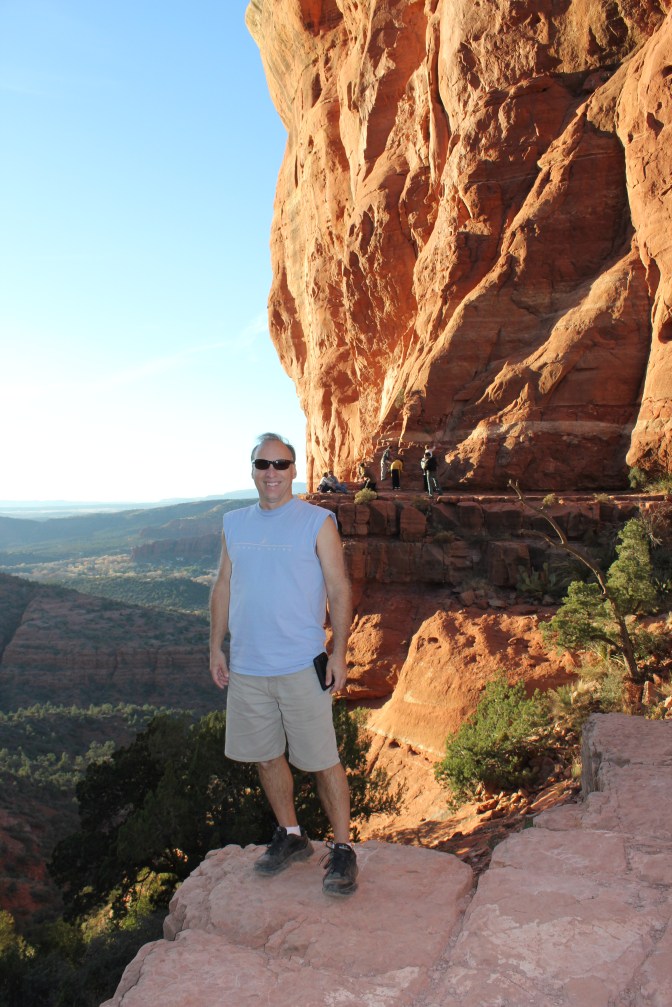
I’ve been struck by lightning twice while mountain biking. The first time knocked me off my bike; I woke up in the mud during a monsoon storm. The second time, lightning hit a rock outcropping near me, and I saw electricity dancing on my handlebars and running up and down my arms. That happens to the main character in chapter one. Writers write what they know.
Most of the trails I ride are black diamond—the kind with signs warning of severe injury or death. I’ve bled on all of them. I also rock climb, sail, and jump into my Ford F-150 Lightning, put it in four-wheel drive, and see where I end up.
I learned long ago to collect stories and the people who make them. A former roommate of mine was an FBI special agent who told me incredible stories. In my novel, Victoria Stewart is a ranch owner blown up by a narco assassin. She’s loosely based on a woman who disappeared in the Arizona White Mountains and may have seen something she shouldn’t have. The narcos really do avoid the interstates by cutting across ranches and through the national forest.
Major Jacobson isn’t based on anyone I know, though my dad was in the military. I did extensive research on Army Ranger training, operations, and mindset. I would not want an Army Ranger after me. No one does. They are among the most feared forces on Earth.
Many readers note the balance between fast-paced storytelling and detailed world-building in your writing. How do you approach maintaining that balance during the writing process?
Thrillers should all have one thing in common: action and adventure. What’s critically important is to intersperse the action with quiet moments so the reader can “reset.”
I also end each chapter with a cliffhanger, then switch to a different character or plot line. I work hard to fully engage the reader with one character, and just as the action peaks, I pause it and shift threads. Then I repeat the cycle until the reader can’t put the book down and ends up so sleep-deprived they have to call in sick the next day.
For world-building, I pay attention to my surroundings. I’m not glued to my phone. I run, walk, bike, and drive through interesting places, making mental notes of what I see. Then I craft characters readers care about and drop them into those worlds.
In Lightning, I created the fictional town of Defiance, Arizona—a mining town where “widowmakers” drowned miners by filling their lungs with grit. Arizona has many ancient volcanoes, so I placed one in Defiance. I like spelunking, so I created the Silent Black Mine, named after the fictional prospector who discovered copper there. Mines are dangerous places—shafts, pits, darkness—perfect for a thriller. Arizona is famous for its ghosts, so I gave Defiance a “Creep Tour” where tourists search for spirits in pubs and restaurants.
My favorite setting is the Stewart Ranch in the remote Eastern Arizona Highlands—bleak, beautiful, volcanic country. A setting is nothing without characters, so I gave Victoria a past no one wants: a mother lost to loneliness, a father murdered by narcos, and a ranch caught in a war she never asked for. When she’s assassinated by a narco named Black Jack Joe—who drives a lurid candy-apple-red Land Rover with rap poetry carved into the engine shroud—her story truly begins. With a character like that, she almost writes herself.
Your stories often involve individuals navigating complex or high-stakes situations. What draws you to these kinds of narratives, and what do you hope readers take from them?
You like your protagonist, but you love your antagonist because the antagonist gives the protagonist something to do.
In Lightning, Adam Barnett, Major Blain Jacobson, and Victoria Stewart are all ordinary people thrust into extraordinary danger. What they share is the opportunity to grow.
Before Adam is struck by lightning, he’s just trying to build enough bikes to buy more parts to build more bikes—that’s not very interesting. But have him struck by lightning, saved by a remarkable service dog named Mop, and introduced to the love of his life, and suddenly his world expands.
Readers have cried over Mop. One reader told me she was bawling so hard she had to stop reading, even though she desperately wanted to continue.
Victoria’s arc begins in desperation. The narcos are killing her stock and hunting her. Her medical bills are crushing her. Worst of all, she hears a killer—Dark—in her head. But she chooses to confront Dark, and that journey changes her life.
Major Jacobson is different. While Adam and Victoria want normal lives, Jacobson’s job is to ensure the rest of us can have them. He’s a soldier who has fought all over the world, then is placed in a situation unlike anything he’s faced—one that forces him to make a decision readers won’t fully understand until the sequel.
But the biggest character in Lightning is Mop. He’s a medical service dog raised in a government lab until a catastrophic accident releases the experiments that pursue him through the mountains. When Mop finds Adam, both their lives change forever.
Life isn’t about the destination—it’s about the journey.
Could you walk us through your creative process—from initial idea to finished manuscript—and how it has evolved over time?
I was working on a science fiction novel for Arizona State University’s Novel Year when three things happened:
- I read an article on CRISPR-Cas9, the technology that revolutionized gene editing.
- I got struck by lightning for the second time because I was foolish enough to ride my bike in a monsoon storm on top of a mountain.
- I heard someone at a community event explain how service dogs take years and tens of thousands of dollars to train—and there are never enough of them.
That made me wonder: what if the government genetically engineered service dogs? And what if they used the same technology to step off an ethical cliff?
Most of the science in the novel isn’t science fiction. It came from research, plus help from my wife, who is a doctor, and her friends. Cortical neural clustering doesn’t exist, but cortical neurons do form clusters that support memory, decision-making, and intelligence—making genetically engineered service dogs plausible.
I have a Golden Retriever named Ares, who is exceptionally intelligent. I also have a friend who has a Black Lab, Bo, who was a state champion retriever. Bo, along with Ares, became the inspiration for Mop.
Readers have highlighted the multi-character structure in your recent work. How do you develop distinct perspectives while maintaining a cohesive overall narrative?
The story demanded it. Adam is struck by lightning and saved by a strange dog. Major Jacobson investigates the research lab and nearly dies there. Victoria was a patient at the lab before the novel began, after getting blown up outside a post office and saved by a medical miracle and the researcher who created Mop.
I’ve been told many times that having three main characters is a bad idea, so I made sure they were distinct. Adam is nothing like Jacobson, and no one would confuse Victoria with either of them. Their voices, personalities, and arcs are completely different.
To keep the narrative cohesive, I rely on the same principles I use in my day job writing code. Unstructured code is junk. Books are organized into chapters; code is organized into functions. Structure matters. The difference is that writing fiction is a lot more fun than parsing millions of log lines looking for a hacker.
Your work touches on scientific and technological concepts. How do you ensure these elements remain accessible and engaging for a broad readership?
When I was in high school, I read Analog Science Fiction and Fact. Their submission guidelines stuck with me: they didn’t want dry technical demonstrations. They wanted strong characters, emotional stakes, human consequences, and believable science that matters to the people in the story.
Everything must be about the characters. The technology is the setting—like Defiance or the Stewart Ranch—but it’s secondary to the people who live in it.
Women buy most books, and they want to read about strong women. Victoria Stewart is the strongest character in the novel—not because she’s an Army Ranger, but because she’s a normal person placed in a horrific situation and forced to survive. Writing her was difficult—not just because I’m a man writing a woman, but because I wanted women to stand up and cheer for her. The solution was simple: let women read her and listen to what they say. I’m fortunate to have many strong women in my life who helped shape her.
Recognition such as the BREW Reader’s Choice distinction brings attention from a wider audience. How do you view this kind of recognition, and what does it represent to you in your creative journey?
It’s hard to get noticed. Thousands of books are published every year. Even though my first novel, Satan’s Gold, won an award, very few people read it.
The world is changing. People spend hours on TikTok and YouTube. They’d rather watch someone comment on SpongeBob than watch the episode itself. Attention spans are shrinking. Entertainment options are exploding. Getting someone to take a chance on my book isn’t easy when they can access unlimited entertainment with a few swipes.
That’s why I’m humble and deeply grateful to be part of readers’ lives. Thank you from the bottom of my heart. You have no idea what it means to me.
Looking at your broader body of work, how do you see your writing evolving in terms of themes, style, or the kinds of stories you want to explore next?
It’s incredibly difficult to get noticed. I spent years writing in obscurity, trying different genres to see what would resonate. When Lightning struck, the response was overwhelming. Readers laughed and cried. My publisher sent me the early reviews and told me to drop everything and write the sequel.
But writing a sequel is hard. In Lightning, the characters didn’t know what was happening, so they—and the reader—discovered the truth together. In the sequel, everyone knows what happened. Their lives have changed. How do you keep readers turning pages when the original mystery is gone?
You expand the mystery. Make it bigger. There were things I intentionally left unresolved in the first book.
All I can say is: stay tuned. I’m writing the sequel as fast as I can.
If you were to write your own bio, what would you say? And as your work evolves, what kind of impact do you hope it has?
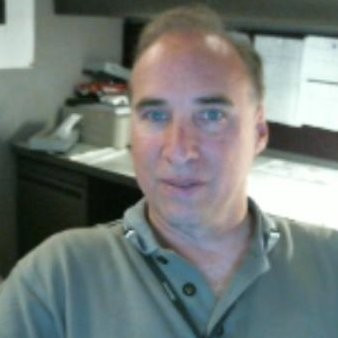
My first book won the Emerging Writers Gateway Award for Crime Fiction. My software, AT&T Rhapsody, won an industry award for best workflow automation software. When I was at Broadcom, the company was ranked as the top Linux engineering compute grid in the world and benchmarked against NVIDIA, Intel, and Microsoft.
I’ve written fiction, essays, poetry, science fiction, financial thrillers, romantic comedy, and—best of all—a story about an extraordinary dog who changes the lives of everyone he touches.
He’s changed mine, and I hope he changes yours.
⭐⭐⭐⭐⭐
“Life isn’t about the destination—it’s about the journey.”
– Michael Ray Ewing
Links
- Michael’s website
- Michael on LinkedIn
- Know more about the BREW Book, Blog, and Poetry Awards here
Share Your Insights
What stood out to you in this interview? Share your thoughts:
- How do real-life experiences influence creative work?
- Do you prefer character-driven or action-driven stories?
- What makes a story memorable for you?
Alignment with the UN SDGs
- SDG 4: Promotes learning through storytelling
- SDG 9: Highlights technology and innovation themes
- SDG 16: Explores cybersecurity and societal impact
Other Highlights

Looking for something?
Type in your keyword(s) below and click the “Search” button.
Helpful Shortcuts
More Stories












Print and Digital Magazine



Don’t just read about greatness. Own it!

About Us
The World’s Best Magazine is a print and online publication that highlights the extraordinary. It is your passport to a universe where brilliance knows no bounds. Celebrating outstanding achievements in various fields and industries, we curate and showcase the exceptional, groundbreaking, and culturally significant. Our premier laurels, The World’s Best Awards, commend excellence through a unique process involving subject matter experts and a worldwide audience vote. Explore with us the pinnacle of human achievement and its intersection with diversity, innovation, creativity, and sustainability.
We recognise and honour the Traditional Owners of the land upon which our main office is situated. We extend our deepest respects to Elders past, present, and emerging. We celebrate the stories, culture, and traditions of Aboriginal and Torres Strait Islander Elders from all communities who also reside and work on this land.
Disclaimer: The World’s Best does not provide any form of professional advice. All views and opinions expressed in each post are the contributor’s own. Whereas we implement editorial policies and aim for content accuracy, the details shared on our platforms are intended for informational purposes only. We recommend evaluating each third-party link or site independently, as we cannot be held responsible for any results from their use. In all cases and with no exceptions, you are expected to conduct your own research and seek professional assistance as necessary prior to making any financial, medical, personal, business, or life-changing decisions arising from any content published on this site. All brands and trademarks mentioned belong to their respective owners. Your continued use of our site means you agree with all of these and our other site policies, terms, and conditions. For more details, please refer to the links below.
About | Advertise | Awards | Blogs | Contact | Disclaimer | Submissions | Subscribe | Privacy | Publications | Terms | Winners
The World’s Best: A Magazine That’s All About What’s Great | theworldsbestmagazine.com | Copyright ⓒ 2022-2026
Let’s connect
Discover more from The World's Best
Subscribe to get the latest posts sent to your email.


