
“Understanding the past isn’t a competition over whose culture is most moral.”
– David A. Falk
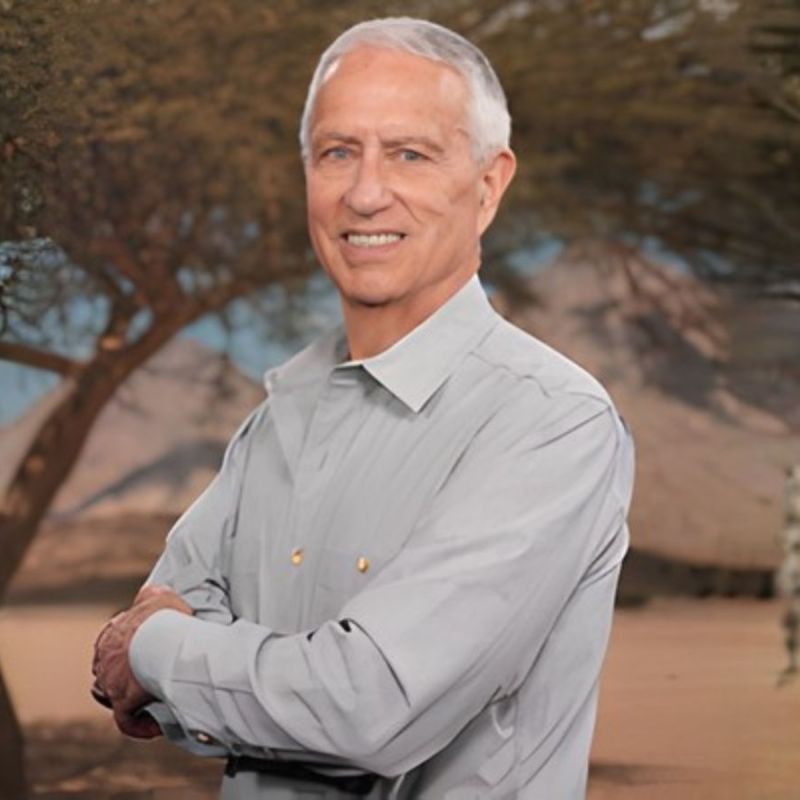
1. David, thank you for taking the time to speak with us. Could you introduce yourself, share your background, and tell us about the work you focus on and what you aim to contribute through it?
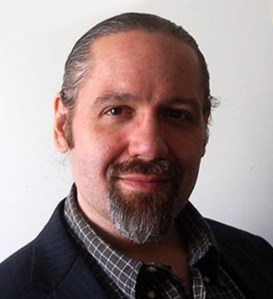
I am an Egyptologist and a Bible scholar from Vancouver, Canada. I’ve had careers as a computer systems analyst, a professional artist, and a science fiction author. My work focuses on helping people understand the ancient world. The ancient world is complicated and fascinating and follows its own rules and ways of thinking that few people—even many professional historians—understand today. My goal as a writer is to bring people one step closer to understanding the past, not by making the people of the past appear the same as us, but by emphasizing their depth and complexity.
2. What initially drew you to the study of ancient cultures and Egyptology, and how did your academic journey develop over time?
I started the same way most Egyptologists do: as a child sitting in front of a television fascinated with documentaries about King Tut, ancient tombs, and pyramids. Most Egyptologists begin as children fascinated with Egypt who simply grow up never wanting to do “responsible” things like business and finance.
My journey was a bit convoluted. I earned my BA as a philosophy major and worked as a computer systems analyst for fifteen years. I then had the opportunity to go to grad school and seized it by going to seminary—yeah, I know, an odd choice. While at seminary, one of the Old Testament professors happened to be an Egyptologist. Once I discovered that, I kept taking every Egypt-related course I could until, ten years later, I finished my PhD.
3. Your work often bridges multiple disciplines. How do you approach integrating fields like archaeology, linguistics, and cultural interpretation in your research?
By the time I started my doctoral work, I had already done many different things. My early career began as a UNIX systems administrator. During that time, I also worked for several years as a professional artist—I grew up in an artistic family and am a fourth-generation artist, so I had a firm handle on art techniques, crafts, and art materials.
After my experience in the corporate world, I went back to grad school and earned three master’s degrees across a range of biblical disciplines (theology, archaeology, and Near Eastern civilizations), and ultimately earned my PhD in Egyptology. Through my academic studies, I also picked up thirteen languages.
Learning is a cumulative process. Each thing you learn makes learning other things easier. You keep asking yourself the question, “Is this thing I am learning anything like this other thing I learned?” Once you start doing that, integrating fields comes naturally.
4. When studying historical objects or texts, what principles guide your interpretation to ensure it remains grounded and responsible?
The highest principle I use when interpreting an ancient object or text is to give each object the benefit of the doubt. When the Egyptian pharaoh Ramesses II said that Amun-Re (king of the gods) and Montu (god of war) fell upon him, making him fight like a lion against the Hittites who surrounded him, I don’t have to believe that Amun-Re and Montu are real to believe that Ramesses II fought for his life. Yet, I respect that Ramesses II believed Amun-Re and Montu were real.
Too often, scholars try to debunk ancient texts and beliefs without first trying to understand them. It’s almost as though these scholars have to tear the past down to make their own culture seem superior. Why berate the people of the past as misogynistic, violent, or unjust? Does that help us understand them within their circumstances—circumstances that our modern culture may only be an extinction event away from?
Understanding the past isn’t a competition over whose culture is most moral. If that’s all history is good for, then we have sadly missed the point. We must strive to discover how other people might have felt or thought in different circumstances.
I taught a class on the History of Ancient Egypt at the University of British Columbia. Many of my students were from the People’s Republic of China. Six months after the class had ended, a Chinese student approached me and said, “I was taught in my country that religion had no use. But those people in ancient Egypt really believed their religion, and it was important to them.”
The principles of historical interpretation don’t just result in getting the facts right. They also cultivate empathy toward other cultures and societies—cultures unlike our own.
5. Many readers are interested in how scholars reconstruct the past from limited evidence. Could you walk us through your process when examining artifacts or historical narratives?
Scholars reconstruct the past based on the evidence available. The more evidence available, the higher the standard applied to that evidence. From the classical period to the present, deductive evidence is the gold standard. During ancient history, induction is the gold standard. For prehistory, abduction is often used. The farther one goes back in time, the less evidence there is to work with and the less deductive the methods become.
Most of my work focuses on the Late Bronze Age and Early Iron Age. Scholars in this discipline must draw conclusions from the widest breadth of evidence available. When you are presented with an artifact, you compare it to other artifacts to understand its context. Once we understand the context, that contributes to the historical narrative as a whole.
6. Your research engages with how meaning is shaped by cultural context. How can modern readers better understand ancient perspectives without imposing contemporary assumptions?
Every culture has its assumptions. Our Western 21st-century culture has assumptions. We live in an age where science, engineering, accounting, naturalism, guilt, individualism, and the weight of longitudinal history are the norm. But the ancient world was an age in which magic, religion, sacredness, indeterminism, shame, clan identity, and cyclical history were the norm.
To understand the past, it is important to enter a frame of mind the ancients themselves would have assumed. Some of these concepts are difficult to understand because they have sweeping implications—for example, clan identity. Other concepts are more approachable to the modern reader.
No one can learn to appreciate every ancient perspective overnight, and even scholars can take decades to learn them. That is why scholars need to point out where those understandings conflict, to help modern readers better understand what they are reading.
7. Your book has been recognized as a BREW Nonfiction Book Excellence Award 2026 recipient. Could you share your perspective on this recognition and what it means to you personally and professionally?
There are many awards out there. Many are simply popularity contests based on votes or the number of Goodreads reviews, and some are even pay-to-play schemes. It was quickly apparent that BREW was unlike those other awards—it was an award that recognizes nothing less than quality writing.
The BREW awards published their judging criteria and were transparent in their process. To have my book recognized as a recipient of a BREW Nonfiction Book Excellence Award 2026 is validation that my book is quality writing and makes a significant contribution to public discourse.
8. In your view, what role does visual or material evidence—such as artifacts or artistic representations—play in helping people engage more deeply with history?
Many people are visual learners. Even if someone doesn’t necessarily understand every underlying implication of a discovery, a person with limited knowledge can still see a picture and appreciate it. Appreciation alone is a form of learning.
Providing a book that is deeply visual while also offering excellent scholarship gives people the opportunity to engage with the material on multiple levels.
9. Throughout your career, what milestones, recognitions, or achievements have been particularly meaningful to you, and how have they shaped your direction moving forward?
It’s hard for me to narrow this down because I have had an exceptional career. Recognitions are nice and can shape your direction, but I’ve never been one to rest on my laurels. I’m always thinking about what I can learn next, what new skills I can acquire, and how I can use those skills going forward.
Milestones, recognitions, and achievements are markers that I have attained or perfected a new skill. But that is just the beginning of what is to come.
10. As someone working across both academic and technical fields, how have these experiences influenced your thinking, creativity, or approach to problem-solving?
I apply my experiences to all the challenges before me. I worked for decades as a computer analyst and programmer. At one point, I had a problem where I needed to computationally validate historical chronologies, so I used my programming skills to solve it.
All experience can be repurposed for other tasks. It doesn’t matter whether that experience comes from being a scholar, a computer guy, an artist, an amateur radio operator, or a lumberjack. It’s all relevant, and it can all be used when you put pen to paper.
11. If you were to write your own bio, what would you say? And as your work evolves, what kind of impact do you hope it has?
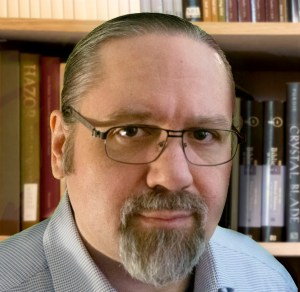
As a PhD student, I remember the first exercise I was asked to do at my induction was to give a thirty-second speech about myself. In academia, you are constantly writing and rewriting your bio. Having written five books now, I’ve had to write—or revise—my bio for each one.
The one thing I have learned from writing my bio so often is that human beings are in a constant state of reinventing themselves. Every major new achievement—like the BREW award or having written the boot code for the fourth-fastest supercomputer in the world, the BlueGene/L DD1 Prototype in 2004—changes our personal story in subtle and sometimes profound ways.
As my work evolves, I strive to write with ever greater clarity, transparency, and virtuosity. It is not enough for my work to be academically rigorous. It must also be approachable and a joy to read. Reading—even nonfiction—should be a joy.
The impact I want my work to have is for people to read my books and say, “I learned so much, but it felt like no effort at all.”
⭐⭐⭐⭐⭐
“I learned so much, but it felt like no effort at all.”
– David A. Falk
Links
Share Your Insights
What are your thoughts on history, culture, and interpretation?
- How do you think modern perspectives shape our understanding of the past?
- Which part of the interview stood out to you most?
- Can interdisciplinary learning change how we approach history?
Alignment with the UN SDGs
- SDG 4: Promotes education, historical literacy, and cultural understanding.
- SDG 10: Encourages empathy across cultures and perspectives.
- SDG 11: Supports preservation of cultural heritage.
Other Highlights

Looking for something?
Type in your keyword(s) below and click the “Search” button.
Helpful Shortcuts
More Stories









Print and Digital Magazine
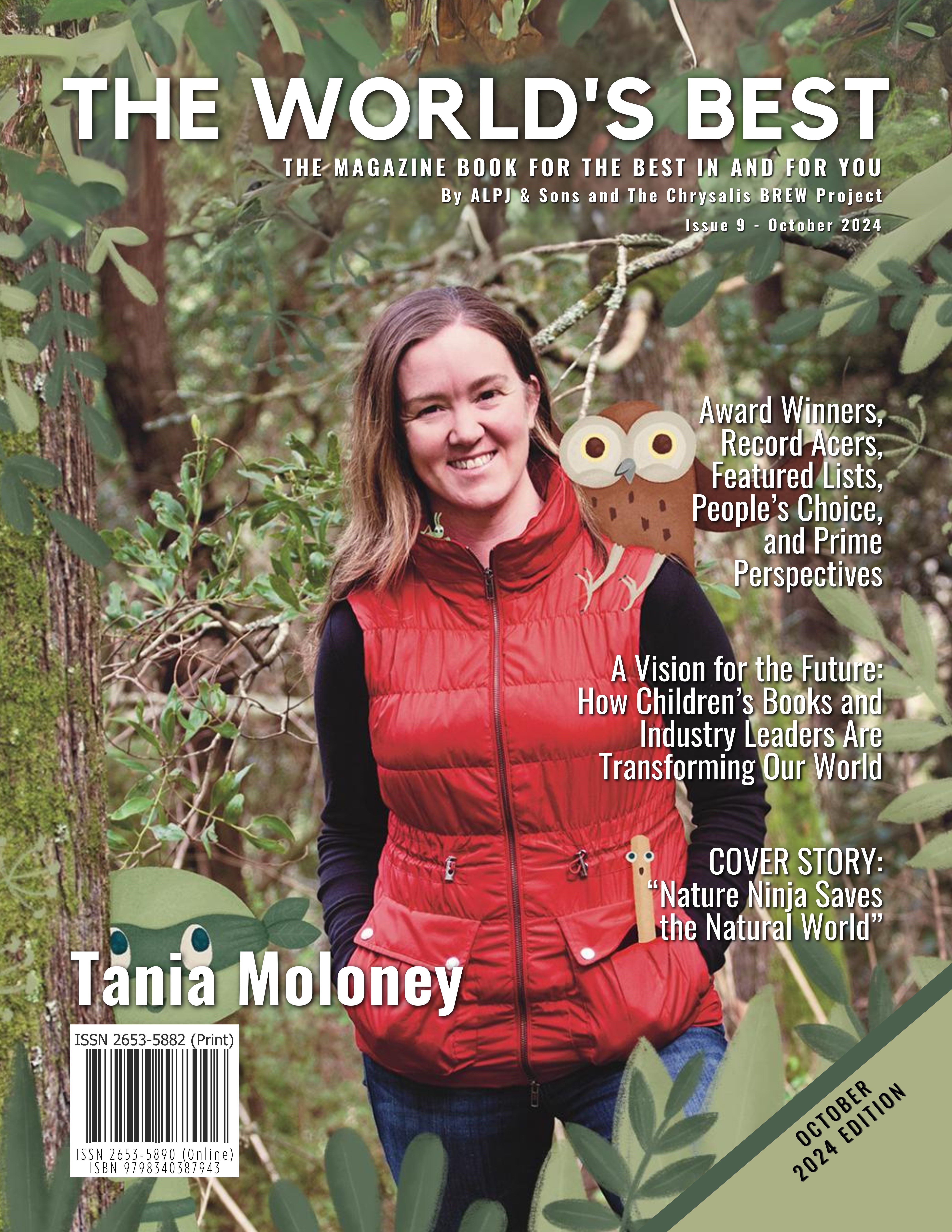
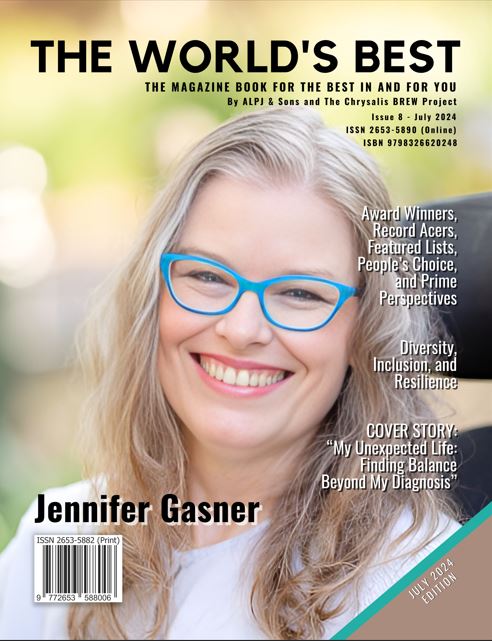
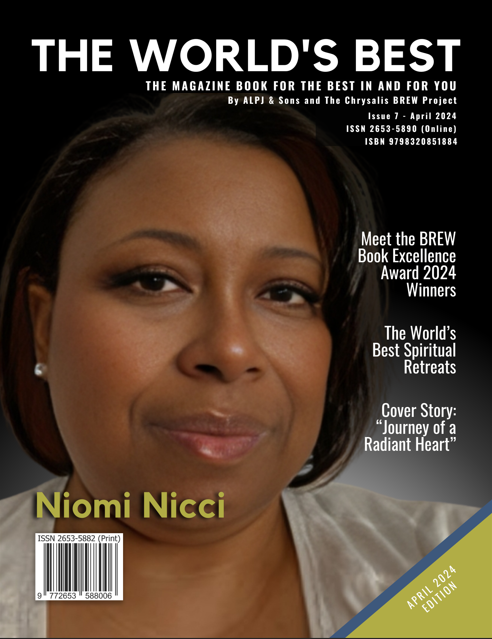
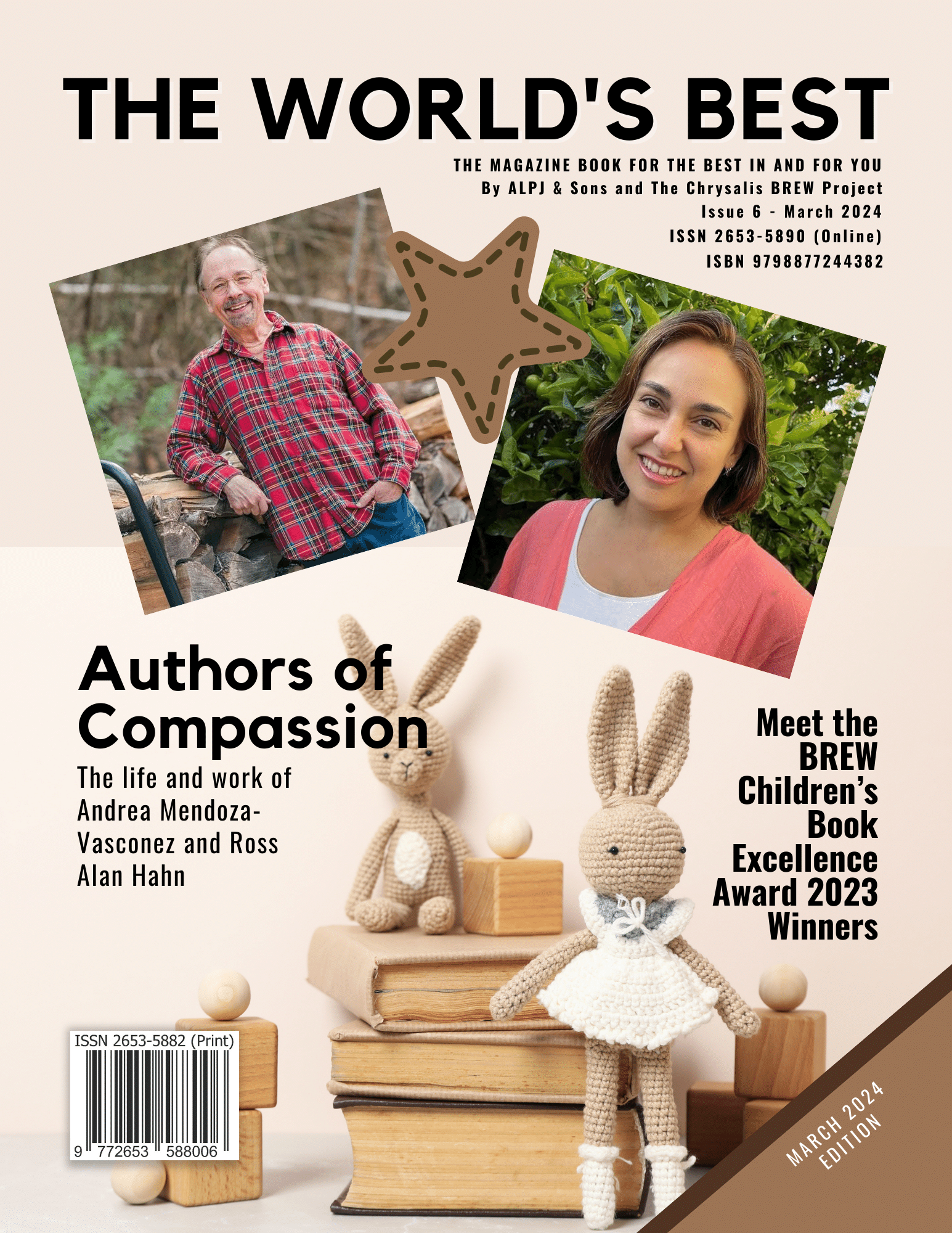


Don’t just read about greatness. Own it!

About Us
The World’s Best Magazine is a print and online publication that highlights the extraordinary. It is your passport to a universe where brilliance knows no bounds. Celebrating outstanding achievements in various fields and industries, we curate and showcase the exceptional, groundbreaking, and culturally significant. Our premier laurels, The World’s Best Awards, commend excellence through a unique process involving subject matter experts and a worldwide audience vote. Explore with us the pinnacle of human achievement and its intersection with diversity, innovation, creativity, and sustainability.
We recognise and honour the Traditional Owners of the land upon which our main office is situated. We extend our deepest respects to Elders past, present, and emerging. We celebrate the stories, culture, and traditions of Aboriginal and Torres Strait Islander Elders from all communities who also reside and work on this land.
Disclaimer: The World’s Best does not provide any form of professional advice. All views and opinions expressed in each post are the contributor’s own. Whereas we implement editorial policies and aim for content accuracy, the details shared on our platforms are intended for informational purposes only. We recommend evaluating each third-party link or site independently, as we cannot be held responsible for any results from their use. In all cases and with no exceptions, you are expected to conduct your own research and seek professional assistance as necessary prior to making any financial, medical, personal, business, or life-changing decisions arising from any content published on this site. All brands and trademarks mentioned belong to their respective owners. Your continued use of our site means you agree with all of these and our other site policies, terms, and conditions. For more details, please refer to the links below.
About | Advertise | Awards | Blogs | Contact | Disclaimer | Submissions | Subscribe | Privacy | Publications | Terms | Winners
The World’s Best: A Magazine That’s All About What’s Great | theworldsbestmagazine.com | Copyright ⓒ 2022-2026
Let’s connect
Discover more from The World's Best
Subscribe to get the latest posts sent to your email.


