
“Indecision is often the biggest risk.”
– David B. Hampson
Could you introduce yourself, share your background, what you do, and what you aim to accomplish through your work?
I’m the President of Schrager Hampson Aviation Insurance Group and a multi-company business owner working at the intersection of aviation, insurance, and wealth strategy. At my core, I’m an acquisition entrepreneur, an instrument-rated commercial pilot, and someone who has spent my career helping businesses manage risk so they can grow with confidence.
I didn’t come from a traditional business background. I studied at Phillips Exeter Academy, Wake Forest, and the University of Cape Town, none of which formally trained me in business. What I learned instead came through experience: building, acquiring, and leading companies, and navigating both opportunities and setbacks in real time.
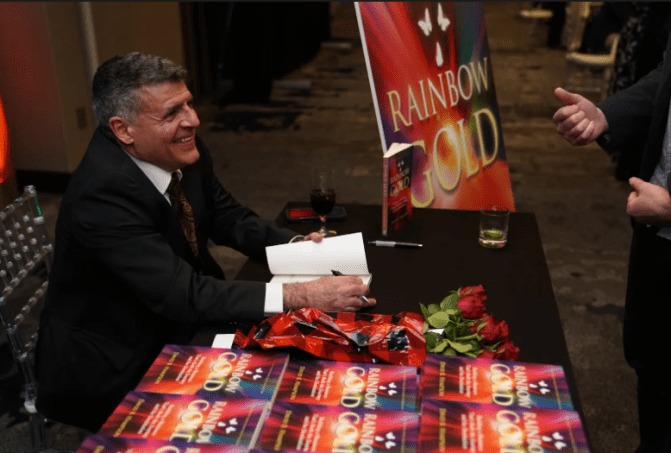
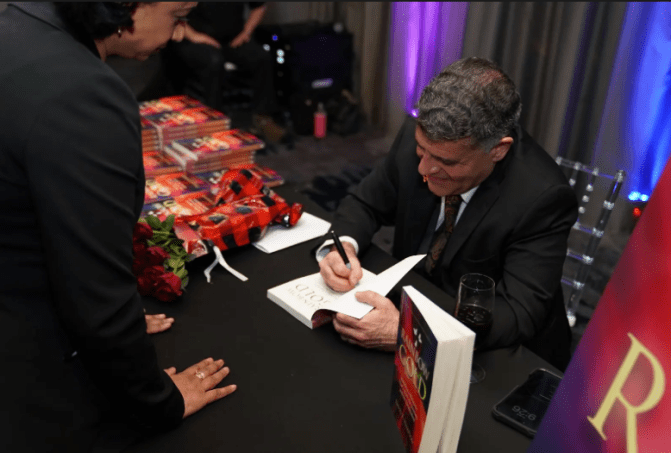
What I aim to accomplish through my work is twofold. First, to help clients make better decisions by structuring risk intelligently. Second, to build enduring businesses. In my book Rainbow Gold, I describe this as building a business that is both the journey and the destination—financially successful, but also meaningful to the people who are part of it.
How did your early experiences influence the direction you chose professionally?
My early experiences taught me that business is ultimately about responsibility—both to people and to outcomes. I entered the insurance world somewhat indirectly but quickly realized that it sits at the center of economic activity. Insurance enables risk-taking, and risk-taking drives progress.
Living and working in South Africa in my twenties had a profound influence on me. It gave me perspective on markets, inequality, and resilience. It also forced me to adapt quickly in unfamiliar environments. That experience shaped both my appetite for opportunity and my appreciation for disciplined decision-making.
How do you approach decisions when outcomes are uncertain?
I try to separate what is knowable from what is not, then make the best possible decision with the information available. In aviation, you do not wait for perfect certainty. You operate with incomplete information, but within structured parameters. I apply that same mindset in business.
I also think in terms of asymmetry. What are the downside risks, and are they survivable? If the downside is controlled and the upside is meaningful, that is often a decision worth making.
Indecision is often the biggest risk. Many people get stuck in “analysis paralysis.” A well-reasoned decision made in a timely manner is almost always better than waiting for perfect clarity that never comes.
How has your perspective on responsibility and accountability developed over time?
That perspective developed through experience, especially in situations where the stakes were real. When you are responsible for clients, employees, and partners, decisions carry weight.
Over time, I have come to believe that accountability is not just about outcomes, but about ownership. Taking responsibility for decisions, communicating clearly, and standing behind commitments builds trust. Trust is foundational in any business.
It is also something I try to model internally. Culture is shaped less by what you say and more by what you consistently do.
How do you currently define success in your work and life?
Earlier in my career, success was more externally defined. Growth, revenue, and recognition all mattered. They still do, but they are no longer the primary lens.
Today, I define success as alignment—building something that works economically, but also aligns with your values and how you want to spend your time. It is about creating a business that supports your life, rather than consuming it.
I also think in terms of durability and legacy. A successful business is not just one that grows quickly, but one that can endure through cycles, challenges, and across generations.
What role do relationships play in building and sustaining organizations?
Relationships are everything. Insurance is a relationship-driven business between clients, brokers, and underwriters, but that extends to any organization.
Trust compounds over time. Strong relationships allow for better communication, more flexibility in difficult situations, and better outcomes. Relationships are a two-way street, and you have to be prepared to maintain them through good and bad. Be there for other people and they’ll be there for you. Never break a relationship unless there is good reason.
Internally, relationships shape culture. Externally, they shape reputation. Both are critical, and both take years to build but can be lost quickly if not handled with care.
What does recognition from The Chrysalis BREW Project mean to you?
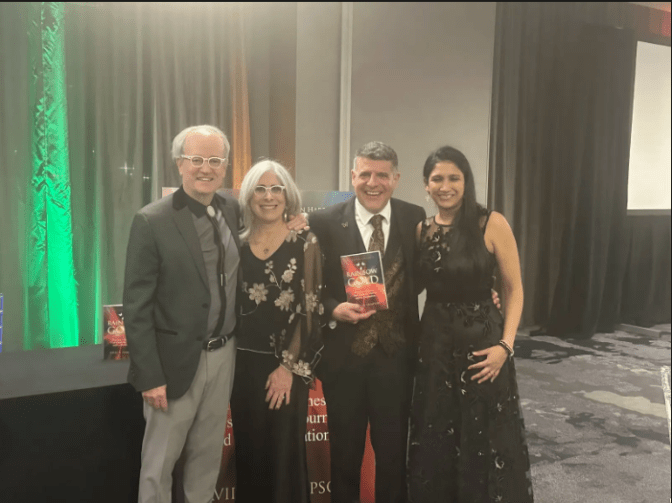
It is meaningful because Rainbow Gold is an extension of how I think about business and life. Recognition from The Chrysalis BREW Project validates that the ideas resonate with a broader audience.
The core message is that you can build something that is both financially successful and personally fulfilling. That is something more people are seeking today, and this recognition helps extend my message, which was my primary goal in writing this book.
What milestones or experiences have had the most lasting impact on your professional direction?
A few stand out: living in South Africa in my twenties and purchasing my first business there with no prior business courses or experience; learning to fly, which shaped my confidence in irrevocable ways and provided the seeds of passion that fueled much of my entrepreneurial journey; acquiring and integrating businesses over the years, which taught me the realities of leadership beyond theory; navigating complex transactions and transitions within our firm; and writing this book, which crystallized my concept of building a business that is both the journey and the destination.
Each of those experiences reinforced the importance of adaptability, discipline, and long-term thinking.
How do you adapt to industry changes while staying true to your principles?
I try to distinguish between tactics and principles. Tactics should evolve. Markets change, technology advances, and client expectations shift.
Principles should remain consistent. You should never compromise on your values or your morals. Integrity, disciplined risk management, and long-term thinking do not go out of style.
If you stay anchored in principles while being flexible in execution, you can adapt without losing your identity.
What habits have helped you maintain focus and direction throughout your career?
Clarity of priorities has been critical. There are always more opportunities than there is time, so being selective matters.
I also value time to think. That could be while exercising, during travel, flying, or simply stepping away from day-to-day activity. Some of the best decisions come from creating space to think clearly.
Finally, surrounding myself with strong people has been essential. A good team does not just execute—they challenge your thinking and help you stay aligned with what matters.
If you were to write your own bio, what would you say, and what impact do you hope your work will have?
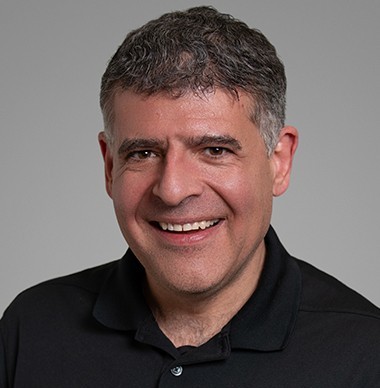
I would describe myself as a builder at heart—someone who learned by doing, who took a path that was not always linear, and who found meaning in creating something over time that actually works, both as a business and as a life.
As my work evolves, I feel a growing responsibility to share that path with others. There are a lot of entrepreneurs who are capable of building something great, but they either do not see the path clearly or feel like they have to follow someone else’s version of success. I want to help change that.
The impact I hope to have is helping more people realize that they can build something of their own—something durable, something that creates both financial freedom and personal fulfillment. Not by chasing shortcuts, but by approaching business with intention, discipline, and a long-term perspective.
If my work resonates, I hope it gives people both a framework and the confidence to build a business that not only succeeds on paper but actually feels right to them.
⭐⭐⭐⭐⭐
“If you stay anchored in principles while being flexible in execution, you can adapt without losing your identity.”
– David B. Hampson
Links
- Connect with David via LinkedIn
- Visit David’s website
- Know more about the BREW Book, Blog, and Poetry Awards here
Share Your Insights
What are your thoughts on this perspective? Join the discussion:
- How do you make decisions when outcomes are uncertain?
- What does success look like in your life today?
- How do you balance principles with changing circumstances?
Alignment with the UN SDGs
- SDG 8: Promotes sustainable economic growth
- SDG 9: Encourages innovation and industry
- SDG 4: Supports continuous learning and development
Other Highlights

Looking for something?
Type in your keyword(s) below and click the “Search” button.
Helpful Shortcuts
More Stories













Print and Digital Magazine

Don’t just read about greatness. Own it!

About Us
The World’s Best Magazine is a print and online publication that highlights the extraordinary. It is your passport to a universe where brilliance knows no bounds. Celebrating outstanding achievements in various fields and industries, we curate and showcase the exceptional, groundbreaking, and culturally significant. Our premier laurels, The World’s Best Awards, commend excellence through a unique process involving subject matter experts and a worldwide audience vote. Explore with us the pinnacle of human achievement and its intersection with diversity, innovation, creativity, and sustainability.
We recognise and honour the Traditional Owners of the land upon which our main office is situated. We extend our deepest respects to Elders past, present, and emerging. We celebrate the stories, culture, and traditions of Aboriginal and Torres Strait Islander Elders from all communities who also reside and work on this land.
Disclaimer: The World’s Best does not provide any form of professional advice. All views and opinions expressed in each post are the contributor’s own. Whereas we implement editorial policies and aim for content accuracy, the details shared on our platforms are intended for informational purposes only. We recommend evaluating each third-party link or site independently, as we cannot be held responsible for any results from their use. In all cases and with no exceptions, you are expected to conduct your own research and seek professional assistance as necessary prior to making any financial, medical, personal, business, or life-changing decisions arising from any content published on this site. All brands and trademarks mentioned belong to their respective owners. Your continued use of our site means you agree with all of these and our other site policies, terms, and conditions. For more details, please refer to the links below.
About | Advertise | Awards | Blogs | Contact | Disclaimer | Submissions | Subscribe | Privacy | Publications | Terms | Winners
The World’s Best: A Magazine That’s All About What’s Great | theworldsbestmagazine.com | Copyright ⓒ 2022-2026
Let’s connect
Discover more from The World's Best
Subscribe to get the latest posts sent to your email.


