
“The goal is to make the lesson feel natural and like something they recognize from their own lives.”
– Stacy Byous
Stacy, thank you for joining us. Could you introduce yourself, share your background, what you do, and what you aim to contribute through your work?
Thank you so much for having me. I’m an educator and children’s author based in Atlanta, Georgia. I spent many years in the classroom teaching engineering, computer science, and business, and now I work as a STEM curriculum developer with Georgia Tech’s Center for Education Integrating Science, Mathematics, and Computing (CEISMC).
In my current role, I design project-based learning experiences, which really aligns with storytelling. Both are about helping students make meaning, connect ideas, and apply what they’ve learned in real-life situations.
Alongside my work in education, I created Tattle Tails™, an award-winning children’s book and growing social-emotional learning brand designed to help children navigate everyday situations like communication, problem-solving, and kindness.
In addition to writing curriculum and books, I am also a songwriter and co-founder of the Warrior Kindness Initiative, where we provide grants to teachers to support anti-bullying curriculum and kindness initiatives in schools.
Through all of my work, my goal is simple: to help children feel seen, supported, and confident in making positive choices.
What first drew you to working with children, and how did that experience influence your path into writing?
I’ve always been drawn to working with children because of their honesty, curiosity, and potential. As a teacher, I had a front-row seat to how children think, communicate, and process the world around them.
Over time, I noticed that many challenges in the classroom weren’t academic; they were social and emotional. Once I became a parent, I saw those same moments play out at home with my own children.
That combination of experiences really inspired me to start writing because I realized there was an opportunity to support kids in a more accessible and relatable way.
How do your experiences in education and family life inform the themes you explore in your work?
My work is deeply rooted in both my classroom experience and my family life. In the classroom, I saw the real challenges children face with communication, conflict, and independence. At home, I experienced those same moments in a much more personal way.
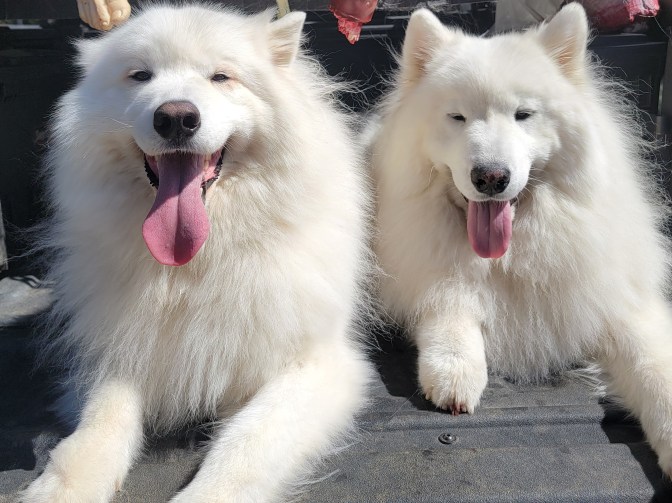
Tattle Tails was inspired by everyday interactions with my children and, just as importantly, our three playful pups. I intentionally included the puppies in the story because they add humor and lightness to situations that kids might otherwise experience as frustration or conflict.
Those real-life moments helped shape the story, making it feel authentic and relatable for families. As I continue to share the book through author visits, I’m excited to bring that same energy to life because the puppies help make the message approachable, engaging, and fun for kids.
When creating stories for young readers, how do you approach presenting ideas in a way that is both clear and meaningful?
When I create stories for young readers, I always start with a simple question: “What is the child experiencing in this moment?”
From there, I break the idea down into language and situations that feel familiar and engaging. I use humor, repetition, and clear examples so children can easily understand the message without feeling like they’re being “taught.”
The goal is to make the lesson feel natural and like something they recognize from their own lives.
Your work highlights communication and emotional awareness. How do you translate these ideas into narratives that children can understand?
Social-emotional concepts can feel big and abstract, so I focus on making them concrete. In Tattle Tails, I take something like “tattling vs. telling” and turn it into a simple, relatable situation children can see themselves in.
I also created a companion plush, which gives children something tangible to connect with. It turns the story into an experience they can hold and use in real situations. That helps reinforce the message in a way that feels supportive rather than corrective.
The plush helps children pause and reflect. They can ask themselves, “Is this a minor frustration that I can handle on my own, or is it something important that I need to share with a trusted adult?”
I also intentionally included the puppies as part of the storytelling because they bring humor and levity to situations that might otherwise feel frustrating for children, making the message easier to connect with and remember.
Can you describe your creative process, from developing an idea to completing a book?
My creative process usually starts with a real-life moment or a situation I’ve observed in the classroom or experienced as a parent. From there, I identify the core challenge behind that moment.
My work in curriculum development has definitely influenced this process. Designing project-based learning experiences has taught me to think about how ideas connect, how learners engage with content, and how to make concepts meaningful and applicable. That perspective carries directly into my storytelling.
I then build the story around relatable characters, keeping the language simple and the pacing engaging. After drafting, I refine the message to make sure it’s clear, developmentally appropriate, and easy for both children and adults to use as a conversation starter.
Many of the small, humorous details, like the puppies’ antics, come directly from real-life moments, which helps keep the story grounded and engaging. The goal is always to create something that works as both a story and a practical tool.
A very important part of bringing the story to life is collaboration with the illustrator. Maddie Kimber’s work added so much depth, warmth, and personality to the characters and the overall tone of the book. Her ability to capture emotion through expressions, color, and playful details helped reinforce the message in a way that words alone cannot.
In a picture book, the illustrations are just as important as the text, and Maddie truly helped transform the story into a visual experience that children can connect with, explore, and enjoy page after page.
What challenges have you encountered in writing for children, and how have you addressed them?
One of the biggest challenges is balance—keeping the story engaging while also delivering a meaningful message. Children can immediately tell if something feels forced or overly instructive.
To address that, I focus on authenticity. I make sure the story feels natural first, and then layer in the lesson. If the story works, the message follows.
You have worked in both writing and music. How do these forms of expression influence your overall creative approach?
Writing curriculum, books, and music are all forms of storytelling, just expressed in different ways.
Music, in particular, has helped me think more about rhythm, emotion, and connection—how something feels, not just what it says.
I’ve had the opportunity to explore that through songwriting, including co-creating “Warrior,” which was honored as Song of the Year at the Atlanta Kidz Choice Awardz. That experience reinforced for me how powerful creative expression can be in helping young people feel seen and understood.
That perspective carries over into my books. Whether it’s through language, pacing, or tone, I try to create an emotional connection that children can actually carry with them into their everyday interactions.
Could you share key milestones or recognitions in your journey and what they have meant to you?
Some meaningful milestones in my journey have been seeing Tattle Tails resonate with both educators and families, and receiving recognition such as the Chrysalis BREW Project’s Reader’s Choice Award, the Chrysalis BREW Project’s Seal of Excellence, and the International Firebird Book Award in the Children’s Educational category.
Another highlight has been co-creating the song “Warrior,” which was honored as Song of the Year at the Atlanta Kidz Choice Awardz. That experience reinforced how storytelling, whether through music or writing, can connect with young people in meaningful ways.
Beyond awards, the moments that matter most to me are hearing from teachers and parents who are using the book as a tool to support children in real-life situations. Those everyday connections are what truly validate the purpose behind my work.
Much of this journey has also been shaped by my own family, especially my children, whose everyday experiences inspired the heart behind Tattle Tails.
Your book has received recognition, including the BREW Seal of Excellence and the BREW Reader’s Choice Award from The Chrysalis BREW Project. What does this recognition represent for you and your work?
Receiving The Chrysalis BREW Project’s Reader’s Choice Award and The Chrysalis BREW Project’s Seal of Excellence is incredibly meaningful. It reflects both editorial recognition and reader connection, which is a powerful combination.
It reinforces that Tattle Tails is not just telling a story; it is helping children understand the difference between tattling and telling while supporting communication, empathy, and problem-solving.
It is encouraging to see those ideas resonate with both educators and families in meaningful, real-world ways.
If you were to write your own bio, what would you say? And as your work evolves, what kind of impact do you hope it has?
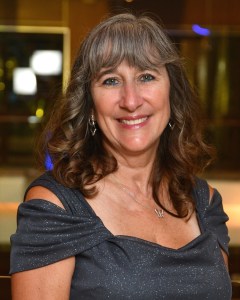
If I were to describe myself, I would say I’m an educator at heart who creates stories and tools to support children’s growth beyond academics.
As my work evolves, I hope Tattle Tails continues to grow into a broader platform that helps children navigate everyday social-emotional challenges with confidence. Whether through books, characters, or other extensions, my goal is to provide families and educators with simple, relatable ways to support children in becoming kind, capable, and emotionally aware individuals.
As part of that growth, I have also developed a cooperative family board game, The Great Town Rescue: A Tail-Wagging Adventure. The game gives children and families the opportunity to practice teamwork, communication, and problem-solving in a fun, hands-on way.
Instead of competing against one another, players work together toward a shared goal, reinforcing the idea that kindness and cooperation lead to success.
As the brand grows, I also hope to bring the characters to life through author visits and interactive experiences. The puppies, in particular, add humor and energy that help children connect with the message in a more memorable way, making those in-person moments even more impactful.
⭐⭐⭐⭐⭐
“Kindness and cooperation lead to success.”
– Stacy Byous
Links
- Visit Stacy’s author website
- Connect with Stacy via LinkedIn
- Know more about the BREW Book, Blog, and Poetry Awards here
Share Your Insights
What are your thoughts on storytelling and emotional learning for children?
- How can books help children communicate better?
- What role does kindness play in learning?
- Which idea from the interview stood out to you most?
Alignment with the UN SDGs
- SDG 4: Supports inclusive education and social-emotional learning
- SDG 3: Encourages emotional well-being for children
- SDG 16: Promotes empathy, kindness, and positive social interaction
Other Highlights

Looking for something?
Type in your keyword(s) below and click the “Search” button.
Helpful Shortcuts
More Stories





















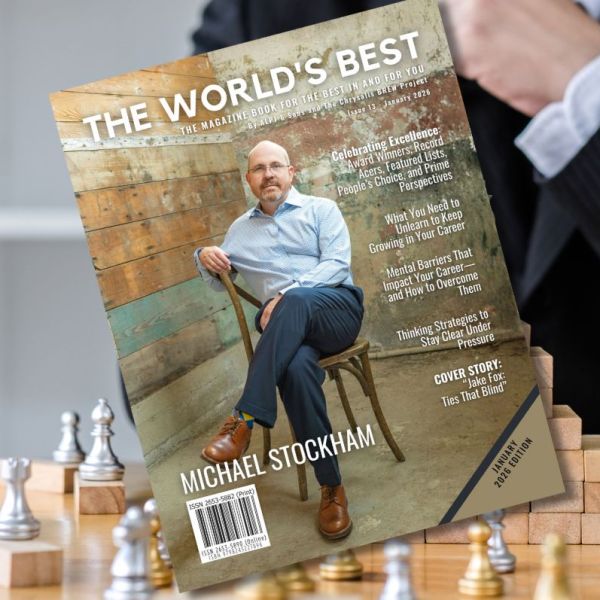
Print and Digital Magazine
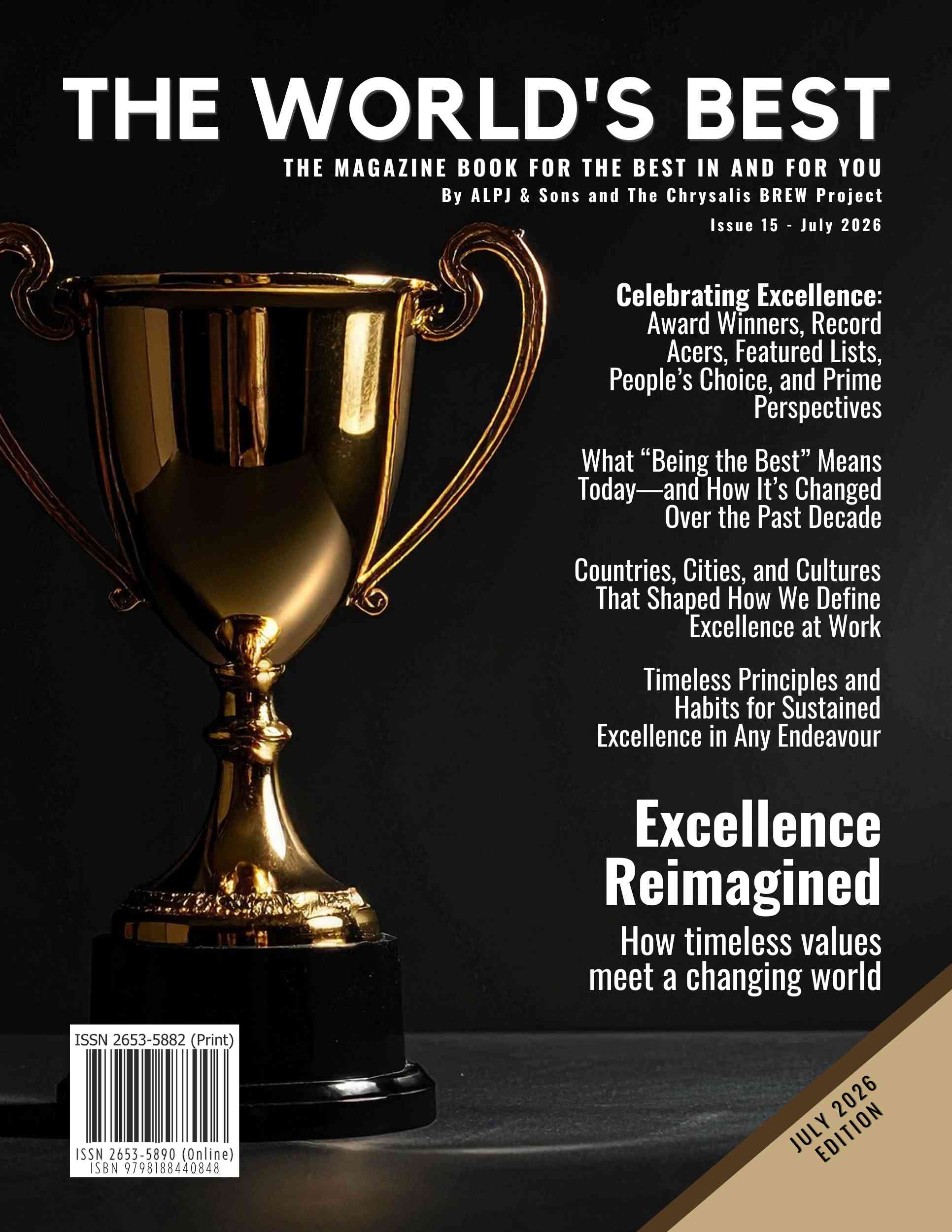

Don’t just read about greatness. Own it!

About Us
The World’s Best Magazine is a print and online publication that highlights the extraordinary. It is your passport to a universe where brilliance knows no bounds. Celebrating outstanding achievements in various fields and industries, we curate and showcase the exceptional, groundbreaking, and culturally significant. Our premier laurels, The World’s Best Awards, commend excellence through a unique process involving subject matter experts and a worldwide audience vote. Explore with us the pinnacle of human achievement and its intersection with diversity, innovation, creativity, and sustainability.
We recognise and honour the Traditional Owners of the land upon which our main office is situated. We extend our deepest respects to Elders past, present, and emerging. We celebrate the stories, culture, and traditions of Aboriginal and Torres Strait Islander Elders from all communities who also reside and work on this land.
Disclaimer: The World’s Best does not provide any form of professional advice. All views and opinions expressed in each post are the contributor’s own. Whereas we implement editorial policies and aim for content accuracy, the details shared on our platforms are intended for informational purposes only. We recommend evaluating each third-party link or site independently, as we cannot be held responsible for any results from their use. In all cases and with no exceptions, you are expected to conduct your own research and seek professional assistance as necessary prior to making any financial, medical, personal, business, or life-changing decisions arising from any content published on this site. All brands and trademarks mentioned belong to their respective owners. Your continued use of our site means you agree with all of these and our other site policies, terms, and conditions. For more details, please refer to the links below.
About | Advertise | Awards | Blogs | Contact | Disclaimer | Submissions | Subscribe | Privacy | Publications | Terms | Winners
The World’s Best: A Magazine That’s All About What’s Great | theworldsbestmagazine.com | Copyright ⓒ 2022-2026
Let’s connect
Discover more from The World's Best
Subscribe to get the latest posts sent to your email.


