
“There is nothing more practical than a sound theory.”
– Dr. S. Lee Funk
Editor’s Note: Views expressed in this interview are those of the interviewee.
Lee, thank you for taking the time to join this conversation. Could you introduce yourself, share your background, and describe what you focus on in your work today?
As a suburban child of the 1950s and 1960s, with parents from the Midwest, I grew up in a family where I had a lot of responsibility in contributing to the household but also considerable freedom in my spare time. TV access was limited, so I read a great deal—in childhood, Sir Arthur Conan Doyle, Edgar Allan Poe, Stevenson, Twain, myths and legends from many cultures, as well as comics; later, Ray Bradbury, Robert Heinlein, Carl Sandburg, Ayn Rand, Baldwin, Steinbeck, and Matheson. Horror, mystery, and the struggle of the individual all fascinated me.
For some reason, when I was around fifteen, I picked up a book by Bertrand Russell. I think it was An Inquiry into Meaning and Truth. Getting through it was tedious. I had to stop every other page to look up a word. It was the first time I had read something outside of school that was neither fiction nor poetry, and I realized that, as an author, it was possible to create verbal constructs to theorize. That realization was enchanting, and it still fascinates me.
About a year later, a friend surreptitiously loaned me a copy of The Catcher in the Rye. It was surreptitious because it was banned in our community; at least, it was not on the library shelves and unavailable in bookstores. Like most young people, I identified with the angst of the narrator, but just as relevant was the thrill of defiance in reading a forbidden story. Again, as before, but in a more emotional way, I was struck by the latent power of well-chosen words.
Today, my work is focused primarily on the etiology as well as the symptomology of extreme violence, types of emotional disturbance, how cognitive distortions contribute to aberrant socialization, and the social detriment of personality deficits. I believe many of our societal problems begin with either a misunderstanding or casual acceptance of individual pathologies. Professionals and laypeople alike need to develop a better appreciation of pathological thinking and its potential for harm.
My view is slightly askew compared to other theorists because I draw on multiple disciplines—not just criminology or psychopathology—to support my premises. Also, it is shaped by actual personal events, not just interviews, but by the many interactions I’ve had throughout my life with volatile persons.
When I was seeking a publisher, one reviewer criticized my submission because my degrees were not in criminology. An irrelevant criticism when you think about it. In fact, the learning and developmental theory that permeates my examination of deviant tendencies makes the work more justifiable and immediately usable.
Your career has included roles in education and work with individuals facing behavioral challenges. How did your early experiences influence the direction of your professional path?
In my primary years, I manifested a severe articulation disorder, and my parents hired a speech and language specialist who tutored me. Special education was not as accessible then as it is now. She did an excellent job regarding my linguistic skills. However, I was a serious discipline problem in school through the eighth grade. Thinking back, these two maturational issues offered visceral insight into why people sometimes manifest difficulties in adjustment.
Your research and writing engage with psychological and behavioral patterns. What led you to focus on these areas, and how has your perspective evolved over time?
During the late sixties and early seventies, my wife at the time and I were drawn to the alternative school and open classroom movement. We secured positions as house parents and teachers at a residential school for adjudicated youth, many of whom were aggressive or deeply disturbed.
Later, when we were expecting our first daughter, we moved to a small mountain community, and I took a job as a teacher’s assistant in a special education class for pupils labeled as EH (educationally handicapped). We do not even use that term anymore, thankfully.
The class was composed of a disparate group of kids who had learning disabilities, attention deficits, and a propensity for sudden outbursts. I also did lunchroom supervision, which is a story in and of itself. The special day class teacher was a strong believer in perceptual-motor training. We now know that dyspraxia is associated with learning disabilities, but not the cause. She was earnest, however, and simply following a trend. The experience left me with a firm commitment to keeping pace with professional literature.
Anyway, I was effective in both of those early positions for three reasons: I was patient, I could make judgment calls without being judgmental, and I was good at anticipating reactions. In retrospect, those skills were acquired by growing up in a household in which part of the family dynamic was barely suppressed rage.
The experiences with troubled youths prompted me to return to college to attain a credential in special education.
When I first started teaching in the public schools, I was a diehard behaviorist and modeled my practice very much on the “engineered classroom” model that was in vogue in some quarters at the time. Contingency management works well when it comes to getting erratic and antagonistic youngsters to conform to predictable regimens. Direct instruction based on a behaviorist approach is the most pragmatic and straightforward route to specified skill acquisition. The military uses it successfully for basic training.
But when it comes to knowledge transfer and application across varied settings, it becomes more complex. So, I began reviewing the literature for techniques that would help with generalization. Not surprisingly, the inquiry led me to cognitive behaviorism, rational-emotive therapy, and logotherapy.
My master’s star paper focused on the relationship language has to actions. As a result, I began to appreciate that between the stimulus and the response there is, as Jensen puts it, “the organism.”
An educator, psychologist, sociologist, criminologist, manager, and so forth must address thinking. It is an appreciation of this internalized, yet highly malleable, process that now informs my endeavors, especially ethical considerations.
That is why my texts on autogenic violence devote so much space to exposing and analyzing the thoughts of perpetrators. There are a series of micro-decisions that formulate extreme acts, a fact often overlooked in press reporting.
Following a rampage or assassination attempt, commentators often speak of “finding the motive.” They are framing the impetus with the wrong adjective. James Holmes, the Aurora theater shooter, mocked the idea of searching for reasons in his journal. He wrote, “The message is there is no message,” labeling as “fools” those who might later seek to identify the cause of his massacre.
The motivation for random brutality acted out in public is most often contained within the event itself, frequently as part of a suicidal spectacle. In the mind of the perpetrator, it is a performance considered more valuable than the detriment of the crime.
In your work, you examine how individuals interpret their experiences and surroundings. How do you approach studying these interpretations in a structured way?
In the introductions to my two books on rampaging, I outline the methodology. There is some statistical sampling, but mainly both volumes rely heavily on principles endemic to historical research, case studies, and action-based investigation—most notably triangulation, repeated observations, verbal analyses, and pattern matching.
Let me digress a bit here and point out that there is a misunderstanding, even among scholars, about the value and usefulness of so-called “qualitative” and “quantitative” methods. Those descriptors, when used for scholarship, are misnomers.
All research has a qualitative component—for example, in operational definitions, sampling, and so forth. Meanwhile, all studies involve some level of quantification, if nothing else, tallying. When selecting methods for a study, the researcher should align them with the question being studied and choose from an array of approaches—surveys, experiments, fieldwork, and so forth.
My dissertation chair, Steve Counelis, wrote a probing paper on this topic that was published in Kybernetes.
Most of my writing is heuristic, and the analytical methods reflect that intent.
With respect to references, I’ve had to confront a problem that I am sure is becoming increasingly common for historians, journalists, or anyone addressing contemporary problems. The internet and social media have brought us a vast array of resources about nearly any topic and event. The quantity, however, is counterbalanced by diminished accessibility to reliable information vis-à-vis validity. The discernment of standards is left to the consumer.
Though somewhat counterintuitive, the more recent the circumstance, the higher the probability that commentary is not definitive because false observations are made quickly but fade with time.
I once thought there must be some sort of commonly recognized rating system for sources, both printed and electronic, that could be used to assess the merit of available materials. There is one derived from the Trust Project, but the number of publications that have taken advantage of that certification process is limited.
Hence, if the trust indicators are not noted, the researcher has no way of knowing whether the absence is due to a lack of verifiability or simple non-participation in the program. Also, the project’s focus is only on news media.
Consequently, I developed a rubric for evaluating credible information. It is presented in a paper entitled “Regarding Source Credibility and Accuracy: A Protocol for General Researchers, Investigative Journalists, and Historians.” It is available on my website and LinkedIn profile.
You have contributed to discussions in both education and behavioral analysis. How do you see these fields informing each other in practice?

They don’t, unfortunately, at least not in practice to the degree they should. Educators often treat aspects of psychology as lofty, untranslatable principles.
In contrast to that prevailing perspective, years ago, a colleague commented to me, “There is nothing more practical than a sound theory.” In fact, daily work in education should be based on a knowledgeable application of three fields: human development, behavioral science, and cognitive functions.
At the same time, psychologists, along with many politicians and members of the general public, tend to dismiss the artistry of teaching. There is even a tendency in curriculum design to try to make materials “teacher-proof” by scripting lessons in immense detail.
Years ago, I attended a conference on the long-term effects of child abuse. There were medical professionals, counselors, and law enforcement personnel. I was the only teacher present.
We need to develop training and investigative models that not only encourage but rely upon interdisciplinary exchange.
By the way, we need to guard against the notion that instruction can be assumed by artificial intelligence. One need only watch a skilled teacher at work to see how limiting a programmatic approach can be.
Teaching is not just about imparting information. It involves promoting thought, shaping behavior, encouraging socialization, providing guidance in values clarification, reinforcing self-reliance, mentorship, and more.
A component of my doctoral dissertation involved interviewing non-graduates and pupils still in school who had traits similar to those who had left school without graduating, such as poor grades and credit deficiencies. The idea was to tease out the factors that distinguished the decision-making of both groups.
Many of those still attending attributed their persistence to a person at school with whom they felt a connection. Similarly, we know that rampage assaults are associated with marginalization. Computerization, no matter how sophisticated, does not promote bonding.
Throughout your career, you have been involved in program development and training. What principles guide your approach to supporting educators and communities?
When I worked for the California Department of Education, we conducted needs assessments to determine training topics. They consisted mainly of questionnaires.
About two years into the job, an administrator reminded me that surveys, in and of themselves, do not suggest curricular gaps. You have to look at the totality of factors—performance indicators, organizational climate, community expectations, and so forth—while asking, “What are the desired outcomes?” Then conduct a sort of reverse task analysis to determine how to get there.
As Covey says, “Begin with the end in mind.”
Another principle is the core of transformational theory: “Change is a process, not an event.” When striving to improve a system, you have to plan for the long haul and keep in mind that changes happen in individuals first and institutions later.
This point seems to elude lawmakers who fail to appreciate how beliefs—judicious or not—become enmeshed with perspective, however lopsided.
Our legal system, by all means, needs to address systemic reform by emphasizing fairness and dignity, but it also needs to be accompanied by planning, constituent involvement, and instructional efforts.
A study published in The Lancet estimates that reductions in USAID foreign assistance for food, water, sanitation, disaster relief, and medicine could result in 22 million excess deaths, five million of them children, by 2030.
Was this result contemplated? If not, then why was the possibility not considered by people who pretended to be so insightful? If it was anticipated, then our society is truly facing a moral crisis.
Your book has been recognized with a Firebird Book Award. What does this recognition represent to you in the context of your work and research?
Well, first of all, it meant that somebody actually read it, and that’s gratifying.
More substantially, the award, along with the honors received by its companion, Why Rampage Killers Emerge, demonstrates that there is interest in well-researched analytical writing on topics that are usually treated in a sensationalistic manner.
In addition, the recognition motivates me to continue my efforts in examining and clarifying aspects of decision-making regarding deviance.
Many professionals aim to connect research with practical application. How do you approach translating complex ideas into insights that others can use?
It’s easy when presenting a workshop or speaking publicly. I simply ask participants to discuss the subject matter and share practical applications related to their occupations or personal lives.
A more reasoned and reflective technique has to be applied in writing. I try to dissect abstractions into identifiable components, such as the five assumptions engulfed by alienation presented in How Rampage Killers Interpret Their Worlds or the types of cognitive sophistry discussed in the same book.
A utilitarian perspective is also evident in the details of the case studies that permeate all my writing. Finally, it is essential to refer to experts who have offered sensible and straightforward advice on the subject matter.
Looking back on your career so far, what milestones or experiences stand out as particularly meaningful, and how have they influenced your direction?
I’ve already addressed those points somewhat, but there is one additional concept I would like to emphasize.
It’s not enough to read, discuss, or ask questions. A researcher or writer must spend a considerable amount of time simply contemplating. For me, that translates into long walks alone.
Thoreau walked three to four hours almost every single day, regardless of the weather. In Bob Dylan’s Grammy-winning record Time Out of Mind, many songs refer to walking—at night, on a dirt road, through “streets that are dead,” or “through the middle of nowhere.” These references are not accidental. They allude to a kind of mobile meditation.
Others might approach contemplation differently. Einstein spent hours gazing out the window near his desk at the patent office when he was supposed to be detailing specifications. Wendell Berry has a twelve-acre farm. My guess is that he does a great deal of pondering while doing his chores.
The value of daydreaming is underappreciated, especially in a society that highly values acquisition. Adam Duritz sings, “If you’ve never stared off into the distance, then your life is a shame.” It can be restorative and certainly creative. But in this context, I’m not just addressing reverie.
Thought must also be critical and intentional. Especially important is questioning assumptions, even those that are common or seem obvious.
When I was working on Why Rampage Killers Emerge, the case studies exemplified the influential nature of what I call “preconditions” in the initiation of rampage inclinations—for example, a pathological personality or neuropsychological impairment.
As I wrote, I noticed that many killers experienced multiple circumstantial factors. I considered contributing some explanatory comments to the overlap. Then I thought, well, the overlapping occurrences are obvious. Then I reconsidered: Is it really so evident, and even if it is, what does that tell us?
I ended up fashioning a Venn diagram and writing an entire chapter about the intersections. In the process, there were a couple of revelations. One was that, contrary to what is often supposed, a destructive environment in and of itself is not necessarily a contributor to eventual violence.
This conclusion would not have materialized if I had not bothered to re-evaluate the evidence in a deconstructive manner.
While taking classes for my administrative credential, one professor said, almost offhandedly, that an effective manager should spend at least five hours a week simply planning.
Anybody who has ever worked as an administrator knows how difficult it is to set aside that much time. Plans sometimes seem almost irrelevant when you are caught up in the barrage of demands for crisis intervention, problem-solving, advising, and so on.
You might think, “Hey, you can’t plan for most of this stuff,” but you can. You can imagine it if you devote yourself to vivid imagining.
If one follows public discourse with any care, it is impossible not to be struck by the intellectual dishonesty. There are two reasons for this type of hypocrisy. One is that some people simply hold no consistent values, and this vacuity is probably more frequent than we would care to admit. Read Snakes in Suits by Babiak and Hare.
The other reason, though, is that there is no real thought given to the issues at hand. Ethics and morality come about through deriving and expressing the purpose of deeds.
If you were to write your own bio, what would you say? And as your work evolves, what kind of impact do you hope it has?
I’ve written over a hundred poems along with a considerable amount of professional treatises over the years. If they are all put together, the conglomeration could constitute a biography.
Years ago, I bought a book entitled The Four Agreements by Don Miguel Ruiz. It is a synopsis of Toltec philosophy on living gracefully and with purpose. One of the axioms is, “Always do your best.”
Now, the purity of that sentiment may vary from day to day depending on the demands of the situation, your capacity for effort, and your interpretation of events. Nevertheless, a person, in spite of circumstances, can strive to rise to the occasion.
The concept is similar to what Frankl calls “attitudinal value” or, as Bukowski says, “What matters most is how well you walk through the fire.”
I’d like that to be my legacy: that I strove as best I could for right action—not just in my work, but with those close to me, my entire extended family, friends, and random encounters.
Any biography should also note that my pets always made me laugh and that I loved cilantro, pasta, chocolate, ice cream, dry martinis, and wine—not necessarily in that order.
As for the impact, I would hope that readers recognize my prose as an earnest evaluation of the vagaries of human fallibility and that criminologists realize there is a motivation for violence as powerful as retaliation, predation, and utility—namely, performative intention.
That realization can be immensely useful in nudging civilization toward the elimination of cruelty.
Beyond that, let’s face it: the universe tends toward entropy; the reckoning is in the effort itself.
⭐⭐⭐⭐⭐
“The reckoning is in the effort itself.”
– Dr. S. Lee Funk
Links
Share Your Insights
What are your thoughts on the ideas discussed in this interview?
- How does education shape behavior?
- Can reflection improve decision-making?
- What role should research play in public understanding?
Alignment with the UN SDGs
- SDG 4: Education and behavioral learning
- SDG 3: Mental health awareness
- SDG 16: Violence prevention and social understanding
Other Highlights

Looking for something?
Type in your keyword(s) below and click the “Search” button.
Helpful Shortcuts
More Stories



























Print and Digital Magazine

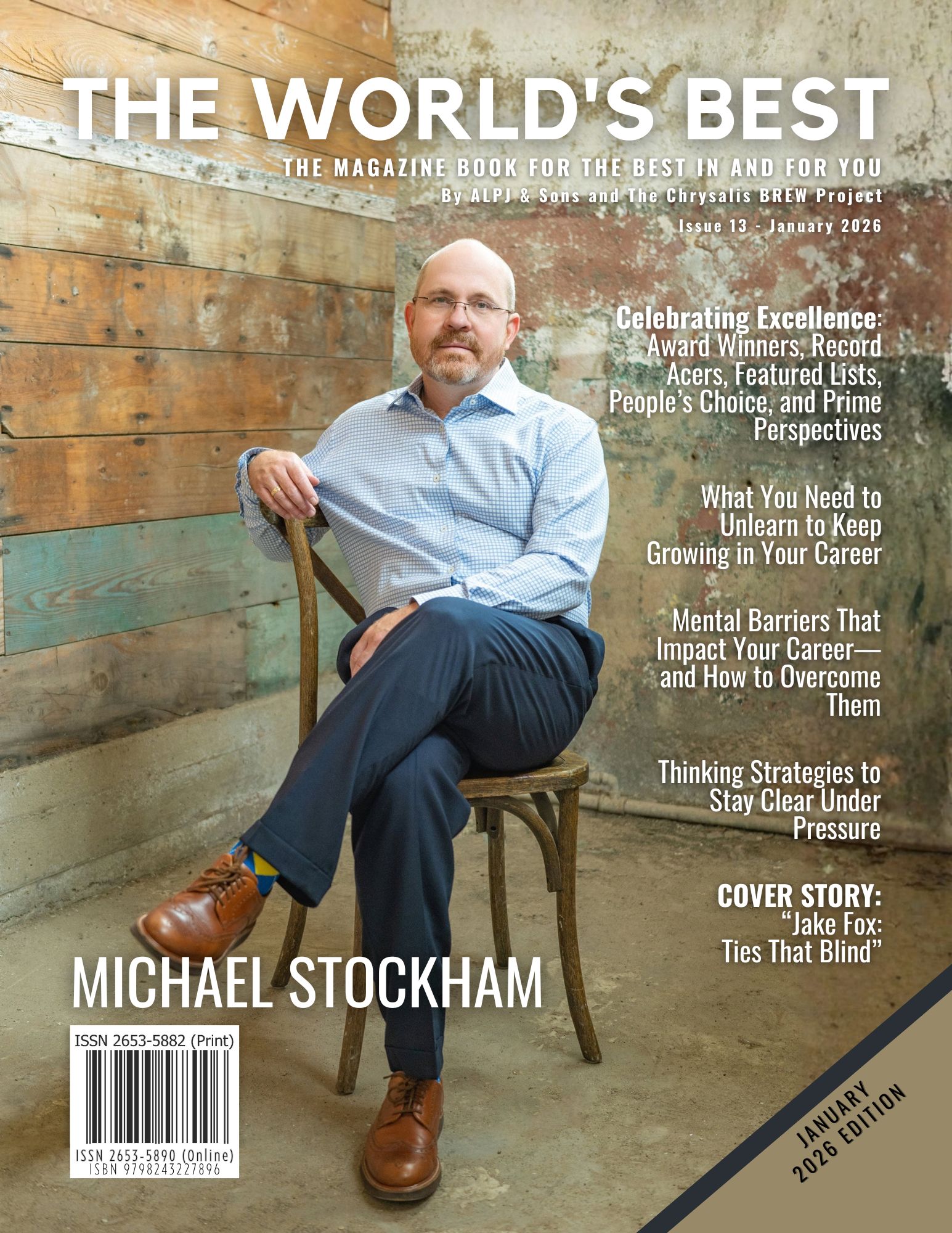
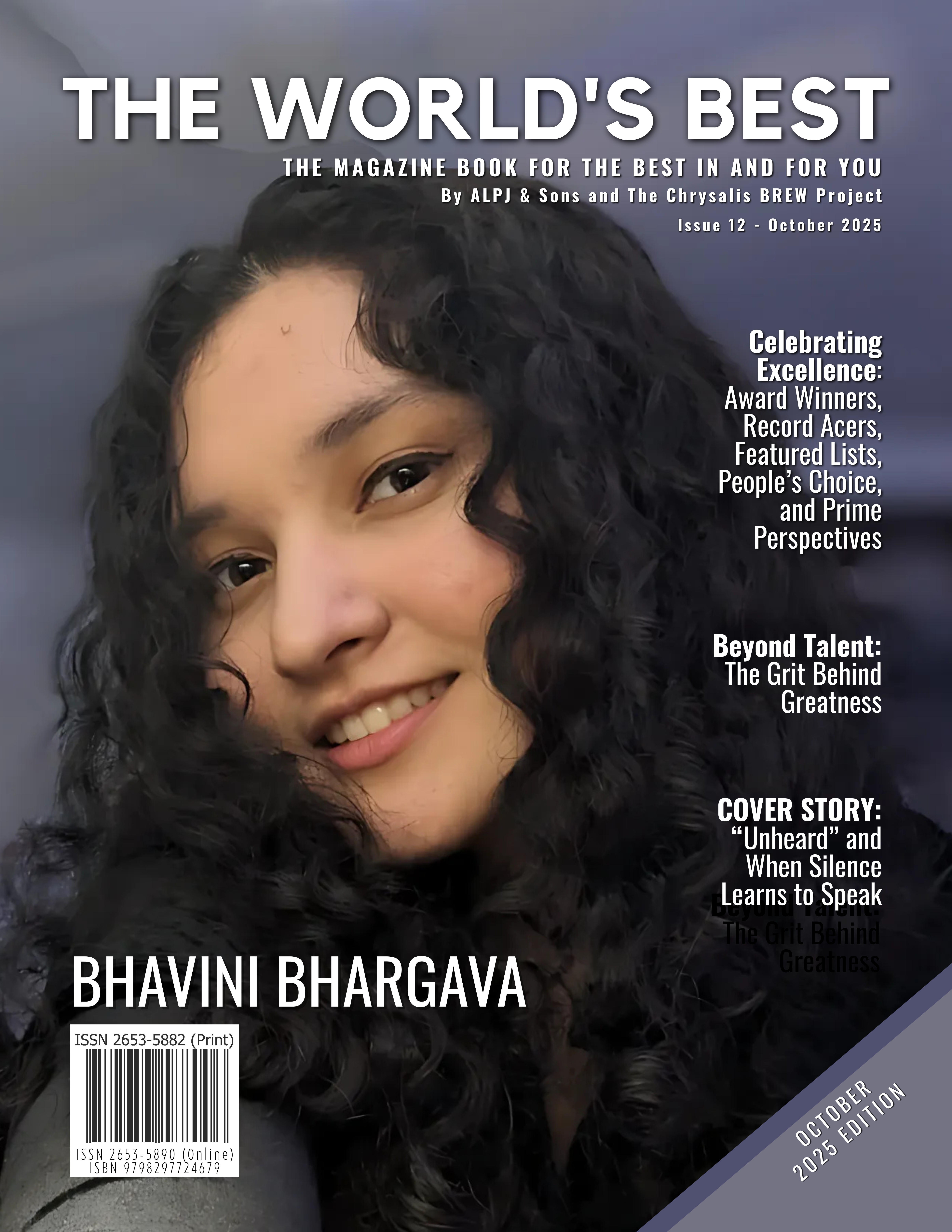

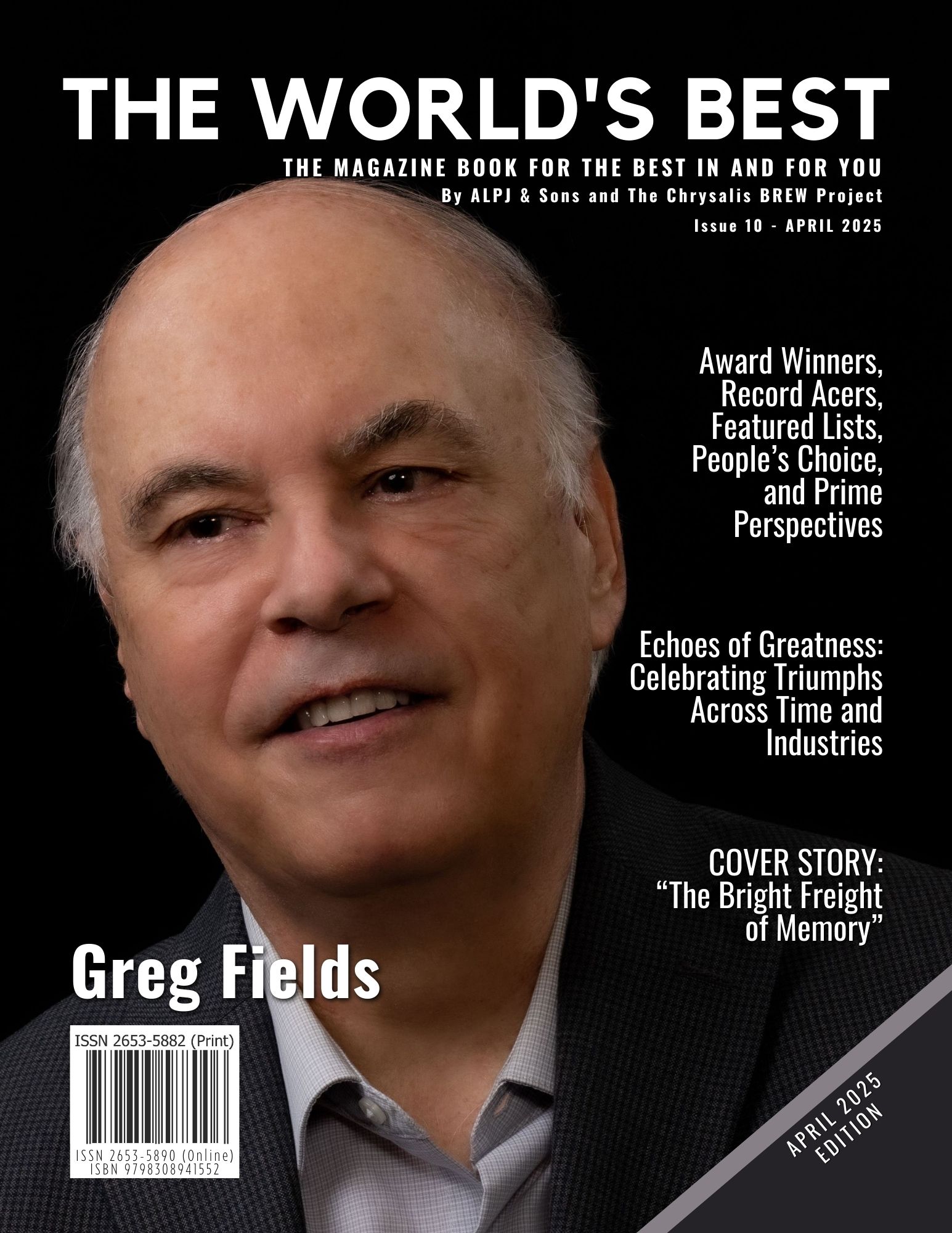
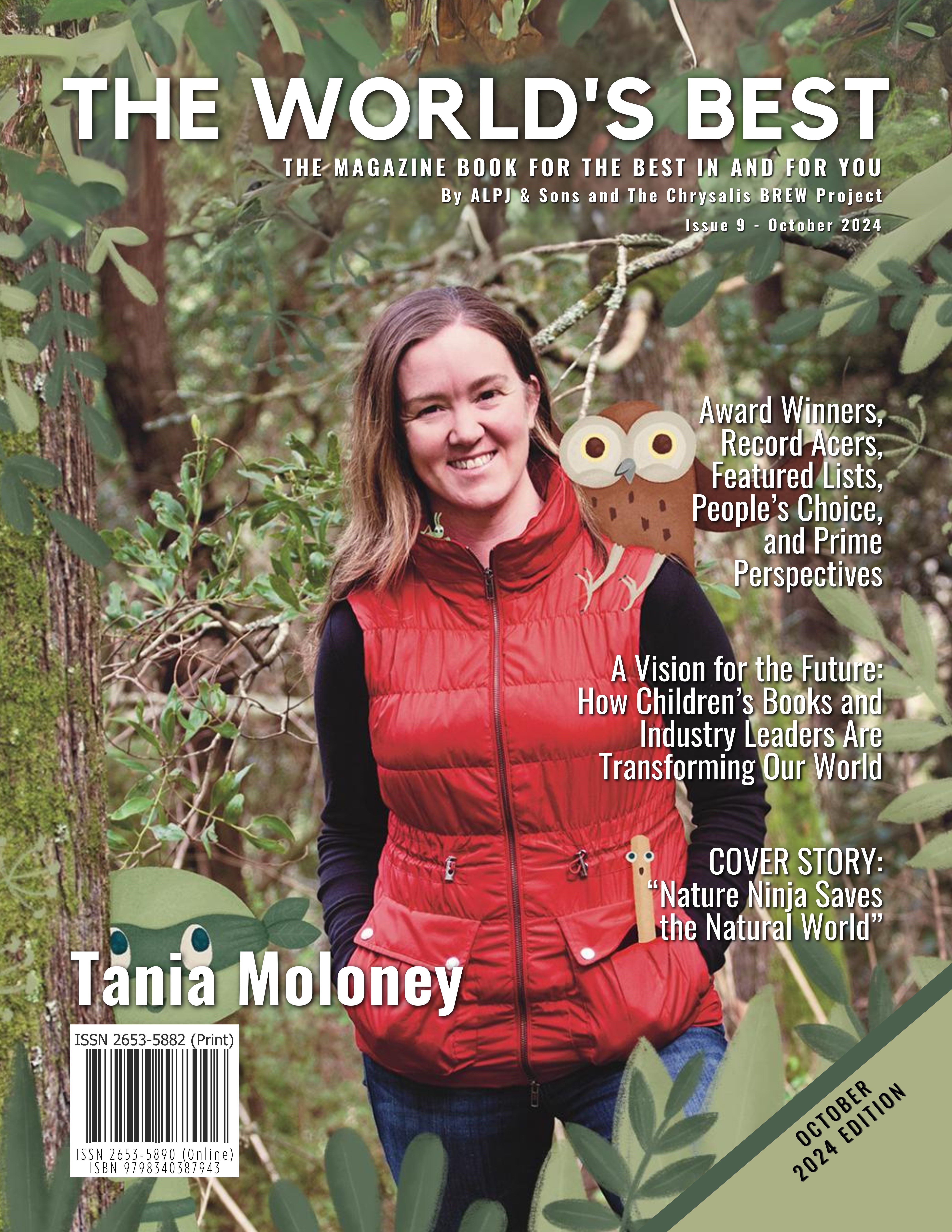





Don’t just read about greatness. Own it!

About Us
The World’s Best Magazine is a print and online publication that highlights the extraordinary. It is your passport to a universe where brilliance knows no bounds. Celebrating outstanding achievements in various fields and industries, we curate and showcase the exceptional, groundbreaking, and culturally significant. Our premier laurels, The World’s Best Awards, commend excellence through a unique process involving subject matter experts and a worldwide audience vote. Explore with us the pinnacle of human achievement and its intersection with diversity, innovation, creativity, and sustainability.
We recognise and honour the Traditional Owners of the land upon which our main office is situated. We extend our deepest respects to Elders past, present, and emerging. We celebrate the stories, culture, and traditions of Aboriginal and Torres Strait Islander Elders from all communities who also reside and work on this land.
Disclaimer: The World’s Best does not provide any form of professional advice. All views and opinions expressed in each post are the contributor’s own. Whereas we implement editorial policies and aim for content accuracy, the details shared on our platforms are intended for informational purposes only. We recommend evaluating each third-party link or site independently, as we cannot be held responsible for any results from their use. In all cases and with no exceptions, you are expected to conduct your own research and seek professional assistance as necessary prior to making any financial, medical, personal, business, or life-changing decisions arising from any content published on this site. All brands and trademarks mentioned belong to their respective owners. Your continued use of our site means you agree with all of these and our other site policies, terms, and conditions. For more details, please refer to the links below.
About | Advertise | Awards | Blogs | Contact | Disclaimer | Submissions | Subscribe | Privacy | Publications | Terms | Winners
The World’s Best: A Magazine That’s All About What’s Great | theworldsbestmagazine.com | Copyright ⓒ 2022-2026
Let’s connect
Discover more from The World's Best
Subscribe to get the latest posts sent to your email.


