
“I’ve been drawn to poetry since a very young age; it’s a natural form of self-expression for me.”
– Vinita Agrawal
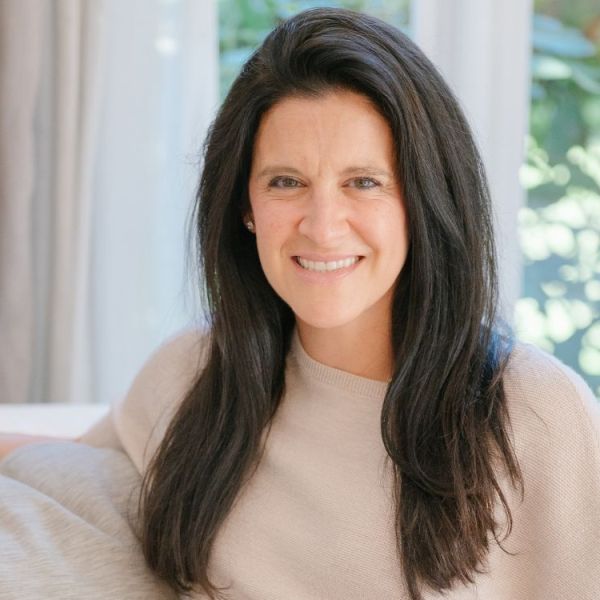
Vinita, thank you for joining this conversation. To start, could you introduce yourself, share a bit about your background, and what first drew you to poetry?
Your poem “Conversation with a Seed” was recognized with a BREW Poetry Award. What does this recognition mean to you personally and creatively?
The BREW Poetry Award for Conversation with a Seed means a lot to me. Personally, any award is a very special recognition and brings great validation for the poet. One feels accepted for what one is writing, from a global audience. I’m very grateful for this award.
Creatively, I felt more confident about the craft of writing my poems, the way I juggled language and the manner in which I approached the theme of the poem.
The poem explores the quiet interplay between self and nature. How do you approach capturing the rhythms and subtleties of the natural world in your work?
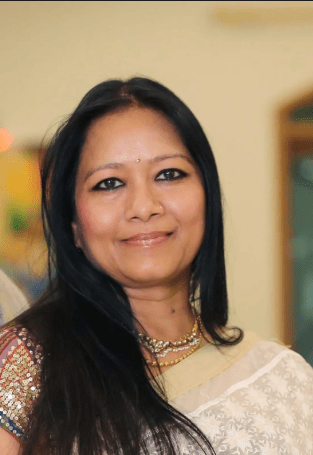
I’m essentially and fundamentally a nature person. I observe natural phenomena minutely and closely. The subtleties of the act of a seed sprouting in hard earth are nothing short of miraculous. I still remember my process of crafting this poem—personifying the seed as a resilient, tough guy, fighting against all odds to sprout that one green shoot. I decided to restrain the botanical jargon and focus more on conversational language instead. I thought doing so would make the poem more approachable.
Imagery and observation are central to your poetry. How do you choose the images that carry the emotional or philosophical weight of a poem?
I have to confess that it happens quite unconsciously. It’s not a contrived thing. Having said that, I must add here that often we are not our normal, ordinary selves when we write poems. The task of writing a poem is almost meditative. It takes us deep within ourselves. As the lines emerge, they bring with them astonishing philosophical and emotional connotations. In the second or third reading of the poem, I edit and re-edit the poem, chopping excesses and finally, after a couple of more rounds of editing, the poem begins to look the way one wants it to.
There’s a sense of patience and contemplation in this poem. How do you balance reflection with narrative or lyric movement in your writing?
That’s a wonderful observation. For me, reflection isn’t the opposite of movement; it’s a different kind of motion. I try to let the narrative or lyric impulse provide the current of the poem—the thing that carries the reader forward—while using the contemplative moments as deep pools within that current. The pause gives weight to the action, and the action gives urgency to the pause.
What milestones—whether in publication, recognition, or personal creative breakthroughs—stand out as especially meaningful in your journey so far?
The moment of receiving a mail of acceptance from a journal I hold in high esteem or one that I admire gives me a high. For my poem(s) to have made it past an accomplished editorial panel means the world to me. Awards like the Tagore Literary Prize and the Jayanta Mahapatra National Award for English Literature have also meant a lot to me. They are recognitions that stamp quality all over your work. They are really special. And thirdly, there’s the elation of being able to use language innovatively and interestingly. Honing one’s craft is a constant challenge in the journey of writing poetry. Whenever I am able to craft a special phrase or line, the moment stands out for me.
Your work often blends the physical with the metaphorical. How do you approach integrating the concrete world with abstract reflection in your poetry?
I’m glad you sensed that balance. It’s something I work on quite consciously. I often think of it in terms of rhythm and white space. The narrative or lyric movement lives in the active verbs, the enjambed lines, the forward drive of the syntax. The metaphor or the abstraction, on the other hand, happens in the caesuras, the line breaks that ask the reader to hesitate, and in the choice to focus on a single, resonant image. For example, in the poem we’re discussing, I might follow a line with a lot of narrative energy with one that focuses intensely on a single, still detail—like the way the seed exhibits a firm will to sprout and grow. That shift in focus forces a deceleration, creating the space for patience you mentioned and culminates in the concluding lines:
I am the quiet conversation / the earth repeats with light / the husk holds firm / but deep within / a green ignites.
Many readers turn to poetry for insight or grounding. What do you hope someone takes away when reading “Conversation with a Seed” or your other works?
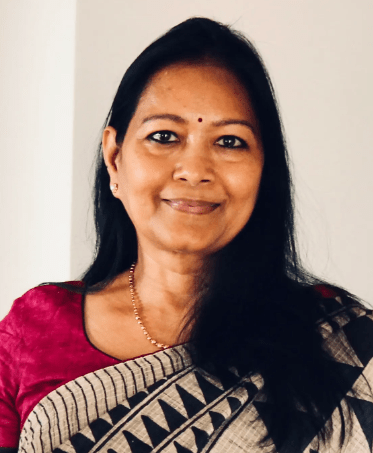
When someone reads Conversation with a Seed, or much of my other work, I hope they take away a sense of quiet alliance with resilience. We often think of strength as something loud and unyielding, but a seed’s power is its patient, silent tenacity. It holds a complete blueprint for life within its shell, waiting for the right conditions to crack itself open. I hope a reader feels that same potential within themselves—the recognition that growth often requires a period of darkness and pressure, and that the will to sprout is a powerful, innate force. I suppose I hope they feel a little less alone in their own struggles, and a little more in awe of the quiet persistence that surrounds us in nature.
I write often about the dialogues we have with the non-human world, and Conversation with a Seed is a prime example. I don’t hope the reader takes away a lesson I’ve taught them, but rather the invitation to have their own conversation. The poem is my side of the dialogue. I hope it inspires them to consider their own resilience, their own periods of being dormant, and what it means to finally break open toward the light. So, what I hope they take away isn’t an answer, but a better, more profound set of questions to ask themselves and the world.
If a reader can finish the poem and feel a sense of alliance with that process—to see their own struggles and growth reflected in the natural world—then I feel the poem has done its job. Ultimately, I hope my poetry offers not just insight, but a form of grounding: a reminder that we are part of a vast, persistent, and beautifully resilient system.
Are there recurring themes, images, or questions you find yourself revisiting in your writing, and why do they continue to resonate with you?
I find myself grappling with existential questions of love, loss, longing. I also write a lot about losing my parents and death in general. I think I’m obsessed with the moon—I use it as a metaphor in so many of my poems. Loneliness, solitude, and coming to terms with reality and what it brings to the table are other things that I write about. The reason why I ponder over these themes is because they confront us at every step of life. How can we then not try and make sense of it through the depth of poetry, through language and the power of words.
Looking forward, what themes, projects, or experiments are you most excited to explore in your poetry?
My poetry has taken a turn towards slightly more abstract themes like alchemy, transformation, and inner change. I also see it addressing current issues like Gaza, man’s desire to conquer and colonize the moon, and the phenomena of light. It’s exciting to explore these new themes alongside the old.
If you were to write your bio in your own words, what would you say? What legacy do you hope to leave?
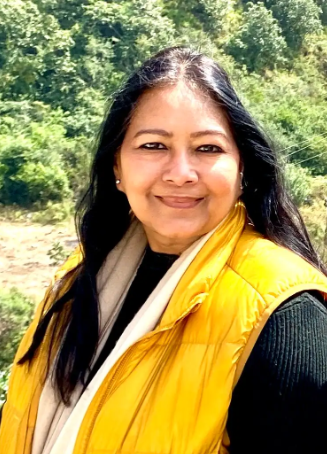
I am a collector of quiet moments. I believe in the unspoken language of kindness, the kind that sits in a shared silence or a warm cup of tea. To make sense of the whirlwind within and without, I arrange words into poetry—my map for a world that often feels too vast. I carry the echoes of my loved ones with me, a gentle presence that guides my steps.
My life is not an attempt to be extraordinary, but a quiet commitment to endure with sensitivity and to meet the world with courage and a compassionate heart, always. Life often feels like a puzzle, and I’ve found that writing poetry is my way of fitting the pieces together. I don’t believe in chasing greatness, but I do believe in the profound strength of endurance, and in refusing to let the world corrupt my values.
⭐⭐⭐⭐⭐
“The legacy I’d like to leave behind is one of humanitarian kindness, one of compassion and sensitivity.”
– Vinita Agrawal
Links
Share Your Insights
We’d love to hear your thoughts! Share your reflections in the comments:
- What themes in poetry resonate most deeply with you?
- How do you personally find resilience or grounding through art?
- Which images from nature inspire you to reflect or create?
Alignment with the UN SDGs
- SDG 4: Promotes lifelong learning through poetry.
- SDG 3: Encourages mental well-being via creative expression.
- SDG 16: Fosters peace, resilience, and compassionate dialogue.
Other Highlights

Looking for something?
Type in your keyword(s) below and click the “Search” button.
Helpful Shortcuts
More Stories









Print and Digital Magazine

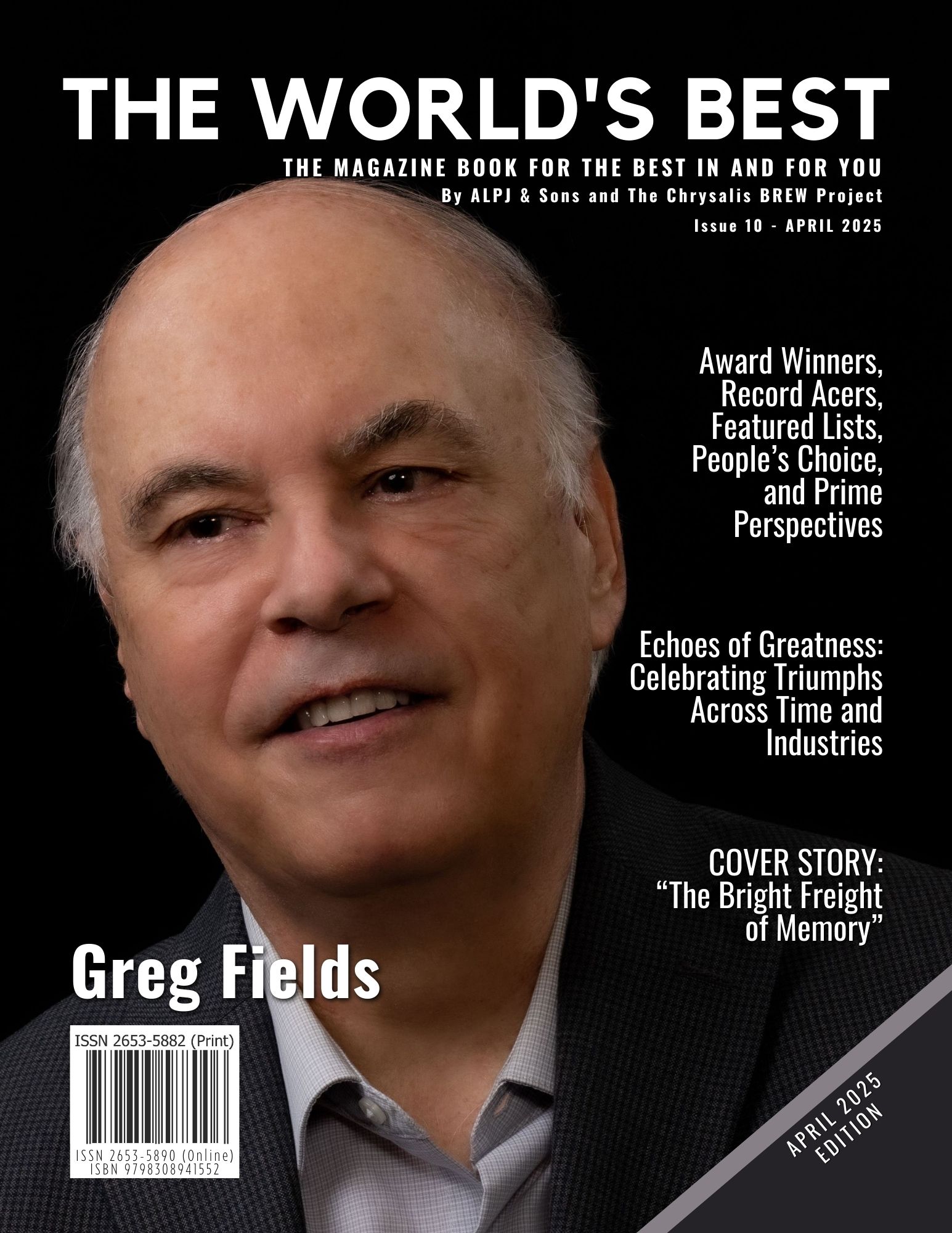
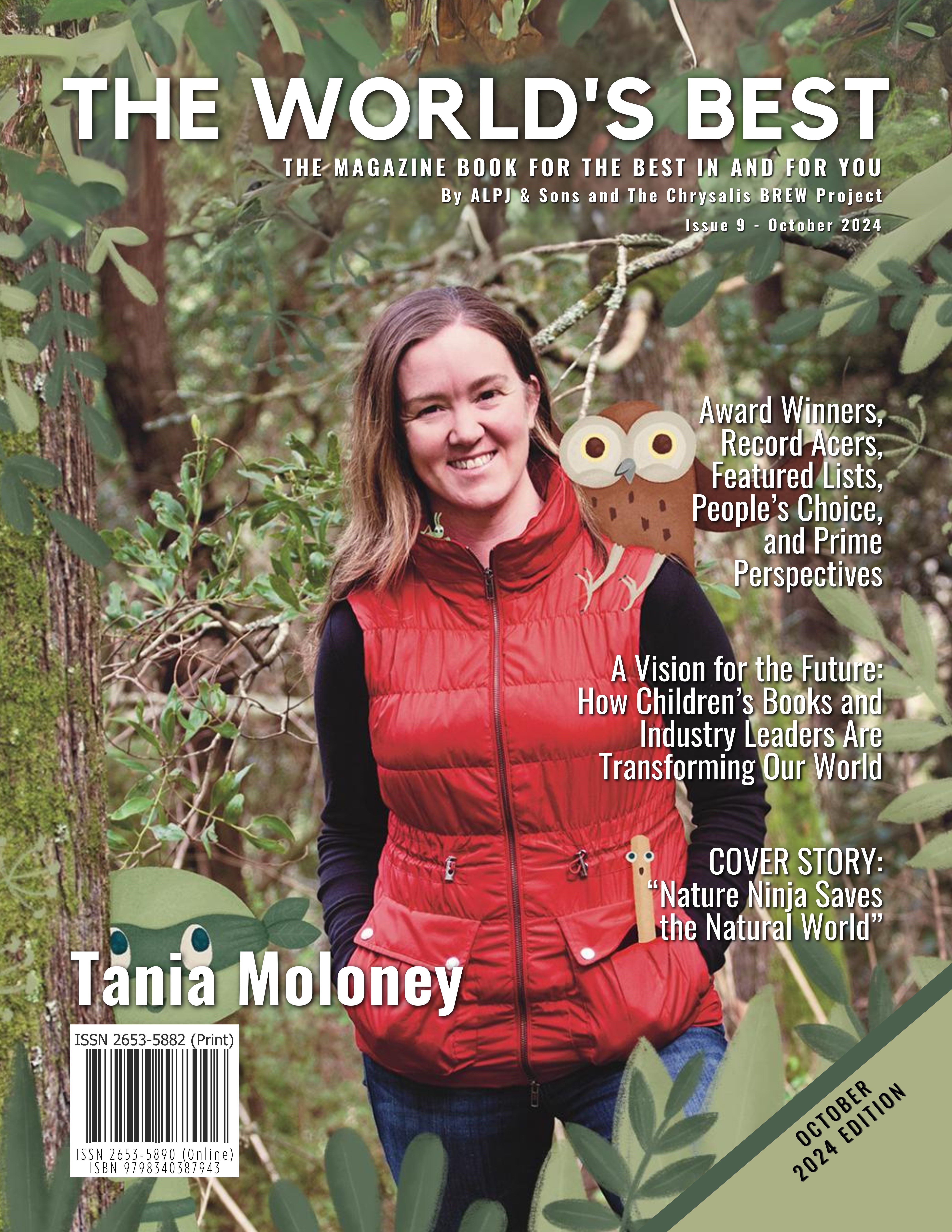

Don’t just read about greatness. Own it!

About Us
The World’s Best Magazine is a print and online publication that highlights the extraordinary. It is your passport to a universe where brilliance knows no bounds. Celebrating outstanding achievements in various fields and industries, we curate and showcase the exceptional, groundbreaking, and culturally significant. Our premier laurels, The World’s Best Awards, commend excellence through a unique process involving subject matter experts and a worldwide audience vote. Explore with us the pinnacle of human achievement and its intersection with diversity, innovation, creativity, and sustainability.
We recognise and honour the Traditional Owners of the land upon which our main office is situated. We extend our deepest respects to Elders past, present, and emerging. We celebrate the stories, culture, and traditions of Aboriginal and Torres Strait Islander Elders from all communities who also reside and work on this land.
Disclaimer: The World’s Best does not provide any form of professional advice. All views and opinions expressed in each post are the contributor’s own. Whereas we implement editorial policies and aim for content accuracy, the details shared on our platforms are intended for informational purposes only. We recommend evaluating each third-party link or site independently, as we cannot be held responsible for any results from their use. In all cases and with no exceptions, you are expected to conduct your own research and seek professional assistance as necessary prior to making any financial, medical, personal, business, or life-changing decisions arising from any content published on this site. All brands and trademarks mentioned belong to their respective owners. Your continued use of our site means you agree with all of these and our other site policies, terms, and conditions. For more details, please refer to the links below.
About | Advertise | Awards | Blogs | Contact | Disclaimer | Submissions | Subscribe | Privacy | Publications | Terms | Winners
The World’s Best: A Magazine That’s All About What’s Great | theworldsbestmagazine.com | Copyright ⓒ 2022-2026
Let’s connect
Discover more from The World's Best
Subscribe to get the latest posts sent to your email.


This is a beautifully presented and insightful interview. The introduction captures Vinita Agrawal’s poetic essence with grace, and her reflections on creativity, nature, and recognition are both humble and inspiring. You’ve highlighted her journey, her craft, and her philosophy with clarity and warmth, making the reader appreciate not just her work but the quiet depth behind it. A thoughtful and engaging piece—truly well shared.
LikeLike