
“The takeaway from my return to fiction writing is persistence; so many of us desire to be creative but have difficulty finding time and courage.”
– Michael Stockham
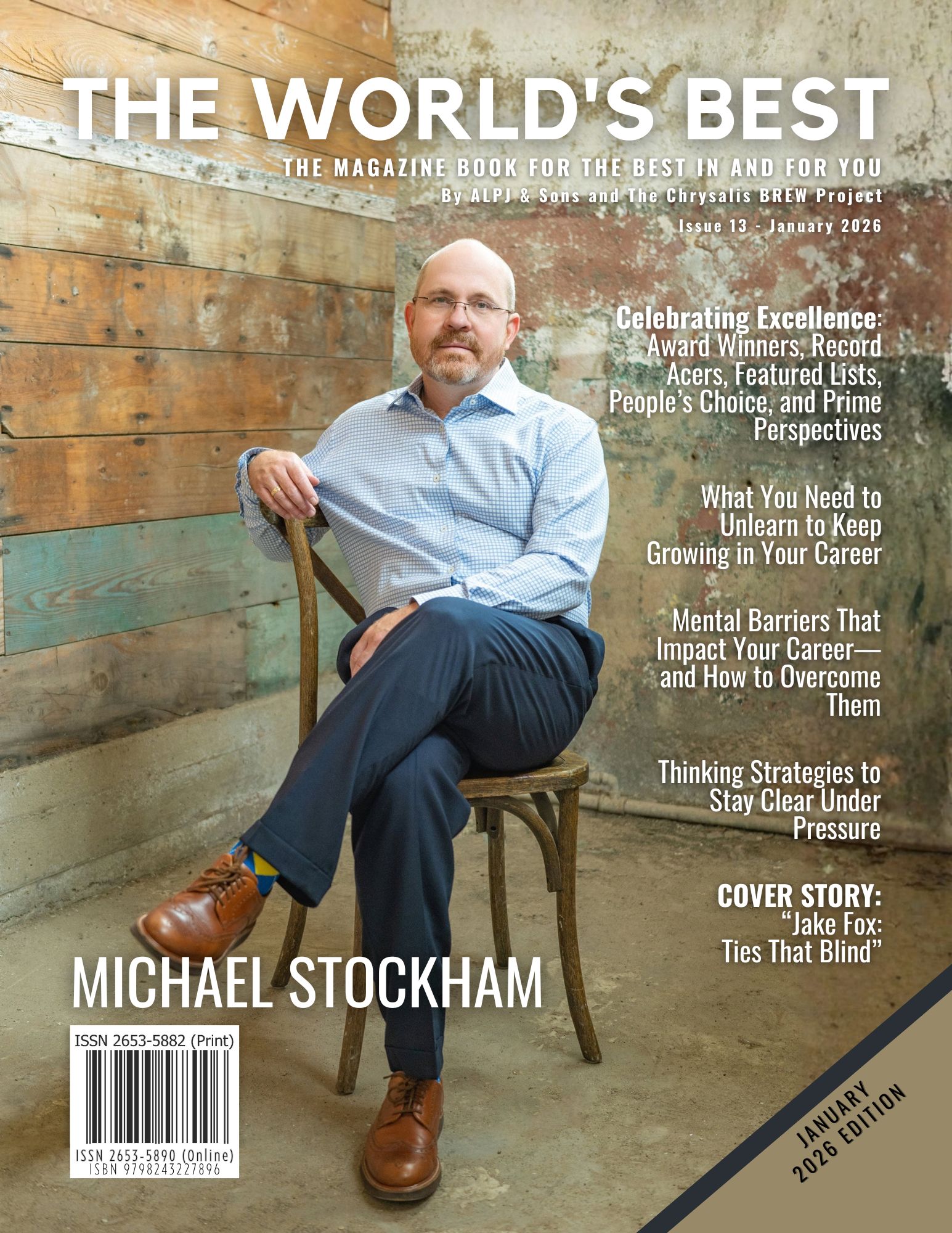
Michael, thank you for joining us. Could you start by introducing yourself, sharing a bit about what you do, and what you hope readers take from your work?
Thank you for having me, it’s a pleasure to join you. Let’s start with, I’m currently a trial lawyer at a large law firm, and I specialize in advising companies that face issues with stakeholders, the government, or internal governance. I spend most of my time with companies in crisis one way or another and counsel them on how to prioritize threats and strategize a positive path forward.
But that’s my day job. In college, over thirty years ago, I trained to write poetry and short stories. After those degrees, I wandered for years, working as a fly-fishing guide, a dishwasher, a mason’s apprentice, a technical writer, and a medical sales rep. Eventually, I went to law school and joined a law firm. Now I’ve come full circle.
The takeaway from my return to fiction writing is persistence. So many of us desire to be creative but have difficulty finding time and courage. I’ve always wanted to be a successful author, and I’m accomplishing that goal. It’s not on the original timeline I envisioned, but persistence is what caused me to reengage with writing and creativity.
Your background combines law and storytelling—two fields grounded in truth and human experience. How have your years in legal practice influenced the way you build characters and conflicts?
Great question. Creating believable, relatable characters is core to my writing. If your characters do not ring true when they confront obstacles, then the book is just a plot plodding forward. But when your characters are unique and come alive in your reader’s mind, then the story expands beyond mere events. I strive to create characters with whom the reader relates, and the audience builds relationships.
On another point, it’s not just the heroes that count. Secondary characters must come to life. Villains are also key. The most difficult character arc involves taking a villain who your readers hate and bending that character arc so the reader comes to empathize with, and maybe even root for, that villain in one way or another. It distills to the principle that villains are people too. My years practicing law have heavily influenced this empathetic streak in my writing because I’ve learned that every story has two sides and human motivations are complex, varied, and emotionally driven.
When you write about justice, redemption, and personal struggle, how do you balance realism with emotional depth without overwhelming the reader?
It’s a fine line between realism and melodrama and something front of mind as I write. For me, the key is to live within the characters as you write them. If you do not smile when you write a humorous line, then the audience won’t laugh. If you do not cry, then the audience won’t either. If the writer’s emotions are true, then the character should ring true, and truth is a strong antidote to melodrama.
What first moved you to begin writing fiction, and what keeps you committed to telling stories that explore difficult moral questions?
Writing fiction has been a lifelong passion. But the effort needed to attend law school and build a legal career required placing that passion on hold. When I acquired more time to pursue other activities, that passion reignited.
My desire to address difficult moral questions springs from curiosity and craft. I do not want to write books just to write them. I want them to be memorable—to last. To accomplish that goal requires delving into the complexity of human character and morality.
You’ve received literary recognition for your work, including one of the BREW Awards from The Chrysalis BREW Project. How did it feel to have your storytelling acknowledged in that way, and what did the recognition mean to you personally and professionally?
It makes me feel fantastic. I especially appreciate the commentary and reviews that validate what I’m seeking to accomplish through character development and character arcs and how that connects with the reader.
Many readers find your writing emotionally resonant yet grounded in authenticity. How do you approach research or life observation to ensure your stories remain true to human experience?
I engage in radical observation, always taking in the people and places around me. I also try to listen rather than talk so I can soak in the nuance. Finally, I seek to engage on some level or another with everyone I come into contact with—from a CEO client to an Uber driver to the grocery store clerk bagging groceries. If you want to write real people, it helps to study real people.
Writing often mirrors a search for understanding. Has storytelling changed how you view resilience, empathy, or your own sense of purpose?
It educates and informs my view on empathy, purpose, and resilience. Writing can be a meditation on these deeper questions about life. To write a thriller, you take ordinary people, put them in a terrible situation, and ask how you can make it worse. Then the task is to solve the situation and have your characters succeed in a believable way built on accurate human emotion and response. Exploring how those characters react and move forward can illuminate your own views on myriad subjects.
The settings in your books, such as small-town Texas, feel lived-in and familiar. How do you use place as more than backdrop—as part of the story’s moral or emotional journey?
I’ve had the privilege of living in a number of small towns, including in the Cayman Islands, New Mexico, New York, and Texas. Each location had its own character and energy, and location impacts the personality of the people who live there. It informs their beliefs, morals, and values. The task for me when I write is to blend that reality into the book’s narrative.
You’ve portrayed complex relationships between grief, redemption, and hope. What message do you want readers to carry with them after closing one of your books?
Resilience. Tragedy impacts everyone’s life to one degree or another. People die unexpectedly, jobs disappear, natural disasters change lives forever. Each of those events leaves a scar. The difficult journey is to heal and move forward. When something breaks in life, the goal is to avoid being broken by misfortune. In my characters, I want to explore that path in various ways.
Many creative professionals today seek to make their work meaningful beyond entertainment. In what ways do you think fiction can help communities or individuals reflect, heal, or connect better with one another?
Fiction allows readers to experience varied feelings, issues, and problems outside their everyday life. By doing so, it provides an opportunity for them to explore how they would react or solve the situation. That process becomes an exercise in self-reflection.

If you were to write your bio in your own words, how would you describe yourself, and what lasting impact would you like your work to have?
The most humbling impact would be for readers, decades in the future, to enjoy the books and the characters. To write something that lasts would be rewarding. For a bio, I’m happy to be thought of as a trial lawyer, author, and loyal husband, father, and friend.
⭐⭐⭐⭐⭐
“The most humbling impact would be for readers, decades in the future, to enjoy the books and the characters.”
– Michael Stockham
Links
Share Your Insights
What do you think about the connection between life experience and storytelling? Share your thoughts in the comments:
- Which character qualities make a story memorable for you?
- How do you think persistence shapes creativity in your own life?
- What lessons from fiction have influenced the way you view resilience or empathy?
Alignment with the UN SDGs
- Promotes lifelong learning and personal growth (SDG 4)
- Encourages inclusive, empathetic communities through storytelling (SDG 10)
- Highlights resilience and well-being in facing challenges (SDG 3)
Other Highlights

Looking for something?
Type in your keyword(s) below and click the “Search” button.
Helpful Shortcuts
More Stories






















Print and Digital Magazine



Don’t just read about greatness. Own it!

About Us
The World’s Best Magazine is a print and online publication that highlights the extraordinary. It is your passport to a universe where brilliance knows no bounds. Celebrating outstanding achievements in various fields and industries, we curate and showcase the exceptional, groundbreaking, and culturally significant. Our premier laurels, The World’s Best Awards, commend excellence through a unique process involving subject matter experts and a worldwide audience vote. Explore with us the pinnacle of human achievement and its intersection with diversity, innovation, creativity, and sustainability.
We recognise and honour the Traditional Owners of the land upon which our main office is situated. We extend our deepest respects to Elders past, present, and emerging. We celebrate the stories, culture, and traditions of Aboriginal and Torres Strait Islander Elders from all communities who also reside and work on this land.
Disclaimer: The World’s Best does not provide any form of professional advice. All views and opinions expressed in each post are the contributor’s own. Whereas we implement editorial policies and aim for content accuracy, the details shared on our platforms are intended for informational purposes only. We recommend evaluating each third-party link or site independently, as we cannot be held responsible for any results from their use. In all cases and with no exceptions, you are expected to conduct your own research and seek professional assistance as necessary prior to making any financial, medical, personal, business, or life-changing decisions arising from any content published on this site. All brands and trademarks mentioned belong to their respective owners. Your continued use of our site means you agree with all of these and our other site policies, terms, and conditions. For more details, please refer to the links below.
About | Advertise | Awards | Blogs | Contact | Disclaimer | Submissions | Subscribe | Privacy | Publications | Terms | Winners
The World’s Best: A Magazine That’s All About What’s Great | theworldsbestmagazine.com | Copyright ⓒ 2022-2026
Let’s connect
Discover more from The World's Best
Subscribe to get the latest posts sent to your email.


This conversation is truly inspiring and insightful. Michael Stockham’s reflections on persistence, empathy, and the interplay between law and storytelling reveal how deeply life experience can enrich fiction. I particularly appreciate his focus on creating believable characters—including villains—with emotional depth, and his emphasis on observing real people to make stories authentic. His perspective on writing as a tool for exploring resilience, morality, and human complexity is both practical and profoundly moving.
LikeLiked by 1 person