
“I help people tap into their intuition whenever they need and learn to use it alongside their logic to make better decisions, navigate challenges, improve relationships, and enhance self-care.”
– Nil Demircubuk
Editor’s Note: The views and experiences shared in this interview reflect the personal perspectives of the interviewee. They are offered for informational and reflective purposes and should not be interpreted as professional medical, psychological, or scientific advice.
Nil, thank you for joining us. Could you start by introducing yourself—what you do, the path that led you here, and what you aim to achieve through your work?
I am an intuition facilitator and certified professional coach. I help people tap into their intuition whenever they need and learn to use it alongside their logic to make better decisions, navigate challenges, improve relationships, and enhance self-care. My background is diverse—beginning with engineering, moving into economics and finance in graduate school, then working in financial technology and managing a data group at a large corporation. I also worked in the non-profit sector, running human rights awareness programs and teaching workshops on confidence and compassion.
Intuition has always held a special place in this varied background, especially after a life-altering event that brought moments of deep mental and emotional peace. During these experiences, I discovered that I often came up with creative ideas and solutions to long-standing problems. Curious about this process, I began researching intuition. I studied with various teachers, completed an apprenticeship, and read every book and scientific study on intuition I could find. I started offering intuitive guidance sessions and eventually developed my own approach to help clients access their intuition more effectively. As more people joined as students, I created a curriculum that later became the foundation of my book, Down to Earth: Demystify Intuition to Upgrade Your Life, published on September 15, 2025.
Many people see intuition as abstract or mystical. How do you explain it in a way that connects with everyday reasoning and evidence-based practice?
Intuition is a form of knowing or a sensation we get about something or someone without any prior conscious thought process. It draws on the knowledge and experiences we accumulate throughout our lives. Several scientific studies have demonstrated the existence of intuition and our ability to tap into this resource. I discuss some of this research in my book, including the matrix scanning experiment conducted by Lewicki and colleagues and the word triad puzzles studied by Bowers and later by Bolte and colleagues. In these experiments, participants were able to solve puzzles based on intuitive insights such as pattern recognition, yet they could not explain how they arrived at the solutions because their reasoning occurred outside conscious awareness.
You have an academic and corporate background that seems far removed from the intuitive field. How have these earlier experiences shaped your current approach?
My background contributed to my curiosity about intuition and allowed me to approach it as a research topic, much like writing another academic dissertation. The scientific studies I read convinced me that intuition is a superpower we all possess—one that needs to be practiced regularly and integrated with logic and other forms of input.
How do you help people distinguish between genuine intuitive insights and biases or impulses that only feel intuitive?
I show my clients and students that they can intentionally tap into their intuition by first priming themselves. The concept of priming was inspired by one of the word triad puzzle studies conducted by Bolte and colleagues in 2003. They found that participants were able to solve the puzzles intuitively when they were primed to be in a positive mood. Research such as Dijksterhuis and Nordgren’s unconscious thought theory also showed that participants made better intuitive choices when their conscious thinking was distracted by other tasks.
Based on these studies, I help my clients and students prime themselves for intuition by calming their minds and emotions. Each person responds to a different type of priming. For some, taking a quiet walk in nature does the trick; for others, mindlessly playing a computer game helps them achieve that same calm. When they practice accessing intuition on demand after priming, they notice how calm intuitive insights feel compared to emotionally charged biases. I also encourage them to prime again and ask their intuition the same question. If the idea or answer they originally received truly came from intuition, it typically remains consistent. In contrast, impulses or emotionally driven thoughts tend to fade or change upon revisiting.
Your work often bridges disciplines—from psychology and neuroscience to reflective exercises. What challenges have you faced in translating research findings into practical tools for readers and clients?
I relied on my intuition for some exercises and parts of the curriculum I created. I also thought about it extensively, logically analyzing how specific tools might work and whether people would respond well to them. The process also required experimentation. Thankfully, I had clients and students who were open to trying various versions of my intuition exercises, and we learned together about what worked best.
The book recently earned international recognition, including the BREW Seal of Excellence and the Global Spines Book Award, and was shortlisted for the BREW Readers’ Choice Award. What does this recognition represent for you personally and professionally?
I feel honored to receive these awards and am deeply grateful. I poured a lot of thought, intuition, logic, and heart into writing and publishing my book, and I’m very happy that it was reviewed with such care. It means a lot to know that all the effort that went into crafting it was appreciated. I hope these awards help the book gain more recognition, reach more people, and inspire them to use their intuition in daily life to improve their well-being.
You often encourage people to “listen, but verify.” How does that mindset apply to leadership, creativity, or problem-solving in complex environments?
As a leader, it is very important to be aware of risks and account for them. Sometimes intuition can warn you of potential dangers, and other times it can nudge you to take risks for greater rewards. I think of intuition as a wise friend—you can listen to what this friend says and consider it, but whether you act on their advice should always depend on what your other inputs suggest and how costly it would be if the outcome were unfavorable. Other inputs include your logical analysis and, when relevant, expert opinions and research.
Your methods emphasize personal awareness and social responsibility. How do you see intuitive development supporting areas like community well-being, sustainability, or ethical decision-making?
When we practice tapping into our intuition about people, we gain a deeper understanding of their emotions and motivations. Through this understanding, we can connect more deeply and cultivate greater compassion. A community built on deeper connections fosters respect for differing opinions and can coexist peacefully despite its differences. This also contributes to sustainability, as such a community can more easily unite around common causes, such as caring for the environment. Likewise, a compassionate and connected community is more likely to make ethical decisions since its members truly consider the impact of their choices on others.
How do you ensure that your teaching remains inclusive and accessible for people with different backgrounds, belief systems, or learning styles?
In my book and in my practice, I am always mindful of each person’s uniqueness and strive to adapt my teachings, tools, techniques, and exercises to different preferences, backgrounds, learning styles, and belief systems. You can see an example of this in the way I present priming—the process of calming emotions and conscious thoughts to prepare for tapping into intuition. I include many options that can work for different people. For some, meditating does the trick, while for others, going for a run or even mindlessly playing a computer game can help achieve that same calmness of mind and emotion.
Many readers found your practical exercises—such as journaling, mindfulness, and the “Golden Leaves” meditation—memorable. How did you design these to move from reflection to measurable change?
In many cases, my exercises and guided meditations were inspired by a student or client based on what they needed to tap into their intuition for a specific situation. I then tried these exercises with other students and clients, and if many of them responded well, I included them in my book. I also used the slow intuition method that I discuss in the final chapter. This type of intuition is activated when you take a break from trying to solve a problem or generate an idea and engage in a priming activity to calm your mind and emotions.
In many cognitive science studies, this break is known as the incubation period. Researchers such as Kenneth Gilhooly have described the nonconscious processing that occurs during these periods—that’s intuition in action. Ideas and solutions often surface when you take priming breaks from conscious effort. Some of the exercises in my book were inspired during such breaks when I paused my conscious thinking about how to incorporate a teaching.
If you were to write your bio in your own words, what would you say? What legacy do you hope to leave?
I am an intuition facilitator and coach. I hope my work will show people around the world that everyone has intuition and can learn to tap into it whenever they choose and combine it with logic and other forms of input to make more grounded decisions, understand each other more deeply, and take better care of themselves. I also hope that as people connect more with their intuition and therefore understand themselves and each other better, they can cultivate greater compassion for themselves and for others, and the world naturally becomes a better place.
⭐⭐⭐⭐⭐
“I hope that as people connect more with their intuition and therefore understand themselves and each other better, they can cultivate greater compassion for themselves and for others, and the world naturally becomes a better place.”
– Nil Demircubuk
Links
Share Your Insights
We’d love to hear your thoughts! Share your perspective in the comments:
- Have you ever trusted your intuition in a decision? What happened?
- How do you balance intuition with logic in your daily life?
- What practices help you stay more self-aware and connected to your inner guidance?
Alignment with the UN SDGs
- SDG 3 (Good Health & Well-being): Promotes mental and emotional well-being through self-awareness and intuitive practices.
- SDG 4 (Quality Education): Encourages lifelong learning and personal development.
- SDG 16 (Peace, Justice & Strong Institutions): Fosters compassion, ethical decision-making, and harmonious communities.
Other Highlights

Looking for something?
Type in your keyword(s) below and click the “Search” button.
Helpful Shortcuts
More Stories













Print and Digital Magazine
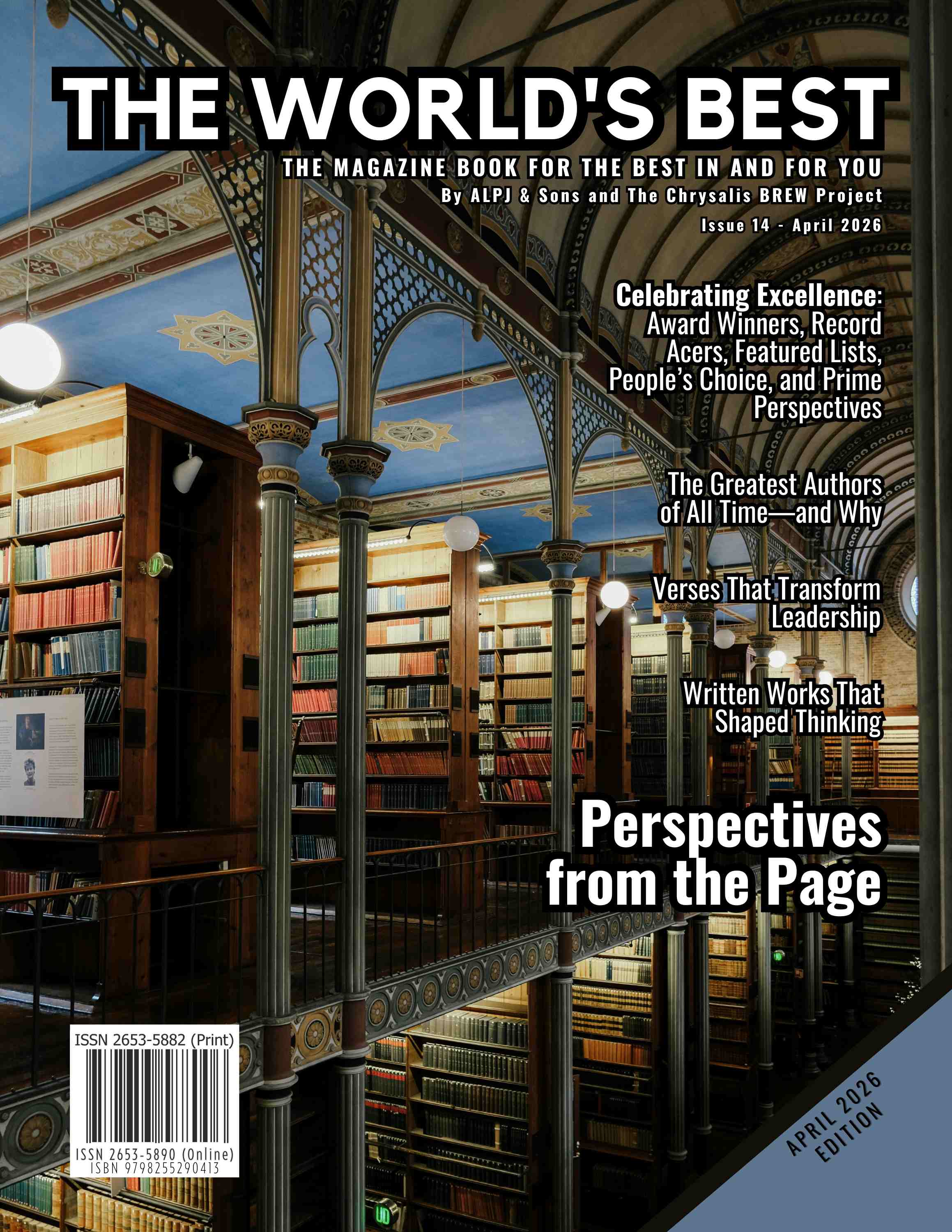

Don’t just read about greatness. Own it!

About Us
The World’s Best Magazine is a print and online publication that highlights the extraordinary. It is your passport to a universe where brilliance knows no bounds. Celebrating outstanding achievements in various fields and industries, we curate and showcase the exceptional, groundbreaking, and culturally significant. Our premier laurels, The World’s Best Awards, commend excellence through a unique process involving subject matter experts and a worldwide audience vote. Explore with us the pinnacle of human achievement and its intersection with diversity, innovation, creativity, and sustainability.
We recognise and honour the Traditional Owners of the land upon which our main office is situated. We extend our deepest respects to Elders past, present, and emerging. We celebrate the stories, culture, and traditions of Aboriginal and Torres Strait Islander Elders from all communities who also reside and work on this land.
Disclaimer: The World’s Best does not provide any form of professional advice. All views and opinions expressed in each post are the contributor’s own. Whereas we implement editorial policies and aim for content accuracy, the details shared on our platforms are intended for informational purposes only. We recommend evaluating each third-party link or site independently, as we cannot be held responsible for any results from their use. In all cases and with no exceptions, you are expected to conduct your own research and seek professional assistance as necessary prior to making any financial, medical, personal, business, or life-changing decisions arising from any content published on this site. All brands and trademarks mentioned belong to their respective owners. Your continued use of our site means you agree with all of these and our other site policies, terms, and conditions. For more details, please refer to the links below.
About | Advertise | Awards | Blogs | Contact | Disclaimer | Submissions | Subscribe | Privacy | Publications | Terms | Winners
The World’s Best: A Magazine That’s All About What’s Great | theworldsbestmagazine.com | Copyright ⓒ 2022-2026
Let’s connect
Discover more from The World's Best
Subscribe to get the latest posts sent to your email.

 The World's Best
This is a fascinating and deeply insightful interview that beautifully bridges the gap between science, intuition, and lived experience. 🌿✨ Nil Demircubuk’s thoughtful reflections illuminate intuition not as something mystical or vague, but as a real, trainable human skill grounded in both evidence and self-awareness.
Her journey—from engineering and economics to intuition facilitation—is nothing short of inspiring. It shows how curiosity, discipline, and compassion can merge to create a holistic understanding of how we think, feel, and make decisions. The way she connects neuroscience, mood priming, and emotional regulation to intuitive clarity is especially powerful—it gives readers practical, research-backed ways to access their own inner wisdom.
LikeLike