
“Writing is the only thing that stayed with me through all the shifts and changes.”
– Devashish Makhija
Devashish, thank you for joining this conversation. To begin, could you introduce yourself, share a bit about your background, and what draws you to working across so many creative forms?
I love writing. I love it more that writing can be done in so many forms and across so many mediums. I’ve leap-frogged many professions in my life because I couldn’t ever find the one thing I wished to dedicate my life to. Writing is the only thing that stayed with me through all the shifts and changes. It was a default then that I now find myself having written poetry, short stories, novels, film, children’s books, et al almost simultaneously all these years.
Your poem Between the Spider received recognition in the BREW Poetry Awards. What does this acknowledgment mean to you at this stage of your career?
Poetry, especially in English in India, is being read less and less every passing year. To have a poem’s existence acknowledged and then recognized this way is a puff of wings beneath a poet’s wings.
The poem explores breath, silence, and intimacy with striking imagery. How do you approach capturing the ineffable in language?
Poetry, of all the mediums of language-based expression, is arguably the one that intrinsically allows the ineffable. In fact, without the ineffable poetry may not be poetry. I turn to this medium for exactly this – to not have to curl my wings in, but instead spread them as far and wide and explore the intimate and the expansive in ways the other mediums I work in cannot allow.
You’ve published novels, short stories, poetry collections, and children’s picture books, alongside making award-winning films. How do these different mediums influence one another in your creative process?
They probably do but I try to not be too self-conscious of how they do. It is perhaps my filmmaking that makes my poems more visual? It is perhaps my poetry that seeps into my fiction filmmaking and prose writing, imparting it some signature that audiences and readers have brought to my attention. Most of my children’s picture books are in verse. Perhaps that is why most of my poetry is blank (free) verse because I fulfill some need for rhyme in my kid-lit?
Your poetry often draws from the sensory and the surreal. What inspires you most when shaping imagery in verse?
In most of my other writing work my primary impulse is socio-political. I’m often driven by my rage against the ‘machine’ when I write prose or film. My poetry is my response to the beauty in the world… to the art that moves me, to the music, the flowers, the beasts, the birds, colours, sounds, kindness, love, ache, desire. And most of these inhabit my mind as images which I pull at, play with, juggle, bounce, and reshape into verse.
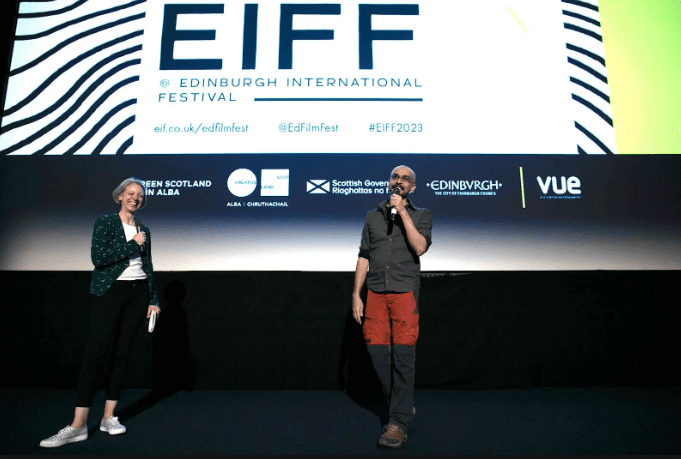
Looking back, what milestones—whether in literature, film, or recognition—have felt most defining in your creative journey so far?
Strangely my so-called failures. When I couldn’t decide what to dedicate my life to I switched from defence to engineering to economics to management to journalism to advertising in under 4 years, abandoning them all finally. What kept me together was precisely my confusion which I tried to make sense of through writing poetry, sketching, photography.
When I finally pursued cinema I had a decade when countless films I tried to find funding for started and stopped at different stages of production. Through all of that – desperate to express myself – I turned to other mediums. My poetry collections (Bewilderness), a solo gallery art show (Occupying Silence), an anthology of short stories (Forgetting), a young-adult novel (Oonga), and several children’s picture books were a result of that. Perhaps that then defined me?
You’ve worked with themes that range from deeply personal to socially resonant. How do you decide which stories or emotions belong in a poem versus a film or another form?
It’s impossible to. Many of my themes and ideas and materials take form multiply. I often explore the same preoccupations with different tools in different mediums. It’s not a conscious endeavour. I’ve only recognized this in retrospect. A scene in a film has resonance with a poem I wrote years earlier. A short story morphs and shape-shifts into a feature-length film years after.
What role do discipline and routine play in sustaining your multi-faceted creative practice?
Discipline scares me. I write all the time, perhaps every day, but not as a matter of routine. I have to make sense of the thousand things bouncing around inside my head. I can only do that by writing. And then it is the writing that shows me what those thoughts can be shaped into. As a result I surprise myself sometimes by turning out a screenplay or a children’s picture book when what I set out to do was write a poem!
Readers and audiences often experience art as a mirror. What do you hope someone encountering your poetry for the first time might take away from it?
Questions. I hope I make my readers/audiences feel like asking questions of all the things we have taken for granted about ourselves and our world. I hope to leave them with the same curiosity and restlessness that drives me to write in the first place.
Looking ahead, are there new themes, stories, or creative experiments you’re excited to pursue?
I’m dedicating more and more of myself to children’s picture books. The world is going through a dark, grim time. I write for children in a way to speak to myself… to keep the light from being snuffed out within me. My themes even in my children’s picture books hold up a mirror to what we have become/are becoming. But I present those with either a tongue-in-cheek lightness or a warmth that my other writing doesn’t ask for. I look forward to these.
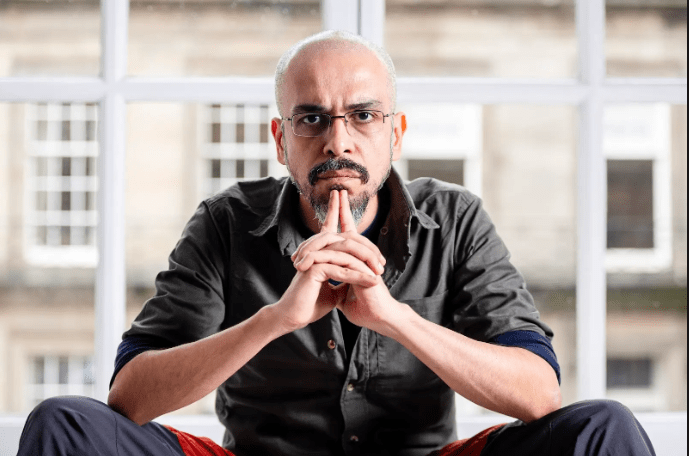
If you were to write your bio in your own words, what would you say? What legacy do you hope to leave?
his parents gave devashish makhija his name
pure chance gave him his nationality
no one asked him if he wanted the religion he got
the system gave him an education
and then proceeded to make it null and void when he stepped out into the real world
the only thing he got to choose in his life are his words
so he likes to choose them carefully.
⭐⭐⭐⭐⭐
“The only thing I got to choose in my life are my words—so I like to choose them carefully.”
– Devashish Makhija
Links
- Know more about the BREW Book, Blog, and Poetry Awards here
Share Your Insights
We’d love to hear your thoughts on this conversation.
- What role does writing or art play in your own life?
- Which part of Devashish’s reflections resonated most with you?
- How do you find light or inspiration during challenging times?
Alignment with the UN SDGs
- SDG 4 (Quality Education): Promotes literature, poetry, and children’s books as tools for learning.
- SDG 16 (Peace, Justice & Strong Institutions): Encourages critical reflection and questioning societal norms through art.
- SDG 3 (Good Health & Well-being): Highlights creativity as a way to cope with challenges and nurture emotional resilience.
Other Highlights

Looking for something?
Type in your keyword(s) below and click the “Search” button.
Helpful Shortcuts
More Stories



Print and Digital Magazine
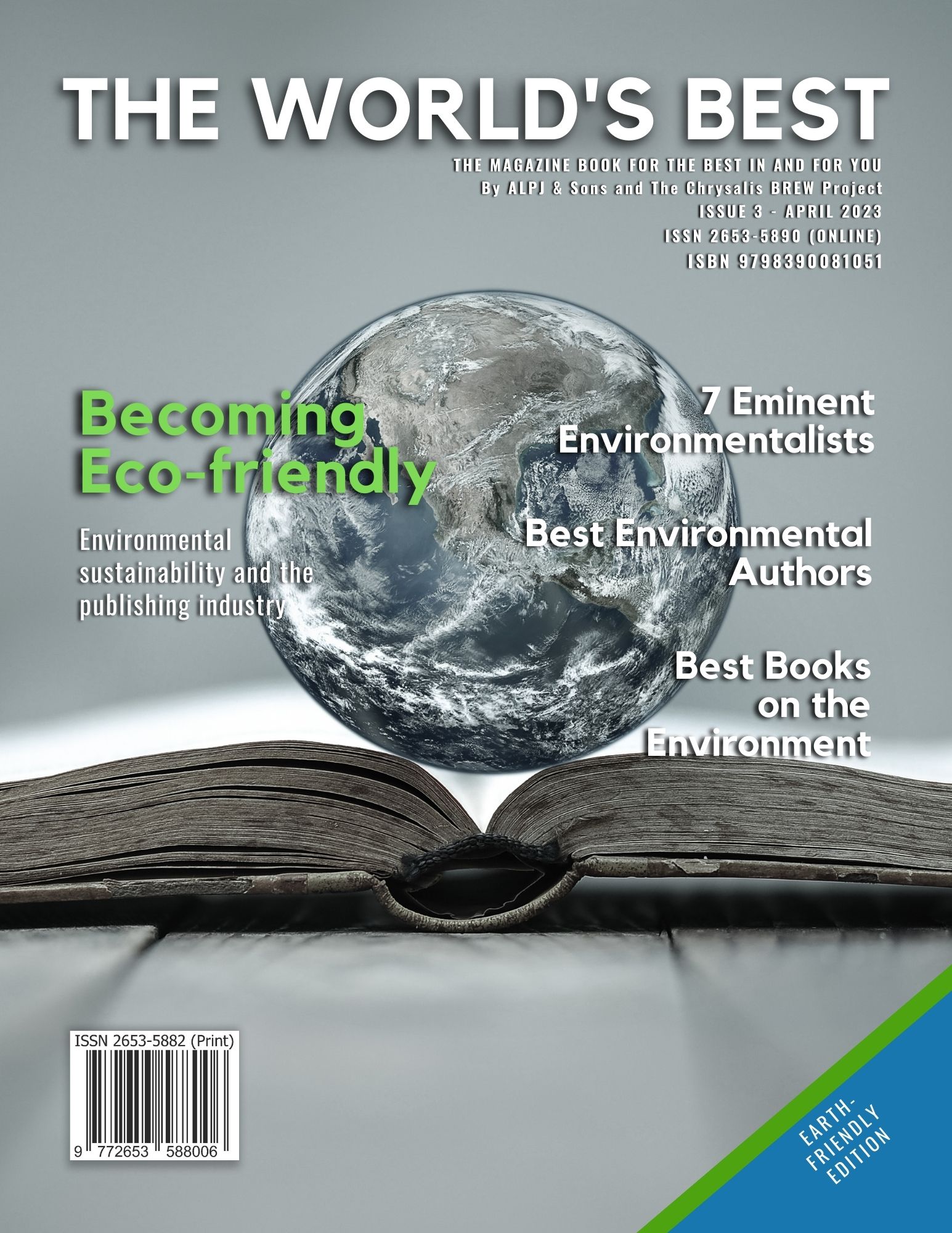

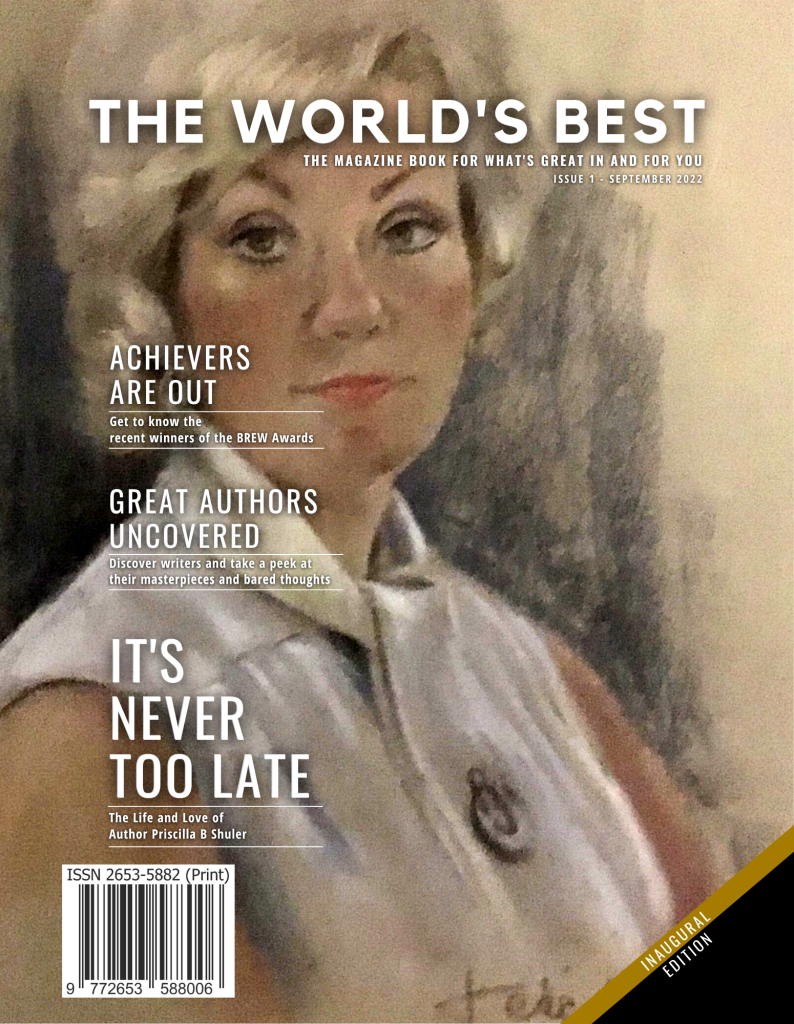
Don’t just read about greatness. Own it!

About Us
The World’s Best Magazine is a print and online publication that highlights the extraordinary. It is your passport to a universe where brilliance knows no bounds. Celebrating outstanding achievements in various fields and industries, we curate and showcase the exceptional, groundbreaking, and culturally significant. Our premier laurels, The World’s Best Awards, commend excellence through a unique process involving subject matter experts and a worldwide audience vote. Explore with us the pinnacle of human achievement and its intersection with diversity, innovation, creativity, and sustainability.
We recognise and honour the Traditional Owners of the land upon which our main office is situated. We extend our deepest respects to Elders past, present, and emerging. We celebrate the stories, culture, and traditions of Aboriginal and Torres Strait Islander Elders from all communities who also reside and work on this land.
Disclaimer: The World’s Best does not provide any form of professional advice. All views and opinions expressed in each post are the contributor’s own. Whereas we implement editorial policies and aim for content accuracy, the details shared on our platforms are intended for informational purposes only. We recommend evaluating each third-party link or site independently, as we cannot be held responsible for any results from their use. In all cases and with no exceptions, you are expected to conduct your own research and seek professional assistance as necessary prior to making any financial, medical, personal, business, or life-changing decisions arising from any content published on this site. All brands and trademarks mentioned belong to their respective owners. Your continued use of our site means you agree with all of these and our other site policies, terms, and conditions. For more details, please refer to the links below.
About | Advertise | Awards | Blogs | Contact | Disclaimer | Submissions | Subscribe | Privacy | Publications | Terms | Winners
The World’s Best: A Magazine That’s All About What’s Great | theworldsbestmagazine.com | Copyright ⓒ 2022-2026
Let’s connect
Discover more from The World's Best
Subscribe to get the latest posts sent to your email.

 The World's Best
Devashish Makhija’s reflection beautifully captures the essence of artistic agency. In a world where so much is predetermined, his belief that words are the one realm of true choice is profoundly resonant. His commitment to using language with care transforms writing into both an act of resistance and a declaration of freedom.
LikeLike