
Books have long been regarded as windows into other worlds, offering insights into human nature, culture, and the complexities of life. In fact, reading a compelling narrative is known to improve cognitive abilities, increase empathy, and broaden perspectives. According to neuroscientific studies, stories activate the brain’s sensory areas, enhancing our ability to understand and connect with others. As acclaimed author C.S. Lewis once said, “We read to know we are not alone.” The books that stand the test of time do so not only because of their storytelling prowess but because they resonate with universal truths, emotions, and experiences.
Scout’s Perspective Challenges Society in Mockingbird
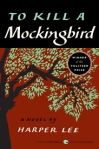
One of the greatest storytelling novels, in my view, is “To Kill a Mockingbird” by Harper Lee. Its narration feels intimate and moving, weaving themes of fairness, ethics, and humanity through the perspective of Scout, a young narrator. The framework of the story seamlessly blends innocence with a deep examination of societal shortcomings, making it both captivating and reflective.
For someone like me, who values tales that challenge viewpoints while remaining rooted in profoundly human experiences, this novel resonates on multiple levels. The characters seem vivid, their challenges and transformations leaving a lasting impression. It’s a narrative that prompts you to think not just about society but also about your personal principles. To me, it’s an enduring work of art that continues to inspire and teach with each reading.
Valentin Radu, CEO & Founder, Blogger, Speaker, Podcaster, Omniconvert
Holden’s Voice Captivates in Catcher
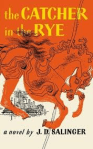
Regarding unforgettable storytelling and structure, I’d say “The Catcher in the Rye” by J.D. Salinger stands out as one of the world’s best. It’s a book that transcends the typical coming-of-age story. The way Salinger captures the voice of Holden Caulfield is unlike anything you see in literature–it’s raw, unapologetic, and relatable. What makes it truly brilliant is how the story’s structure mirrors Holden’s fragmented, chaotic, and deeply introspective mental state. It’s as if you’re experiencing the world through his lens, and in doing so, you get lost in his journey while still understanding the larger themes of identity, loneliness, and alienation.
The narrative keeps you hooked not because of some grand plot, but because of Holden’s voice. You get the sense that he’s speaking directly to you, opening up his world incredibly personally. The book stays with you long after you finish it–both for its emotional depth and its masterful way of making you feel something so profound about being human. In short, “The Catcher in the Rye” is a perfect example of how the power of storytelling can leave an indelible mark.
James Parsons, CEO, Content Powered
Glass Castle Mirrors Chaos and Redemption

“The Glass Castle” by Jeannette Walls stands out to me as the best narrative book. Its storytelling is raw, powerful, and unforgettable. What moves me most is how she navigates extreme childhood dysfunction without turning the story into just trauma for trauma’s sake. Her structure, bouncing between past and present, mirrors the emotional whiplash many people feel when their homes don’t feel safe or settled. That sense of living in chaos, feeling overwhelmed, and yearning for order hits close to home for a lot of the clients I work with.
At Revive My Spaces, we often walk into rooms that tell their own story: stacked boxes from a cross-country move five years ago, a laundry chair that never had a chance to be a chair, toys that outgrew the kids but never left the house. There’s this quiet, internal chaos people carry that shows up in physical form. That’s why Walls’ memoir resonates so deeply; it reminds us that what’s behind the clutter is often an untold story, not laziness or lack of care.
I started this business because I wanted to help people reclaim their space and their narrative. We’ve worked in over 50 homes now, and I’ve seen firsthand how the emotional weight of a disorganized home can hold someone back. One client, a mom of three, told me after we cleared her basement, “I feel like I can breathe again.” That stuck with me. It’s not just about clear surfaces; it’s about clarity of mind, the ability to function, and the freedom to enjoy your home.
“The Glass Castle” shows that even in mess, there’s meaning. But in real life, we get to choose when the mess ends. Helping people rewrite their home story from chaos to calm is why I do what I do.
Lauren Hammer, Founder & Lead Organizer, Revive My Spaces
The Road Strips Storytelling to Its Core
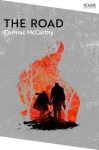
For me, it’s “The Road” by Cormac McCarthy. It’s haunting and bleak, sure, but what makes it unforgettable is its raw, stripped-down storytelling. There’s barely any punctuation, no chapters, no names–just a father and son trying to survive in a burned-out world. But in that simplicity, McCarthy delivers something compelling. Every word feels intentional, every moment between the characters feels earned. It’s a masterclass in narrative structure because it breaks many rules and still hits harder than anything I’ve read. What sticks with me isn’t the dystopia; it’s the quiet love and fierce protectiveness between the father and son. In real estate, I meet people at substantial turning points in their lives–new beginnings, hard endings, everything in between. And “The Road” reminds me that connection is everything even in the most challenging moments. That kind of storytelling doesn’t just entertain–it stays with you, and maybe even changes you.
Matt Ward, Team Lead, The Matt Ward Group
The Road’s Minimalism Speaks Volumes

Cormac McCarthy’s “The Road” is my pick, hands down. It’s stripped down–no quotation marks, no frills–but somehow more emotionally devastating because of it. The minimalist structure mirrors the story’s bleak world, yet the father-son bond at its core is deeply moving. I read it during a long solo trip, and the silence in those remote stretches felt heavier after each chapter.
What makes “The Road” unforgettable isn’t the post-apocalyptic setting–it’s how McCarthy delivers a story with so few words and so much weight. The pacing forces you to sit with moments longer than you expect. That kind of storytelling lingers. A book doesn’t have to be ornate to break your heart. Sometimes, the quieter it is, the louder it speaks.
James McNally, Managing Director, SDVH [Self Drive Vehicle Hire]
Shadow of Wind Unravels Mysteries Within
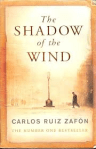
Carlos Ruiz Zafón’s “The Shadow of the Wind” represents the pinnacle of storytelling, in my opinion. This narrative structure spirals inward with multiple layers of stories that resemble a Russian doll containing mysteries. The atmosphere creates an unforgettable experience beyond the plot. Through the pages, you explore Barcelona’s wet and shadowy streets after the war. When I gave the book as a gift to someone who needed support, they mentioned that it seemed as though it had been saved specifically for them.
This book achieves a rare combination where literary sophistication meets suspenseful momentum. The author crafts each sentence with precision while maintaining a swift narrative speed. This book leaves its haunting impression on you even after you finish reading.
Danilo Miranda, Managing Director, Presenteverso
Solitude Weaves Generations of Magical Realism

In my years of exploring literature, I have come across many remarkable narrative books, but one that truly stands out for its unforgettable storytelling and structure is “One Hundred Years of Solitude” by Gabriel García Márquez. This masterpiece weaves a complex and captivating tale of the Buendía family over several generations in the fictional town of Macondo.
The way Márquez seamlessly blends magical realism with historical events creates a rich and immersive reading experience that stays with you long after you’ve finished the book. The intricate web of characters, the cyclical nature of time, and the themes of love, solitude, and the passage of time all come together in a beautifully crafted narrative that leaves a lasting impact on the reader.
“One Hundred Years of Solitude” is not just a book, but a journey through the depths of human experience, filled with moments of joy, sorrow, and everything in between. It is a testament to the power of storytelling and the ability of literature to transport us to different worlds while reflecting our own reality back to us in profound ways.
Gauri Manglik, CEO and Co-Founder, Instrumentl
Night Circus Enchants with Dreamlike Narrative

The world’s best narrative book, in my view, is “The Night Circus” by Erin Morgenstern. It’s a story that lingers long after the final page is turned, thanks to its unforgettable storytelling and intricate structure. The novel weaves an enchanting tale of two magicians bound by a mysterious rivalry, but what makes it stand out is its non-linear narrative and rich world-building that invites readers to lose themselves in a fantastical yet grounded universe. The plot unfolds like a series of interconnected dreams, with moments of wonder and tension spread throughout. Every chapter feels like stepping into a new, mesmerizing world, each one more intriguing than the last.
What truly sets “The Night Circus” apart is its ability to blend magic with a deep emotional core. The characters are complex, with motivations that slowly reveal themselves, and the pacing is carefully constructed to keep readers on the edge of their seats. But it’s not just the plot; it’s how Morgenstern uses time and space to layer the story. The circus itself becomes a character, constantly shifting and evolving in unexpected ways, much like the lives of the people involved.
This book also succeeds in how it bridges different storylines. Every character, no matter how minor, is connected to the main conflict in ways that feel meaningful. The use of alternating perspectives adds depth, pulling you further into the circus’s strange, magical world, all while providing a structure that rewards patient readers who pay attention to each subtle detail.
In many ways, “The Night Circus” is like a well-crafted dog walk through a neighborhood where every corner reveals a hidden story. Much like how George’s Floofing Friends builds personal connections with each walk, Morgenstern’s novel crafts a world that feels both intimate and grand. Each chapter, each character, each plot twist is a piece of the puzzle that, once complete, creates an unforgettable narrative.
George Kunatz, Owner, George’s Floofing Friends
Alchemist Inspires Journey of Self-Discovery
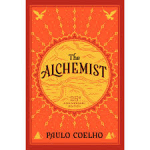
One book that truly left an imprint on me is “The Alchemist” by Paulo Coelho. It’s a journey that mirrors much of the entrepreneurial experience, especially for someone like me who built Teami Blends from scratch. The simplicity of the storytelling is powerful, and the structure is so fluid that it pulls you in without you even realizing how deeply it’s affecting you. What I love most is how it blends real-world challenges with spiritual insight. It’s about listening to your heart, trusting the process, and understanding that the detours are just part of the path. That message hits home for me as a businesswoman, a wellness advocate, and honestly, just as a human being navigating life. I’ve revisited it several times over the years, and each time, it brings a new perspective depending on where I’m at in life or business. It’s a book that reminds you to dream big but also to stay grounded, present, and aligned with your purpose. That’s the kind of story that sticks with you long after the last page.
Daisy Cabral, Visionary Founder and CEO, Teami Blends
Sapiens Crafts Engaging Narrative of Humankind
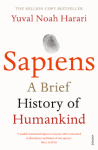
For me, it’s “Sapiens” by Yuval Noah Harari. While it’s not fiction in the traditional sense, the way Harari structures the story of humankind reads like an epic. From an entrepreneurial lens, it’s a masterclass in narrative building—how ideas evolve, how belief systems shape societies, and how storytelling itself is the foundation of culture, collaboration, and even capitalism.
What makes “Sapiens” unforgettable isn’t just the historical sweep. It’s how Harari guides the reader through time with clarity and intention. He breaks down incredibly complex concepts—cognitive revolutions, economic shifts, political systems—and delivers them in a way that feels accessible, engaging, and deeply relevant. That’s what powerful storytelling should do: translate complexity into something that sticks.
As a founder, I think a lot about how we tell the story of our company, our mission, and the value we bring. “Sapiens” taught me that it’s not just what you say—it’s how you build the arc, the structure, and the emotional connection behind it. That’s what people remember. That’s what moves them.
In business, especially when building a brand like Zapiy, you’re often tasked with shaping a narrative around something abstract—technology, innovation, disruption. What Harari does so well is take the abstract and make it personal, even primal. That’s a skill every entrepreneur should study.
So, while there are countless brilliant works of fiction, “Sapiens” stands out to me as the best narrative book because it fuses intellectual depth with narrative structure in a way that leaves a lasting imprint—and reminds us just how powerful storytelling really is.
Michelle Obama’s Becoming Inspires Real Leadership

For me, the world’s best narrative book is “Becoming” by Michelle Obama. Her journey deeply resonates with me–not just as a woman, but as someone who’s worn many hats in life. I started as a flight attendant, then ran a daycare, and now own a thriving interior design business. Like Michelle, I didn’t take a traditional path or always feel prepared, but I kept showing up, learning, and evolving. Her honesty about identity, balance, motherhood, and stepping into purpose hit home for me. The way she structures her story–with transparency, grace, and strength–reminds me that leadership doesn’t have to be perfect to be powerful. It just has to be real.
Melody Stevens, Owner, Design On A Dime Interiors
Invisible Cities Builds Mosaic of Human Experience

If I had to choose a book that represents unforgettable narrative and structure, it would be “Invisible Cities” by Italo Calvino. The book does not move through plot in any traditional sense; it builds a mosaic of imagined cities through conversations between Marco Polo and Kublai Khan. Every chapter reads like a small investment—one that might seem isolated at first but accumulates into an intricate architecture of human longing, ambition, and memory. No single city holds the story, yet the story would collapse if any were removed.
In this case, what makes “Invisible Cities” so unusual is that it teaches the reader to navigate complexity without needing straight lines or easy answers. It mirrors how financial planning often works when clients think they want a direct path, but success usually emerges from understanding relationships across hundreds of variables. Honestly, it is the kind of book you finish and realize it has rewritten how you see movement, connection, and even time.
Eric Croak, CFP, President, Croak Capital
Till We Have Faces Redefines Myth
“Till We Have Faces” by C.S. Lewis is hands-down my choice when it comes to remarkable narrative and composition. Far more potent, darker, and with surprising depth–this isn’t the Lewis most remembered from Narnia. Lewis brilliantly retells a myth through Orual’s raw, first-person narrative. A voice that’s imperfect, layered, and deeply human pulls you in from the very first page.
Love, envy, and selfhood are all thrown into question when the narrative pivots halfway through–that’s where the brilliance truly lies. Hidden within layers of nuance is a striking depth I’ve seldom come across in all my years of reading (and believe me, there have been many). Messy, honest, and deeply memorable–that’s storytelling in its most human form.
Colin Potts, Chief Operating Officer, Regenerative Orthopedics & Sports Medicine
Who Moved My Cheese Simplifies Complex Concepts

“Who Moved My Cheese?” by Spencer Johnson is one of the best motivational books out there because it takes many complex concepts on consistency, complacency, growth, and progress and explains them through a very simple story. It’s suitable for readers of every age and also has the quality of holding different meanings at different stages of life.
Manasvini Krishna, Founder, Boss as a Service
Have Your Say
- What role do you believe books play in shaping our perspectives?
- What’s the most memorable narrative book you’ve ever read and why?
- How do you think storytelling impacts our everyday lives?
Alignment with the UN SDGs
- 📚 Quality Education (SDG 4) – Promotes critical thinking through powerful storytelling.
- ⚖️ Peace, Justice & Strong Institutions (SDG 16) – Highlights justice, equity, and moral courage.
- 🤝 Reduced Inequalities (SDG 10) – Encourages empathy and challenges societal bias.
- 🧠 Good Health & Well-being (SDG 3) – Addresses emotional resilience and mental health themes.
Note: The views and opinions expressed in the content provided on this page are those of the individual authors and do not necessarily reflect the official policy or position of any organizations mentioned. The information provided is for educational and informational purposes only and should not be interpreted as professional advice. Readers should consult with relevant experts or professionals for guidance specific to their circumstances. The examples used are for illustrative purposes and results may vary depending on various factors. Any external links provided are for convenience, and we do not endorse or take responsibility for the content, products, or services available through these links.
⭐⭐⭐⭐⭐
Related

Exploring Story, Place, and Imagination with Dust Kunkel
Ever wondered how a childhood across continents and rivers becomes the fuel for storytelling? Discover how Dust Kunkel’s life shaped his novel and worldview — read the full interview to explore it.
Continue reading Exploring Story, Place, and Imagination with Dust Kunkel

Imagining Humanity and Technology with Donald Firesmith
Can engineering precision and handcrafted magic wands coexist in one imagination? Discover how a futurist blends hard science fiction, AI insight, and human emotion—read the full interview to explore his journey.
Continue reading Imagining Humanity and Technology with Donald Firesmith

Charting Tomorrow’s Medicine: A Conversation with Dr Pietro Emanuele Garbelli
What happens when a doctor decides medicine needs a blueprint as much as a stethoscope? This interview explores that question—revealed through experience, ethics, and the future of care.
Continue reading Charting Tomorrow’s Medicine: A Conversation with Dr Pietro Emanuele Garbelli

Richard Scott Sacks on Travel, Language, and Writing Fiction from Global Encounters
Have you ever wondered how encountering global upheaval can shape a novel? This interview explores one writer’s real journeys and the questions that inspired his fiction—read on to discover how it unfolded.
Continue reading Richard Scott Sacks on Travel, Language, and Writing Fiction from Global Encounters
Something went wrong. Please refresh the page and/or try again.
Other Highlights

Looking for something?
Type in your keyword(s) below and click the “Search” button.
Helpful Shortcuts
More Stories
























Print and Digital Magazine

Don’t just read about greatness. Own it!

About Us
The World’s Best Magazine is a print and online publication that highlights the extraordinary. It is your passport to a universe where brilliance knows no bounds. Celebrating outstanding achievements in various fields and industries, we curate and showcase the exceptional, groundbreaking, and culturally significant. Our premier laurels, The World’s Best Awards, commend excellence through a unique process involving subject matter experts and a worldwide audience vote. Explore with us the pinnacle of human achievement and its intersection with diversity, innovation, creativity, and sustainability.
We recognise and honour the Traditional Owners of the land upon which our main office is situated. We extend our deepest respects to Elders past, present, and emerging. We celebrate the stories, culture, and traditions of Aboriginal and Torres Strait Islander Elders from all communities who also reside and work on this land.
Disclaimer: The World’s Best does not provide any form of professional advice. All views and opinions expressed in each post are the contributor’s own. Whereas we implement editorial policies and aim for content accuracy, the details shared on our platforms are intended for informational purposes only. We recommend evaluating each third-party link or site independently, as we cannot be held responsible for any results from their use. In all cases and with no exceptions, you are expected to conduct your own research and seek professional assistance as necessary prior to making any financial, medical, personal, business, or life-changing decisions arising from any content published on this site. All brands and trademarks mentioned belong to their respective owners. Your continued use of our site means you agree with all of these and our other site policies, terms, and conditions. For more details, please refer to the links below.
About | Advertise | Awards | Blogs | Contact | Disclaimer | Submissions | Subscribe | Privacy | Publications | Terms | Winners
The World’s Best: A Magazine That’s All About What’s Great | theworldsbestmagazine.com | Copyright ⓒ 2022-2026
Let’s connect
Discover more from The World's Best
Subscribe to get the latest posts sent to your email.

 The World's Best