
“I wanted to reinvent myself and did a writing course at our local community centre and one online—soon, I had a novel.”
– M.A. Quigley
Multi-award-winning author M.A. Quigley transformed her career by pursuing writing courses after decades as a personal assistant. Her journey led to publishing novels and poetry exploring identity and connection. In this interview, Quigley discusses her creative process, the challenges of storytelling, and the personal experiences that shaped her published works.
M.A., thank you for joining us today. To start, could you share a bit about yourself, your background, and what inspires your work?
Thank you for the opportunity. It’s lovely to be here. In my other life, I was a personal assistant in a legal office for 24 years. I worked for 10 lawyers in the city. In 2009, the firm announced a takeover by another company. Our firm was considered too ‘top-heavy,’ so they offered everyone voluntary redundancies. I put my hand up and was rejected. The ladder had stopped and there was nowhere else for me to go. Eventually, my boss relented. I wanted to reinvent myself and did a writing course at our local community centre and one online. Soon, I had a novel, so I went to Writer’s Victoria and had a couple of lessons with a lady to polish it. She said if I was serious about writing, I should enrol in a Professional Writing and Editing associate degree or Creative Writing degree because it would teach me everything I needed to know. I was silly and thought I knew everything. I sent my manuscript to an appraisal agency. My manuscript came back with lots of red ink over it. It was loaded with clichés and needed a lot of work. I kept going to the community centre and learnt poetry, professional writing and how to write short stories. I also did a course in grammar at night school. I contacted RMIT and applied as a mature aged student to do their Associate Degree in Professional Writing and Editing. I was rejected and told that I could apply next year. One of the facilitators at RMIT interviewed me and asked me a lot of questions about writing and why I wanted to do it, etcetera. I was so nervous and didn’t like my chances. He said they would be in touch with me. A week later, I received a letter saying that I’d been accepted. I can’t tell you how excited I was to read those words. Since then, my flash fiction, poetry, and short stories have been published in over thirty anthologies worldwide. My debut novel, The Complexities of Love was published by a traditional publisher in Canada in August 2021 and my poetry novel, Bereft was traditionally published in 2022. I self-published Let’s Write a Six-Word Story or a Poem Workbook in 2023 to help people who want to write something but don’t know where to start. I am currently working two days a week part-time as a personal assistant in a real estate agency.
Your book, Bereft: A Story about Love, Loss, and Family, recently received the Ink and Horizons Book Award and became a BREW Readers’ Choice Award 2024-2025 finalist. What does this recognition mean to you, and how does it resonate with your creative vision?
I can’t tell you how grateful I am to receive the Ink and Horizons Book Award and to be a BREW Readers’ Choice Award 2024-2025 finalist. You’ve probably heard this before: being a writer is a lonely job. I sit in the back bedroom on a mattress on the floor overlooking our back garden with my two Jack Russell’s, Oscar, and Molly. I read everything I write to them and my husband. They are my initial audience. Every fortnight, I take 10 copies of 2000 words of what I’ve written to my writing group. We take it in turns to read our writing. We write comments on each other’s writing and talk about what each of us has written. Some days, I wonder why I’m writing. I get anxious and self-doubt settles in. I tell myself I should give up. It’s too hard. Recognition and winning an award means everything to me. It’s an acknowledgement that there are people interested in what I’ve written. It also gives me credibility as an author and opportunities like this interview that would otherwise not exist. Not only that, it spurs me on to keep practising my craft to be a better writer. It gives me hope that I may be able to reach a wider audience, so people get to know me and read what I’ve written.

Your writing blends prose and poetry to explore themes like identity and love. Could you tell us more about why these themes are important to you and how they shape your storytelling?
Relationships play an important role in life. It’s about how we perceive ourselves and others. Everyone has a unique background and attributes. When someone reads a story, they compare their experiences, sexuality, beliefs, and values with what’s happening in the story. A person’s cultural background also comes into play. Identity and love are important because I want the reader to be able to step into my protagonist’s shoes and try to understand what he/she is going through and to empathise with her/him. Hopefully, this will bridge the gap between their life and the protagonists, so that they can find common ground. In that way, the reader can learn from someone else’s experience, and find insights to help them in the real world.
Your work reflects an interest in human relationships and societal dynamics. What experiences or observations have influenced your approach to these topics?
That’s a good question. My cousin, Brian, is three years older than me and was a closet gay person growing up in the 70s. He lived in country Victoria and had no one to talk to, so he used to phone me and tell me how he felt and what he’d been doing. I was the only person who would listen and accept him. I’ve been writing in a diary since I was 12 years old and would write what we’d spoken about. I asked him if I could write a novel about it, and he said, ‘yes.’ That’s how The Complexities of Love was written. It is loosely based on his experiences. When he turned 21, I went to his birthday party at his parents’ house. It was in Summer and there were no girls at the party except for his sister and mine. When the party ended, he decided to walk his Aboriginal friend home. Brian’s friend was tall, thin, and attractive with shiny black curly hair. His teeth were perfect and bright white. Brian, his sister, Kim, and I had walked a few blocks when a car approached and stopped opposite us. It was my dad and uncle. They got out of the car and grabbed Kim and me, slapping us, and telling us that we shouldn’t associate with an Aboriginal. What did we think we were doing. They shoved us in the car and drove us back to my aunt and uncle’s home. My husband and I went for a walk along Banana Alley in the city during our holiday. We saw two school children from different ethnic backgrounds having sex under a city bridge. When they saw us, they ran away. Several years ago, we went for a holiday near Gippsland where there are waterways and caves. That was how I got the idea to write Bereft.
In your career, you’ve achieved significant milestones, including publishing The Complexities of Love in 2021. Could you walk us through some of the key moments or achievements in your journey as a writer?
Reading my writing in front of students in class at the community centre gave me confidence. I knew where my heart was because I thought it was going to jump out of my throat, I was so nervous. I disliked public speaking and thought I had nothing valuable to say, so it was best to remain quiet. I think writing for anthologies has been invaluable for me. That is what gave me confidence as a writer. Writing flash fiction, poetry and short stories and have them accepted buoyed me on at the start of my writing career. The joy of someone wanting to publish what I’d written spurred me on to write a novel. My debut novel. The Complexities of Love won The New York City Big Book Award in 2023 in the LGBT category. My short story, Wool, was published in Monash University’s Literary Magazine with the theme, Defiant in 2023. My poetry novel, Bereft, recently became a BREW Readers’ Choice Award 2024-2025 finalist, and won the Ink and Horizons Book Award. I am humble and grateful for all the people who have voted for me to make all of my awards possible.
As someone educated in professional writing and editing at RMIT University in Melbourne, how has your academic background shaped your craft and approach to storytelling?
I’ve learnt to look at storytelling a lot differently. I can think my story shines, but after being constantly critiqued at university it has made me practice my craft more to make me a better writer. Feedback is invaluable. It’s about dropping myself into the scene, imagining I’m the protagonist and trying to gauge how she/he would be feeling. Is anyone with her/him? What country are they in? What year is it? I close my eyes and ask myself what’s around me? Is there a smell? What time of the day is it? And so many more questions. It’s like I’m living the story with my characters through each chapter on their journey.
Your stories often invite readers to reflect on personal growth and connection. What do you hope readers take away from your works?
I hope that readers realise that they aren’t alone. That someone has gone through something like what they’re living in real time. My wish is that they can learn something from my stories to make their life more fulfilling/better.
Diversity, creativity, and innovation are important to many creators. How do these ideas feature in your work or your creative process?
I like to think that my writing challenges the status quo. Many people have asked me why I write such hard topics to read. Isn’t life hard enough without writing stuff like that? My answer to your question and theirs is this: Australia is a multicultural society. We all come from different backgrounds, cultures, and life experiences. We can learn a lot from different people’s viewpoints to solve problems. I believe this innovative approach can lead to a more connected world where people can flourish instead of standing one another off because of outdated beliefs that our parents once had that they’ve tried to instil in us. I hope my writing conveys that.
Have you engaged with any initiatives or topics that align with the United Nations’ Sustainable Development Goals (SDGs)? If so, how do these align with your values and work?
I recycle and donate my clothes, shoes, and books I’ve read to charities. My husband’s cousin is a lentil and faba bean farmer, so I know how valuable it is to buy fresh produce from farms. Whenever we’re in the countryside we like to buy potatoes, eggs, and vegetables. When I worked in the city, I’d buy fresh fish from the Queen Victoria Market. I’m a big believer in vaccinations though I know a few people who don’t.

Looking to the future, what upcoming projects, ideas, or aspirations are you excited to explore, and how do you see your storytelling evolving?
I have written a children’s picture book to teach children about never giving up and having resilience. I’m hoping that it empowers children to forge ahead despite the adversity that they may be facing. Last year, I finished writing another novel about women being abused and what it does to children as well as themselves. If any female reads it, I hope it encourages women to make the right decisions when are in a complicated relationship and know that they deserve a better life, as do their children. I’ve sent both books out to agents and publishers. There are so many facets to love and family. At the moment, my storytelling is evolving with a new novel I’ve just started writing about a mother, daughter relationship. It’s set in the present day, but I don’t want to divulge any more than that. Thank you.
⭐⭐⭐⭐⭐
“I hope that readers realise that they aren’t alone, that someone has gone through something like what they’re living in real time.”
– M.A. Quigley
Links
- LinkedIn: https://www.linkedin.com/in/melisaquigley/
- Know more about the BREW Book, Blog, and Poetry Awards here
Share Your Insights
We’d love to hear your thoughts on this interview with M.A. Quigley! Share your perspective in the comments below:
- What inspires you most about M.A. Quigley’s journey into writing?
- Have you ever pursued a passion that led to unexpected opportunities?
- Which themes in storytelling resonate most with your own experiences?
Alignment with the UN SDGs
- Promotes Quality Education through lifelong learning and writing workshops.
- Advocates for Reduced Inequalities by exploring identity, diversity, and inclusion.
- Encourages Sustainable Communities with personal efforts in recycling and supporting local farmers.
Other Highlights

Looking for something?
Type in your keyword(s) below and click the “Search” button.
Helpful Shortcuts
More Stories


Print and Digital Magazine
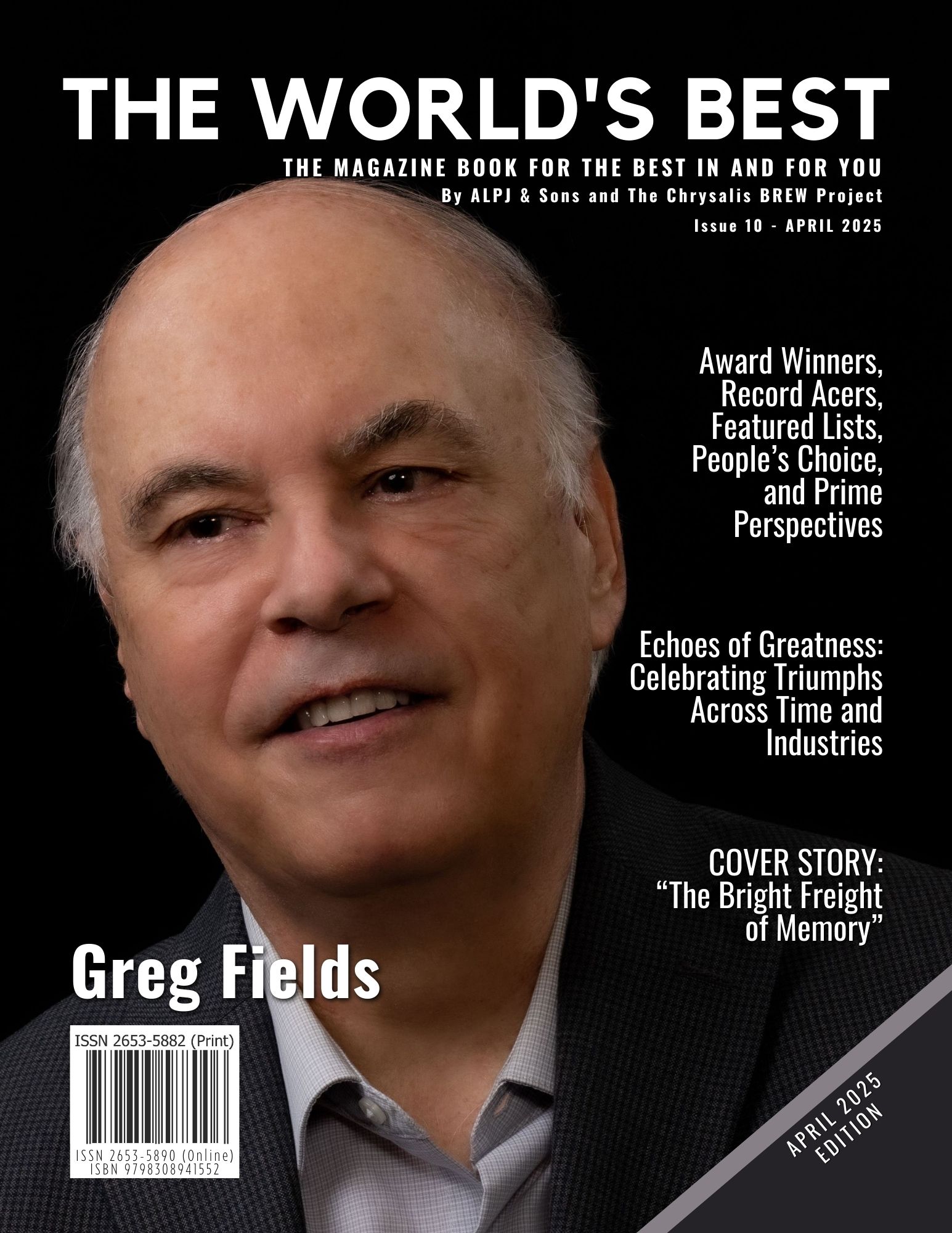
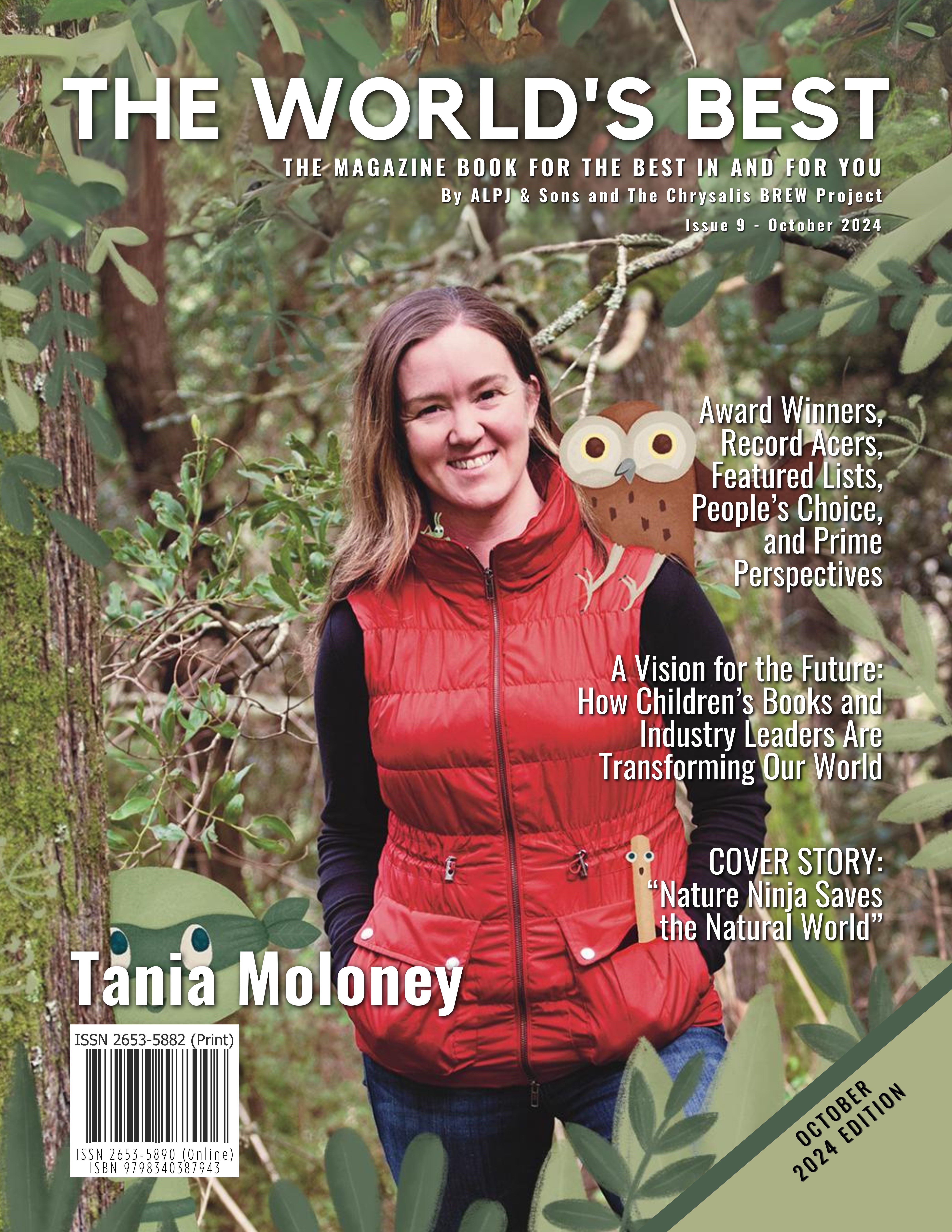

Don’t just read about greatness. Own it!

About Us
The World’s Best Magazine is a print and online publication that highlights the extraordinary. It is your passport to a universe where brilliance knows no bounds. Celebrating outstanding achievements in various fields and industries, we curate and showcase the exceptional, groundbreaking, and culturally significant. Our premier laurels, The World’s Best Awards, commend excellence through a unique process involving subject matter experts and a worldwide audience vote. Explore with us the pinnacle of human achievement and its intersection with diversity, innovation, creativity, and sustainability.
We recognise and honour the Traditional Owners of the land upon which our main office is situated. We extend our deepest respects to Elders past, present, and emerging. We celebrate the stories, culture, and traditions of Aboriginal and Torres Strait Islander Elders from all communities who also reside and work on this land.
Disclaimer: The World’s Best does not provide any form of professional advice. All views and opinions expressed in each post are the contributor’s own. Whereas we implement editorial policies and aim for content accuracy, the details shared on our platforms are intended for informational purposes only. We recommend evaluating each third-party link or site independently, as we cannot be held responsible for any results from their use. In all cases and with no exceptions, you are expected to conduct your own research and seek professional assistance as necessary prior to making any financial, medical, personal, business, or life-changing decisions arising from any content published on this site. All brands and trademarks mentioned belong to their respective owners. Your continued use of our site means you agree with all of these and our other site policies, terms, and conditions. For more details, please refer to the links below.
About | Advertise | Awards | Blogs | Contact | Disclaimer | Submissions | Subscribe | Privacy | Publications | Terms | Winners
The World’s Best: A Magazine That’s All About What’s Great | theworldsbestmagazine.com | Copyright ⓒ 2022-2026
Let’s connect
Discover more from The World's Best
Subscribe to get the latest posts sent to your email.

 The World's Best
Thank you so much for having me in your magazine. It means the world to me.
Kind regards,
Melisa.
LikeLike