
“I think that horror and humour aren’t a million worlds apart…“
– Cathleen Davies
There exists a rare breed of storyteller who seamlessly intertwines the macabre with the comedic and crafts stories that both chill the spine and tickle the funny bone. Cathleen (Cathy) Davies, a prolific writer and PhD researcher in Creative/Critical Writing at the University of East Anglia, embodies this distinctive literary fusion. Through her collection “Cheeky, Bloody Articles,” winner of the prestigious BREW Seal of Excellence, Cathy tackles the intricate terrain of human emotion with a darkly humorous touch that leaves readers both unsettled and entertained.
Cathy’s own words capture the essence of her unique approach: “I think that horror and humour aren’t a million worlds apart…” Indeed, within the pages of her collection, readers encounter tales where horror and humor dance in tandem, blurring the lines between the terrifying and the absurd. Whether exploring failing relationships, loyalty tests in cults, or the dissatisfaction of elder LGBTQ+ members with the present, she infuses each story with a distinctive blend of wit and dread.
One of the hallmarks of Cathy’s storytelling prowess lies in her ability to strike a delicate balance between these seemingly contrasting elements. “I spend a lot of time watching schlocky horror comedies,” she admits, hinting at the influences that shape her narrative style. Yet, beyond mere entertainment, she employs humor as a tool for coping with the darkness of the human condition, finding irony and absurdity even in the most harrowing of situations.
However, Cathy’s work transcends mere amusement, going deep into societal issues and existential quandaries. Through her written works, she confronts themes of police violence, feminism, and the complexities of human relationships with an unflinching gaze. “Art should always, always, always leave room for protest,” she asserts, emphasizing the role of fiction as a vehicle for social commentary and activism.
As both a writer and educator, Cathy draws inspiration from her interactions with students and the broader community. Her experiences as an English teacher and tutor inform her understanding of creativity and self-expression, fostering a nurturing environment where artistic endeavors flourish. “When a fourteen-year-old comes up to you with a story they’ve poured their heart into, you don’t read it and think ‘Oh well, that’s derivative and unoriginal… You’re delighted they’ve done something creative and true to their own voice,” she reflects, embodying a spirit of encouragement and inclusivity.
Looking ahead, readers can anticipate more from Cathy as she continues to push the boundaries of genre and form. With publications ranging from memoirs to experimental novellas, Davies remains a literary force to be reckoned with, unafraid to challenge conventions and provoke thought.
Know more in this exclusive interview with Cathy.
TWB: Your book, “Cheeky, Bloody Articles,” has received the highly coveted BREW Seal of Excellence. Congratulations! Can you share how this recognition has impacted you as an author and how it reflects the unique qualities of your work?
CD: I was thrilled to receive it. It was an honour! Reading Kajori’s kind words was profoundly moving for me. Bear in mind this was my first debut collection published by a tiny independent publisher; at this point there was only a handful of people who saw some potential in my stories. I didn’t expect the book to go anywhere, except perhaps to the shelves of my friends and family. The prospect of someone I’ve never met actually understanding, let alone enjoying, my work, seemed impossible. It was immensely flattering and I’m still grateful for it today. On a practical level, it gave me lots of lovely quotes for my publishers to use for promotion so that was great too!
TWB: Your collection “Cheeky, Bloody Articles” covers a wide range of themes, from failing relationships to loyalty tests in cults. What inspired you to explore such diverse subject matter?
CD: Honestly, there’s never much of a conscious choice involved in what I write about. Usually, I am inspired by some kind of compulsion, some dissatisfaction or hyper-fixation, and I feel an intense need to explore how I feel about it, which I do by writing fiction. In terms of failing relationships, we’ve all been there. It’s an emotional experience and it requires some reflection and thought. Writing those stories was cathartic for me, and I felt it connected to the human experience.
The inspiration for the cult loyalty tests in ‘The Family’ was very different. I was going through my undergraduate dissertation, unsure what I wanted to write about, until I saw a documentary on Jonestown and became enraptured (for lack of a better word). I’d recently had a horrible nightmare in which I was caught in a dystopian reality where people wanted to steal your arms, and I was confronted by horrific images of armless children that stayed with me for months after waking. I wanted to bring it into a story, but wasn’t sure how such a thing could be feasible, and then I started to learn about Jonestown. I was fascinated by this idea that an entire community could be created and destroyed as the result of one narcissist, and more disturbed by the fact that I had initially felt like the place seemed paradisical. In some way, this too connects to wanting to explore the human experience, although it’s decidedly more extreme. Overall, I just find what’s cool, what I like or I’m interested in or I can’t stop thinking about, and I form stories around those thoughts.
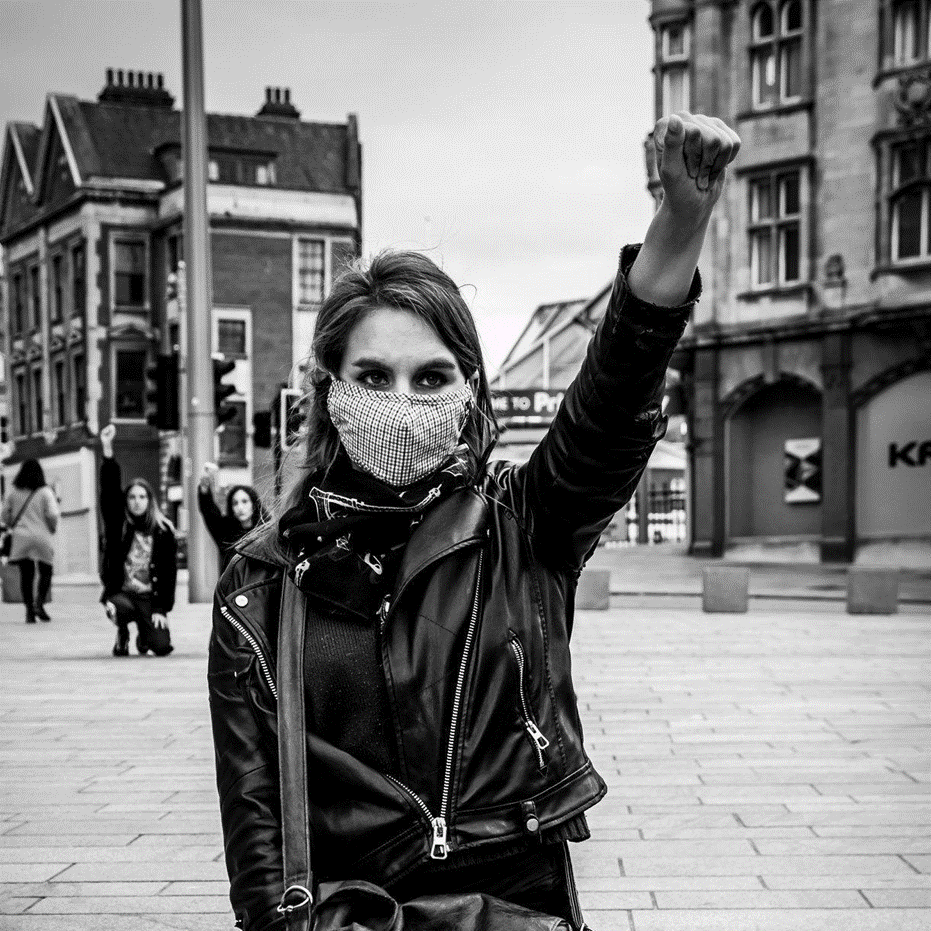
TWB: Many of your stories blend humor with horror. How do you strike a balance between these seemingly contrasting elements?
CD: I think that horror and humour aren’t a million worlds apart. I think about ‘The Depressed Person’, one of my favourite short stories by David Foster Wallace: there’s this character who’s so depressing that it’s heavily implied she drives her therapist to suicide. As a single sentence, that’s hilarious. As a reality, it’s tragic. Those things don’t have to contradict. I spend a lot of time watching schlocky horror comedies, which probably contributes as well, but gallows humour and understanding the irony in awful situations seems to me to be quite an important tool. There’s also probably some truth to the idea it’s not entirely intentional. Sometimes I don’t mean to be humourous at all, but people still laugh and I just go with it. Sometimes, I try to be funny and people look at me with horror and pity, and I find it’s best just to go along with that too.
TWB: One of the themes in your collection is the dissatisfaction of elder LGBTQ+ members with the present. Can you discuss how you approached portraying this perspective?
CD: It was another situation of ‘write what you know and what you don’t know, research’. I’m queer myself (in case that wasn’t obvious) and I’ve always connected to radical ideas of queerness. Don’t get me wrong, assimilation is important in a lot of ways. When I was growing up in the 2010s in rural East Yorkshire, being an openly queer teenager (or even a hidden but obviously queer one) was enough to ruin your entire adolescence. It was brutal. But now, I teach in schools where my queer students wear rainbow pins and it’s not a big deal, where queer kids are just as likely to be popular and happy as straight kids. That’s amazing. I love that we can get married, I love seeing queer couples adopt and having that white picket fence. Still, I’ve always personally connected more with the John Waters of the world, the Bob Flanagans, the COUM Transmissions. I love the idea of saying to the world: You think I’m a disg*sting freak? Good. F*ck you. I suppose, especially as a bisexual woman, that element of queerness seems just as important to me as actually f*cking the ‘opposite’ sex, although that’s likely a contentious statement, and I don’t really agree with the idea of an ‘opposite sex’ anyway.
I saw a play written in Polari, the secret language spoken by gay people to avoid being caught by the police when it was illegal in Britain. I felt a kind of ache that we had lost that culture, before I realised that actually the death of Polari was a good thing, in a way, because it meant we no longer had a need for it. That conflict played on my mind until I saw a documentary about drag-performer and actor Divine, where John Waters said ‘It was still illegal to be gay then, actually it was kind of more fun that way’. I’m paraphrasing, so that might not be direct, but I shot up in bed like, I knew it! Before again getting a grip and remembering that, actually, I like having rights. So, I played around with it in writing and got to ‘The Old Castle’, a conversation between two aging members of the LGBTQ+ community debating culture vs assimilation. I still don’t really have my answer or a neat opinion on which is better. It’s a conflict. It was fun to write, though.
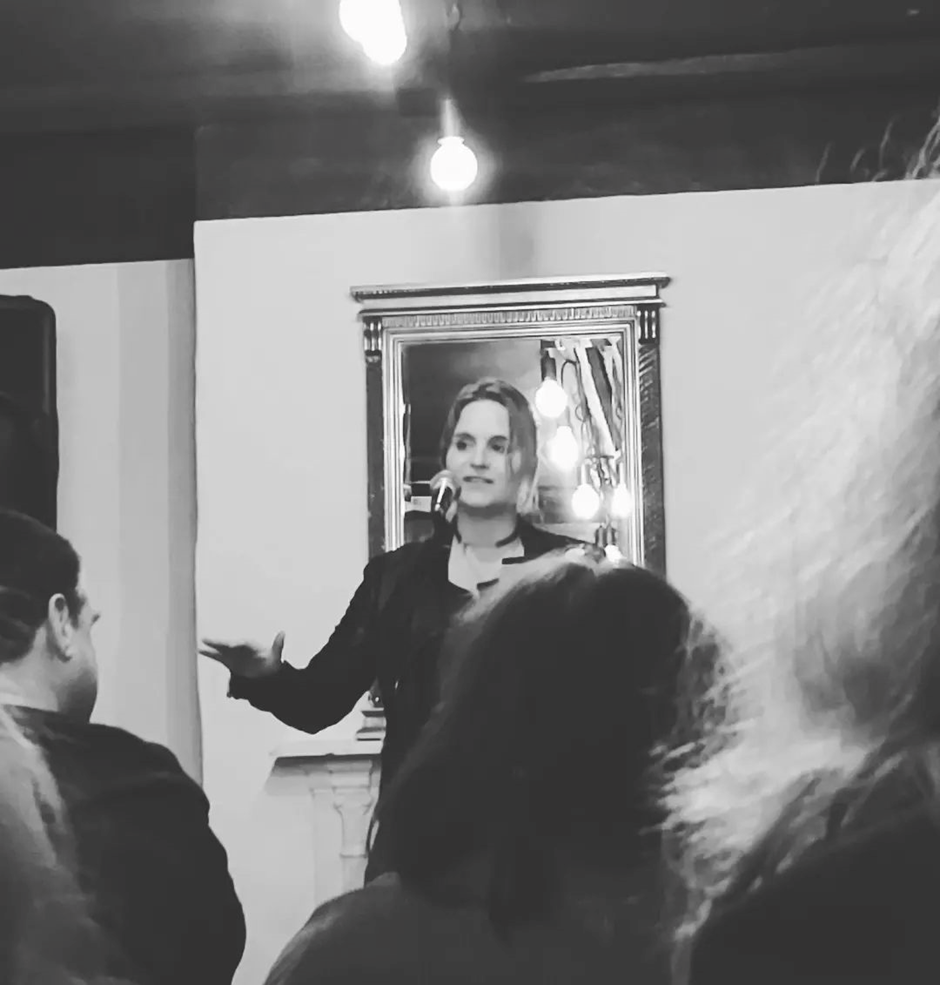
TWB: “Cheeky, Bloody Articles” challenges readers’ expectations and explores the complexities of human relationships. How do you navigate writing about such intricate emotional landscapes?
CD: I suppose I write about intricate emotional landscapes because I exist within and can’t escape from intricate emotional landscapes. Humans are complex. Relationships contain multitudes. I think that’s worth taking the time to navigate, right?
TWB: Your work has been described as both terrible and wonderful, yet always insightful. How do you hope readers will engage with your stories on an emotional and intellectual level?
CD: Firstly, that is very kind, thank you. I love the idea of being terrible, wonderful and insightful all at once. I think most of the population would stop at the first adjective.
It’s not up to me to tell readers how to engage with my story on an emotional and intellectual level. I hope they read it and it resonates with them, that’s all. Beyond that, I hope they take it and run with whatever they feel about it personally. Death of the author, innit. My opinion doesn’t matter, I’m just the one who wrote it.
TWB: In your opinion, what role does fiction play in addressing societal issues such as police violence and feminism?
CD: Art should always, always, always leave room for protest. Like I said before, if something sticks with me and bothers me and I work through it with writing. When I saw the horrific murder of George Floyd, I was so angry, and I felt helpless. I went to BLM marches, which was great and I’ll always love a bit of grass-roots activism, but the anger didn’t fade. So, I wrote ‘Hands Up’. Naturally, some amateur, white writer coming up with a story about police brutality won’t help the situation very much, but it made me feel that some of my anger and dissatisfaction was being expressed, and hopefully someone else might read it and think about it. I know that as a white person I’m more at risk of becoming racist than being subjected to racism, so I explored the issue from the perspective of an entitled, white officer trying to convince himself he was in the right when committing an atrocious murder. It was empowering to consider that media attention was having an impact on how law was treating people of colour. They couldn’t get away with it as blatantly anymore.
As a feminist, it’s a similar thing. I get sick of the world and how it treats women and queer people and I write some angry shit about it to make myself feel better, and hopefully to get some other people feeling better too. I got pissed off at centrists believing themselves to be morally advanced, shutting down any underrepresented person who might finally get a say (all in the name of balance, of course), so I wrote ‘Open Mind’. I think politics are inevitable in art whether you realise it or not, so I might as well use my writing to properly express what I think.
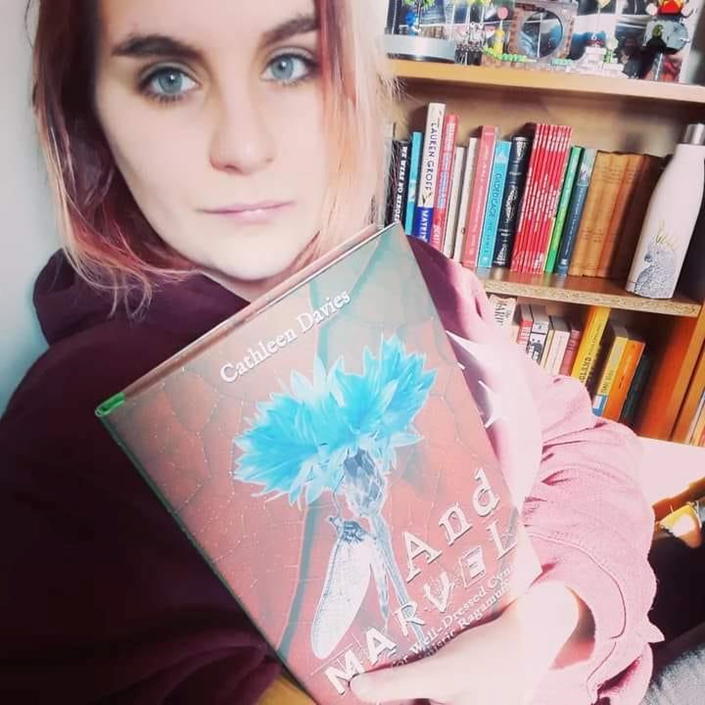
TWB: Could you share some insights into your writing process? How do you develop your characters and craft your stories?
CD: I’m much more of a drafter than a perfectionist. I scribble down a few ideas, get a vague sense of where I want the plot to go, then write it down. Usually, I tend to overwrite and have to read through it again and get rid of all the superfluous language that doesn’t work. It tends to go 1.) erratically scribble some nonsense in a notebook 2.) begin typing up the nonsense, correcting it as you go, ignoring the sentences that really are pathetic, and polishing up a plot and a shape, 3.) read it, oh god it’s awful, scrap all of it, 4.) read it again, hey actually, this could be something. Nearly all the characters I come up with are based off people I’ve actually met. If you know me personally and recognise yourself in some of the characters, I don’t know what to tell you except stay away from writers in the future. That’s probably good advice in general anyway.
TWB: What message or takeaway do you hope readers will derive from “Cheeky, Bloody Articles”?
CD: Again, that’s down to the readers. I hope they like it! I hope it makes people feel understood. Beyond that, it’s really down to you.
TWB: As a writer, researcher, and teacher, how do these different roles influence your storytelling and the themes you choose to explore?
CD: Because I work a lot with kids and young adults, helping them with creative writing, I feel far less critical about myself and the whole process. When a fourteen-year-old comes up to you with a story they’ve poured their heart into, you don’t read it and think ‘Oh well, that’s derivative and unoriginal, surely that sentence is a cliché, I think this lacks nuance blah blah blah’. You’re delighted they’ve done something creative and true to their own voice. You’re proud of them. That attitude has incidentally bled into how I treat myself, and now I’m like ‘hey if it’s written, get it out there. Might resonate with someone, might not, but you’ve done it so you might as well try.’ I think that’s quite a nice thing really. The kids I teach inspire me every day and I’m so grateful to them. Similarly, I think being a writer makes me a better teacher. It allows you more flexibility and creativity in the classroom, which is great. And the research, well, my PhD is in Creative Writing, so I’m writing and reading all the time and that obviously helps the process. Plus, it’s gotten me some decent teaching gigs with undergraduate students, and they’re all brilliant and talented too. Basically, it’s all one thing, and I love nearly every element of it. Would be great if I got some more money though. (Fund the arts, you cowards).
TWB: Looking ahead, what can readers expect from your future writing projects?
CD: Since Cheeky, Bloody Articles I’ve published two books. The first was And Marvel, a memoir about recovering from my partner’s suicide in the Basque Country. I meant it to be a ‘find myself and recover’ kind of book, but I actually ended up having a nervous breakdown. Less Eat, Pray, Love more Starve, Sin, Hate. The most recent book I’ve published, and a personal favourite is a novella called Fluid. Each chapter is based on a 1970s artwork relating to body fluids. It’s gross and punk and queer and I had the best time researching it. That was out in March so it’s still brand-baby-new to me.
Otherwise, I have some more stories in the pipeline. I’m getting a collection together called So Clever You’re Thick and I’m thinking of doing some experimental stuff with AI, although that’s still in the consideration stage. My PhD novel Stitches will be about for a while, but I’m hoping to get an agent before I send off that one for publication since it took me many many years to write and I’d like to earn some money, see it in a bookshop etc. Otherwise, if you’re local to Norwich, UK, you’ll probably find me at poetry events and protests reading out my work while I’m tipsy and terribly nervous. Who knows what else the future might hold? I don’t think I’ll stop writing any time soon, though. ⭐
“Art should always, always, always leave room for protest… I think politics are inevitable in art whether you realise it or not, so I might as well use my writing to properly express what I think.”
– Cathleen Davies
For more information about the BREW Book, Blog, and Poetry Awards, click here.
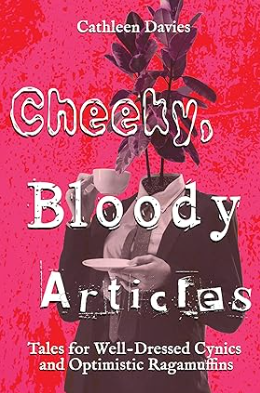
Get a copy of Cheeky, Bloody Articles by Cathleen Davies by clicking here.
Catch her through the following links:
Other Highlights

Looking for something?
Type in your keyword(s) below and click the “Search” button.
Helpful Shortcuts
More Stories







Print and Digital Magazine

Don’t just read about greatness. Own it!

About Us
The World’s Best Magazine is a print and online publication that highlights the extraordinary. It is your passport to a universe where brilliance knows no bounds. Celebrating outstanding achievements in various fields and industries, we curate and showcase the exceptional, groundbreaking, and culturally significant. Our premier laurels, The World’s Best Awards, commend excellence through a unique process involving subject matter experts and a worldwide audience vote. Explore with us the pinnacle of human achievement and its intersection with diversity, innovation, creativity, and sustainability.
We recognise and honour the Traditional Owners of the land upon which our main office is situated. We extend our deepest respects to Elders past, present, and emerging. We celebrate the stories, culture, and traditions of Aboriginal and Torres Strait Islander Elders from all communities who also reside and work on this land.
Disclaimer: The World’s Best does not provide any form of professional advice. All views and opinions expressed in each post are the contributor’s own. Whereas we implement editorial policies and aim for content accuracy, the details shared on our platforms are intended for informational purposes only. We recommend evaluating each third-party link or site independently, as we cannot be held responsible for any results from their use. In all cases and with no exceptions, you are expected to conduct your own research and seek professional assistance as necessary prior to making any financial, medical, personal, business, or life-changing decisions arising from any content published on this site. All brands and trademarks mentioned belong to their respective owners. Your continued use of our site means you agree with all of these and our other site policies, terms, and conditions. For more details, please refer to the links below.
About | Advertise | Awards | Blogs | Contact | Disclaimer | Submissions | Subscribe | Privacy | Publications | Terms | Winners
The World’s Best: A Magazine That’s All About What’s Great | theworldsbestmagazine.com | Copyright ⓒ 2022-2026
Let’s connect
Discover more from The World's Best
Subscribe to get the latest posts sent to your email.

 The World's Best
Enjoyable post, good morning
LikeLiked by 1 person
Nice
LikeLiked by 3 people
Thank you for stopping by. All the best.
LikeLiked by 1 person
I love the humor and horror mix. When done right, it’s the perfect balance to give the reader a brief respite and highlight the eerie. Cults are a fascinating topic! And just the wordplay in the title makes me want to read this book.
LikeLiked by 2 people
I completely agree!
LikeLiked by 1 person
Thank you for the interview. I can identify with embracing terrible writing, especially short stories where the ideas are disposable, but you are curious where it is going anyway.
LikeLiked by 1 person
You’re welcome! Embracing the process of writing, even when it feels like the ideas are disposable, is such an important part of the creative journey. It’s in those moments of exploration and curiosity that unexpected gems often emerge. Short stories can be particularly liberating in this regard, offering a space to experiment and follow your curiosity wherever it leads. Keep embracing the journey, even when it takes you through rough drafts and uncertain paths.
LikeLiked by 1 person