
“By weaving psychological and spiritual elements into an otherwise mainstream mystery, I hope to introduce helpful concepts to readers who wouldn’t otherwise encounter them.”
– Verlin Darrow
Verlin, thank you for speaking with us. To begin, could you introduce yourself to our readers, describe what you do, and share what you hope to accomplish through your work?
I’m a semi-retired psychotherapist with a diverse set of life experiences to draw from, both in my writing and in service to others. I try to live by the same values as the protagonist in my book, focusing on cooperating with the world around me—not fighting reality by conning myself or overexerting my will. Most of the ideas about how to live, grow, or attain peace of mind in the book are ones that I try to live by (and often fail to do so). By weaving psychological and spiritual elements into an otherwise mainstream mystery/courtroom drama, I hope to introduce helpful concepts to readers who wouldn’t otherwise encounter them.
Another important goal of mine is to create a fun, readable story that could stand alone without the depth I’ve added. I think it’s important for every writer to avoid being heavy-handed with a book’s message or theme. To accomplish this, I’ve injected quite a bit of humor, a host of quirky characters, and a fast-moving plot.
Many authors draw from a range of life experiences. Can you describe how your professional path and personal journey have shaped your approach to writing?
I was in the middle of an 8.0 earthquake that lasted four and a half minutes. This was in Mexico City in 1985. I was thrown out of bed by the violent shaking, rolling, and swaying, and could do nothing but grab onto something and wait to see what happened. Screaming, a deep rumbling, and buildings collapsing nearby composed the soundtrack. I was on the top floor of an old wood-framed hotel. As the building tilted, I could see the ground underneath, with spiked poles holding up a glass-ceilinged restaurant. With each sway, I thought it would be the last one and I would die. I couldn’t believe the hotel could withstand such an extreme angle.
The experience was so obviously out of my control—I was along for the ride, wherever that took me—that some part of me knew my feelings and any other immediate reaction would be profoundly gratuitous. So as intense as the quake was, it seemed matter-of-fact—just what happened to be going on right then. Perhaps going directly from sleep to a natural disaster played a role in this. When I became sure I’d die, I tasted that with an odd sort of poise. And it felt okay. Dying felt okay. I even found myself curious about what might come next.
Obviously, I survived. And I came away with two powerful life lessons that are ever-present in my writing. One, at any moment, from any direction, anything can happen. We can’t even trust the ground underneath us. Our sense of control—of being in charge of our lives—is largely an illusion. My protagonists often learn this as they navigate the plots I impose on them. Secondly, I no longer fear death. I’m not sure how that directly manifests in my writing, but I am informed by it 24/7. Perhaps it makes it easier for me to kill off characters, or maybe I’m less affected now by the vicarious loss and grief that’s always an element in a mystery or a thriller.
You have written multiple novels. What themes or ideas consistently draw you back to the page, and why do you find them meaningful?
I’m drawn to how people change, especially in response to extraordinary experiences. Murder mysteries and thrillers provide excellent vehicles for exploring this. If the characters remain static through thick and thin, I get bored because they don’t seem real. Real people are shifted by finding dead bodies, being accused of murder, having their lives threatened, etc.
I think I know quite a bit about this from my work as a therapist. People show up because they’re unhappy, or need help managing their mental health symptoms, or just because they’re stuck in some way and need to get moving again. This list isn’t comprehensive, of course. In order to accomplish any of this, most clients—most people—need to learn new life skills, new operating modes, new attitudes, or even make wholesale paradigm shifts. It’s my job to facilitate this process however it unfolds. I talk, they do the work outside of our sessions.
I think therapy represents a microcosm of more global aspects of being human. I find that what I’ve learned helping people transfers into my writing rather seamlessly.
Readers often notice psychological depth in your fiction. In what ways does your background in psychotherapy influence how you develop characters and internal conflict?
I was blessed by multiple struggles, failures, and mental health issues in the first half of my life. It’s only in hindsight that I hold any of this as a positive phenomenon. These problems led me to therapy as a client, and that intention to change led to the universe meeting me more than halfway—providing events that made things even worse, exerting pressure on me to finally transform. Grudgingly at first, I did.
When I work with therapy clients, I have almost always experienced the problems they tell me about. I know firsthand what they’re going through, and to some degree I know what they need to do to improve their lives. Most importantly, I can hold hope for them since I know radical change is possible—psychologically, practically, and spiritually. If a tough nut like me can eventually be cracked…
So in developing characters and describing/resolving internal conflict, I unconsciously draw on this history and professional experience. My characters aren’t simply one thing or another. Duality is surely a fictional concept in relation to our species. My protagonists start off as a complex mixture of attributes—exemplary and deplorable—and end up with a realistically altered set of the same. I don’t need to plan or create character bios. What I write falls out of me if I’m willing to chain myself to my desk. Later, this requires editing to create continuity, rhythm, and a host of other desired elements.
Complex characters often feel authentic because of subtle emotional details. What is your process for creating characters who resonate with readers?
I may have answered this question in my last response, but I’ll see what I can add. When I generate dialogue, I keep my ear alert for false notes. Would this character really say something like that? Would they use that vocabulary, that tone? And why would they say it? What was their goal or intent? Then I need to look at how that particular dialogue serves my purposes as the author. Does it advance the plot? Does it illustrate character development? Is it at least amusing or interesting? I need to explore all of this when I’ve struck a wrong note or I’ve added a gratuitous section. The same goes for inner monologue, action, and other choices my characters make. First, I let stuff fall out of me, then I try to notice what went wrong—and there are always a disheartening number of necessary fixes.
Your recent book was recognized as a BREW Reader’s Choice Award winner from The Chrysalis BREW Project. What does that recognition mean to you, and how do you view reader-based acknowledgments of your work?
I love it when readers appreciate my work, whether it’s professionals or just my cousin. Of course, this Brew award is especially satisfying, and it has the bonus of helping me reach a wider readership. At this point in my life, I don’t care about royalties. I care about more people enjoying and benefiting from my work.
In the past, I submitted three of my novels to book contests, and all three times I was awarded runner-up status for best mystery of the year. This Brew recognition feels more like a first-place finish, regardless of whether it actually is one or not. I think this is primarily because the BREW reviewer received my book as I intended it. You got it, Kajori, and thank you for that. So this award, for me, is based on an expert’s clear sense of what is being awarded.
Every creative professional experiences milestones. Would you share any significant achievements, recognitions, or turning points in your career and what they represent for you personally?
When I was nineteen, I hitchhiked around Europe, which in those days didn’t brand you as a serial killer. It probably still doesn’t in these more sensible countries. I stayed in a low-rent campground outside Naples in a twenty-dollar tent. It rained hard every day for a week. I was bored out of my mind and decided to buy a composition book and start writing since I unjustifiably fancied myself as someone who was good at it. I wasn’t. But I completed a (terrible) novel and got my career rolling. I should take a moment and thank the weather. Once again, something I experienced as quite negative at the time led to good things.
Some years later, after a series of abortive projects, my garbage-eating dog farted the mother of all farts, and my partner said, “Why not write a children’s book about a dog that farts his way to Mars.” So I did, changing the fart to a burp and Mars to Jupiter. People liked it, and I was able to garner a good agent. That gave me hope on a new level about a career as a writer. Unfortunately, the manuscript still rests on a shelf along with Nightmares Are Caused By Bad Dust Bunnies, and the like.
Eventually, a local publisher distributed two adult mysteries of mine under a different name, another encouraging development. Years later, I tried short story writing, producing two, both of which were accepted for anthologies. Each step of the way, I received the encouragement I needed to continue to work at becoming a better writer. Finally, Wild Rose Press has published seven well-received adult mysteries and thrillers, and I feel confident that these represent my best work. Most recently, when my ruthless editor got ahold of The Brighter the Light, the Darker the Shadow, she found little to object to.
Storytelling can reflect universal aspects of the human experience. What questions or reflections do you hope readers carry with them after finishing one of your novels?
I hope that readers will ponder the question of which elements of being human are universal and which are unique to a given individual. This is certainly a theme in The Brighter the Light, the Darker the Shadow. I suspect that some readers will come away with an enhanced sense of commonality and a diminished sense of separate individuality. Admittedly, this is a grandiose goal. At the least, I hope readers will question what my protagonist teaches his students about this. What resonates in a reader’s life? What doesn’t? What sounds like wisdom? What sounds like bullshit? For what it’s worth, my perspective about this matches my protagonist’s. We’re truly all in this together, and in moments of clarity, I can sense a sublime oneness.
In your professional and creative life, how do you encourage thoughtful dialogue, inclusion of varied perspectives, or innovation in the way stories are told?
My characters usually embody a wide variety of perspectives about the same event, ranging from the absurd to the thought-provoking. By introducing a broad range of backgrounds, ethnicities, gender affiliations, etc., I’m afforded the opportunity to generate the type of writing I enjoy—a more creative process. I need to stretch—to get outside the box I live in—and imagine how someone quite different from me would think. For example, in my book, some people believe the protagonist is a conman, some a saint, and everything in between. When he shares his ideas about life, some characters argue, some are profoundly moved, and others—I’m thinking of the DA and several police officers—don’t give a crap. As far as they are concerned, he’s like a dog barking in the neighbor’s yard—annoying as he produces meaningless content.
For someone encountering your work for the first time, how would you describe the reading experience they can expect?
I hope a new reader enjoys my book above all else. That might be because the suspense grabs them, or they find it amusing, or the ideas in it are meaningful to them. I guess another thing I could say is: strap yourself in for a wild ride. I love big plot twists, and there’s a bunch. Other than that, I think each reader’s experience is so colored by their particular hard-earned perspective that valid generalizing isn’t possible.
If you were to write your own bio, what would you say? And as your work evolves, what kind of impact do you hope it has?
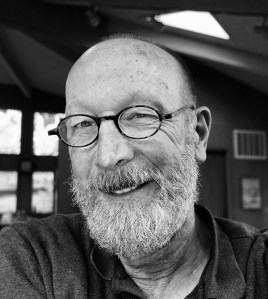
In lieu of prose here, I offer a list of unusual events in my life that I haven’t mentioned yet:
- Missed being blown up by Mt. St. Helens by ten minutes
- Professional volleyball player (in Italy)
- Rescued a dog who’d fallen through ice
- Journeyed around the world on a spiritual pilgrimage
- Radio therapist
- Newspaper columnist
- Storeowner
- Met famous people, including Einstein and Wilt Chamberlain
- 8 holes-in-one and a double eagle
- Could dunk creatively and jump onto the roof of a VW bug from a standing start
- Had amnesia (twice)
- Lost with no money in another country
- Drove coast to coast by myself in 58 hours
- “Horse” champ at a major university
- Captain of a college sports team
- Only cried once from 5 y.o. to 17 y.o.
- Domestic violence victim
- Homeless
- Frostbitten
- Built a floor that appeared in House Beautiful
- An identity thief bought two cars using my credit
- Outran a tornado
- Had a guru, served as his assistant
- Hitchhiked around Europe
- Lived in a women’s college dorm
- Chased in a high-speed police pursuit (I got away)
- Threatened by a man with a gun while driving a taxi
- Endured a home invasion
- Prevented suicides
- NCAA coach
- Won a civil rights discrimination lawsuit (with an African-American friend)
- Psychotherapy clients: TV news anchor, NFL cheerleader, American Idol winner, professional skateboarder, FBI agent, school superintendents, physicians, other therapists, etc.
⭐⭐⭐⭐⭐
“At any moment, from any direction, anything can happen—and my protagonists, like all of us, learn to navigate that chaos.”
– Verlin Darrow
Links
Share Your Insights
We’d love to hear your thoughts on Verlin’s extraordinary journey and creative process. Share your reflections in the comments:
- Which life experience from Verlin’s story resonated most with you?
- How do you think personal challenges influence creativity in your own life?
- Which part of his writing process would you try in your own projects?
Alignment with the UN SDGs
- SDG 3 (Good Health & Well-being): Emphasizes mental health awareness and psychological resilience.
- SDG 4 (Quality Education): Encourages learning through storytelling and life lessons.
- SDG 10 (Reduced Inequalities): Promotes understanding diverse perspectives and inclusivity through character representation.
Other Highlights

Looking for something?
Type in your keyword(s) below and click the “Search” button.
Helpful Shortcuts
More Stories







Print and Digital Magazine

Don’t just read about greatness. Own it!

About Us
The World’s Best Magazine is a print and online publication that highlights the extraordinary. It is your passport to a universe where brilliance knows no bounds. Celebrating outstanding achievements in various fields and industries, we curate and showcase the exceptional, groundbreaking, and culturally significant. Our premier laurels, The World’s Best Awards, commend excellence through a unique process involving subject matter experts and a worldwide audience vote. Explore with us the pinnacle of human achievement and its intersection with diversity, innovation, creativity, and sustainability.
We recognise and honour the Traditional Owners of the land upon which our main office is situated. We extend our deepest respects to Elders past, present, and emerging. We celebrate the stories, culture, and traditions of Aboriginal and Torres Strait Islander Elders from all communities who also reside and work on this land.
Disclaimer: The World’s Best does not provide any form of professional advice. All views and opinions expressed in each post are the contributor’s own. Whereas we implement editorial policies and aim for content accuracy, the details shared on our platforms are intended for informational purposes only. We recommend evaluating each third-party link or site independently, as we cannot be held responsible for any results from their use. In all cases and with no exceptions, you are expected to conduct your own research and seek professional assistance as necessary prior to making any financial, medical, personal, business, or life-changing decisions arising from any content published on this site. All brands and trademarks mentioned belong to their respective owners. Your continued use of our site means you agree with all of these and our other site policies, terms, and conditions. For more details, please refer to the links below.
About | Advertise | Awards | Blogs | Contact | Disclaimer | Submissions | Subscribe | Privacy | Publications | Terms | Winners
The World’s Best: A Magazine That’s All About What’s Great | theworldsbestmagazine.com | Copyright ⓒ 2022-2026
Let’s connect
Discover more from The World's Best
Subscribe to get the latest posts sent to your email.

 The World's Best