
“The best stories find us rather than us finding them.”
– Dust Kunkel
Dust, thank you for joining us. To begin, could you introduce yourself, share a bit about your background, and describe what you do and what you aim for through your work?
I’m a “Third Culture Kid” who grew up in Ghana, West Africa, until the age of 17, with parents from the Pacific Northwest who were Lutheran development workers launching schools and other projects. I grew up on two different continents and, by nature and upbringing, get along with all kinds of people, move freely between cultures, and enjoy helping others do their best work. I’m an executive coach and work with executives and leaders in the nonprofit and Lutheran spheres who are focused on helping their communities thrive. In my writing, I’m interested in exploring how we perceive the world through the stories we’re told, the influence of relationships between humans and animals, and the power of nature to heal us.
You have lived in different parts of the world and the United States. How have those experiences shaped the way you observe people, place, and story?
The stories we tell ourselves have tremendous influence on how we see ourselves and, on a larger scale, how entire cultures operate. I find this endlessly fascinating and beautiful. Folktales, in particular, capture me. I think of them as “blue-collar myths” that create meaning. These are the perspectives of the average working person in any society across the earth. Each is unique in its own perspective, yet at the same time shares common ground in the way we love one another, the role of family trauma, the influence of the natural world, and most of all, the humor we use to get through our days. In Western society, there’s a sort of negative portrayal of “fantasy” as being a lesser form of art, but I think it’s actually the opposite: the role of the magical infused in the real details of our lives is what makes life worth living. It is real art to tell stories with all kinds of undercurrents (magical and otherwise), stories that still live in the day-to-day grind of human existence. I love Shakespeare and believe that, despite the highbrow detritus that covers his legacy, his actual work in the plays and sonnets is filled with this kind of humor, human experience, and magical play. In fact, besides his genius technical skill as a writer, this is what makes his work so special. I come back to it often, and it runs through my novel as an homage to Hamlet (plus the sonnets).
When you began working on Fly Stone, Fly, what drew you to this particular story, and how did you know it was one you wanted to pursue as a full novel?
The best stories find us rather than us finding them. I mean, I was searching as I freewrote for a novel. But it was the characters who showed up in their wild beauty and forced me to deal with their stories. “Fly Stone, Fly” grew naturally from these meetings. I will say that initially there was a type of waking dream in which I was sitting in a raft on the Salmon River in Idaho, listening to a teenage boy have a conversation about death with a strange creature who was definitely not human, at least not completely human. I wanted to find out more, and that is how the novel was born. Then certain characters just showed up: Dammit, the dog, is a great example. In the novel, the first time we meet him, he is coming down a hill in the wilderness following a bulldozer, and that’s the first time I met him too. He showed up, said, “Friend or foe?” and I realized that I liked him a lot, and he just stayed.
You have worked in education, outdoor settings, and creative fields. How do these experiences influence your approach to writing and storytelling?
My first college degree was in teaching high school literature, but then I ended up getting a Master’s in Outdoor Education from the University of Edinburgh, Scotland. This was less an end goal and more of an outcome of some long searching in which I realized that the only way to heal some of the traumas I’d experienced along the way in my life was to be outdoors for long periods of time. It was as simple as that. I’ve sat at the feet of Shakespeare, Tolkien, Hemingway, Faulkner, McGuane, Maclean, Harrison, and Jeffers, who are all male writers or poets interested in the influence of nature on the soul. Yes, I’ve learned a lot from them technically, but it’s a much deeper issue: the power of the outdoors to heal. I feel a little bit like an anachronism as a writer because I’m a white male who likes to fly-fish, who loves to read (mostly) dead white male writers, and I know that’s not cool in most circles in literature. But all I can do is write from my experience and let others write from theirs, and do my best to honor their effort, ability, and work. What makes what I have to offer interesting (I think) is that I’m “white male passing,” but under my skin there is a wild and different influence: the backbeat of West Africa.
Creative work often involves long periods of uncertainty. Can you describe moments in your writing journey that challenged you and what those moments taught you?
“Fly Stone, Fly” took 12 years to complete. I was (and still am) working full time, and my wife and I raised two daughters through high school and college during that time. Most days I could only get in an hour or two. I’m looking forward to a day in the future when I have whole swaths of time to write. To your question: every single day involved uncertainty. It was and still is a grind. I heard somewhere that it is really important to be as clear as you can about what success looks like. I suppose that works for any field you’re in, but particularly as a writer. What the long grind taught me as a writer is to first be as clearheaded as I can be about the actual joy of writing and rewriting as a form of success. I’ve found it liberating to separate the act of creation from the science of getting a book published and the new form of grind that goes with inviting people to read your work. Thinking in these two categories has been good for my soul. They’re interrelated, but they are not the same, and success means something different in each. Finally, being clear in this way in my head also seems to influence my capacity to write well. I’m not in a hurry, and I’m not thinking about the critics.
Recognition and awards can arrive unexpectedly. When you reflect on the acknowledgments your work has received, what do they mean to you at this stage of your career?
To my former point about success: I decided long ago that it was not about making money selling books or accolades, but the simple experience of having good conversations with readers, booksellers, and people who love literature. The novel has opened a door for that. What the accolades do is let people know that others think the novel is worth a look, and for that I’m grateful. You can only do so much self-promoting; you need the influence of awards and accolades to get people’s attention, particularly in a world that is awash in information and social media (and, yes, much writing that is poor. Don’t get me started on generative AI and how it’s like genetically modified food products).
I believe my novel is of literary quality and worth reading more than once. I’m foolish enough to believe it may be good for your soul, and I hope more people read it. I suppose receiving awards and recognition does make me feel good. It means the work all those years was worth it, and others see the quality I tried to build into the story.
Natural landscapes appear to play an important role in your storytelling. How does environment influence the characters you create and the worlds they inhabit?
This is where I will come off a little cheesy to some readers of this interview. I don’t give a damn. If your own mother was in a tough spot or dealing with some infirmity, wouldn’t you show up and care for her? How far would you go to make sure the one who carried you nine months and nurtured you for many more years (my heart breaks for those who didn’t have a caring mother like I did) was OK if she was in trouble? The earth is all we’ve got, and I mostly just take advantage of her. I think, in my writing, I’m trying to just be real about that relationship, and it is a real relationship with a real nurturing presence. Her creatures, maybe not so much, but her essence? Absolutely. Who hasn’t felt better on a bad day after a good walk outside? I want to get at this somehow, that there is a beauty that just keeps giving, and it is when we enter that giving and receive it, we receive something that is closer to our true selves. Tolkien is great at this, and people give him criticism all the time for pages of environmental description. And yet, my argument here is that that is exactly Tolkien’s heart: it is in the outdoors, walking alongside loving companions, where we find our truest selves. In the details of my writing, what this means (without planning it) is that a lot of the action happens outside, and the role of the environment takes on a Gothic intimacy. Many people think of “Gothic” as a bloody and scary thing, but for me it’s more about the recursive nature of nature speaking to us in both a high and a low tone and, if we are willing, healing us.
Writing can be both solitary and communal. Are there mentors, collaborators, or communities that have played a meaningful role in your development as a writer?
Absolutely, there is a whole cloud of mentors and encouragers around me in my solitary space. There’s not enough room here to name them all, though I’ve name-dropped a few already (read my acknowledgments in the novel for that!), but I’ll say this: sometimes the best mentors are writers who may not even be alive. History has a way of repeating itself, and learning from these writers who’ve gone before is most encouraging. I’ll shout out the writer Gene Wolfe in particular, who came to writing later in his life like I did. Gene taught me that if a story can shoot straight, it can ride whatever pony it wants.
I’ll also give a significant nod to writers who prop open the door to the publishing world for others. Sunyi Dean (“Book Eaters” and “Girl with a Thousand Faces”) went out of her way to be an encouragement, wrote a blurb that’s on the front cover of my novel, and is a Valkyrie in the battles of 21st-century writing. Another writer, Arlo Zven Graves, found me on social media and has been a voice of encouragement to me promoting “Fly Stone, Fly.” I can only hope to do the same for others someday, though I fear I don’t have the clout. I suppose that’s another measure of success: to be known well enough that I can actually do some good for other writers of quality.
When readers finish one of your books, what kinds of reflections or conversations do you hope they carry forward with them?
This is a tough question to answer. I guess the baseline answer is that I hope it makes them more human in the best ways: to listen more to others, to value friendships that heal, to be OK being loved even if it’s just by dogs, to fall in love with the way a tree touches the earth, to be courageous on the little patch of ground where they walk. Honestly, more than anything, I hope they just enjoy the story as a good yarn, as something that moves them enough by the end that they find themselves in the story and the story finds itself inside them. This makes for a conversation with ourselves and opens doors for conversations with others that we wouldn’t have otherwise. Which is my measure of success.
Looking ahead, are there ideas, themes, or forms of storytelling you feel curious about exploring in future projects?
The first novel ends well, in my opinion, and stands on its own two feet, but “Fly Stone, Fly” is one of two novels in a two-novel cycle. I’m interested in completing the material that was left unresolved in the first novel, and I’m working on that right now. I hope to have the second novel ready by winter 2028. I can say that I’m interested in how the self interrogates itself both for good and ill, and how folktales give us the kind of fodder necessary to live well.
If you were to write your own bio, what would you say? And as your work evolves, what kind of impact do you hope it has?
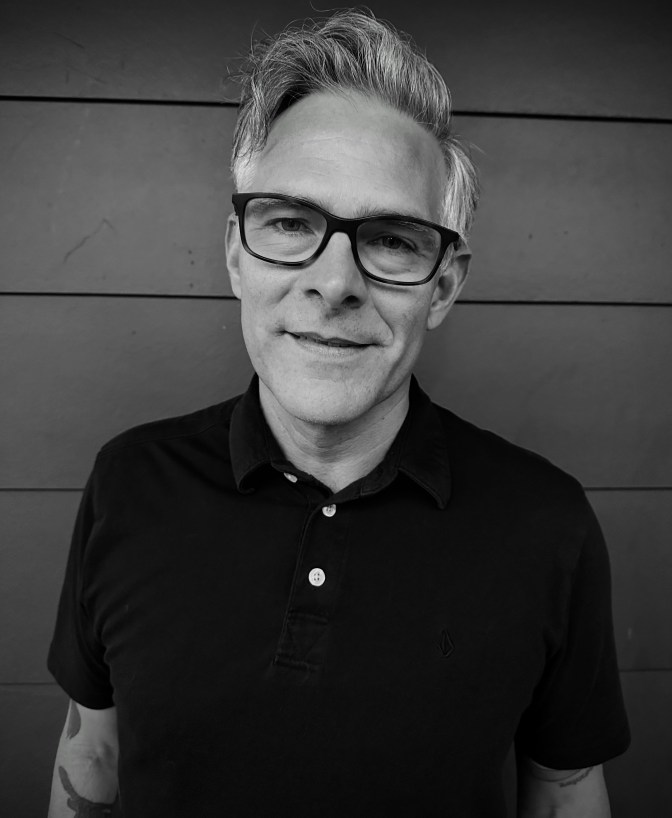
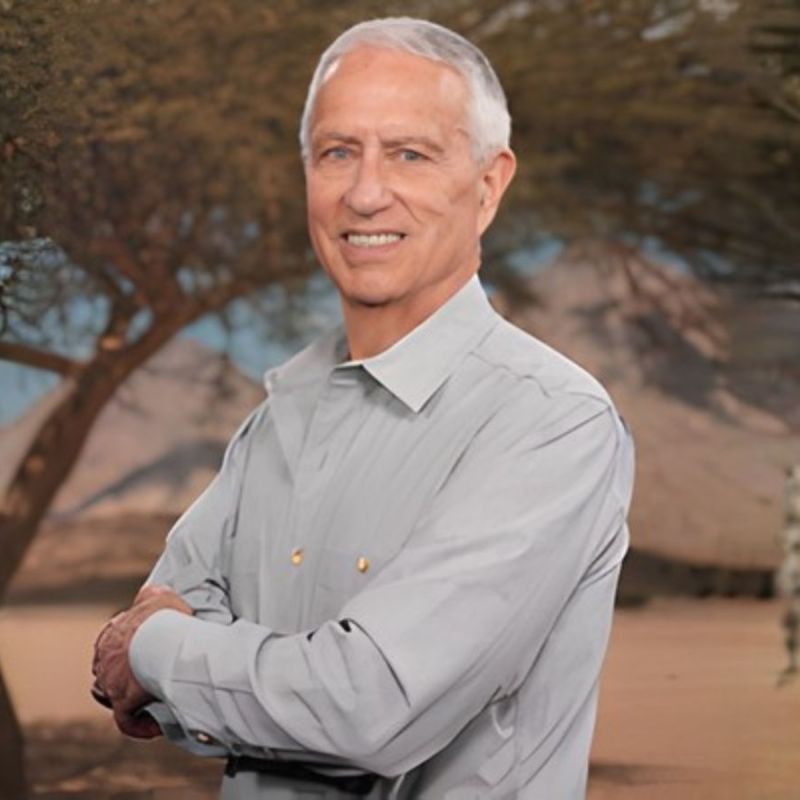
Dust Kunkel grew up in Ghana, West Africa. With a mother from Montana and a father from Oregon, he returned to the Pacific Northwest at age seventeen and fell in love with a Northwest girl and the rivers, mountains, and canyons of the region. Over the years he has taught literature, guided the Salmon River in Idaho, foster-parented teenagers, managed outdoor schools, and directed student leadership programs at a university. Dust has a BA in Literature, an MSc in Outdoor Education from the University of Edinburgh, Scotland, and is an executive coach. Dust and his wife, Jan, live in Eugene, Oregon, and have two daughters launched from the nest and two elderly retriever mixes, Bowie and Percy, who will not launch from any nest. In his free time, Dust reads, goes on adventures with Jan, writes and performs songs, and fly-fishes the rivers of the Pacific Northwest.
⭐⭐⭐⭐⭐
“I hope it makes them more human in the best ways.”
– Dust Kunkel
Links
Share Your Insights
What resonated with you most from Dust Kunkel’s insights? Share your thoughts:
- How has nature influenced your own perspective on life or story?
- Do you think stories find us or we find them?
- What role does personal experience play in creative work?
Alignment with the UN SDGs
- SDG 4: Encourages lifelong learning through literature and reflection.
- SDG 10: Highlights diverse cultural experience and inclusion.
- SDG 15: Connects human wellbeing with nature and environment.
Other Highlights

Looking for something?
Type in your keyword(s) below and click the “Search” button.
Helpful Shortcuts
More Stories





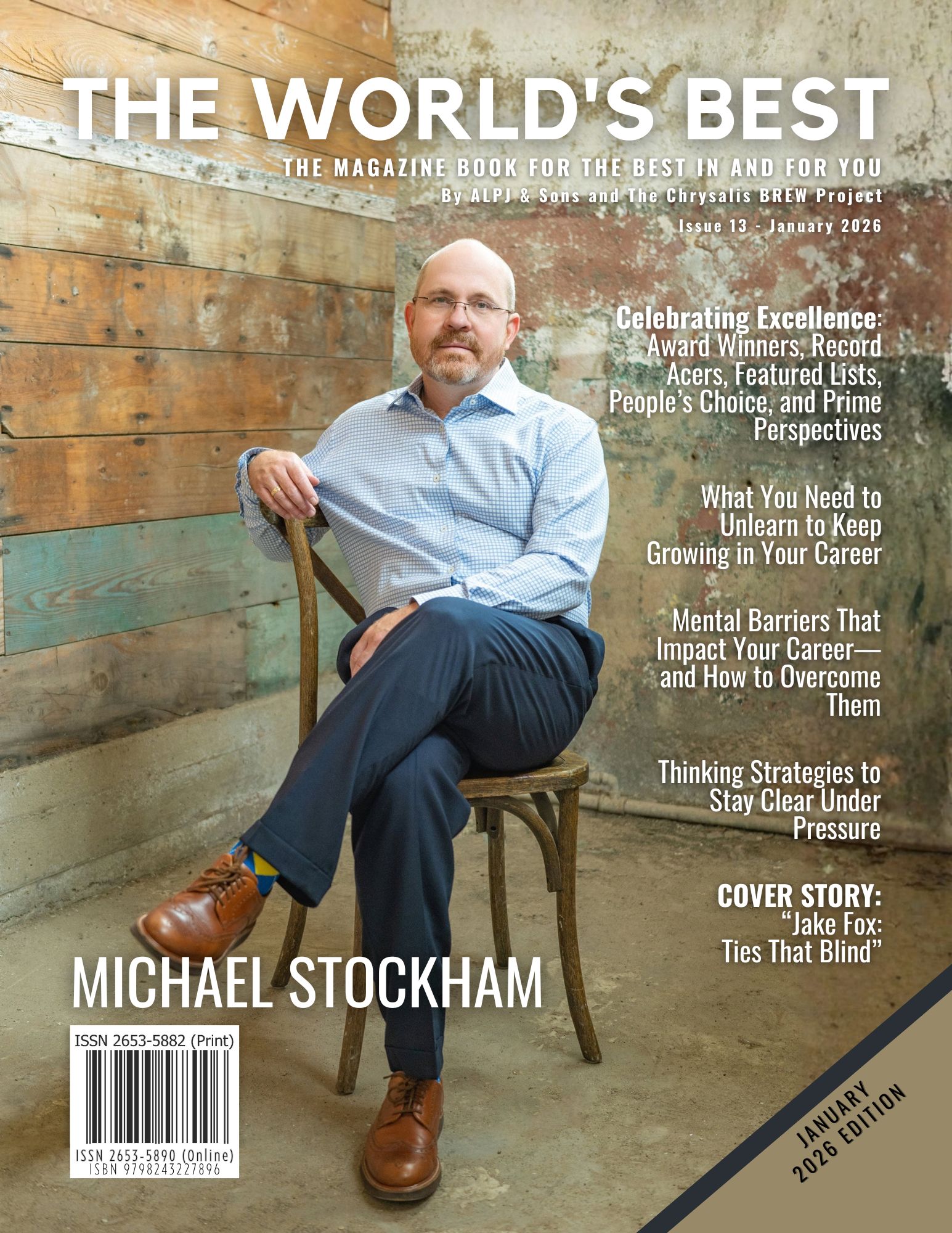
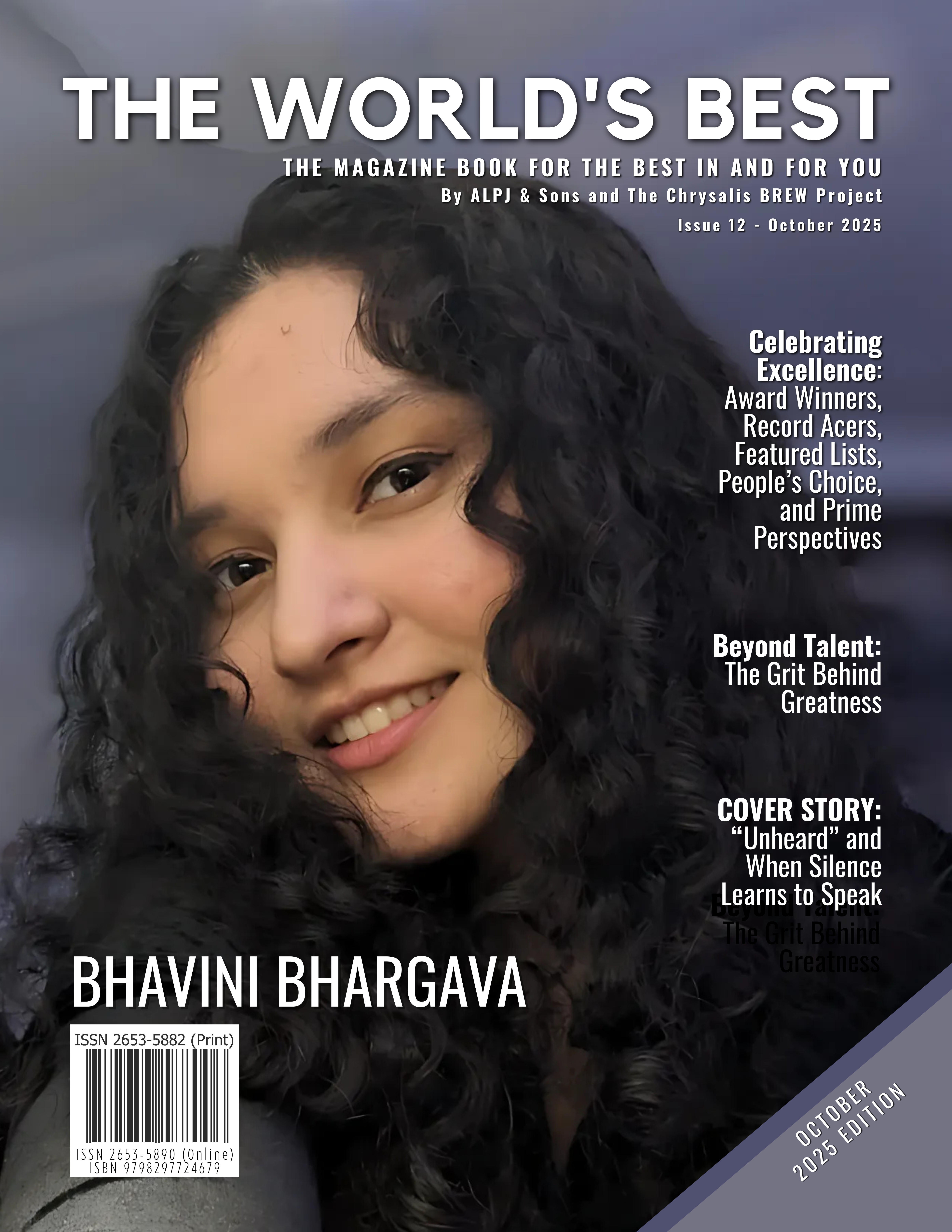
Print and Digital Magazine
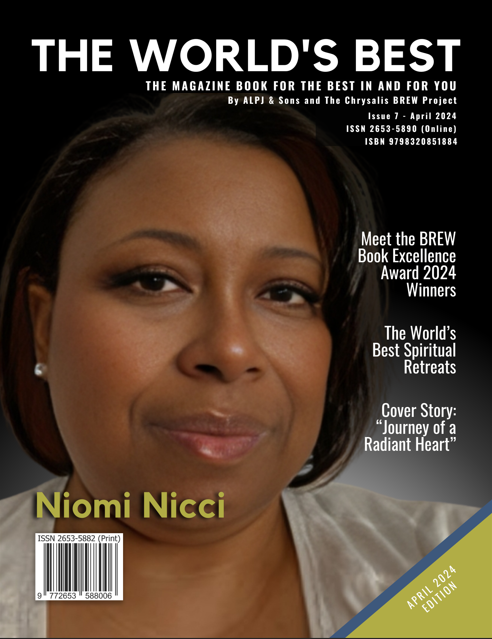
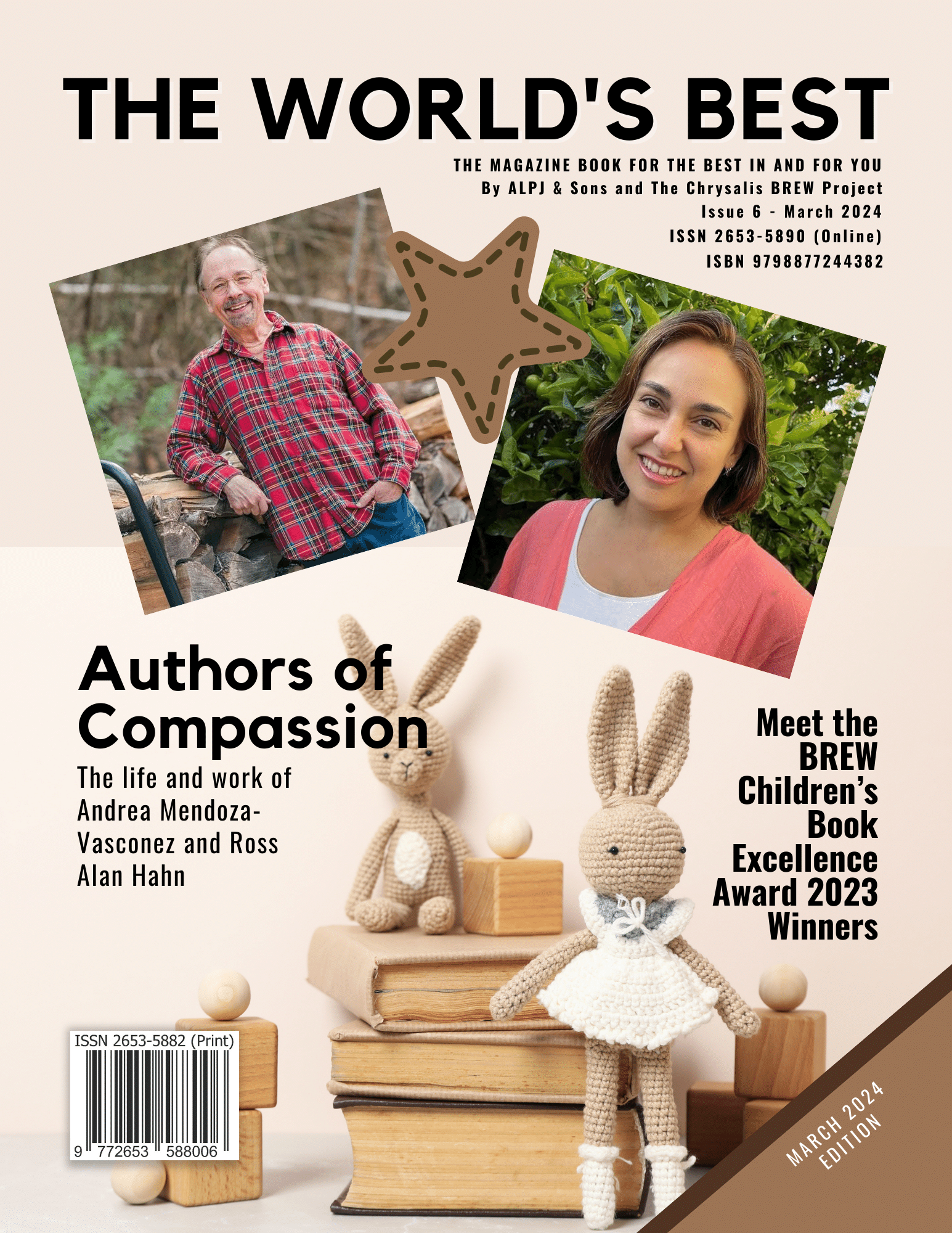
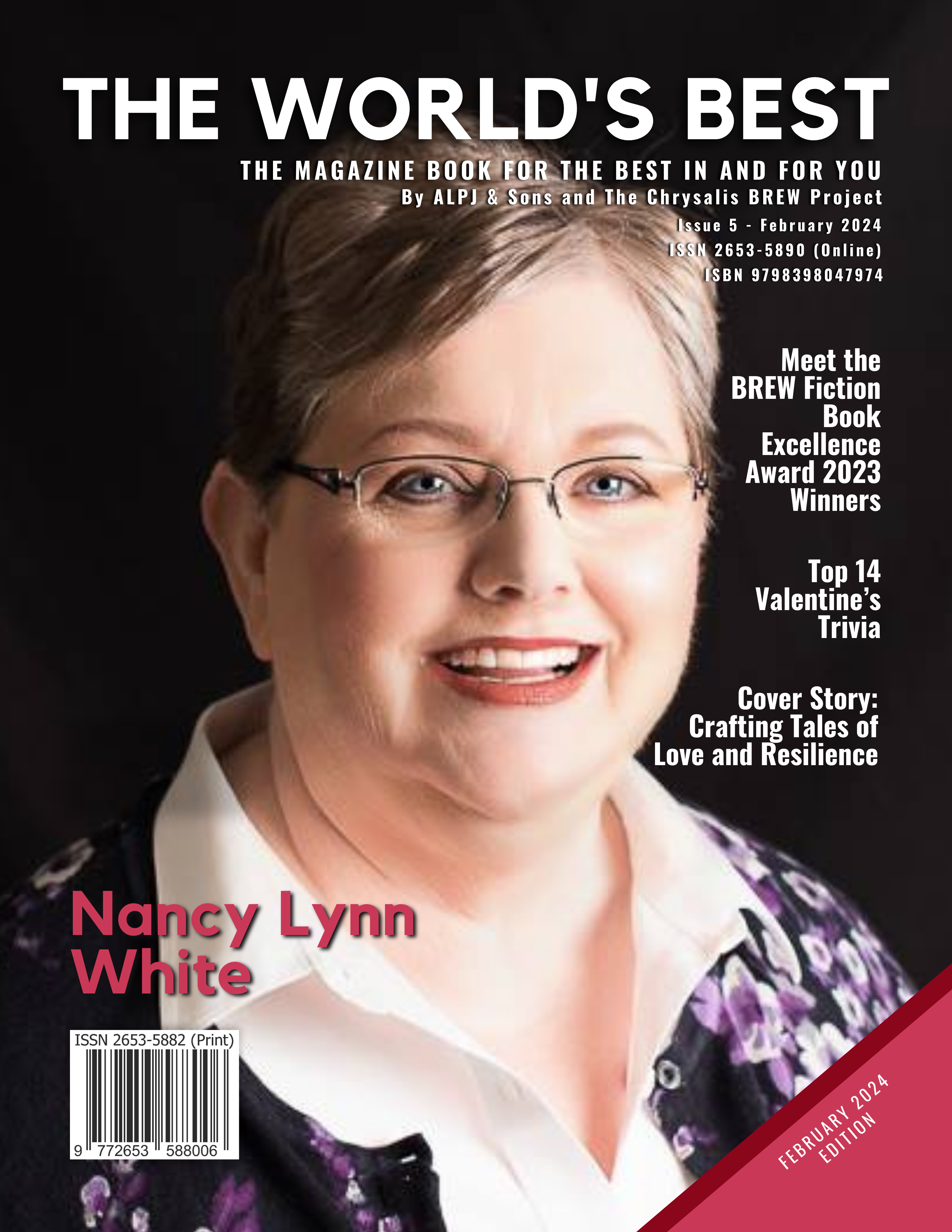
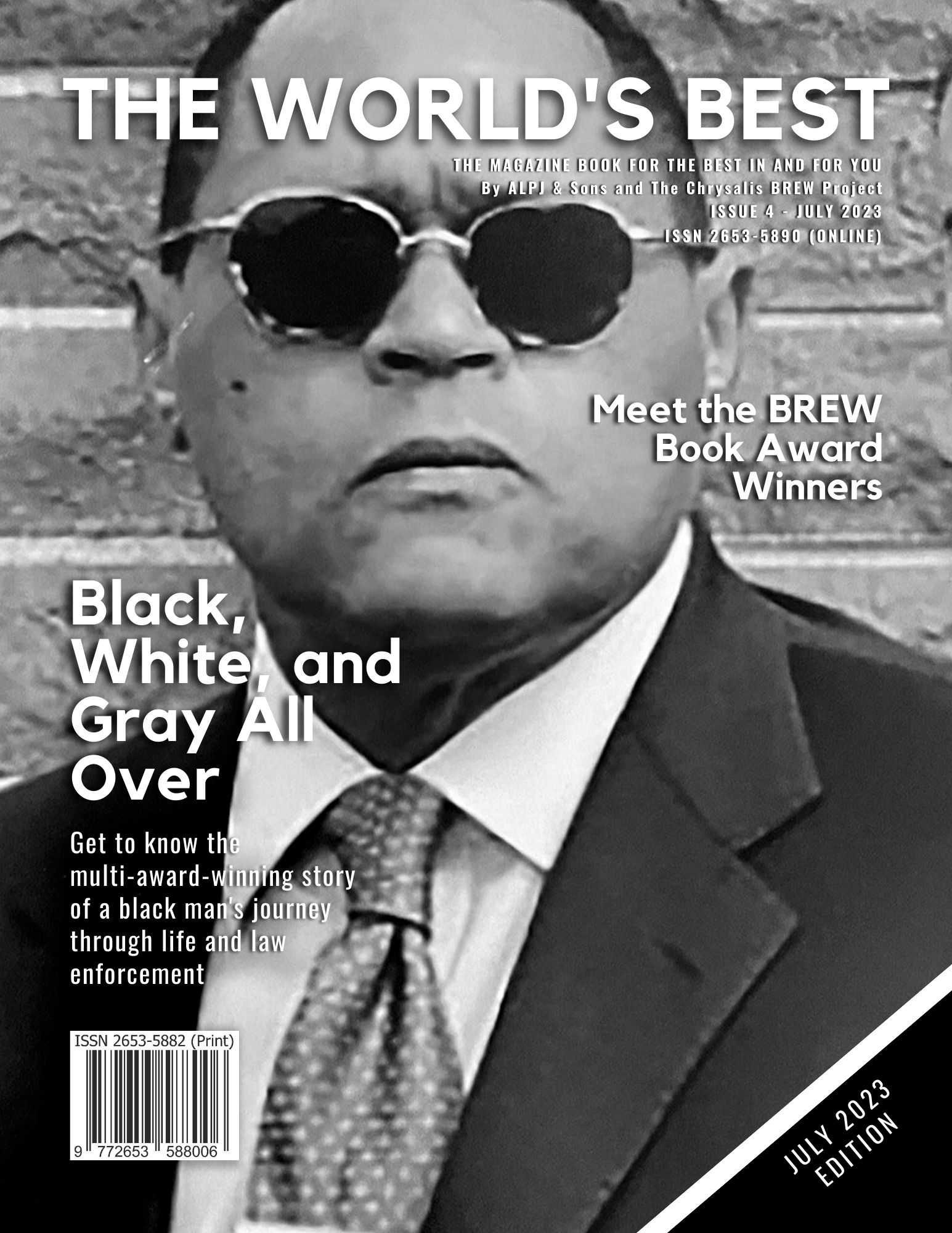

Don’t just read about greatness. Own it!

About Us
The World’s Best Magazine is a print and online publication that highlights the extraordinary. It is your passport to a universe where brilliance knows no bounds. Celebrating outstanding achievements in various fields and industries, we curate and showcase the exceptional, groundbreaking, and culturally significant. Our premier laurels, The World’s Best Awards, commend excellence through a unique process involving subject matter experts and a worldwide audience vote. Explore with us the pinnacle of human achievement and its intersection with diversity, innovation, creativity, and sustainability.
We recognise and honour the Traditional Owners of the land upon which our main office is situated. We extend our deepest respects to Elders past, present, and emerging. We celebrate the stories, culture, and traditions of Aboriginal and Torres Strait Islander Elders from all communities who also reside and work on this land.
Disclaimer: The World’s Best does not provide any form of professional advice. All views and opinions expressed in each post are the contributor’s own. Whereas we implement editorial policies and aim for content accuracy, the details shared on our platforms are intended for informational purposes only. We recommend evaluating each third-party link or site independently, as we cannot be held responsible for any results from their use. In all cases and with no exceptions, you are expected to conduct your own research and seek professional assistance as necessary prior to making any financial, medical, personal, business, or life-changing decisions arising from any content published on this site. All brands and trademarks mentioned belong to their respective owners. Your continued use of our site means you agree with all of these and our other site policies, terms, and conditions. For more details, please refer to the links below.
About | Advertise | Awards | Blogs | Contact | Disclaimer | Submissions | Subscribe | Privacy | Publications | Terms | Winners
The World’s Best: A Magazine That’s All About What’s Great | theworldsbestmagazine.com | Copyright ⓒ 2022-2026
Let’s connect
Discover more from The World's Best
Subscribe to get the latest posts sent to your email.

 The World's Best