
“I believe that if the real aspects of a story are realistic, then the speculative parts are more believable.”
– Donald Firesmith
Donald, thank you for joining us. To start, could you introduce yourself in your own words, share what you do, and describe what motivates your writing?
I am a multi-award-winning author of speculative fiction, including science fiction, fantasy, paranormal horror, and children’s novels and collections of short stories. I constantly watch science, AI, and robot videos and read books and articles on these topics. These are the primary sources of ideas for new short stories, novelettes, novellas, and novels. If I think the idea is good, then I feel compelled to write it. And if the resulting story is good, then I publish it.
I am also an internationally recognized systems and software engineer.
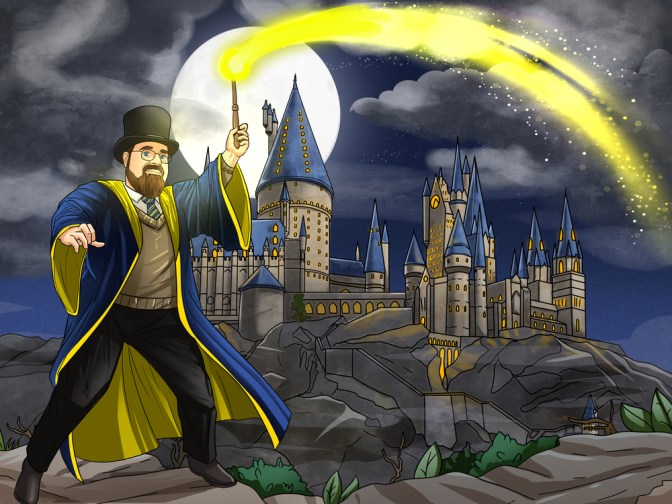
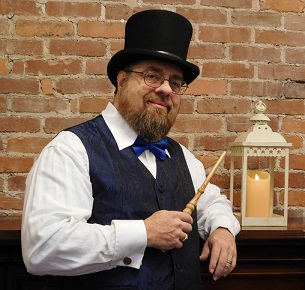
I make and sell handcrafted, bejeweled magic wands.
Your professional background includes extensive experience in software and systems engineering. How has that experience influenced the kinds of stories you choose to tell?
Prior to retiring to become a full-time novelist and short story author, I earned an international reputation as an authority on systems and software engineering, authoring eight engineering books and nearly 300 technical articles and conference papers based on my 40+ years spent developing large, complex, software-intensive systems. These publications have been cited approximately 4,500 times. In 2015, the Association for Computing Machinery named me an ACM Distinguished Engineer.
This background explains my preference for writing hard science fiction (i.e., stories in which the science and engineering are correct or at least plausible). My science fiction is well researched, and I rely on science, technology, and military technical advisors to ensure that the non-speculative aspects of my stories are realistic and believable. I believe that if the real aspects of a story are realistic, then the speculative parts are more believable.
More Future Dreams and Nightmares explores imagined futures shaped by artificial intelligence. What initially inspired you to create this collection?
Even though I have retired from engineering work, I still maintain my interest in AI and robotics. I have written white papers and a book on AI/robot consciousness and the economic impact of AI and robotics. AI and robotics are advancing at an incredibly rapid pace, and many people do not realize how soon they will radically change everyone’s lives. Many of my stories take place in the near future, and several of them have already partially come to pass.
Writing about technology often involves balancing realism and imagination. How do you approach making complex technical ideas accessible and engaging for readers?
I often describe complex topics in simple terms and use real terminology rather than technobabble. I also get the idea across by showing how it affects the characters in my stories.
Many of your stories explore emotional and ethical dimensions alongside innovation. Why is it important to you to place human feelings at the center of speculative fiction?
When I first started writing science fiction as a teenager, my stories were often technology driven. But we humans are a social species, primed to understand and crave human interaction. Thus, as a mature author, I have learned that the best way to reach my readers is to concentrate on character-driven stories. I put characters into a world with advanced technology and show how it affects them physically, mentally, and emotionally. These are the characters that readers empathize with and remember.
Some of the scenarios in your work are unsettling by design. What role do discomfort and challenge play in the reading experience you hope to create?
Some aspects of the future will be unsettling. These stories enable readers to understand and cope with the radical changes coming in the next few decades.
Over the course of your writing career, what moments or projects have most influenced how you think about storytelling and craft?
That is a hard question to answer because many moments and projects have influenced how I think about storytelling and craft. One lesson I learned: I used to be a pantser (i.e., fly by the seat of my pants), putting characters in situations and then seeing how they acted. I rarely knew what would happen or what the characters would say or do until I wrote that part of the story. Since then, I’ve become a plotter (i.e., creating detailed outlines and character sheets). This has two major advantages: If I get writer’s block, I can always jump to another chapter or even another book. I also avoid many inconsistencies that I must later find and fix.
Recognition, feedback, and reader engagement can shape an author’s perspective. How do you reflect on responses to your work, whether from critics or general readers?
My books and short stories have won 28 awards. These awards are not just good for advertisements; they boost my morale and help me keep writing. Book reviews are critically important for an indie author such as me to reach potential readers. I read every review, feel good after each positive one, and consider what I could have done better for each negative one. Besides relying on critics and general readers, I also rely on a team of beta reviewers. I also use AIs as critics. I ask them to critique my stories, then look at the weaknesses they identify to guide me on which text I might need to rewrite or expand.
Speculative fiction often comments on the present as much as the future. What aspects of today’s world most strongly inform your imagined scenarios?
Currently, I am heavily influenced by AI, robots, and their effects on society.
This is what many Star Trek episodes did: “safely” comment on current issues by moving them to a future or alien world. For example, I am currently finishing a novel about an artificial superintelligence and the enhancement of human intelligence titled A Third Path. When some people have their intelligence enhanced, there are all sorts of impacts on society.
Looking ahead, are there themes, technologies, or narrative approaches you feel particularly drawn to exploring next?
Not really. My stories are typically triggered by the videos I watch, the books and articles I read, and often the dreams I have.
If you were to write your bio in your own words, what would you say? Looking ahead, what kind of long-term impact would you like your work to have?
I would like the following epitaph:
Donald Firesmith. Loved husband and father. Respected systems and software engineer. Multi-award-winning author of speculative fiction. Futurist. World traveler. Master wand maker. He did his best to leave the world a little bit better than he found it.
⭐⭐⭐⭐⭐
“He did his best to leave the world a little bit better than he found it.”
– Donald Firesmith
Links
- For more details about Donald Firesmith, visit his website.
- Know more about the BREW Book, Blog, and Poetry Awards here
Share Your Insights
What did you think of Donald Firesmith’s perspective on blending engineering and fiction? Join the conversation and share your thoughts below:
- Do you prefer science fiction grounded in real science or pure imagination?
- How do you think AI will shape storytelling in the future?
- Which themes in speculative fiction resonate most with you?
Alignment with the UN SDGs
- SDG 4: Promotes lifelong learning through science and technology themes.
- SDG 9: Explores innovation and AI.
- SDG 16: Encourages ethical reflection on societal change.
Other Highlights

Looking for something?
Type in your keyword(s) below and click the “Search” button.
Helpful Shortcuts
More Stories







Print and Digital Magazine

Don’t just read about greatness. Own it!

About Us
The World’s Best Magazine is a print and online publication that highlights the extraordinary. It is your passport to a universe where brilliance knows no bounds. Celebrating outstanding achievements in various fields and industries, we curate and showcase the exceptional, groundbreaking, and culturally significant. Our premier laurels, The World’s Best Awards, commend excellence through a unique process involving subject matter experts and a worldwide audience vote. Explore with us the pinnacle of human achievement and its intersection with diversity, innovation, creativity, and sustainability.
We recognise and honour the Traditional Owners of the land upon which our main office is situated. We extend our deepest respects to Elders past, present, and emerging. We celebrate the stories, culture, and traditions of Aboriginal and Torres Strait Islander Elders from all communities who also reside and work on this land.
Disclaimer: The World’s Best does not provide any form of professional advice. All views and opinions expressed in each post are the contributor’s own. Whereas we implement editorial policies and aim for content accuracy, the details shared on our platforms are intended for informational purposes only. We recommend evaluating each third-party link or site independently, as we cannot be held responsible for any results from their use. In all cases and with no exceptions, you are expected to conduct your own research and seek professional assistance as necessary prior to making any financial, medical, personal, business, or life-changing decisions arising from any content published on this site. All brands and trademarks mentioned belong to their respective owners. Your continued use of our site means you agree with all of these and our other site policies, terms, and conditions. For more details, please refer to the links below.
About | Advertise | Awards | Blogs | Contact | Disclaimer | Submissions | Subscribe | Privacy | Publications | Terms | Winners
The World’s Best: A Magazine That’s All About What’s Great | theworldsbestmagazine.com | Copyright ⓒ 2022-2026
Let’s connect
Discover more from The World's Best
Subscribe to get the latest posts sent to your email.

 The World's Best