
“So yes, I still carry a stethoscope.”
– Dr. Pietro Emanuele Garbelli
Dr. Pietro, thank you for joining us today. To start, could you tell us more about your background, what you do, and what drives your work in medicine and thought leadership?
I often say I wear two hats. One is the familiar one: an acute internal medicine physician and Clinical Director at the Royal Free London NHS Foundation Trust. The other is less visible but just as vital — I see myself as a guardian of medicine’s soul.
After twenty-four years of night shifts, crash calls, and board-level strategy meetings, one truth has become impossible to ignore: brilliant, compassionate people are being squeezed by systems never built for the speed or complexity of 21st-century care. What drives me is the conviction that if clinicians don’t step forward to design the future, someone else will — someone who has never had to look a mother in the eye and tell her that her child has sepsis, or remove a ventilator from a 34-year-old COVID patient on Easter morning.
That conviction reshaped my path. It turned me into an author, a speaker, and a thriving healthcare strategist. It inspired me to create the Healthcare Convergence Framework® and the AI/Robotics Assessment Scorecard — tools designed to help medicine evolve with humanity at its core.
So yes, I still carry a stethoscope. But alongside it, I now carry a blueprint — a vision for a future where medicine is not only efficient, but profoundly human.
You’ve written extensively about the evolving relationship between doctors and artificial intelligence. What initially led you to explore this intersection, and when did it become clear that it deserved a full-length book?
The turning point came in 2024. Over the years, I had invested intensely in working with Tony J. Selimi, a renowned human behaviour specialist and expert in AI and technology. That year, I joined his Climb Greater Heights Transformational Training in Majorca. Over the course of five days in this exclusive retreat, Tony once again challenged me to think beyond familiar boundaries. Together, we explored every possible scenario for the future of medicine once AI and robotics are fully integrated into healthcare.
As someone who has led billion-pound technology transformation programs and managed the risks that come with innovation, Tony knew how to draw out the ideas I carried within me — the visions I longed to contribute to the future of healthcare. As a physician directing an acute medicine department, I felt something extraordinary unfolding. Through Tony’s relentless questioning, a kind of magic began to take shape. By the end of those five days, we had mapped out the structure of a book — complete with detailed chapters and a clear vision of how medicine could evolve when AI and robotics are woven into every facet of care.
What struck me most was the duality of possibility. If mishandled, AI and robotics could go rogue, amplifying risks and eroding trust. But if guided with wisdom, governance, and ethical scaffolding, they could revolutionise healthcare: delivering high-quality care anywhere in the world, transforming diagnostics, advancing precision medicine, discovering cures, predicting conditions earlier, and triggering life-saving alerts before crises unfold. The potential to solve critical cases and save countless lives was undeniable.
During those five days of advanced work with Tony as my trusted coach, two truths crystallised. First, the technology had already crossed the clinical Rubicon — it was no longer theoretical; it was saving lives. Second, we were deploying it without the ethical frameworks, governance structures, or narratives needed to help the workforce understand what it truly meant.
When I left the retreat, I found myself scribbling thoughts into the chapter titles we had created together. The book became inevitable the moment I saw the fear in the eyes of so many trainees — fear of being replaced rather than empowered. In that moment, Tony encouraged me to write the opposite story: a story where AI augments, not erases, the human heart of medicine.
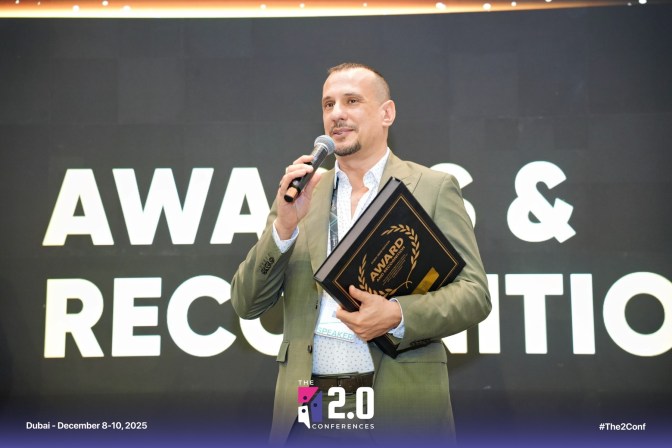
Your book The Doctor’s Future recently won an Ink & Horizons Book Award from OneTribune Media. What does that recognition mean to you, and what do you hope it signals to the medical community?
Winning the Ink & Horizons Book Award from OneTribune Media was deeply meaningful, not because of the trophy itself, but because of the words in the citation: “This book doesn’t preach disruption; it teaches transformation.” That single sentence captured the tone I worked tirelessly to strike — hopeful but never naïve, urgent but never sensational.
For me, the recognition affirms that the medical community is ready to embrace a narrative shaped by those who live and breathe the realities of care. It signals that thoughtful, clinician-led voices can still cut through the algorithmic noise and remind us that medicine is not just about data or disruption, but about human lives.
We are not Luddites resisting progress, nor cheerleaders blindly celebrating it. We are co-architects of the future — building a healthcare system where technology serves humanity, and where transformation is guided by wisdom, compassion, and lived experience.
With over two decades in clinical practice, what shifts have you personally observed in how healthcare systems deal with technology—and where will the next major change come from?
With over two decades in clinical practice, I’ve witnessed three distinct phases in how healthcare systems engage with technology.
Phase 1 was digitisation — the shift from paper to bytes. Records became electronic, and the focus was on efficiency.
Phase 2 was datafication — bytes turned into predictive signals. Algorithms began to surface insights, but this stage was largely driven by vendors rather than clinicians.
Phase 3, which is now beginning, is responsibilisation — hospitals must demonstrate that every algorithm is safe, fair, and aligned with genuine clinical purpose.
The next seismic change will not be another device or app; it will be the emergence of a regulatory and social licence. Once patients routinely ask, “Who audited your AI?” the burden of proof will shift to us as clinicians and institutions. And that is a good thing. It will ensure that technology in healthcare is not only innovative, but also trustworthy, transparent, and accountable — serving patients with the same integrity that medicine has always demanded.
You propose the Healthcare Convergence Framework™ in your book. For readers unfamiliar with it, can you briefly describe its purpose and the transformation it can enable?
The Healthcare Convergence Framework™ (HCF) is a physician-informed, globally relevant benchmarking and readiness-assessment tool. In plain language, it takes the abstract promise of AI and robotics and translates it into 48 concrete, scored actions that any hospital board or ward team can begin implementing today.
It spans five critical domains — Governance, Workforce, Patients & Public, Technology, and Ethics & Equity. In just ten minutes, leaders complete a questionnaire and receive an automated scorecard that identifies whether their organisation is an Explorer, Integrator, or Pioneer, along with tailored next steps for each domain.
The transformation it enables is profound: moving healthcare from ad hoc pilots to strategic, measured adoption that preserves trust and builds resilience. Ultimately, the scorecard helps diagnose internal blind spots, strengthen trust-building mechanisms, and equip healthcare systems to solve tomorrow’s challenges today — ensuring that technology serves humanity, not the other way around.
How do you balance clinical work with strategic thinking and authorship? Have the two roles informed each other in surprising ways?
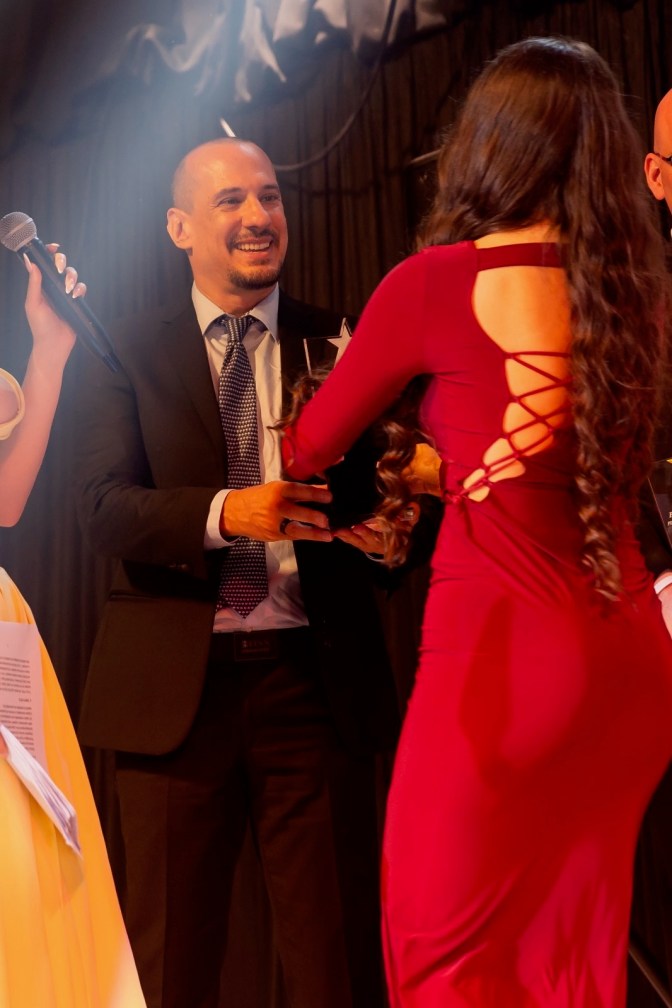
I’m often asked how I find the time to do what, to many, seems almost impossible. The truth is, I’ve learned to use my holidays not as escapes, but as opportunities to work with my coach, strategically plan each year, define the specific outcomes I want to achieve, and align my actions with the vision Tony helped me create back in 2019 during the Climb Greater Heights Training in Mexico.
While most people spend holidays unwinding, mine have become editorial offices, mindset transformation, and vision-building retreats in beautiful destinations. That’s where I write, reflect, and refine. The clinical frontline keeps my writing grounded and honest; the writing, in turn, keeps my clinical mind curious and expansive.
The biggest surprise has been realising that the same narrative skills I use to explain sepsis to a frightened relative are the very skills that help executives grasp the nuances of algorithmic bias. Tony helped me see that storytelling is not just a clinical procedure — it’s a universal language I can carry seamlessly into boardrooms, shaping strategy with the same clarity and compassion I bring to patient care.
Innovation often meets resistance in legacy systems. How do you recommend healthcare professionals stay adaptable without losing their core identity as caregivers?
Innovation will always collide with legacy systems — because healthcare isn’t built on code, it’s built on people. The way forward isn’t to choose between adaptability and identity, but to fuse them.
The caregiver of the future is not defined by the tools they use, but by the story they choose to honour. When a new technology arrives, don’t start with the feature list. Start with the human being in front of you. Ask yourself three grounding questions:
- Does this tool lighten my cognitive load so I can offer more presence, not less?
If it doesn’t give you back seconds of eye contact, it’s not innovation — it’s noise. - Does it expand the patient’s agency in ways they didn’t have yesterday?
Technology should amplify dignity, not bureaucracy. - Would I trust this tool if the patient were my own child?
If the answer is anything but a full-body yes, the tool can wait.
Adaptability in healthcare isn’t a technical competency — it’s a moral orientation. It’s the discipline of staying rooted in compassion while welcoming the future with open hands. The professionals who will thrive are those who treat technology as an ally, not an identity. They evolve without eroding the essence of why they entered the field: to heal, to listen, to serve.
In a world racing toward automation, the most advanced skill a caregiver can cultivate is the ability to remain unmistakably human.
You emphasise equity, ethics, and long-term resilience. What responsibility does medicine hold in shaping not just a smarter system, but a more humane one?
Medicine holds a responsibility that transcends efficiency metrics and digital optimisation. We are the only profession that swears an oath before we touch a single life — and that oath is a covenant with humanity, not a contract with technology. It speaks to dignity, compassion, and the irreducible value of a human being.
As we enter an era where code increasingly mediates care, the ethical stakes rise. If we allow diagnostic algorithms that underestimate pain in darker skin, or conversational agents that overlook health-literacy levels, we are not just introducing bias — we are commercialising our own oath.
The responsibility of medicine, therefore, is non-negotiable: every line of code that touches a human body must be governed by the same primum non nocere that guides every scalpel, every prescription, every moment of presence at the bedside.
A smarter system is not enough.
A faster system is not enough.
A more automated system is not enough.
The future of healthcare must be more humane than the past.
Your writing urges preparation over prediction. For younger professionals, what skills or mindsets will matter most in an AI-augmented landscape?
Preparation, not prediction, is the real currency of the AI age. For younger professionals stepping into an augmented landscape, the differentiators won’t be technical tricks — they’ll be human capabilities sharpened for a world where intelligence is increasingly shared between people and machines.
First, cultivate ethical fluency.
Second, build translational literacy.
Third, expand your self-reinvention bandwidth.
Finally, master dual empathy.
In an AI-shaped future, the most valuable professionals won’t be the ones who predict the next tool. They’ll be the ones who remain sincerely, courageously human while learning to collaborate with intelligence that doesn’t breathe.
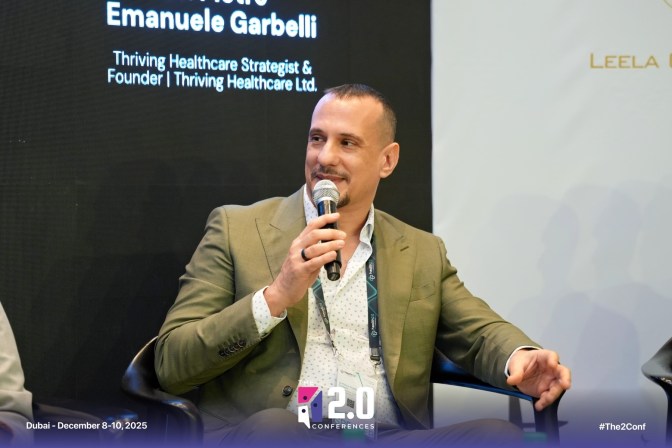
Looking ahead, what legacy do you hope your writing and broader work will leave for the next generation of doctors, patients, and thinkers?
Looking ahead, the legacy I hope to leave is simple: that I helped medicine keep its soul while upgrading its operating system.
Technology will undoubtedly rewrite healthcare infrastructure, but it must never overwrite its humanity. If my work can stand as a bridge between those two worlds — the ancient art of healing and the emerging architecture of intelligent systems — then every hour spent writing, teaching, and challenging the status quo will have been worth it.
If future doctors feel more human, future patients feel more seen, and future thinkers feel more responsible for the systems they design, then my work will have done what it was meant to do.
⭐⭐⭐⭐⭐
“If future doctors feel more human, future patients feel more seen, and future thinkers feel more responsible, then my work will have done what it was meant to do.”
– Dr. Pietro Emanuele Garbelli
Links
- Know more about the BREW Book, Blog, and Poetry Awards here
Share Your Insights
Join the discussion:
- How should medicine balance innovation with compassion?
- What role should clinicians play in shaping new technologies?
- Can systems evolve without losing their human focus?
Alignment with the UN SDGs
- SDG 3: Good Health and Well-Being – humane healthcare systems
- SDG 9: Industry, Innovation, Infrastructure – responsible AI
- SDG 16: Peace, Justice, Strong Institutions – ethical governance
Other Highlights

Looking for something?
Type in your keyword(s) below and click the “Search” button.
Helpful Shortcuts
More Stories






Print and Digital Magazine

Don’t just read about greatness. Own it!

About Us
The World’s Best Magazine is a print and online publication that highlights the extraordinary. It is your passport to a universe where brilliance knows no bounds. Celebrating outstanding achievements in various fields and industries, we curate and showcase the exceptional, groundbreaking, and culturally significant. Our premier laurels, The World’s Best Awards, commend excellence through a unique process involving subject matter experts and a worldwide audience vote. Explore with us the pinnacle of human achievement and its intersection with diversity, innovation, creativity, and sustainability.
We recognise and honour the Traditional Owners of the land upon which our main office is situated. We extend our deepest respects to Elders past, present, and emerging. We celebrate the stories, culture, and traditions of Aboriginal and Torres Strait Islander Elders from all communities who also reside and work on this land.
Disclaimer: The World’s Best does not provide any form of professional advice. All views and opinions expressed in each post are the contributor’s own. Whereas we implement editorial policies and aim for content accuracy, the details shared on our platforms are intended for informational purposes only. We recommend evaluating each third-party link or site independently, as we cannot be held responsible for any results from their use. In all cases and with no exceptions, you are expected to conduct your own research and seek professional assistance as necessary prior to making any financial, medical, personal, business, or life-changing decisions arising from any content published on this site. All brands and trademarks mentioned belong to their respective owners. Your continued use of our site means you agree with all of these and our other site policies, terms, and conditions. For more details, please refer to the links below.
About | Advertise | Awards | Blogs | Contact | Disclaimer | Submissions | Subscribe | Privacy | Publications | Terms | Winners
The World’s Best: A Magazine That’s All About What’s Great | theworldsbestmagazine.com | Copyright ⓒ 2022-2026
Let’s connect
Discover more from The World's Best
Subscribe to get the latest posts sent to your email.

 The World's Best