
“I’ve been to 80 countries and speak four foreign languages.”
– Richard Scott Sacks
Richard, thank you for joining us. To begin, could you introduce yourself in your own words—what you do, what draws you to your work, and what you aim to contribute through it?
Hello! It’s wonderful to have this opportunity. My name is Richard Scott Sacks. I’m a writer with two books under my belt and a third on the way. And I’m an American diplomat. Writer and diplomat. Those are two vocations I identified at an early age because I loved reading and language and wanted to write, and I loved to travel and living abroad. I was good at learning languages, and I got along easily with foreigners.
I’ve been to 80 countries and speak four foreign languages. Writing has led me to specialize in journalism and fiction. My novel, DRINKING FROM THE STREAM, focuses on difficult moral choices, politics, friendship, acts of courage, coming of age, and long-distance travel in the East African outback at a time of upheaval, dictatorship, and mass murder. Set in the early 1970s during the Vietnam War and the Chinese Cultural Revolution, STREAM presents the world as the characters see it while they grapple with moral ambiguity, cultural clashes, and revolution. Under great strain and uncertainty, constantly worried about how their lives and careers will turn out, these young people face the added stress of constantly crossing borders without knowing what new crisis they will face.
Your writing reflects time spent in many places and roles. How has moving across different environments influenced the way you observe people and situations?
Culture can be defined broadly as how people think within a given group, society, or nation. So understanding cultures offers a key to predicting what people will do and how they will view events. History, or historical myth, is an important part of culture and offers clues about political behavior. Understanding local economics is important, too.
How do people make a living? What do they eat? How do they live? What are their goals? What threatens them? What benefits them? How are they divided? Whom do they resent? These are just examples. You have to meet people where they live, and it helps if you know something about the place they inhabit.
Also be aware of how people perceive you—your nationality, your background, your language, your appearance, your actions and behavior. What are you yourself bringing to the interaction? It’s not just them!
When you begin a long-form project, what usually comes first for you: a question, a setting, a character, or a moment you cannot let go of?
Sometimes great events touch us deeply. In May 1972, while hitchhiking through Africa, I had reached Angola, which was then a Portuguese colony. I was reading the International Herald Tribune in a student cafeteria at the University of Luanda when an article caught my eye about ethnic killings in Burundi.
One month earlier, in April 1972, in a three-day rampage, Hutu rebels using pangas—machetes—had killed hundreds of unsuspecting Tutsi citizens in hopes of sparking a civil war.
The massacres that followed were even more shocking. The Tutsi-led Burundi army quickly defeated the Hutu death squads. Then they launched a much bigger, better organized ethnic bloodletting of their own. The Hutu revolt had been led by Hutu schoolteachers, jobless because no one in Tutsi-ruled Burundi would hire them. Burundi’s answer to unemployed Hutu schoolteachers was to kill educated Hutus, who were defined as any Hutu who had gotten past the fourth grade.
Tens of thousands were already dead in 1972. As we now know, by 1973 well over 200,000 Hutus had been murdered.
How and why did the initial uprising happen? And how could so many people be murdered so quickly—first by one group, then by another—I wondered. And why was the world ignoring it? I had been less than fifty miles from Burundi. What if I had decided to visit Burundi myself? If I had done that, I would have been there exactly when the killings broke out. This event is what led me to write DRINKING FROM THE STREAM.
Your work often explores how individuals respond to unfamiliar settings. What have you learned about adaptation and perspective through your own experiences?
Some people adapt to new settings quickly; others can’t do it. I’ve learned to be willing to be surprised. In an unfamiliar place, one must drop expectations and preconceptions, not jump to conclusions or stereotype, but look and listen instead.
Pay attention to what’s going on: study what people say, what they do, and how they act. You’ve got to go out and talk to people, ask questions, make friends, read newspapers, and listen to the radio. And if possible, you must learn the language. Without language, you’re sunk. You’ll never understand a culture and a society without it.
Looking back across your career, are there milestones, recognitions, or turning points that helped clarify your direction, and what did those moments teach you?
There were definitely moments of clarity. I lived in Germany when I was sixteen and studied German while living with a German family. Right out of college, I traveled and worked overseas for five years. I picked up languages quickly, kept a journal, and loved reading all kinds of novels, including foreign novels, plus history, politics, philosophy, travel stories, and economics.
When I came home, I decided to earn my living as a writer, though I didn’t always stick to it. I joined the Foreign Service partly to live abroad. I was well suited to the lifestyle. I noticed that I often enjoyed the company of foreigners as much as my fellow countrymen. If I don’t watch myself, I tend to “go native” quickly.
Writing often requires balancing research, memory, and imagination. How do you approach accuracy and responsibility while still allowing a story to breathe?
Imagination is crucial. It is the basis of fiction. Memory is not reliable; it’s more like a picture story we keep watching on our private movie screen. Keeping a journal helps.
I often have compared memories with people who traveled with me and find they either don’t remember the things I remember, and vice versa, or else they remember the same event completely differently. No matter. Writing fiction is impossible without memory, unreliable though it may be, but the author’s depiction of memory must be true.
A character must act in a way that’s true to herself, to what she and the other characters know, and to the situation. When writing historical fiction, the writer must keep his facts straight and be very sure not to contradict the historical record. At the same time, he must immerse the characters in a real framework of events as they actually transpired—or in situations that could have arisen within that framework. That requires careful research and careful sequencing of the plot.
Many readers are interested in how authors sustain curiosity over time. What practices or habits help you continue learning and refining your craft?
I’m always curious about how things work, about what makes people unique and why they do the things they do. I read a lot—newspapers, magazines, novels, biography, history. I try not to get stuck in my comfort zone.
I often force myself to branch out to areas where I know nothing, like fashion or sailing, and to areas where I would like to know more, like business or finance. About writing, I often hear people praise someone for being a born writer, which is just nonsense.
I won’t say everyone can learn how to write well, but I will say that the more you do something, the better you get at it. That’s also true of writing. Working at it constantly is what makes great writers.
In your view, how can storytelling contribute to greater understanding across cultures and backgrounds without simplifying complex realities?
“Novel” means “something new”—literally. At least part of the reason we read novels and fiction is to see new things with new eyes. As someone who has observed or been immersed in many foreign cultures, I thought writing about them could show readers something new—things that could lead to insights about foreign places they may never have a chance to visit.
But writing novels isn’t just a didactic exercise. A novel is meant to entertain, and what better way to entertain than by showing something novel? Complex realities will always remain complex. Maybe the best we can do is to gradually chip away at the complexities and gradually make them more familiar so that they become less intimidating and mysterious.
Your recent book was selected as a winner of The Bookish Reader’s Pick Award from The Bookish Magazine. What did that recognition represent to you personally and professionally?
I was thrilled to receive the award. Honestly, it was a huge surprise and a bit overwhelming—like I suddenly had friends and readers, enthusiastic ones, on the other side of the world. I am grateful to The Bookish judges for their unexpected recognition and fervent interest in my work.
As you look ahead to future projects, what themes or questions are you most interested in exploring next, and why do they matter to you now?
My next book, now with the publisher, is a short story collection called WORLD OF WORLDS: Stories from Four Continents. My idea was to explore how young people behave under pressure in strange environments.
The storylines follow characters often traveling in remote places globally—from India to the Congo—but sometimes in Europe or very close to home in Chicago, Detroit, Texas, or the East Coast. The characters, like all young people, are trying to figure out who they are and what to do with their lives.
They often must cope with stark internal conflicts and terrible moral dilemmas. It’s tough for young people on the move, who are vulnerable, have illusions, and lack experience, friends, and support networks. Forced to think on their feet, they often face unpalatable choices. Will they make their choices with resilience and grace, or will they resist making any choice at all? And how does that turn out for them?
If you were to write your bio in your own words, what would you say? Looking ahead, what kind of long-term impact would you like your work to have?
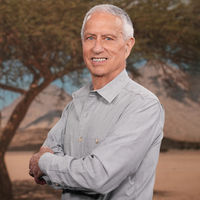
I’ve written three books, including two works of fiction. I worked over 35 years in diplomacy, foreign relations, and government. I worked for newspapers and a wire service. I’ve lived all over the world. I speak multiple languages. I married and raised a family.
I hope to be known and remembered as someone who made a difference. I hope to be an influential writer, and that means someone accomplished at their craft who called things by their real names and who stood up to injustice.
I also would like to be remembered as someone who did what he promised to do; who worked hard and provided for his family; who was faithful to his ideals; who was a true friend; who treated people fairly; who respected truth and knew it from a lie; who was willing to show the way to those searching for it; who knew he was part of a human continuum much bigger than any one person; and who always had time for children and for laughter.
⭐⭐⭐⭐⭐
“Complex realities will always remain complex.”
– Richard Scott Sacks
Links
- Know more about the BREW Book, Blog, and Poetry Awards here
Share Your Insights
Tell us what you think:
- How do your own experiences shape the stories you tell or read?
- Can travel change how we understand people?
- What themes in fiction matter most to you and why?
Alignment with the UN SDGs
- SDG 4: Quality Education – cultural understanding through literature
- SDG 10: Reduced Inequalities – global perspective
- SDG 16: Peace, Justice, Strong Institutions – reflection on moral choices
Other Highlights

Looking for something?
Type in your keyword(s) below and click the “Search” button.
Helpful Shortcuts
More Stories










Print and Digital Magazine
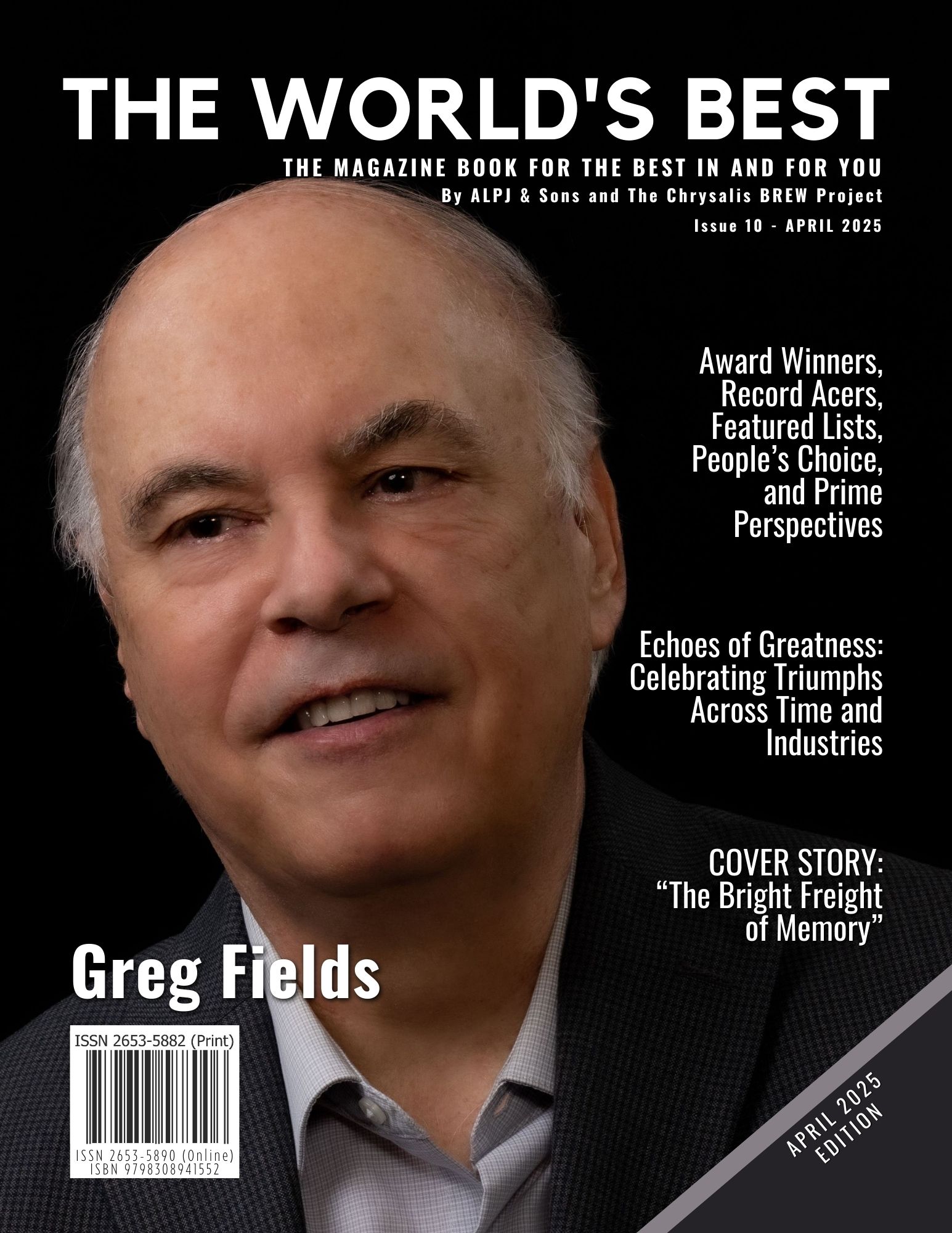
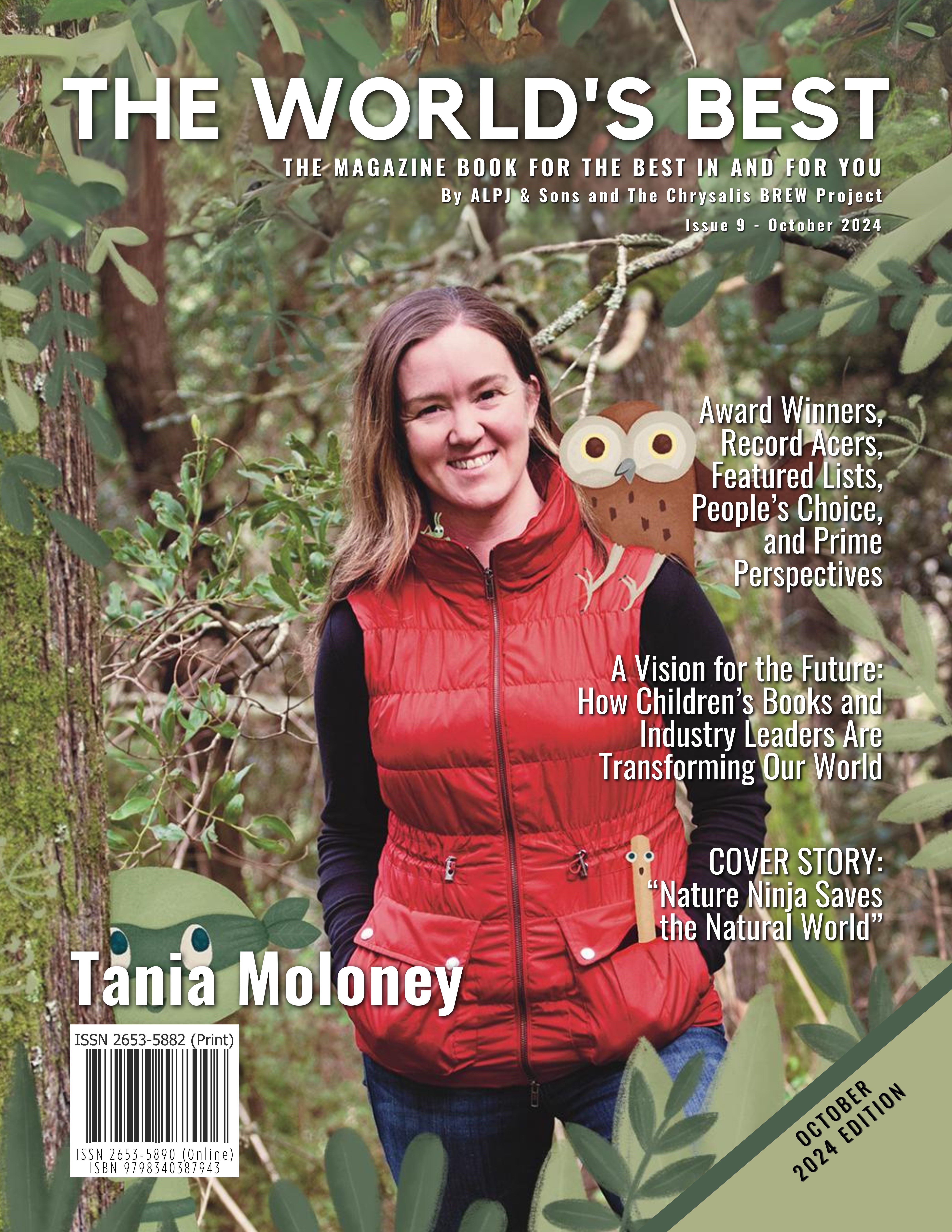

Don’t just read about greatness. Own it!

About Us
The World’s Best Magazine is a print and online publication that highlights the extraordinary. It is your passport to a universe where brilliance knows no bounds. Celebrating outstanding achievements in various fields and industries, we curate and showcase the exceptional, groundbreaking, and culturally significant. Our premier laurels, The World’s Best Awards, commend excellence through a unique process involving subject matter experts and a worldwide audience vote. Explore with us the pinnacle of human achievement and its intersection with diversity, innovation, creativity, and sustainability.
We recognise and honour the Traditional Owners of the land upon which our main office is situated. We extend our deepest respects to Elders past, present, and emerging. We celebrate the stories, culture, and traditions of Aboriginal and Torres Strait Islander Elders from all communities who also reside and work on this land.
Disclaimer: The World’s Best does not provide any form of professional advice. All views and opinions expressed in each post are the contributor’s own. Whereas we implement editorial policies and aim for content accuracy, the details shared on our platforms are intended for informational purposes only. We recommend evaluating each third-party link or site independently, as we cannot be held responsible for any results from their use. In all cases and with no exceptions, you are expected to conduct your own research and seek professional assistance as necessary prior to making any financial, medical, personal, business, or life-changing decisions arising from any content published on this site. All brands and trademarks mentioned belong to their respective owners. Your continued use of our site means you agree with all of these and our other site policies, terms, and conditions. For more details, please refer to the links below.
About | Advertise | Awards | Blogs | Contact | Disclaimer | Submissions | Subscribe | Privacy | Publications | Terms | Winners
The World’s Best: A Magazine That’s All About What’s Great | theworldsbestmagazine.com | Copyright ⓒ 2022-2026
Let’s connect
Discover more from The World's Best
Subscribe to get the latest posts sent to your email.

 The World's Best