
Pressure has a way of shrinking time and sharpening consequences. Psychologists note that stress narrows attention, while experienced professionals learn to counteract that instinct with structure, preparation, and deliberate simplification. From aviation checklists to emergency medicine protocols, history shows that clear frameworks outperform improvisation when stakes rise. Why do some people move forward calmly while others freeze? The answer often lies in habits built long before a crisis arrives. Decision science suggests that breaking complexity into manageable steps reduces cognitive overload and error. As the saying attributed to Dwight D. Eisenhower goes, “Plans are nothing; planning is everything.” This roundup explores how seasoned leaders think, decide, and act when clarity matters most.
Ship 85 Percent, Iterate From Feedback
My trick? I define what “good enough” looks like before we even start. During our fast growth, I saw how endless perfecting just stalls everything. Now we ship an 85% solution and iterate based on what users actually tell us. Deciding this upfront keeps me from getting stressed and makes the choices simple.
Max Marchione, Co-Founder, Superpower
——————————————-
Act Fast, Target the Biggest Constraint
I use a rapid cycle of observing and acting as opposed to sitting around, overthinking ideas. I look at where in the process there’s a blockage, identify what is the largest constraint, and proceed with the next step based on my observations. Being overly conservative in high-pressure situations increases your probability of failing. Therefore, I would rather make a relatively good move sooner rather than getting paralyzed and doing nothing until an ideal strategy is developed.
James Scribner, Co-Founder, The Freedom Center
——————————————-
Switch Languages to Unlock Sharper Strategy
When the courtroom heat is on, my brain switches to Spanish. Legal stuff can feel like a tangled mess, but thinking it through in another language somehow untangles it. I’ll catch an argument or a strategy I completely missed in English. If you have another language in your back pocket, give it a shot. It actually helps.
Ramiro Lluis, Managing Attorney, Lluis Law
——————————————-
Let the Mission Decide Tough Choices
When deciding whether the strategic options we have for today meet the goals of our organization or how many lives they save, I will always return to our mission statement. If it doesn’t help save more lives or meet the core goal, it is removed from consideration. This single reference point, or “North Star,” provides significant clarity when weighing difficult decisions. You don’t have to be extremely intelligent; you just have to remain focused on the original reason for starting your company.
Ryan Hetrick, Co-founder of Epiphany Wellness, Epiphany Wellness
——————————————-
Break Work Down, Automate, Trust the System
When deadlines pile up and I have a ton of decisions to make, I break the whole mess into smaller tasks. I map out every step and use simple tools to automate the boring repetitive stuff, which keeps my head clear. My advice is to simplify what you can and trust the system you’ve built to handle the rest.
Ralph Pieczonka, Director, Simple Is Good Inc
——————————————-
Rely on Proven Protocols in Chaos
To be honest, The protocols we currently have are essentially put in place to maintain consistency. When it becomes chaotic, I won’t put myself in a position of attempting to save anyone’s life by creating new rules on the spot. The clinical systems we created, they are designed for the most chaotic times, and I believe that using a time-tested and proven pathway keeps me from becoming flustered and allows the patient to be protected during these fast-paced, chaotic times.
Saralyn Cohen, CEO & Founder, Able To Change Recovery
——————————————-
Follow the Money to Cut Noise
I always check my finances first, when things tend to go out in the weeds. The question I always ask myself is, “What is the current activity or things happening right now to move our balance sheet?” It is a funnel for cutting through the confusion. Unless it gets rid of a financial risk or protects capital, I don’t have time to devote to it. Simplifying things this way helps reduce anxiety and enables me to act on factual information rather than react to anxiety.
Brian Chasin, CFO & co-founder, SOBA New Jersey
——————————————-
Use Checklists, Take the Next Step
That Hawaii trip was a mess. So I made checklists for everything, from the rental car to packing. I just needed to know the next thing, which kept my brain from spinning. It took me a bit to get the system right, but when our flight changed last minute, it was no big deal. My advice? Don’t worry about the whole trip. Just do the next small thing.
Bryan Murphy, Owner, Hawaii’s Best Travel
——————————————-
Rehearse the Operation Before You Operate
Before surgery, I run through the whole operation in my head. I’m thinking through every step, figuring out what I’ll do if something goes wrong. So when there’s real pressure in the OR, I’ve already played it out and I don’t freeze up. It cuts the stress and helps me make clearer calls. I’d recommend this for any situation where the stakes are high.
Dr. Tomer Avraham, Board-Certified Plastic Surgeon, Avraham Plastic Surgery
——————————————-
Trust the Process, Not Your Impulses
When pressure hits, improvising is always a bad idea for me. I’ve found that just sticking to the steps we wrote down keeps me from making rushed calls. It’s not a magic fix, but it clears my head when everything is moving fast. Instead of trusting my gut, I trust the process we built. It works.
Dan Tabaran, CEO, dynares
——————————————-
Choose the Compliant Path Under Pressure
My goal is to determine what the “safer” or least legally risky option is when I am faced with a decision-making situation. While this may seem dull, the best decision in a high stress environment is to take the “compliant” option. The compliant option essentially provides me with an exact framework in which to operate, giving me boundaries that help prevent me from making uninformed, hasty decisions that I may regret.
Sean Smith, Founder & CEO, Alpas Wellness
——————————————-
Run the OODA Loop to Move Forward
I always keep OODA Loop in the back of my mind when chaos breaks. Instead of freezing up or reacting emotionally, I process it through those four things so fast. I Observe the naked reality of the crisis. I turn off; I mean by that pay attention in a direct way and disregard outside sounds. I then pick the best of a bad lot, and reply. And it works, the idea being that you’re taking a monster of overwhelm and chaos and breaking it into manageable minute decisions. It shifts from “solving everything” to merely “moving on to the next step. It prevents analysis paralysis and keeps the momentum.
Keith Sant, Founder & CEO, Kind House Buyers
——————————————-
Ask the Team, Find the Blind Spots
Example of the scene Questioning Your Team: The following are what I am missing by doing this to my team, and they don’t need anything from me because I think I need to be smart. I will tell you usually there is another person that sees part of the business I didn’t see due to my stress level. A lot of times by saying that I don’t know everything or that I will work together as a group will allow us to come up with a solution and move quicker to the right answer.
Tzvi Heber, CEO & Counselor, Ascendant New York
——————————————-
Fix One Module at a Time
Breaking the entire project down into smaller, stand-alone pieces will help me get rid of my overwhelming feeling toward the entire project. If I see that something has gone wrong with one module or campaign, I will not try and fix everything all at once. Instead, I will deal with one issue at a time and continue to the next module or campaign. Therefore, I can think clearly and will be focused as I take steps to clear a path forward instead of trying to see all the different modules together at the same time.
Darryl Stevens, CEO & Founder, Digitech Web Design
Have Your Say
- Which approach from the roundup resonated most with you?
- What helps you stay clear-headed under pressure?
- Do you rely more on systems or instincts when stressed?
Alignment with the UN SDGs
- SDG 3: Good Health and Well-Being
- SDG 8: Decent Work and Economic Growth
- SDG 9: Industry, Innovation, and Infrastructure
- SDG 12: Responsible Consumption and Production
Note: The views and opinions expressed in the content provided on this page are those of the individual authors and do not necessarily reflect the official policy or position of any organizations mentioned. The information provided is for educational and informational purposes only and should not be interpreted as professional advice. Readers should consult with relevant experts or professionals for guidance specific to their circumstances. The examples used are for illustrative purposes and results may vary depending on various factors. Any external links provided are for convenience, and we do not endorse or take responsibility for the content, products, or services available through these links.
⭐⭐⭐⭐⭐
Related

Written Works That Shaped Thinking
What single insight can quietly reshape how you approach challenges, relationships, or career decisions? Explore this expert roundup to see how reflective reading can transform everyday thinking and choices.

Exploring Narrative, Healing, and the Human Mind with Verlin Darrow
Ever wondered how surviving earthquakes, outrunning tornadoes, and dodging a gun shaped a mystery writer’s mind? Discover Verlin’s extraordinary life experiences and how they feed the thrilling stories on every page.
Continue reading Exploring Narrative, Healing, and the Human Mind with Verlin Darrow
Exploring Story, Place, and Imagination with Dust Kunkel
Ever wondered how a childhood across continents and rivers becomes the fuel for storytelling? Discover how Dust Kunkel’s life shaped his novel and worldview — read the full interview to explore it.
Continue reading Exploring Story, Place, and Imagination with Dust Kunkel

Imagining Humanity and Technology with Donald Firesmith
Can engineering precision and handcrafted magic wands coexist in one imagination? Discover how a futurist blends hard science fiction, AI insight, and human emotion—read the full interview to explore his journey.
Continue reading Imagining Humanity and Technology with Donald Firesmith
Something went wrong. Please refresh the page and/or try again.
Other Highlights

Looking for something?
Type in your keyword(s) below and click the “Search” button.
Helpful Shortcuts
More Stories





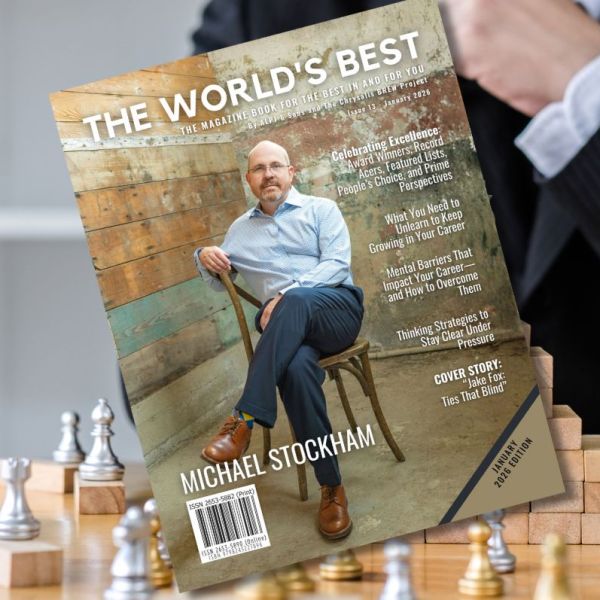




















Print and Digital Magazine



Don’t just read about greatness. Own it!

About Us
The World’s Best Magazine is a print and online publication that highlights the extraordinary. It is your passport to a universe where brilliance knows no bounds. Celebrating outstanding achievements in various fields and industries, we curate and showcase the exceptional, groundbreaking, and culturally significant. Our premier laurels, The World’s Best Awards, commend excellence through a unique process involving subject matter experts and a worldwide audience vote. Explore with us the pinnacle of human achievement and its intersection with diversity, innovation, creativity, and sustainability.
We recognise and honour the Traditional Owners of the land upon which our main office is situated. We extend our deepest respects to Elders past, present, and emerging. We celebrate the stories, culture, and traditions of Aboriginal and Torres Strait Islander Elders from all communities who also reside and work on this land.
Disclaimer: The World’s Best does not provide any form of professional advice. All views and opinions expressed in each post are the contributor’s own. Whereas we implement editorial policies and aim for content accuracy, the details shared on our platforms are intended for informational purposes only. We recommend evaluating each third-party link or site independently, as we cannot be held responsible for any results from their use. In all cases and with no exceptions, you are expected to conduct your own research and seek professional assistance as necessary prior to making any financial, medical, personal, business, or life-changing decisions arising from any content published on this site. All brands and trademarks mentioned belong to their respective owners. Your continued use of our site means you agree with all of these and our other site policies, terms, and conditions. For more details, please refer to the links below.
About | Advertise | Awards | Blogs | Contact | Disclaimer | Submissions | Subscribe | Privacy | Publications | Terms | Winners
The World’s Best: A Magazine That’s All About What’s Great | theworldsbestmagazine.com | Copyright ⓒ 2022-2026
Let’s connect
Discover more from The World's Best
Subscribe to get the latest posts sent to your email.

 The World's Best