
“Whether or not consciously recalled, memories inform our view of ourselves and, as such, are part of the foundation upon which our identities rest.”
– Ronald-Stéphane Gilbert
Ronald, thank you for joining us. For readers who may be meeting you for the first time, could you introduce yourself and share what you focus on in your work and what you hope your writing contributes to others?
Perhaps because I was raised in a French-speaking family, grew up in historic New England, and spent most of my working life in global marketing communications, I’ve always been interested in the interrelation of different cultures and of the past with the present. The latter figured in my writing of Conversations With My Mother, A Novel of Dementia on the Maine Coast, whose heroine is increasingly incapable of distinguishing between what’s happening in the moment and what happened long ago, but whose life is markedly affected by both—the latter of which I believe is the case for all of us.
Your book presents everyday exchanges as meaningful in themselves. What led you to focus on small, ordinary moments as the core structure of this story?
The book is written in a minimalist style, which, among other things, requires the writer to show, rather than tell, the tale—that is, to depict significant events in detail rather than describing them summarily. In my opinion, this approach best reflects actual life, wherein the everyday transpires incidentally, not in some grand narrative arc. I believe it also gives the reader the chance to react to the story independently and creatively instead of just responding to a predefined point of view put forth by the writer.
Many readers connect strongly with the themes of memory and shifting identity. How did your understanding of these themes evolve as you wrote?
Our reactions in the present are often colored by our experiences in the past. Whether or not consciously recalled, memories inform our view of ourselves and, as such, are part of the foundation upon which our identities rest. While writing, I came to realize that when some memories fade or are distorted and others gain a heightened or skewed significance, this foundation shifts and changes the individual’s sense of identity along with it. This is what happens to Yvette, the book’s heroine, as she slowly loses the confidence of her adult persona and reverts to a helpless, childlike state.
The first-person perspective gives the narrative an immediate, intimate quality. What guided your choice of viewpoint, and how did it shape the way you explored the relationship between parent and child?
I wrote the story in the present tense so that it feels as if it is unfolding rather than already finished. I chose the first-person voice to more effectively communicate the close relationship between mother and child, which is perhaps the closest relationship many of us ever experience. This enabled me to better depict, through specific interactions, the nature of the heroine’s relationship with her children rather than simply describing it.
Your work includes cultural elements such as language, heritage, and regional setting. How do these layers influence the way you tell a story about family and change?
I think that language, cultural heritage, ethnic background, and environment all serve to inform a character’s personality and actions. My book tells the story of a Québécois family in a Maine coastal town that’s being turned into a beach resort while their once-astute matriarch, the book’s heroine, descends into dementia. This framework allowed me to address the differences between the long-settled Francophone and Anglophone natives of the region and the city-dwelling, out-of-staters who were invading and transforming it—and not for the better. Most importantly, it permitted me to demonstrate that, the setting’s physical degradation and the heroine’s mental deterioration notwithstanding, the essence of each endures—the first, in the natural beauty of the shore, and the second, via the flashes of insight that continue to shine through the heroine’s confusion.
Caregiving can involve both practical challenges and meaningful discoveries. What aspects of the caregiving experience did you feel were most important to convey through the scenes you chose?
The book’s principal caregiver is Diane, the sister of Rob, the narrator. Her interactions with the dementia victim and main character, her mother Yvette, depict the necessary patience and inevitable frustrations entailed in caring for a chronically confused individual. Despite Diane’s intermittent bursts of resentment and acerbity, she never stops helping Yvette, evincing her devotion to her.
Another element of caregiving that the book highlights is the difference between concerned but geographically removed family members like Rob, who is occasionally frustrated by breakdowns in communication about Yvette’s condition, and front-line caregivers like Diane, who has to deal with the day-to-day practicalities of tending to her mother’s wants and needs. Unlike Diane, Rob never loses his temper or overtly expresses his irritation with Yvette because his is the lesser burden. While it’s hard to experience the decline of a parent from a distance, it’s not as challenging as witnessing and dealing with the consequences of that decline, as Diane does daily.
Your writing incorporates observations that resemble insights from psychology and memory research. How do you approach weaving evidence-based concepts into a narrative without turning it into analysis?
Although I hold two social-science degrees—one in psychology and the other in organizational behavior—I didn’t consciously draw on research while choosing or writing any of the episodes described in the book. Instead, I drew on the experiences that I, my sister, and other family members had with our own mother when she developed dementia and, later, Alzheimer’s. This having been said, it was heartening to find that the story isn’t atypical and that the behavior it depicts is supported by research findings.
Readers often note the balance between honesty and restraint in your storytelling. How do you decide what to include directly and what to leave implied?
In keeping with the minimalist style, my writing is indeed “restrained,” which, I believe, contributes to its honesty. For example, in Conversations With My Mother, the reader is never told what anyone but Rob, the narrator, is thinking. Although Rob occasionally speculates as to others’ thoughts, he never presumes to know them. In this respect, the book reflects life. After all, how can we ever know what someone else is really thinking, even if we’re told? Most of the time, the best we can do is hazard a guess based on observed behavior. This is why I focus my writing on the dialogue between characters rather than their thoughts.
Some writers draw from personal experience while others begin from imagination. How do you tackle that boundary, and how do you ensure the final work remains accessible to a broad audience?
Almost all my writing draws in some way from personal experience. I think this is likely true of most writers of character-driven literary fiction. You can transpose scenes, vary the circumstances of events, and alter timelines, but if you haven’t experienced some aspect of what you’re writing about, the result is likely to fall flat. It’s this element of authenticity that makes literary fiction accessible to a larger audience.
Plot-driven, genre fiction is a different kettle of fish. There, the author’s ability to imagine and manipulate circumstances and convincingly arrive at a satisfying conclusion takes precedence over drawing from personal experience. Still, even in genre writing, it’s important that characters’ feelings and situations seem genuine, and this is easier for a writer to achieve if he or she can draw upon aspects of his or her lived experience.
Milestones such as recognitions, awards, or creative accomplishments can influence a writer’s direction. What recognitions or achievements have been most meaningful to you, and how have they shaped your understanding of your role as a storyteller?
Conversations With My Mother has won or placed in a number of awards competitions but, though gratifying, such recognition hasn’t been as valuable to me as insightful feedback, whether it’s from professional reviewers or ordinary readers. Some have understood exactly what I tried to achieve with the book, and some have taken things from it that surprised and humbled me. Others have related what they’d hoped to find in the book but didn’t—for example, the further development of a specific character or one character’s relationship with another. So long as the feedback is well thought out, I’m grateful, since the information could prove useful in my future writing.
If you were to write your bio in your own words, what would you say? What legacy would you like to leave?
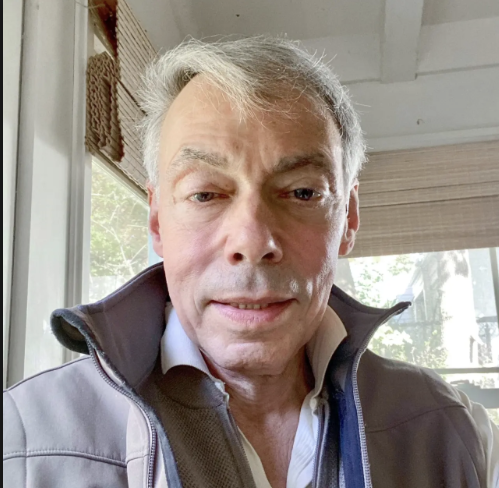
Ronald-Stéphane Gilbert has wanted to be a writer since boyhood. Though, for a time, life got in the way—i.e., to make a living and support a family, he undertook a decades-long career in global marketing management—achieving his original goal in retirement has been a source of satisfaction. His first book-length work, Conversations With My Mother, A Novel of Dementia on the Maine Coast, which was inspired by his family’s own experience, was short-listed for or otherwise cited in a number of awards competitions, including the 2025 American Writing Awards’ Hawthorne Prize; the 2025 North American Book Awards, whose previous honorees include Antony Doerr; and the 2021 Lorian Hemingway Short Story Competition, sponsored by the noted journalist of the same name, a granddaughter of Ernest Hemingway.
On a personal level, he would like to be remembered as someone who tried his best to be kind, compassionate, and a good son, husband, and father, and who strove for honesty, accuracy, and beauty in his writing.
⭐⭐⭐⭐⭐
“On a personal level, he would like to be remembered as someone who tried his best to be kind, compassionate, and a good son, husband, and father, and who strove for honesty, accuracy, and beauty in his writing.”
– Ronald-Stéphane Gilbert
Links
- Connect with Ronald-Stéphane Gilbert via LinkedIn here
- Know more about the BREW Book, Blog, and Poetry Awards here
Share Your Insights
Join the conversation and share your perspective—your voice adds depth to the discussion.
- How do memories shape the way you see yourself?
- What everyday moments feel most meaningful to you?
- How has family history influenced your sense of identity?
Alignment with the UN SDGs
- SDG 3: Mental health awareness
- SDG 10: Inclusion across aging
- SDG 11: Cultural heritage, communities
Other Highlights

Looking for something?
Type in your keyword(s) below and click the “Search” button.
Helpful Shortcuts
More Stories


















Print and Digital Magazine


Don’t just read about greatness. Own it!

About Us
The World’s Best Magazine is a print and online publication that highlights the extraordinary. It is your passport to a universe where brilliance knows no bounds. Celebrating outstanding achievements in various fields and industries, we curate and showcase the exceptional, groundbreaking, and culturally significant. Our premier laurels, The World’s Best Awards, commend excellence through a unique process involving subject matter experts and a worldwide audience vote. Explore with us the pinnacle of human achievement and its intersection with diversity, innovation, creativity, and sustainability.
We recognise and honour the Traditional Owners of the land upon which our main office is situated. We extend our deepest respects to Elders past, present, and emerging. We celebrate the stories, culture, and traditions of Aboriginal and Torres Strait Islander Elders from all communities who also reside and work on this land.
Disclaimer: The World’s Best does not provide any form of professional advice. All views and opinions expressed in each post are the contributor’s own. Whereas we implement editorial policies and aim for content accuracy, the details shared on our platforms are intended for informational purposes only. We recommend evaluating each third-party link or site independently, as we cannot be held responsible for any results from their use. In all cases and with no exceptions, you are expected to conduct your own research and seek professional assistance as necessary prior to making any financial, medical, personal, business, or life-changing decisions arising from any content published on this site. All brands and trademarks mentioned belong to their respective owners. Your continued use of our site means you agree with all of these and our other site policies, terms, and conditions. For more details, please refer to the links below.
About | Advertise | Awards | Blogs | Contact | Disclaimer | Submissions | Subscribe | Privacy | Publications | Terms | Winners
The World’s Best: A Magazine That’s All About What’s Great | theworldsbestmagazine.com | Copyright ⓒ 2022-2026
Let’s connect
Discover more from The World's Best
Subscribe to get the latest posts sent to your email.

 The World's Best