
“I felt a deep sense of responsibility to lead the way in improving relationships between the department and the community.”
– Jason P. Armstrong
Jason, thank you for being with us. To begin, could you introduce yourself, share what you do now, and walk us through what guided your career in public safety leadership?
Absolutely, I’ll start with my career track first. When I first entered law enforcement, I had a goal to be a police chief one day. I didn’t know anything about the profession or being a police chief; I just knew I wanted to be the person at the top. I would say being a resource for the community is what guided my career in leadership.
After the 2014 police shooting of Michael Brown Jr. in Ferguson, Missouri, I watched the civil unrest and destruction that ensued after that incident. At the time, I was working as a patrol captain in Forest Park, Georgia, a suburb of Atlanta.
I remember reading the investigation report on Ferguson months after the incident happened. The things mentioned in the report that community members were saying about the Ferguson Police Department were very similar to the things I heard in the community in Forest Park, and they were not positive. As an African American, I was the only minority on the Command Staff at that time. The bulk of the complaints that I heard from the community came from minorities in the community, which made up the majority of the population. I felt a deep sense of responsibility to lead the way in improving relationships between the department and community. I felt I was uniquely positioned to drive positive change, and that is really when I found my footing as a leader in public safety.
Never could I have imagined that years later I would be appointed the police chief in Ferguson, MO. I got to Ferguson one month before the five-year anniversary of Michael Brown Jr.’s death. By the time I arrived in Ferguson, the department had already been operating under a U.S. Department of Justice Consent Decree, which spelled out all the reforms the department and City had to undertake as a result of the investigation into the department after the civil unrest.
Working under the consent decree was an enormous challenge because Ferguson was a small department with minimal resources, and our consent decree was just as expansive as major city departments like New Orleans and Baltimore.
Working on mandated reforms under the consent decree taught me a lot about leadership, community, and the results that should be the end product of all of the hard work. Leadership, Community, and Results are the foundational pillars of my consulting company, Armstrong Consulting. Prior to retiring from active law enforcement, I started Armstrong Consulting as a way to stretch my impact across the country through professional speaking, whether through keynote talks or leadership development workshops.
In 2023, I was selected for an inaugural USA Leaders Program, a leadership program for 100 up-and-coming leaders from around the country. I was the only police executive out of the 100 people in the program. I gained the greatest value from being in that group because it highlighted for me the impact that I could have nationally and even globally with the leadership that I brought to spaces with my unique background of driving reform in public safety. That experience birthed the notion that I might be able to make a bigger impact if I retired and went into my consulting business full time.
In October of 2024, after 23 years in public safety, five and a half years as a police chief, I retired from the only profession I had ever known. Now I serve as a professional speaker, speaking throughout the country on leadership issues around crisis leadership, organizational transformation, and community outreach and engagement. I serve as a subject matter expert on consulting projects. Most notably, I work with agencies that are under consent decrees or have had high-profile public incidents that they are trying to recover from. I have been on teams in Chicago aiding in their consent decree compliance efforts, and most recently I was selected to be on the Monitoring Team with Effective Law Enforcement For All (ELEFA), which is working with the Louisville Metro Police Department on their consent decree implementation following the death of Breonna Taylor.
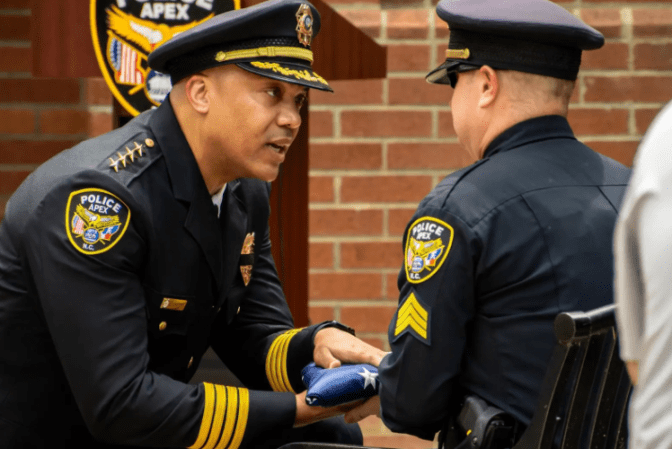
After more than two decades in the profession, what early experiences or mentors shaped the type of leader you ultimately became?
The primary experience that shaped the leader I ultimately became happened very early in my career. I was a patrol officer with no rank or supervisory authority. I made a traffic stop one Friday evening on a vehicle that was speeding. When I checked the driver’s information in the computer system, it showed that he had a warrant out for his arrest.
I went through my normal process and got the driver, a young Black male, out of the car and detained in handcuffs. When I told him he had a warrant, he vehemently denied having any warrants and stated that there must be a mistake. I had the dispatcher check the warrant for confirmation, and it returned confirmed that it was a valid warrant. The driver was adamant that this had to be a mistake.
I provided him with the limited information I had from the computer system, and he informed me that he had already been arrested for the warrant. He asked me to call his mother, and she could retrieve the paperwork to confirm his claims. Because this young man was being very respectful in how he spoke to me, I chose to call his mother. When his mother provided me with the information from the paperwork they had, I was convinced that the young man was telling me the truth.
The problem I was faced with now is that I had a confirmed warrant in the system, and we had already communicated that this individual was being taken to jail to be held for the valid warrant. Our computer system was the holy grail of information; we never questioned what was in the computer system because it was all supposed to be verified information. Remember, I was just a line officer at the time, so I had no real decision-making authority at this point in my career.
I called the commanding officer on duty and explained that I believed the young man, but I was instructed to take him to jail because the computer system showed the warrant was valid and we strictly went by the computer system.
Having a direct order from my commanding officer, I had no choice but to head to the jail, but I took my sweet time getting there. On the way, I was making every phone call and trying every resource I could think of because I didn’t want to take someone to jail who didn’t belong there.
Just as I pulled into the jail parking lot, dispatch called me over the radio. When I called in to them, they informed me that they finally got someone on the phone and learned that the young man had already been arrested for the warrant and it was not properly removed from the system. I was able to pull over and call the young man’s mother to come pick him up.
Although it wasn’t a coined term at that time, this was my first experience with procedural justice. One of the components of procedural justice is giving community members voice. I listened to what that young man had to say, and I wasn’t dismissive of him just because he had a warrant out for his arrest. By listening and pushing against the mindset of “this is how it’s always done,” I was able to help someone and serve justice in a different way.
That experience showed me that I had the power to drive change, regardless of what my position or title was, and that is something that I speak on around the country today.
You served in leadership roles during periods of organizational transition and reform. How did you approach steering teams through complex change while keeping community needs in focus?
I always tried to frame what we were doing as a benefit to the community, which would ultimately result in it being a benefit to us. Even in Ferguson, when we were mandated to implement changes, I always tried to highlight the benefit to the community in what we were doing and make the focus on our changes being needed for us to be better—not so much that someone (U.S. Department of Justice) or something (Consent Decree) was telling us to make the changes.
It is human nature to resist things that are forced upon us. I tried not to attribute our changes to what was forced on us and instead talk about how we would be better in the future based on the foundation we were building today. Change is hard; forced change is even harder. That’s why finding innovative ways to connect community and law enforcement during the process of organizational transformation is so critical. The more department members can see how the community appreciates the changes being made, the more they understand the purpose for all of the hard work.
Another key issue related to this is not separating the police department from the community. Every member of a police department is part of the community, regardless of whether they live within the jurisdictional boundaries or not. When we talk about community, we have to ensure that we are talking about the members of the law enforcement agency as well.
The more that we have people talking and seeing everyone from an equal lens—where no one part of the community is looked upon as higher or lower—that’s when you really start to have a community-focused approach to public safety, and that’s how you drive positive impact.
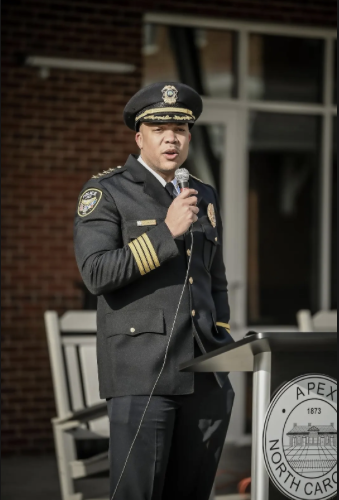
Over the years, you’ve been recognized for work related to accountability and constitutional policing. Could you share the milestones that stand out to you most and what those recognitions meant in the context of your broader mission?
I’ll start with my two 40 Under 40 awards. I received my first 40 Under 40 from my alma mater, North Carolina Central University (NCCU). That was special because my university holds such a special place in my heart. NCCU is a Historically Black College and University. Largely, these schools were founded because African Americans were not allowed to attend already established universities.
For my career accomplishments to be recognized by my alma mater was a career achievement that will always be at the top of my list. The work that I did in my first department—leading community outreach and engagement efforts and becoming the first African American promoted to the Command Staff—were all accomplishments that contributed to that recognition and honor.
My second 40 Under 40 award was from the International Association of Chiefs of Police (IACP). This honor was special because it came from my peers. I had just been appointed the police chief in Ferguson when I was awarded this honor. IACP is the largest law enforcement association in the world, with over 35,000 members worldwide.
Much of my work up to that point was focused on improving law enforcement so we could show up better for the community, and for that to be respected and valued by the profession—and for me to be viewed as one of the best up-and-coming leaders around the world—was special.
Another unbelievable recognition for me was being selected for the inaugural USA Leaders Program. A candidate pool of thousands was whittled down to 100 of us, and to hear that the president gave personal approval for each of us is something that I hold very near and dear to my heart. For a President of the United States of America to see value in what you have accomplished over your career is a testament to my oath to provide the highest quality public service to the community.
Lastly, I would say being inducted into the National Law Enforcement Officer Hall of Fame after retiring was the icing on top of the cake. In any profession, there is no greater honor than to be recognized in your profession’s Hall of Fame. Growing up as an athlete, my friends and I all had Hall of Fame dreams. I only knew about sports Hall of Fames and never had a clue that other industries had Hall of Fames as well. For my entire body of work to be recognized as impactful and innovative was the ultimate honor.
Reform work often involves collaboration among many groups. What have you learned about building trust, facilitating dialogue, and ensuring that different stakeholders feel heard?
In doing reform work, I learned that getting in front of the people who are the most critical of your organization is the best way to gain allies and identify opportunities for collaboration. My experiences taught me that people fear what they don’t understand. Driving reform in law enforcement is difficult because there is so much that the average community member doesn’t know or understand about law enforcement.
Instead of keeping the loud people at arm’s length, I always tried to welcome them into my world, and I was always willing to meet them where they felt most comfortable. Being the police chief in Ferguson, MO, was an immersion into difficult conversations. No matter where I went, someone was upset about something and looking at me to do something about it.
I learned that being authentic and candid with people were the things that community members valued most. It wasn’t so much me saying things that they agreed with, but if I was genuine in my approach and consistent in what I said and how I said it, they got to learn who I was as a leader.
People often misunderstand the concept of community policing. It’s not just a philosophy for department members to buy into; it is also an accountability component for how the community is supposed to contribute to efforts to keep the community safe.
I was always looking for diverse stakeholder groups to engage with so I could find creative and innovative ways to bring more community members to the table to help address problems. When more people understand how their skills, gifts, and talents can contribute to positive change, before you know it, you have a coalition of people all working toward a common goal.
This approach doesn’t mean there won’t be tension at times, disagreement over policies and practices, or unhappiness with decisions that are made. I have found that people value being part of something meaningful. I was always looking for ways to get people to take ownership of things that could help the broader community—not just serve their own interests.
When people get to see you up close and evaluate the person you are—forget the title and authority you hold—if they can see you are a genuine person trying to do the right thing for the right reasons, people will want to see you succeed and will often help you if they can.
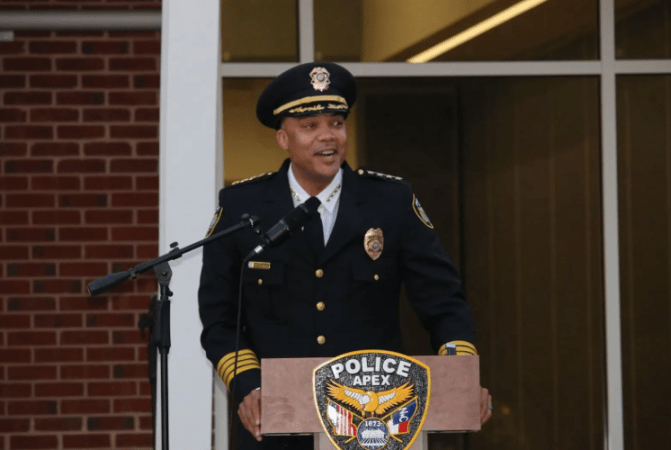
What aspects of leadership did you find most essential when guiding an agency through long-term improvement efforts?
Confidence was most essential in leading reform work. There are so many variables that come at you that can shake your resolve and wear you down over time. Having confidence in your ability to lead, confidence in the people you lead to get the job done at a high level, and confidence in community members to come alongside the organization and support the effort were all critical to the possibility of success.
People need to feel that the leader is capable of handling everything that comes at them. It’s not that the leader won’t make mistakes—I’ve made tons of them—but having confidence to go after things is sometimes more important than actually accomplishing them.
Another key aspect of leadership that is crucial is being authentic. Long-term change and improvement are hard work for everyone involved. I didn’t sugarcoat that for anyone, and I didn’t make excuses when we fell short. As the leader, all failures were on me, and I had to own them.
Understanding that part of leadership and being consistent in what people see from you day in and day out is paramount. Whether things are going great or going badly, your people need to see strong leadership at all times and feel that the person they are entrusted to follow is genuine and authentic.
Now that you support reform initiatives through consulting, how has your perspective evolved on what makes organizational change both achievable and sustainable?
My perspective hasn’t evolved much. You need strong leadership to drive change. You also need a leader who understands when to be firm and when to be flexible. When you sit in the leadership seat, the buck stops with you.
I believe all leaders have moments when they stand too firm on an issue—I know I’ve done that plenty of times. As I matured throughout my tenure as a police chief, I learned that in order for the organization to be successful and for change to be sustainable, I had to be willing to relinquish some of my power and authority.
No one person has all the answers or ideas that will yield the best results. In leading organizational change, you have to realize that everything doesn’t have to look exactly how you would like it to look. You have to be willing to allow others to be creative and innovative and support it, as long as it aligns with the organization’s overall goals and objectives.
When people have the ability to be creative and innovative, they give more of themselves to the effort. That’s the key to sustainable success—creating an environment where people understand the ultimate goal while being empowered to find innovative ways to accomplish it.
In my book, I’m Done Here!, I share my formula for leading sustainable change: Community P.I.E. (Partnerships–Innovation–Empowerment). Here is an excerpt from the book:
“What I’ve learned in working in different communities around the country is that a commitment to building partnerships with a wide range of community stakeholders, coupled with an emphasis on being innovative to explore new ways of doing things and empowering both community and law enforcement to create in the same space, is the recipe for success.”
In short: partnerships + innovation + empowerment = success.
Public safety agencies today face increased expectations around transparency and community-centered practices. From your experience, what approaches help leaders meet these expectations constructively?
You have to find ways to include community members in the work being done. When I arrived in Apex, NC, as the police chief, I was coming in on the heels of a public relations nightmare. The Town was navigating the fallout from the public release of an internal report on the police department stating that “racial bias and blind spots appear to be deeply entrenched into the APD culture.”
Understandably, community members were concerned after reading the report. It contained several recommendations for reform, which was largely why I was brought in as the new chief.
One of my strategies was to connect with the people in the community who were most vocal about their discontent. In my experience, opening lines of communication and finding opportunities to partner with people who do not have a positive outlook on the department is the best way to build trust.
Trust goes both ways. I wasn’t trying to get people to trust us—I was trying to build relationships where trust was earned on both sides.
The more community members are exposed to what we are doing to enhance public safety, the more opportunities we have to build confidence. Bringing community members along for the journey and including them in important initiatives went a long way in earning trust.
It’s a long game. Being intentional about relationships, peeling back the curtain, and showing both progress and challenges is how you build true partnerships and demonstrate transparency.
Having worked in multiple regions with different organizational cultures, what patterns or lessons have you observed that seem universally relevant to effective reform?
I often say, “people are people.” I’ve seen the same challenges across organizations when addressing culture. Human nature is the ultimate driver. People are often interested in how they are personally impacted.
When driving reform, you have to help people see the personal benefits of the work. Change is uncomfortable, and resistance is natural. I focused on overcoming that resistance by identifying personal motivations and selling the personal benefit of reform rather than the reform itself.
For current and future leaders who may find themselves responsible for guiding teams through change, what grounded, experience-based advice would you offer?
The first person you lead is yourself. If you don’t do that well, you won’t lead others well.
The key to any reform effort is understanding who the reform is for. Anyone impacted by the reform must be at the table in shaping it.
Lastly, reform is largely policy-driven. It’s easy to get caught up in debates over appropriateness or restrictions. Always remember that every policy has a human touchpoint. Ensure there is always a heartbeat in the final product.
If you were to write your bio in your own words, what would you say? What legacy would you like to leave?
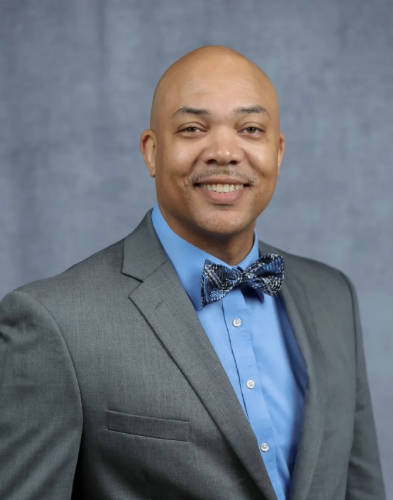
In reflecting on the milestones of my career, the through-line has always been service, accountability, and the desire to leave every organization and community better than I found it. I have had the privilege of serving as a three-time police chief and leading agencies through some of the most complex reform environments in the country, including Ferguson, Missouri, following the death of Michael Brown Jr., and later supporting national efforts in cities such as Chicago and Louisville as they work to meet the requirements of federal consent decrees.
I am honored to be a National Law Enforcement Officer Hall of Fame inductee and a recipient of two 40 Under 40 leadership awards, including one from the International Association of Chiefs of Police, the largest law enforcement association in the world. In 2023, I was selected by the president for the inaugural USA Leaders Program.
In addition to my operational leadership experience, I am a national speaker and the author of the best-selling book I’m Done Here!: Create Lasting Impact by Leading with Intentionality. My work now centers on helping leaders across industries navigate complex change, lead with confidence under pressure, and build cultures grounded in trust, accountability, and community.
Each of these accomplishments reflects a career committed to principled leadership and meaningful reform. My hope is that the lessons I have learned will continue to help leaders serve with clarity, courage, and purpose in the moments that test them most.
⭐⭐⭐⭐⭐
“When people understand how their skills, gifts, and talents can contribute to positive change, you have a coalition working toward a common goal.”
– Jason P. Armstrong
Links
- Visit Jason’s website here
- Connect with Jason via LinkedIn here
- Know more about the BREW Book, Blog, and Poetry Awards here
Share Your Insights
We’d love to hear your thoughts on leadership, reform, and community impact. Share your perspective by answering any of these questions in the comments:
- How do you define effective leadership in your community or organization?
- What strategies have you seen work to build trust and collaboration?
- How can individuals contribute to meaningful, long-term change in their communities?
Alignment with the UN SDGs
- SDG 3 (Good Health & Well-being): Promotes safe communities
- SDG 10 (Reduced Inequalities): Addresses equity in policing and community engagement
- SDG 16 (Peace, Justice, and Strong Institutions): Focuses on accountability and institutional reform
Other Highlights

Looking for something?
Type in your keyword(s) below and click the “Search” button.
Helpful Shortcuts
More Stories

















Print and Digital Magazine


Don’t just read about greatness. Own it!

About Us
The World’s Best Magazine is a print and online publication that highlights the extraordinary. It is your passport to a universe where brilliance knows no bounds. Celebrating outstanding achievements in various fields and industries, we curate and showcase the exceptional, groundbreaking, and culturally significant. Our premier laurels, The World’s Best Awards, commend excellence through a unique process involving subject matter experts and a worldwide audience vote. Explore with us the pinnacle of human achievement and its intersection with diversity, innovation, creativity, and sustainability.
We recognise and honour the Traditional Owners of the land upon which our main office is situated. We extend our deepest respects to Elders past, present, and emerging. We celebrate the stories, culture, and traditions of Aboriginal and Torres Strait Islander Elders from all communities who also reside and work on this land.
Disclaimer: The World’s Best does not provide any form of professional advice. All views and opinions expressed in each post are the contributor’s own. Whereas we implement editorial policies and aim for content accuracy, the details shared on our platforms are intended for informational purposes only. We recommend evaluating each third-party link or site independently, as we cannot be held responsible for any results from their use. In all cases and with no exceptions, you are expected to conduct your own research and seek professional assistance as necessary prior to making any financial, medical, personal, business, or life-changing decisions arising from any content published on this site. All brands and trademarks mentioned belong to their respective owners. Your continued use of our site means you agree with all of these and our other site policies, terms, and conditions. For more details, please refer to the links below.
About | Advertise | Awards | Blogs | Contact | Disclaimer | Submissions | Subscribe | Privacy | Publications | Terms | Winners
The World’s Best: A Magazine That’s All About What’s Great | theworldsbestmagazine.com | Copyright ⓒ 2022-2026
Let’s connect
Discover more from The World's Best
Subscribe to get the latest posts sent to your email.

 The World's Best