
“To be able to convey an ideal, a love, or a lifetime in a handful of stanzas is a sort of magic or contagion.”
– K.J. Poesy
K.J., thank you for joining this conversation. To start, could you introduce yourself, share a bit about your background, and what first drew you to poetry?
I’m a writer from the West, still clinging to the ideals of my twenties.
Imbued with the passion for writing since a very young age, I fell, as I’m sure many writers do, into a love affair with brevity. To be able to convey an ideal, a love, or a lifetime in a handful of stanzas is a sort of magic or contagion. Both catching and addictive.
Your poem Agony Courting was recognized with a BREW Poetry Award. What does this acknowledgment mean to you personally and creatively?
As a writer you sit by yourself in a room, day after day, at a poorly constructed desk banging your head against a blank piece of paper and hoping that the marks it leaves are worth reading. To form connections with minds over space and time, and give them a microscope and blade to dissect your very inner being. Recognition is the light pressure to a gaping wound that says: maybe we can stitch up this sore before we open another?
I would survive without the recognition, I wouldn’t bleed out. But how nice is the reprieve from constant pain?
The poem delves into love, longing, and emotional intensity. How do you approach transforming such personal or universal emotions into poetic form?
It’s the simple cleaving of a soul in two on the paper. Is this ink? Is this claret? It’s all the same in the end, come direct from the veins, all that the heart feels and the brain ignores. The pen and I are merely mediators tripping along after the thread of perhaps.
Imagery of the body, memory, and relational intimacy is central to the poem. How do you select the details that carry both emotional and conceptual weight in your work?
All I do is point out to myself when I’m falling through the floorboards and document it as I go down. Down with love, down with pain, knowing that it all comes with the inhale as life goes in and the exhale when poetry comes out. Agony Courting started with a toaster, there was nowhere else that it could go but to take us on an excursion around the house and exit direct through the heart.
The poem balances vulnerability, narrative, and lyricism. How do you navigate tone, pacing, and rhythm when exploring deeply personal themes?
The subject dictates. To bring a harshness as opposed to beauty can stretch the subject further, into corners and under the table where one wouldn’t expect poetry to go. If it’s harsh; write harshly, when soft; tread carefully, and when tiptoeing ends; that’s where subconscious lies. A fumbling and mumbling fool that tosses aside any structure or single thought of iambic pentameter. And from the pen and off the tongue rolls forth whatever is left of what I’m fighting to say.
What milestones—whether publications, recognitions, or personal breakthroughs—stand out as significant in your creative journey?
You’ve got to turn inwards as a writer, to celebrate that the dedication and repetition of work is what makes a writer. I’ve been bolstered by publishing, and competitions, but it’s the unpublished that I’m just as proud of as the published. The accomplishment of having written as well as the satisfaction and pride of having been read.
Many readers connect with poetry through raw emotion and resonance. What do you hope someone takes away when reading Agony Courting or your other work?
Simply, whatever they want. Poetry is all interpretation, I provide so others can chew and digest it at their own pace and will. That they’ve enjoyed it? Connected to it? Appreciated that someone put into words what sat perched in their heart or caught behind their teeth? Absolutely. But I leave direction and interpretation to the readers.
Are there recurring themes, motifs, or questions you revisit in your poetry, and what draws you back to them?
When it comes to poetry, I’m drawn, in both reading and writing, to the harsher take. The beauty that is sharpened to a point, whether by wit, form, or a slight ugliness. It’s the sadness and uncomfortable ache that can’t be translated with a look, or a kiss, that I circle back to when writing.
Poetry to me is like a woman; beautiful, soft, and likely to bite.
Your bio mentions many novels in progress. How does writing poetry interact with your longer-form writing projects?
I hope that there is some aid to my writing in being able to concise work and emotions down to a handful of pages of poetry, and from there expand it outwards and fill in the many blank pages to resemble a novel. But all I know for sure is that it’s all hard graft and repetition.
Looking ahead, what themes, projects, or experiments are you most excited to explore in your poetry?
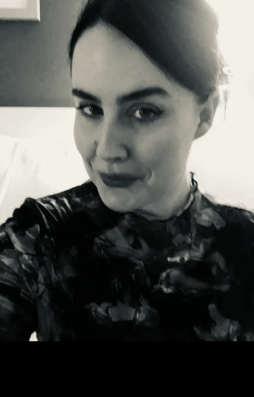
I want to expand more into the ache of femininity, to separate the woman from the womb and bring the person to the forefront to create a sort of pocket book of women’s life. Something that’s equal parts honest, painful, and humorous.
To present the beating heart of the average woman where all can grasp it and think, yes, she is that, we are that.
Or else I’ll stick to shaking crumbs out of the toaster.
If you were to write your bio in your own words, what would you say? What legacy would you like to leave?
K.J. Poesy is a writer and poet, and we thank her for it.
⭐⭐⭐⭐⭐
“Poetry to me is like a woman; beautiful, soft, and likely to bite.”
– K.J. Poesy
Links
- Know more about the BREW Book, Blog, and Poetry Awards here
Share Your Insights
We’d love to hear your thoughts! Share your reflections in the comments below:
- Which part of K.J. Poesy’s approach to poetry resonated most with you?
- How do you connect with poetry or creative writing in your own life?
- What emotions or themes do you find most powerful in poetry?
Alignment with the UN SDGs
- SDG 4 (Quality Education): Promotes literacy, creative expression, and critical thinking through poetry.
- SDG 10 (Reduced Inequalities): Explores diverse perspectives and emotional experiences, fostering empathy.
- SDG 16 (Peace, Justice, and Strong Institutions): Encourages dialogue, reflection, and understanding through storytelling.
Other Highlights

Looking for something?
Type in your keyword(s) below and click the “Search” button.
Helpful Shortcuts
More Stories








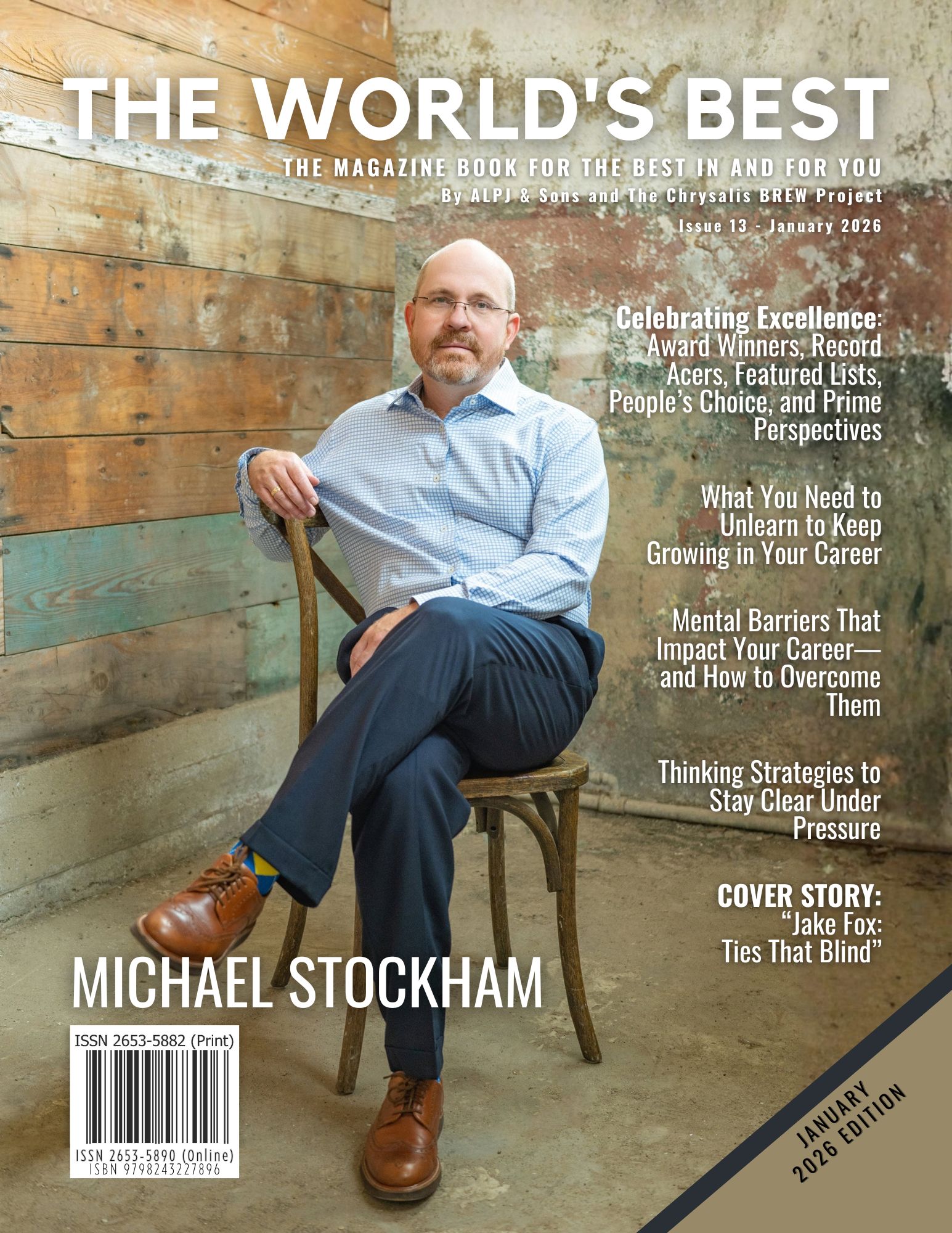
Print and Digital Magazine
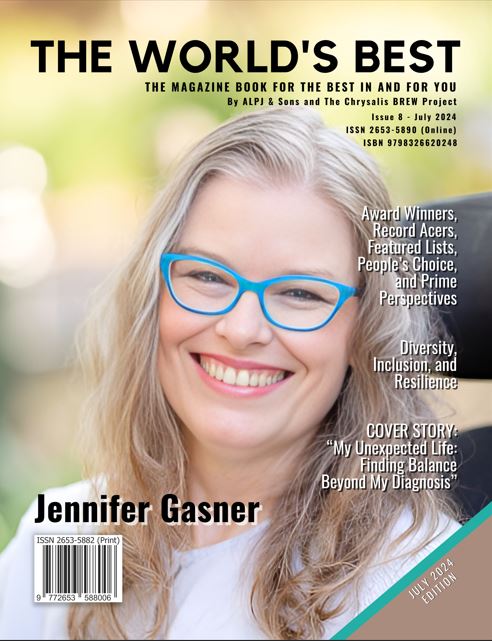
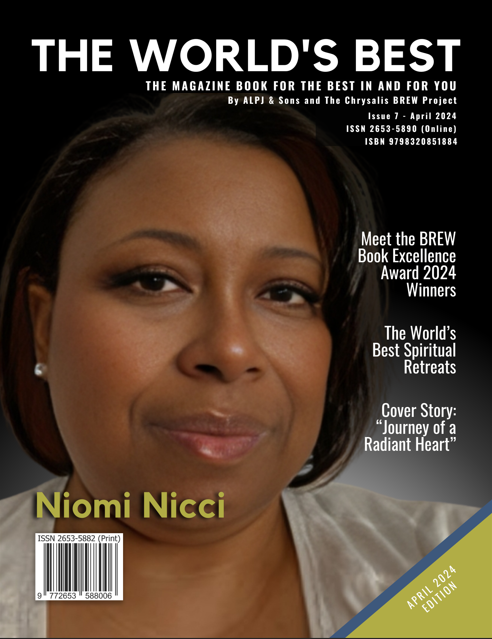
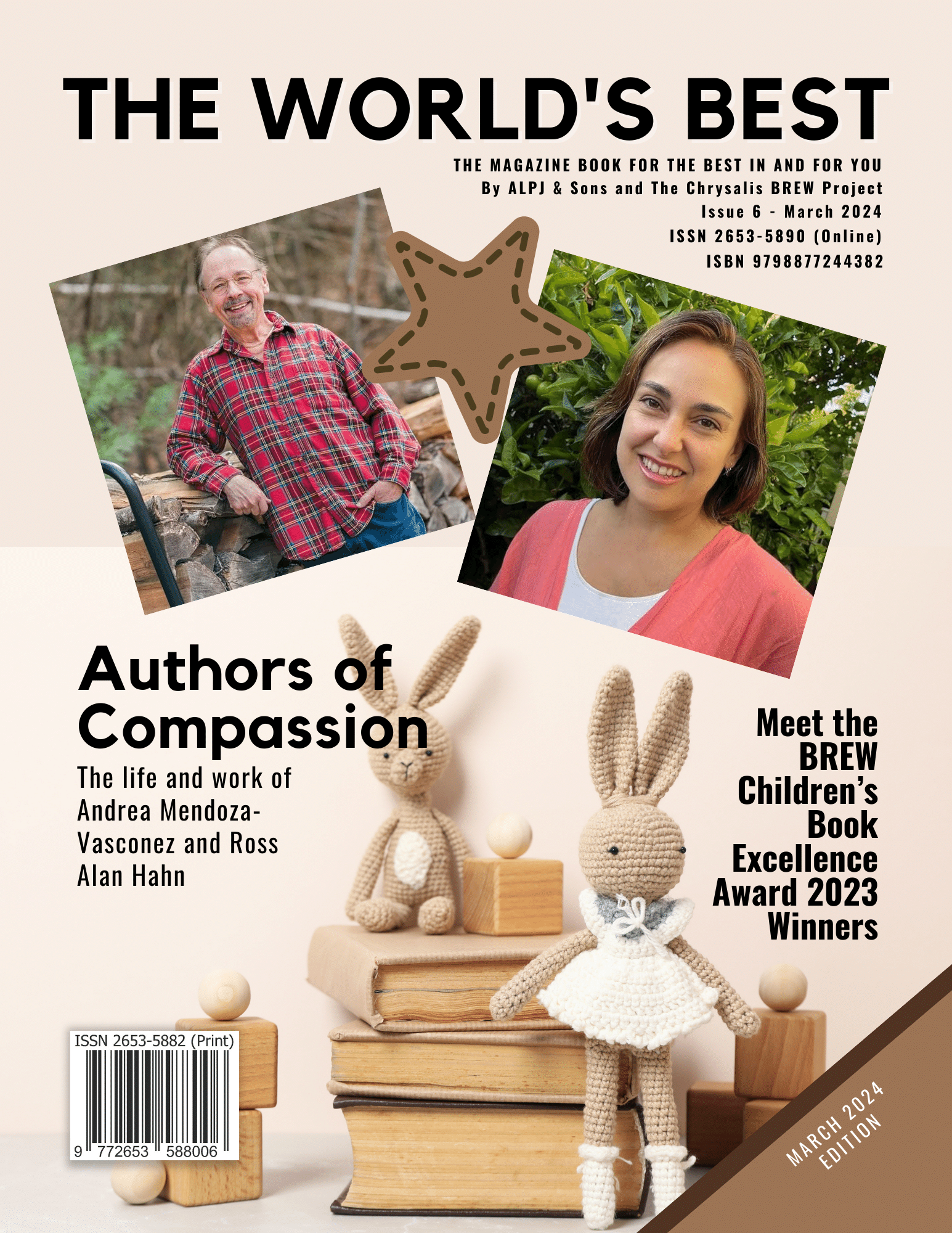
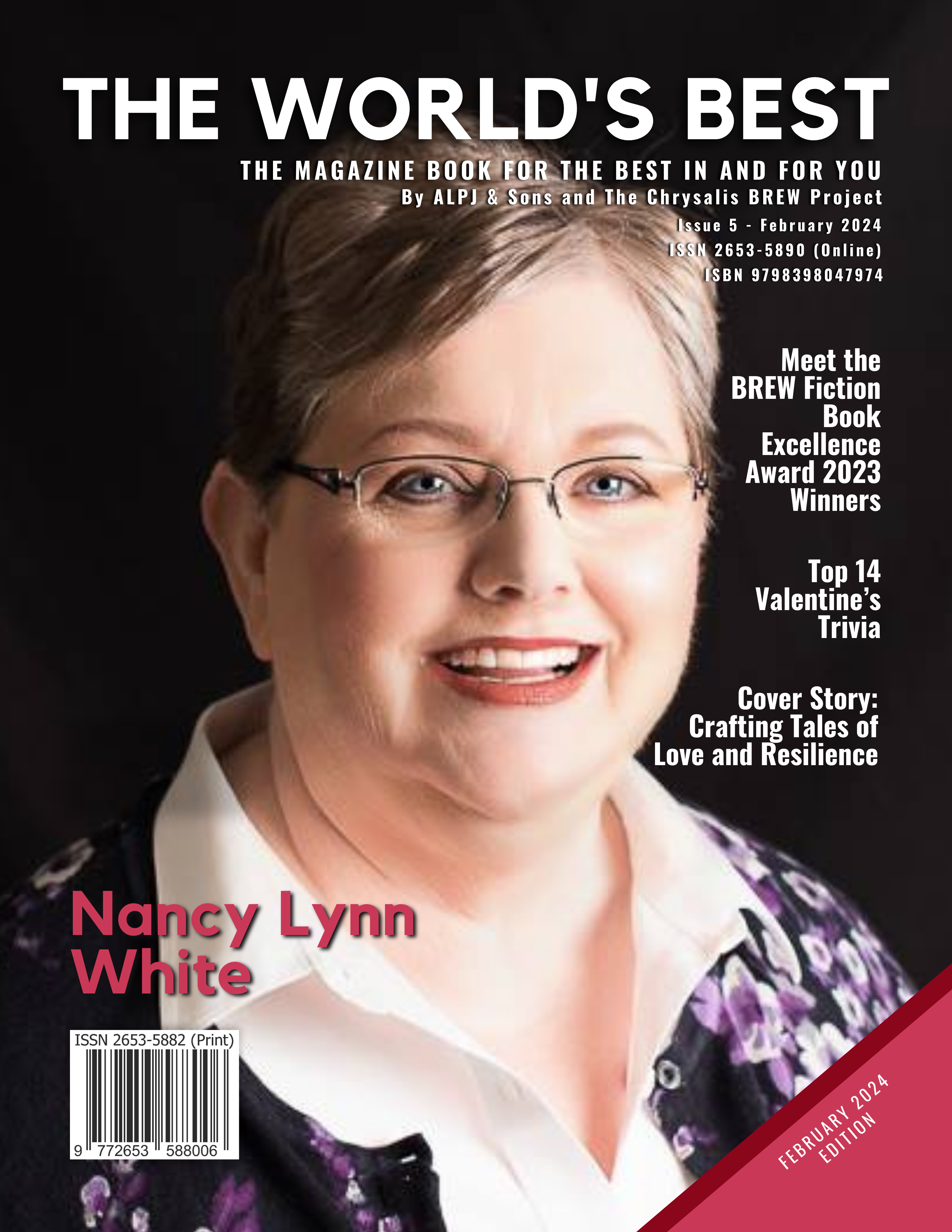

Don’t just read about greatness. Own it!

About Us
The World’s Best Magazine is a print and online publication that highlights the extraordinary. It is your passport to a universe where brilliance knows no bounds. Celebrating outstanding achievements in various fields and industries, we curate and showcase the exceptional, groundbreaking, and culturally significant. Our premier laurels, The World’s Best Awards, commend excellence through a unique process involving subject matter experts and a worldwide audience vote. Explore with us the pinnacle of human achievement and its intersection with diversity, innovation, creativity, and sustainability.
We recognise and honour the Traditional Owners of the land upon which our main office is situated. We extend our deepest respects to Elders past, present, and emerging. We celebrate the stories, culture, and traditions of Aboriginal and Torres Strait Islander Elders from all communities who also reside and work on this land.
Disclaimer: The World’s Best does not provide any form of professional advice. All views and opinions expressed in each post are the contributor’s own. Whereas we implement editorial policies and aim for content accuracy, the details shared on our platforms are intended for informational purposes only. We recommend evaluating each third-party link or site independently, as we cannot be held responsible for any results from their use. In all cases and with no exceptions, you are expected to conduct your own research and seek professional assistance as necessary prior to making any financial, medical, personal, business, or life-changing decisions arising from any content published on this site. All brands and trademarks mentioned belong to their respective owners. Your continued use of our site means you agree with all of these and our other site policies, terms, and conditions. For more details, please refer to the links below.
About | Advertise | Awards | Blogs | Contact | Disclaimer | Submissions | Subscribe | Privacy | Publications | Terms | Winners
The World’s Best: A Magazine That’s All About What’s Great | theworldsbestmagazine.com | Copyright ⓒ 2022-2026
Let’s connect
Discover more from The World's Best
Subscribe to get the latest posts sent to your email.

 The World's Best