
“I feel like I have always searched for the capacity to ‘see with the heart,’ and my poetry writing is a more reliable way of doing that.”
– Julie Hollitt
Julie, thank you for joining this conversation. To start, could you introduce yourself, share a bit about your background, and what drew you to writing poetry?
Ask me about my background, and I always go blank, as though I don’t have words about background. I grew up in Adelaide, South Australia, went to a little school across the road from our home, and then to a high school which was a bike ride away. I was anxious about the world in general and, in adolescence, anxious about the world being nuked…but so were many from my generation. Speaking of which, many from my generation left Adelaide as teenagers and young adults, as did I. It took me a long time to find myself after that.
But throughout, I always wanted nature…lots of it. Wanted to be out in it. It either made me curious or made me smile. I was not so afraid in the natural world.
I became interested in writing poetry and drawing when I was in primary school…I had a beautiful, creative teacher and she made me see things in myself and in nature that I had not yet seen.
There is much more to my background than this that I have mentioned here, but I am no longer sure what is important to me writing poetry and what is just ‘stuff’ I did. In relation to what I measure as important background now…I have learnt from life and other people, some learning has been priceless, some awful, but always wanting nature is the most persistent and important background information.
Your poem Octopus was recognized with a BREW Poetry Award. What does this recognition mean to you personally and creatively?
Initially, I didn’t quite believe it…I was kind of numb. Now, the recognition excites me…I had submitted Octopus to a number of other competitions and nothing happened, but I felt that poem onto a page, and I knew it ‘flashed neon’ at a deep level. So, personally, I am relieved that it resonated with readers. Creatively, the recognition of a BREW Poetry Award…the first recognition for a poem of mine…this has re-fired me…it has given my drive a shake-up to keep feeling words onto a page. This award has made me pay more attention to this drive.
The poem examines perception, presence, and invisibility in both human and natural contexts. How do you approach translating these abstract ideas into vivid, immersive imagery?
There’s this line from de St Exupéry’s The Little Prince…you have brought it to mind when you ask me this question. The line is…“It is only with the heart that one sees clearly…what is essential is invisible to the eye.”
I backward map from what I can see and from what that seeing generates or evokes in me…I try to focus on what is evoked, and use the words that come up from that…the evocation captures me and is the invisible part of any experience that I think is worth trying to express. I think the evocation is the element that can connect me to other than myself…to grace, goodness, eternity, spirit. The evocation is probably the most important thing I want to connect with, and connect with other human beings around. For me it is what is essential, what makes living worth it.
So I guess the abstract ideas of perception, presence, and invisibility are in that which is evoked in me from human and natural contexts…and I try to see and write the words that are expressed from some depth in human and natural contexts.
I think nature and other lesser-known levels of consciousness must speak to one another, and I want to try to at least listen in on the dialogue.
It was my beautiful teacher who read The Little Prince to my class in primary school. I didn’t realise exactly what she was teaching me at the time but, for some reason, that line I mentioned has always stayed with me…I feel like I have always searched for the capacity to “see with the heart,” and my poetry writing is a more reliable way of doing that.
Imagery of the ocean, light, and motion is central to Octopus. How do you choose the elements of nature that will carry emotional or philosophical weight in your poems?
Honestly, I think it is the elements of nature, carrying meaningful weight, that choose me. Sometimes, I am ready to be chosen and it is then that the emotional or philosophical expressions get onto the page…I don’t feel like I own them or generate them or that I steer them. I don’t possess the emotional and philosophical weight but they somehow emerge when the elements of nature touch me. I want to be able to attend to them when I am fortunate enough to sense them. I feel like I am more ready now than ever before in my life to do this…to sense them and write them as best I can.
Being influenced by the octopus is actually a great example of how this happens. I was down at the beach with my partner, and I wasn’t expecting to encounter an octopus in the water, not far from the rocks, but in the sand. We didn’t even know it was an octopus at first and, what I didn’t realise was that I had physically seen it before…at that time, I literally thought it was a discarded T-shirt floating around in the water, at the bottom, in the sand which I had seen some days previously.
This time of actually seeing it, I was with my partner, and we became curious, focusing, leaning over to look and wonder…it moved, changed colours, became invisible, then visible again and finally disappeared in a puff of sand. It was the best magic either of us had ever seen! And it was we who were being watched by the octopus long before we realised what we were actually seeing.
So, I wrote any words that came around that emotional and philosophical epiphany…that’s how I came to write Octopus. The evocation – like a call to my depths – came before the words. Then, a whole kaleidoscope of words came…I think it is a level of consciousness that is drawn out of me, connecting and relating to contexts and interactions, and that level of consciousness is beautifully and intrinsically layered well beyond words in some ways…but words come as well and they are words to listen to rather than construct, words that tell me how they are expressing the experience.
I love it because the experience calls up words that express the powerful. The words are multi-layered, generous…allowing the use of as few words as possible in the writing of the poem. This, I believe, is the nature of powerful expression…it is not verbose, but it is layered.
The poem balances observation, playfulness, and philosophical reflection. How do you navigate tone and rhythm when exploring such layered subjects?
I want to say I am an impostor more than a navigator of tone, rhythm, and layered subjects…I can see that I use tone and rhythm, and I like to use them…but again, they are more what I hear, like what is a suggestion as I write, than what I deliberately create. Some choices occur to me and I am not sure of them or the reason that they occur, but I know that they are important to follow through, so I do. I always end up wanting to use them all, but I am limited and I can’t…that’s important to me too…”I am a human being from planet Earth” is a way of reminding myself that I cannot select everything and incorporate it, as my limits are my limits even though the evocation feels unlimited.
For example, with the poem Octopus, the word ‘sapphic’ came to me when I was thinking of the colour and light of the sea through which I was looking at the octopus…the word, I said to myself, is ‘sapphire’ not ‘sapphic’. But I did not want to discard this word (‘sapphic’) that just appeared in my head so I looked it up to remind myself of its layers…among other things, I came across ‘sapphic verse’ as a way of writing poetry.
To my delight, after reading about it, I realised that this octopus had somehow seen into me and evoked layers of meaning (like its layers of colours) out of me due to our encounter (and to think the first time I saw it I didn’t even recognise what I was looking at!). So, I tried to cobble the words together being faithful to a form of sapphic verse.
Then of course, there were all the other layers of ‘sapphic’ related to female thought and philosophy, female relationships and female energies and pulses, female identity and power, and the female connection to the world. When I related this to the octopus we saw, and how it related to us, how it saw us long before we saw it, long before we saw ourselves observing a creature that was seeing us at such playful, honest, curious, innocent depth…oh, the layers go on and on…!
For some, I guess this might seem crazy, but for me it is life that has so much to help me with my understanding and connection that I cannot generate just by my intellect…It is more about intelligent life playfully and curiously leading me than my intellect explaining life to me or anyone else.
What milestones—whether in publication, recognition, or personal creative breakthroughs—have been most meaningful in your writing journey?
I have written formally for many years as a professional (clinical reports, technical writing, guidelines/manuals, a thesis, a book chapter, and journal submissions) and I became proficient in these genres. In some instances, I was ‘successful’ in that a few things were published. So, ‘proficient’ is the term I would use about this writing, and to be proficient is to be effortful…at least, that was my experience!
After many years, I came to notice that when I wrote proficiently, and practised applying my intellect in a systematic way to my professional written expression, I had certain physiological experiences that were literally like symptoms of that writing…I would breathe in a shallow manner, my neck and shoulders tightened, my heart rate would change (and not in a good way!). I was not writing from my whole being but superficially, as though my intellect was somehow a muscle lifting weights, pulling oars, pushing pallets of manufactured goods in preparation for freighting. I sometimes think now that the ‘freight’ I used to write is probably not wanted or needed in the long term of human existence, and is abandoned on some wharf somewhere, or dumped as noxious landfill!
In this sense, years of this type of writing (culminating in the writing of a doctoral thesis) brought me to the realisation that there was so much—in the world, in my tacit learning, and within myself—that was being neglected…my awareness had been trained out of me because it did not belong in the genres of writing that were required of me if I were to make a living. I guess now I see this type of professional writing as having done for me a grinding but great service.
I can’t write from my weight-lifting intellect anymore…it literally causes me to feel quite ill to do so. It instantly nauseates me. These days, I am only wanting to write that which is evoked in me, that which connects depths in me to depths in nature and humanity. Nature teaches us all, connecting with us at infinitesimal levels of consciousness. This makes life worth living…the sounds, the sights, the interactions, the impacts of nature are, for me, the most powerful absorptions and motivations. Such a relief!
Your work often blends sensory experience with introspection. How do you approach combining physical description and conceptual exploration in your poetry?
I was exceptionally fortunate to have had my singular “beautiful” teacher…I am pretty sure she was not following any highly proscriptive state, national or globalised curriculum when she decided what she would teach us.
I remember she taught us some lessons in what she called ‘logic’…this amounted to systematic thinking that followed laws of human experience in cause and effect. She also taught us how to think and express creatively…so she taught us that not all human thinking has to follow logic. I am pretty sure her reading The Little Prince to us was to show us the importance of other parts of our awareness and other levels of consciousness that are essential to living life regardless of our circumstances. That I was so lucky to have had this woman in my life!
One of the other things she taught us was the origin of words that we use…she would show us how to explore word origins and then how to use those words respectful of origins…I want to say she taught us the spirit of words, that is, the essence of specific words, present from when they were originally uttered, breathed out, as it were. Words are gifts of essence rather than heavy hammers hitting dull nails.
To me, this has translated into paying close attention to the words that I am given when I attend to the emotional and physical experiences that arise from being in an interaction in the living world.
When I write a poem, like Octopus, the first words that come are those that describe the physical elements (and this can include describing the physiological elements) of the interaction (e.g. ‘sapphic’, ‘fabric!’, ‘waving’, ‘motion’, ‘invisibility’, ‘leaps’, ‘lightning’). Initially, the words that come describe the physical from which the evocation has been engendered, and the physiological experienced as part of the evocation. Then the other gift of these words are the layers of understanding inviting exploration (e.g. ‘waving’ suggesting fluidity, current, hailing awareness; ‘leaps’ suggesting energy and pulse, surprise and enigmatic delight).
Sometimes there is a pattern with which the words arrive…I would say the pattern seeps in and if I am lucky enough to notice it, I try to pay attention and see if it will also tell the story with as few words as possible.
Many readers look to poetry to illuminate new ways of seeing. What do you hope someone takes away when reading Octopus or your other works?
I hope for some common ground in delight and in getting to know another creature who observes every bit as much as it is observed, which communicates with us even though we may not ‘get it’ or see it. I hope that someone who reads it will also experience some kind of visceral response to a fellow creature. I hope in that there is some new learning for them too.
Are there recurring motifs, ideas, or questions in your poetry that you revisit, and what draws you back to them?
Yes…for sure. I think I am very much a creature of habit with the motifs, ideas, and questions that always turn up for me…in myself and in my writing. If I made a quick list, without referring to anything I’ve written, it would mostly be about context, the heart (trying to touch a concept more than explain it), what is essential to life, otherness, inclusion, the apparently absent, the apparently invisible, the nameless/wordless, not-knowing as knowledge, seeing (not just the optical kind), nonverbal concepts, and nature of course. I also like the idea of utterance as part of an endless dialogue, and dialogue as bringing ‘always-learning’.
My questions I am less sure of, but I know I question the definitive naming of that which transcends me, is other than me…I have an aversion to the set religious language of Christianity, and Catholicism specifically as that is the religion of my childhood. If I or anyone else doggedly sticks to a naming term for that which transcends me, then I am immediately limited from becoming more familiar with whatever that reality is.
I think the ‘religion’ of psychology became a little the same to me in that sense, as has the ‘sect’-like, learning outcome language of curriculum and formal schooling.
I think I repeatedly am drawn back to these ideas and questions because the learning is endless for me…the layers of learning, the spiral of learning round and round, deeper and deeper into evocations. For me, these things are my reason pulling me forward into my life now. It feels irresistible.
Looking forward, what themes, projects, or experiments are you most excited to explore in your writing?
There are a couple of things I have percolating…I would like to continue writing poems and perhaps get a publisher interested. I would very much like to do a number of road trips around Australia/within Australia and then write what evocations occur during those travels. I also have a historical fiction idea based in South Australia and its desolate mid-north, and the solitary Coorong area.
My more recent poems are investigating the imagery, emotions, and motifs of dreams…so, another form of what sits within that is not fully conscious. And then there is painting and drawing…trying to capture moments of ‘light’ in nature, which is, in a way, what I try to do in writing.
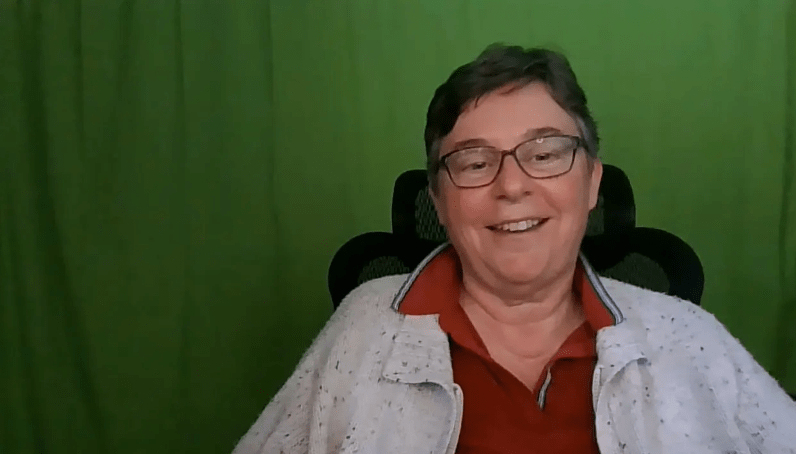
If you were to write your bio in your own words, what would you say? What legacy do you hope to leave?
My bio in my own words would run something like this:
Julie was a searcher, a seeker, who attempted to climb several mountains (religion, education, psychology, academia, creative arts) pursuing knowledge, purpose, and her own heart. Some of the climbs were just sheer hard work, some made her ill, and some provided her with a sense of adventure. Some of the mountains she abandoned before reaching the peak. The others she made it back down from after going as far as she could. All of them she learnt from.
Some of her fellow climbers were inspiring. Others were deeply and firmly kind and solicitous, providing nourishment, water and compasses. Some were good companions, meaning well. And some were reptiles, adept predators, expert at stalk and grievous harm or, when challenged, at flight, fight and freeze. All of them she learnt from.
She still has joy which visits her frequently enough. She lives in a small hamlet on the south coast of New South Wales, Australia, and she continues to receive acceptance from nature. She receives and she writes. That is enough.
Not sure about the legacy idea…I know when my mum died, the heritage I felt like I had received from her was joy…I knew when she passed I wanted to be joyful whenever possible because she seemed like that to me. Despite her experiences, history, and life’s ups and downs, overall she hung on to her capacity for graciousness in the face of cruelty and malice, and her capacity for joy in the presence of everything and everyone else. Life was not always kind to her so I know she didn’t always feel that way, and sometimes she did not have joy for long periods, but overall that’s who she was: feel the feelings, give the benefit of the doubt where it seems to belong, and live a joyful life anyway because that is who you are.
I don’t have children, but I have worked with children all of my adult life and that is the memory I would like to leave behind to any who might remember how I lived life outside of my mistakes, poor judgment, harm I may have done, or lack of understanding I may have brought to people.
Life gives us the capacity to be joyful, especially in the neighbourhood of nature. That’s what I would like people to inherit from me.
⭐⭐⭐⭐⭐
“Life gives us the capacity to be joyful, especially in the neighbourhood of nature.”
– Julie Hollitt
Links
Share Your Insights
We’d love to hear your reflections after reading this interview.
- What part of Julie’s journey or perspective resonated most with you?
- How does nature inspire or shape your own creativity or way of seeing the world?
- Which recurring themes in poetry—or in life—do you find yourself returning to again and again?
Alignment with the UN SDGs
- SDG 3: Supports mental well-being through creative expression.
- SDG 4: Promotes lifelong learning and literacy.
- SDG 15: Highlights connection with nature and biodiversity.
Other Highlights

Looking for something?
Type in your keyword(s) below and click the “Search” button.
Helpful Shortcuts
More Stories









Print and Digital Magazine

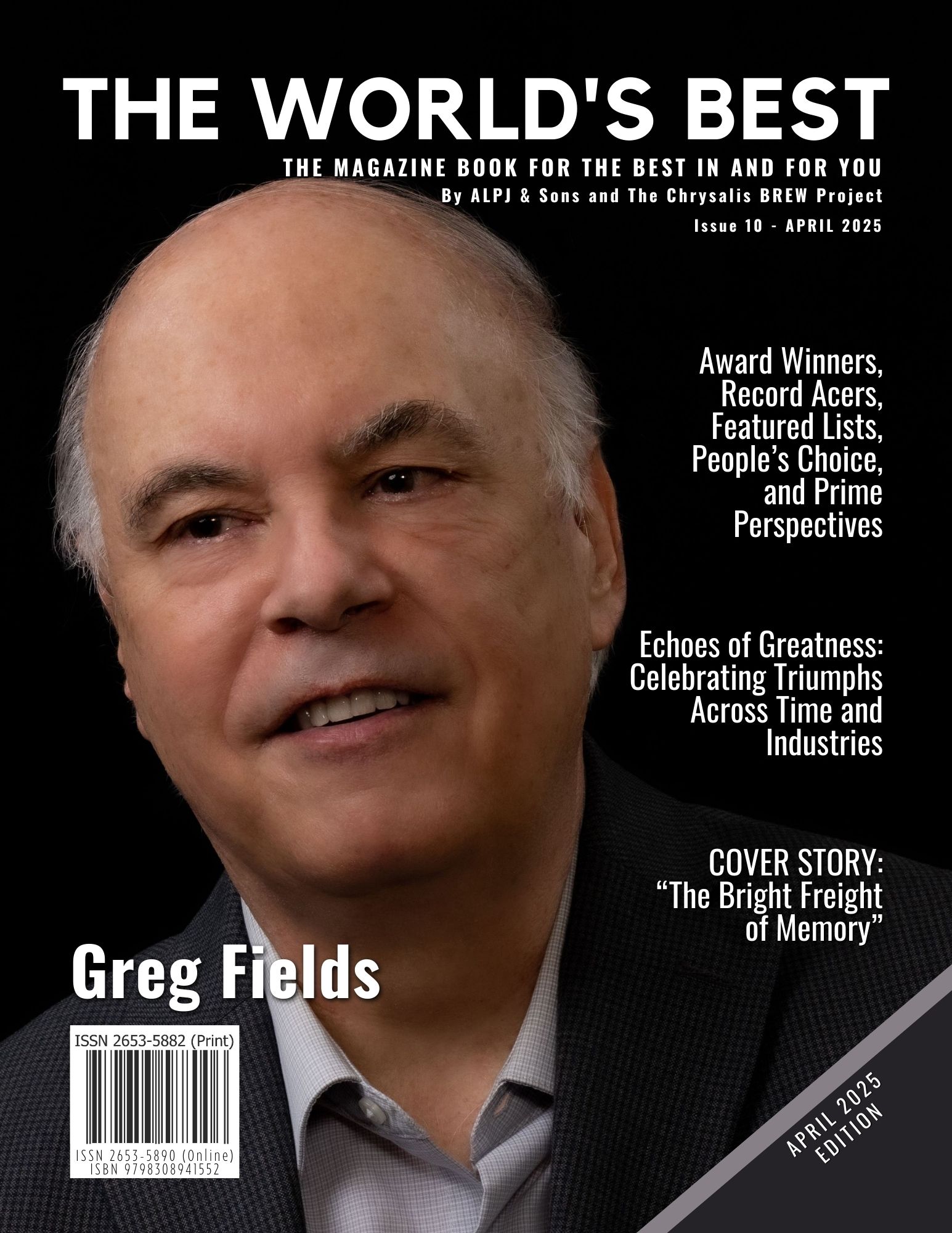
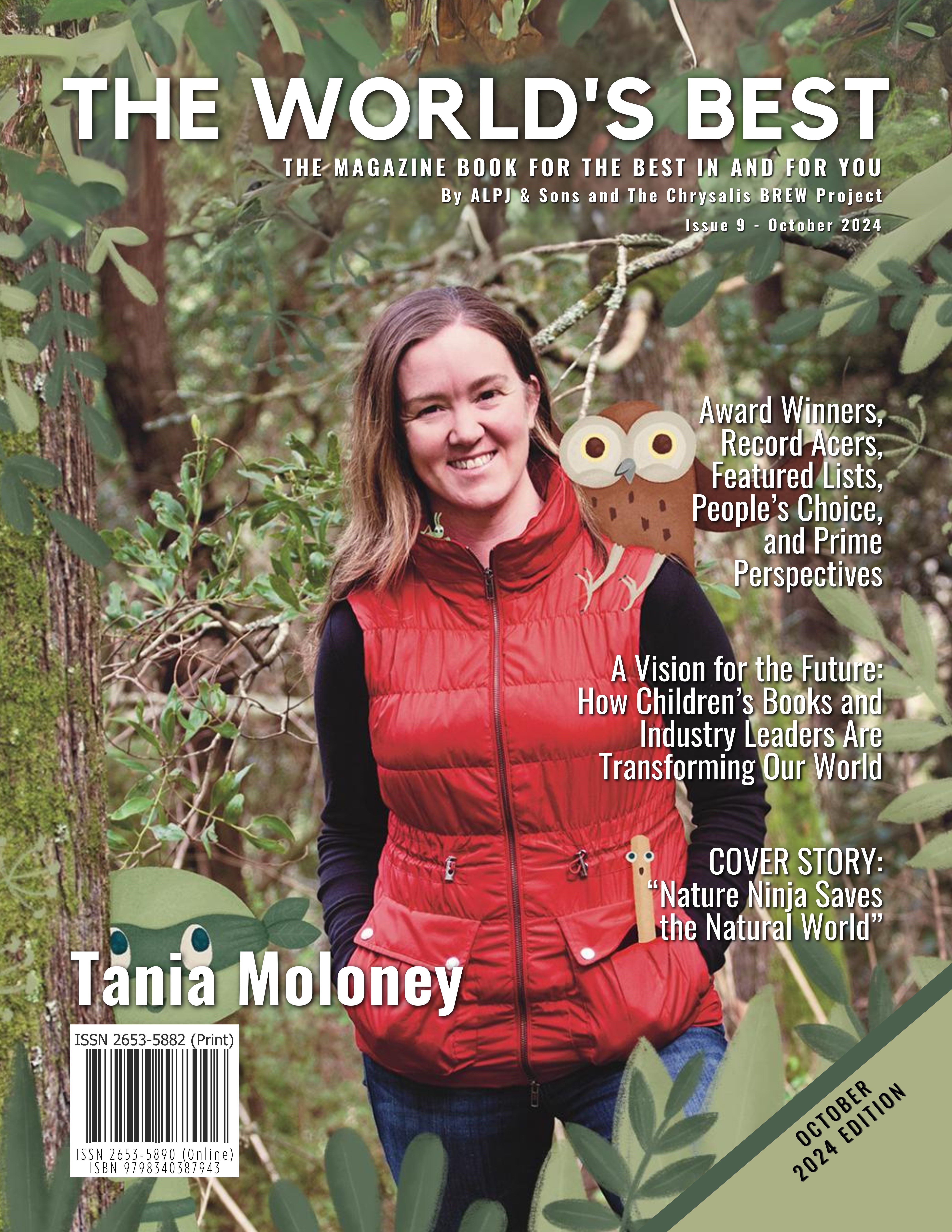

Don’t just read about greatness. Own it!

About Us
The World’s Best Magazine is a print and online publication that highlights the extraordinary. It is your passport to a universe where brilliance knows no bounds. Celebrating outstanding achievements in various fields and industries, we curate and showcase the exceptional, groundbreaking, and culturally significant. Our premier laurels, The World’s Best Awards, commend excellence through a unique process involving subject matter experts and a worldwide audience vote. Explore with us the pinnacle of human achievement and its intersection with diversity, innovation, creativity, and sustainability.
We recognise and honour the Traditional Owners of the land upon which our main office is situated. We extend our deepest respects to Elders past, present, and emerging. We celebrate the stories, culture, and traditions of Aboriginal and Torres Strait Islander Elders from all communities who also reside and work on this land.
Disclaimer: The World’s Best does not provide any form of professional advice. All views and opinions expressed in each post are the contributor’s own. Whereas we implement editorial policies and aim for content accuracy, the details shared on our platforms are intended for informational purposes only. We recommend evaluating each third-party link or site independently, as we cannot be held responsible for any results from their use. In all cases and with no exceptions, you are expected to conduct your own research and seek professional assistance as necessary prior to making any financial, medical, personal, business, or life-changing decisions arising from any content published on this site. All brands and trademarks mentioned belong to their respective owners. Your continued use of our site means you agree with all of these and our other site policies, terms, and conditions. For more details, please refer to the links below.
About | Advertise | Awards | Blogs | Contact | Disclaimer | Submissions | Subscribe | Privacy | Publications | Terms | Winners
The World’s Best: A Magazine That’s All About What’s Great | theworldsbestmagazine.com | Copyright ⓒ 2022-2026
Let’s connect
Discover more from The World's Best
Subscribe to get the latest posts sent to your email.

 The World's Best