
“What drew me to poetry is the way it can move you so deeply within such a small space.”
– Adele Evershed
Editor’s Note: This interview contains the personal reflections of the interviewee, including themes of memory, identity, and women’s experiences. The views expressed are those of the interviewee and presented in the context of their poetry and creative work.
Adele, thank you for joining this conversation. To start, could you introduce yourself, share a bit about your background, and what led you to writing poetry?
I grew up in South Wales and spent eight years living in Asia before moving to Connecticut in the U.S. I’ve always been an avid reader, but I came to writing a little later. What drew me to poetry is the way it can move you so deeply within such a small space. Poetry can hold emotions, intensify them, and at the same time leave room for each reader to breathe their own experiences into the lines—so it’s almost as if every reader receives a slightly different poem. Living between places—holding onto Wales while raising a family elsewhere—sharpened my awareness of memory, language, and the concept of belonging. Poetry became the natural way to explore those shifting identities.
Your poem crumbling… was recognized with a BREW Poetry Award. What does this acknowledgment mean to you personally and creatively?
It means a great deal. Recognition like this feels affirming because poetry often exists in such private spaces—scribbled in notebooks or on the edge of everyday life. Having a piece read and noticed tells me that the emotions I tried to capture have reached someone else, and that’s the real reward.
The poem elevates a simple moment—buying peaches—into a reflection on impermanence. How do you approach transforming everyday experiences into poetry?
I usually begin with something ordinary—a sound, a phrase, an overheard snippet of conversation, even a story on the radio—and then follow the thread to see what it’s really touching. With crumbling, it began as simply as buying peaches at a farmer’s market and noticing they were sold by the quart rather than by number. That gave me pause, and when I brought the fruit home to find only that one ripe peach, it was my way into the poem. I like to use these things that are echoes of larger questions we all live with every day—time passing, changing relationships, loss, and joy. For me, poetry is like turning a key so that little details can reveal something deeper behind the door.
There’s a strong sense of seasonality and the passage of time in crumbling…. How do nature and its cycles inform your writing?
Growing up in Wales, we were always aware of the weather, the tides, coal dust, and all the different kinds of rain. Now, in Connecticut, I feel like I’m living in a child’s storybook called The Seasons—everything arriving exactly as you’d expect, from the turning of autumn leaves to snow at Christmas. I find myself noticing these seasonal shifts as a way of keeping time, not just in the world around me, but also in my own body. In Crumbling, the peaches felt part of that rhythm—ripening and softening as summer slipped into autumn, echoing my own little “crumbling,” my own personal “fall,” as I watched my hands brown and patina. The cycles of blooming, ripening, and decay are happening outside my window and within me at the same time, and I love how poetry allows me to hold onto both.
Your work examines subtle tensions and small betrayals alongside broader reflections on life. Do you find poetry uniquely suited to exploring these nuances?
Absolutely. Poetry makes it easier to show rather than tell—you can catch a hesitation in a voice or a tiny crack in an ordinary moment without spelling it all out. Every word has to pull its weight, which lets you pack layers of meaning into a single line or image—like in Crumbling, where making a peach crumble mirrors my own little “crumbling” as I slip into autumn, my own personal “fall.” Poetry doesn’t need a tidy ending, so it can linger in those small, ambiguous spaces, allowing the reader to notice, feel, and fill in the gaps as they see fit.
What milestones—whether in publication, recognition, or personal development—stand out as significant in your creative journey?
Getting my first poems published felt huge—it was the moment I knew I was doing something right. Recently, having a poem accepted by Poetry Wales felt particularly special. I’ve long admired the magazine, and, being Welsh myself, it felt like coming home in a way. I’ve also had two chapbooks published, Turbulence in Small Spaces and The Brink of Silence, which felt like real milestones too. Something is validating—and a little scary—about putting a whole collection of your own poems out there, especially without the safety of an anthology cover alongside other poets. Nominations like the Pushcart Prize and Best of the Net, as well as placing in competitions such as the Winchester Poetry Prize, have been lovely reminders that people are noticing and appreciating what I’m doing. Awards like this one feel the same—they’re a nudge to keep growing, experimenting, finding my voice, and, honestly, to keep imposter syndrome from shouting in my ear.
Could you walk us through your process, from the first spark of an idea to shaping it into a finished poem?
Usually, a spark comes as an image or a line I just can’t shake. I’ll grab my phone or whatever scrap of paper is handy and jot it down quickly, then let the first draft sprawl wherever it wants. The real work comes in revision—I trim, rearrange, listen for rhythm, and pare it back to what feels essential. I love experimenting with form too, such as turning something into a haibun or using slashes instead of line breaks to see how it flows. If I’m in a dry patch, I turn to reading and writing haiku—I love how a haiku is a small pause and the way it can hold so many layers in such a confined syllable count. Another thing I love is writing ekphrastic poems—losing myself in a painting and noticing all the details in the margins always stirs my creative juices.
Many readers connect with poetry for its ability to illuminate everyday moments. What do you hope readers take away from your work?
I hope readers feel seen in some way—that a line or image resonates with their own life. More than anything, I’d like my poems to create a pause, a small moment of reflection where someone might see the ordinary a little differently.
Are there recurring themes or questions in your writing that you keep returning to, and if so, why do they continue to resonate with you?
Yes—memory, belonging, hiraeth, family, and the push-and-pull between home and distance keep showing up in my work. I also return to women’s experiences, from violence and suffering to the changes our bodies go through. I keep circling back because these aren’t questions with tidy answers—they’re just part of living. Writing into them feels like a way of making sense of, and making peace with, that ongoing complexity.
Looking ahead, what new themes, projects, or experiments are you most excited to explore in your poetry?
I’ve just signed a contract with Prolific Pulse Press to publish a collection of haiku, titled Red Threads and Silver Linings, which explores women’s lives through the lens of the body and its changes. I’m also writing flash fiction, which shares a close relationship with poetry—both require packing a lot of meaning into a small space. This month, my novella-in-flash, A History of Hand-Thrown Walls, was published by Unsolicited Press, so I’ve been busy marketing and publicizing that, alongside returning to work as a teacher. I haven’t had as much time to write as I’d like, but I make sure to write at least one haiku every day—it keeps me connected to the practice, even when life is hectic.
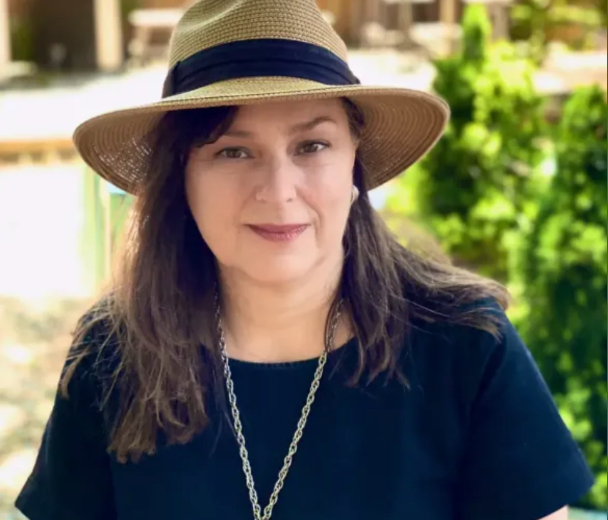
If you were to write your bio in your own words, what would you say? What legacy would you like to leave?
I’d say: I’m a writer who loves haiku, PG Tips, and a good Panto. A strong sense of hiraeth for Wales runs through much of my work, alongside the frustration of living in a world that still questions women’s rights. I often write about the bodies of women—the changes they undergo, how we inhabit them and learn to accept them—and how those changes shape memory, identity, and desire. Through poetry and prose I’m trying to make sense of distance, memory, and the body. If I leave any legacy, I’d like it to be this: it’s never too late to try something new—and when you get the chance, find an anthem and play it at full volume so you can sing along. One of my favorites is Good Morning Baltimore from the musical Hairspray—try it next time you’re feeling any way at all, whether sad, happy, angry, or tired—it can turn most things around.
⭐⭐⭐⭐⭐
“If I leave any legacy, I’d like it to be this: it’s never too late to try something new—and when you get the chance, find an anthem and play it at full volume.”
– Adele Evershed
Links
Share Your Insights
We’d love to hear your thoughts! Share your reflections in the comments:
- What small moments in life have inspired you to reflect or create?
- How does poetry help you explore emotions or memory?
- Which themes in poetry resonate most strongly with your own experiences?
Alignment with the UN SDGs
- SDG 4 (Quality Education): Encourages learning and self-expression through poetry.
- SDG 5 (Gender Equality): Highlights women’s experiences and voices.
- SDG 16 (Peace, Justice, Strong Institutions): Promotes reflection, empathy, and understanding through art.
Other Highlights

Looking for something?
Type in your keyword(s) below and click the “Search” button.
Helpful Shortcuts
More Stories








Print and Digital Magazine

Don’t just read about greatness. Own it!

About Us
The World’s Best Magazine is a print and online publication that highlights the extraordinary. It is your passport to a universe where brilliance knows no bounds. Celebrating outstanding achievements in various fields and industries, we curate and showcase the exceptional, groundbreaking, and culturally significant. Our premier laurels, The World’s Best Awards, commend excellence through a unique process involving subject matter experts and a worldwide audience vote. Explore with us the pinnacle of human achievement and its intersection with diversity, innovation, creativity, and sustainability.
We recognise and honour the Traditional Owners of the land upon which our main office is situated. We extend our deepest respects to Elders past, present, and emerging. We celebrate the stories, culture, and traditions of Aboriginal and Torres Strait Islander Elders from all communities who also reside and work on this land.
Disclaimer: The World’s Best does not provide any form of professional advice. All views and opinions expressed in each post are the contributor’s own. Whereas we implement editorial policies and aim for content accuracy, the details shared on our platforms are intended for informational purposes only. We recommend evaluating each third-party link or site independently, as we cannot be held responsible for any results from their use. In all cases and with no exceptions, you are expected to conduct your own research and seek professional assistance as necessary prior to making any financial, medical, personal, business, or life-changing decisions arising from any content published on this site. All brands and trademarks mentioned belong to their respective owners. Your continued use of our site means you agree with all of these and our other site policies, terms, and conditions. For more details, please refer to the links below.
About | Advertise | Awards | Blogs | Contact | Disclaimer | Submissions | Subscribe | Privacy | Publications | Terms | Winners
The World’s Best: A Magazine That’s All About What’s Great | theworldsbestmagazine.com | Copyright ⓒ 2022-2026
Let’s connect
Discover more from The World's Best
Subscribe to get the latest posts sent to your email.

 The World's Best
A beautiful and insightful interview!
You’ve highlighted Adele Evershed’s gift with such grace—her ability to turn ordinary moments into powerful reflections truly shines here. The way you captured her voice, her creative journey, and the depth behind her poetry makes this piece both inspiring and enriching. A wonderful tribute to a poet who finds meaning in the smallest corners of life.
LikeLike