
“Writing is rewriting, so gather your perseverance because that’s what it takes.”
– Cherie Kerr
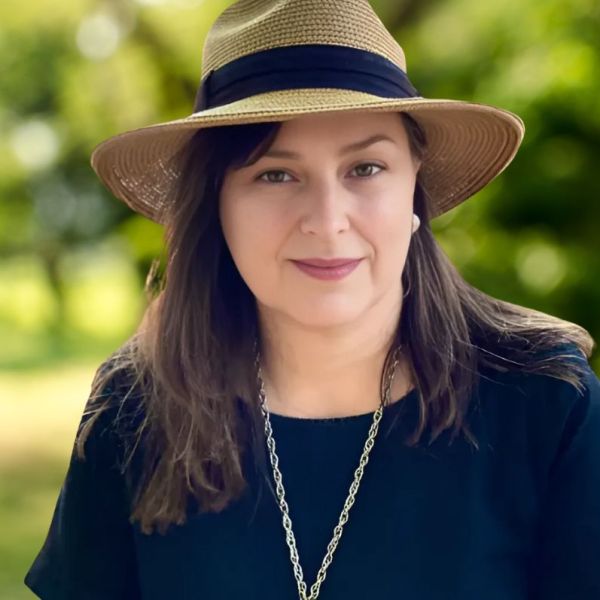
Cherie, thank you for joining us. Can you start by introducing yourself—who you are, what you do, and what motivates your work as a writer?
I am an author, publicist, film writer/director, comedy and presentation and communications skills teacher and writer.
What happens to me personally and what happens in the world (each day) that I most want to vent about or better understand. I have extensive experience in comedy—more than 4 decades as a writer/actor.
Your writing career began in an unconventional way, transitioning from retail and PR into authorship. Can you share how those early experiences shaped your perspective as a storyteller?
I am still a P.R. writer of all types of materials. My work as a publicist prompted me to teach my clients improv comedy and acting skills to make them come across more effectively during print and broadcast interviews. In addition to KerrPR, this activity prompted me to start ExecuProv. Eleven of my books are geared toward sharing lessons of my ExecuProv work, the others are about comedy, though one is a memoir about my father’s life as a jazz musician; the other a short story collection.
But, let’s back up: At 25 years old I was divorced with two small children to feed. I always loved writing poetry, stories and plays as a kid, but had no formal training. Suddenly divorced with no formal skill set, I applied for a receptionist position at a homebuilding company who mentioned they were also looking for a P.R. person. They asked if I could do any work regarding the latter, and I said I could. I was sure they wouldn’t offer me that post. They did. I was shocked. I accepted it and started studying every publication I could get my hands on. Their ad agency was most impressed and within a year offered me a job at their firm. I accepted.
I spent 4 years there (it was like going to college) and learned all I needed to be a comprehensive publicist. After 4 years I left, freelanced, and wrote for several magazines. Then, within a couple of years, I started my own P.R. agency. I have many interesting stories to share.
You’ve written books and hundreds of sketches. How do you decide which stories to tell, and what drives your creative process?
It has largely to do with what pushes my buttons—mostly my comedy writing through the lens of absurdity. For instance, in the mid-90s women seemed to fancy shoulder pads in their jackets and blouses. They were getting ridiculously huge. I wrote a piece called Too Much Shoulder Pad, based on a support group for women who had this addiction. Two women confessed to the group about the foreign objects they were stuffing inside their clothing to make their shoulders huge. The Los Angeles Times named it “Sketch of the Year,” which I truly appreciated.
So then, I’m often writing about societal issues and new norms; family life issues; neuroses, etc. My trilogy of mockumentary indie films—about the absurdities of behind-the-scenes theater and film festival happenings—were the themes. They did well: more than 80 nominations and 40-plus film festival awards.
Books and screenplays are my favorites to write. I still have so many books to pen. Hope to get to finish many of them.
Looking back, what were some pivotal moments or challenges that influenced your growth as a writer?
I had to really strive to be a good writer. My second husband, a prominent sportswriter and broadcaster, once told me I would have to “suffer” to become a good writer. I was 31 at the time. I laughed at him. He was right. It took me years to be able to be a versatile and good writer.
I tell my students: “Writing is rewriting,” so gather your perseverance because that’s what it takes. That was the first pivotal moment. Another was when I embarked on my authorship career. Each book was a new challenge, and a pivotal moment, as was every screenplay.
I have a book, Write Away: How to Become a Better Business Writer by Studying the Pros You Never Thought Of. It teaches students how to write 18 different styles of writing—some include: standup comedy sets; journalism pieces; children’s stories; and social media posts. Not until I embarked on that book (as a lesson for my clients at Toyota) did I realize I had been wonderfully blessed to have been tasked to write so many “styles” as part of my work assignments.
Writing professionally and successfully is super critical these days with respect to text and email communications. These messages can make or break a relationship. There are far too many broken relationships due to poor or misconstrued written messages. I’m militant about this form of written communication these days—that it be appropriate and well done!
Humor seems to be a significant part of your work, especially your sketch comedy. How do you approach creating content that resonates with diverse audiences?
Once again, I’m looking all around me for what seems absurd, topical, what’s scary, what pisses me off, the inequities all around me… things like that. Making fun of them through satire is so healing to the psyche—those of the audience, my actors, and myself. It’s healthy to laugh when you are frustrated or feel powerless.
I also consider the audience, too. Some things are appropriate, but others inappropriate. I cover that whole thing in my What’s So Funny book on how to get storytelling in your speeches and presentations. That said, since I live in Orange County, CA, I have spent a great deal of time focusing on “yuppies!”
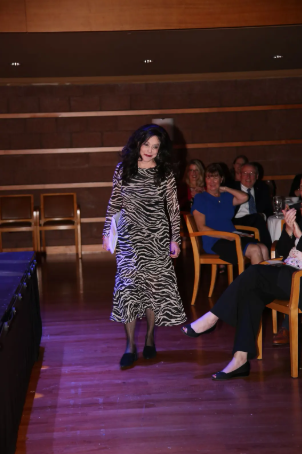
We had an improvised send-up of Jeopardy, and we called it Yuppardy—all improvised. We took on our “Board of Stupidvisors.” We also made fun of all 31 cities in the county—by doing a fashion show where each model depicted a certain city. For Fountain Valley, we had a male model dressed in a toga. He paused at the end of the runway and spurted a long stream of water for about a minute—he looked like a fountain statue in Rome.
We’ve had so much fun, but in a good way. We never do malicious or inappropriate humor. We simply make fun—tongue in cheek of all things—often put the joke on ourselves, not others. We want others to take life somewhat less seriously.
That said, sometimes we do take a sharp bite as we go up against those who have been less kind or credible. For instance, right around 2007, we did a sketch show Orange Flew Over the Cuckoo’s Nest. It focused on the real estate lending crisis in the OC. One of the looney-binners was James Duncan. He was joined with Bernie Madoff and others.
Many of your works have received awards and recognition. Can you share some of these milestones and what they mean to you personally and professionally?
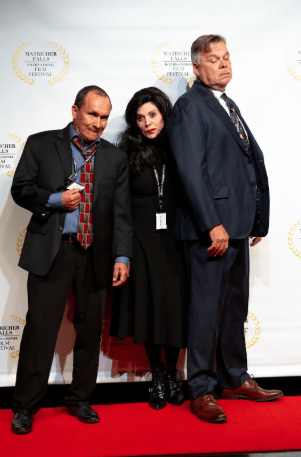
Yes, I am humbly grateful for all of them. Considering that I started from nothing and nowhere and have received a number of honors over the years. One of my most treasured was having been named among the “10 Most Sensational People in Orange County” along with Michael Eisner. I also was given the “Helena Modjeska Cultural Legacy Award”—for my lifetime achievement in comedy.
I also won first place in Songwriter Magazine for lyrics I wrote (“I’m Me,” was the song). I also won an award from the New York Book Festival Awards for Charlie’s Notes, my dad’s memoir. That was a real highlight too.
I guess what they mean to me—these awards—is that my work is resonating with others. No higher compliment! I’m so grateful to the many mentors who supported me along the way…!
Ghostwriting is a unique skill that blends your voice with someone else’s story. How do you tackle this process while maintaining authenticity?
I actually handle it the same way I always have when playing a character. I synthesize their “voice” and get into their heads to tell the story the way they would write it if they had the ability to.
Like My Watergate Tell-All: How I Unwittingly Caused This Historic Event for Bruce Givner. He had a real down-to-earth personality. Reliving his experience as an intern at the Watergate that fateful night was such fun for me. The research alone was fascinating. It took me back to my investigative journalism days (in my 30s), and I took the book chapter by chapter; so I was very much in the moment while writing each page.
For each of the 3 books I ghosted, the writing reflected the authors’ personalities and points of view. It’s so fun to do—help people with their tutorials and stories. I also have written hundreds of columns under my clients’ bylines. I spend a good amount of time outlining the books or columns for my clients according to their desired approach.
Innovation and creativity appear central to your success. How do you stay inspired, experiment with ideas, and push the boundaries of your writing?
There is no one formula. Sometimes, I’m just driving down the street and suddenly an idea comes to me—one that is funny or serious.
Recently, I wrote a curriculum for a new ExecuProv class: Have You Lost Your Touch? It has the students convening in a workshop where they are tasked with making up “rules and manners” and programs that will help them assess whether their business relationships are becoming more and more distant from others.
It’s twofold: It asks students to explore whether they are being treated more dismissively (and what to do about it), or whether they themselves are coming off as cold and distant to those business colleagues with whom they once had a cordial relationship.
Everyone who has participated in this class has had a real wakeup call when they examine and own up to how they “ghost” people in their written communications; how they often show disrespect in the way they write them; and also, how they are quietly resentful of the way they have been treated. The purpose of the class is to find solutions to the “losing touch” issue. Each group has come up with “new rules” during this fun process.
The group of six are committed to finding ways to connect and stay connected in order to forge strong and collaborative business relationships. I’m so tired of the way people “diss” one another these days, that my irritation and frustration provided the impetus for creating this new ExecuProv class—and likely soon a book.
With my business books, a premise for writing one is always inspired by a need. Other writing projects are based on what I am personally feeling passionate about—whether it is drama or comedy.
As far as boundaries: I try not to have any, but as I mentioned, we have a strict rule not to insult or denigrate an audience member. We try to re-direct the joke (to still make the point) without insulting anyone in attendance. Comedy is cyclical, and there are some sketches we did 25 years ago that I wouldn’t touch today.
We are not prudes—we who are with the Orange County Crazies—but we are mindful of not purposely offending anyone. Also, we mention to our actors and students not to overuse profanity (one of my favorite vices, which I use constantly when I’m driving on the freeway) because overusing it loses its impact. We choose our profanity conservatively.
Always remember your audience, I tell the students—whether corporate or those in the performing profession. Some situations are not appropriate to anything profane, while others will appreciate it. “Who are you performing for?” I ask them to ask themselves. Make decisions accordingly. There is no one-size-fits-all. This said, I’m always pushing up against the line.
Beyond writing, what principles or practices do you follow to nurture your professional and personal growth, and possibly influence others positively?
I try to keep it real. Be authentic. Write what you know. Be good to your fellow performers. Take criticism from those you respect, and work at getting better, because if you’re any good as a writer, you should never feel you’ve absolutely “arrived”—because great writers never do.
Adhering to that principle alone will tip off the writer that he or she is likely a very, very good one. There are few things I have written that I would not want to edit a lot—or at least a bit!
Looking at your body of work, how do you see your writing contributing to broader conversations—about storytelling, creativity, or the human experience?
I’m hopeful that my work will do one thing: Make people think! Whether my work is comedy, drama, or educational. Only then can they explore or arrive at the point or message I intend to impart.
Also, I always want to leave people wanting more. I also believe it’s always about the human experience—everything in art. That includes all types of writing.
If you were to write your bio in your own words, what would you say? What legacy do you hope to leave?
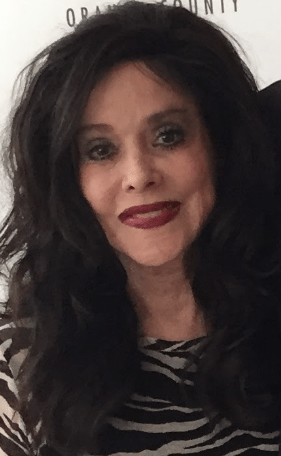
I would like people to realize that every experience—good or bad—has a purpose. I would like people to realize that life rarely turns out the way you thought it would. Always do the right thing. Go beyond your perceived potential, always in all things. Be true to yourself.
I would like those I have mentored to note that I pushed them hard to excel. Not because I am tough, but because I would not accept them performing to a lower standard than what they were really capable of—because I truly cared about them and their growth as a writer along the arduous writing journey.
⭐⭐⭐⭐⭐
“I’m hopeful that my work will do one thing: make people think!”
– Cherie Kerr
Links
Share Your Insights
What stood out to you in this conversation? Share your thoughts in the comments:
- What motivates your own creative or professional work?
- How do you personally handle challenges or setbacks in your craft?
- Which part of the interview resonated with you the most, and why?
Alignment with the UN SDGs
- SDG 4: Promotes lifelong learning through writing, teaching, mentorship.
- SDG 8: Encourages creativity, innovation, and sustainable career growth.
- SDG 10: Advocates inclusion through diverse, respectful storytelling.
Other Highlights

Looking for something?
Type in your keyword(s) below and click the “Search” button.
Helpful Shortcuts
More Stories



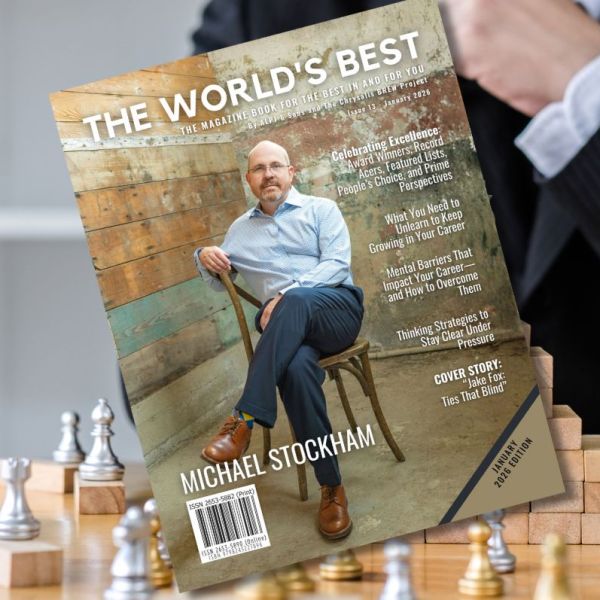







Print and Digital Magazine

Don’t just read about greatness. Own it!

About Us
The World’s Best Magazine is a print and online publication that highlights the extraordinary. It is your passport to a universe where brilliance knows no bounds. Celebrating outstanding achievements in various fields and industries, we curate and showcase the exceptional, groundbreaking, and culturally significant. Our premier laurels, The World’s Best Awards, commend excellence through a unique process involving subject matter experts and a worldwide audience vote. Explore with us the pinnacle of human achievement and its intersection with diversity, innovation, creativity, and sustainability.
We recognise and honour the Traditional Owners of the land upon which our main office is situated. We extend our deepest respects to Elders past, present, and emerging. We celebrate the stories, culture, and traditions of Aboriginal and Torres Strait Islander Elders from all communities who also reside and work on this land.
Disclaimer: The World’s Best does not provide any form of professional advice. All views and opinions expressed in each post are the contributor’s own. Whereas we implement editorial policies and aim for content accuracy, the details shared on our platforms are intended for informational purposes only. We recommend evaluating each third-party link or site independently, as we cannot be held responsible for any results from their use. In all cases and with no exceptions, you are expected to conduct your own research and seek professional assistance as necessary prior to making any financial, medical, personal, business, or life-changing decisions arising from any content published on this site. All brands and trademarks mentioned belong to their respective owners. Your continued use of our site means you agree with all of these and our other site policies, terms, and conditions. For more details, please refer to the links below.
About | Advertise | Awards | Blogs | Contact | Disclaimer | Submissions | Subscribe | Privacy | Publications | Terms | Winners
The World’s Best: A Magazine That’s All About What’s Great | theworldsbestmagazine.com | Copyright ⓒ 2022-2026
Let’s connect
Discover more from The World's Best
Subscribe to get the latest posts sent to your email.

 The World's Best