
“I write poetry about memory, human connection, and the little moments in life that can feel surprisingly big when you really notice them.”
– Daniel Naawenkangua Abukuri
Daniel, thank you for joining us. To begin, could you introduce yourself, share a bit about your background, and what first drew you to poetry?
I’m Daniel Naawenkangua Abukuri, though I also write under the name poetraniel. I write poetry about memory, human connection, and the little moments in life that can feel surprisingly big when you really notice them. I grew up in Ghana and am a first-generation student. Reading and writing opened doors I never imagined I’d walk through, and they quickly became a lifeline for me, a place to understand the world, and a place where the world could understand me.
Interestingly, the first poetry I knew wasn’t on paper. It was spoken. In my hometown, my grandparents filled our evenings with stories. They would pause just at the right moments, break into song without warning, and let silences stretch until they became part of the tale. I didn’t realize it then, but I was learning poetry: rhythm, timing, imagery, and the art of quiet. I was learning how to feel a story as much as to hear it.
Some years later, in school, my English teacher noticed the short poems and little stories I scribbled in the margins of my exercise books and handed me a poetry book, Cotton Candy on a Rainy Day by Nikki Giovanni. Reading it felt like hearing a voice I already knew, like home captured on a page. I could see myself reflected in those words, and it opened a door into the wider world of poetry for me. That’s when I truly fell in love with the craft.
Since then, writing has become both a refuge and a bridge. It allows me to process my own experiences, and to connect with people far beyond my own world. My poems are small invitations: moments, gestures, or reflections that often go unnoticed, waiting to be seen, felt, and remembered.
Your poem about the oyster bar was recognized with a BREW Poetry Award. What does this recognition mean to you personally and creatively?
Honestly, winning the BREW Poetry Award for The Couple at Table Nine was a little like realizing someone noticed the way I obsessively watch people eat oysters, and actually thought it was worth celebrating. It’s incredibly affirming. It’s a reminder that the quiet, everyday moments we often walk past, like a half-eaten oyster, a crumpled napkin, or a song hummed in the kitchen, actually matter. They carry universality, emotion, and sometimes a surprising amount of drama.
Creatively, it’s a nudge (or maybe a gentle shove) to keep paying attention to those little details. To keep poking around in the spaces between words, gestures, and silences, and to trust that readers might find meaning there too. This award feels like a wink from the universe, saying, “Yes, your weird little observations about life? People notice them. People care.” And, if I’m honest, it also gives me a tiny excuse to keep lingering in oyster bars, pretending to write poetry while really just watching couples awkwardly share plates.
The poem captures memory, longing, and quiet moments of human connection. How do you approach translating personal experiences into poetry that resonates broadly?
I usually start by noticing the small details most people might overlook, like the fold of a napkin, a song hummed under someone’s breath, the angle of sunlight across a table, or the tiny pause before a laugh. These seemingly mundane moments often carry more emotional weight than they appear.
From there, I let the feelings unfold naturally, trusting that humor, longing, regret, or affection can speak for themselves. I aim for honesty, sometimes funny, sometimes bittersweet, while staying grounded in reality. What feels deeply personal, such as sharing oysters, noticing a curl of lemon, or jotting a half-thought on a napkin, can often resonate with others because everyone has those fleeting, memorable moments.
If a reader sees themselves, or someone they know, in a poem, then I know it’s working. In the end, translating personal experience into broadly resonant poetry is about paying attention, being honest, and trusting that the magic and connection live in the details. And yes, occasionally it’s about a little obsessive observation of people eating oysters, but we’ll call that research.
Your imagery often focuses on small, intimate details—a song, a napkin, a meal. How do you choose the details that will carry the weight of emotion in a poem?
I often start with the details that stick in my mind, the little moments that make me pause, smile, or sigh. These are the things that linger, like a melody you can’t forget or sunlight hitting a table just so. It could be the curl of a lemon, the awkward shuffle of two people sharing an oyster, or the way a song hangs in the air long after it’s finished.
I choose details that feel alive and carry energy or resonance. They act as hooks, drawing readers into the scene and carrying the emotional weight without spelling everything out. I ask myself: does this make me feel something, surprise me, or make me linger in thought? If yes, it’s likely to resonate with someone else too.
I also consider how details interact with memory and emotion. A folded napkin or a half-empty glass of wine can suddenly hold a story, a feeling, or a moment of connection. These small, specific moments let readers enter a world that feels intimate and universal, where the ordinary becomes meaningful. In the end, I’m drawn to details that carry life in their quietness, humor in their subtlety, and weight in their simplicity.
The poem balances humor, melancholy, and reflection. How do you navigate tone when writing about memory or relationships?
Tone is always a bit of a tightrope walk, but I try not to overthink it. Life itself is a mix of laughter, awkwardness, sadness, and fleeting joy, so I want my poems to reflect that messy, beautiful reality. Sometimes a memory makes me smile, sometimes it makes me wince, and sometimes it does both at once. I try to let those natural shifts guide the tone rather than forcing it into one mood or another.
I also like to leave a little room for surprise. Humor, for example, can creep in where you least expect it like a perfectly timed awkward observation in a moment of longing. And melancholy doesn’t always have to be heavy; sometimes it’s gentle, almost like a sigh that lingers just long enough to notice. When I balance these elements, I hope the reader feels the layers of human experience. The way humor can exist alongside sorrow, or reflection can make a small, everyday moment feel weighty and profound.
Navigating tone is about honesty. I try to write as if I were talking to a friend over coffee, sharing memories and observations without pretending they’re anything more than real. If a poem can make someone chuckle and then pause for a moment of reflection, or maybe even nod and think, “Yeah, I’ve felt that too,” then I know I’ve hit the right note. And yes, occasionally, a little self-aware humor sneaks in, because life is just too strange and funny to take entirely seriously.
What milestones or moments—whether in publication, recognition, or personal growth—stand out as most meaningful in your writing journey?

There have been several moments in my writing journey that feel unforgettable. Of course, winning the BREW Poetry Award and now having The Couple at Table Nine considered for the Pushcart Prize 2026 and Best of the Net 2027 is huge for me. It feels surreal and deeply affirming.
Being shortlisted for the African Literary Prize and African Writers Award, and seeing my work appear or forthcoming in journals like Chestnut Review, The Malahat Review, Consilience, A Long House, Minyan Magazine, and The Poetry Lighthouse have all been incredible milestones. But honestly, it’s often the smaller, quieter moments that hit me the hardest. Finishing a poem that’s been nagging at me for weeks, receiving a message from a reader saying a piece made them feel seen, or realizing I’ve captured a fleeting memory exactly as I remembered it. Those victories, though less public, feel profound.
For me, writing has always been about connection. Any moment when someone says, “Hey, I saw myself in your poem,” feels like a quiet high-five across space and time. It’s a reminder that poetry isn’t just about clever words or perfect lines. It’s about shared experience, empathy, and the way a poem can make us feel less alone. And honestly, it’s moments like these, whether big or small, that keep me coming back to the page every day.
How do setting and environment—like the oyster bar, the pier, or a specific table—inform the emotional core of your work?
I often think of setting as a secret character in my poems. Sometimes even the most important one. The oyster bar in The Couple at Table Nine isn’t just a backdrop; it’s a stage for human quirks, awkward glances, small confessions, and quiet revelations.
Spaces carry mood, memory, and tension, and they subtly shape how emotions unfold. A particular table, a slant of sunlight through a window, the hum of a guitar in the corner. These details influence the rhythm, heartbeat, and even the pauses in a poem. I pay attention to the world around me because the ordinary holds extraordinary potential. The right setting can transform a simple memory into something cinematic, giving readers a place to inhabit the emotions, gestures, and silences I’m trying to capture.
Sometimes the setting almost dictates the story; it can coax out humor, tension, longing, or tenderness that might not exist on its own. And yes, I’ll admit, sometimes I choose settings as an excuse to pretend I’m “researching” life while really just people-watching. Observing how someone awkwardly shares a plate of oysters or how a couple leans together in quiet conversation is basically my official poetic duty. The goal is always the same: to let the setting breathe, to make it feel alive, and to give readers a space that mirrors the emotional core of the poem itself.
Many readers find that poetry illuminates the ordinary in new ways. What do you hope someone experiences or takes away when reading your work?
I hope readers notice the small things. The gestures we often overlook, the fleeting moments that slip by too quickly, the sounds, smells, and sights we usually pass without a second thought. Life is full of tiny, quiet details, and I want my poems to shine a little light on them.
The curl of a napkin, a song hummed under someone’s breath, the way sunlight falls across a table. These are the moments that can carry humor, longing, tenderness, or even a gentle sadness, if we only pay attention. If a poem makes someone laugh, sigh, or pause to remember a person, a place, or a feeling, then I feel like it’s done its job.
I hope readers leave with a renewed awareness that life isn’t just the big, obvious events. It’s also the subtle, almost invisible details that make everyday existence so rich and meaningful. Ideally, they might even walk away with a little reminder to slow down, to linger a bit longer over the ordinary things that, when noticed closely, are anything but ordinary. And if they happen to glance at a plate of oysters or a napkin and think, “Hmm…there might be a poem in this,” then I know the magic has worked.
Are there recurring themes, motifs, or questions in your poetry that you revisit often, and if so, what draws you back to them?
Yes. It’s memory, absence, longing, human connection, and that curious mix of humor and melancholy are all recurring themes in my work. I keep returning to them because they are constant companions in our everyday lives, quietly shaping the way we experience the world.
There’s something endlessly fascinating to me about how ordinary moments, a fleeting glance, a familiar song, a shared meal, or even the way someone folds a napkin, can carry so much emotional weight if we just pay attention. I’m drawn back to these themes because they allow me to explore the quiet, often unnoticed corners of life, the intimate details that feel both deeply personal and universally recognizable at the same time.
They’re the little things that sneak under the skin, linger in memory, and quietly shape who we are. And, if I’m honest, I also enjoy the challenge of seeing how far I can stretch a simple observation before it becomes something larger, a poem that resonates beyond just the moment it describes. There’s a bit of playful experimentation in that, a joy in testing the limits of intimacy, humor, and emotional depth, and finding the perfect balance so that readers can both recognize themselves in the work and perhaps see the world in a slightly different light.
Looking ahead, what projects, themes, or experiments are you excited to explore next in your poetry?
Looking ahead, I’m excited to dive into projects that weave together memory, urban life, and African storytelling traditions, exploring the rhythms, humor, and irony that often hide in everyday moments. I’m particularly interested in how poetry can intersect with other art forms, music, visual art, even performance, so that words, sounds, and images can converse with one another, amplify emotions, and create layered experiences for readers.
I’m also always on the lookout for more “tables to watch” and those tiny, seemingly ordinary moments that have the potential to become poems. Life is full of them, whether we notice or not: a shared glance, a half-finished song, the clink of forks over a small plate, a fleeting smile, or a pause that says more than words ever could. Part of the joy in writing is discovering these moments and finding ways to reveal the humor, tenderness, or small surprises hidden in them.
So yes, readers can expect more awkward shared meals, lingering songs, half-remembered conversations, and maybe even a few more oysters in my future work. In the end, I hope to continue exploring the subtle, quiet, and often overlooked experiences that make life rich, funny, and achingly human. These are moments that remind us that even the ordinary can be extraordinary if we slow down enough to see it.
If you were to write your bio in your own words, what would you say? What legacy would you like to leave?

I’m a poet and prose writer who finds meaning in the small, often overlooked moments. The gestures, sounds, and fleeting interactions that make life feel both ordinary and extraordinary. I hope my writing encourages readers to pause, to see, and to connect with these moments, whether it makes them laugh, sigh, or feel recognized in their own experiences.
If I leave behind a legacy, I hope it’s this: that poetry can transform the ordinary into something unforgettable, that it can turn small, fleeting details into shared experience, and that it reminds people to pay attention to the quiet, humorous, tender, and beautiful parts of life that so often go unnoticed. And, of course, maybe, just maybe, that poetry gives a perfectly good reason to linger in oyster bars once in a while.
⭐⭐⭐⭐⭐
“If I leave behind a legacy, I hope it’s this: that poetry can transform the ordinary into something unforgettable, that it can turn small, fleeting details into shared experience, and that it reminds people to pay attention to the quiet, humorous, tender, and beautiful parts of life that so often go unnoticed.”
– Daniel Naawenkangua Abukuri
Links
- Daniel at Instagram
- Know more about the BREW Book, Blog, and Poetry Awards here
Share Your Insights
We’d love to hear your thoughts! How do you notice and appreciate the small moments in life? Share your reflections in the comments:
- Which everyday detail or memory has recently caught your attention in a meaningful way?
- How does poetry or writing help you see ordinary moments differently?
- Are there small gestures, sounds, or experiences you’d like to capture in your own creative work?
Alignment with the UN SDGs
- SDG 4 (Quality Education): Encourages literacy, learning, and creative expression through poetry.
- SDG 10 (Reduced Inequalities): Highlights first-generation student experiences and diverse cultural perspectives.
- SDG 16 (Peace, Justice, and Strong Institutions): Promotes empathy, understanding, and human connection through storytelling.
Other Highlights

Looking for something?
Type in your keyword(s) below and click the “Search” button.
Helpful Shortcuts
More Stories














Print and Digital Magazine

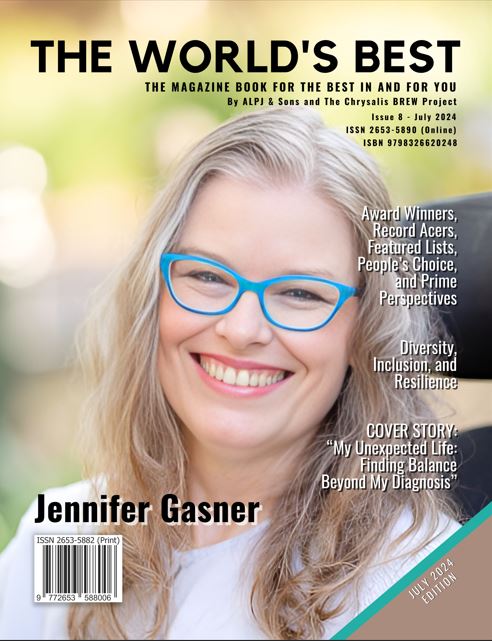
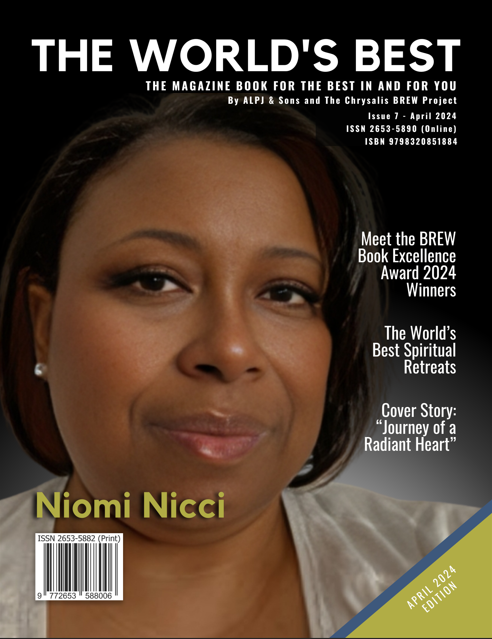
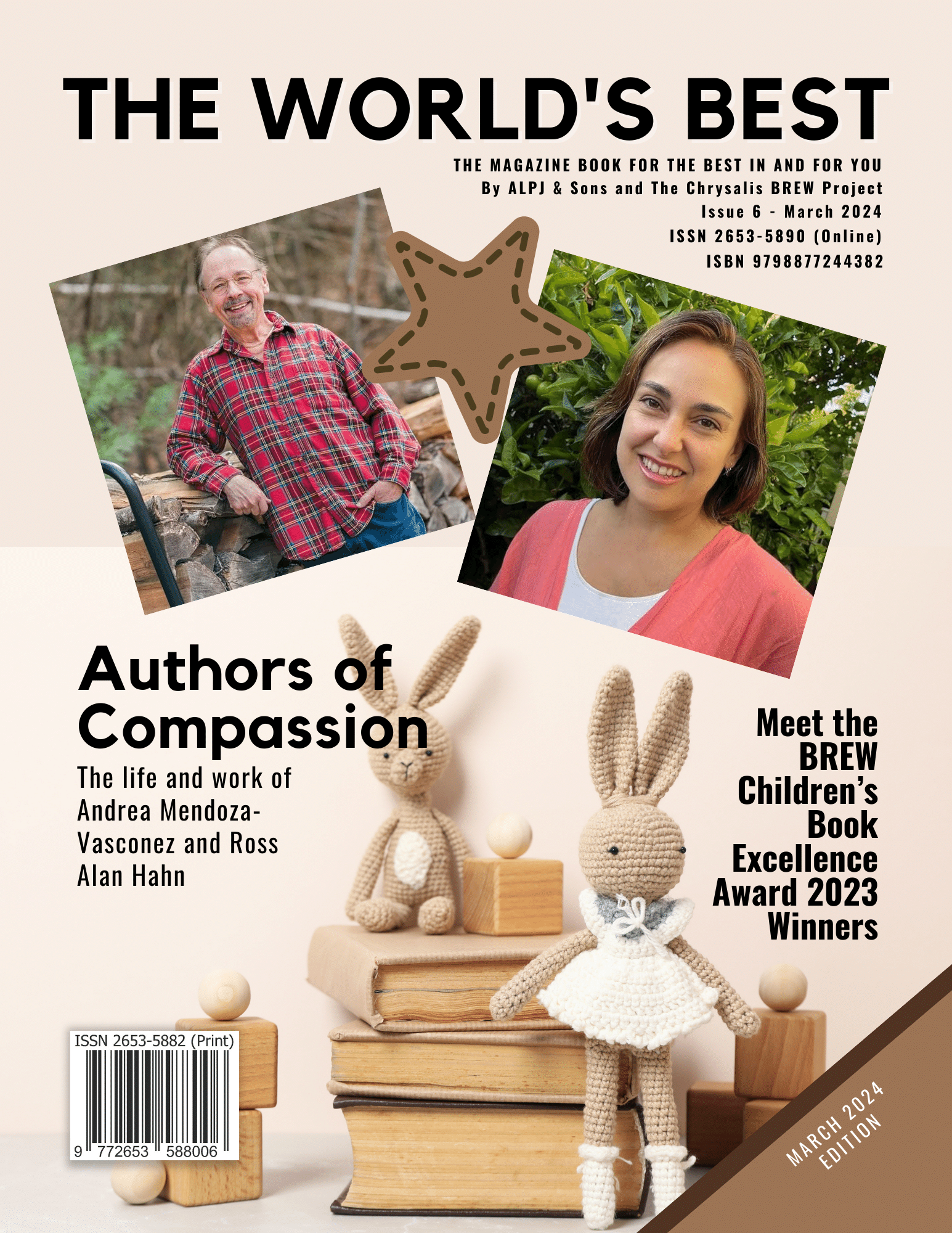
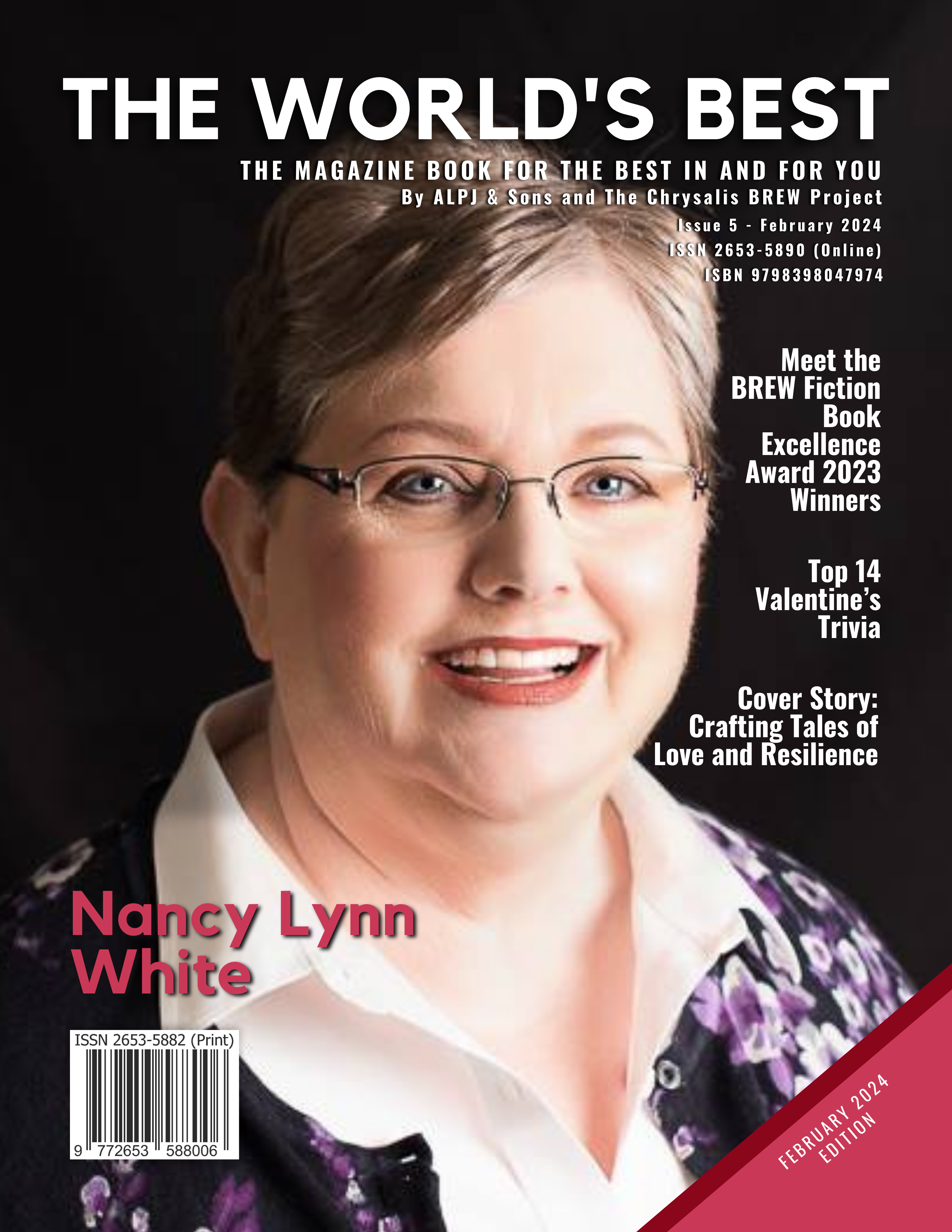

Don’t just read about greatness. Own it!

About Us
The World’s Best Magazine is a print and online publication that highlights the extraordinary. It is your passport to a universe where brilliance knows no bounds. Celebrating outstanding achievements in various fields and industries, we curate and showcase the exceptional, groundbreaking, and culturally significant. Our premier laurels, The World’s Best Awards, commend excellence through a unique process involving subject matter experts and a worldwide audience vote. Explore with us the pinnacle of human achievement and its intersection with diversity, innovation, creativity, and sustainability.
We recognise and honour the Traditional Owners of the land upon which our main office is situated. We extend our deepest respects to Elders past, present, and emerging. We celebrate the stories, culture, and traditions of Aboriginal and Torres Strait Islander Elders from all communities who also reside and work on this land.
Disclaimer: The World’s Best does not provide any form of professional advice. All views and opinions expressed in each post are the contributor’s own. Whereas we implement editorial policies and aim for content accuracy, the details shared on our platforms are intended for informational purposes only. We recommend evaluating each third-party link or site independently, as we cannot be held responsible for any results from their use. In all cases and with no exceptions, you are expected to conduct your own research and seek professional assistance as necessary prior to making any financial, medical, personal, business, or life-changing decisions arising from any content published on this site. All brands and trademarks mentioned belong to their respective owners. Your continued use of our site means you agree with all of these and our other site policies, terms, and conditions. For more details, please refer to the links below.
About | Advertise | Awards | Blogs | Contact | Disclaimer | Submissions | Subscribe | Privacy | Publications | Terms | Winners
The World’s Best: A Magazine That’s All About What’s Great | theworldsbestmagazine.com | Copyright ⓒ 2022-2026
Let’s connect
Discover more from The World's Best
Subscribe to get the latest posts sent to your email.

 The World's Best