
“What drives me the most is the fact that in times when I’m not writing, I’m not as happy as when I am, even when it’s difficult.”
– Catherine Shonack
Catherine, thank you for joining us. Could you introduce yourself and tell us—in your own words—what you do, what drives you, and the vision behind your creative work?
Thank you so much for having me! I’m a writer from Los Angeles, and I’m currently based in Brooklyn where I’m a poet, playwright, and social worker. I attended the University of Glasgow and obtained my master’s degree in playwriting and dramaturgy. After I graduated, I got more actively interested in writing poetry. I’ve had my plays performed in scratch nights in Leeds, London, and Glasgow, and my radio play How to Drive in the Dark was performed with ChapelFM as part of their Writing on Air Festival last year. I’m excited to be working with them again this year on a new show with their theme “Threshold.” This year has been a great year for my poetry; I’ve published work in several literary magazines, including Ink Sweat & Tears, and published my first chapbook, breakup notes from a love story i made up in my head, with Bottlecap Press.
What drives me the most is the fact that in times when I’m not writing, I’m not as happy as when I am, even when it’s difficult. I’ve had a love for writing that’s always been a part of me. In the same way I can’t remember when I realized I was alive, I can remember when I started writing; it’s always been true about me. I’d rather struggle trying to figure out what to write next than not be writing at all. It’s like every relationship in that way. The highs are worth pushing through the lows.
Like all creatives, I have this want to put my work out there, like a little gift left out in the world. If one person resonates with it and it makes them feel less alone, more understood, or provides them with a needed escape, then I am grateful I put it out there. It also releases the work from me, letting it take on a new life separate from the original meaning it had to me.
My main aim for my creative work is to have it really sit in the relationships between people, between characters, and show that human side. I want who the characters are and their choices to drive the direction of the story. Plot is less important to me in that sense. Often when I’m writing, I leave a lot of room for the characters to tell me where they want to go.
Thematically, I’m interested in work that lies in the political and historical realm, as well as the different ways people try to find themselves when they’re feeling lost. A lot of my work is akin to a therapy session for the characters. Whether they want it or not, the feelings they’ve been running from will come to a head.
How do you personally define the idea of “capturing a moment” in literature, and what makes a fleeting encounter worth writing about?
To me, capturing a moment is about finding ways that evoke the feeling of the moment more so than capturing the details of the moment itself. One of my favorite series is The Raven Cycle by Maggie Stiefvater, and she does this incredibly well. When you feel like you’re in the room with the characters, the story becomes more powerful because it feels personal. It doesn’t matter as much what the room looks like, but that the emotions are familiar enough that you can step inside of them along with the characters.
What I remember most about reading The Raven Cycle was that I read the first three books in two days, and I was left with the feeling that I’d known those characters my whole life. I was always surprised when I was confronted with the fact that I’d only read it a short time ago. I felt like I was a different person after reading it than I was before because I lived in those moments with the characters.
In the last couple of years I’ve become interested in how the brain stores memories and how we alter them over time by the act of remembering. This chapbook is from the perspective of someone looking back on what already happened, so I wanted to use fragments and the kind of experiences that persist as the backbone of each poem. When we look back at something, all the minutiae falls away. Most of these poems I wrote in the process of moving on from someone, so they were true to what was most memorable to me.
What makes a fleeting encounter worth writing about is not something that I choose. That’s not completely true—when I’m editing, then I do choose more specific moments and memories to focus on—but the majority of the time the encounters choose me. When I feel my fingers itching to write down words, my brain already writing the lines in my head, then I know that moment has chosen me.
More so than thinking about the moments as something worth writing about, I think about them as emotions that persist, and it’s the feeling that I can’t shake that makes the moment worth writing about. It’s less about the encounter itself and more about what it left me with after it’s passed.
Your work often blends location and emotion. How do the places you visit influence the mood, structure, or themes of your writing?
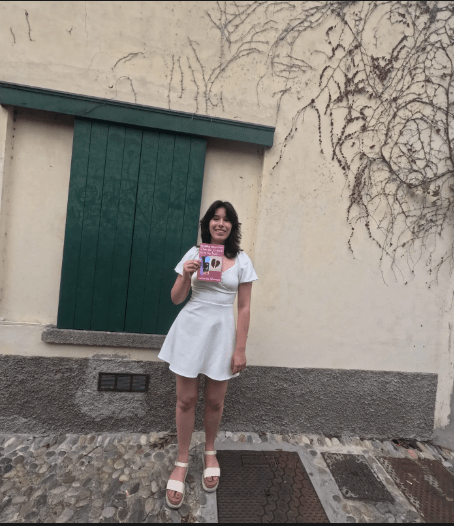
Life always finds a way to sneak into all the work I do. I’m an avid traveller. I spent one summer working as a tour guide and, in traveling frequently, the places I visited felt more like home than my actual home given how little time I spent there. They became tied to some very powerful and varied emotions, and that definitely has a big impact on my work. In some ways, through my writing I’m trying to find my way back to the way it felt to be there and exist somewhere far from home.
I wrote most of the poems in this chapbook on a two-week tour I led while I was on the train, which was the place where I had the most time to myself. Trains have always felt like an in-between space to me, and I do enjoy writing on trains more when I’m not taking them regularly. A six-hour train ride every two to three days does take that impulse from me.
I find trains to be a space for reflection; I love watching the landscape go by, playing a moody song, and thinking about everything that’s happened to me leading up to this moment, both in the recent and distant past. As the destination approaches, thoughts of the future appear and overshadow the past.
In a way this chapbook is like a train journey. It starts with the excitement of what was left behind, then it thinks about all that’s happened in the meantime, and ends looking to the future. I also use a lot of travel imagery for this because when I think of my memories of traveling, they’re all through rose-colored lenses—like the memories have become sepia-tinted and all that they left behind were the positive memories, the negative ones brushed away.
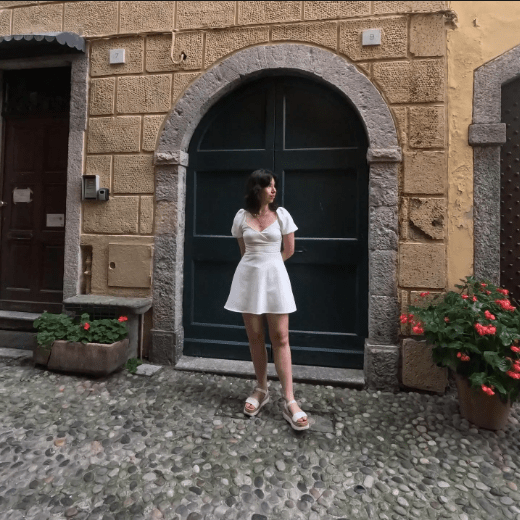
When I think of some of my happiest memories, they include the times when I was skipping by one of the straights at the racetrack in Monza, in Italy, or sitting in a private alcove in Sorrento watching the water get bluer as it meets the ocean. I have a lot of emotions tied to places; I guess a lot of my life is spent trying to find new ways to evoke that same feeling.
When I do something I’ve done somewhere else—even something mundane like eat calamari—for a brief moment I always feel like I’m doing it at the place I am currently, but also in the seaside in Greece on Valentine’s Day, in Barcelona, and every other place I’d done that exact same thing, like time and the moments all fold in on themselves and I’m living them all at the same time.
When you’re developing a piece, how do you balance what actually happened with what you imagine or reframe for the sake of the narrative?
When I use details from what actually happened, I feel like I’m giving away that part of the narrative, so the balancing act starts with deciding how much I give away. There are always parts of it I want to keep just for me, but I start with writing out how I feel and taking things away during editing to try to make the piece line up more with the emotional arc I want the poem to have.
This is also when I’ll change details to better suit the piece, or add imagery that didn’t happen. Some pieces will have the imagined details from the start, because when we’re imagining a fantasy, those imaginations feel real to us and I wanted this work to be grounded in that. I wanted to blur the lines between what was real and what was imagined.
For me, writing these pieces was part of the process of letting go. There were several pieces that I added to create a full narrative, and I did move around the order of the poems several times. As I settled on the final order, I reframed several of them so that the emotional arc would fit better with the overarching story. As I did this, it made it easier to remove details that actually happened because it felt less personal.
Many readers connect to your pieces through their own life experiences. How do you approach creating work that is deeply personal yet universally relatable?
That’s something I’m incredibly grateful for. As a writer you don’t always know if your work will resonate with people, and it makes me happy to know other people can relate to it, and I do hope these pieces give readers hope for the future.
Something I go back to a lot when I’m editing work is finding moments of specificity. A lot of us will feel familiar with an experience without having lived those experiences, because they feel akin to a previous experience we’ve had ourselves. The memories we hold onto: the night you meet someone, the way you feel when you’re not sure where a relationship is going, the tiny detail someone mentions that you remember forever, the exact shade of blue of someone’s eyes—these are all things a lot of people have felt before in their own way, and this shared emotion is a kind of bridge I’m trying to build with my pieces.
I don’t set out with the intention to make my work universally relatable. I try to make it as true to my experience as I can. The fact that it does resonate with people, I think, comes from the fact that we all experience heartbreak, and a lot of us know what it’s like to fall in love with someone that was never ours to begin with. For the lucky people who don’t experience it personally, they see it through other people, and know there is a way to reach the other side.
Unfortunately for all of us who want to avoid our heartbreak, the only way to get over it is through it. The act of being vulnerable can make a work relatable to people, and it can touch on ideas people are afraid to admit out loud.
Can you walk us through your creative process—from the first spark of inspiration to the moment you know a piece is finished?
My creative process does vary depending on the project. With poetry, some poems are done in minutes, some take months. The spark of inspiration usually comes from the world, what I observe around me, or what I’m feeling. Occasionally, it comes from the songs I’m listening to. I’ve always struggled to write from prompts. I try from time to time, but I don’t do anything with most of those poems.
Some poems are ready from the start, but those are a rarity. I can’t always tell what those are when I write them. After I let them sit for a few days, I have a better sense of how I want to move forward with a piece.
I like sitting on poems for at least a few days before editing. It gives the poems room to breathe. Sometimes when I’m going about my day edits to poems pop into my head; I get a few lines or a new stanza. I write them down and, as soon as I get the chance, add them to the poem. Editing takes many different shapes for me. It can be making small changes, reworking a piece entirely, making it shorter, or realizing the poem isn’t working, saving a few lines, and starting over. Each poem has its own editing process. I meet the poem where it’s at and work from there.
I know when I’m ready to call a poem finished when I read it out loud in the most neutral voice I can muster and the ending feels satisfying. I will admit, some poems I do edit after I’ve considered them done for years, but I try not to. The writer I was at the time is not the writer I am now, and will not be the writer I will be in the future. If I thought a poem was finished in the past, I don’t want to go back and edit it later so it can stand as a testament to the writer that I was at the time of completion. For the poems I’ve never considered to be done, it’s fair game to edit them years later. Sometimes the finished product can only find you after a significant amount of time has passed.
Travel and movement seem to be recurring motifs in your writing. How have journeys, both literal and metaphorical, shaped your voice as a writer?
That is a great question — part of it is due to my writing most of these poems on a train while I was on a backpacking trip, so movement was a big physical sensation at the time that I was writing this.
In the past four years I’ve lived in four different cities and three different countries. Moving was such a central part to who I was that it also made a destination feel temporary; the one certainty was that I would be moving again soon, and that made it difficult to set down meaningful roots. I found resistance to it in myself because I knew it would hurt when I left.
What stuck out to me the most about moving countries and taking solo backpacking trips is how each one helped me grow as a person. You discover something about yourself in every situation you put yourself in, even if it is just a small truth. My writing, at least to me, feels like an act of discovery. More often than not, life does not go according to plan, especially when you travel. Writing goes the same way. You have to be willing to make changes to the project and go in directions that you may not have foreseen, but in the end will make it much stronger.
Metaphorically, journeys that happen within yourself can be both loud and quiet. There are big life changes that we notice change us, and then there are the subtle ways we change as we grow, changes that have slowly come about for years and we don’t notice until they’ve already happened. I try to put myself outside of my comfort zone on a regular basis because I like pushing myself. No growth comes from playing it safe. There is more life to be lived when you’re willing to be uncomfortable. In my writing, this makes me feel okay with being vulnerable in my work; when it starts to feel uncomfortable, I feel like I’m getting closer to the real underlying emotion. That in itself is a journey and instead of stopping I take it as a sign to dig deeper and extract more. The closest I can get to the actual feeling and experience is on the other side of discomfort. Similarly, that is what I enjoy most about traveling — what you learn from the other side of leaning into your discomfort.
The Voyages of Verses Award recognizes literary works that transport readers. What does winning this award mean to you, and what do you hope readers carry with them after reading your chapbook?
I’m very grateful to receive this award; it’s a great honor to have my chapbook recognized as a work that expands the horizon of what literature can achieve. It’s a humbling experience to have my work resonate with readers in such a way. As a writer there is nothing more gratifying than having my poems translate personal experiences to say something greater about the human experience.
I hope that the feeling people are left with after reading it is hope. Heartbreak is a difficult thing to overcome; it drives people crazy in unique ways. There’s no pain like it, and it’s a distinct type of heartbreak to get over a fantasy of someone because you’re getting over the imagined and the real simultaneously, and it can be impossible, after enough time, to tell them apart. It is a brave thing to do, to let go of an idea that brought you happiness. This chapbook honors that, and I hope it leaves readers feeling like they are ready to leave themselves open to the next love that comes their way. Not everything was meant to last, but that does not make it less beautiful. That also does not make it any more than it is. It takes a lot of strength to let things go and leave yourself open to getting hurt again. I want readers to feel like they’re ready to let go and get to the other side of heartbreak. There is so much beauty out there in the world for them to find.
Creativity often thrives when it intersects with other disciplines. Are there arts, practices, or fields outside of literature that influence your work in unexpected ways?
I’ve already spoken about this, but travel is a big influence. I also love history, so a lot of my work is inspired by different periods of history. Right now I’m working on a lot of pieces set in the colonial era. I like the gray areas in history, where right and wrong aren’t so clear and the moral obligations to a greater good blend with someone’s personal desire to live a comfortable life.
I’m also a huge fan of museums and art. I like sitting in a museum and writing a poem about the painting or statue I’m looking at. Sitting in a room in a museum, the ambience of the room is inspiring to me. Books are also an inspiration; a line in a book has led me down a rabbit hole that has led to a new play. I read one book about explorers that I wrote poems to in the margins because they were coming to me too quickly to find a notebook.
I’ve also been writing more about sports. I’ve written one play about racecar driving and I’m working on another about an ice skater. I ice skate myself, so that has made my interest in it grow over time, but interestingly enough my motivation is less the love for the sport itself and more the interest in the sound produced in sports. Theatrically, I’ve wanted to explore the idea of how these sounds in sports can evoke different feelings in a scene: the sound of an engine starting, an engine racing by, the beauty in ice skating and the scraping sound a skate makes as it carves a line into the ice. I see that as an act of violence — the sound of the blade leaving its mark on the ice, chipping a hole in the ice. It’s manipulating and changing the ice in a way that, even though a Zamboni does try to smooth it over, it does not disappear.
Looking ahead, are there themes, genres, or mediums you haven’t yet explored but are curious to try in your future projects?
I’ve been working on a novel that has its roots in magical realism and historical fiction. I’ve always wanted to write a novel but it definitely has a higher learning curve. I feel like each draft gets closer to what I want it to be. It’s set in the golden age of piracy, and I wanted to explore how people who felt like they didn’t belong in traditional society found freedom out on the sea. It explores 18th-century racism, colonialism, and what it means to be part of an empire. On a similar note, I’m working on a poetry chapbook exploring the meaning of the concept of empire. I want to take it from a literal sense and use historical examples of empire, as well as colonialism within the body and what it means to be mixed race. I have one poem in there about the ethics of aquariums. The aim is to stretch the idea of empire into different spheres that do not fit into what our traditional idea of empire is, but are by definition a form of rule and conquest.
I’m also working on a new radio play. It’s going to be about an athlete in the next Olympics whose old interviews are now being seen in a different light due to the shift in political circumstances that have occurred in his home country. At some point, I am interested in working on a novella about someone taking a backpacking trip and exploring how what we most want to run away from when we desperately want to leave home is ourselves, yet we carry ourselves everywhere we go. I want to focus on how that discovery is made as well as how one deals with that, and the ways that we change but also stay the same. I’m flirting with the idea of doing a poetry film. There are so many different mediums to explore; the difficult thing is to find the time.
If you were to write your bio in your own words, what would you say? What legacy do you hope to leave?
If it were to be at the end of my life, I’d want my bio to be short. The exact wording of it I can’t commit to now, but I’d want it to start with something about my family. I love them and I’d want the focus to start with the important relationships I had in my life. Of course writing is one of those relationships. I’d love to have published several books, a poetry collection, and have a production history for multiple plays. I’d like to have travelled the world. I have multiple F1 races that I want to see in the years to come. I hope I saw as many of those as I could.
As for my legacy, I’d want people to feel like they could see a piece of themselves in my work, or they felt like they could build a home with it, even for a short amount of time. I’d want it to be the type of book where the cover is creased, the pages are stained yellow from the sun, and when you set the book down it automatically opens to a page you know was well-loved. I’d want my writing to be a friend you want to sit down with and get a coffee with over and over again; that when you miss me in a room, you could pick up my work and feel like I’m still there with you. A part of me always will be.
⭐⭐⭐⭐⭐
“I’d want my writing to be a friend you want to sit down with and get a coffee with over and over again; that when you miss me in a room, you could pick up my work and feel like I’m still there with you.”
– Catherine Shonack
Links
Share Your Insights
We’d love to hear your thoughts after reading this interview. Join the conversation in the comments:
- What part of Catherine’s creative process resonated with you most?
- How has travel or movement influenced your own creativity or perspective?
- When do you know a piece of your work is truly finished?
Alignment with the UN SDGs
- SDG 4 (Quality Education): Promotes lifelong learning through writing and creative exploration.
- SDG 10 (Reduced Inequalities): Highlights diverse voices and mixed-race identity.
- SDG 16 (Peace, Justice, and Strong Institutions): Explores history, colonialism, and ethical reflection in art.
Other Highlights

Looking for something?
Type in your keyword(s) below and click the “Search” button.
Helpful Shortcuts
More Stories


Print and Digital Magazine

Don’t just read about greatness. Own it!

About Us
The World’s Best Magazine is a print and online publication that highlights the extraordinary. It is your passport to a universe where brilliance knows no bounds. Celebrating outstanding achievements in various fields and industries, we curate and showcase the exceptional, groundbreaking, and culturally significant. Our premier laurels, The World’s Best Awards, commend excellence through a unique process involving subject matter experts and a worldwide audience vote. Explore with us the pinnacle of human achievement and its intersection with diversity, innovation, creativity, and sustainability.
We recognise and honour the Traditional Owners of the land upon which our main office is situated. We extend our deepest respects to Elders past, present, and emerging. We celebrate the stories, culture, and traditions of Aboriginal and Torres Strait Islander Elders from all communities who also reside and work on this land.
Disclaimer: The World’s Best does not provide any form of professional advice. All views and opinions expressed in each post are the contributor’s own. Whereas we implement editorial policies and aim for content accuracy, the details shared on our platforms are intended for informational purposes only. We recommend evaluating each third-party link or site independently, as we cannot be held responsible for any results from their use. In all cases and with no exceptions, you are expected to conduct your own research and seek professional assistance as necessary prior to making any financial, medical, personal, business, or life-changing decisions arising from any content published on this site. All brands and trademarks mentioned belong to their respective owners. Your continued use of our site means you agree with all of these and our other site policies, terms, and conditions. For more details, please refer to the links below.
About | Advertise | Awards | Blogs | Contact | Disclaimer | Submissions | Subscribe | Privacy | Publications | Terms | Winners
The World’s Best: A Magazine That’s All About What’s Great | theworldsbestmagazine.com | Copyright ⓒ 2022-2026
Let’s connect
Discover more from The World's Best
Subscribe to get the latest posts sent to your email.

 The World's Best