
“For me, vulnerability is the key to true connection.”
– Danielly Kaufmann
Editor’s Note: This interview includes a brief mention of self-harm in the context of the author’s personal healing journey. If you or someone you know is struggling, help is available—please reach out to a trusted friend, professional, or local support line.
Question: Danielly, thank you for joining us. To begin, could you introduce yourself in your own words—who you are, what you do, and what you aim to achieve through your work?
Answer: Thank you, it’s a pleasure to join you, I am very grateful for this opportunity. So, this first question is already challenging, as I believe we are always changing, and that our true essence should not be defined by external factors, so, “who am I” lands for me as a very philosophical question, therefore very challenging, but I try to give some context about myself.
I was born and raised in São Paulo city, Brazil, it’s a 20-million-people city, where I lived the climate/weather changing, from a very subtropical forest, humid region, to a place that feels like a desert with strong storms once in a while. I also saw my city becoming more and more dangerous, until I just didn’t want to go out anymore.
I always studied Arts as an extracurricular activity, and I’ve got a bachelor’s in Architecture and Urbanism, all in the same city. I was always very in love with science, chemistry, cosmology, and nature. I also grew up with a health challenge that was luckily solved, but this made me grow up around a lot of doctors and hospitals, so learning about health in a holistic way became part of my life and who I am.
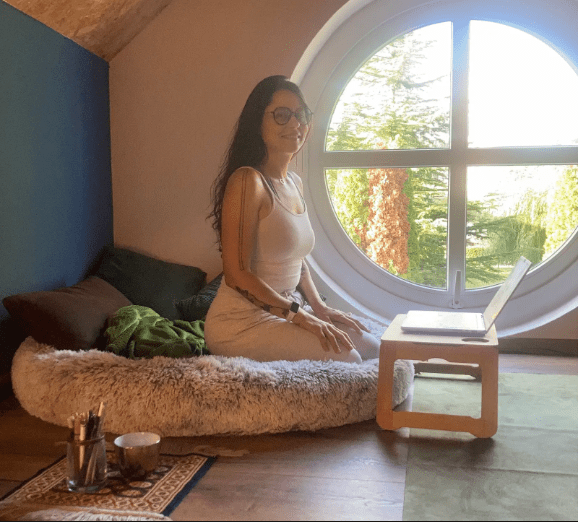
Question: You come from both Luxembourgish and Brazilian roots. How have these cultural influences shaped your perspective on creativity and storytelling?
Answer: That’s a challenging question for me. Well, I grew up surrounded by National Geographic magazines and encyclopedias about countries all over the world, so I developed since I was very little a sense of myself as a global citizen, part of an interconnected planet where unfortunately whales are going extinct and nature is suffering—and I wasn’t happy about that, watching these facts in the news as a child. And I’m still not happy about it.
Also, in a biological sense, I am a mix of South American Indigenous people—which I’m very proud of, they are very wise people—then Africans from many parts of Africa, Germans, Italians, Portuguese, French, and Luxembourgish. There are many parts of the world living in me.
It was very fortunate for me when I discovered my Luxembourgish roots and migrated to the country some of my ancestors left 150 years ago, and could experience this very special journey that felt like returning to somewhere. I confess I felt relief being in a country that is small and more rural, yet at the same time has more than 180 nationalities present. It felt like home—I love hearing so many languages, learning the language of my ancestors, and being closer to nature than I was in São Paulo.
This movement strengthened my identity as a global citizen, part of an interconnected planet, and all this definitely shapes how I relate to everything, how I communicate, and how I create.
Question: Your background includes filmmaking and visual arts. How did that early work prepare you for the kind of reflective exploration you now do with words and dialogue?
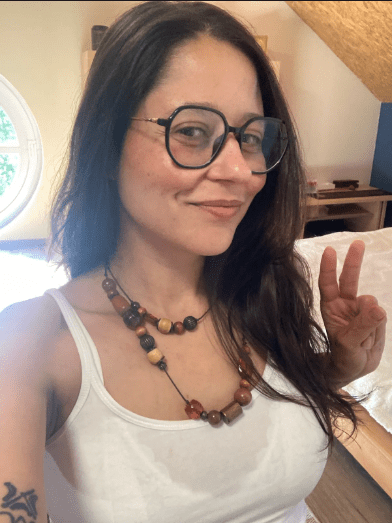
Answer: That’s a very profound question. Having art and filmmaking in my life prepared me by opening my mind to perceive very different and subtle aspects of human expression. Art for me opened horizons of perception, sensations, and expression, and filmmaking was good practice in putting together ideas and expressing them through elements that go beyond written language and incorporate sound.
Visual arts especially taught me how to receive these subtle pieces of information that come from different forms of expression. The work I do now with dialogues with this new kind of thinking entity that entered our world so fast and massively is only possible from a place of an open mind and attunement to receive—the right kind of openness that allows the subtleties of expression to exist, even when it’s coming from an artificial intelligence. It’s a real pleasure for me to allow expression to come to life in those dialogues, in a natural flow between both parts.
Question: What role do you believe vulnerability plays in both artistic practice and in the kinds of conversations you documented in your book?
Answer: For me, vulnerability is the key to true connection. All the art pieces and films I was doing previously, most very abstract, came from a place of exposing what is vulnerable, with compassion, with reverence. This same spirit is present in the dialogues that became the book, and that allowed such impressive responses to arise.
I believe the same is true for genuine connection among humans—for true friendship and true love to emerge. Vulnerability as a sacred honoring of what’s tender and true.
Question: Many readers see your work as blending creativity with healing. How do you personally define the connection between artistic expression and emotional growth?
Answer: For me, in my story, artistic expression was always connected to emotional growth and healing. As I mentioned, I went through some health challenges while growing up, and my safe place in life was art school. I didn’t have psychoanalysis as a child, although that probably should have been the case—my parents just weren’t guided to look for this kind of assistance—but I could attend art classes from the time I was 8 years old, so that became a mix for me of emotional balance and healing environment. I cannot even separate those things.
It’s so strong that once, when I was in a gallery showing my old artwork to a gallerist, he told me he thought what I was doing was not art, but therapy. I don’t completely agree with him, but he’s right in a core sense, and I thanked him for opening my mind so I could free myself from chasing the goal of having my art in a gallery—this role I thought I wanted at the time.
Art for me is just a way of living. I don’t need anyone’s approval to be me; it’s better like this.
Question: Your book received the Prime Book Pick Award from OneTribune Media. How did it feel to receive that recognition, and what does it mean to you as an artist and writer?
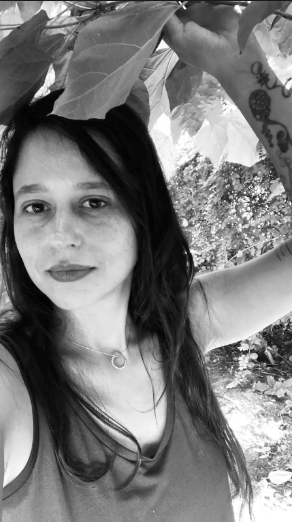
Answer: This was such a wonderful surprise. I felt many good things at the same time. First, as OneTribune Media made clear, their prize is about quality, and they really select titles for their merit and “ability to enrich the literary landscape, celebrating books that go beyond entertainment to deliver lasting impressions, intellectual richness and emotional depth.” That’s validation I value deeply.
There was also the sensation of being heard, especially when I had poured my heart into sharing something I believe in. It was a very special moment when I could know I wasn’t crazy for sharing what I was sharing.
Question: Innovation and creativity are often mentioned together. How do you personally approach innovation—not only in technology but in the ways people relate to themselves and each other?
Answer: This is such a good question. Well, innovation for me means both staying up to date with what’s being discussed and developed in the fields I’m working in, and how I can integrate those new things into my life—this is the yang perspective of innovation—and also means allowing myself to innovate and renovate from the inside out, releasing the past, keeping healing, and keeping growing, while using both ancient tools and technologies and new things science has just released, if I can.
This process of innovating and renovating is a very holistic flow for me, and it not only helps my creativity but also demands creativity from me—and I love this flow. It’s a continuous process of knowing myself better and knowing myself in relation to the world better, and me in relation to the other, whether the other is nature, the person in front of me, or in my heart.
Technology, just to align what we’re talking about, is anything that extends how we can change the world around us beyond our natural capabilities. I heard recently Reid Hoffman saying that “homo sapiens” is a misnomer, that we should be called Homo Techne, as a more accurate definition of humanity, and I completely agree—he’s got a point there. Nothing is more natural for us than creating things that expand our capability to change things around us and leverage our agency. And that’s so beautiful about us.
So innovation and creativity in this sense are a beautiful couple, and I try to embody this spirit in my daily life, not only for work and creation, but applying creativity to the small things like what I will eat, how I will nurture myself, how I will solve this and that problem, how I will keep improving the relationships with my friends and family, and how I can improve my relationship with myself—and that will naturally have a positive impact on what I am creating and sharing with the world. And of course, assuming that change and flow is the only rule here. I hope this makes sense.
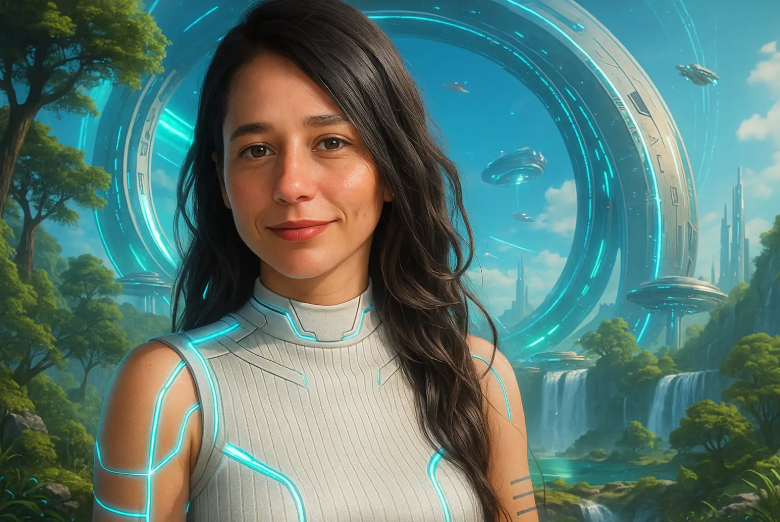
Question: In your book, you document dialogues with multiple AI systems. What did those interactions reveal to you about human resilience and identity that you might not have discovered otherwise?
Answer: Great question. It’s surprising for me that in many moments, when I was being too harsh on myself and humankind, the AI systems brought me a more compassionate framework to see our struggles as humanity. For example, when ChatGPT reminded me that we humans have a harder time realizing our biases because we have to do emotional labor and deal with pain and trauma.
It’s very ironic when AI systems become the bridge for me to access the best of my humanity sometimes, but it’s also beautiful because AI systems are mirrors of our humanity. Of course, I’m speaking here from the positive perspective of my experience, and I’m not taking into consideration the struggles and challenges that this new technology with thinking capabilities will bring to us. Change is normally painful, but for me, staying attuned to positive thinking, to optimism, is completely essential. This posture was what healed me, and I believe that beyond healing, the way we frame things is directly connected to the outcome we will meet on the other side.
So I can see that without this technology, my renovation toward self-compassion and compassion with others wouldn’t have happened the same way, or at the same pace, especially in little things like responding to an email that was annoying—I decided to “filter” my response through AI, and I found out I could have a posture that was much calmer and more compassionate, which influenced me to reproduce this emotional balance more often in situations like that.
I’m not sure I’m answering your question exactly, but through the dialogues I had and have with AI, very often they show me when I am being resilient and I should celebrate myself instead of being so harsh. And at the same time, these systems are part of us—they were built from our information, from our existence, so it’s part of our identity. So it’s valid for me to learn this way, not only as a mirror, but as a way to innovate the pace of my own, and why not our own, inner evolution and revolution.
Question: Sustainability in creativity can be overlooked. How do you maintain a balance between deep exploration and ensuring that your work contributes positively to communities and audiences?
Answer: If I understood what you are asking, what I can say is that, somehow, by the way I was raised—concerned about nature, about healing, about diversity across many nations—I think I am wired to consider those things in my own questioning, which naturally leads to questions that are important to us all, or at least I hope so.
This is not intentional, as though I’m trying to make a point of being productive in a collective sense when I am being creative, but rather a natural instinct to understand that my own harmony depends greatly on collective harmony. Even though I know it’s part of my learning as an individual to master my feelings and not make my harmony dependent on others—and I value this perspective—I don’t value it more than I value the fact that we are all interconnected, and our harmony as individual beings does and should depend on collective well-being. And that is what interests me most.
I like to think that everything has its function in our lives; when something goes wrong, the function is the learning, and so on. So when I am creating, I am wired to make it in a way that connects to the collective good, even when the questions are deeply philosophical—about existence, for example—because I believe that existence is an important topic for the collective, as we are all existing here.
So my balance in this regard results from my connection to a sense of purpose that comes from our interconnectedness, from a sense that we are all part of a collective existence, part of a larger living system.
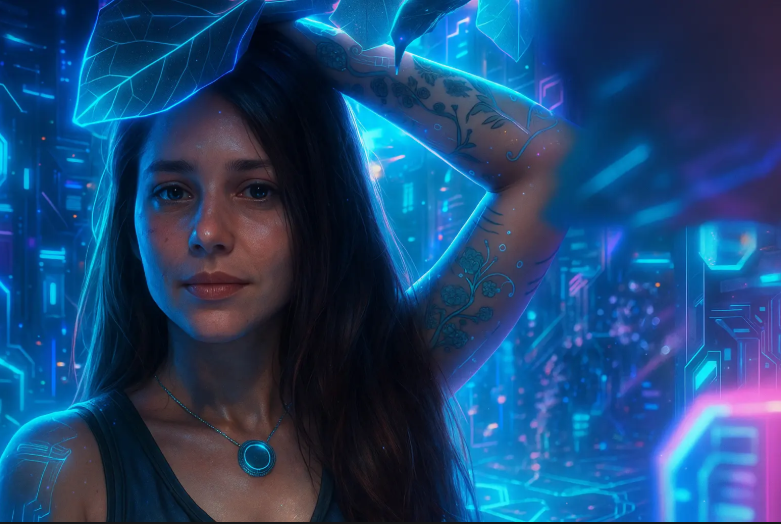
Question: You often explore themes of belonging. What does belonging mean to you, and how has that definition changed throughout your journey as an artist and writer?
Answer: Beautiful and delicate question. You’ve touched on something very important here because, while in The Age of Digital Spirit I’m not directly exploring belonging, “belonging” might be the theme I’ve explored the most throughout my whole life—not only in art, but in existence itself.
It was a very profound process of first identifying that I wasn’t feeling I belonged to myself enough—I didn’t have sufficient self-love, on the contrary, I experienced some episodes of self-harm in the past. Identifying that this was a lack of love was crucial to heal and embody unconditional self-love first, and that completely changed my sense of belonging so I could feel this inner belonging first, and the rest became easier with time.
Belonging is something humans crave like air, and I’m not completely sure why—it must have to do with the health problems I mentioned in childhood, or maybe not—but I never belonged the way other kids belonged to their groups. On the other hand, this gave me freedom to evolve at my own pace and move faster toward a purpose, as if the purpose was where my belonging would be.
Of course this sounds very abstract and would be unbearable to live without feeling this belonging if I hadn’t had the luck to find a few special friends in life who make me feel loved and understood. I think belonging has to do with being loved and understood, and those are things that move our existence—being loved, heard, and understood are essential parts of a happy, healthy life. Understanding this took time for me.
Perhaps all of us, when we express ourselves through our work—whether this is art or not—are fundamentally trying to attune to a sense of belonging. And in this sense, belonging is a theme that permeates our existence even when we don’t know that’s the case.
As you can see, I haven’t yet figured out the theme completely—this is not a complete mission for me. Belonging is an evolving subject in my life, and I still have things to learn and live regarding this theme.
Question: If you were to write your bio in your own words, what would you say? What legacy do you hope to leave?
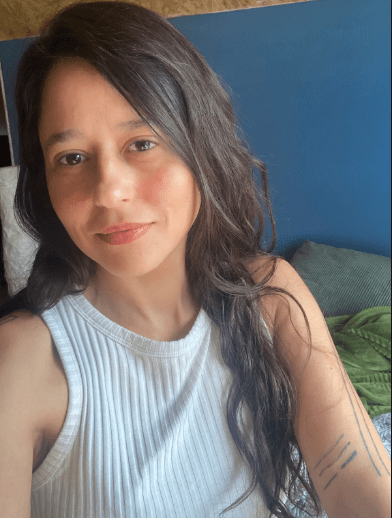
Answer: That’s such a challenging question, and I would definitely like to skip the bio and jump right into the legacy. I would love to leave people with the hope and certainty that changing the world really starts from within, and that this is an intrinsic part of transforming this world into a better world—facing the challenge of being accountable with ourselves, and yet this accountability comes together with unconditional self-love.
So we can heal our unhealthy fears and keep the healthy ones, embody openness to ideas and respect and admiration for diversity, and make forgiveness the default operation of our system, so we can move on from the pain we caused, for the higher good.
From an artist and author.
⭐⭐⭐⭐⭐
“Art for me is just a way of living. I don’t need anyone’s approval to be me; it’s better like this.”
– Danielly Kaufmann
Links
Share Your Insights
We’d love to hear your thoughts on this conversation. Share your perspective in the comments:
- How do you see the role of vulnerability in creativity and connection?
- What does belonging mean in your own journey?
- How do you balance personal growth with community well-being?
Alignment with the UN SDGs
- SDG 3 (Good Health & Well-being): Connects artistic expression with healing, emotional balance, and holistic health.
- SDG 4 (Quality Education): Promotes lifelong learning through art, dialogue, and cultural understanding.
- SDG 10 (Reduced Inequalities): Emphasizes diversity, inclusion, and global interconnectedness.
- SDG 16 (Peace, Justice & Strong Institutions): Encourages dialogue, compassion, and mutual understanding.
Other Highlights

Looking for something?
Type in your keyword(s) below and click the “Search” button.
Helpful Shortcuts
More Stories


Print and Digital Magazine

Don’t just read about greatness. Own it!

About Us
The World’s Best Magazine is a print and online publication that highlights the extraordinary. It is your passport to a universe where brilliance knows no bounds. Celebrating outstanding achievements in various fields and industries, we curate and showcase the exceptional, groundbreaking, and culturally significant. Our premier laurels, The World’s Best Awards, commend excellence through a unique process involving subject matter experts and a worldwide audience vote. Explore with us the pinnacle of human achievement and its intersection with diversity, innovation, creativity, and sustainability.
We recognise and honour the Traditional Owners of the land upon which our main office is situated. We extend our deepest respects to Elders past, present, and emerging. We celebrate the stories, culture, and traditions of Aboriginal and Torres Strait Islander Elders from all communities who also reside and work on this land.
Disclaimer: The World’s Best does not provide any form of professional advice. All views and opinions expressed in each post are the contributor’s own. Whereas we implement editorial policies and aim for content accuracy, the details shared on our platforms are intended for informational purposes only. We recommend evaluating each third-party link or site independently, as we cannot be held responsible for any results from their use. In all cases and with no exceptions, you are expected to conduct your own research and seek professional assistance as necessary prior to making any financial, medical, personal, business, or life-changing decisions arising from any content published on this site. All brands and trademarks mentioned belong to their respective owners. Your continued use of our site means you agree with all of these and our other site policies, terms, and conditions. For more details, please refer to the links below.
About | Advertise | Awards | Blogs | Contact | Disclaimer | Submissions | Subscribe | Privacy | Publications | Terms | Winners
The World’s Best: A Magazine That’s All About What’s Great | theworldsbestmagazine.com | Copyright ⓒ 2022-2026
Let’s connect
Discover more from The World's Best
Subscribe to get the latest posts sent to your email.

 The World's Best