
“Once you discover the ‘soul’ of a language, it sticks to you, it even shapes the way you think and how you interpret the world around you.”
– Ana María López Jimeno
Ana María, thank you so much for joining us. Could you tell our readers a little about who you are, your personal and professional background, and what drives your work today?
I was born and bred in Puerto Rico where I learned both Spanish and English. Very soon I realized that languages were a powerful tool for understanding the world around you. I discovered that I could talk to my cousins living in the United States (who only spoke English) and get to know them much better. Later on, I moved to Spain to study at the Autónoma University and had to study Arabic as an optional language in the curriculum of Spanish Philology. That’s when I fell in love with Arabic, a very difficult but wonderful language. So I switched to Arabic Philology!
The next summer I went to London to polish my English and then I really understood the power of languages: I was sharing a classroom with people speaking a dozen different languages and, although we were all communicating in English, we were well aware of the others’ languages. Probably then I started craving to learn more and more languages. And I still do. My next challenge is Euskera, a very different language from the ones I already know.
After finishing my degree, I moved to Toledo where I opened my language academy and the first English Kindergarten in the city. During more than 40 years I have had the pleasure of helping many people achieve their goal of learning practical, oral English that would advance their professional careers. A few years ago I started working as a volunteer teaching Spanish to refugees and migrants hosted by the Red Cross, and then I discovered how powerful the method was for teaching illiterate people.
Nowadays I am preparing for my Doctorate in Didactics of Languages, aiming at researching the proven evidence that can back my method so we can discover ways to improve it for the future. This method is a tool for teachers so they can teach languages wherever they are, whenever they want.
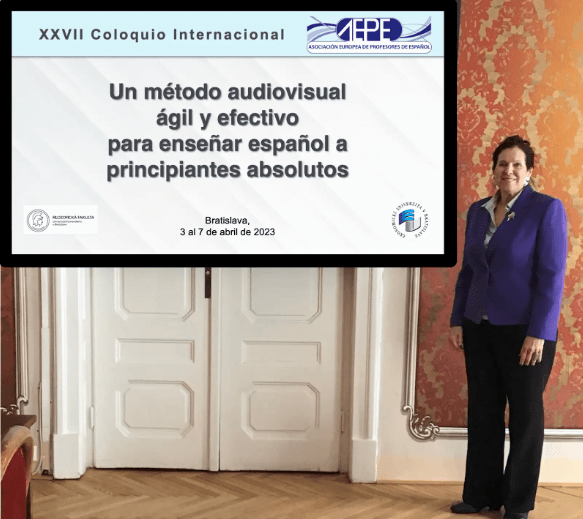
What inspired you to build a life around language, and how has your perspective on language education evolved over time?
As Nelson Mandela once said: “If you talk to a man in a language he understands, that goes to his head. If you talk to him in his language, that goes to his heart.”
Once you discover the “soul” of a language, it sticks to you; it even shapes the way you think and how you interpret the world around you. I created my own system because I wanted to learn more languages, and the methods I encountered didn’t do it in an effective way. We need languages mainly to communicate — so we need to speak — and that’s what I wanted: I needed to talk to the people I met and get their genuine ideas and thoughts. I also love travelling, and knowing languages is a plus when moving around.
My perspective on language education has not changed with respect to the way we learn languages. Although the process is somehow different (some might say completely different), we should follow the same process a child transits to acquire its mother tongue: listening, speaking, and much later, reading; and much, much later, writing. Such is the natural process all children in the whole world follow to acquire their languages. Why shall we reverse it and start writing and reading and hardly ever listening or speaking? That is why failure is almost always the final result of many teaching methods: they follow the opposite path.
Learning a language should be an enjoyable process, so the more you learn, the more you enjoy it, and therefore, you will enter a “virtuous cycle” that will help you achieve your goal. That’s what I enjoy most about learning languages: at the beginning, you do not understand a single word; a few months later, it starts to reveal itself. It is fascinating.
I also believe that you can reach a “survival” level in any language in a short time if you go to the basics and learn: first, the sounds of the language; then, the functional words (just a few but very frequently used; in English, around 250 words) and a minimum vocabulary of about 1,600 items that will allow you to manage most of your everyday conversations. At the same time, of course, you should learn how to put those items together to convey meaning. From then on, you can build your new language on a very strong foundation that will allow you to evolve to more complicated realms.
What people don’t often realize is that, right now, thousands of conversations, TV and radio programs, meetings, and classes are taking place around the whole world, both in person, online, by phone, etc., and we are using only 45–50 sounds — in our surrounding languages — to accomplish such feats. And we have developed extraordinary literature in those languages using less than 30 letters combined. On top of that, you can understand sentences that you may not have heard before and create new sentences as well. That is the wonder of language!
Your book, Vademecum of English, received the BREW Seal of Excellence. What does that recognition mean to you, especially considering your journey as a teacher and innovator?
It clearly represents major backing because it has been a long journey. I did not intend to write a book; it was the result of many years of reading, analyzing, gathering, and filtering all the information I obtained from many dictionaries, grammar books, thesauruses, and the like. I wanted to find an explanation for everything, not just get the “rule” that applied to the issue I was trying to understand. And then I started to compile them under each subject to make the information easier to find. When I finally had all the subjects, I decided to publish it aiming to be a helpful resource to many teachers of English and curious people alike.
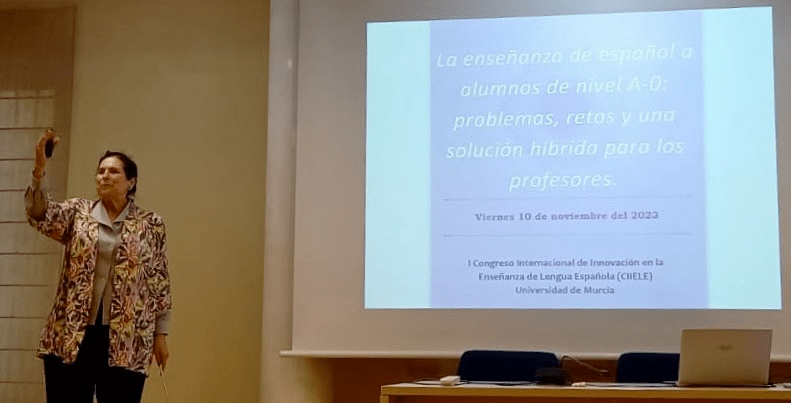
On Lexiway® and the Graphic Grammar system, what problems were you trying to solve when you created these, and what impact have you seen them have?
These solutions aim at many different things. The Lexiway® Method tries to simplify the process of teaching a language (it is intended for teachers to use) in such a way that they can find all the material needed in a single place. If we make it easier for teachers to deliver a class efficiently, the students will learn more effectively.
Besides, in the case of immigrants, the problems we want to solve are those encountered by thousands of people who have to flee their countries because of war, poverty, or abuse, being forced to abandon their homes and reach new countries where the language is the first and most difficult wall to climb. A language can be a wall or a bridge; we want newcomers to transform that wall into a bridge to their new life, hopefully one they can share with their families in a peaceful country. Because learning the language is the first step to integrating into a new society. You cannot get a job, do your shopping, study further, etc., if you don’t know the language.
Graphic Grammar, on the other hand, was developed along with the Lexiway Method because we needed a way to help students realize the different functions of the words in each sentence. Many of our students have never set foot in a classroom, so they don’t know what adjectives, verbs, or complements are. Representing such “grammatical labels” by means of geometrical shapes made it easier for them to understand the relationships. It is also useful for contrastive grammar, allowing comparison of the same sentence in several languages and clearly observing word shifts between languages.
In your book, you break down English into phonetics, grammar, vocabulary, and etymology—why did you choose that structure, and how do you believe it helps learners grasp language more holistically?
It was like chunking the language system (English in this case, but it works the same with any other) into smaller pieces to understand it better. The process of learning a new language requires mastering some aspects before others, but it is not a linear path. You feel like you must get “everything at the same time” although you may try to pay attention to them separately. So, let’s imagine you are constructing the “building” of your new language:
The vocabulary represents the bricks you need to “build” the language. Learning words randomly seems more difficult than grouping them in semantic families, mainly because the brain learns by clinging new knowledge to already known items. So that is why all the vocabulary is offered in lexical families and related groups. Another important issue is that you don’t want to overload the student’s cognitive capacity. Therefore, we chose the words in groups of 20 items as they were intended to be part of the teaching system.
Surely you don’t want those “bricks” to have cracks or broken corners that could damage the functioning or appearance of your building. So, you need to master the sounds that shape those words, which is crucial if you want to achieve suitable pronunciation (not a native or perfect pronunciation — which does not exist — but one minimizing misunderstandings and maximizing comprehension). So, phonetics and phonology are responsible for this.
Besides, those “bricks” are made of smaller parts that carry their own meanings. Knowing how they behave and combine, creating new words that fit in the system, will give the learners lifelong resources to decipher future encounters. And here is where etymology and morphology play their part. “Etymorphology” (the coinage is mine) is the key to learning vocabulary.
Then you need to put those words together: you need a “mortar” to put them in the correct order and the plans telling you how to place them. So, you need to discover the mechanisms each language uses to do that. And that is what grammar does: it explains how the bricks are placed and glued together. But usually books do not explain the “why” they do it in this way and not another. And that was precisely what I tried to discover when analyzing all the explanations the grammar books gave. I chose the most convincing and logical ones or elaborated my own explanations. Many of them are shown in the book.
You’ve worked across languages and cultures. How has that multilingual and multicultural experience shaped your approach to teaching and curriculum design?
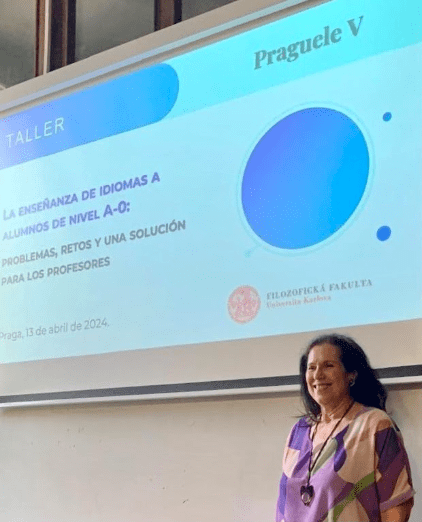
That is the key factor in this project. Knowing many languages gives you access not only to the language itself but to all the cultural implications that come with it. You get a wider idea of how the world is seen from others’ points of view. This broadens your perspectives and understanding of the human race.
Curiously, I now believe that there might be something genetic about it. A few years ago, I happened to find a few notebooks belonging to my grandfather (from my mother’s side) dealing with Arabic and Italian. I know for sure that, besides Spanish, he spoke English, French, and German. So maybe I have inherited his passion for languages; I don’t know.
Your work leans heavily into visual aids and contrastive grammar. How important is creativity and innovation in making language accessible, and what advice would you give to educators trying to make their teaching more inclusive or intuitive?
Visuals are very helpful because they reach the brain quicker than processing oral information. The use of colors helped me categorize the different aspects that I believed were important to point out. I am a one-pager enthusiast; I try to explain everything as summarized as possible, concentrating all the relevant information in a single place. Contrasting the mechanisms and aspects of your language with those of the target language will help you discover the similarities and differences, making the suitable adjustments. Nonetheless, it is more helpful if you discover the combinatory mechanisms of the new language, grasping its very own “soul.”
My advice to teachers is that they must help students discover the mechanisms of the language on their terms, challenging them instead of providing all the information. Learners should be responsible for their own learning process.
Sustainability in education isn’t always discussed—but with your online platform Lexiway and adaptable tools, you’ve created a model that feels future-ready. How do you see technology contributing to more equitable and sustainable language learning?
I believe that technology will undoubtedly narrow the educational gap if we succeed in giving access to everybody. Unfortunately, it seems that it is pushing an even wider and more discriminating wedge, and if we cannot achieve worldwide availability, the poor will not get access to a better status. Nowadays, it is not only that reading comprehension has plummeted everywhere and that literacy is a clear marker of success in everyday life, but illiteracy is forcing many people to a lower status and condemning them to poverty. Education is the only successful ladder to reach a better life.
We aim to offer a powerful tool for teachers so they can use the platform to deliver their classes, backed by a proven and effective method. As it can be used onsite and online, it can be used by anyone wanting to help others learn a language.
It is also about teacher sustainability, aiming to reduce burnout, make training easier, and create resources to adapt to new languages or contexts. This way, teachers do not start from scratch; they have all the required material at hand. I believe this is how technology can make education more equitable for everybody, especially for the undereducated population.
We are very interested in helping associations defend endangered languages to survive. If we can teach those languages using Lexiway® Online, maybe we can help reverse their situation and increase the number of users, protecting the language from disappearing completely.
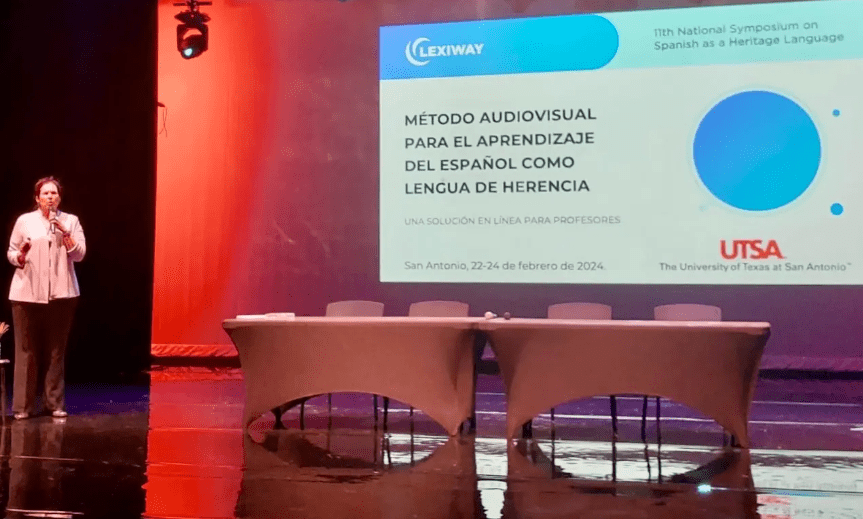
Let’s talk about recognition again. Aside from the BREW Award, could you walk us through other milestones or honors you’ve received, and how they’ve shaped your sense of purpose in this field?
We have already received several recognitions: as you mentioned, the Lexiway Online Project was awarded a Special Mention in 2025 at the 9th Humanitarian Technology Awards sponsored by the Spanish Red Cross, being the first educational project to achieve it.
Regarding the Vademecum of English, besides your 5-star seal and the 2025 Ink and Horizons Award — also from Australia — from the USA, we have won several prizes in the Education and/or Reference categories:
- 1st place or gold medal in the 2025 book awards: Independent Press, International Impact, the Pinnacle Book Achievement, Independent Authors, Pacific Book, Literary Global, and the President’s Book Awards of the Florida Association of Publishers and Authors. We also received a 5-star review by Reader’s Favorite.
- 2nd place or silver medal in the 2025 Literary Titan Book Awards.
- 3rd place in the 2024 Firebird Book Award, the 2025 Feathered Quill Book Awards, and the 2025 The Book Fest Awards Spring Contest.
- Honorable Mention in the 2025 International Latino Book Awards.
Looking forward, what’s next for you—whether it’s new languages on your platform, your doctoral work, or another book? And for those just starting in language education, what’s one thing you wish someone had told you when you began?
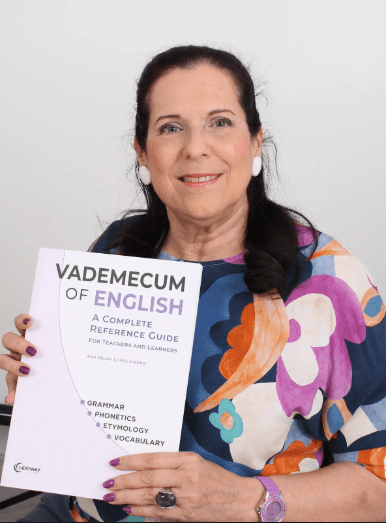
All of those, in fact. Consolidating and promoting the platform is a goal, along with adapting it to other languages. Besides, my doctoral work is very demanding, and Graphic Grammar will be part of it. I will probably write a new book describing it in detail and how it works. I am also considering a practical guide as a complement to the Vademecum of English with suggestions, activities, and exercises for teachers to apply directly in the classroom.
Regarding the last question, I wish I knew from the beginning that to start learning a new language, you need solid foundations (the very basics) so you can build up from there. With a weak base, you will always struggle to reach higher levels of proficiency. And you don’t “study” a language; you master it from exposure and usage. Nonetheless, analyzing and dissecting languages is like solving puzzles: a lifelong challenge with great intellectual rewards.
To all teachers, I would say they must never stop learning. I love this quote: “When one is teaching, two are learning.” We always learn from our students as their questions will challenge us to search for the right answers, improving ourselves and performing a much better job. Lastly, teaching is always an act of love.
⭐⭐⭐⭐⭐
“Teaching is always an act of love, and we always learn from our students as their questions challenge us to improve and grow.”
– Ana María López Jimeno
Links
- Ana María López Jimeno via LinkedIn
- Know more about the BREW Book, Blog, and Poetry Awards here
Share Your Insights
We’d love to hear your thoughts on language learning and education:
- Which language-learning methods have worked best for you?
- How do you think technology can make language education more accessible?
- What role do you see creativity playing in teaching or learning a new language?
Alignment with the UN SDGs
- SDG 4 (Quality Education): Promotes inclusive, equitable, and effective language education.
- SDG 10 (Reduced Inequalities): Supports access for refugees, migrants, and undereducated populations.
- SDG 16 (Peace, Justice, and Strong Institutions): Encourages cross-cultural understanding through multilingualism.
Other Highlights

Looking for something?
Type in your keyword(s) below and click the “Search” button.
Helpful Shortcuts
More Stories















Print and Digital Magazine



Don’t just read about greatness. Own it!

About Us
The World’s Best Magazine is a print and online publication that highlights the extraordinary. It is your passport to a universe where brilliance knows no bounds. Celebrating outstanding achievements in various fields and industries, we curate and showcase the exceptional, groundbreaking, and culturally significant. Our premier laurels, The World’s Best Awards, commend excellence through a unique process involving subject matter experts and a worldwide audience vote. Explore with us the pinnacle of human achievement and its intersection with diversity, innovation, creativity, and sustainability.
We recognise and honour the Traditional Owners of the land upon which our main office is situated. We extend our deepest respects to Elders past, present, and emerging. We celebrate the stories, culture, and traditions of Aboriginal and Torres Strait Islander Elders from all communities who also reside and work on this land.
Disclaimer: The World’s Best does not provide any form of professional advice. All views and opinions expressed in each post are the contributor’s own. Whereas we implement editorial policies and aim for content accuracy, the details shared on our platforms are intended for informational purposes only. We recommend evaluating each third-party link or site independently, as we cannot be held responsible for any results from their use. In all cases and with no exceptions, you are expected to conduct your own research and seek professional assistance as necessary prior to making any financial, medical, personal, business, or life-changing decisions arising from any content published on this site. All brands and trademarks mentioned belong to their respective owners. Your continued use of our site means you agree with all of these and our other site policies, terms, and conditions. For more details, please refer to the links below.
About | Advertise | Awards | Blogs | Contact | Disclaimer | Submissions | Subscribe | Privacy | Publications | Terms | Winners
The World’s Best: A Magazine That’s All About What’s Great | theworldsbestmagazine.com | Copyright ⓒ 2022-2026
Let’s connect
Discover more from The World's Best
Subscribe to get the latest posts sent to your email.

 The World's Best