
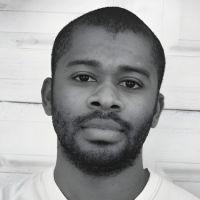
“Today, my biggest inspiration is my son Brayden, who we call Bray Bray.”
– Chris B.
Editor’s Note: This interview includes discussion of serious medical challenges and caregiving experiences, which some readers may find emotionally sensitive.
Chris, thank you for joining this conversation. To begin, could you introduce yourself, share a bit about your background, and what writing and caregiving mean in your life today?
Sure! I’m Chris B. I was born and raised in Long Island, NY, and since as long as I can remember, I always was writing. My dad once told me, “If you could write, you’ll always have a job.” Little did he know that his advice would end up being the catalyst for my creative writing endeavors.
In high school, I got really into music, especially singer/songwriters like Alanis Morissette. Her Jagged Little Pill album, which I played on repeat in 1995/96, was the reason I wrote my first poem. Later, I graduated from Binghamton University in upstate NY with a degree in English and Creative Writing.
Today, my biggest inspiration is my son Brayden, who we call Bray Bray. While working full-time at our day jobs, my wife and I are also full-time caregivers. Bray Bray was born with a rare genetic disorder, so the hand he was dealt was not the easiest. He has global developmental delays, is legally blind, and is prone to seizures. He is in a wheelchair and cannot walk, and he does not talk.
With that said, Bray Bray is a warrior, and his smile lights up the world. Last year, he was in the hospital for 28 days and fought for his life when seizures made his body too weak to fight off an unknown infection. But Bray Bray recovered, showing us that his spirit is undeniable. He is my hero, and I am a better man — and poet — because of him.
Your poem The Believer was recognized with a BREW Poetry Award from The Chrysalis BREW Project. What does this acknowledgment mean to you personally and creatively?
Personally, this means more than I could ever express. The Believer is part of a larger poetry chapbook that I recently finished called The Caregiver’s Lament. I am hoping to find the right home for this chapbook, as it covers Bray Bray’s journey from the hospital to his full recovery through my lens as his dad.
The chapbook is 25 poems and covers 15 months of our lives. It is the most vulnerable work I’ve ever written. Specifically, The Believer is my tribute to my wife Melanie and my son Bray Bray, who lifted me up during my emotional breaking points when dealing with the daily grind of caregiving and fighting for Bray Bray’s healthcare and other related services.
Creatively, this means validation. Like many other poets and authors, my work has been rejected many times before getting accepted. I am trying to lend my voice to caregiving because I feel this is underrepresented in the literary world. I know what it’s like to make those phone calls, fill out paperwork, and deal with roadblocks, and I want other caregivers to know that I have their backs. Also, after one year of Bray Bray being fully recovered, it’s time to share his story — and his smile — with others who could use a shining light.
You describe your style as a mix of free verse and Shakespearean form with a twist. How did you come to that balance, and what does it allow you to express that other styles might not?
I fell in love with Shakespeare very early on in my writing journey. There is just something about his sonnets that conveyed so much rhythm and emotion without having to say too much. I don’t always stick to the 14-line sonnet format, and I don’t try to force extra lines when they are not there. Some of my work might be 30 lines, and other poems might be micro poems at 10 lines. The rhythm I feel when writing — it simply lends itself to couplets, like a songwriter finding his or her voice in the melody.
Much of your writing is rooted in personal reflection. How has your caregiving journey shaped your poetry, and how has poetry, in return, supported you as a caregiver?
I have never been more inspired than I am right now as I begin to share Bray Bray’s warrior journey and my perspective as his dad. My poetry grounds me and enables me to release my rawest emotions so that I can be completely present when taking care of Bray Bray.
In The Believer, you convey both struggle and light. How do you approach writing about difficult realities while still holding space for joy and resilience?
I have never been one to hold my tongue; what you see is what you get. When I am writing poems like The Believer, I am simply sharing everything I feel on any given day. I don’t hold back because I need to be authentic, and, perhaps more importantly, I want others to feel the ups and downs on this rollercoaster ride called caregiving. Caring for someone you love who has challenges like Bray Bray is so hard mentally and physically — just ask any family member who is caring for someone. But when he smiles, claps his hands, and says thank you in his own unique way, that is what gets me through it all.
What milestones or moments — whether in your writing, caregiving, or personal life — stand out as especially meaningful to you?
June 13, 2024, when Bray Bray was discharged from the hospital and we were finally heading home after 28 days. I’ll never forget that car ride home and even wrote a poem about it called 13 Miles.
August 12, 2024, when Bray Bray ripped out his own feeding tube and reached for my guacamole and chips. He always loved to eat and had a feeding tube for a few months while he recovered. In that moment, I knew he was going to be okay medically moving forward.
Everything else I consider to be a bonus and a true blessing.
Partnership and family feature strongly in your poem. How do the people closest to you influence the themes and tone of your work?
The Believer is actually about my wife Melanie even more than it is about me caring for Bray Bray on a hard day. She is the protagonist in the poem who lifts me up at a time when I needed it most. I am forever influenced by her steadfast optimism and Bray Bray’s pure innocence. We are also blessed for all of the support we have from our parents and extended family members as well as people who help us take care of Bray Bray in different ways.
You’ve mentioned enjoying music, pickleball, and beach volleyball. Do those activities give you inspiration or balance when it comes to creativity?
1 million percent yes. My extended volleyball and pickleball community of friends are the nicest, most supportive people. I could not get through the daily grind without my exercise and adult time. I enjoy unplugging for a couple of hours and just getting on the court and having a blast.
As for music, I have always been influenced by music and lyrics. I used to love creating mixtapes in the 90s and was even a college radio DJ at WHRW Binghamton. I still love making playlists and listening to all different kinds of songs, usually from the 90s and early 00s.
Many caregivers and parents struggle to find time for their own pursuits. How have you managed to carve out time for writing, and what advice might you share with others in similar circumstances?
I never force myself to write at a specific time. I have a hard time explaining this at times, but for me, it’s like I’ll have this amorphous thought or feeling that plants the seed for something bigger. Sometimes, I let it marinate for a little while, and other times, it’s like I have to get it all out on the page in that moment.
My advice to other writers and caregivers especially is that you have a story to tell that is worth telling. The more we put ourselves out there, the more we can reach others who may need to hear your message and realize they are not alone. We are in this together.
Looking to the future, what directions or themes are you excited to explore in your poetry or creative projects?
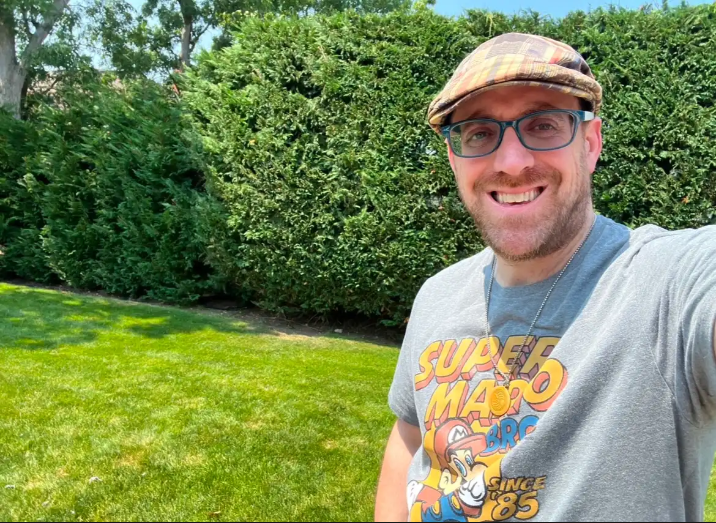
I am excited to explore not just themes of Bray Bray’s recovery but also his continued development. I have also started revisiting snippets from my own childhood and upbringing during the mid to late 1980s and 1990s. I am on the cusp of Gen X and Millennial — Xennial, if you will — and I feel like there’s a lot there that I can delve into with my poetry.
⭐⭐⭐⭐⭐
“My advice to other writers and caregivers especially is that you have a story to tell that is worth telling… We are in this together.”
– Chris B.
Links
- Chris at Substack
- Know more about the BREW Book, Blog, and Poetry Awards here
Share Your Insights
We’d love to hear your thoughts! How do caregiving and creativity intersect in your life? Share your reflections in the comments:
- What small moments in your life inspire your own creativity or writing?
- How do you find balance between caring for others and caring for yourself?
- Have you ever shared a personal story that connected with others in a meaningful way?
Alignment with the UN SDGs
- SDG 3 (Good Health and Well-Being): Highlights caregiving challenges, resilience, and support for individuals with disabilities.
- SDG 4 (Quality Education): Encourages literacy, creative expression, and sharing personal stories.
- SDG 10 (Reduced Inequalities): Amplifies underrepresented voices and caregiving experiences in literature.
Other Highlights

Looking for something?
Type in your keyword(s) below and click the “Search” button.
Helpful Shortcuts
More Stories












Print and Digital Magazine

Don’t just read about greatness. Own it!

About Us
The World’s Best Magazine is a print and online publication that highlights the extraordinary. It is your passport to a universe where brilliance knows no bounds. Celebrating outstanding achievements in various fields and industries, we curate and showcase the exceptional, groundbreaking, and culturally significant. Our premier laurels, The World’s Best Awards, commend excellence through a unique process involving subject matter experts and a worldwide audience vote. Explore with us the pinnacle of human achievement and its intersection with diversity, innovation, creativity, and sustainability.
We recognise and honour the Traditional Owners of the land upon which our main office is situated. We extend our deepest respects to Elders past, present, and emerging. We celebrate the stories, culture, and traditions of Aboriginal and Torres Strait Islander Elders from all communities who also reside and work on this land.
Disclaimer: The World’s Best does not provide any form of professional advice. All views and opinions expressed in each post are the contributor’s own. Whereas we implement editorial policies and aim for content accuracy, the details shared on our platforms are intended for informational purposes only. We recommend evaluating each third-party link or site independently, as we cannot be held responsible for any results from their use. In all cases and with no exceptions, you are expected to conduct your own research and seek professional assistance as necessary prior to making any financial, medical, personal, business, or life-changing decisions arising from any content published on this site. All brands and trademarks mentioned belong to their respective owners. Your continued use of our site means you agree with all of these and our other site policies, terms, and conditions. For more details, please refer to the links below.
About | Advertise | Awards | Blogs | Contact | Disclaimer | Submissions | Subscribe | Privacy | Publications | Terms | Winners
The World’s Best: A Magazine That’s All About What’s Great | theworldsbestmagazine.com | Copyright ⓒ 2022-2026
Let’s connect
Discover more from The World's Best
Subscribe to get the latest posts sent to your email.

 The World's Best