
“I grew up in southeast Georgia, where my love for the outdoors sparked a passion for writing that weaves together adventure, history, and the natural world.”
-Gary M. Roberts
Editor’s Note: The following interview reflects the author’s own words and experiences. References to military and law enforcement service, rural life, and family values are shared in the context of personal storytelling and creative inspiration.
Question: Gary, thank you for joining us today. To begin, could you introduce yourself and share a little about who you are, your background, and what you aim to accomplish?
Answer: I am the youngest in my family, with an older brother who has since passed away. My wife, Carol, and I have been married for over thirty-four years, and we currently live in an old farmhouse in rural Georgia. We have five grown children and seven grandchildren.
I grew up in southeast Georgia, where my love for the outdoors sparked a passion for writing that weaves together adventure, history, and the natural world. I’m an Army veteran, joining straight out of high school. From there, I went into law enforcement, serving nearly forty years and retiring last year as police chief. While working, I sought advanced degrees in theology and education and taught at a seminary for five years. Today, my wife and I live on a farm in Georgia, where we enjoy the rural lifestyle that continues to inspire me.
As for my writing goals, I aspire to be the best I can be and make the most of the life I was created to live. I hope not only to entertain but also to inspire others through stories that encourage them to be more than they are.
Question: Looking back at your early years in Georgia, what do you think those outdoor explorations taught you about observing people, places, and life itself?
Answer: I grew up in a very rural area that was mostly farmland. Both my parents worked, and my brother and I were on our own most of the time. We spent our time exploring on horseback and walking trails just to see where they led us. We learned early on about the wonder of just observing creation and exploring. I have a natural curiosity and a very vivid imagination. As for observing people, a lot of that came from training in law enforcement.
Question: You’ve had a diverse career path, spanning service, leadership, and education. How have these experiences influenced the way you approach storytelling?
Answer: My career has afforded me the opportunity to interact with people from diverse backgrounds. I have spent equal time with the very famous and wealthy, as well as the lowest of the low. I have had contact with minds eager to learn and those who cannot learn. And I have seen people change their circumstances in ways one would not think possible. Through this, I have learned that people can be very resilient at times, and many have a story just waiting to be told.
Question: Much of your writing is deeply connected to rural life and its rhythms. What draws you back to this setting, and what do you hope readers take away from stories grounded in it?
Answer: For me, rural life is one of struggle and hardship, yet it can produce some of the best people. I have a particular interest in the post-Civil War era and the challenges faced by the Deep South in its efforts to survive and prosper during that time. I love westerns, but I did not grow up in the West, so I bring my love for westerns to the South.
Question: Storytelling often reflects responsibility across generations. How do you see the idea of promises—made, broken, or carried forward—shaping not just your work but also your personal outlook?
Answer: I grew up in a home where I believed that your word is your bond. My father was very adamant about a man’s word. If he promised you something, be it a treat of some kind or a spanking, you could count on it. It saddens me to see how a person’s word often means little today. In my writing, I try to expose this. In my life, I try to live it. I long for the time when a handshake was enough.
Question: Your work recently received recognition through The Narrative Voyager Award. What does this acknowledgment mean to you personally and professionally, and how do you see it shaping your future projects?
Answer: It is a great honor for me to have received this award and a motivation to continue writing. I am sure many writers go through periods when they stop writing for a time: the pressures of living can be very distracting. Receiving acknowledgment for my work is a significant motivator to keep going.
Question: Awards aside, how do you measure the impact of your writing? What signals tell you that a story has truly reached people?
Answer: When someone tells me that a particular story or character reminds them of someone or of a feeling they had, whether high or low. I love it when people say, “I love that character,” or “they sure are a stinker.”
Question: Creativity often requires balancing tradition with innovation. How do you approach this balance in your work, especially when writing about history and family ties?
Answer: I love the traditional settings and cultures and have no desire to change them. What I like to do is place a character in a traditional setting and force them into a situation where they must be innovative. For example, in Ginny, A Yearning to Belong, Ginny is in a loving home at the beginning of the book. She is suddenly thrust into a setting that is the opposite of what she was accustomed to. By holding to the memory of what she had, she is able to overcome it, and in future books, we may even see her prospering from her experiences.
Question: Many readers resonate with themes of belonging and resilience in your work. Why do you think these themes remain so important in today’s world?
Answer: We live in a time when the family is disintegrating. When I was growing up, I knew all of my cousins and extended family well. Today, we live in such busy times that we tend to focus only on our nuclear family, if even that. I think readers long for a time when family was the center of focus and support.
Question: Sustainability and community are recurring undercurrents in rural life. How do you see these ideas connecting with your storytelling and your own life today?
Answer: Sustainability is about meeting needs without compromising the future and the needs of future generations. In rural life, this is not merely a concept, but a way of life. It is demonstrated sometimes in the simplest of ways, such as preserving seed from the harvest or planting that will sustain for generations to come. These ideas are played out in my stories as families seek to ensure future generations are cared for. In my own life, I hope my stories will inspire future generations to do the same. My life motto is: Make your life count for something.
Question: If you were to write your bio in your own words, what would you say? What legacy would you like to leave?
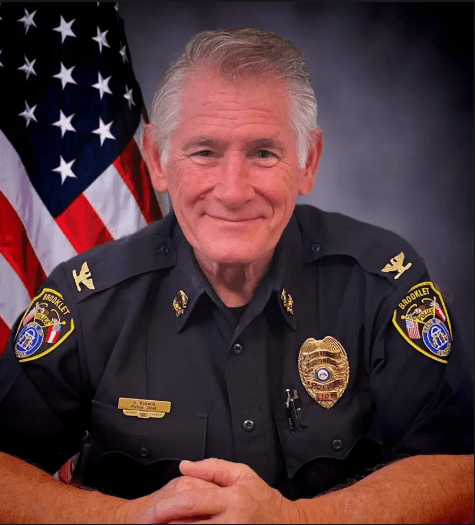
Answer: If I were to write my bio in my own words, I’d begin in southeast Georgia, where growing up close to the outdoors shaped both my character and my love for storytelling. Straight out of high school, I joined the Army, and after my service, I devoted nearly forty years to law enforcement, retiring as police chief. Alongside my career, I pursued advanced degrees in theology and education, and spent several years teaching at a seminary, experiences that deepened my perspective on faith, leadership, and purpose.
Today, my wife and I live on a farm in Georgia, where we enjoy the rural lifestyle that continually inspires my writing. My goal as a writer is not just to entertain but to encourage—to offer stories that remind people they can rise above limitations and live more fully.
As for the legacy I’d like to leave, it’s a simple one: that I lived a life of service, faith, and integrity, and that my words inspired others to become more than they imagined possible.
⭐⭐⭐⭐⭐
“My life motto is: Make your life count for something.”
-Gary M. Roberts
Links
- Goodreads
- Gary’s website
- Know more about the BREW Book, Blog, and Poetry Awards here
Share Your Insights
We’d like to hear your thoughts on Gary L. Smith’s journey and writing. Share your reflections by answering these questions:
- How does rural life shape your own sense of story and community?
- What values do you think resonate most across generations?
- In what ways can storytelling preserve lessons for the future?
Alignment with the UN SDGs
- SDG 4 (Quality Education): Encourages learning through storytelling and teaching.
- SDG 11 (Sustainable Communities): Highlights rural life, resilience, and sustainability.
- SDG 16 (Peace, Justice): Reflects service, integrity, and community values.
Other Highlights

Looking for something?
Type in your keyword(s) below and click the “Search” button.
Helpful Shortcuts
More Stories








Print and Digital Magazine
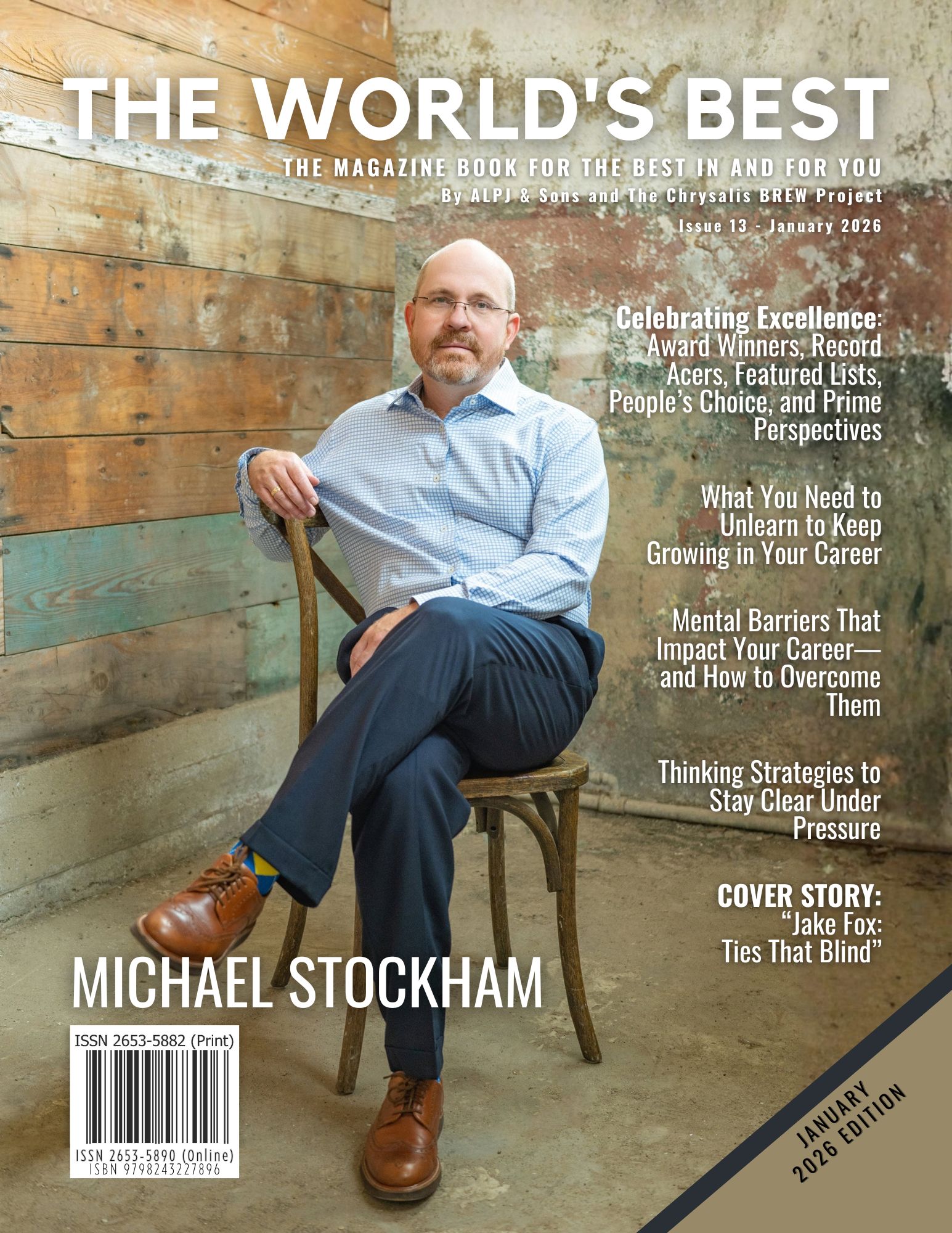

Don’t just read about greatness. Own it!

About Us
The World’s Best Magazine is a print and online publication that highlights the extraordinary. It is your passport to a universe where brilliance knows no bounds. Celebrating outstanding achievements in various fields and industries, we curate and showcase the exceptional, groundbreaking, and culturally significant. Our premier laurels, The World’s Best Awards, commend excellence through a unique process involving subject matter experts and a worldwide audience vote. Explore with us the pinnacle of human achievement and its intersection with diversity, innovation, creativity, and sustainability.
We recognise and honour the Traditional Owners of the land upon which our main office is situated. We extend our deepest respects to Elders past, present, and emerging. We celebrate the stories, culture, and traditions of Aboriginal and Torres Strait Islander Elders from all communities who also reside and work on this land.
Disclaimer: The World’s Best does not provide any form of professional advice. All views and opinions expressed in each post are the contributor’s own. Whereas we implement editorial policies and aim for content accuracy, the details shared on our platforms are intended for informational purposes only. We recommend evaluating each third-party link or site independently, as we cannot be held responsible for any results from their use. In all cases and with no exceptions, you are expected to conduct your own research and seek professional assistance as necessary prior to making any financial, medical, personal, business, or life-changing decisions arising from any content published on this site. All brands and trademarks mentioned belong to their respective owners. Your continued use of our site means you agree with all of these and our other site policies, terms, and conditions. For more details, please refer to the links below.
About | Advertise | Awards | Blogs | Contact | Disclaimer | Submissions | Subscribe | Privacy | Publications | Terms | Winners
The World’s Best: A Magazine That’s All About What’s Great | theworldsbestmagazine.com | Copyright ⓒ 2022-2026
Let’s connect
Discover more from The World's Best
Subscribe to get the latest posts sent to your email.

 The World's Best