
Everyone has experienced failure; it’s inevitable, frequently uncomfortable, and incredibly enlightening. Reflective learning following losses can greatly enhance performance in the future, according to studies in cognitive psychology. From athletes watching game footage to astronauts performing post-mission debriefs, the practice of systematic reflection turns errors into valuable learning opportunities. “You may experience numerous setbacks, but you must not give up,” as the late Maya Angelou once stated. Learning how to react when setbacks occur is more important than avoiding them. However, how can time-pressed professionals use their daily setbacks to gain momentum? Which behaviors don’t merely help us move on, but truly aid in our growth? Experts from a range of disciplines offer the tried-and-true methods they use to overcome obstacles, adjust with clarity, and make better choices in the future in this roundup.
Mentor Minutes: Dual Perspectives After Project Setbacks
I schedule “mentor minutes” after any project setback. I meet with a senior crew lead and a resident of our sober living home, summarizing the failure and soliciting one lesson from each perspective. Capturing operational and human angles expands my decision frame. I consolidate takeaways into a brief that I share with both businesses, reinforcing that whether we are repairing roofs or lives, setbacks point the way to stronger foundations.
Carl Dugan, CEO & Founder, Viking Roofing
——————————————-
Nightly Reflection Transforms Cancellations Into Service Excellence
I used to take each cancellation on a guest by a driver as a shot to the gut. But I took action to begin a habit that improved my business- I began asking myself one question every night — what did I learn today that can mitigate or avoid this tomorrow?
That simple habit of reflection led to the creation of our present driver fallback protocol at Mexico-City-Private-Driver.com. For instance, a few scenarios occurred in 2023 where we incorrectly had drivers missed for an airport pick up (2 were missed due to traffic and 1 missed because of miscommunication). I began to realize we have been depending on driver capacity/talent and not enough on system safeguards. That nightly habit reflecting led me to:
Automate reminders and confirmations 24 hours in advance of every ride.
Create a back up driver list who have been pre cleared for licenses and knowledge of routes.
Enforce: All drivers must confirm ETA 2 hours in advance now.
The net result? In the last 12 months we have reduced last-minute cancellations by 92% and our Google review average climbed to 4.97 stars, comprised of real guests who noticed the reliability!
To be clear, the habit is not journaling or meditating — I call it accountability in motion. Asking what did I learn today that can better tomorrow? was the difference between reacting to chaos and creating and delivering a premium, trusted service.
Martin Weidemann, Owner, Mexico-City-Private-Driver.com
——————————————-
Facts Over Drama: Journal Your Way Forward
Setbacks are an everyday occurrence for me as a founder, but I’ve conditioned my brain to respond rationally to them: facts and data over drama! One long-term habit that has been of tremendous value to me is my weekly journaling especially after something didn’t go according to my hopes. I ask myself three simple questions: What happened? What did I learn? What would I do differently next time?
When we had an early Cafely launch completely fall flat, I was devastated. I just got my head on straight by writing it down, all of the errors, missed signals, and assumptions we made. This self-reflection turned into one of our most successful pivots. We were able to refine our messaging, re-engage our customers, and come back better than ever.
This habit may not be innovative or something groundbreaking, but it gives me perspective. It is a reminder that failure is not a dead-end, it’s just feedback. And when you treat it that way, it loses its power to stop you.
Mimi Nguyen, Founder, Cafely
——————————————-
Confront Errors Daily to Build Stronger Foundations
Setbacks happen. It’s what you do next that matters.
One of the things that I have been doing for a long time that has been successful for me is spending a few minutes every night going over errors right away. I go over what happened, why it happened, and how it needs to be fixed so it doesn’t happen again. I write it down. No excuse. I learned this early on waterproofing with my uncle. Little mistakes there can lose time or upset the clients. This became a habit.
We used to shortchange on an issue with a foundation on a job that cost us rework. I reviewed every step from inspection to the materials we used. The answer was clear: slow down on inspections, repeat moisture readings twice, and give the team more authority to call out problems. That easy adjustment has saved us time, money, and reputation ever since.
Errors are only worthless when you refuse to acknowledge them. Confronting them with courage, learning from them, and making quick changes keeps you moving forward.
Steve Karlik, Owner & Founder, Blue Umbrella Waterproofing
——————————————-
Quick Post-Mortems Create Culture of Learning
The habit that has had the most significant impact on my approach is engaging in post-mortems quickly and without ego. Whether it’s a missed launch goal or a deal that did not materialize, I set aside time immediately afterward to analyze the situation: What assumptions did we make? What signals did we overlook? How might we approach it differently if given the chance?
This process is not about assigning blame; rather, it’s about fostering a culture of learning while the experience remains fresh. At Ray, this perspective allows us to focus on being iterative rather than reactive. In the startup environment, setbacks are inevitable. What differentiates progress from burnout is our ability to view them as opportunities for feedback rather than as failures.
By normalizing this reflective practice, the entire team becomes more adept at advancing rather than feeling impeded. Recovery is where we build our momentum.
David Diaz, Co-Founder and Chief Commerical Officer, Ray Browser
——————————————-
Uncomfortable Reflection Transforms Setbacks Into Insights
Reflection & honest, uncomfortable reflection. It’s not sexy, but it works. Every setback I’ve had, from being pushed out of an agency to dealing with tricky client launches, has taught me more than any success ever did. But only because I made a habit of sitting with it, unpacking it, and asking what part I played in it.
I write it down. What went wrong, what I felt, what I could’ve done differently. Not to dwell, just to understand. That way, the lesson sticks. Over time, it’s become second nature. So even in the thick of something going wrong, there’s a part of me already looking for the angle, the insight, the way forward. That mindset has been a game changer.
Jm Littman, CEO, Webheads
——————————————-
Clear Communication Turns Patient Care Errors Around
Setbacks happen. Your response shapes the outcome. Every day, I practice clear communication. I review after each mistake in patient care or office procedure to determine where there was a communication breakdown. That way, errors are translated into action steps. If a patient does not present for an appointment due to bad instructions, for example, I review how the message was communicated and modify it to prevent repetition.
In the long run, maintaining a solutions mindset places you in advance. When something is an issue, consider what can be done differently rather than what failed. This mindset encourages proactive solutions. If a new treatment process encounters a setback, I receive input from staff and patients to identify specific issues. That creates adjustments that simplify and improve the process.
Building up resilience is founded on practices that underscore clarity and advancement. Translating failures into insights requires day-to-day effort. This contributes to improving your ability to yield better results and refining your process constantly.
Deborah Israeli, MA, Co-Founder and Office Manager, Sage Dental NJ
——————————————-
Daily Goal Review Keeps Ambitions on Track
I am a big goal-setter. I always have goals that I am striving toward, both short-term and long-term, and I have those written down. I keep a note on my phone with my goals, and I look at it every single day, and that helps me stay on track. It also lets me add new goals if I face setbacks or feel like I need to adjust my mindset.
Steve Schwab, CEO, Casago
——————————————-
Reframe Failures as Teachers, Not Defeats
One strong daily habit is to see setbacks as opportunities to learn instead of as failures. Do not think “I failed,” but rather “What can this teach me?” This change in how you feel helps you figure out what went wrong without blaming yourself, and it gives you the strength to move on.
Setting a challenging time limit to deal with sadness is another essential habit. Recognize how you feel, but don’t think about losses for too long. Then, quickly shift your attention to something positive, like finishing an important job or making progress on a project you’re in charge of. This keeps you going and gives you a new sense of accomplishment.
Going over your mission or goals daily helps you keep failures in perspective. It enables you to get back on your feet with purpose and strength by reminding you why you do what you do and coordinating your efforts.
Mark Hirsch, Co-founder and Personal Injury Attorney, Templer & Hirsch
——————————————-
Journal Today’s Pain for Tomorrow’s Growth
When I’ve had a tough day, I write a quick note in my journal about what I’m feeling and how this might help me grow someday. It’s a small act, but it makes a big difference in how I view setbacks, they start to feel like setups for something better.
Summaiya Nisar, VP, Marketing, Sympl Energy
——————————————-
AI-Powered Reflection Accelerates Solution Discovery
Using ChatGPT for reflection. Normally, I describe my situation to ChatGPT and ask one of the following questions: What can I learn from it?
Then ChatGPT gives me clarity that turns the setback into a learning opportunity. For solutions, I write a prompt like: How would the [Famous person who has solved this kind of problem] solve the setback?
This habit has been incredibly exciting and efficient, as it reduces the time spent on setbacks, allowing for instant solutions.
Nir Appelton, CEO, The CEO Creative
Editor’s note: While the above write-up reflects the contributor’s personal habit, readers are encouraged to exercise independent judgment and verify the appropriateness of using AI tools in decision-making contexts, especially in sensitive or regulated industries.
——————————————-
Weekly Action Reviews Build Community Through Accountability
Synergy’s ethos of community, process, and accountability lives in our weekly “action review.” Residents and staff together examine one setback, from missed curfew to budget overrun. We map the process failure, assign a communal action, and schedule a follow-up. The shared ownership converts individual slips into collective lessons and demonstrates that accountability, not punishment, drives growth.
Timothy Brooks, CEO, Synergy Houses
——————————————-
Reflective Journaling Transforms Setbacks Into Strategy
Reflective journaling is one of the habits that have helped me turn every setback into a learning experience. I make it a habit of reflecting anytime I face some challenge or when things turn out to be unfavorable, and writing my thoughts. Self-type questions like the following ones dance in my head: What happened? What should I have done otherwise? What had I learned in this experience? Sitting down and journeying through the setback this way helps me work through the setback, but more importantly, it changes my frame of mind so that I can grow out of my frustration. Since I can focus on what I can learn from it, I can go further in the future with a clearer idea of strategy.
The second behavior that I have embraced is verbalizing the challenge with the team or with other trusted people. It helps to open new horizons sometimes when one only shares the situation with other people. Another person could notice a point that I would not have imagined, or even provide some tips. This also brings a culture of openness to my team, where we do not fear making confessions in case of mistakes. The reader should learn to accept the fact that failure is not a roadblock but rather a teaching moment to experience together.
I have learned that this mentality has enabled me to go through obstacles and overcome them faster. Instead of focusing on the frustration, I attempt to regard every difficulty as a possibility to improve my strategy, to improve my technique, and to emerge stronger. This reflective and sharing culture has now been an effective mechanism in personal development as well as in developing a strong foundation of a resilient team culture.
Alex Saiko, CEO & Co-founder, MiraSpaces
——————————————-
Daily Meditation Turns Technical Failures Into Insights
One routine I find makes it easier for me to learn from my failures is dedicating time to meditate at the end of every day. Whether I missed a deadline, had a technical hiccup, or a marketing campaign that could have been executed better, I do a 15-minute review of what went wrong and what can be learned from it. This practice allows me to dissociate from the setback emotionally and view it analytically, while thinking about what I can do differently next time.
In the long run, I focus on learning by reading, networking, and keeping up with industry trends in the EV space. When I face obstacles, I perceive them with the eyes of development. For instance, if a feature doesn’t take off, I read user feedback, learn about competitor products, and look for upcoming technology to figure out why it didn’t work and how we can pivot or innovate. This keeps me focused on solutions, not the problem.
Making reflection and learning a regular habit teaches you to view every challenge as part of the process — a practice that keeps the space in your mind open to new ideas.
Rob Dillan, Founder, EVhype.com
——————————————-
Daily Progress Reviews Reveal Opportunities in Disguise
Turning Setbacks into Learning Opportunities
What has helped me in both my professional and personal life is facing failures and owning up to them with a mindset of growth. I don’t dwell on what went downhill when things don’t go as planned; instead, I ask myself: What can I learn from this? What might have felt liek a failure initially, i seem to find value into the mistake by shifting my focus from setbacks to lessons and key takeaways from certain situations.
Reviewing my progress at the end of each day is a daily habit that I can never let go of. This daily review does not mean obsessing over every single detail, it means taking a moment to reflect on what worked, what didn’t, & what can be improved. This practice reminds me that progress is not about perfection but consistent effort. I have learned that setbacks often lead to the best insights, as long as I am open to correcting my course and learning from them.
Setbacks are just opportunities in disguise. If you can turn them into learning moments and adjust accordingly, you will come out much stronger and equipped for future success. And if nothing else, you will at least have a great story to tell!
Paul Herskovitz, CEO and Founder, Discount Lots
——————————————-
Focus on Development, Not Just Achievement
One of the big problems with handling setbacks is how we determine accomplishment, which is why the long-term habit I have to deal with setbacks is to focus on development rather than achievements. In business, it is easy to become hyper-concentrated on outcomes as so many tools that we utilize to measure success are defined by reaching measurable objectives.
However, a long-term habit that can take setbacks and turn them into learning opportunities is to focus on growth by taking notes on what you learn through documenting the steps to achieve a goal, being accurate in accounting for mistakes, and even assessing the skills you recognize may be lacking. In doing so, you can continue to generate success even if you ultimately fail to achieve an objective. By focusing on development rather than solely on achievement, you can always be moving forward and be more likely to find the opportunities.
Jason Bandarra, CEO, Sonoma Stays
——————————————-
Mindfulness Practices Reveal Lessons Within Failures
I believe some basic mindfulness practices have worked best for me when it comes to turning setbacks into learning opportunities. Mindfulness can be summed up as the practice of staying aware of your thought processes and reactions, and I have found it very helpful in terms of not giving in to my immediate reactions to setbacks or failures. Instead, I am better able to recognize my emotions around a setback. This can be helpful because I can then take a closer look at the setback and find the positive in it, such as the ways I know I could have handled or approached it better.
Soumya Mahapatra, CEO, Essenvia
Have Your Say
We’d love to hear your thoughts! Join the conversation in the comments:
- Which reflection practice has made a real difference in your work or life?
- What’s one habit that helps you bounce back from setbacks?
- How do you turn mistakes into learning moments?
Alignment with the UN SDGs
- SDG 4: Promotes lifelong learning through reflective habits
- SDG 8: Encourages resilient, productive work cultures
- SDG 3: Supports mental well-being via self-awareness and growth
Note: The views and opinions expressed in the content provided on this page are those of the individual authors and do not necessarily reflect the official policy or position of any organizations mentioned. The information provided is for educational and informational purposes only and should not be interpreted as professional advice. Readers should consult with relevant experts or professionals for guidance specific to their circumstances. The examples used are for illustrative purposes and results may vary depending on various factors. Any external links provided are for convenience, and we do not endorse or take responsibility for the content, products, or services available through these links.
⭐⭐⭐⭐⭐
Related

Verses That Transform Leadership
What poem or line quietly changes how you face big decisions or challenges? Explore this expert roundup to see how literary insights guide real-life choices and personal resilience.

Written Works That Shaped Thinking
What single insight can quietly reshape how you approach challenges, relationships, or career decisions? Explore this expert roundup to see how reflective reading can transform everyday thinking and choices.

Exploring Narrative, Healing, and the Human Mind with Verlin Darrow
Ever wondered how surviving earthquakes, outrunning tornadoes, and dodging a gun shaped a mystery writer’s mind? Discover Verlin’s extraordinary life experiences and how they feed the thrilling stories on every page.
Continue reading Exploring Narrative, Healing, and the Human Mind with Verlin Darrow
Exploring Story, Place, and Imagination with Dust Kunkel
Ever wondered how a childhood across continents and rivers becomes the fuel for storytelling? Discover how Dust Kunkel’s life shaped his novel and worldview — read the full interview to explore it.
Continue reading Exploring Story, Place, and Imagination with Dust Kunkel
Something went wrong. Please refresh the page and/or try again.
Other Highlights

Looking for something?
Type in your keyword(s) below and click the “Search” button.
Helpful Shortcuts
More Stories






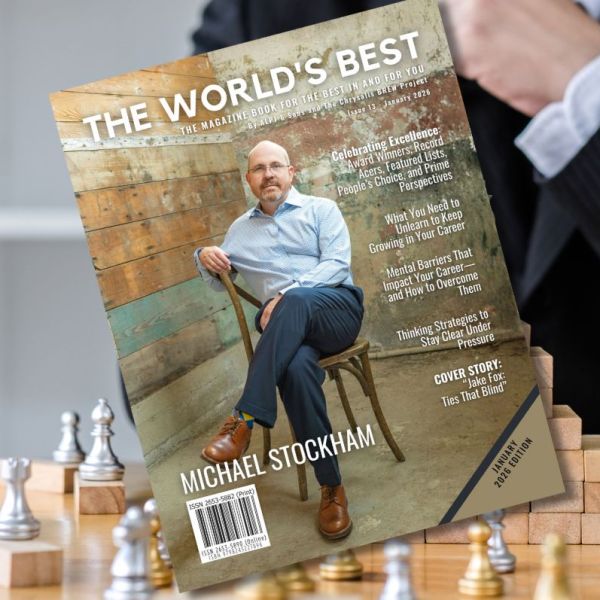


















Print and Digital Magazine
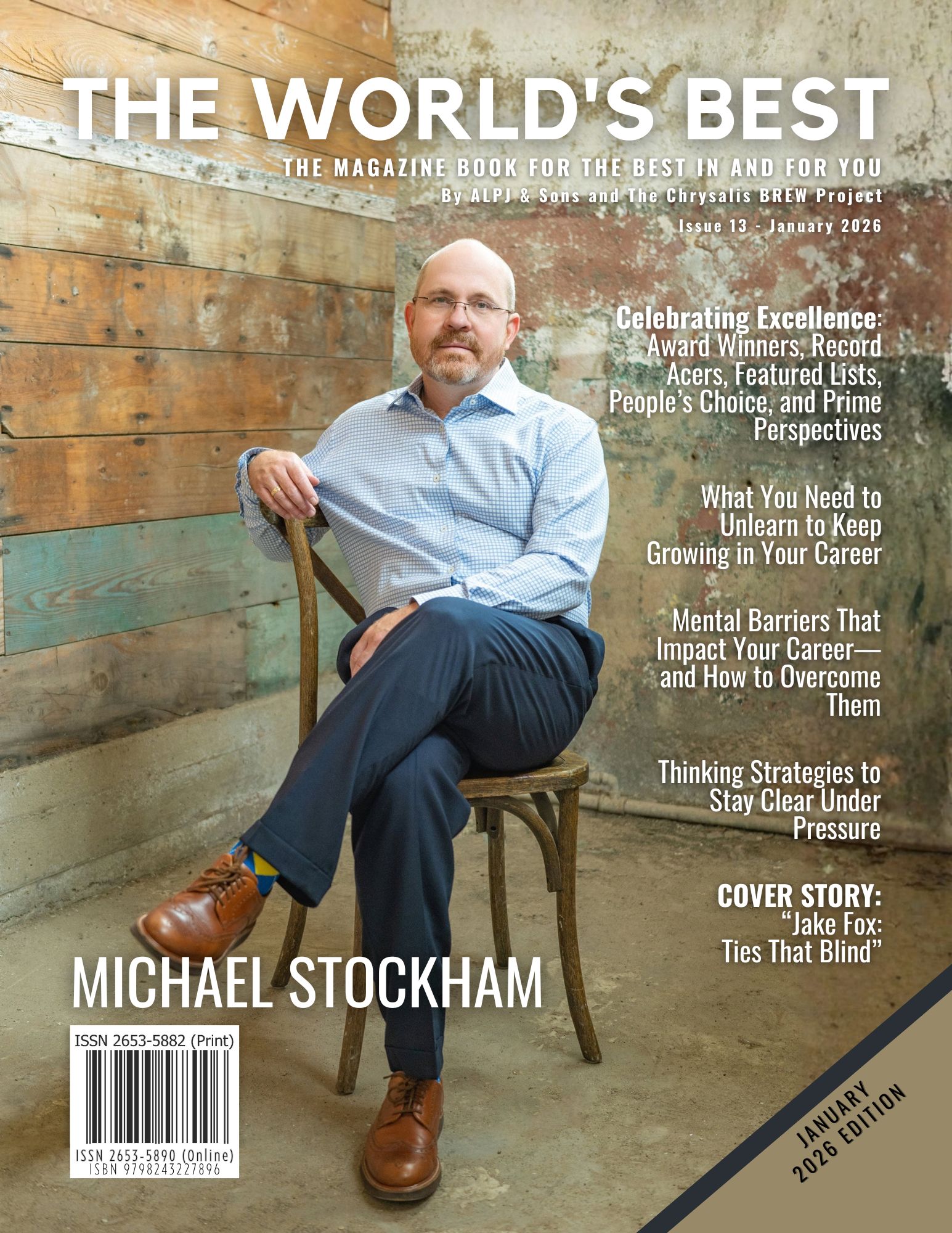



Don’t just read about greatness. Own it!

About Us
The World’s Best Magazine is a print and online publication that highlights the extraordinary. It is your passport to a universe where brilliance knows no bounds. Celebrating outstanding achievements in various fields and industries, we curate and showcase the exceptional, groundbreaking, and culturally significant. Our premier laurels, The World’s Best Awards, commend excellence through a unique process involving subject matter experts and a worldwide audience vote. Explore with us the pinnacle of human achievement and its intersection with diversity, innovation, creativity, and sustainability.
We recognise and honour the Traditional Owners of the land upon which our main office is situated. We extend our deepest respects to Elders past, present, and emerging. We celebrate the stories, culture, and traditions of Aboriginal and Torres Strait Islander Elders from all communities who also reside and work on this land.
Disclaimer: The World’s Best does not provide any form of professional advice. All views and opinions expressed in each post are the contributor’s own. Whereas we implement editorial policies and aim for content accuracy, the details shared on our platforms are intended for informational purposes only. We recommend evaluating each third-party link or site independently, as we cannot be held responsible for any results from their use. In all cases and with no exceptions, you are expected to conduct your own research and seek professional assistance as necessary prior to making any financial, medical, personal, business, or life-changing decisions arising from any content published on this site. All brands and trademarks mentioned belong to their respective owners. Your continued use of our site means you agree with all of these and our other site policies, terms, and conditions. For more details, please refer to the links below.
About | Advertise | Awards | Blogs | Contact | Disclaimer | Submissions | Subscribe | Privacy | Publications | Terms | Winners
The World’s Best: A Magazine That’s All About What’s Great | theworldsbestmagazine.com | Copyright ⓒ 2022-2026
Let’s connect
Discover more from The World's Best
Subscribe to get the latest posts sent to your email.

 The World's Best
Am doing some of this myself currently.
LikeLike