
“I sit down at a computer and frantically type in an attempt to merely describe the movie that’s playing in my mind.”
-W. Kenneth Tyler Jr.
Editor’s Note: The following interview reflects the author’s own words and storytelling style. Some passages include fictional references to wartime settings and period attitudes that may not align with contemporary perspectives. These are part of the author’s creative process and should be read in that context.
Thank you for joining us Kenny. Please introduce yourself. Tell us a little about your background.
I am currently a mostly retired Certified Public Accountant (CPA) with a bachelor’s degree in business administration with a concentration in marketing and a Master of Business Administration (MBA) graduate degree with a concentration in marketing as well. I spend most of my time now writing novels and magazine articles for fun and play golf for, uh, well, aggravation, I suppose.
Prior to this I owned a CPA firm for the last 38 years. During this time I spent years successfully writing some of the most compelling and persuasive prose imaginable to the Internal Revenue Service and various state taxing authorities and business enterprises in an effort to persuade. Before the CPA business I spent some time right out of college in the advertising business writing radio commercials and speeches for corporate executives.
What inspired you to write Hunting the Red Fox, and what initially drew you to this unusual blend of historical fiction, espionage, golf, and romance?
My initial inspiration was the same as that of Roger Mace, one of the significant characters in Hunting the Red Fox (HRF). I thought I wanted to do something different and write a book. But about what? I gave it considerable thought and was leaning mostly toward something along the lines of nonfiction where I could tether myself to facts and figures.
I then hit upon the idea to gather real stories from ordinary people who at least once in their lives did something extraordinary. It would be a compendium of odd, uncommon, uplifting but truthful stories. So I tried to interview a few people more or less at random to see what I could uncover. What I quickly discovered was it was going to take a lot of interviews and time to uncover even one worthy story let alone enough for a book. Plus, it became immediately apparent to me I didn’t really care about this worthy project anymore since I concocted this whole goofy idea. I was despondent and down. That was my one concrete idea for a book and now I didn’t want to do it. I still wanted to write something—but what?
Finally it dawned on me to scrap other people’s stories and simply make up my own. Everything. All of it. Merely write a fictional story about something. Again, about what?
It didn’t take me long to evolve this into historical fiction where I could anchor the story on a certain point in time and real places. Then I would attempt to mistily meld truth and fiction until the lines had blurred sufficiently enough to make it hard to tell one from the other.
As to the second part of your question concerning what initially drew me to the unusual blend of historical fiction, espionage, golf, and romance—it’s a little hard to describe on one level and sounds downright nuts on another. However, it’s best to get this concept out of the way right up front.
The very first day I sat down to start this book I sketched a few story ideas I thought might work. They did not. As for employing any storytelling techniques I’m not sure I could pinpoint or even name a storytelling technique if you gave me a week and an unlimited budget. I don’t know about others and how they do it, but I figured out that day that’s not how I write. It’s not really a conscious thing with me. I can’t sketch out a storyline in advance then try to write to that plan. I sit down at a computer and frantically type in an attempt to merely describe the movie that’s playing in my mind. My fingers often have a difficult time keeping up with what I see in my brain in picture form. It feels like an actual motion picture is unfolding between my ears and all I have to do is capture it with my fingers.
When I start typing at the top of a page, I literally have no plan or idea as to what may fall out of my head by the end of the page. This often results in characters, events, or places that had not previously come to mind on any prior level. I can’t explain it more simply than that.
Oddly enough, the thing I was most concerned about in the beginning was my ability to write dialogue between characters. Once I started typing the motion picture scenes playing in my head, the conversations were simply there and seemed to write themselves. I just tried to write how people speak in real life. I think my second book benefits from this “technique” even more because it is more dialogue-driven. I’m only a third of the way through book number three and I think that may be true for that one as well.
As for the blending of the elements you mention, I think historical fiction and romance will always be a major part of anything I write. It is in HRF and the second and third books as well. I am really drawn to various times in the past and I adore women, in a non-piggish sort of way. Golf, in the case of HRF, was mostly a vehicle I used to plausibly move the main character, Perry Barnes, and the story from one moment in time, physical locations and/or events. All the while he is meeting the most bewildering people, some real, some not, which allowed the story to unfold in a believable manner. I’m sure there was another way to do it but it did not immediately come to my mind.
The protagonist, Perry Barnes, moves between war, high-stakes heists, show business, and the PGA Tour—how did you develop such a multifaceted character?
I decided early on that I wanted the story to revolve around a fictional character during the 1950’s who was first and foremost a gentleman in the traditional, grandest manner in which that term used to exist. I also wanted him at his core to be one of the “strong, silent types” as they used to be called. I wanted a guy who was recognized by others as a “man’s man” and “ladies’ man,” in a non-piggish sort of way, without a hint of ego or self-promotion. Above all, Perry had to be likeable.
Also, I wanted in the character of Perry someone who was very good or above average at virtually everything he did without being the best at anything. At the same time, I didn’t want everything he did to necessarily be good. I wanted him fundamentally to be principled and seek to do good and right even if that was not technically the legal course of action. In other words, I wanted the internal struggle between the right thing to do and the legal thing to do. The last thing I wanted Perry to be was someone who was flawless. Quite the contrary, as it turns out.
Lastly, I wanted a character who seemed by circumstances mostly out of his control to plausibly meet the most bewildering array of real folks or pop up in the oddest of places throughout the 1940’s and 1950’s.
The novel features real historical figures and events alongside fictional elements. How did you approach balancing research-based authenticity with imaginative storytelling?
It was my feeling that if I brought enough real people, places, things, and events into the book I could meld in the fictional characters and make the story more believable. So, I did a ton of internet research. Plus, I went to Williamsburg. I traveled to Savannah and walked the town for three days. I went to the Georgia Historical Society and spent hours reading microfilm from June of 1942 to gather facts about what was going on in that town the weeks before and immediately after Perry stole jewelry from Mr. Goldsborough. I wrote a lovely chapter about what was going on in Savannah and the country as a whole during the month when it was likely Perry was either going to jail or war. In the end I left that chapter out of the book because the story was getting a little lengthy.
Similarly, I went to Sir Winston Churchill’s Chartwell home in southern England and the Highlands in Scotland where Aldercraig (a real place but I changed the name) is located. I read numerous books on the SOE in England and their clandestine sabotage activities. I even read a few books written by first-class jewel thieves.
I did the same thing with the professional golf world of the 1950’s and in one case 1945. Almost all of the references to courses, players, winners, and tournaments are substantially true. For example, when I talk about there being two Durham Opens in 1945 and their respective winners—this really happened. When I discuss the Los Angeles Open of 1952 at Riviera Country Club won by Tommy Bolt, that happened as written. If I said that Herman Keiser, Ben Hogan, Jimmy Demaret, or Stan Leonard won a particular tournament in a certain year, it really happened. At one point I referenced one golf course (Fox Hills) that hosted the LA Open in 1954 and is now a shopping mall. It really happened. I’m sure there were a few stray references to tournaments in terms of timing during the year but not many.
In short, I did the work about what was real such that I could write about it as it related to my fictional characters.
There’s a dual-timeline structure that unfolds through an oral-history style via Roger Mace interviewing an elderly Perry Barnes—how did you determine that narrative framework, and what effect were you hoping to achieve?
I wanted a conversational style to have someone to bounce back and forth with and to toggle between present and past. So comments and questions by Roger did much to break up the narrative and bring the story back from the past most of the time to present so the reader doesn’t forget the actual setting amid which Roger and Perry are allowing the story to unfold.
In addition to using Roger to toggle between past and present, he also was sort of like a referee kicking Perry back in play every once in a while when Perry omitted some obvious information. This most significantly happened at the end of the book. Another example of Roger’s bringing the past back to present that was notable in my mind was his restraint in not asking an obvious question lingering in the air. Perry had just finished telling the story of his clandestine mission in World War II and had left a frightened German boy soldier lying on the sidewalk while Perry mulled over the boy’s fate. There was a palpable tension over what Perry did with this boy that went unanswered and remained for the reader to guess what happened.
After briefly coming up for air periodically in the story, it was my intention to have the narrative seamlessly fade back into the telling of stories past, and when the transformative mist cleared, the reader is back in the 1940’s or 50’s again.
Themes of love, redemption, and identity run through the story, especially with Perry stealing the Mecklenburg Diamond for love. What do these themes mean to you personally, and how did you shape them in Perry’s journey?
After writing this book plus a second one that is complete and sitting on a shelf waiting for HRF to run its natural course plus a third novel I’m about a third of the way into, I have subconsciously determined that love, relationships, and romance are critical factors. These elements are prominently on display in all three books and the main driving force of the second book.
As for redemption, who doesn’t love some sort of recovery or reclamation for a likeable main character? Apparently I do, because all three of my books so far have a healthy dose of this element as well.
The concept of Perry Barnes was of a man who certainly got healthy doses of romance and redemption and seemingly a little of lots of things: kindness, rascality, righteousness, indignance, decency, etc. Also, as I said earlier, it was important that he was a gentleman.
How all the rest of these things I just described translate into themes is beyond my pay grade. I just typed what I saw in my head and felt in my gut, and out came Perry.
With respect to the theme of “identity” you mention in your question, I’m not sure what that concept implies or what it means in this context, so it must remain unanswered by me for now.
Your own professional background includes accounting, marketing, and advertising. Did these experiences influence your writing process, pacing, or approach to structure and detail?
As I mentioned in my answer to Question 1, I have been writing for many years in various forums in an attempt to persuade. Sometimes that meant radio commercials geared for a mass audience. Sometimes that meant speeches singularly prepared for other people to give. Other times that meant a very targeted individual or type of receptor at the IRS who I needed to see things my way for the benefit of my client.
I don’t necessarily see these experiences having a direct relationship with writing a novel. However, writing is writing and experience probably translates across different types of tasks at some level, I suppose.
Writing a powerfully persuasive letter is a rare talent and much admired by me. Writing a novel is a different type of animal for the most part. You are still trying to persuade but at a much slower pace and with more subtle implements in your toolbelt. Sometimes you draw readers in only to purposely allow them to ebb away. It’s almost like a cat and mouse game until you decide it’s time to let everyone in on a secret. I’m not sure I learned that in my previous business experience as much as from reading several hundreds of books of all stripes over four decades.
The tone of the novel blends humor, wit, intrigue, and adventure. How did you manage the shifts in tone, and were there specific literary influences or storytelling models you leaned on?
I get it, I get it. People generally don’t expect their CPA to be a creative writer or even remotely comical, and I suspect more than a few would rather I not be either. On the surface, they want the steady, unemotional, and intensely humorless CPA they expect.
I’m told by others from time to time that I’m quite funny. Not stand-up comic kind of amusing but rather out-of-left-field, wry, witty, clever, subtle brand of humor. The type that sometimes takes a bit of reflection before being appreciated. Except in my wife’s case. She slipped way past being enamored with my sense of humor about, uh, thirty years ago, give or take.
HRF contains lots of subtle and not-so-subtle humor, sometimes bordering on smart-aleck irreverence. I think it takes two readings of the book to pick up on most of the humor, such that more than a few folks have asked me, “Did you really mean . . . with that line?”
The humor portion is just part of who I am at my core. The intrigue and adventure segments are mostly an unconscious act by me to simply type the motion picture playing in my head at any given moment. I’d like to take credit for employing “specific literary influences or storytelling models” but it would be a lie. As I said earlier, I’m not exaggerating when I reply to people who ask questions such as this concerning my planning and/or motivations that when I start typing at the top of a page, I literally have no plan or idea as to what may fall out of my head by the end of the page. This often results in characters, events, or places that had not previously come to mind on any prior level. I can’t explain it more simply than that.
What challenges did you face writing Hunting the Red Fox—whether in researching period details, constructing character arcs, or maintaining narrative momentum—and how did you address them?
The only significant challenge I can remember was twofold but related. The first issue was making sure I maintained the character and integrity of the researched historical data as I attempted to seamlessly meld in fictional characters.
The second was always trying to stay true to the actual timeline of history. So if Perry was 18 in one chapter, he couldn’t be 25 in the next chapter two years later. Sounds easier than it was.
Looking ahead, do you see your future projects continuing in this genre blend, or exploring different storytelling modes or themes?
I have written a second book that has been completed since November 2024. My publicist wisely told me to let it sit on a shelf until Hunting the Red Fox has had a chance to run its course. This second novel is a time travel story taking place back and forth mostly between current days and the late 1970’s. At the time I shelved it this past November I felt the narrative was at least as captivating as Hunting the Red Fox. It is mostly a love story with a palpable level of tension related to the consequences of the time travel. I believe I got better the second time around and the writing is tighter, and the relationships are compelling and entirely believable.
A third novel is about a third of the way done. I can’t exactly tell you yet what this is about because my brain hasn’t shown my fingers the entire movie of the story yet. So, where we are now, which I’m excited about, is not where it’ll end up when I’m done, I’m sure.
Also, I have been more than a little gratified by the number of people who have expressed an ardent interest in reading a sequel. A few were somewhat miffed that one was not yet available. I’m getting a lot of requests from folks about doing a sequel to HRF. If it keeps up, I’m inclined to give that a go after finishing book three.
If you were to write your bio in your own words, what would you say? What legacy would you like to leave?
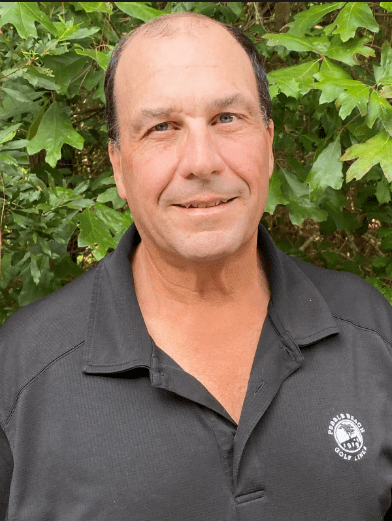
W. Kenneth Tyler, Jr. (Kenny) was born in 1959 in the back seat of a 1956 Ford, delivered by his father on the way to the hospital. He has been doing things his own way ever since.
Kenny was born, raised, and lived most of his life in the highly popular Maryland summer resort town of Ocean City, hard against the Atlantic Ocean. He attended—and actually graduated, much to his parents’ delight—from Salisbury University in Salisbury, Maryland, earning a Bachelor of Science degree with a concentration in marketing. Miraculously, he also graduated from the University of Baltimore with a Master of Business Administration degree with a concentration in marketing as well.
After college, armed with all of this marketing education, Kenny spent some time in the advertising business writing radio commercials and speeches for corporate executives. Naturally, when it came time to pursue a lifelong career, Kenny being Kenny chose accounting.
After passing the Certified Public Accountant (CPA) exam in the mid-1980’s, he toiled for others for a few years to see what they knew, then started his own accounting firm, which is still in existence today, known as Tyler & Company, P.A. Since starting the firm, he has spent almost four decades successfully writing some of the most compelling and persuasive prose imaginable to the Internal Revenue Service and various state taxing authorities.
Kenny is now semi-retired and lives in Lakewood Ranch, Florida, with his wife Barbara. He has three adored adult children: Katie, Billy, and Abbie. Mercifully, Kenny and Barbara became grandparents in May 2025 with the birth of a granddaughter, Samantha.
In terms of a legacy, I’m not all that concerned with that concept. However, if I were to think about it a little, I suppose I only have one hope and one regret. First, I hope my legacy as it relates to this book is that people find it an enjoyable read, a liking of Perry Barnes, a sense that they got their money’s worth, and finally, a desire to read whatever the next book brings.
My only regret is I didn’t start writing novels sooner.
⭐⭐⭐⭐⭐
“My only regret is I didn’t start writing novels sooner.”
-W. Kenneth Tyler Jr.
Links
- Kenny’s website
- Know more about the BREW Book, Blog, and Poetry Awards here
Share Your Insights
We’d love to hear from you! Share your thoughts on W. Kenneth Tyler Jr.’s approach to storytelling and his debut novel. Consider these questions:
- Which aspect of Perry Barnes’ journey did you find most compelling?
- How do you feel about blending historical facts with fictional elements in a story?
- Did Kenny’s creative process inspire you to approach your own projects differently?
Alignment with the UN SDGs
- SDG 4 (Quality Education): Promotes learning through writing, research, and storytelling.
- SDG 5 (Gender Equality): Highlights respect and appreciation in relationships.
- SDG 8 (Decent Work): Showcases career transition to creative work.
- SDG 10 (Reduced Inequalities): Encourages diverse perspectives and inclusion.
Other Highlights

Looking for something?
Type in your keyword(s) below and click the “Search” button.
Helpful Shortcuts
More Stories


















Print and Digital Magazine


Don’t just read about greatness. Own it!

About Us
The World’s Best Magazine is a print and online publication that highlights the extraordinary. It is your passport to a universe where brilliance knows no bounds. Celebrating outstanding achievements in various fields and industries, we curate and showcase the exceptional, groundbreaking, and culturally significant. Our premier laurels, The World’s Best Awards, commend excellence through a unique process involving subject matter experts and a worldwide audience vote. Explore with us the pinnacle of human achievement and its intersection with diversity, innovation, creativity, and sustainability.
We recognise and honour the Traditional Owners of the land upon which our main office is situated. We extend our deepest respects to Elders past, present, and emerging. We celebrate the stories, culture, and traditions of Aboriginal and Torres Strait Islander Elders from all communities who also reside and work on this land.
Disclaimer: The World’s Best does not provide any form of professional advice. All views and opinions expressed in each post are the contributor’s own. Whereas we implement editorial policies and aim for content accuracy, the details shared on our platforms are intended for informational purposes only. We recommend evaluating each third-party link or site independently, as we cannot be held responsible for any results from their use. In all cases and with no exceptions, you are expected to conduct your own research and seek professional assistance as necessary prior to making any financial, medical, personal, business, or life-changing decisions arising from any content published on this site. All brands and trademarks mentioned belong to their respective owners. Your continued use of our site means you agree with all of these and our other site policies, terms, and conditions. For more details, please refer to the links below.
About | Advertise | Awards | Blogs | Contact | Disclaimer | Submissions | Subscribe | Privacy | Publications | Terms | Winners
The World’s Best: A Magazine That’s All About What’s Great | theworldsbestmagazine.com | Copyright ⓒ 2022-2026
Let’s connect
Discover more from The World's Best
Subscribe to get the latest posts sent to your email.

 The World's Best
What a fascinating introduction to W. Kenneth Tyler Jr.! ✨ His journey from CPA and marketing professional to novelist is inspiring—it shows how diverse experiences can shape a writer’s voice. I love how he humorously contrasts writing to the IRS with writing novels, proving that every form of communication holds a story within it. His ability to blend romance, espionage, golf, and historical fiction in Hunting the Red Fox speaks to a truly creative and adventurous spirit. 🎭📚 The interview highlights not only his professional discipline but also his passion for storytelling and redemption, which adds depth and humanity to his work. A brilliant example of how life’s many chapters can enrich one’s art. 🌟
LikeLike
Innovation + impact = true greatness. 👏
LikeLike
Such an insightful piece 👏 Love how W. Kenneth Tyler Jr. blends adventure, espionage, and redemption into historical fiction, it really shows the power of storytelling to bring the past to life in a fresh and engaging way!
LikeLike
So inspiring! And how he came with the ideas is amazing!!! 😍
LikeLike