
“As you start peeling back the layers of who you thought you were, who you were told or made to be, and allow your authentic self to step forward, everything shifts both personally and professionally.”
-Camilla Fellas Arnold
Content Warning: This article briefly references personal experiences involving health conditions and pregnancy loss, which some readers may find sensitive.
Q: Camilla, thank you for joining us. To start, could you introduce yourself to our readers—what you do, what drives your work, and what you hope to achieve through your creative and professional journey?
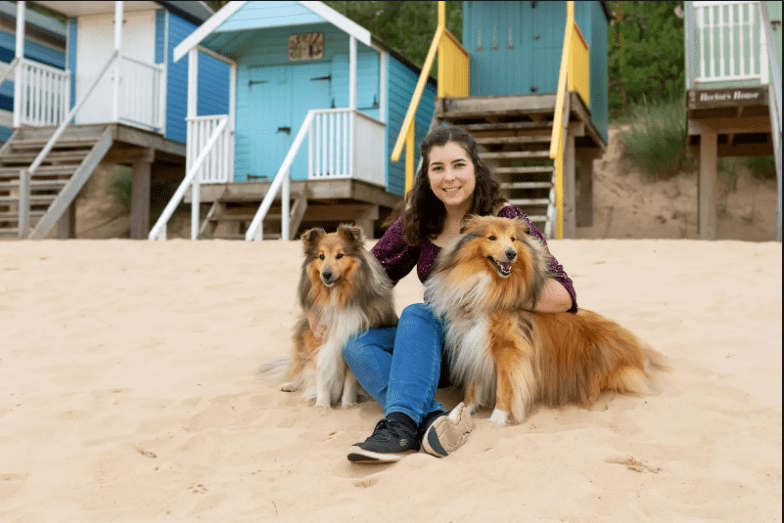
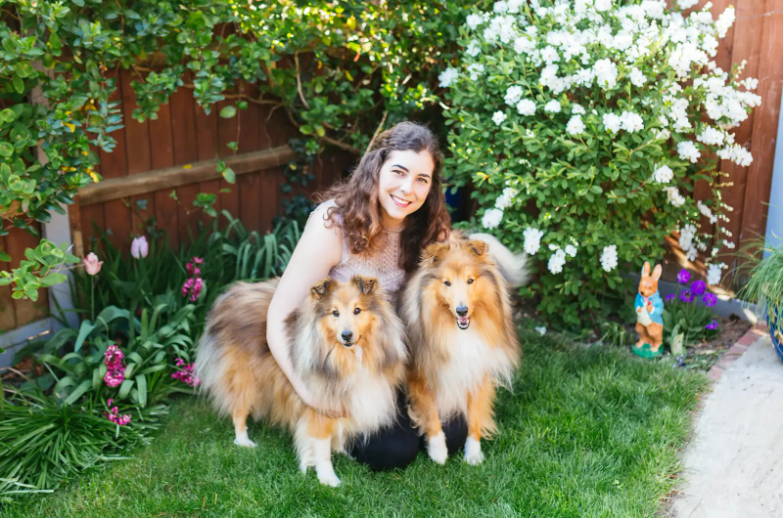
A: I’m Camilla, an author, poet, and executive coach. I’m based in Norfolk, UK, with my husband and two Shetland sheepdogs. Writing has been my dream since I was a child, but a relative made a comment when I was eight that made me feel not good enough, so I buried my writing dream for many years. I still wanted to be around books and stories, so I went to college and university where I studied BA (Hons) Design for Publishing and MA Communication Design. These led me to working as a freelance book designer, and eventually I set up my own publishing company to support indie authors in publishing their books.
Authors I was working with wanted my help on the writing side as well as the book production, so I got an ILM Level 7 Diploma in Executive and Senior Level Coaching and Mentoring and began working as a writing coach. Using my coaching skills, I unlocked my own voice and became passionate about wanting to help people share their truth through writing—and it is that desire to share authentically and from the heart that drives what I do. In recent years I have had multiple health crises and have spent a lot of time facing my own fears, my mortality, my hopes and dreams, and rewriting my life, which has made me even more determined to share my passion for storytelling with the world.
It is my hope that my work can help and inspire others—helping them feel less alone on their healing journeys and showing people what is possible when you face your fears. It took me 25 years to start writing again… it’s never too late to do what you love!
Q: Your book Unravelling Inwards was recently named one of the winners of the BREW Readers’ Choice Book of the Month Award. What does this recognition mean to you, and how does it align with the themes you explore in the book?
A: It’s wonderful to achieve recognition for my writing because I have spent so many years in paralysis, terrified to share my words. Even now, post-publication, I still feel the fear rise sometimes that what I wrote isn’t any good or that no one wants to hear what I have to say. To hear that my work is helping people, that they are enjoying reading it, means so much to both me in the present but also the eight-year-old me who got told she wasn’t good enough.
I wrote Unravelling Inwards in a vacuum—I was so compelled to share my journey of healing that at the time I didn’t care if anyone read it; I simply needed to write it. After sharing it with a couple of trusted friends who encouraged me to publish it, I think this recognition encapsulates my journey of writing and publishing the book—that idea of coming home to your authentic self and not needing outside validation. I wrote the book even though I wasn’t sure anyone would read it or care, and so to receive this kind of recognition validates my belief in myself that it was always meant to be written and shared with the world, that people do need to hear what I have to say.
Q: The book speaks to burnout, identity loss, and creative recovery. What inspired you to document this journey—and why was it important for you to share it in this form?
A: Originally, I thought this book was meant to be written by the practitioner who walked me through my healing journey as a guidebook to help others. I knew I’d been on a profound journey and people needed to understand what it was really like to get down in the dirt with your feelings to heal—not the ‘love and light’ or bypassing that New Age Spirituality often portrays.
However, as I sat with the feeling I realised that the book needed to be written by me as the one doing the healing—me as a layperson who didn’t know what any of these holistic tools were at the beginning—to show people what was really possible when you put in the work, rather than it coming from an expert. I think it was important to share it in this way because it’s more relatable—I was stumbling in the dark and just as sceptical at the beginning as the next person, but the journey took me to places I never could have imagined and I’m better for it. That’s what I wanted to show people in my writing, to hopefully encourage them to take the leap for themselves too.
Q: You combine writing with coaching and mentoring. How do these roles inform each other, and how does this multidisciplinary work shape your approach to helping others?
A: I came into coaching and mentoring through my work in publishing. I had worked for many years as a freelance book designer and was working with some spiritual entrepreneurs who wanted to publish books but were struggling to write them. At the time, I was equally struggling to find my voice, so I went and got my coaching and mentoring qualification in order to support them—but in doing so I found that both my writing and my coaching and mentoring have been enriched.
I have walked the same path of fear and doubt like the people I work with, which gives me a great deal of empathy and understanding of their struggles, while also making me fight harder on a personal level to never let anyone silence me in future. It has made me even more determined to keep writing!
As a result, my multidisciplinary approach means that when I work with others, I can support them in a holistic capacity—we’re not just working on writing skills, but we’re also looking at their mindset, imposter syndrome, confidence, and getting underneath all the noise to find out what they really want to say.
Q: You’ve spoken about reconnecting with one’s inner voice. For those unsure of where to start, what are some practical ways people can begin to “unravel inward” in their own lives?
A: The best way to start is to cut out all the noise that tells you what you ‘should’ be thinking, feeling, and doing so that you can start to hear yourself. We are conditioned to be people pleasers with no boundaries, so this is one of the first places I started—learning to say no to things that cost me my peace and happiness. Saying no was a hard lesson, but it gave me back so much in terms of my time, energy, and headspace, which freed me up to ask myself: What do I actually, really, truly want? It’s a question that I continually ask myself and make small tweaks towards even now, as it’s an ever-evolving process.
Another great tip for starting the journey of listening to your inner voice is to challenge your inner monologue. For example, you might be in a shop looking at a top and think to yourself, ‘I couldn’t wear that, it’s too colourful’… says who? Where did that judgement come from—society, a relative, a friend, yourself? Is it fact or fiction? So often our first thought is a knee-jerk reaction that we’ve been conditioned to think by our life experiences. But if you can pause and challenge the thought, you have an opportunity to assess whether it is a belief that you agree with—or even want to agree with—which is when you can start re-examining your belief system and create a space for your true authentic self to shine.
Q: How has your understanding of personal or professional identity changed through your creative journey? Has your work led to any shifts in how you define success?
A: Absolutely. I’ve joked many times that I wake up as one person and go to bed feeling completely different because the healing process often does feel that way. As you start peeling back the layers of who you thought you were, who you were told or made to be, and allow your authentic self to step forward, everything shifts both personally and professionally.
In Unravelling Inwards I wrote about a small moment where I went to make my husband a cup of tea and found myself making two cups of tea like it was the most normal thing in the world, despite me not being a tea drinker. Yet one day I found myself making this cup of tea without even thinking about it because something had shifted in my sense of self and suddenly, I was a tea drinker.
I think it comes back to, once again, this idea of cutting out all the noise of everyone else and coming home to yourself because I truly believe your body knows what it wants and needs—even if you can’t express it verbally, it will tell you through actions, pain, cravings (like my sudden need for tea!). In getting quiet, deeply listening, and following our bodies, I think it can cause what we perceive as identity changes—but perhaps it’s more of identity revealing itself.
In my professional work it has often looked like my job title or work focus shifting to accommodate the person I am now. My recent health struggles have massively impacted how I define success as I’ve been diagnosed with an autoimmune condition which has led to me having to rethink how I work, take stock of my dreams, and reprioritise my life to fit around my health and energy levels. It’s a learning curve and has been a long period of adjustment, but I think everything I’ve already done on my healing journey has made the process smoother. Now I can define success on my own terms, judged by my own internal happiness—and that is all that really matters.
Q: Your approach supports creative sustainability. In what ways can people working in creative or high-pressure fields prevent burnout and cultivate long-term growth?
A: I think the first thing to understand about creative sustainability is to understand that creative industries were not designed to support creative sustainability—they were designed to conform to societal expectations of productivity. However, creativity is not like that; it requires time and space to breathe.
Creativity is not essential to survival mode—if you were being chased by a bear, your body will cease bodily functions to focus its energy on what you need to survive, which in this case would be running or fighting, not trying to come up with a cool logo idea.
Unfortunately, it means that a lot of creative and high-pressure fields are not supportive of the creative process by design, and I believe it’s up to us as individuals and as a collective of creative people to start advocating for changes in the industry that would benefit us, our needs, and support creative sustainability.
A massive part of this comes from starting on an individual level—we’re taught, whether at school, university, or in 9-5 jobs, that we need to be machine-like in our creative process. But taking time to understand your personal creative flow is the first step in being able to advocate for what you need in order to prevent burnout and promote creative growth.
Q: Have you received other forms of recognition, awards, or milestones you’d like to share? What have they taught you about visibility and value in a creative life?
A: In my work as a coach, I was named as a top creativity coach by the Coach Foundation, which was lovely to receive. Coaching is an unregulated industry and I’ve worked very hard to earn my qualifications such as the ILM Level 7 diploma, and I am an EMCC UK Senior Accredited Practitioner.
I take my role as an executive coach and mentor very seriously by being part of regulatory bodies, participating in supervision, undertaking continuing professional development, and I have spent time training therapists, counsellors, and coaches in creative tools. So to be recognised for my work means a lot, particularly in a large and highly competitive industry such as coaching.
The first piece of writing that I wrote and was published was a chapter in a book called Sacred Redesign which became an international bestseller. It felt incredible. Finally, I could say I was a published author! It had taken me so many years to get to the point where I felt confident enough to submit a single chapter, so it felt like a big culmination of a dream.
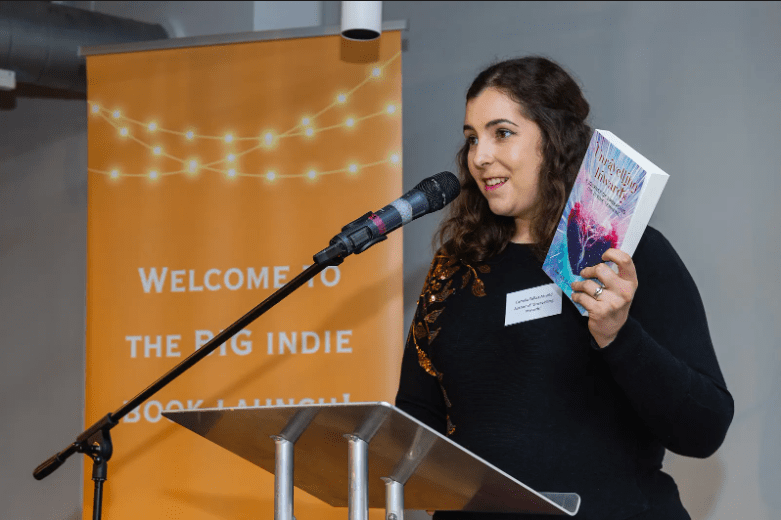
The one moment that was very special to me, though, was when I was invited to take part in the Big Festive Indie Book Launch at Foyles bookstore in Charing Cross, London in 2023. There I presented Unravelling Inwards to journalists as part of a group book launch for indie authors. It was daunting to speak in front of so many journalists, but I was incredibly proud to be there sharing my work on the stage.
All of these experiences—and things like appearing in newspapers, on radio, and recording podcasts—have taught me so much about being visible in terms of building a brand and building a business. But at the heart of it, I’ve learnt that it’s really all about connection. Accolades are great for the ego, but they only mean what you let them mean to you.
What really matters to me, and what truly makes me happy, is when I hear that someone has picked up my book, read it, and that it has helped them in some way. Making a difference to readers—whether that’s inspiring them, guiding them, or even entertaining them—is what truly drives me to keep going.
Q: Much of your work invites reflection and emotional honesty. How do you balance vulnerability with clarity when writing personal narratives?
A: It’s a very difficult balance, particularly when writing memoir. Poetry, which I also write, automatically lends itself to symbolism and poetic license, but the line is very fine when writing memoir and non-fiction as the assumption from readers is that what you’ve written is completely true. And for me it is, but what is also important to remember is that we all experience events differently, remember things differently, and tell stories differently—so no retelling of a moment in your life is going to be 100% as it happened, especially if a fair amount of time has passed.
If you’re talking about other people, as a writer, for me it’s about being mindful of balancing truth and clarity without hurting others. When I include memories of other people, I try to stay truthful to my experiences and honour what I’m writing about without making the story about them—it’s about me, how I feel, how I reacted, what I did with it, because that’s where the learning is and the moment is a vehicle for that.
As such, I tend to focus on those details such as emotions and don’t include dates, times, and places because that’s where it can get upsetting to people who recognise themselves in events. That means, for the most part, I focus on my internal experiences, which means I can be as honest as I dare to write on a page—and the only one who needs to feel okay about it is myself.
Writing vulnerably is always a challenge to find the balance for me between how comfortable I feel sharing and how that raw honesty might help someone else. But I feel it is important to be as vulnerable, as raw and real as I possibly can, because that’s the whole point of the message I’m trying to get across.
Q: Looking ahead, are there new themes, projects, or creative goals you’re currently exploring or planning to develop?
A: As I said previously, since writing Unravelling Inwards I’ve had two years of multiple health crises including multiple miscarriages, a diagnosis of endometriosis, and most recently a diagnosis of the autoimmune condition, Sjögren’s disease. All of these, plus the grief, have meant I’ve spent a lot of time refocusing and reprioritising my life and dreams.
I know at some point I will write a follow-up to Unravelling Inwards based on this next phase of my healing journey, and I can feel the energy rising on it—but it isn’t quite ready to be written yet.
During my health issues, I did continue writing poetry. It became my lifeline and way to make sense of the world. I have recently begun to collate these writings together and plan to release them as a poetry collection as a symbolic way to close that chapter of my life and hopefully serve as a small beacon of hope for others going through similar things.
Throughout my long period of unwellness, the one dream I held onto was to finally achieve my dream of writing fiction, which I’ve wanted to do since I was a child. So I am currently working on several different projects across various genres. In admitting to myself that I want to write fiction, so many ideas flooded my brain and I’m letting myself explore them all—from contemporary women’s fiction to fantasy romance.
The overarching theme of all of them is about healing, spirituality, the divine feminine, and being true to yourself—so I feel that regardless of which genre I write in, I have a cohesive thread that drives all my work. Writing and working with people to develop their stories is the one thing that keeps me motivated, especially on the days when I feel frustrated because my body isn’t working the way it’s supposed to.
Writing is my lifeline and I’m really looking forward to sharing my fiction with the world, hopefully within the next year.
Q: If you were to write your bio in your own words, what would you say? What legacy do you hope to leave?
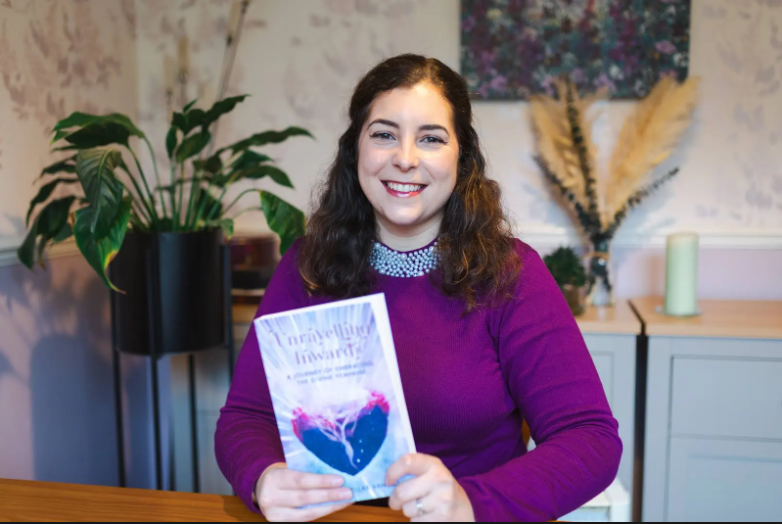
A: Camilla Fellas Arnold is an international bestselling author, poet and executive coach. She has published the books Unravelling Inwards: A Journey of Embracing the Divine Feminine, her debut poetry collection Soul Threads and Meet Your Creative Archetype and more through her indie publishing imprint Tecassia Publishing.
Camilla writes nonfiction, fiction and poetry. The key themes that run through all of her works are women’s narratives, authentic self-expression, the divine feminine, goddess mythology, creativity and emotional healing.
Her writing coaching helps authors find their authentic voice and tell compelling stories. She works as an Executive Coach at Visionary Coaching Centre, providing corporate coaching to help companies support and nurture their creative staff. With over a decade of experience across creative industries, Camilla holds a BA (Hons) in Design for Publishing, an MA in Communication Design, an ILM Level 7 Diploma for Executive and Senior Level Coaches and Mentors and is an EMCC UK Accredited Senior Practitioner. She has been featured in major media outlets like The Telegraph, Metro Online, Grazia, Thrive Global and Voice Magazine.
Recommended links:
- Top Creativity Coaches – Coach Foundation
- Top Coaches in Norwich 2023 – Influence Digest
- Media Feature – PR Newslink
- BREW Readers’ Choice Award 2024–2025 – The Chrysalis BREW Project
- June 2025 Book of the Month Award – The Chrysalis BREW Project
- Camilla Fellas Arnold – Linktree
⭐⭐⭐⭐⭐
“What really matters to me and what truly makes me happy is when I hear that someone has picked up my book, read it and that it has helped them in some way.”
– Camilla Fellas Arnold
Share Your Insights
If Camilla’s journey resonates with you, we’d love to hear your thoughts. How do you approach creativity and self-discovery in your own life? Share your experiences and join the conversation:
- What helps you stay connected to your authentic self?
- How do you manage creativity under pressure?
- In what ways has your definition of success evolved?
Alignment with the UN SDGs
- Promotes mental health and well-being through self-discovery and healing (SDG 3).
- Encourages inclusive creative industries and lifelong learning (SDG 4).
- Supports gender equality by highlighting women’s narratives (SDG 5).
Other Highlights

Looking for something?
Type in your keyword(s) below and click the “Search” button.
Helpful Shortcuts
More Stories






Print and Digital Magazine


Don’t just read about greatness. Own it!

About Us
The World’s Best Magazine is a print and online publication that highlights the extraordinary. It is your passport to a universe where brilliance knows no bounds. Celebrating outstanding achievements in various fields and industries, we curate and showcase the exceptional, groundbreaking, and culturally significant. Our premier laurels, The World’s Best Awards, commend excellence through a unique process involving subject matter experts and a worldwide audience vote. Explore with us the pinnacle of human achievement and its intersection with diversity, innovation, creativity, and sustainability.
We recognise and honour the Traditional Owners of the land upon which our main office is situated. We extend our deepest respects to Elders past, present, and emerging. We celebrate the stories, culture, and traditions of Aboriginal and Torres Strait Islander Elders from all communities who also reside and work on this land.
Disclaimer: The World’s Best does not provide any form of professional advice. All views and opinions expressed in each post are the contributor’s own. Whereas we implement editorial policies and aim for content accuracy, the details shared on our platforms are intended for informational purposes only. We recommend evaluating each third-party link or site independently, as we cannot be held responsible for any results from their use. In all cases and with no exceptions, you are expected to conduct your own research and seek professional assistance as necessary prior to making any financial, medical, personal, business, or life-changing decisions arising from any content published on this site. All brands and trademarks mentioned belong to their respective owners. Your continued use of our site means you agree with all of these and our other site policies, terms, and conditions. For more details, please refer to the links below.
About | Advertise | Awards | Blogs | Contact | Disclaimer | Submissions | Subscribe | Privacy | Publications | Terms | Winners
The World’s Best: A Magazine That’s All About What’s Great | theworldsbestmagazine.com | Copyright ⓒ 2022-2026
Let’s connect
Discover more from The World's Best
Subscribe to get the latest posts sent to your email.

 The World's Best
One thought on “Camilla Fellas Arnold on Self-Discovery, Creativity, and Reclaiming the Inner Voice”