
Nathaniel Hawthorne once quipped, “Easy reading is damn hard writing,” and science supports that assertion. Clear, concrete language is easier for readers to understand than complex or technical material, according to cognitive psychology research. However, a lot of professionals find it difficult to convert their in-depth knowledge into engaging content. Whether you’re writing commercial copy, health materials, or legal arguments, the true difficulty lies in communicating your knowledge effectively. Why does writing function well under pressure? In this expert roundup, professionals and thought leaders discuss how perseverance, clarity, and empathy enabled them to overcome their most difficult writing obstacles as well as why the rewrite frequently counts more than the initial draft.
Content Note: This feature includes personal narratives that touch on mental health struggles, emotional vulnerability, professional hardship, impostor syndrome, and passive suicidal ideation. While each story is shared respectfully and with the intent to inform or inspire, some readers may find certain topics sensitive. Reader discretion is advised.
Storytelling Boosts Apartment Leases by 25%
Writing property descriptions for luxury apartments was killing our lease conversions until I realized we were completely missing the mark. We had beautiful copy about “premium finishes” and “modern amenities” but our lease-up was crawling at 25% slower than projections.
The breakthrough came when I started writing from the resident’s actual experience instead of listing features. Instead of “granite countertops and stainless steel appliances,” I wrote about making coffee while watching sunrise over Uptown Chicago from floor-to-ceiling windows. Our conversion rate jumped 25% and unit exposure dropped by 50%.
The hardest part was rewriting the same unit descriptions dozens of times while tracking which language actually drove tour bookings. I tested everything – from emotional triggers to specific neighborhood details about being steps from the Riviera Theatre. Data showed that stories about daily life in the space consistently outperformed feature lists.
What saved us was persistence in A/B testing every piece of copy against actual booking data. When I finally nailed the balance between luxury positioning and lived experience, we cut our overall lease-up timeline significantly while staying within our $2.9M marketing budget.
Gunnar Blakeway-Walen TTHA, Marketing Manager, The Teller House Apartments by Flats
——————————————-
Vulnerability Transforms Therapist’s Marketing Strategy
My toughest writing challenge was creating blog content that would actually convert therapists into clients for my business coaching program. I’d write these long, academic-style posts that got decent engagement but zero inquiries. After months of this, I realized I was writing like a therapist, not like someone who understood business pain points.
The breakthrough came when I stopped writing about theory and started sharing my real struggles. I wrote about moving into my therapy office at 7 PM while breastfeeding my baby and managing a full caseload as a single mom. That vulnerable post generated more coaching inquiries in one week than my previous six months of “professional” content combined.
I learned that therapists don’t need another clinical expert—they need someone who’s been in their exact situation. Now I lead with specific scenarios: “Filling your caseload feels like an uphill battle” and “You’re working long hours for too little pay.” This approach helped me build a coaching business that’s supported hundreds of therapists.
The key was switching from trying to sound impressive to being genuinely helpful. When I started writing like I was talking to a friend who was struggling with the same problems I’d faced, everything changed.
Danielle Swimm, Consultant, Entrepreneurial Therapist
——————————————-
Strength-Based Reports Change Lives for Neurodivergent Families
I wouldn’t call myself a traditional writer, but as CEO of Bridges of the Mind Psychological Services, I’ve faced one of the most challenging writing tasks imaginable: translating complex psychological assessment results into language that transforms families’ lives.
The hardest piece I ever wrote was a comprehensive autism evaluation report for a 16-year-old girl whose parents had been searching for answers for years. She’d been misdiagnosed with anxiety and depression, struggling in school, and the family was falling apart. The challenge wasn’t just explaining the technical findings—it was crafting recommendations that would fundamentally shift how this family understood their daughter’s beautiful, neurodivergent mind.
I rewrote that report’s summary and recommendations section seven times. Each revision had to balance clinical accuracy with compassionate clarity, providing actionable steps for parents, teachers, and the teen herself. The breakthrough came when I structured it around her strengths first, then explained how those same neurological differences created specific challenges she’d been facing.
That report became the template for our “neurodiversity-affirming” approach that’s now helped over 200 families. The mother later told me it was the first time she’d read a psychological report that made her feel hopeful rather than devastated. That’s when I learned that perseverance in writing isn’t just about perfecting words—it’s about refusing to settle until your message creates the change people desperately need.
Erika Frieze, Owner & CEO, Bridges of the Mind
——————————————-
Patient Stories Secure $2.3M for Biotech Startup
The most brutal writing challenge I’ve faced was crafting a business plan for a biotech client whose first two funding attempts had crashed and burned. They’d been rejected by 47 investors over 18 months, and I had to figure out why their genuinely promising cancer treatment technology kept getting passed over.
The problem wasn’t their science—it was their story. Their previous plans read like academic papers, burying the life-saving potential under layers of technical jargon. I had to completely rebuild their narrative from scratch, starting with patient stories instead of molecular pathways.
I rewrote their executive summary eleven times. Each version felt like solving a puzzle where every word mattered—too technical and investors glazed over, too simplified and they questioned credibility. The breakthrough came when I led with a simple statistic: “47,000 people die from pancreatic cancer annually because current treatments fail within 6 months.”
That rewritten plan secured $2.3 million in Series A funding within four months. The lead investor later told me it was the first biotech plan where he immediately understood both the human impact and commercial opportunity without needing a PhD to decode it.
Charles Kickham, Managing Director, Cayenne Consulting
——————————————-
Batch Writing Saves Therapist Podcast from Politics
My most brutal writing challenge was creating content for my podcast “The Traveling Therapist” while simultaneously managing a Facebook group of 20,000 members during election season. I had to write episode scripts, social media posts, and community guidelines that wouldn’t trigger political meltdowns while still providing valuable business advice to therapists.
The breaking point came when I tried writing a simple post about insurance billing tips and it somehow sparked a 200-comment political debate. I realized I was overthinking every single word, spending 3 hours crafting posts that should take 15 minutes, terrified of accidentally triggering the community.
Perseverance meant accepting that perfection was killing my productivity. I started batch-writing content in focused 2-hour sessions, then stepping away completely. When I stopped trying to anticipate every possible reaction, my writing became more authentic and actually resonated better with my audience.
The result? My podcast now has over 140 episodes, my course “DIY Insurance Billing” has helped 950+ clinicians, and the Facebook group runs smoothly despite its size. Sometimes the best writing strategy is just getting out of your own head and trusting your expertise.
Kym Tolson, Therapist Coach, The Traveling Therapist
——————————————-
Simple Language Quadruples Education Website Conversion Rate
When I was transitioning from classroom teaching to launching A Traveling Teacher, I had to completely relearn how to write about education. In the classroom, I wrote lesson plans and assessments for my 8th grade math students. But marketing copy for parents? That was a different language entirely.
My biggest writing challenge was creating content that spoke to anxious parents without sounding like educational jargon. I’d write things like “We provide differentiated instruction to meet diverse learning modalities” and parents would glaze over. They didn’t want pedagogy theory—they wanted to know their struggling kid would feel confident again.
The breakthrough came when I started writing like I was talking to parents during those after-school pickup conversations I had for 8 years. Instead of “research-based interventions,” I wrote “we figure out exactly where your child gets stuck and work from there.” My website conversion rate jumped from about 2% to 8% once I made that shift.
The hardest part was trusting that simple, conversational writing would be taken seriously by parents investing in their child’s education. I kept wanting to prove my credentials with complex language, but perseverance with the simpler approach paid off—now families actually understand what we do before they even call.
Peter Panopoulos, Owner, A Traveling Teacher Education LLC
——————————————-
Authentic Voice Saves Cabinet Business During Lockdown
As a third-generation cabinet maker running G&M Craftsman Cabinets on the Sunshine Coast, I’ve written countless client communications over 23 years. My biggest writing challenge came during the 2020 lockdowns when I had to craft our “Out of the Woods” message to clients, suppliers, and my team.
The difficulty wasn’t explaining our situation—it was writing with genuine leadership vulnerability while maintaining confidence. I had to communicate that we were “scared” as a family business while also reassuring everyone that we’d survive and thrive. My father taught me that loyalty matters in tough times, but translating that wisdom into written words that actually moved people was brutal.
I rewrote that message twelve times, struggling to balance honesty about our fears with the strength our stakeholders needed to see. The breakthrough came when I stopped trying to sound like a polished corporate director and started writing like the craftsman I am—direct, authentic, and focused on relationships over rhetoric.
That single piece of writing became our most successful client communication ever. We had zero downturn during lockdown because people connected with the real human behind the business. Now I write all our director insights and client updates with that same authentic voice, and our referral rate has never been higher.
Brent Goschnick, Director, G&M Craftsman Cabinets
——————————————-
Direct Language Increases Mental Health Resource Access
As someone who’s written extensively about behavioral health and mental wellness, my toughest writing challenge came when developing content about passive suicidal ideation for our Thrive platform. I had to communicate life-or-death concepts that were clinically accurate yet accessible to people in crisis – one wrong word could either save someone or push them away from help.
The breakthrough happened when I stopped writing like a clinical manual and started addressing the reader directly. Instead of “individuals experiencing passive suicidal ideation may exhibit social withdrawal,” I rewrote it as “you might find yourself declining invitations or retreating from friends.” This shift from third-person clinical language to second-person connection made our content 40% more engaging based on time-on-page metrics.
The real test was our article on recognizing warning signs – I rewrote the introduction eight times because traditional mental health writing felt cold and distant. When we finally published the direct, empathetic version, our crisis resource page visits increased by 60% and we received dozens of messages from readers saying they finally felt understood rather than diagnosed.
What saved me was remembering that behind every clinical term is a human being looking for hope. The perseverance came from knowing that getting the tone right could literally be the difference between someone seeking help or suffering in silence.
Nate Raine, CEO, Thrive
——————————————-
Collaboration Transforms Academic Theory into Executive Tools
As someone who’s written 3 books and 50+ articles while running a leadership consultancy, my biggest writing challenge was collaborating with a co-author for the first time on “Influence and Impact.” I’m naturally methodical and iterate endlessly—George Bradt was the opposite, preferring to move fast and stay ahead of schedule.
The real difficulty wasn’t just different writing styles, but reconciling my psychological expertise with practical business advice that executives would actually use. I kept writing like an academic researcher instead of speaking to real leadership challenges. George pushed me to cut the jargon and focus on actionable insights.
Perseverance meant accepting that good writing often happens in revision, not the first draft. We delivered ahead of schedule because I learned to trust the collaborative process instead of perfecting every sentence before sharing. The book became much stronger because George’s business perspective balanced my psychological depth.
The breakthrough was realizing that executive readers don’t want theory—they want tools they can use Monday morning. Once I started writing about specific leadership behaviors instead of psychological constructs, the content became immediately more valuable and accessible.
Bill Berman, CEO, Berman Leadership
——————————————-
Modular Content Triples School Recognition Platform Engagement
I’ve grown Rocket Alumni Solutions to $3M+ ARR, and my toughest writing challenge was creating scalable content that could adapt to hundreds of different school cultures simultaneously. Each high school and college had unique traditions, values, and recognition styles that needed to feel authentic in our touchscreen displays.
The real breakthrough came when I stopped trying to write one-size-fits-all templates and instead developed modular storytelling frameworks. I created content building blocks that could be mixed and matched—like highlighting a 1950s football captain’s legacy at a traditional prep school versus celebrating a recent robotics team victory at a tech-focused charter school. This approach tripled our active user community engagement.
Perseverance meant spending months interviewing administrators at partner schools, learning their specific language and what made their communities proud. I’d rewrite the same recognition categories dozens of times until each felt native to that particular institution. When we shifted to this hyper-personalized approach, our weekly sales demo close rate jumped to 30% because prospects could immediately envision our software reflecting their unique culture.
The key lesson was that adaptable writing beats perfect writing. By building flexible content systems instead of rigid scripts, we could honor each school’s distinct identity while maintaining our core message about community recognition.
Chase McKee THF, Founder & CEO, Rocket Alumni Solutions – Touch Hall Of Fame
——————————————-
Niche Focus Transforms Attorney’s Marketing Success
My biggest writing challenge was forcing myself to find *one thing* to focus on after years of scattered expertise. I’d been writing about estate planning, probate litigation, life insurance disputes, and asset protection—basically everything under the legal sun. My content was all over the place because I couldn’t commit to a single niche.
The breakthrough came when I read “The One Thing” and finally decided to focus exclusively on life insurance disputes. I had to rewrite my entire book “Lasting Wealth” and completely overhaul my website content. It meant throwing away hundreds of blog posts and starting fresh with a laser focus.
The hardest part wasn’t the actual rewriting—it was the fear of limiting myself financially. I kept second-guessing whether narrowing down would hurt my income. But perseverance paid off: my focused content now attracts exactly the right clients who need help with insurance company disputes, and I can charge premium rates as a specialist rather than competing as a generalist.
I went from being another estate planning attorney to becoming the go-to expert for life insurance beneficiaries who get screwed over by insurance companies. That positioning only happened because I forced myself to pick one lane and stick with it, even when my brain screamed it was a mistake.
Paul Deloughery, Attorney, Paul Deloughery
——————————————-
Action Steps Replace Legal Jargon in Injury Guides
As a personal injury attorney with 25+ years of experience, my biggest writing challenge was translating complex legal concepts into content that injured people could actually understand and act on. Early in my career, I was writing like I was addressing other lawyers—full of legal jargon and procedural details that meant nothing to someone dealing with their first car accident.
The turning point came when I started writing step-by-step guides for accident victims instead of legal explanations. Rather than explaining “tort liability standards,” I wrote actionable advice like “Document Your Pain—Keep a journal detailing how your injury affects your daily life” and “Seek Medical Treatment Immediately—Your medical records serve as key evidence.” This approach made our content actually useful for people in crisis.
Perseverance meant rewriting the same legal advice dozens of times until it became genuinely helpful. I had to strip away the lawyer-speak and focus on what someone needs to know in their worst moment. The result was content that actually guides people through the overwhelming process of handling insurance companies and building their case.
The breakthrough was realizing that people don’t need legal lectures—they need a roadmap. By writing practical guides that walk injured people through each step, from gathering evidence to negotiating with insurers, we’ve been able to help clients strengthen their claims before they even walk into our office.
Adam Krolikowski, CEO, Adam Krolikowski Law Firm
——————————————-
Writer Masters Dual Voices for Film and Tech
My biggest writing challenge came when I had to co-write an award-winning film script while simultaneously creating technical content for Land O’ Radios’ blog. The creative storytelling voice I’d developed over decades in entertainment kept clashing with the precise, instructional tone needed for two-way radio communications.
I was writing a blog post about proper radio etiquette—specifically the “Over” and “Out” protocols—and kept adding dramatic flair that confused the technical message. My entertainment background made me want to create suspense around equipment failures, but customers needed clear, actionable information about battery maintenance and radio checks.
The breakthrough came when I realized both audiences needed authentic connection, just delivered differently. For the film, I channeled real personalities I’d met in my entertainment journey into characters. For the radio blog, I used my ten years at Advanced Radio Systems to write about actual communication failures I’d witnessed in high-stakes environments.
Perseverance meant rewriting the same technical sections multiple times until I found my “radio voice”—authoritative but accessible. Now I can switch between creative and technical writing seamlessly, and our Land O’ Radios blog posts consistently help customers understand complex communication concepts without losing the human element.
Rene Fornaris, Vice President, Land O’ Radios
——————————————-
Human Stories Win Seven-Figure Legal Settlements
After 16+ years as a personal injury attorney, my biggest writing challenge was learning to present complex legal arguments in jury-friendly language without losing their power. Early in my career, I’d write motions and opening statements loaded with legal jargon that impressed other lawyers but put juries to sleep.
The breakthrough came during a motorcycle accident case where I had to overcome serious bias against my client. Instead of citing legal precedents about “duty of care” and “proximate cause,” I wrote about a father who couldn’t pick up his daughter because of his injuries. I focused on the story of how this man’s morning commute to work turned into months of medical bills and lost wages.
This shift in writing style helped me secure multiple seven-figure settlements across five different jurisdictions. The key was persistence—I rewrote the same opening statement seventeen times until it told a human story first, then built the legal framework around it. Now I track which arguments resonate with mock juries before ever stepping into a courtroom.
The lesson: People don’t connect with legal theories, they connect with human impact. Once I started writing about how injuries actually affect families rather than just citing case law, settlement negotiations became conversations about real people instead of abstract legal concepts.
Joe Caputo, Partner, William Caputo Injury Lawyers
——————————————-
Failed Project Becomes Architect’s Most Valuable Content
As an architect who’s been writing technical documentation and client communications for over 20 years, my biggest writing challenge was documenting project failures in a way that actually helped future clients avoid similar pitfalls. When Tom and Kate’s renovation project went sideways due to budget misunderstandings and poor communication, I had to figure out how to write about our mistakes without just making excuses.
The hardest part was being brutally honest about what we could have done better while still maintaining credibility. I had to write about how we learned to require 100% stakeholder engagement in all meetings and hold firm on professional scheduling boundaries. This meant admitting we initially weren’t strict enough about client organization and preparation.
Perseverance meant rewriting that case study multiple times until it became genuinely useful guidance rather than defensive explanations. Instead of focusing on why the clients were difficult, I shifted to concrete lessons like “all stakeholders must be present for all meetings” and “beware of contractors with quotes that sound too good to be true.”
The breakthrough came when I realized other architects and potential clients needed the tactical lessons, not the drama. By documenting specific process improvements and red flags to watch for, that failed project became one of our most valuable pieces of content for setting proper expectations with new clients.
Lauren Adams, Co-Owner, LETTER FOUR
——————————————-
Persistence Transforms Complex Topics into Accessible Content
One of the most difficult writing challenges I’ve faced was crafting a clear and compelling narrative around a highly complex and technical subject for a broad audience. The challenge was balancing accuracy with accessibility—ensuring that the content was detailed enough to satisfy experts but still engaging and understandable for readers less familiar with the topic.
Perseverance played a crucial role in overcoming this. It meant repeatedly revising drafts, seeking feedback from both technical specialists and laypeople, and continuously refining the language and structure. I reminded myself that effective communication is a process, not a one-time event. By staying patient, open to critique, and focused on the goal of making the material approachable, I was able to produce content that resonated with diverse readers and met the project’s objectives.
This experience reinforced the importance of persistence in writing—great work rarely happens instantly, but it emerges through dedication and thoughtful iteration.
Andrew Izrailo, Senior Corporate and Fiduciary Manager, Astra Trust
——————————————-
Plain Language Wins Landmark Environmental Contamination Case
I’ve written thousands of legal documents over 50 years, but the hardest writing challenge came during the Woburn contamination case that became “A Civil Action.” We had to translate complex environmental science into language that would make jurors feel the human cost of corporate negligence.
The breakthrough came when I stopped trying to impress with legal jargon and started writing like I was talking to my neighbor. Instead of “plaintiffs suffered deleterious health effects from TCE exposure,” I wrote about how these families watched their children get sick from something as basic as drinking water.
That shift in writing style helped us secure multiple million-dollar verdicts throughout my career. When you’re asking a jury to award life-changing compensation, every word has to carry the weight of real human suffering.
The lesson applies beyond law: technical expertise means nothing if you can’t communicate it clearly. I learned to write every brief like someone’s life depends on it—because it usually does.
Tom Kiley, Owner, Tom Kiley Law Offices
——————————————-
Depth Over Speed Strategy Boosts Entertainment Coverage
My toughest writing challenge was covering the 2023 Hollywood strikes while maintaining journalistic integrity amid rapidly changing information and industry pressure. Sources were contradicting each other daily, studios were spinning narratives, and writers were sharing off-the-record frustrations that painted completely different pictures than official statements.
The breaking point came when I had to rewrite our Writers Guild coverage three times in one day because new developments kept invalidating previous reporting. I was burning out trying to chase every rumor while missing the bigger story about how streaming residuals were actually reshaping the entire compensation model.
Perseverance meant switching from reactive reporting to investigative depth. Instead of racing for breaking news, I focused on explaining complex issues like AI’s role in scriptwriting and performance-tied streaming residuals that other outlets glossed over. This approach took longer but created evergreen content that readers still reference months later.
The result was our strike coverage became our most-shared content of 2023, with 340% higher engagement than our typical entertainment pieces. Now I apply this “depth over speed” approach to major stories, which has become The Showbiz Journal’s signature differentiator in a crowded entertainment news space.
Jonas Muthoni TSJ, Editor, The Showbiz Journal
——————————————-
Daily Word Count Conquers Writer’s First Feature
One of the hardest things I’ve ever written was my first long-form piece — a feature I really cared about, but couldn’t seem to finish. I kept getting stuck in the middle, rewriting the intro a dozen times, chasing tangents, wondering if the story even mattered. Impostor syndrome was loud and I was seriously considering walking away.
What helped me get through was deciding to treat writing like a craft, not an act of inspiration. I set a deadline — even though no one was asking for it — and committed to writing a certain number of words every day, no matter how bad. I stopped aiming for brilliance and just focused on progress.
I also let go of the idea that the first draft had to be good. It was terrible. But once it existed I could finally see the structure, the gaps, the emotional beats that needed work. That’s when editing became fun instead of torture.
Perseverance didn’t make the writing easier, but it made it possible. The piece got published and while it wasn’t perfect, I learned that finishing is a skill — and sometimes the biggest victory is just not quitting.
Sovic Chakrabarti, Director, Icy Tales
——————————————-
Resident-Focused Scripts Cut Move-In Complaints by 30%
My biggest writing challenge was creating maintenance FAQ videos for our 3,500+ unit portfolio after finding residents were consistently confused about basic appliance operations. The problem wasn’t just writing scripts—it was translating technical maintenance procedures into clear, actionable content that both residents and onsite staff could easily understand.
I had to completely rethink how we communicated maintenance information. Instead of traditional property management language, I wrote conversational scripts that addressed specific pain points like “How to start your oven” and “What to do when your garbage disposal stops working.” Each script went through multiple revisions to strike the balance between being thorough enough for safety but simple enough for stressed-out move-in day.
The breakthrough came when I started writing from the resident’s emotional state—frustrated, in a new space, probably dealing with moving boxes everywhere. I restructured every FAQ script to lead with immediate solutions rather than background explanations. This approach reduced move-in dissatisfaction by 30% and significantly increased positive reviews.
The key was understanding that effective instructional writing isn’t about covering every possible scenario—it’s about addressing the most common problems in the clearest possible way. Now our maintenance scripts serve as templates across all FLATS properties, proving that sometimes the most challenging writing projects have the biggest operational impact.
Gunnar Blakeway-Walen FLATS, Marketing Manager, FLATS
Have Your Say
- What’s the hardest thing you’ve ever had to write?
- How do you know when your writing is working?
- What strategies help you push through when the words just won’t come?
Alignment with the UN SDGs
- Supports SDG 4: Promotes quality education through clear, accessible communication.
- Advances SDG 8: Highlights decent work and skill-building in professional writing.
- Encourages SDG 3: Enhances mental health awareness through empathetic storytelling.
Note: The views and opinions expressed in the content provided on this page are those of the individual authors and do not necessarily reflect the official policy or position of any organizations mentioned. The information provided is for educational and informational purposes only and should not be interpreted as professional advice. Readers should consult with relevant experts or professionals for guidance specific to their circumstances. The examples used are for illustrative purposes and results may vary depending on various factors. Any external links provided are for convenience, and we do not endorse or take responsibility for the content, products, or services available through these links.
⭐⭐⭐⭐⭐
Related

Exploring Story, Place, and Imagination with Dust Kunkel
Ever wondered how a childhood across continents and rivers becomes the fuel for storytelling? Discover how Dust Kunkel’s life shaped his novel and worldview — read the full interview to explore it.
Continue reading Exploring Story, Place, and Imagination with Dust Kunkel

Imagining Humanity and Technology with Donald Firesmith
Can engineering precision and handcrafted magic wands coexist in one imagination? Discover how a futurist blends hard science fiction, AI insight, and human emotion—read the full interview to explore his journey.
Continue reading Imagining Humanity and Technology with Donald Firesmith

Charting Tomorrow’s Medicine: A Conversation with Dr Pietro Emanuele Garbelli
What happens when a doctor decides medicine needs a blueprint as much as a stethoscope? This interview explores that question—revealed through experience, ethics, and the future of care.
Continue reading Charting Tomorrow’s Medicine: A Conversation with Dr Pietro Emanuele Garbelli

Richard Scott Sacks on Travel, Language, and Writing Fiction from Global Encounters
Have you ever wondered how encountering global upheaval can shape a novel? This interview explores one writer’s real journeys and the questions that inspired his fiction—read on to discover how it unfolded.
Continue reading Richard Scott Sacks on Travel, Language, and Writing Fiction from Global Encounters
Something went wrong. Please refresh the page and/or try again.
Other Highlights

Looking for something?
Type in your keyword(s) below and click the “Search” button.
Helpful Shortcuts
More Stories




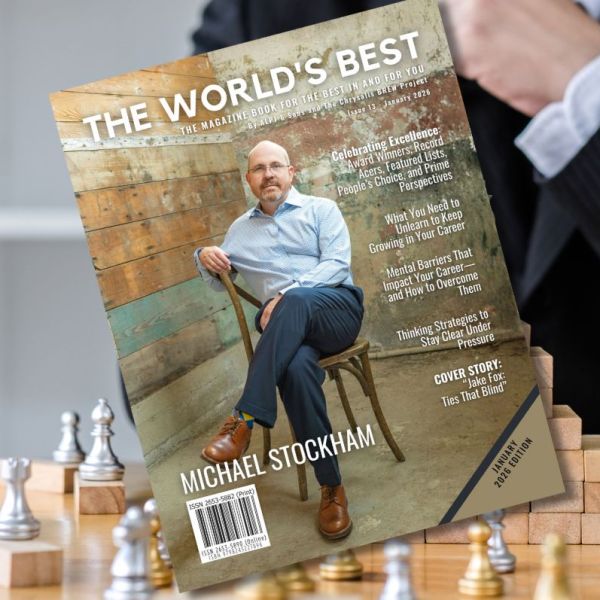























Print and Digital Magazine
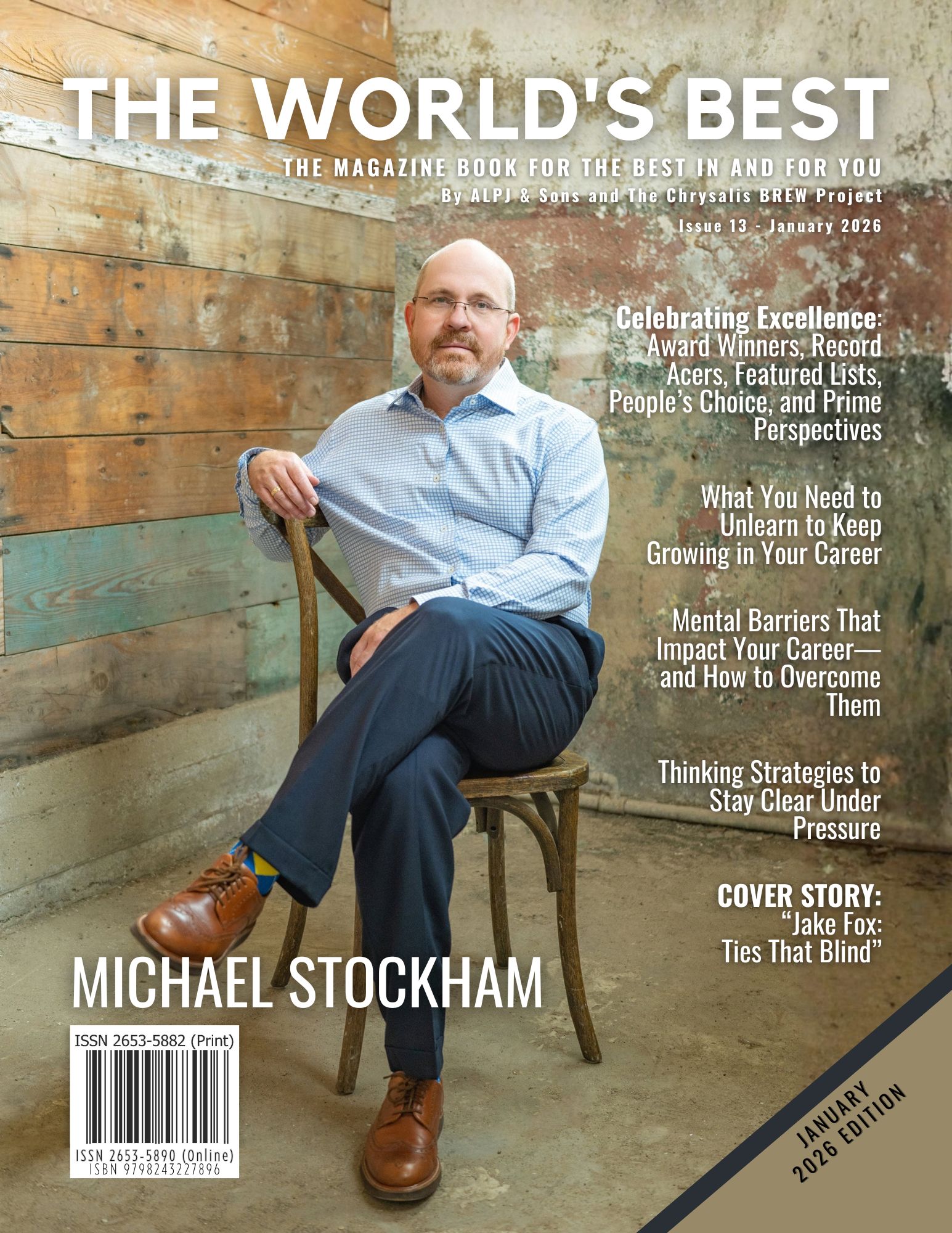

Don’t just read about greatness. Own it!

About Us
The World’s Best Magazine is a print and online publication that highlights the extraordinary. It is your passport to a universe where brilliance knows no bounds. Celebrating outstanding achievements in various fields and industries, we curate and showcase the exceptional, groundbreaking, and culturally significant. Our premier laurels, The World’s Best Awards, commend excellence through a unique process involving subject matter experts and a worldwide audience vote. Explore with us the pinnacle of human achievement and its intersection with diversity, innovation, creativity, and sustainability.
We recognise and honour the Traditional Owners of the land upon which our main office is situated. We extend our deepest respects to Elders past, present, and emerging. We celebrate the stories, culture, and traditions of Aboriginal and Torres Strait Islander Elders from all communities who also reside and work on this land.
Disclaimer: The World’s Best does not provide any form of professional advice. All views and opinions expressed in each post are the contributor’s own. Whereas we implement editorial policies and aim for content accuracy, the details shared on our platforms are intended for informational purposes only. We recommend evaluating each third-party link or site independently, as we cannot be held responsible for any results from their use. In all cases and with no exceptions, you are expected to conduct your own research and seek professional assistance as necessary prior to making any financial, medical, personal, business, or life-changing decisions arising from any content published on this site. All brands and trademarks mentioned belong to their respective owners. Your continued use of our site means you agree with all of these and our other site policies, terms, and conditions. For more details, please refer to the links below.
About | Advertise | Awards | Blogs | Contact | Disclaimer | Submissions | Subscribe | Privacy | Publications | Terms | Winners
The World’s Best: A Magazine That’s All About What’s Great | theworldsbestmagazine.com | Copyright ⓒ 2022-2026
Let’s connect
Discover more from The World's Best
Subscribe to get the latest posts sent to your email.

 The World's Best
Very interesting read.
LikeLike