
Talent may open doors, but it rarely keeps them open. In a world where only 8% of people maintain their New Year’s goals and most ventures fail within the first five years, sustained success hinges on more than ability alone. What truly carries changemakers through uncertainty, burnout, and failure? Researchers at Harvard and Stanford suggest traits like resilience, adaptability, and emotional regulation often outweigh IQ in long-term performance. As psychologist Angela Duckworth said, “Enthusiasm is common. Endurance is rare.” In this third installment of More Than Gifted, we explore what it really takes to last—and lead—beyond talent.
Editor’s Note: This feature contains personal anecdotes and opinions from contributors. Financial, legal, and business outcomes mentioned are specific to individual experiences and should not be considered universal advice or guarantees. Readers are encouraged to consult with qualified professionals before making related decisions.
Resilient Dedication Fuels Growth Beyond Talent
If I could develop one trait beyond talent to sustain long-term success, it would be resilient dedication to growth with a blend of courage, curiosity, and the relentless pursuit of becoming better.
Talent opens doors, but it’s what we do after we walk through them that defines our journey. In my work as a leader and coach, I’ve seen firsthand how success isn’t about brilliance in a moment, it’s about staying grounded, adaptable, and humble enough to keep learning long after the spotlight fades. It takes courage to grow when no one’s watching. To show up again after setbacks. To ask better questions when the answers are uncomfortable.
Resilient leaders don’t just survive change, they shape it. They embrace feedback without defensiveness, learn from failure without shame, and pursue excellence without arrogance. The best leaders know that personal growth is a leadership responsibility. When you choose to develop yourself, you gain the capacity to elevate others. That’s the heart of sustainable impact.
One practical way to build this trait is by maintaining a personal set of growth goals with clear action steps, that you review often. Adjust them boldly. Keep them visible and not just in your mind, but in writing. Dominican University conducted a study that found that people with written goals are 42% more likely to achieve them. Even more striking: only 1% of people have a written set of goals they review regularly. This simple discipline drastically increases long-term development, clarity and performance.
Because here’s the truth: when leaders prioritize their own development, they create a ripple effect. Their courage gives others courage. Their consistency builds trust. And their growth creates a culture where teams feel safe to stretch, speak up, and thrive.
Resilient dedication means refusing to coast on yesterday’s success. It means being brave enough to evolve and generous enough to bring others with you. That’s the kind of trait that not only sustains long-term success, but multiplies it in others.
If you want to build something that lasts, don’t just sharpen your skills. Strengthen your character. Fuel your courage. Stay curious. Lead yourself first and then others will rise.
Gearl Loden, Leadership Consultant/Speaker, Loden Leadership + Consulting
——————————————-
Resilience Powers Climate Leaders Through Challenges
If I could develop one trait beyond talent to sustain long-term success, it would be resilience.
As the leader of a large nonprofit focused on climate action, I’ve learned that talent and vision are only the beginning. The real work — changing policies, shifting mindsets, and mobilizing communities — happens over years, often in the face of political resistance, funding challenges, and even climate disasters themselves.
Resilience is what allows us to show up again and again, even when progress feels slow or invisible. It helps us recover from failed campaigns, adapt to changing data, and stay grounded while advocating for ambitious solutions like carbon neutrality, clean energy transitions, or climate justice for vulnerable populations.
In climate work especially, where the stakes are existential and the timelines urgent, resilience means committing to both the science and the storytelling — day after day, decade after decade. It’s the trait that allows leaders to carry the weight of big missions without burning out, and to inspire others to stay in the fight.
Without resilience, talent gets lost in fatigue. But with it, we build movements that endure — and ultimately, transform the world.
Maryna Ovtsynova, President | Climate Threat Strategist | Mother, Speaker, Journalist, Allatra
——————————————-
Resilience: The Secret Weapon for Lasting Change
Beyond Talent: The Changemaker’s Secret Weapon
If you want to play the long game as a changemaker, here’s the bottom line: Resilience beats raw talent—every time.
Why Resilience?
Talent opens doors. Resilience keeps you in the room when things get tough. It’s the trait that lets you bounce back from setbacks, learn from failures, and keep moving forward when the world says, “Not yet.” In a world that changes fast and throws curveballs, resilience is your edge.
What Does Resilience Look Like in Action?
1. Bounce-Back Ability: You’ll face rejection, resistance, and roadblocks. Resilience means you don’t take it personally or let it define you. You regroup, recalibrate, and try again—smarter.
2. Growth Mindset: Every setback is a lesson, not a dead end. Resilient changemakers see challenges as fuel for growth, not reasons to quit.
3. Long-Term Perspective: Talent may get you noticed, but resilience keeps you relevant. It’s about staying in the game, adapting, and finding new ways to make an impact when plans go sideways.
4. Emotional Endurance: Change is messy. Resilience gives you the emotional stamina to handle uncertainty, criticism, and the inevitable ups and downs.
Why Does It Matter Now?
The pace of change is relentless. Disruption is the norm. Talent alone isn’t enough to navigate constant shifts, tough markets, or big missions. Resilient changemakers are the ones who:
– Stay curious and adaptable—always learning, always evolving.
– Build strong relationships—leaning on others for support and perspective when things get rough.
– Keep their purpose front and center—using it as a north star when the path gets foggy.
How to Build Resilience
– Practice self-reflection: Regularly check in on your mindset and energy.
– Seek feedback: Don’t go it alone—let others help you see blind spots.
– Celebrate small wins: Progress is progress, even if it’s not headline-worthy.
– Stay mission-driven: Let your “why” anchor you when storms hit.
Bottom line:
Talent might get you started, but resilience is what keeps you in the game. For changemakers, it’s not about never falling—it’s about always getting back up, stronger and wiser than before. That’s how you create real, lasting impact.
Nancy Capistran, CEO Coach, Executive Coach, Crisis Advisor, Board Director, Best-Selling Author, Capistran Leadership
——————————————-
Adaptability Trumps Talent in Evolving Media Landscape
After 40 years in public relations working with everyone from Andy Warhol to international royalty, I’d choose **adaptability** as the one trait beyond talent for sustained success. The ability to pivot quickly when circumstances change has saved more careers than any single skill I’ve witnessed.
I started at Interview magazine in the Warhol era, then watched the entire media landscape transform from print to digital to social media. The publicists who thrived weren’t necessarily the most talented—they were the ones who acceptd each new platform and found creative ways to tell stories through changing mediums. Those who clung to “how we’ve always done it” became irrelevant within five years.
During the 2008 financial crisis, I had clients whose entire philanthropic funding dried up overnight. The organizations that survived weren’t the ones with the biggest endowments—they were the ones that immediately restructured their events, found new revenue streams, and completely reimagined their approach to fundraising. One client pivoted from $10,000-per-plate galas to intimate house parties and actually increased their donor base by 40%.
The changemakers I’ve worked with who have 20+ year careers all share this trait: they read the room, sense shifts before they happen, and aren’t emotionally attached to their methods. They care deeply about their mission but hold their tactics lightly.
R. Couri Hay, Co-Founder, R. Couri Hay Columns
——————————————-
Emotional Regulation Prevents Burnout for Changemakers
**Emotional regulation.** After working with sex trafficking survivors at Courage Worldwide and treating hundreds of families in crisis, I’ve seen that changemakers who can manage their emotional responses consistently outlast those who burn out from reactive patterns.
In my practice, I’ve watched brilliant advocates crash when they couldn’t separate their personal triggers from their mission work. The ones who develop emotional regulation skills—like pausing before responding and addressing their own trauma—sustain their impact for decades instead of years.
When I transitioned from frontline crisis work to building Light Within Counseling, my ability to stay regulated during setbacks became my biggest asset. Instead of spiraling when facing business challenges, I could process the stress and make clear decisions that kept both my practice and my clients’ care stable.
The data backs this up: parents who model emotional regulation create environments where their children have fewer tantrums and anxiety issues. Similarly, changemakers who can stay grounded during chaos create the psychological safety needed for their teams and communities to thrive long-term.
Kelsey Thompson, LMFT, Owner, Light Within Counseling
——————————————-
Self-Compassion Outperforms Perfectionism for Parents
As a therapist working with overwhelmed parents, I’ve seen countless talented people burn out because they lack one critical trait: **self-compassion**. I watch brilliant parents who excel professionally completely fall apart when they apply perfectionist standards to parenting.
In my practice, I’ve observed that parents who accept the “good enough” concept—originally developed by pediatrician Donald Winnicott—consistently outperform perfectionists long-term. One client, a successful executive, was having daily meltdowns because she couldn’t maintain her pre-baby productivity levels. Once she learned to treat herself with the same kindness she’d show a friend, her stress decreased dramatically and her actual parenting improved.
The data backs this up too. Research shows that self-compassionate parents have children who develop better emotional regulation and resilience. When we’re harsh with ourselves, we model that internal criticism for our kids. When we practice self-forgiveness after mistakes, children learn healthy coping mechanisms.
What makes self-compassion so powerful for changemakers is that it prevents the shame spiral that kills motivation. Instead of getting stuck in “I’m terrible at this,” you can quickly move to “That didn’t work, what can I try next?” This psychological flexibility becomes your secret weapon for sustained impact across any field.
Maya Weir, Founder, ThrivingCalifornia
——————————————-
Adaptive Learning Drives Nonprofit Fundraising Success
After helping nonprofits raise over $5 billion through technology and automation, I’d choose **adaptive learning** as the one trait beyond talent for sustained success. Most changemakers I work with have incredible passion and skills, but they get stuck using the same approaches even when the landscape shifts around them.
I saw this clearly with a nonprofit client who was struggling with traditional fundraising methods. They had amazing programs but kept relying on outdated email campaigns and manual donor outreach. When we implemented AI-powered donor engagement systems, their donations increased 700% within months—but only because they were willing to completely rethink their approach.
The organizations that thrive long-term are the ones that constantly question their methods and experiment with new solutions. At KNDR, we’ve helped clients acquire 1000+ new donors monthly by combining AI automation with strategic pivots based on real-time data. The key isn’t just being open to change—it’s actively seeking out what you don’t know and testing new approaches before your current methods stop working.
Mahir Iskender, Founder, KNDR
——————————————-
Strategic Patience Builds Stronger Healthcare Companies
After scaling two companies across healthcare and behavioral health, I’d choose **strategic patience** over any talent. This isn’t about waiting—it’s about executing with discipline while maintaining long-term vision when everyone else is chasing quick wins.
At Thrive, this meant rejecting pressure to expand rapidly into multiple states. Instead, we perfected our virtual IOP model for 18 months, focusing on retention rates and clinical outcomes. When we did expand, our foundation was bulletproof—client satisfaction stayed above 90% even during scaling.
The same principle drove our Trusted Data Lakehouse project at Lifebit. While competitors rushed AI features to market, we spent two years building federated analysis infrastructure. Now it’s become our core differentiator with health systems, generating partnerships that took competitors years to catch up to.
Most changemakers burn out because they confuse activity with progress. Strategic patience means saying no to 80% of opportunities so you can absolutely dominate the 20% that matter. My mentor taught me this early—it’s why both my companies have sustainable growth instead of the typical startup boom-bust cycle.
Nate Raine, CEO, Thrive
——————————————-
Systematic Thinking Scales Impact Beyond Personal Capacity
Having scaled businesses for over 20 years and helped 100+ entrepreneurs build systems that work without them, I’d choose **systematic thinking** as the one trait that matters most for lasting success.
Most changemakers burn out because they become the bottleneck in their own mission. I’ve seen brilliant founders with game-changing ideas fail because they couldn’t delegate or systematize their core processes. One healthcare client I worked with had patient care methods but was personally handling every intake call—until we built an automated system that maintained quality while freeing up 15 hours of her week.
The most successful changemakers I know treat their impact like a manufacturing process. They document what works, create repeatable systems, and build teams that can execute their vision without constant oversight. When Google’s algorithm updates hit this year, my clients with documented SEO systems recovered 62% faster than those flying by intuition alone.
Talent gets you noticed, but systematic thinking gets you sustained impact. I’ve watched too many gifted people plateau because they couldn’t scale beyond their personal capacity. The real changemakers build machines that create change long after they’ve moved on to the next challenge.
Raymond Strippy, Founder, Growth Catalyst Crew
——————————————-
Selective Stubbornness Defines Successful Business Owners
After building multiple businesses from scratch over 10+ years and helping hundreds of small businesses compete against industry giants, I’d choose **selective stubbornness**—knowing exactly what to be inflexible about while staying fluid on everything else.
Most changemakers fail because they’re stubborn about the wrong things. When I owned my dessert shop, I was obsessed with perfecting recipes but ignored digital marketing. I learned to be absolutely rigid about client results (like that 400% traffic increase or 30% cost reduction) while staying completely flexible on methods.
The key insight came when I helped a local foot clinic generate 27 leads in 3 days using AI chat. They were stubborn about maintaining personal patient relationships but flexible about the technology delivering it. That’s selective stubbornness—unwavering on core values and outcomes, adaptable on tactics.
I’ve seen too many business owners pivot constantly, chasing every new trend, while others stick to outdated methods that no longer work. The winners I work with are like that clinic—they know their non-negotiables and ruthlessly experiment with everything else.
Shoaib Zafar, CEO, Digital Market Hero
——————————————-
Empathetic Persistence Transforms Senior Living Industry
After 20 years helping senior living communities steer constant industry changes, I’d choose **empathetic persistence**—the ability to keep pushing forward while genuinely understanding the human impact of your work.
Most changemakers burn out because they focus solely on metrics without connecting to the real people they’re serving. When I shifted our approach from health-centric to lifestyle-centric marketing, it wasn’t just about better conversion rates—it was about understanding that families felt stigmatized by traditional senior living messaging. We started showcasing residents thriving in their communities rather than just medical care, which completely transformed how prospects viewed these decisions.
The key insight came from listening to families who said choosing senior living felt like “giving up.” By maintaining empathy for their emotional journey while persistently working to change industry perceptions, we helped communities increase occupancy by focusing on independence improvement rather than dependency. This dual approach—caring deeply about the human element while refusing to accept the status quo—creates sustainable change that actually matters.
Empathetic persistence means you’ll pivot your tactics based on real feedback, but never abandon the underlying mission to improve lives. It’s what separates temporary success from lasting impact across any field.
Jerry Gerald Vinci, CEO, CCR Growth
——————————————-
Resourcefulness Builds Success Without Perfect Conditions
**Resourcefulness**—the ability to solve problems with whatever you have at hand, not what you wish you had.
When my brother and I started Wright’s Shed Co. at 16, we didn’t have fancy tools or a warehouse full of materials. We built our first sheds with basic equipment and learned to make premium quality happen through clever problem-solving, not expensive shortcuts. That mindset carried us through 27 years of growth without taking on debt.
I’ve watched countless talented builders fail because they waited for “perfect conditions”—the right equipment, ideal weather, or bigger budgets. Meanwhile, we’ve delivered thousands of custom structures by figuring out how to work around obstacles instead of waiting for them to disappear. When lumber prices spiked 300% in 2021, resourceful builders found alternative materials and methods while others just stopped building.
The companies that survive decades aren’t the ones with the most resources—they’re the ones that maximize what they already have. Resourcefulness turns every limitation into a creative challenge rather than a roadblock.
Dan Wright, Co-Founder & CEO, Wright’s Shed Co.
——————————————-
Relentless Self-Improvement Keeps Tech Leaders Relevant
After 20+ years building and selling web-based software with utility patents, I’d choose **relentless self-improvement** as the one trait that sustains long-term success. Talent opens doors, but continuous learning keeps you ahead of the curve when industries shift.
At Perfect Afternoon, I’ve seen this play out repeatedly during our hiring process—90% of candidates don’t make it to the second round because they stopped growing. The ones who succeed are those who research our company, understand our clients, and show they’ve evolved beyond their comfort zone. I tell my team: “Be an asset, not a liability,” and assets constantly increase their value.
The changemakers I’ve worked with over two decades don’t just master their craft—they master the art of staying relevant. When COVID hit, I had to completely rethink my stance on remote work and “Made in America” policies. The businesses that survived were those whose leaders could admit what they didn’t know and adapt their fundamental beliefs.
My mantra is simple: climb the ladder your employer provides, but never stop building your own. Whether it’s learning HubSpot’s latest features or understanding black hat vs. white hat SEO practices, the moment you think you’ve learned enough is when you become obsolete.
Dwight Zahringer, Founder, Perfect Afternoon
——————————————-
Relentless Curiosity Drives Multimillion-Dollar Growth
As someone who’s grown Rocket Alumni Solutions from zero to $3M+ ARR, I’d choose **relentless curiosity** as the one trait that sustains long-term success. Not the surface-level kind, but the deep drive to understand what people actually need versus what they say they want.
Early on, I was obsessed with our touchscreen technology and features. But when I started doing in-person interviews with donors and school administrators, I finded they didn’t care about our software—they cared about feeling recognized and building lasting relationships with their communities. That shift in curiosity tripled our active user base and drove our 80% year-over-year growth.
The best example: we were about to launch a failing feature I personally loved when market feedback made me scrap it entirely. Instead, we developed our interactive donor wall that became our flagship product. Curiosity about what the market actually wanted, not what I thought was clever, saved the company.
Most changemakers I’ve met are talented, but they get trapped in their own assumptions. The ones who succeed long-term are constantly asking “why” and “what if” instead of defending their original ideas. That curiosity becomes your competitive advantage when talent alone hits a wall.
Chase McKee WF, Founder & CEO, Rocket Alumni Solutions – Wall of Fame
——————————————-
Adaptability Outshines Technical Skill for Startups
After 5+ years building websites for 20+ startups and SMEs across Healthcare, B2B, SaaS, and Finance, I’d choose **adaptability** as the one trait beyond talent for sustained success. The biggest changemakers I’ve worked with aren’t the most technically skilled—they’re the ones who pivot fastest when markets shift.
This became crystal clear when Project Serotonin approached us during their funding round. Their existing website wasn’t reflecting their cutting-edge precision health platform, and they needed to appeal to both investors and consumers simultaneously. Instead of sticking to our usual B2B playbook, we completely adapted our approach—prioritizing performance over heavy animations, creating dual messaging that worked for both audiences, and incorporating advanced filtering beyond native Webflow CMS.
The adaptability paid off massively. They secured their funding, and we learned that rigid processes kill opportunities faster than lack of skill ever will. Every successful client I’ve worked with—from healthcare startups to fashion e-commerce—succeeded because they adapted their strategy based on real user feedback, not because they had the perfect initial plan.
Most changemakers fail because they fall in love with their first approach and refuse to evolve. The 72% of buyers who prefer accessible pricing information taught us to completely restructure how we design pricing pages, even when clients initially resist transparency.
Divyansh Agarwal, Founder, Webyansh
——————————————-
Resilience Powers Success Through Industry Disruption
Resilience is the one trait I’d develop beyond talent for sustained success. I’ve founded four companies, experienced two exits, and built Fulfill.com from scratch – and what carried me through wasn’t just expertise in logistics or technical skills.
The 3PL industry is notoriously challenging. I’ve watched brilliant entrepreneurs falter when facing the inevitable setbacks of scaling fulfillment operations. Meanwhile, those who persevere through warehouse disasters, carrier disruptions, and integration failures ultimately build the most sustainable businesses.
During my wrestling career at UVA, I learned that raw talent only gets you so far. What distinguishes champions is their ability to withstand pressure, adapt to changing circumstances, and push through discomfort. The same applies to business and innovation.
At Fulfill.com, we’ve helped thousands of eCommerce companies find optimal fulfillment partners. The most successful aren’t necessarily those with the most funding or the most innovative products – they’re the ones who persistently refine their fulfillment strategy despite obstacles.
When COVID disrupted global supply chains, we watched businesses either crumble or transform. Those who demonstrated resilience by quickly pivoting their warehouse strategies, distribution networks, and carrier relationships not only survived but thrived.
Resilience also means honestly confronting reality. I’ve learned to validate or invalidate assumptions quickly, course-correct when needed, and make difficult decisions without delaying the inevitable. This pragmatic resilience builds organizational strength over time.
Every successful changemaker I know – from logistics innovators to direct-to-consumer pioneers – demonstrates this resilience. They view challenges as opportunities to strengthen their business model rather than insurmountable obstacles.
Developing resilience isn’t comfortable – it requires deliberately facing adversity, maintaining perspective during crises, and building support networks. But this capacity to persevere while adapting is what ultimately transforms promising talent into lasting impact, regardless of your field.
Joe Spisak, CEO, Fulfill.com
——————————————-
Resilience Fuels HVAC Success Beyond Technical Skill
“While talent certainly plays a crucial role in any field, I believe the ability to cultivate resilience stands out as the most important trait for sustaining long-term success. Resilience is what allows us to navigate the inevitable ups and downs that come with any endeavor, especially in the HVAC industry, where changing seasons and fluctuating demand can lead to unpredictable challenges.
At ALP Heating LTD., we’ve faced our fair share of hurdles-from navigating supply chain issues to adapting our services in response to client needs during the pandemic. These experiences have tested our resolve but have also underscored the tremendous value of resilience. It’s not just about bouncing back; it’s about learning and evolving from setbacks. For instance, when we saw a spike in demand for energy-efficient systems, we didn’t just step up our installation services-we took it as an opportunity to educate our clients about energy conservation. This has not only strengthened our relationships with customers but has positioned us as a thought leader in our community.
Moreover, resilience is closely intertwined with adaptability. In an ever-evolving market, staying attuned to industry trends and customer needs is paramount. For me, this means continuously seeking feedback and encouraging my team to embrace change, thereby fostering an environment of growth and innovation.
Ultimately, why is resilience vital? Because it sustains passion and commitment over time. When the going gets tough, it’s that inner strength that keeps you focused on your mission-providing reliable, efficient, and affordable HVAC solutions. It’s about understanding that failure is merely a stepping stone to greater success. As we continue to serve the Greater Toronto Area, I’m reminded time and again that it’s not only about overcoming challenges; it’s about thriving in the face of them.
I can confidently say that cultivating resilience has not only supported ALP Heating’s growth, but it has also allowed us to emerge stronger, enhancing our service offerings and deepening our relationships with our valued clients.”
Alex Petlach, Owner/Founder, ALP Heating LTD.
——————————————-
Resilience Determines Who Thrives in Trading
Resilience. More than any natural ability, resilience is the key force behind lasting achievement, especially in unpredictable fields like trading. Having moved from Business Development Director to CEO at TradingFXVPS, I’ve seen how adaptability, recovery, and creativity in the face of fluctuating markets and unexpected obstacles distinguish those who succeed over time. Trading, much like leadership, requires accuracy and vision—but resilience is the thread that holds it all together. It’s the determination to readjust after a failure, the commitment to maintain sound approaches when emotions run high, and the awareness to know when a shift is necessary. For me, this perspective has not only allowed me to spot opportunities in the market but also to forge partnerships that endure even under stress. Skill may get you through the door, but resilience determines who remains standing when challenges inevitably arise. That’s what turns promise into lasting impact..
Ace Zhuo, CEO | Sales and Marketing, Tech & Finance Expert, TradingFXVPS
——————————————-
Metabolize Failure Faster Than Your Competition
Look, talent gets you in the door, but resilience keeps you there. And I’m not talking about the motivational poster kind – I mean the unglamorous ability to eat rejection for breakfast and keep showing up anyway.
When my first three product launches tanked, I learned something: success isn’t about avoiding failure, it’s about metabolizing it faster than your competition. You know what separates the entrepreneurs still standing after ten years from the ones who went back to corporate? It’s not who had the best ideas. It’s who could take a punch and genuinely think “interesting, what can I learn here?” instead of “maybe I’m not cut out for this.”
Build that muscle early. Because trust me, you’ll need it more than any growth hack or perfect business plan.
Ajinkya Thete, CEO, CMO, NeonXpert Custom Signs
——————————————-
Resilience Sustains Vision When Doors Close
If I could develop one trait beyond talent to sustain long-term success, it would be resilience because talent may open doors, but it’s resilience that keeps you walking through them especially when those doors feel heavy, or when they close without warning. As a creative entrepreneur navigating the evolving worlds of wellness, personalization, and sustainable luxury, I’ve learned that success isn’t a straight line. It’s often shaped by rejection, reinvention, and risk. Resilience allows you to adapt without losing your vision, to learn without losing your spark, and to keep showing up even when no one is clapping yet.
For changemakers, building something meaningful takes time. Resilience is the trait that empowers us to pace ourselves, protect our energy, and recommit daily to the impact we want to make—no matter how noisy, saturated, or unpredictable the space becomes.
Grace Olayiwola, Founder, BitsStyleJourney
——————————————-
Emotional Regulation Prevents Burnout for Leaders
I believe the most critical trait for sustained success as a changemaker is emotional regulation—the ability to manage your internal responses when external pressure mounts. I think this matters more than pure resilience because it’s not about bouncing back from setbacks; it’s about staying steady while you’re still experiencing them.
Changemakers face constant resistance, criticism, and uncertainty, which can create a cycle of reactive decision-making that undermines long-term progress. I would say that those who can process frustration, disappointment, and fear without becoming paralyzed are the ones who maintain clarity during crucial moments. This trait becomes particularly valuable because it affects not just your own performance, but how others respond to your leadership. When you can remain calm during crises, people trust your judgment more readily.
I think emotional regulation also prevents the burnout that derails many talented changemakers who exhaust themselves fighting every battle with maximum intensity. Perhaps most importantly, it allows you to separate your personal feelings from strategic decisions, which is essential for sustained impact.
Michelle Garrison, Event Tech and AI Strategist, We & Goliath
——————————————-
Flexibility Turns Market Uncertainty Into Opportunity
Success in any domain—particularly one as fast-paced and high-pressure as trading—requires more than just innate skill. If I had to pick one quality beyond skill to ensure lasting success, I’d bet on flexibility. Skill forms the groundwork, sure, but flexibility constructs the skyscraper. Markets fluctuate, systems transform, and strategies that succeeded yesterday could fail you today. Being flexible means you’re not merely responding to shifts but actively using them to your advantage, uncovering potential where others see disorder.
Take trading as an example. My years immersed in the field have shown me it’s not about being the brightest mind in the room—it’s about staying ahead, adjusting tactics as the situation evolves. It’s about interpreting market signals the way an expert diagnostician reads their patient’s symptoms. Personally, I’ve had to make countless shifts, whether keeping up with SEO changes, customizing solutions for clients, or refining go-to-market approaches at CheapForexVPS. Flexibility isn’t a backup plan or an afterthought; it’s your edge. It’s how you turn uncertainty into opportunity, and that’s why I believe it’s the key to enduring success.
Corina Tham, Sales, Marketing and Business Development Director, CheapForexVPS
——————————————-
Discipline Transforms Potential Into Consistent Results
If I could develop one trait beyond talent to sustain long-term success, it would be discipline. While talent may provide a strong foundation, discipline is what turns potential into consistent results over time. Discipline means showing up every day, doing the work even when motivation fades, and staying focused on long-term goals rather than giving in to distractions or short-term gratification. It builds strong habits, encourages time management, and supports thoughtful decision-making. In business, sports, or any creative pursuit, discipline helps maintain progress during slow periods and keeps momentum going when challenges arise. It also fosters accountability and a strong work ethic, which are both critical for earning trust and respect. Developing discipline means committing to the process, not just the outcome, which ultimately leads to sustainable growth and lasting success. Without it, even the most talented individuals may struggle to reach their full potential or maintain consistent performance.
Matthew Ramirez, Founder, Rephrasely
——————————————-
Resilience Fuels Impact When Giving Up Tempts
If I had to pick one trait beyond talent to sustain long-term success, it would be resilience. Talent can open doors, but resilience keeps you moving forward when things get tough—which they inevitably will. For changemakers, the path is rarely a straight line. You face setbacks, criticism, and moments when giving up feels easier.
Resilience is what allows you to learn from failure without losing your sense of purpose. It fuels the grit to adapt, pivot, and keep pushing toward your goals even when the environment changes or obstacles arise. Without resilience, even the most talented people can burn out or lose direction. But with it, you build the mental strength and emotional stamina to stay committed, grow continuously, and make lasting impact over time.
Christine Wetzler, President & Founder, Pietryla PR & Marketing
——————————————-
Emotional Clarity Makes Purpose-Driven Leaders Unstoppable
If I could develop one trait beyond talent to sustain long-term success, it would be resilience with emotional clarity.
It’s one thing to push through hard times—but it’s another to stay grounded while doing it. Building anything meaningful—whether it’s a business, a creative career, or a movement—comes with rejection, burnout, and moments where nothing makes sense. Talent doesn’t carry you through that. Emotional clarity does.
When you know why you’re showing up, what truly matters, and what noise to ignore, you stop chasing validation and start building with purpose. That kind of inner resilience doesn’t just keep you in the game—it makes you unstoppable over the long run.
Tom Haberman, CEO | Creative Director, Studio4Motion
Have Your Say
We’d love to hear your perspective. Share your thoughts in the comments:
- What trait has helped you sustain success beyond raw talent?
- Have you ever had to pivot your approach completely?
- Which insight from this roundup resonated with your experience?
Alignment with the UN SDGs
- SDG 4: Quality education through lifelong learning
- SDG 8: Decent work and economic growth
- SDG 9: Innovation through adaptive leadership
- SDG 17: Knowledge sharing and collaboration
Note: The views and opinions expressed in the content provided on this page are those of the individual authors and do not necessarily reflect the official policy or position of any organizations mentioned. The information provided is for educational and informational purposes only and should not be interpreted as professional advice. Readers should consult with relevant experts or professionals for guidance specific to their circumstances. The examples used are for illustrative purposes and results may vary depending on various factors. Any external links provided are for convenience, and we do not endorse or take responsibility for the content, products, or services available through these links.
⭐⭐⭐⭐⭐
Related

Verses That Transform Leadership
What poem or line quietly changes how you face big decisions or challenges? Explore this expert roundup to see how literary insights guide real-life choices and personal resilience.

Written Works That Shaped Thinking
What single insight can quietly reshape how you approach challenges, relationships, or career decisions? Explore this expert roundup to see how reflective reading can transform everyday thinking and choices.

Exploring Narrative, Healing, and the Human Mind with Verlin Darrow
Ever wondered how surviving earthquakes, outrunning tornadoes, and dodging a gun shaped a mystery writer’s mind? Discover Verlin’s extraordinary life experiences and how they feed the thrilling stories on every page.
Continue reading Exploring Narrative, Healing, and the Human Mind with Verlin Darrow
Exploring Story, Place, and Imagination with Dust Kunkel
Ever wondered how a childhood across continents and rivers becomes the fuel for storytelling? Discover how Dust Kunkel’s life shaped his novel and worldview — read the full interview to explore it.
Continue reading Exploring Story, Place, and Imagination with Dust Kunkel
Something went wrong. Please refresh the page and/or try again.
Other Highlights

Looking for something?
Type in your keyword(s) below and click the “Search” button.
Helpful Shortcuts
More Stories





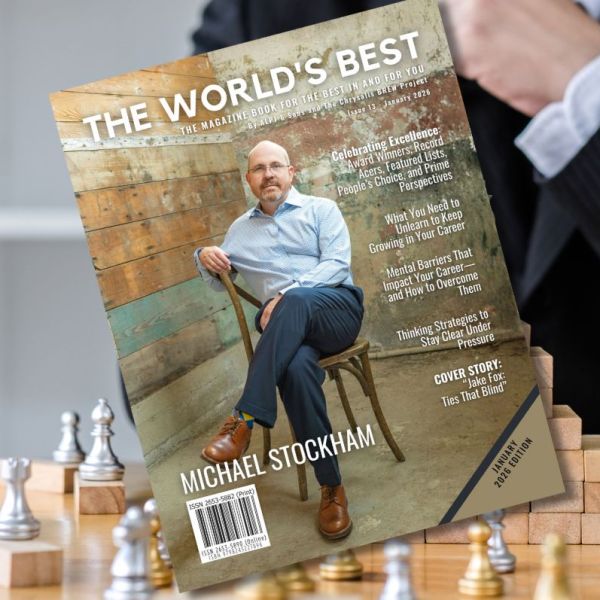


















Print and Digital Magazine



Don’t just read about greatness. Own it!

About Us
The World’s Best Magazine is a print and online publication that highlights the extraordinary. It is your passport to a universe where brilliance knows no bounds. Celebrating outstanding achievements in various fields and industries, we curate and showcase the exceptional, groundbreaking, and culturally significant. Our premier laurels, The World’s Best Awards, commend excellence through a unique process involving subject matter experts and a worldwide audience vote. Explore with us the pinnacle of human achievement and its intersection with diversity, innovation, creativity, and sustainability.
We recognise and honour the Traditional Owners of the land upon which our main office is situated. We extend our deepest respects to Elders past, present, and emerging. We celebrate the stories, culture, and traditions of Aboriginal and Torres Strait Islander Elders from all communities who also reside and work on this land.
Disclaimer: The World’s Best does not provide any form of professional advice. All views and opinions expressed in each post are the contributor’s own. Whereas we implement editorial policies and aim for content accuracy, the details shared on our platforms are intended for informational purposes only. We recommend evaluating each third-party link or site independently, as we cannot be held responsible for any results from their use. In all cases and with no exceptions, you are expected to conduct your own research and seek professional assistance as necessary prior to making any financial, medical, personal, business, or life-changing decisions arising from any content published on this site. All brands and trademarks mentioned belong to their respective owners. Your continued use of our site means you agree with all of these and our other site policies, terms, and conditions. For more details, please refer to the links below.
About | Advertise | Awards | Blogs | Contact | Disclaimer | Submissions | Subscribe | Privacy | Publications | Terms | Winners
The World’s Best: A Magazine That’s All About What’s Great | theworldsbestmagazine.com | Copyright ⓒ 2022-2026
Let’s connect
Discover more from The World's Best
Subscribe to get the latest posts sent to your email.

 The World's Best