
Any high-performance journey may encounter setbacks, but how we handle them can influence the course of events. Studies suggest the body stores stress long after the occurrence, and neuroscience shows that emotional pain activates the same brain regions as physical injuries. Lou Holtz once observed, “The way you carry your burden is what breaks you down, not the weight itself.” Recovery takes more than just mental toughness, whether it’s from a missed goal, an injury that ends your season, or an incident that makes you doubt yourself. Professionals examine how emotional processing, disciplined routines, and physical awareness might aid in the internal rebuilding of drive in this gathering of experts.
Content Advisory: This article discusses topics such as emotional regulation, trauma, stress, relapse, and therapeutic practices in performance contexts. The contributors share professional insights and anonymised case experiences, which are not intended as medical or clinical advice. Readers seeking personal support are encouraged to consult a qualified healthcare professional.
Reset Rituals Break Stress Cycle for Elite Athletes
As a trauma therapist specializing in EMDR with athletes and performers, I’ve seen one habit that separates consistent performers from talented ones: their ability to process and release performance mistakes immediately instead of carrying them forward.
The most successful athletes I work with have developed what I call “reset rituals” – specific physical movements they do after errors that help their nervous system return to baseline. One client, a professional pitcher, would do three specific shoulder rolls and deep breaths after wild pitches. This prevented his autonomic nervous system from staying in fight-or-flight mode, which would have affected his next throw.
Talented players often rely on their skills to overcome mental noise, but consistent performers actively clear their emotional slate between plays. They understand that unprocessed stress from one mistake gets stored in their muscles and affects their next performance. I’ve measured this through tracking heart rate variability – athletes who use reset techniques show 40% better stress recovery between high-pressure moments.
The key is making it physical, not just mental. Pure positive thinking doesn’t work because trauma and stress live in the body. The reset has to involve bilateral movement – something that engages both sides of the brain to actually process and release the stress response.
Linda Kocieniewski, Psychotherapist, Linda Kocieniewski Therapy
——————————————-
Emotional Accountability After Failure Drives Lasting Success
As someone who’s coached hundreds through addiction recovery and built The Freedom Room from the ground up, I’ve seen this pattern everywhere: **the overlooked habit is emotional accountability during setbacks**.
Most talented people I work with can handle success beautifully. But when they relapse or face major obstacles, they disappear, make excuses, or blame external factors. The consistent performers do the opposite—they show up immediately after failure and take full ownership.
I had a client who was brilliant at staying sober for months but would vanish after each relapse. We worked on one simple rule: call within 24 hours of any slip, no matter how ashamed he felt. After implementing this, his sober streaks went from 3-4 months to over 18 months because he stopped letting shame compound his mistakes.
The pattern applies everywhere. In my accounting days before recovery, I watched colleagues either hide their errors or immediately address them with solutions. Guess which ones got promoted? Talent gets you noticed, but how you handle your worst moments determines who trusts you with bigger responsibilities.
Rachel Acres, Director, The Freedom Room
——————————————-
Micro-Recovery Rituals Sustain Peak Performance All Day
As the Academy Therapist for Houston Ballet and someone who’s worked with elite athletes for over a decade, I’ve noticed one habit that separates consistent performers from purely talented ones: **they practice micro-recovery rituals between high-pressure moments**.
The overlooked routine is what I call “reset breathing” – a specific 7-second inhale, 11-second exhale pattern that dancers and athletes use between combinations, routines, or plays. I teach this to my Houston Ballet dancers, and they use it between barre exercises or before entering for variations. It’s not meditation or long mental breaks – it’s a 30-second physiological reset that keeps their nervous system regulated throughout intense training.
One of my professional dancer clients was struggling with consistency during long rehearsals. After implementing this micro-recovery habit, she went from having 2-3 “crash moments” per rehearsal where her technique would fall apart, to maintaining steady performance for 3-hour sessions. The difference wasn’t her talent level – it was that she stopped accumulating stress and anxiety throughout the day.
Most athletes focus on big recovery strategies like sleep and nutrition, but champions understand that managing their nervous system in real-time during performance is what keeps them sharp when it matters most. The talented ones burn through their mental resources in the first hour; the consistent ones preserve and restore them continuously.
Kelsey Fyffe, Owner & Founder, Live Mindfully Psychotherapy
——————————————-
Member Mentality Beats Raw Talent in Boxing
As National Head Coach for Legends Boxing with over two years leading transformative gym growth, I’ve trained thousands of people and coached fighters through actual bouts. The one habit that separates consistent performers from purely talented ones isn’t what most expect – it’s their willingness to stay in “member mentality.”
I teach all my coaches that the first part of their title is “member” – they must always see themselves as students first. The fighters who consistently improve are the ones asking “what’s the most I can learn today?” rather than relying on natural ability. I’ve watched naturally gifted athletes plateau because they stopped being coachable, while less talented fighters who maintained beginner’s mindset continued progressing.
This showed up dramatically in our training camps. The athletes who treated every sparring session like a learning opportunity – even after getting hit hard – were the ones who could execute game plans under pressure. The purely talented ones who thought they’d figured it out would revert to wild haymakers when adrenaline hit.
What makes this powerful is that it’s completely controllable. While talent is fixed, curiosity and coachability are daily choices that compound over time.
Robby Welch, National Head Coach, Legends Boxing
——————————————-
Preparation Rituals Keep Top Athletes in the Game
I’ve worked with everyone from Spartans to Professional Skiers to Ninja Warriors, and the one habit that separates consistent performers isn’t what you’d expect—it’s their approach to injury prevention and recovery preparation.
The standout athletes I’ve observed don’t just train hard; they obsessively prepare their bodies for the specific stresses they’ll face. I’ve watched a legendary ice climber spend 15 minutes taping his hands before every session, not because he was injured, but because he knew exactly where friction and pressure would hit. Meanwhile, naturally gifted climbers would skip this step and end up sidelined with preventable injuries.
The consistent performers treat their preparation rituals as non-negotiable as their actual training. They know that being available to perform beats being the most talented person on the bench. I’ve seen this pattern across every sport—the athletes who stay in the game longest aren’t always the most gifted, but they’re the ones who never skip the boring stuff that keeps them healthy.
What separates them is understanding that consistency requires availability, and availability requires preparation that talented players often think they can skip.
Josh Key, Inside Sales Specialist, Shield Health & Fitness
Have Your Say
- How do you reconnect with your motivation?
- What has helped you recover after a major setback?
- Do you notice physical signs of stress after failure?
Alignment with the UN SDGs
- 🧠 Supports mental health and wellbeing through recovery strategies (SDG 3)
- 📖 Encourages lifelong learning and emotional resilience (SDG 4)
- 🧍♂️ Promotes inclusive approaches to individual development (SDG 10)
Note: The views and opinions expressed in the content provided on this page are those of the individual authors and do not necessarily reflect the official policy or position of any organizations mentioned. The information provided is for educational and informational purposes only and should not be interpreted as professional advice. Readers should consult with relevant experts or professionals for guidance specific to their circumstances. The examples used are for illustrative purposes and results may vary depending on various factors. Any external links provided are for convenience, and we do not endorse or take responsibility for the content, products, or services available through these links.
⭐⭐⭐⭐⭐
Related

Introducing Perspectives from the Page: The World’s Best Magazine Issue 14 (April 2026 Edition)
Here’s to announce the launch of our latest magazine release, Issue 14 (April 2026 Edition), with the theme Perspectives from the Page—a collection of conversations that brings together award-winning authors, poets, and thought leaders from across disciplines.

The Greatest Authors of All Time—and Why
Which authors quietly shape how we think, decide, and lead? Explore this expert roundup to see how literature continues to guide insight, creativity, and personal growth in everyday life.

Verses That Transform Leadership
What poem or line quietly changes how you face big decisions or challenges? Explore this expert roundup to see how literary insights guide real-life choices and personal resilience.

Written Works That Shaped Thinking
What single insight can quietly reshape how you approach challenges, relationships, or career decisions? Explore this expert roundup to see how reflective reading can transform everyday thinking and choices.
Something went wrong. Please refresh the page and/or try again.
Other Highlights

Looking for something?
Type in your keyword(s) below and click the “Search” button.
Helpful Shortcuts
More Stories





























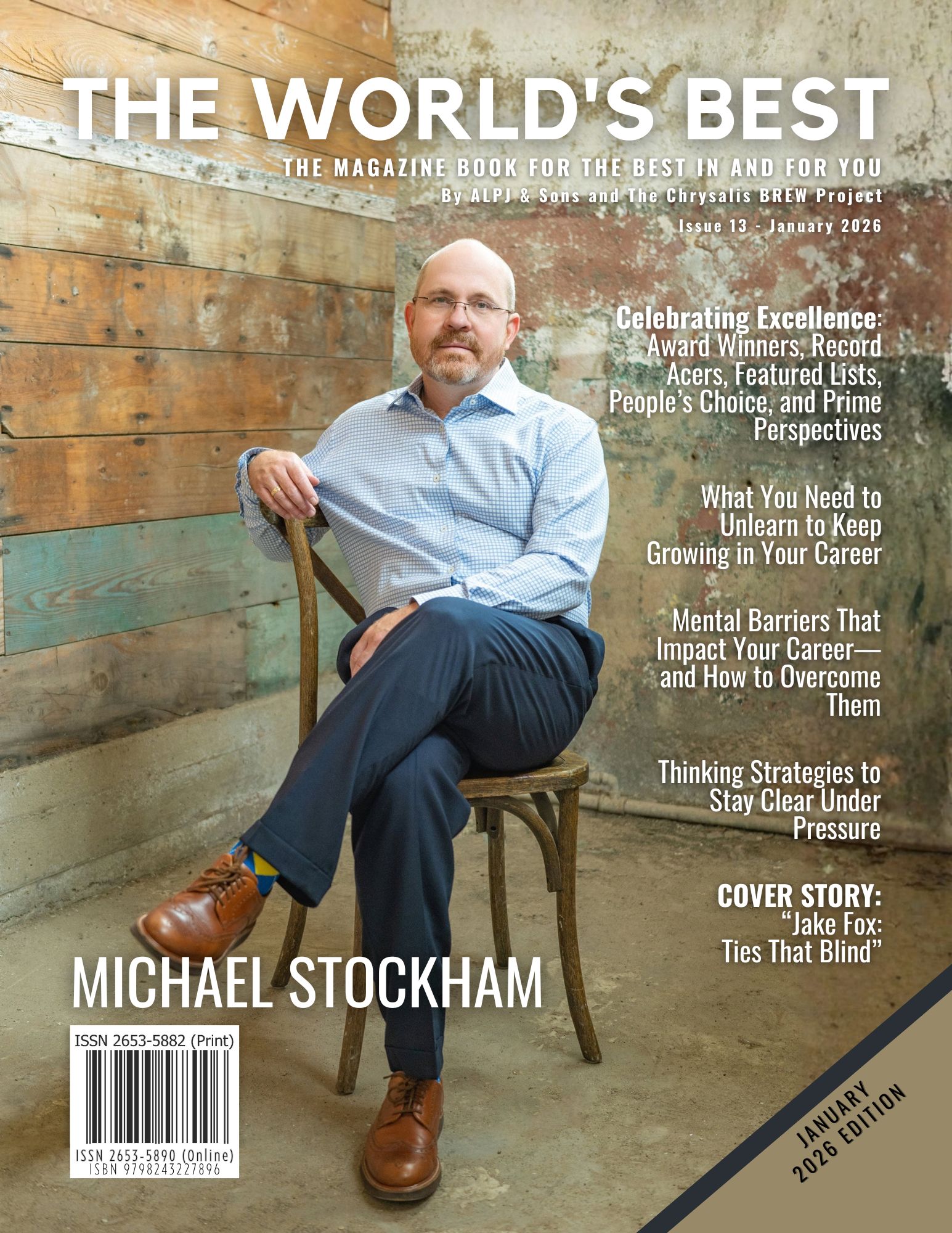
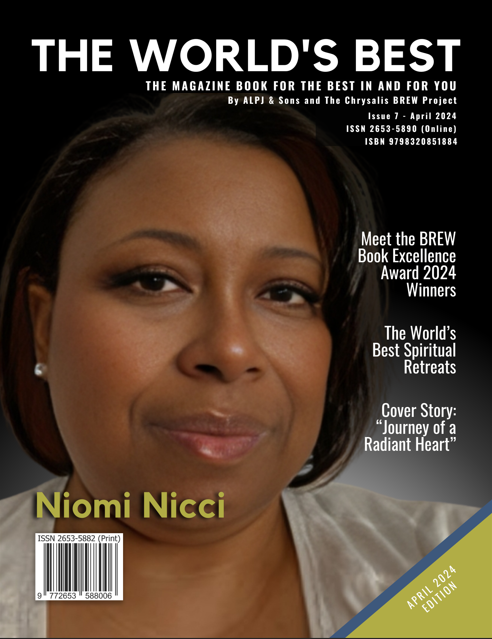
Print and Digital Magazine












Don’t just read about greatness. Own it!

About Us
The World’s Best Magazine is a print and online publication that highlights the extraordinary. It is your passport to a universe where brilliance knows no bounds. Celebrating outstanding achievements in various fields and industries, we curate and showcase the exceptional, groundbreaking, and culturally significant. Our premier laurels, The World’s Best Awards, commend excellence through a unique process involving subject matter experts and a worldwide audience vote. Explore with us the pinnacle of human achievement and its intersection with diversity, innovation, creativity, and sustainability.
We recognise and honour the Traditional Owners of the land upon which our main office is situated. We extend our deepest respects to Elders past, present, and emerging. We celebrate the stories, culture, and traditions of Aboriginal and Torres Strait Islander Elders from all communities who also reside and work on this land.
Disclaimer: The World’s Best does not provide any form of professional advice. All views and opinions expressed in each post are the contributor’s own. Whereas we implement editorial policies and aim for content accuracy, the details shared on our platforms are intended for informational purposes only. We recommend evaluating each third-party link or site independently, as we cannot be held responsible for any results from their use. In all cases and with no exceptions, you are expected to conduct your own research and seek professional assistance as necessary prior to making any financial, medical, personal, business, or life-changing decisions arising from any content published on this site. All brands and trademarks mentioned belong to their respective owners. Your continued use of our site means you agree with all of these and our other site policies, terms, and conditions. For more details, please refer to the links below.
About | Advertise | Awards | Blogs | Contact | Disclaimer | Submissions | Subscribe | Privacy | Publications | Terms | Winners
The World’s Best: A Magazine That’s All About What’s Great | theworldsbestmagazine.com | Copyright ⓒ 2022-2026
Let’s connect
Discover more from The World's Best
Subscribe to get the latest posts sent to your email.

 The World's Best
Very interesting read.
LikeLike