
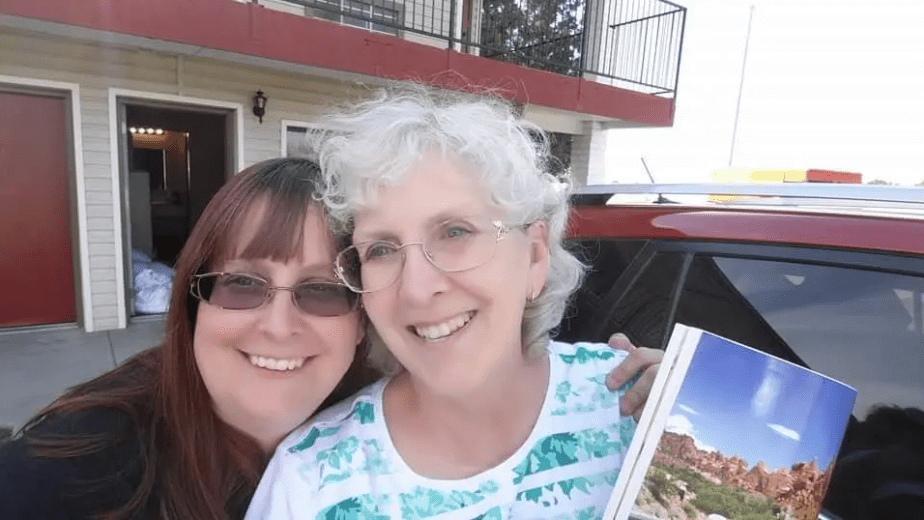
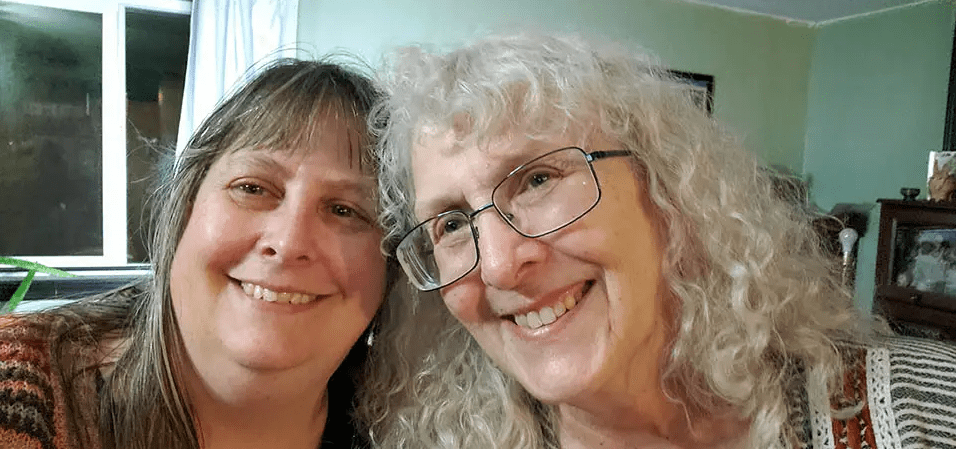
Thank you both for joining us today. To start, could you share a bit about your journey together and what inspired you to create What Mommy Doesn’t See as a collaborative project between mother and daughter?
Karen: From an early age, Kassy would draw and tell stories with her siblings. As a young mother, I returned to school and brought what I learned home to try. With work, children, and extra jobs I didn’t have much time or energy, but I could find a minute or two to write a poem. What Mommy Doesn’t See was originally titled Kassy’s Poem. That brief poem has been important to her and is an ongoing reminder of the importance I place on her even when everything else seems to lack magic.
Today, I work as a Dean for William Howard Taft University. I have multiple master’s degrees and two doctorates, all earned as life rushed by. I have been fortunate to always have jobs that challenged me—but none so much as my favorite job, that of mother.
Kassy: When I was little, my mom sent me out with my red wagon, a paintbrush, old copy paper (printed on one side), a pan of watercolors, and a mason jar of water. I sold custom pictures door to door for a few pennies. I think I believed I could be an illustrator because nobody ever told me I couldn’t, and she encouraged me to try.
My husband pushed me to attend Hollins University, where my mother sent me a copy of Kassy’s Poem. I knew I wanted to use it to create a picture. That picture, which was eventually used as the cover for What Mommy Doesn’t See, won a Margaret Kates Award at the Francelia Butler Children’s Lit. Conference and sparked my desire to use it to create a full book. It was a heart project for me right from the start.
I had a book dummy of What Mommy Doesn’t See reviewed at least three times. Each time they told me I shouldn’t produce it—it broke too many rules. The first problem was that the mother is speaking. I couldn’t seem to explain that the child was having the adventure in the pictures. Even with my thumbnails and the dummy, they didn’t think it would work. What I wanted to do just isn’t how it is normally done.
I live with my family among the dragons and fairies in Florence, Oregon. I am an Oregon Writing Project Teacher Consultant with a Master’s Certification in Children’s Book Illustration, a Master’s in Teaching, and a Master of Fine Arts in Children’s Book Writing and Illustration. I am the multilingual learners teacher for Siuslaw Elementary School and I teach art clubs. In addition, I own Dragon Art Studios, an educational mobile art studio.
My family, students, critique partners, and an active Patreon following keep me inspired. I am working on illustrating my next book and encouraging Mom to write the sequel for What Mommy Doesn’t See. I can already see all the pictures—it just needs her words. Yes, I know this is backwards, asking the author to write words to go with the pictures, but breaking the rules worked for us the first time.
How did you feel when you heard the news about your accolades, and what does the recognition mean to you both personally and creatively?
Karen: I was thrilled, especially for Kassy. She has worked so hard. I have begun to pull my poetry together to publish more in the future. Receiving the award leads me to believe I might just be able to write something worthwhile again!
Kassy: The award is validation that I made the right choice in producing this book even after experts told me not to. It is also proof of what I have been telling my mother all along about her writing.
Karen, you’ve raised nine children and fostered many others, pursued multiple degrees, and now serve as a Dean. How have these life chapters influenced the storytelling voice behind this book?
Karen: My children—real, step, foster, and adopted—have been the most significant influence on my writing. My storytelling voice now is much the same as it was 50+ years ago, reflecting the emotions and occurrences of motherhood. To support my children as a single mother, I took many jobs that I didn’t know I could do until I did them. In that regard, make-believe has been a constant in my life. Although I also write technical and training materials, that is what I do, not who I am. As a Dean for William Howard Taft University, I continue to be involved in the lives of people who are learning and growing, which helps me to continue to learn and grow too.
Kassy, as the illustrator, your visuals truly bring the world of the book to life. What inspired the whimsical and layered style of the illustrations, and how did the process evolve from your initial sketches to the final artwork?
Kassy: This book truly is a heart project. The minute I started the first picture I knew what should be on each page. It was almost fully formed in my head from the start, but as I drew more images they layered themselves into my vision on top of my original ideas. Hiding more subplots and characters into the pages became a game. People even made suggestions about other creatures they wanted to see. There are several mini narratives hidden in the book waiting to be discovered. The monkey, the stuffed dragon, the armadillo, Bigfoot, and several other creatures have little mini stories of their own spread across several pages.
I want people to see something new every time they open the book. I want them to notice that the maps are different, that the creatures change from page to page, and to find where I hid the author’s dog. In the first edition, I have even printed extra content under the book jacket. Readers can find pictures of the original thumbnails and pictures that show how the pictures were created. I am classically trained, so the original pictures are done with a pencil on my drafting table. All of the shading is done with a cheap mechanical pencil. My favorite tool is a nano zero eraser. I own fancier tools, but I always revert back to the basics.
What message were you hoping to convey about the relationship between adults and children when it comes to imagination and seeing the world through each other’s eyes?
Karen: I believe our book has two messages. The first is that the relationship between a mother and her child is miraculous. Second, this relationship is reciprocal; adults can learn from their children just as children learn from adults. In our book, the mother pulls the wagon loaded with necessities around the park, ignoring what is in plain sight for the child. When we are with our child, they can remind us that the world is magical!
Kassy: I agree. I also want to point out that the mother is always right there with the child. She may be missing the fantasy, but she is involved in setting up the fun. She makes sure they are both wearing helmets, but she does ride down the hill in the wagon. She is the reason they are at the park in the first place, making sure the child gets to experience it all.
What was it like to work together on this project, and were there any surprises or special moments during the creative process?
Karen: I am constantly amazed by how wonderful my children are as adults and surprised by their abilities! Working with Kassy to create something lasting and learn from her has been fun.
Kassy: I think I was mostly thankful that my mother trusted me with the illustrations. She didn’t micromanage what I drew. She told her story with the words but let me tell mine with the pictures. She was delighted when I added her dog into one of the scenes and laughed when I didn’t let her have the last word. (Another rule that I broke is that the story continues three pages past the author’s words.)
Your story encourages curiosity, emotional connection, and creative thinking in young readers. How intentional was this, and do you see your work contributing to broader goals like promoting emotional intelligence or lifelong learning in children?
Karen: Kassy’s illustrations encourage children to be observant while offering them whimsy and fun. In addition to prompting children to continue learning, our book also prompts adults to be receptive to seeing things from their child’s eyes.
Kassy: I was very intentional in adding layers of wordless stories into the book. A child should be able to hear the story once and then be able to “read” it back to you. They may not be able to read it word for word, but they can tell you the story. In addition, they should be able to tell you the story of the sub-characters without ever having heard any words about them. In this way, they are constantly innovating and creating their own stories.
My mother encouraged us as children to write and create. It wasn’t something she forced upon us but something she quietly encouraged. Stockings and Easter baskets had art supplies and precious journals. Old copy paper came home from work. It was printed on one side, but the other side was perfect for crayons and paint. I think the main thing she did was take time out of her day to look at or listen to what we had created. I hope that people will read the book to their children, have the children read it back to them, encourage them to “read” the parts without words too, and write those stories down. Children have the best imaginations.
Karen, you’ve had a remarkable journey in education. Could you share how your academic and professional background shaped the narrative approach of the book, even though it’s a work of fiction?
Karen: I began training to be a K–12 teacher in my early twenties. My master’s program was offered by a small college where my instructors had the time to work with us individually. An early course had us writing poetry; fifty years later, I still do. Kassy’s Poem was written during that period. Combining the thrill of being a mother and the newfound skills as a writer of poetry created an amazing time of reflection and voice.
And Kassy, how did your own personal story or artistic influences shape your vision for the illustrations?
Kassy: My family always encouraged me, but my husband pushing me into the master’s program at Hollins University was a game changer. The incredible Ruth Sanderson taught me a technique she uses to layer the images, change the pencil lines to sepia (which is warmer and more inviting), and then color under the lines. She does hers in oils and they are gorgeous. I changed the process a little at the end, but the technique for this book is one I learned at Hollins from her.
Lauren Mills worked with me on my pencil work. I still hear her telling me to sharpen my pencil, which is one of the reasons why I use a cheap mechanical pencil—stopping to sharpen it wasn’t a thing. Ashley Wolff, Elizabeth Dulemba, Mark Braught, and countless other instructors worked with me on page turns, color, layout, book dummies, composition, and all the other parts of illustrating. Getting to study illustration with my illustration heroes was such a blessing.
From hidden creatures to lyrical storytelling, this book celebrates the little wonders of childhood. Do you see your work aligning with global values?
Karen: The relationship between a mother and child is the foundation for learning, good health, and well-being. I believe our book demonstrates that we all have things to learn and illustrates that love is hugely important to our well-being.
Kassy: This book encourages children to become innovators and create their own stories. It also depicts a child having an adventure with the parent right there. Children who have positive support and attention from even one adult do better in all areas of their education and life. There are hundreds of studies to prove this.
This book shows one parent spending time with their child on a picnic. The parent is attentive and encouraging. The book also purposely shows something that any parent can do. Even the stuffed dragon is a simple shape that can be easily recreated. The characters are on a picnic where they are looking for unicorns. Recreating this adventure doesn’t take a lot of money, it just takes a park, your imagination, and your time.
What advice would you give to other families—whether creators, educators, or simply parents and children—who want to preserve imagination, storytelling, and connection in their everyday lives?
Karen: My advice is to write what you can, when you can, about the things that matter to you. Don’t wait until your words are perfect; carry a little notebook around to jot down ideas and notes any time you have a minute.
Kassy: My advice is to never tell your children they can’t be an author or creator. Authors and illustrators can be any age. As a teacher, I don’t know when writing became a chore. Change that mindset. We get to write and create; we don’t have to. Let children know their stories are important and you can’t wait to be part of their audience.
Also, demonstrate enjoying the process. If your children see you writing, reading, or creating and they have materials available, they will want to try it too.
⭐⭐⭐⭐⭐
Links
- Know more about the BREW Book, Blog, and Poetry Awards here
Share Your Insights
We’d love to hear your thoughts on Karen Ledbetter and Kassy Keppol’s story. Share your perspective in the comments:
- How do you nurture creativity in your family or community?
- What everyday moments inspire you to tell a story?
- Have you ever collaborated on a project with a loved one?
Alignment with the UN SDGs
- Supports quality education through storytelling and creativity (SDG 4)
- Promotes well-being by highlighting positive parent-child relationships (SDG 3)
Other Highlights

Looking for something?
Type in your keyword(s) below and click the “Search” button.
Helpful Shortcuts
More Stories









Print and Digital Magazine

Don’t just read about greatness. Own it!

About Us
The World’s Best Magazine is a print and online publication that highlights the extraordinary. It is your passport to a universe where brilliance knows no bounds. Celebrating outstanding achievements in various fields and industries, we curate and showcase the exceptional, groundbreaking, and culturally significant. Our premier laurels, The World’s Best Awards, commend excellence through a unique process involving subject matter experts and a worldwide audience vote. Explore with us the pinnacle of human achievement and its intersection with diversity, innovation, creativity, and sustainability.
We recognise and honour the Traditional Owners of the land upon which our main office is situated. We extend our deepest respects to Elders past, present, and emerging. We celebrate the stories, culture, and traditions of Aboriginal and Torres Strait Islander Elders from all communities who also reside and work on this land.
Disclaimer: The World’s Best does not provide any form of professional advice. All views and opinions expressed in each post are the contributor’s own. Whereas we implement editorial policies and aim for content accuracy, the details shared on our platforms are intended for informational purposes only. We recommend evaluating each third-party link or site independently, as we cannot be held responsible for any results from their use. In all cases and with no exceptions, you are expected to conduct your own research and seek professional assistance as necessary prior to making any financial, medical, personal, business, or life-changing decisions arising from any content published on this site. All brands and trademarks mentioned belong to their respective owners. Your continued use of our site means you agree with all of these and our other site policies, terms, and conditions. For more details, please refer to the links below.
About | Advertise | Awards | Blogs | Contact | Disclaimer | Submissions | Subscribe | Privacy | Publications | Terms | Winners
The World’s Best: A Magazine That’s All About What’s Great | theworldsbestmagazine.com | Copyright ⓒ 2022-2026
Let’s connect
Discover more from The World's Best
Subscribe to get the latest posts sent to your email.

 The World's Best
One thought on “Karen Ledbetter and Kassy Keppol on Storytelling, Family, and Finding Magic in the Everyday”