
“You can’t aspire to be what you don’t know exists.”
-Tiffany Obeng
Tiffany, thank you for being with us. To start, could you share your story in your own words — what you do, what drives your work, and how you see the intersection of law, literacy, and community?
I’m an attorney, a children’s book author, and the founder of Sugar Cookie Books. At heart, I’m passionate about creating access — access to careers, access to literacy, and access to belonging. In my role as a director of equal opportunity, I work to build environments where people can thrive. As an author and publisher, I write and curate books that introduce young readers to careers, ideas, and worlds beyond their immediate experience. To me, the threads of law, literacy, and community are deeply connected. The law is about access and equity. Literacy is the foundation upon which that access is built. Together, they open doors, build understanding, and create a stronger, more inclusive society.
You’ve been recognized as an American Legacy Book Award Finalist for Andrew Learns about Lawyers. Can you walk us through the moment you received that recognition — and what it meant to you personally and professionally?
When I learned about the award, it felt like an affirmation of the work I’ve been doing — blending storytelling and representation in a way that speaks to both children and the adults who guide them. To be recognized for a book that aims to open a child’s imagination and expand their understanding of possibility meant a lot to me. It reaffirmed my belief that stories can have a profound impact, and it motivated me to continue creating books that inspire belonging and purpose.
From courtrooms to classrooms, your work seems to bridge two very different worlds. What first inspired you to create children’s books that introduce young readers to diverse careers, and how did your legal background influence that path?
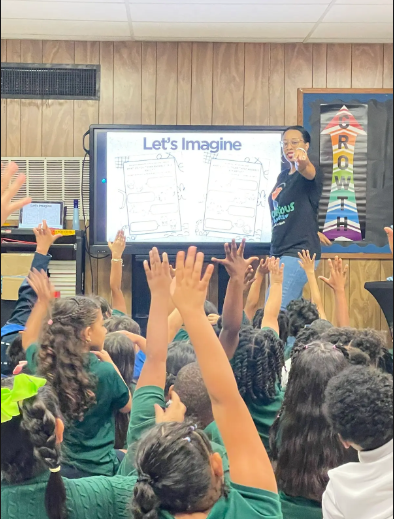
The idea came from my own lived experience. I didn’t meet a lawyer in person until I was in the 11th grade — far too late for a pivotal career influence. I wanted to change that for the next generation. As one of five minority female students in my law school class and learning how underrepresented minority and female lawyers are in the profession overall, I knew that access and exposure were key. Creating career-focused books became a natural extension of that work. The stories I write plant seeds early, making abstract ideas about careers concrete, relatable, and attainable for children from all walks of life.
As a director of equal opportunity and founder of a publishing platform, you champion access and representation. In your view, what role does early exposure to career possibilities play in shaping inclusive future workforces?
Early exposure is pivotal. You can’t aspire to be what you don’t know exists, and too many children aren’t introduced to careers until much later in life. By giving them glimpses of a wide range of careers from an early age — and making sure those careers are represented by people who reflect their communities — we expand their sense of belonging and potential. This early awareness is foundational for shaping inclusive, resilient, and diverse future workforces.
Storytelling is central to both the legal profession and children’s books. How do you use narrative — whether in the law office or on the page — to foster understanding, representation, and change?
At its core, the law is about stories — about making sense of facts, capturing human experience, and seeking justice. In both the courtroom and the pages of a book, stories have the power to build empathy, illuminate overlooked perspectives, and create connections. In my books, I use storytelling to spotlight careers and highlight belonging. In my legal work, I help implement programs and strategies for achieving an equitable workforce, access, and opportunity. In both spaces, the goal is the same: to foster understanding and drive change.
Your work advocates for belonging and visibility in children’s media. How do you ensure that the stories you publish speak to a broad and diverse audience while staying true to each child’s unique experience?
My approach to storytelling is grounded in universal themes that transcend race, gender, nationality, religion, etc. While my books may highlight specific cultural aspects, they are centered around experiences — like friendship, perseverance, or self-discovery — that resonate across boundaries. Focusing on universal topics allows every child to find a connection to the story and character. The goal is to craft stories that foster understanding, spark curiosity, and cultivate empathy for all readers, regardless of where they come from.
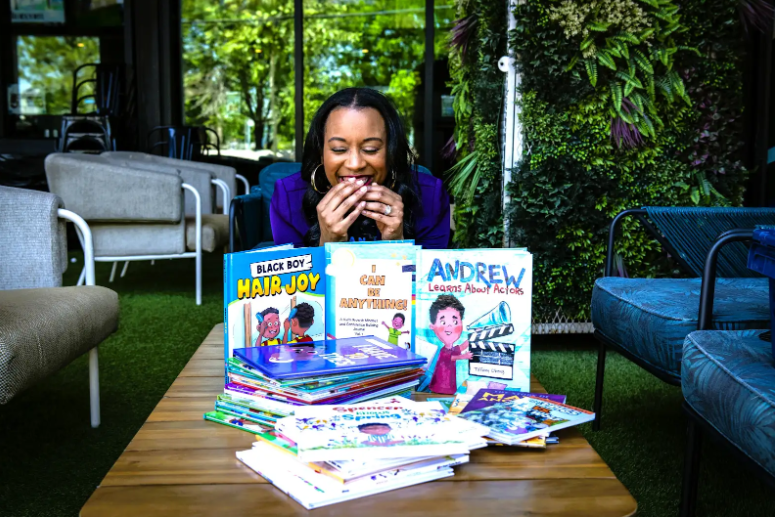
Literacy is often seen as a basic skill — but you treat it as a foundation for empowerment and workforce development. How do you connect literacy to larger outcomes like economic mobility and community resilience?
Literacy is so much more than reading words on a page. Early exposure to literacy and diverse stories allows young people to gain access to ideas, envision new futures, and build the confidence to pursue them. Literacy is the bedrock upon which economic mobility rests. When we expose children to diverse careers and give them the tools to understand and imagine those roles, we’re planting seeds for more resilient communities. Strong literacy means more pathways to opportunity, and more opportunity means stronger, more hopeful communities.
It’s vital to balance dreaming big with the tools and context that make those dreams attainable.
In my books, I highlight the wonder of careers while providing glimpses of the hard work and character required to achieve them. This approach allows children from underrepresented communities to imagine themselves in roles that may seem out of reach, while understanding the steps required to get there. Making aspirations concrete gives kids both the vision and the roadmap to build their future.
In your efforts toward access and equity, have you found innovative ways to reach beyond the traditional publishing or legal spheres to engage schools, families, or policy spaces? Could you share a moment where that cross-sector approach made a clear impact?
Absolutely. As an independent publisher, I’ve had the freedom to shape my stories and connect directly with schools, bar associations, families, and communities — building tailored literacy and career exposure initiatives. State bar associations purchase copies of Andrew Learns about Lawyers to use as part of their career day programming, Law Day programming, and other literacy initiatives. Same with The Three Pigs vs. The Wolf for mock trial simulation. Engineering organizations use Andrew Learns about Engineers as well, as tools for outreach and early exposure. Schools stock my books and the I Can Be Anything! interactive journal at their independent workstations. All of this is a reminder that when we step outside traditional silos, we can create a deeper and more lasting impact.
Looking ahead, what’s next for you in both your legal and literary work? And finally, what advice would you give to professionals — especially lawyers — who want to use their skills to drive social impact beyond their conventional roles?
Looking forward, I’m focusing on deepening the connections between my legal and literary work. I’m continuing to build Sugar Cookie Books — creating stories, activity guides, and resources that support literacy, representation, and early career exploration, and partnering with schools, organizations, and bar associations to embed these ideas within their communities.
For lawyers — or any professionals — who want to drive social impact beyond their traditional roles, I’d say this: Reflect on the moments and stories that shaped your own path, and ask how you can create those moments for others. Volunteer, teach, write, mentor, advocate, or help fund a program that inspires future generations. Our training gives us a unique lens for seeing and solving problems, and when we apply that lens intentionally, we have the power to create a legacy that goes far beyond any one case, title, or role.
If you were to write your bio in your own words, what would you say?
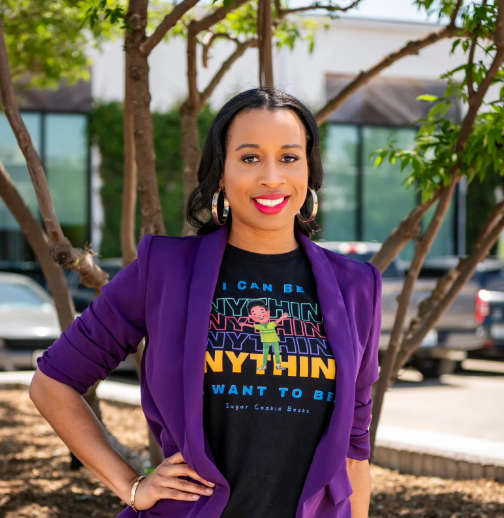
I’m Tiffany Obeng, an attorney, author, and founder of Sugar Cookie Books. I was born and raised in and around Houston, TX. After earning my law degree and serving in roles ranging from legal to equal opportunity, I found myself grappling with a pivotal realization: too many children don’t have access to books that invite them to imagine, explore, and envision themselves in a range of careers. So, I set out to create those stories myself.
Today, I balance a dual calling — serving as a Director of Equal Opportunity, where I advocate for access, equity, and belonging, and pursuing my passion for publishing as the founder of Sugar Cookie Books. Through picture books like Andrew Learns about Lawyers and others in the “Andrew Learns about” series, I introduce children to careers and ideas that can shape their future. I hope this work will have a profound impact on literacy and workforce development.
In 2024, I was honored to be recognized as an American Legacy Book Award Finalist for Andrew Learns about Lawyers, a milestone that reaffirmed my belief in the impact of storytelling. Since then, I’ve worked with state bar associations, schools, and other community organizations to support their literacy initiatives and career exposure programming, making sure every child has a chance to “see it to be it” long before choosing their path.
Through both my legal and literary work, I strive to foster belonging, equity, and access — reminding future generations that their stories matter, their ideas matter, and their futures are worth nurturing.
I continue to write, speak, and collaborate with educators, families, and organizations to build literacy-rich spaces where all children can imagine themselves as future leaders and changemakers.
⭐⭐⭐⭐⭐
“Our training gives us a unique lens for seeing and solving problems, and when we apply that lens intentionally, we have the power to create a legacy that goes far beyond any one case, title, or role.”
-Tiffany Obeng
Link
Share Your Insights
What’s your take?
Join the conversation and share your thoughts in the comments:
- What early experiences shaped your view of career possibilities?
- How can storytelling influence access and opportunity?
- What role should professionals play in shaping the next generation’s future?
Alignment with the UN SDGs
- 📚 SDG 4: Quality Education – Promotes literacy and early career exposure
- ⚖️ SDG 10: Reduced Inequalities – Advocates for access and representation
- 👩⚖️ SDG 5: Gender Equality – Highlights inclusion in underrepresented professions
Other Highlights

Looking for something?
Type in your keyword(s) below and click the “Search” button.
Helpful Shortcuts
More Stories
















Print and Digital Magazine

Don’t just read about greatness. Own it!

About Us
The World’s Best Magazine is a print and online publication that highlights the extraordinary. It is your passport to a universe where brilliance knows no bounds. Celebrating outstanding achievements in various fields and industries, we curate and showcase the exceptional, groundbreaking, and culturally significant. Our premier laurels, The World’s Best Awards, commend excellence through a unique process involving subject matter experts and a worldwide audience vote. Explore with us the pinnacle of human achievement and its intersection with diversity, innovation, creativity, and sustainability.
We recognise and honour the Traditional Owners of the land upon which our main office is situated. We extend our deepest respects to Elders past, present, and emerging. We celebrate the stories, culture, and traditions of Aboriginal and Torres Strait Islander Elders from all communities who also reside and work on this land.
Disclaimer: The World’s Best does not provide any form of professional advice. All views and opinions expressed in each post are the contributor’s own. Whereas we implement editorial policies and aim for content accuracy, the details shared on our platforms are intended for informational purposes only. We recommend evaluating each third-party link or site independently, as we cannot be held responsible for any results from their use. In all cases and with no exceptions, you are expected to conduct your own research and seek professional assistance as necessary prior to making any financial, medical, personal, business, or life-changing decisions arising from any content published on this site. All brands and trademarks mentioned belong to their respective owners. Your continued use of our site means you agree with all of these and our other site policies, terms, and conditions. For more details, please refer to the links below.
About | Advertise | Awards | Blogs | Contact | Disclaimer | Submissions | Subscribe | Privacy | Publications | Terms | Winners
The World’s Best: A Magazine That’s All About What’s Great | theworldsbestmagazine.com | Copyright ⓒ 2022-2026
Let’s connect
Discover more from The World's Best
Subscribe to get the latest posts sent to your email.

 The World's Best
One thought on “Tiffany Obeng on Building Futures: Where Law Meets Literacy and Belonging”