
Although the reality of judicial systems displays complexity and nuance, justice is sometimes perceived as a simple ideal. In certain countries, according to reports, almost 80% of civil lawsuits are settled through discussion or settlement rather than going to trial. There are indications that the promise of justice in the law is largely dependent on an understanding of its human components and procedures, such as prosecutorial discretion, judicial boundaries, and the effects of trauma on memory. Beyond the theatrics of the courtroom, this roundup examines how justice actually works, exposing issues and fundamental realities.
Editor’s Note: This article discusses complex legal issues and systemic challenges that may be distressing for some readers. It is intended for informational purposes and should not substitute professional legal advice. If you are involved in legal matters, please consult a qualified attorney.
What They Don’t Tell You About Insurance Claims
The insurance company controls the claim process more than most people realize.
They aim to minimize payouts. They delay, deny, and discredit your injury claim; even when fault is clear. They train adjusters to find any reason to reduce what you receive. Waiting to get medical care gives them a reason to say you weren’t hurt. Posting on social media can be twisted to undermine your case. Any inconsistency in your account can become a tool against you.
You cannot file a lawsuit immediately. The system requires you to try to settle first. Insurers use this time to investigate and find ways to avoid payment. They request extensive medical records to blame your injury on past issues. They pressure you to record statements to catch mistakes. Most people face this without preparation and lose as a result.
Treat the claim process like a trial from day one. Keep records. Follow your doctor’s advice exactly. Avoid talking to the insurer without a lawyer’s guidance. Claims that succeed are built carefully and early.
Letting the insurance company control everything is like stepping into a fight with your opponent setting all the rules and picking the referee.
You need to protect yourself with knowledge and discipline. The legal system does not protect your rights unless you fight for them.

Justin Lovely, Owner, Lovely Law Firm Injury Lawyers
——————————————-
Family Courts Serve Children, Not Parental Vendettas
As a family law attorney and a working mom, I wish more people understood that family court is not designed to “punish” one parent or reward another; it’s built to serve the best interests of the child. Too often, clients enter the system expecting vindication or revenge, when in reality, the court’s goal is to stabilize families and ensure children thrive post-separation. This misunderstanding causes unnecessary conflict, legal costs, and emotional strain, especially for children. Recognizing the court’s child-centered focus helps everyone approach these deeply personal matters with more clarity, compassion, and long-term perspective.

Anna Blood, Founder and Managing Attorney, Blood Law PLLC
——————————————-
Prosecutor Choices Shape Legal Destinies
Most people don’t realize how much prosecutorial discretion shapes outcomes. Prosecutors decide which charges to file, what plea deals to offer, and when to go to trial. These choices can drastically affect a defendant’s future. Understanding this helps people see how vital it is to have strong legal representation and fair-minded prosecutors.

Scott Monroe, Founder and Criminal Defense Attorney, Monroe Law, P.A.
——————————————-
Judges Follow Law, Not Emotional Appeals
A big part of the legal system that’s misunderstood is the role of family court judges. People often think judges can—or will—do what feels fair emotionally. But they are bound by statutes and case law, not personal beliefs. That’s why it’s crucial to build a case that meets the legal standard, not just appeals to sympathy.

Joy Owenby, Founder and Family Law Attorney, Owenby Law, P.A.
——————————————-
Justice Demands Time, Not Speed
I wish more people understood that “speed” and “justice” don’t usually go together when it comes to the law. Good cases take time because of proof, expert review, and due process.
It’s essential because racing around can cause you to miss important facts or make hasty choices. I’ve seen clients get frustrated about delays only to get a much better result because we took our time and built the case right.
The court system maintains its integrity by exercising caution. And that care protects everyone, not just those in court.

Mark Hirsch, Co-founder and Personal Injury Attorney, Templer & Hirsch
——————————————-
Cases Win Before Court Even Begins
I wish more people understood how much work goes into building a case before it even reaches a courtroom. The public sees high-drama trials but not the months (or years) of investigation, negotiation, discovery, and pretrial hearings. This behind-the-scenes work is where justice is often secured or lost.

Ross Albers, Founder & CEO, Albers & Associates
——————————————-
Trauma Disrupts Memory, Challenges Justice System
One often misunderstood aspect of the system is how trauma impacts victims’ memories and behavior. People expect linear, perfect recall or immediate reporting, but trauma doesn’t work that way. This misunderstanding leads to skepticism and victim-blaming, especially in abuse cases. Educating juries and judges on this is crucial to achieving justice.

Alex Zalkin, Partner, The Zalkin Law Firm P.C.
——————————————-
Presumption of Innocence Protects Everyone
One part of the legal system I wish more non-lawyers understood is the presumption of innocence. People often assume that if someone has been charged, they must be guilty of something. But the presumption of innocence is a constitutional protection and the foundation of a fair trial. It matters to everyone because once we allow public opinion or media narratives to override due process, none of us are safe from being wrongly accused.

Chris Walsh, Criminal Defense Attorney, Walsh Law
——————————————-
Civil Cases Restore Lives, Not Bank Accounts
Something I wish more people understood is that civil cases are not about “getting rich quick”. They’re about making injured people whole—recovering medical costs, lost wages, and the ability to live life again. Insurance companies often paint victims as greedy, but most of my clients would trade every dollar to have their health back.

Loren Schwartz, Attorney, Rouda Feder Tietjen & McGuinn
——————————————-
Police and Prosecutor Discretion Predetermines Justice
Most people don’t understand how much discretion police and prosecutors hold; and how much that shapes the outcome before a case ever reaches court. The legal system isn’t automated. It’s human. That means bias, pressure, and priorities influence every decision from arrest to sentencing.
Police decide who to stop, who to search, and who to arrest. Prosecutors decide which charges to file and whether to offer a deal. None of those decisions require proof beyond a reasonable doubt. They’re based on judgment calls. And those calls carry serious consequences.
I’ve seen people charged with felonies when a misdemeanor would’ve been enough. I’ve seen teenagers charged as adults over minor drug cases. I’ve seen plea offers that force people to choose between freedom and a trial. None of those outcomes are written into law. They’re chosen. And they’re often based on politics, race, or pressure to clear cases fast.
This matters to you because once you or someone you care about is in the system, you’ll realize how fast decisions get made without your input. You don’t control the narrative. They do. And that narrative starts the moment the report is written; not when the trial begins.
If more people understood how much power prosecutors and police wield before a judge ever enters the picture, they’d ask tougher questions. They’d demand more accountability. And they’d think twice before assuming guilt based on a charge. The courtroom isn’t where the system starts. It’s where the damage shows.

Brian Joslyn, Owner, Joslyn Law Firm
——————————————-
Self-Representation Risks Justice Despite Constitutional Right
One part of the legal system I wish more non-lawyers understood is the reality of going pro se — representing yourself without an attorney. While it’s a constitutional right, many people underestimate how complex and unforgiving the legal process can be. Courts have strict rules, deadlines, and procedures that even seasoned attorneys spend years mastering.
Why does this matter to everyone? Because the growing number of people going pro se, especially in civil cases, often leads to delayed proceedings, procedural mistakes, and unjust outcomes — not due to the merits of the case, but simply because someone didn’t know how to navigate the system. The plaintiff or defendant that is pro se is held to the same set of standards as any other attorney in court that often has years of experience trying cases. These issues highlight a deeper access-to-justice issue. Understanding the risks of going pro se emphasizes the importance of legal representation and why expanding affordable legal services is critical for a truly fair justice system.

Anthony May, CMO, Need An Attorney
——————————————-
Injury Claims Require Expert Navigation
Regarding personal injury law, I wish more people understood just how complex and unforgiving the legal system is for accident victims, especially those trying to go it alone. There are loopholes, deadlines, and legal maneuvers most people have never heard of, but missing even one can destroy your case.
What matters most isn’t just filing a claim, it’s building a story that reflects the full weight of your injuries, your losses, and your life. That’s where real advocacy changes everything. Without the right support, too many people walk away with less than they deserve – not because they were wrong, but because they didn’t know the rules.

Justin Farahi, Founder, Farahi Law Firm
Have Your Say
- How can the system better support everyday people?
- Have you ever faced challenges navigating a legal claim?
- What surprised you most about how justice works?
Alignment with the UN SDGs
- SDG 16: Promotes justice, rule of law, and accountable legal institutions.
- SDG 10: Highlights legal inequities and discretion affecting marginalized groups.
- SDG 3: Addresses health justice in personal injury and trauma-informed care.
Note: The views and opinions expressed in the content provided on this page are those of the individual authors and do not necessarily reflect the official policy or position of any organizations mentioned. The information provided is for educational and informational purposes only and should not be interpreted as professional advice. Readers should consult with relevant experts or professionals for guidance specific to their circumstances. The examples used are for illustrative purposes and results may vary depending on various factors. Any external links provided are for convenience, and we do not endorse or take responsibility for the content, products, or services available through these links.
⭐⭐⭐⭐⭐
Related
Exploring Story, Place, and Imagination with Dust Kunkel
Ever wondered how a childhood across continents and rivers becomes the fuel for storytelling? Discover how Dust Kunkel’s life shaped his novel and worldview — read the full interview to explore it.
Continue reading Exploring Story, Place, and Imagination with Dust Kunkel

Imagining Humanity and Technology with Donald Firesmith
Can engineering precision and handcrafted magic wands coexist in one imagination? Discover how a futurist blends hard science fiction, AI insight, and human emotion—read the full interview to explore his journey.
Continue reading Imagining Humanity and Technology with Donald Firesmith
Charting Tomorrow’s Medicine: A Conversation with Dr Pietro Emanuele Garbelli
What happens when a doctor decides medicine needs a blueprint as much as a stethoscope? This interview explores that question—revealed through experience, ethics, and the future of care.
Continue reading Charting Tomorrow’s Medicine: A Conversation with Dr Pietro Emanuele Garbelli

Richard Scott Sacks on Travel, Language, and Writing Fiction from Global Encounters
Have you ever wondered how encountering global upheaval can shape a novel? This interview explores one writer’s real journeys and the questions that inspired his fiction—read on to discover how it unfolded.
Continue reading Richard Scott Sacks on Travel, Language, and Writing Fiction from Global Encounters
Something went wrong. Please refresh the page and/or try again.
Other Highlights

Looking for something?
Type in your keyword(s) below and click the “Search” button.
Helpful Shortcuts
More Stories

























Print and Digital Magazine
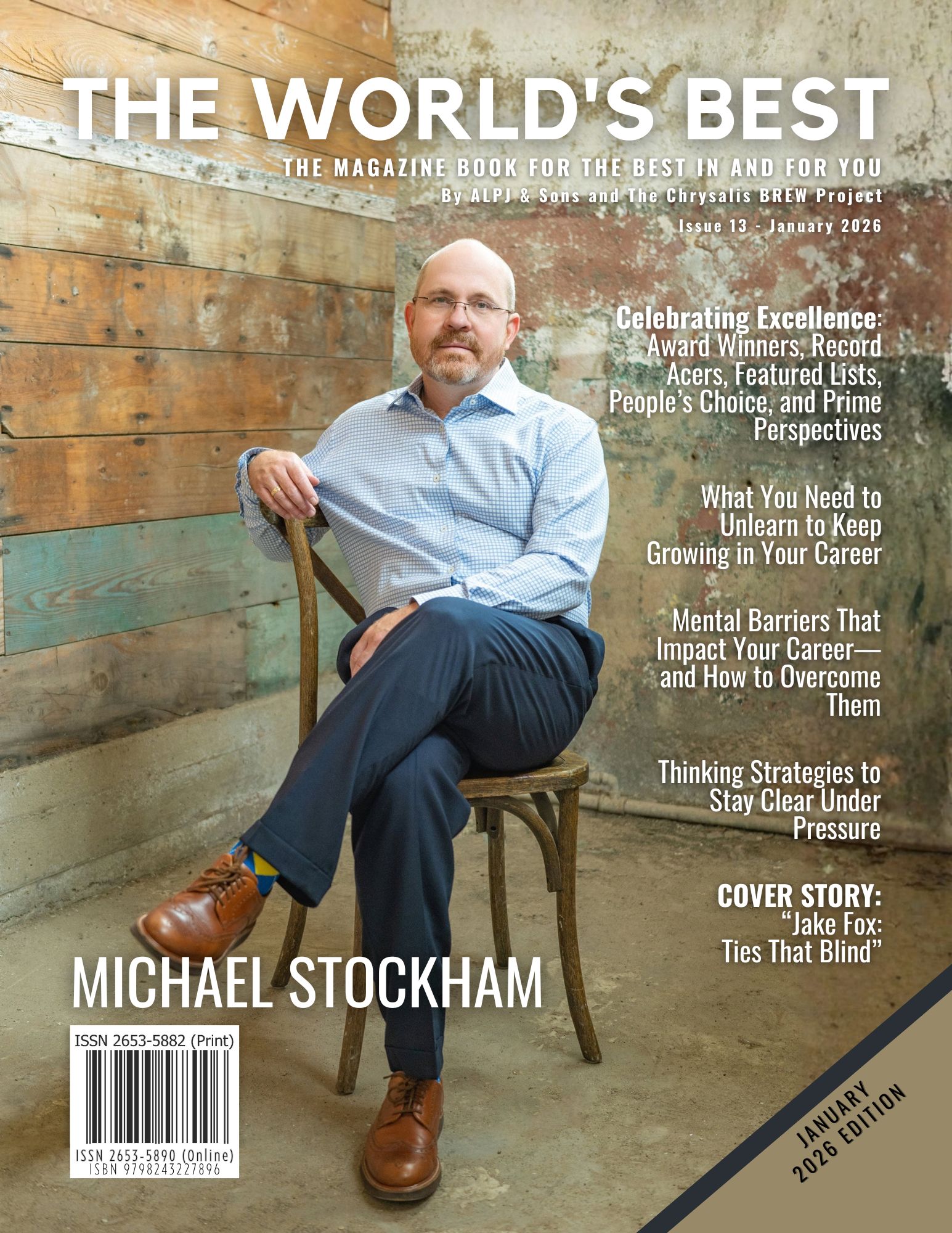


Don’t just read about greatness. Own it!

About Us
The World’s Best Magazine is a print and online publication that highlights the extraordinary. It is your passport to a universe where brilliance knows no bounds. Celebrating outstanding achievements in various fields and industries, we curate and showcase the exceptional, groundbreaking, and culturally significant. Our premier laurels, The World’s Best Awards, commend excellence through a unique process involving subject matter experts and a worldwide audience vote. Explore with us the pinnacle of human achievement and its intersection with diversity, innovation, creativity, and sustainability.
We recognise and honour the Traditional Owners of the land upon which our main office is situated. We extend our deepest respects to Elders past, present, and emerging. We celebrate the stories, culture, and traditions of Aboriginal and Torres Strait Islander Elders from all communities who also reside and work on this land.
Disclaimer: The World’s Best does not provide any form of professional advice. All views and opinions expressed in each post are the contributor’s own. Whereas we implement editorial policies and aim for content accuracy, the details shared on our platforms are intended for informational purposes only. We recommend evaluating each third-party link or site independently, as we cannot be held responsible for any results from their use. In all cases and with no exceptions, you are expected to conduct your own research and seek professional assistance as necessary prior to making any financial, medical, personal, business, or life-changing decisions arising from any content published on this site. All brands and trademarks mentioned belong to their respective owners. Your continued use of our site means you agree with all of these and our other site policies, terms, and conditions. For more details, please refer to the links below.
About | Advertise | Awards | Blogs | Contact | Disclaimer | Submissions | Subscribe | Privacy | Publications | Terms | Winners
The World’s Best: A Magazine That’s All About What’s Great | theworldsbestmagazine.com | Copyright ⓒ 2022-2026
Let’s connect
Discover more from The World's Best
Subscribe to get the latest posts sent to your email.

 The World's Best