
“We share our stories and hope that others will recognize our efforts.”
-Mike Darcy
Editor’s Note: This interview touches on themes of emotional resilience, animal abandonment, and real-world conflict as they relate to children’s literature. While presented in a thoughtful and age-appropriate manner, some content may evoke strong emotional responses. Reader discretion is advised.
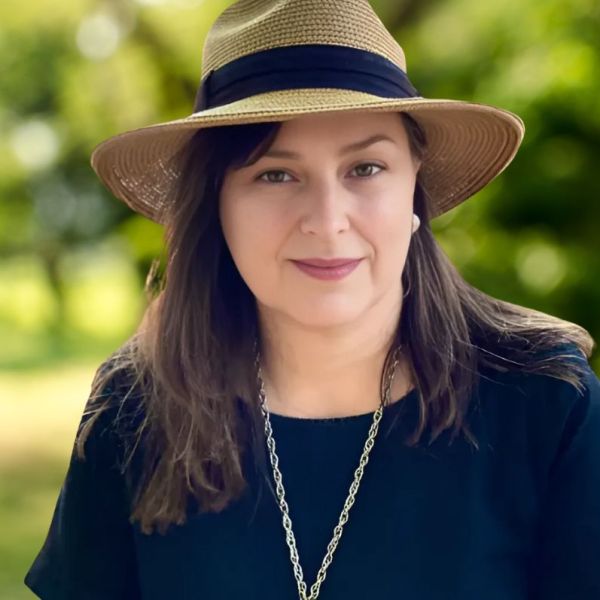
Mike, thank you for taking the time to speak with us. For readers meeting you for the first time, can you introduce yourself, share a bit about your background, what you do, and what inspires your current work?
I’m not very good at talking about myself, so this will be a tough one. We’ll start with inspiration. I first told the story of Little Joe 20 years ago to our flower girl a couple of nights before our wedding. Then I shared Little Joe with my own child, and other kids around that age. Last year, I finally decided to share Little Joe with everyone. I wrote down the first story and went about the process of editing, illustrating, formatting, and all things publishing. Last year was when the world of Little Joe really came into focus and I started my writing journey.
Now me. I’m a dad—of course, now my child is eighteen and headed to college. I’ve worked at a small brass window hardware company for the past 19 years. I served 6 years in the US Navy, 9 years as a town council member. I have multiple degrees, and now I’m an author. I believe I’ve always been a storyteller; it just took me 4 decades to work up the confidence to use writing to share those stories.
You’ve recently received the Wordscape Wonders Award and the BREW Seal of Excellence for Little Joe and the Big City, and were shortlisted for the BREW Readers’ Choice Award. Could you walk us through those recognitions—what they mean to you, and what you think resonated most with readers and evaluators?
The canned answer is it is an honor to be acknowledged; I am humbled and grateful for the recognition. Now, none of that is false—it does mean a lot to me—it’s just generic. Such recognitions make an author feel seen. We share our stories and hope that others will recognize our efforts. These awards are feedback that yes, people see our efforts, and yes, we have contributed something meaningful.
This is my second book (#2 in the series). I am always learning, and it has been fascinating seeing readers’ and evaluators’ attachment to Mura, a “supporting” character. What I am seeing is that the emotional journey is what truly draws readers in. That really makes me happy, because it tells me people are actually reading the books—not just breezing through them because they are children’s books.
There’s a strong emotional thread in your book that centers around friendship, displacement, and second chances. What personal or professional experiences helped shape this story?
So, we are social creatures. We do better and are happier when we share our lives with others. I think that in our modern world (particularly for adults) we have a tendency to silo ourselves from others rather than take the chance to make a friend. I’m no exception to this reality. I find it challenging to open up to others, make friends, or give second chances. Perhaps Little Joe is my message to myself—to be better, do better, and be human.
Your professional background is in Digital Forensics, Applied Mathematics, and Public Administration. How have those disciplines influenced your writing, particularly when developing themes for young readers?
Haha, I don’t think I have a very good answer for this. My educational background, my time serving in the US Navy, and my professional career have nothing to do with my writing or my target audience. If anything, my background tends to be objective and data-driven. Perhaps that is my yin-yang. Because my approach to life is so objective and data-oriented, I’m able to present and explore emotions in an open and honest way.
One thing that stands out in Little Joe and the Big City is the subtle way it addresses emotional literacy without simplifying it. How intentional was that approach, and why do you think it’s important for young audiences to experience emotional complexity in literature?
This story evolved through several iterations. The emotional beats developed over time as the story transitioned from an adventure story of exploration to an emotional journey. I didn’t set out to create an emotional journey in the way I did; it happened organically through each iteration.
I want kids to experience the emotional tension—from Little Joe getting lost to Mura’s sadness. The same tensions we offer adult readers. But I hope when they read, they realize it is okay. It is okay to feel big feelings; it is okay to feel hard feelings. You can feel all those things and continue to live, continue to feel, and continue to help others around you.
The character Mura introduces a perspective on aging, memory, and resilience. What prompted you to include a story within a story in a picture book format—and how do children typically respond to her part in the narrative?
Mura was a slow and late addition to the story, and I love her more every day. Something I learned while writing Little Joe stories is that typically, the story is about another character more than Little Joe. The original Big City storyline was just Little Joe escaping, getting lost, getting found, and getting home. It was fun, but that was really it.
When I first conceived adding a cat, she was going to be an antagonist—meeting Little Joe in the city, getting him lost and in trouble, and eventually both of them getting caught and the cat helping to get Little Joe back home. A redemption arc, with the same happy ending. I wrote that—well, about half of it—before the story of Little Joe and the Big City that is published came to be.
So, why Mura, and why such an emotionally intense storyline? Mura is based, at least in part, on our latest adopted family member. Our cat was adopted twice before we became his forever family. I will always wonder why he was given up twice before we met. He is the biggest sweetheart, even if he is a bit over-talkative. Mura’s past is my imaginings of a cat that was unfamilied twice. Her story is sad, grounding, and most importantly, real.
Kids are capable of feeling emotions, full stop. I think we spend a lot of time shielding them from what it means to be human, to have empathy, to care about others, and to understand that we all have stories and histories that form who we are.
So far, it is the parents who have responded most dramatically. The most common response is relief and an urge to visit their local animal shelter to meet their own Mura. I love that. From children, there is an understanding—that we all have histories and those histories shape who we are. I get a lot of messages from kids squeezing parents’ hands as they navigate the shelter scene. I’m okay with that. A good story should have emotional ups and downs and I firmly believe that children can feel those highs and lows.
Your work hints at broader values like empathy, community care, and animal welfare. Do you see yourself aligning with any sustainability or social development goals—formally or informally? If so, which ones, and how do they show up in your work?

I’m an avid hiker and outdoors person. I’m lucky enough to live and have grown up with the forest and nature in my backyard. Where I live now, I’m almost as likely to see a bear wandering through my backyard as I am a squirrel. Okay, maybe not that likely, but it is not all that uncommon. I served 9 years on my town council. I suppose I highlight those things to show that I have always been engaged in sustainability and community care.
We only have one world, and it is our responsibility to take care of it. I think that the same belief holds true for other people and animals. So, I guess when I see you list those three things in the question, they are all the same to me. If we all just take a moment and take care of something or someone around us, it would change the world for everyone. That is probably why I use animals to tell my stories—they don’t suffer from all our human biases and hang-ups.
So, my love of nature and community are always going to be part of my storytelling. And I’d guess that will shine through—intentionally and unintentionally.
The illustrations by Tincho Schmidt have received attention for their clarity and emotional tone. What was your collaborative process like, and how did you ensure the visuals aligned with your narrative intentions?
Tincho is a gifted artist, and I am forever grateful to have stumbled across him. To be completely honest, I have ZERO artistic ability; I know what I like, but even my stick figures are poor facsimiles. I found Tincho when I put out a request for artists to give me concept samples for Little Joe and the Big Rain. I started with about 15 artists; I had my favorites, and I asked friends and fans to vote on which they liked most.
Tincho was one of the top three, and I asked them for more detailed pieces. All three were incredibly talented, and there were elements of each that I loved, but Tincho had a unique style that I could see as the brand identity for Little Joe. Tincho lives in Argentina, so we don’t get to work together in person, nor do we share a first spoken language.
Our process is: I write the manuscript, then I break apart the book into 10–12 illustrations. I try to space the illustrations throughout the book and ensure that they tell the story. Once I know where I want the illustrations, I write up short descriptions including the appropriate text from the manuscript. Then I send that to Tincho; he creates the drafts and I give feedback about any edits needed.
Sometimes, I include sample images to ensure the illustrations by someone in Argentina match the visual story of someone writing about life in New England, USA. An example is in the upcoming book Little Joe and the Big Snow. I sent many pictures of a sugar shack (where we boil maple sap to make maple syrup) because my best guess was he wouldn’t have an understanding of the structure.
I love seeing an artist’s vision of the characters and stories. I’ve tried to be completely open. I give prompts and some details, but I love to see the characters come to life, and Tincho’s artwork has shaped my visions of characters and place.
In a world increasingly driven by fast-paced media and instant gratification, what role do you believe slower, more reflective children’s stories play in early development and family dynamics today?
Two rules. First, don’t talk or write down to kids. Kids are able to think, imagine, create, and (perhaps better than adults) they can understand subtext. Yes, we are competing against instant, mindless stimuli. But, as a writer, we can’t be afraid that our work won’t be recognized simply because it is not offered in mindless, bite-sized portions.
Second, write your story. Picture books are less than 1,000 words? Children’s books need a spelled-out lesson? There are lots of rules and expectations, especially in the highly competitive publishing world of children’s books. When I wrote Little Joe and the Big Rain (the first book in the series), it was 2,500 words. There was no lesson at the end or learning prompt. And there won’t be. That isn’t the book I wrote, or the books I write. The lessons are in there, but I trust the readers to figure that out. I trust my readers. And, if it takes 3,000 words to tell a story, so what? If it is good, they will read. If it is too long, they will come back to finish later.
At the end of the day, our stories should be immersive and allow our readers and listeners to spend some time in the world we present to them. Our stories have the power to help children and their families develop critical thinking, emotional development, social reasoning, communication skills, and creativity.
What are you currently working on, and how do you see your writing evolving over the next few years? Are there particular themes, stories, or causes you hope to explore further through the Little Joe series or new projects?
Imagine a shotgun blast. See that scattered spray of tiny holes? That is my creativity spread across a sheet of paper. Currently, I’m writing more Little Joe stories. There is no targeted theme. It is what comes as I tell the character’s story. In that world, I’ve been taking some side streets along the journey, writing stories about, by, and featuring side characters from the main series of books. These are fun, and I hope they adhere to my storytelling-first mantra.
With Little Joe, there seem to be more lessons in the writing, and one manuscript that is even analogous to the war in Ukraine. I will continue to explore real emotions in a way that doesn’t preach or talk down to young readers.
On the extreme other side of, well, everything, I’ve been writing ghost and horror short stories. People are fascinating and fear is a psychological wonder. These short stories are fun for me because I can explore new styles of writing and focus on the reader’s experience. Writing—and horror in particular—are opportunities for the reader to experience their own feelings while immersing themselves in their own creativity.
Lastly, for now, I have started working on a middle-grade chapter book. Working title: Homework Fairy. A fun hero’s quest for a middle schooler to avoid summer school. I’m drawing a lot from The Odyssey, Canterbury Tales, and Sir Gawain and the Green Knight. I hope I can dig into this one and perhaps have a rough draft done by the end of the year.
Yeah, that about wraps up where I am in my creative process. I think every book should be better than the last, as I improve my storytelling, and I hope that I can continue to contribute to the rich tapestry of the available written world.
If you were to write your bio in your own words, what would you say?
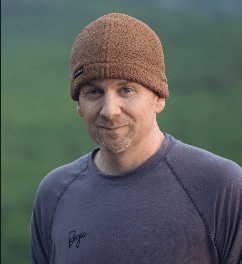
I write because I don’t want to be seen. I will always talk about the characters in my books before myself. I’m not afraid, or a recluse (wouldn’t that be cool). I just feel like the stories and characters are far more important than I am.
I was born in southern Vermont. My assumption is that it was a cold, rainy night, but I have no evidence to support that. We moved a lot when I was a kid, living in Massachusetts, Texas, and eventually back to Vermont by the time I was nine. By the time I graduated from the same high school as my mother, I had attended six different schools.
Through it all, the one constant was nature and the woods. I spent a lot of time hiking, camping, and wandering through the forest. My life has taken me halfway around the world, exploring both countries and cultures. I hope I bring the curious mind of an explorer to everything I write and do.
Today, I live in southern New Hampshire—just a stone’s throw and a river crossing from where I was born. I still hike; I still find my joy and happiness in the woods. I hope that I bring that love to everything I write and that my passions shine through in the characters who fill my pages.
⭐⭐⭐⭐⭐
“At the end of the day, our stories should be immersive and allow our readers and listeners to spend some time in the world we present to them.”
-Mike Darcy
Links
- Know more about the BREW Book, Blog, and Poetry Awards here
Share Your Insights
We’d love to hear your thoughts. Join the conversation below:
- What part of Mike Darcy’s journey or perspective stood out to you?
- How do you think children’s books can handle complex emotions effectively?
- Which character or theme from the Little Joe series resonates with you most?
Alignment with the UN SDGs
- SDG 4: Promotes inclusive, quality education through children’s literature.
- SDG 10: Encourages empathy and reduced inequalities via diverse characters.
- SDG 15: Highlights nature appreciation and environmental care.
Other Highlights

Looking for something?
Type in your keyword(s) below and click the “Search” button.
Helpful Shortcuts
More Stories










Print and Digital Magazine


Don’t just read about greatness. Own it!

About Us
The World’s Best Magazine is a print and online publication that highlights the extraordinary. It is your passport to a universe where brilliance knows no bounds. Celebrating outstanding achievements in various fields and industries, we curate and showcase the exceptional, groundbreaking, and culturally significant. Our premier laurels, The World’s Best Awards, commend excellence through a unique process involving subject matter experts and a worldwide audience vote. Explore with us the pinnacle of human achievement and its intersection with diversity, innovation, creativity, and sustainability.
We recognise and honour the Traditional Owners of the land upon which our main office is situated. We extend our deepest respects to Elders past, present, and emerging. We celebrate the stories, culture, and traditions of Aboriginal and Torres Strait Islander Elders from all communities who also reside and work on this land.
Disclaimer: The World’s Best does not provide any form of professional advice. All views and opinions expressed in each post are the contributor’s own. Whereas we implement editorial policies and aim for content accuracy, the details shared on our platforms are intended for informational purposes only. We recommend evaluating each third-party link or site independently, as we cannot be held responsible for any results from their use. In all cases and with no exceptions, you are expected to conduct your own research and seek professional assistance as necessary prior to making any financial, medical, personal, business, or life-changing decisions arising from any content published on this site. All brands and trademarks mentioned belong to their respective owners. Your continued use of our site means you agree with all of these and our other site policies, terms, and conditions. For more details, please refer to the links below.
About | Advertise | Awards | Blogs | Contact | Disclaimer | Submissions | Subscribe | Privacy | Publications | Terms | Winners
The World’s Best: A Magazine That’s All About What’s Great | theworldsbestmagazine.com | Copyright ⓒ 2022-2026
Let’s connect
Discover more from The World's Best
Subscribe to get the latest posts sent to your email.

 The World's Best
One thought on “Stories That Stay: A Conversation with Mike Darcy on Writing for Children, Compassion, and Curiosity”