
“The sounds are the notes that make up the melody of your storytelling.”
-Peter Massam
Peter, thank you so much for taking the time to chat with us today. To start, can you introduce yourself and tell us a bit about your journey as a writer? What’s your bio in your own words?
Hi. Many would say, “I haven’t a clue as to what I want to do,” when asked that embarrassingly ridiculous question, launched at you at a tender age while still at school or on leaving university. I was no exception to this rule. Gradually, pieces of that puzzle come together and tendencies emerge—such as the innate desire for a challenge I had.
As a linguist at college, I chose the most obscure language on offer, which was Russian (had Chinese or Arabic been available, they would have shot to the top of the list). Other challenges involved a career change from education to business and solving everyone’s issue with early mobile phones dropping calls. This became the topic I chose to write about first. Then it was called service quality, but at another company just two years later, we managed to elevate it to board level as Customer Experience.
That same writing journey began as a result of being made redundant. I had completed a dissertation in 2003 and sought validation from a former colleague that it made sense. His comment was, “You have the makings of a good book here.” So I pulled two or three respected technical publishers off my bookshelf and reached out to them. Within 48 hours, one came back asking if I had more. I did, but everything needs a purpose—and this came to me without hesitation. The book’s aim was to bring two technical tribes together to learn about each other’s domain to handle Customer Experience. That became my soap-box topic for the rest of my business career.
Various innovations led me to ultimately grasp a nettle nobody seemed willing to seek or confront, which seemed odd given the birth of AI on the horizon. I saw the need to focus on what humans still excel at and will continue to outpace machines in for years to come: the psychological aspects of the customer journey. Specifically, I explored the much softer skill of identifying—and perhaps quantifying—categories of Customer Trust as a business imperative.
Sometimes the business world is just not ready for the next idea. The frustrations of that, combined with an impending unplanned but inevitable retirement, left me itching to write about psychology. And where else to start but with the person I knew best (or thought I knew): myself.
Out of that, a trilogy was born by February 2023, delivered in just 18 months. Its purpose was to focus on a young man’s journey and to help teenagers and young adults cope with the complexities of life—what it can throw at you, what survival looks like, and, importantly, how to grow stronger as a result.
Just prior to those publications, COVID-19 struck. Long periods of reflection in a garden I had cultivated for 11 years, and solitary walks in the delightful Oxfordshire countryside, prompted a set of poems and images about our choice of garden plants—the reminiscences they bring, the memories they conjure, and the ties that bind us. Reflections in a Country Garden was the result in 2021.
Before that, during the latter stages of my last employment, I took up sketching classes during lunchtime in my local business park. I had always loved drawing, though was not much good at it.
My reasons for creating these Sketch Poems in 2019 were simpler. I was inspired by my English teacher in sixth form, Mr. Ray V. Weight, and the beacon of light he shone on us via a projector showing William Blake’s inimitable, visionary work. What a combination—embodied in Songs of Innocence and of Experience. This set my train of thought in the direction that was to become Nipper, Moose Conquering Fear, and Know Your Mind.
In the year following the first trilogy, a second was more than embryonic. I had returned to my home village, to the house where I was born and bred, and recalled a set of blue airmail letters sent home to my parents that had mysteriously disappeared from the mantel before my father passed away. They detailed the two years I spent living and working in Kenya as a schoolmaster.
I had always hoped to commit them to a book once work was at an end. Then I remembered I had retained over 500 slides from that stay. I dug them out and had them converted to digital format to provide some graphic light relief to the monologue that would inevitably be in a letters home format—similar to those I’d read on my French literature course (though not so risqué, naturally).
Thus, just a year later in 2024, the second trilogy, Letters from Gilgil, was published. Its purpose soon became clear. A former friend from that little-known place had been moved to set up a children’s charity after the horrific riots in 2008 displaced thousands of children to the streets of Gilgil. Taking in just six children at first, clothing, feeding, and educating them, her charity Restart Africa now cares for over 100 students—many of whom have gone on to universities, while others choose to stay and help lift others out of their predicaments.
All proceeds from this second trilogy go directly to this deserving cause, with a personal commitment by me to ensure regular funding—regardless of book sales. This is now my purpose: to help fund disadvantaged children at home and abroad in Kenya.
Lastly, I would encourage anyone who cares passionately about someone or something to put pen to paper and write about it.

Nipper has earned widespread recognition, including several literary awards. Could you share what that recognition means to you and how it has influenced your writing journey?
The first installment in the Learning Experience trilogy, Nipper, has received new accolades this year, including:
- Winner, Book of Excellence Award — The World’s Best Book Awards
- Winner, Difference Maker Award — Store with a Heart
- Shortlisted, BREW Readers’ Choice Award — The Chrysalis BREW Project
- Winner, Global Spines Book Award — Global Spines
In its review, Global Spines praised the book as “a kind of time capsule—not just for its hero, but for anyone who has ever looked back on their childhood and realized they never quite understood it while they were living it.”
In the latest review, The World’s Best Books recognized that:
“He paints childhood with the kind of tender detail that feels both startlingly specific and universally familiar… These moments are rendered with such quiet precision that you don’t read Nipper, you recall it.”
There’s more to a review than acknowledging a new arrival on the book scene. A reviewer has undoubtedly read the content, but a good reviewer understands the message—the crafting of words on the page and the choices made to deliver that to an intended audience.
Sometimes it will be the poetic nature of certain passages, or the deliberate simplification of language for a younger teenage reader in Nipper that evolves and matures as the experience progresses into young adulthood.
The reviews above differed from what I’d call the initial “passing-glance” three or four paragraphs. They unraveled the design I had purposely built into the work and understood the finer nuances of recollection, memory, and the self—elements that earlier reviewers missed or lacked the time to explore.
The impact on you as an author is tremendous. It spurs you on to write more because you have been understood by a wider audience.
What’s particularly pleasing is the diversity of conclusions that surface—different elements of the storytelling striking a chord with different readers. Just as a live audience or those seated around a campfire absorb words in their own way, that is the intent: to resonate differently with readers as they reflect on their inner experiences—perhaps not too dissimilar, or maybe even kindred.
You’ve explored a variety of genres in your work—from poetry and technical writing to narrative fiction. How do you approach the creative process in each of these areas? Are there any common threads between them?
First, I must say that working across formats is one of the most invigorating challenges a writer can embrace. I hold immense admiration for the poets, authors, philosophers, and artists—past, present, and yet to be discovered—who have pushed boundaries in their craft.
Writing in technical fields differs in that the aim is to distill complex ideas into accessible, engaging language. In my case, it was about bridging two communities—helping them understand each other well enough to create shared value. It became a conduit for symbiosis and collaboration, encouraging fluid movement between disciplines.
In creative writing, however, the process is far more sonic. I write with my ear as much as with my hand. I hear the words aloud—listening for rhythm, sibilance, assonance, alliteration. The sound of a phrase determines whether it stays. These are the notes that form the melody of storytelling.
The themes in Nipper focus on memory, innocence, and the bittersweet process of growing up. What inspired these themes, and how do you hope readers connect with them?

In two words… my granddad.
He was an Australian of great resilience and unshakable humour. You’ll have to dig into Nipper to discover how that shines through. What I hope readers experience are those fleeting, inexplicable flashes of memory—a scent, a still moment, a sound—that linger unexpectedly. Suppressing those moments seems almost sacrilegious. They connect us to formative shifts in our childhoods—some painful, some beautiful.
Wordsworth captured it best when he wrote, “To me the meanest flower that blows can give thoughts that do often lie too deep for tears.” Those glimpses of emotion recollected in tranquillity still resonate across time.
Your writing style in Nipper has been described as capturing quiet, unnoticed moments. Why are these small details so important in storytelling?
Silence is profoundly underrated.
We live in an age of noise—where volume often replaces value. In conversations, too many rush to fill the quiet, fearing the discomfort of pause. Yet, silence is where reflection resides. It’s the space in which thought matures.
In writing, these quiet moments allow depth to seep through. The reader connects not through shouting, but through recognition—a shared pause, a felt shift. These recollections may seem subtle, but their emotional resonance lasts long after the page has turned.
In The Cuz Collection, you blend poetry with sketches and images. How did this creative fusion develop, and what do you hope readers experience through it?
The concept came naturally—images and words have long worked hand-in-hand to evoke mood and meaning. In The Cuz Collection, I wanted to create something immersive. When a reader sees the image and reads the words, I hope they’re transported—to stand where I stood, feel what I felt.
It’s similar to language immersion. At first, you’re adrift, grasping for meaning. But as your senses adapt, you begin to understand instinctively. The more you open yourself to the details—the shadows, the brushstrokes, the turns of phrase—the more deeply you engage with the piece.
You began your writing career with a technical book on customer experience. How did that shape your approach to more personal, reflective storytelling?
Interestingly, my technical work explored the psychology of customer trust. I was trying to help businesses understand that their profitability depended on resonating emotionally with their audience—not just structurally or financially. That focus on the inner workings of perception naturally led to a more introspective kind of writing.
Leaving the business world to write full-time felt less like a break and more like a continuation—one where I was both the subject and the narrator. To write deeply and honestly, I had to turn inward. And in doing so, my storytelling became as much about self-discovery as it was about sharing.
Could you share some of the awards and milestones you’ve achieved and what they mean to you personally and professionally?
The early technical book didn’t win awards, but its longevity is a reward in itself—it’s still being read after two decades. I’ve always aimed to produce work that endures and offers a framework for future thought.
The Learning Experience Trilogy—Nipper, Moose Conquering Fear, and Know Your Mind—has been fortunate to receive recognition:
- Know Your Mind won the BREW Readers’ Choice Award (May 2025), the Narrative Voyager Award, the Spotlyts Story Award, and the Voyages of Verses Book Award.
- Nipper received the Book of Excellence (The World’s Best Book Awards), the Difference Maker Award (Store with a Heart), and the Global Spines Book Award.
- Moose Conquering Fear won the Narrative Voyager and Spotlyts Story Awards.
Other milestones I’m proud of include self-publishing two books on coloured paper—green for Reflections in a Country Garden and blue for Letters from Gilgil—to support readers with dyslexia, ADHD, and autism. It makes a difference.

Letters from Gilgil is also dedicated to a remarkable charity in Kenya. What began as a shelter for six children now cares for over 100, and I’ve committed ongoing support. It feels full circle—having been given a lifeline myself as a child who missed two years of school. That early encouragement instilled in me a love of language that I now hope to pass on.
Your work often reflects on human experience and growth. How do you see your writing contributing to positive change—particularly in creativity, diversity, or sustainability?
Though The Learning Experience Trilogy seems tailored to young male readers, it’s meant just as much for parents. It’s a call for empathy in parenting, not judgment. Children grow, and we grow with them. The journey is shared.
Moose Conquering Fear and Letters from Gilgil underscore the idea that everyone needs everyone else. Compassion is sustenance in hard times.
In Gilgil, cultural sustainability becomes central. Progress threatens indigenous languages and traditions. The challenge isn’t to freeze culture in time, but to preserve its soul while finding creative paths forward.
I hope my work encourages readers to see that their own stories matter. Poetry, especially, is a forgiving medium—it can be short, messy, raw, unstructured, yet still profoundly true. Writing in any form is cathartic. Even if it’s never shared, getting it out can lighten your burden.
And for those new to writing, I say: be bold. No one else has lived your life. Your story is worth telling.
As a recipient of the Book of Excellence from The World’s Best Book Awards for Nipper, what does this recognition mean to you, and how has it influenced your future writing?
The value of such recognition is twofold.
First, it’s simply wonderful to know someone has read your work. Second, it affirms that your intent—both explicit and nuanced—has been understood. One reviewer mentioned that the story resonated just as much for what it didn’t say as for what it did. That subtlety means a lot to me.
It also reassures me that my decision to focus on writing after retiring was the right one. Awards are not just trophies; they’re fuel. They remind me that the experiences I’m capturing still have value—that they’re worth recording, reflecting on, and passing forward.
There’s more to say. There’s always more to say. And now, I have every reason to keep writing.
Your work often reflects on human experiences and growth. How do you see your writing contributing to positive change or inspiring others, especially in terms of creativity, diversity, or sustainability?
The first trilogy may appear aimed at young male adults, with its clear message of “keep going” to overcome fear. But in truth, the intended audience is much broader—it includes parents, too. The stories gently encourage adults to reflect on their own upbringing, not to lecture or compare, but to approach young lives with compassion, understanding, and love. After all, parenting is a learning experience, and we grow alongside our children into adulthood. It’s a shared journey, not a solitary one.
The second trilogy expands this reflection to our role in each other’s lives. A central message is that everybody needs everybody else. In times of crisis, kindness isn’t just a comfort—it’s a lifeline. This interconnectedness weaves through the stories and is meant to resonate beyond the page.
In Letters from Gilgil, the final book grapples with the cost of progress. Cultures are disappearing, often with little notice. I hope to raise awareness of the urgent need for creative solutions to preserve linguistic and cultural diversity—not just in museums or books, but in ways that living communities can shape and own.
On a practical level, I’ve taken steps to make my own work more inclusive. Books in The Cuz Collection and Letters from Gilgil are printed on green and blue paper—an intentional decision, informed by conversations with parents of neurodivergent children. White paper can be too stark or overstimulating for some readers, especially those with dyslexia, autism, or ADHD. A softer hue can make a world of difference in accessibility.
Publishing my books through Gardner’s catalogue, which supplies libraries across the UK and beyond, was another milestone toward greater accessibility. Cost should never be a barrier to literature.
And perhaps most personally, I’ve committed ongoing financial support to two charities—one in Gilgil, Kenya, and one in the UK—that help disadvantaged children access education. This is deeply personal for me. I missed the first two years of primary school and was later given a chance by a headmistress who believed in my potential. Her belief changed my life. I want to pay that forward.
At heart, I hope my writing opens doors—for reflection, for inclusion, for discovery—and helps others feel empowered to share their own stories, in whatever form suits them best.
Finally, as someone whose work has earned the Book of Excellence title at The World’s Best Book Awards for Nipper, what does this recognition mean to you, and how has it affected your view on your future writing projects?
The value of awards can’t be overstated—especially when you’re a writer, often working alone, unsure if your words will ever meet their intended audience. First and foremost, it’s simply gratifying to know that someone has read your work. That they’ve not only read it, but understood what you were trying to do, is even more meaningful.
Take Nipper, for instance. One reviewer noted how the book was as much about what isn’t said as what is. That quiet understanding—that silences, like words, carry weight—is something I try to weave into my work. I often mention this to students learning English: sometimes meaning lives between the lines. It’s a nuance found in other cultures too—Guy de Maupassant’s short stories come to mind. I’ve always admired his ability to write with restraint, letting what’s unsaid do the heavy lifting.
This kind of recognition, especially paired with thoughtful reviews, is humbling. And honestly, it fuels my resolve. After retiring, I poured myself into writing the two trilogies in quick succession. It didn’t feel like work—just the next natural phase of a life devoted to understanding and experience. But awards like the Book of Excellence reinforce that the effort was worth it, that the words have found resonance.
They also give me momentum. There is still so much to explore, so many experiences to reflect on—not just for the sake of storytelling, but always with a deeper purpose. Writing, for me, has always been a tool for empathy, for insight, for connection.
And with that in mind, I’m nowhere near finished.
⭐⭐⭐⭐⭐
“Recording such things by the many is the only true way to gauge what is cherished within communities, the diversity of experiences to sustain all that is good in our lives, worth preserving and dear to us all as a human race.”
-Peter Massam
Related
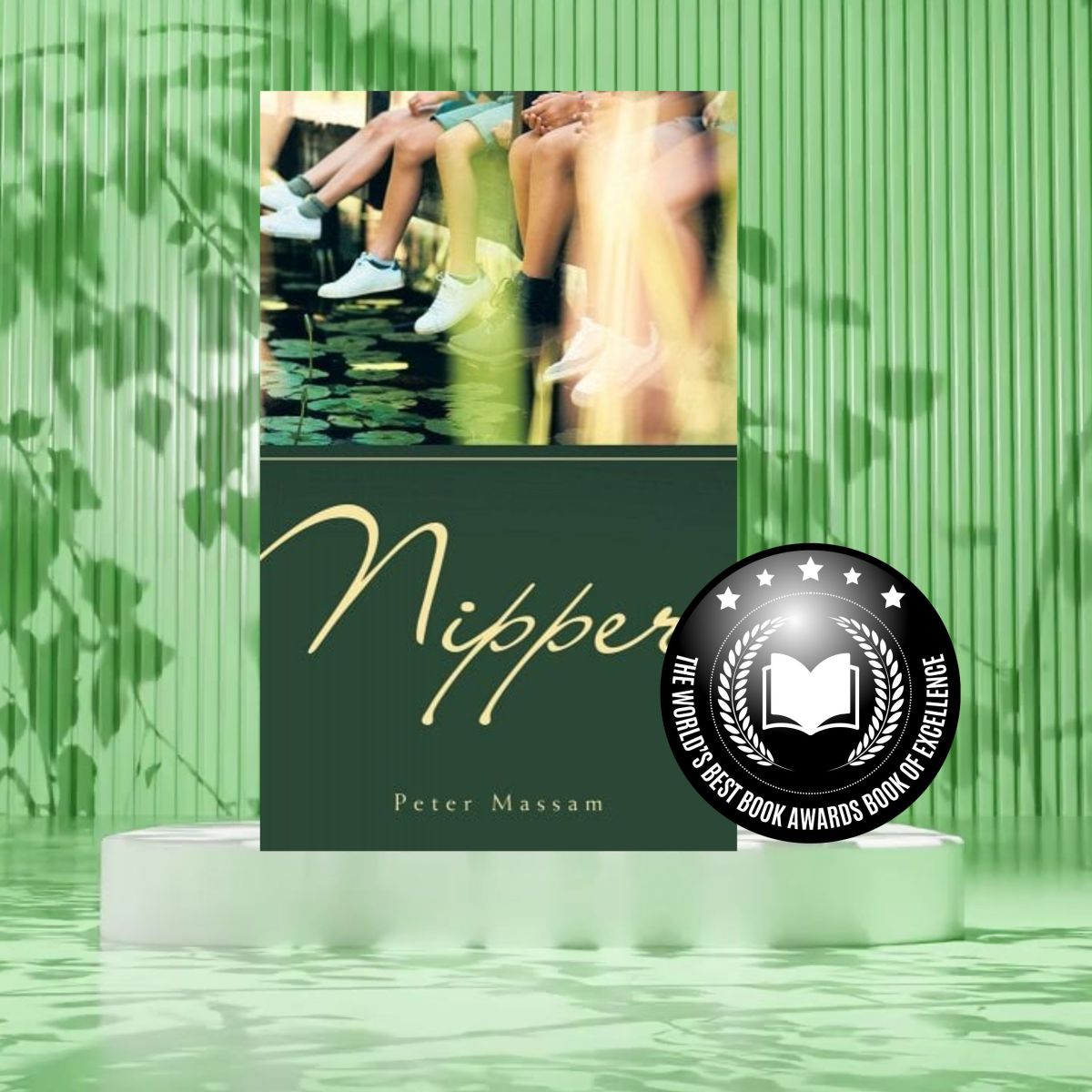
Nipper by Peter Massam
Have you ever missed a version of yourself you didn’t know you were becoming? That half-formed shadow of a memory? Nipper holds the mirror—read on to understand why.
- Know more about the BREW Book, Blog, and Poetry Awards here
Share Your Insights
- What do you think about the role of sound in storytelling?
- How do you connect with the small, quiet moments in your own life?
- Which of Peter Massam’s themes resonate most with you and why?
Share your thoughts in the comments below!
Alignment with the UN SDGs
- Promotes quality education and lifelong learning (SDG 4)
- Encourages gender equality and inclusive communities (SDG 5, 10)
- Supports sustainable cultural preservation and diversity (SDG 11, 16)
- Fosters mental health and well-being (SDG 3)
Other Highlights

Looking for something?
Type in your keyword(s) below and click the “Search” button.
Helpful Shortcuts
More Stories












Print and Digital Magazine

Don’t just read about greatness. Own it!

About Us
The World’s Best Magazine is a print and online publication that highlights the extraordinary. It is your passport to a universe where brilliance knows no bounds. Celebrating outstanding achievements in various fields and industries, we curate and showcase the exceptional, groundbreaking, and culturally significant. Our premier laurels, The World’s Best Awards, commend excellence through a unique process involving subject matter experts and a worldwide audience vote. Explore with us the pinnacle of human achievement and its intersection with diversity, innovation, creativity, and sustainability.
We recognise and honour the Traditional Owners of the land upon which our main office is situated. We extend our deepest respects to Elders past, present, and emerging. We celebrate the stories, culture, and traditions of Aboriginal and Torres Strait Islander Elders from all communities who also reside and work on this land.
Disclaimer: The World’s Best does not provide any form of professional advice. All views and opinions expressed in each post are the contributor’s own. Whereas we implement editorial policies and aim for content accuracy, the details shared on our platforms are intended for informational purposes only. We recommend evaluating each third-party link or site independently, as we cannot be held responsible for any results from their use. In all cases and with no exceptions, you are expected to conduct your own research and seek professional assistance as necessary prior to making any financial, medical, personal, business, or life-changing decisions arising from any content published on this site. All brands and trademarks mentioned belong to their respective owners. Your continued use of our site means you agree with all of these and our other site policies, terms, and conditions. For more details, please refer to the links below.
About | Advertise | Awards | Blogs | Contact | Disclaimer | Submissions | Subscribe | Privacy | Publications | Terms | Winners
The World’s Best: A Magazine That’s All About What’s Great | theworldsbestmagazine.com | Copyright ⓒ 2022-2026
Let’s connect
Discover more from The World's Best
Subscribe to get the latest posts sent to your email.

 The World's Best
If you’d like sight of the second trilogy Letter from Gilgil published in July 2024, please see this review of the final book #3.
https://onetribune.one/2025/06/09/letters-from-gilgil-3-by-peter-massam/
LikeLike