
A single court ruling can change a life—or history. From wrongful convictions to environmental battles, the law is more than rules; it’s stories, struggles, and shifting power. But which books truly capture its complexity, humanity, and consequence? Lawyers read beyond the fine print, and when they choose a favorite, it often says as much about justice as the cases they argue. In this expert roundup, legal professionals share the works that moved them, challenged their thinking, or even launched their careers. Whether you’re curious, studying law, or simply love a gripping real-world narrative, these recommendations offer compelling places to begin.
Editor’s Note: This article includes references to real-life legal injustices, including wrongful convictions, environmental harm, and systemic discrimination. Reader discretion is advised for sensitive topics.
Powerful True Story Exposes Flawed Justice System
Just Mercy by Bryan Stevenson is a book that stands out to me. It’s honest and powerful in a way that makes you want to read it, whether you’re a lawyer or not. Stevenson takes you into real jails and courtrooms and the lives of people stuck in a system that doesn’t always work for them. It’s so interesting because it doesn’t try to make the justice system easy to understand, but it doesn’t use much legalese.
Walter McMillian was wrongfully put on death row, and his story will stay with you forever. It shows how racism, poverty, and bias can change court decisions, even when the facts are clear. For people who aren’t lawyers, it shows what justice looks like in real life. It helps lawyers remember why they do what they do.

Mark Hirsch, Co-founder and Personal Injury Attorney, Templer & Hirsch
——————————————-
Philosophy Book Makes Justice Accessible to All
If I had to recommend just one book to a non-lawyer—whether they’re curious about the law or simply want a deeper understanding of justice—I wouldn’t hesitate to choose Justice: What’s the Right Thing to Do? by Harvard professor Michael Sandel.
Unlike dense legal texts or academic papers, this book uses real-life scenarios to guide readers through big philosophical questions: What does fairness really mean? How should justice be carried out in a complicated world? For example, it raises dilemmas like—should you save one person if it means sacrificing a few others? What does fairness look like in standardized testing? At first glance, the answers may seem obvious, but Sandel shows us just how nuanced and challenging these questions really are.
I love this book because it reminds us that beneath the law, every case involves real people—their choices, their struggles, their stories. That’s something I feel every single day in my work. And for non-lawyers, it’s an easy read. The language is straightforward, the logic is clear, and the examples are relatable. By the time you finish, you’ll likely see legal headlines—and even your own experiences with unfairness—in a new light. Even if you’ve never thought much about the law, this book is absolutely worth reading. Because justice doesn’t just happen in a courtroom—it lives in everyday life.

Seann Malloy, Founder and Managing Partner, Malloy Law Offices, LLC
——————————————-
Human Stories Reveal Truth Behind Legal System
I’ve always been drawn to Bryan Stevenson’s Just Mercy, a profoundly endowing work that transforms abstract legal concepts into deeply human stories. What makes it exceptional is Stevenson’s ability to guide readers through America’s broken criminal justice system while endowing them with both emotional understanding and intellectual clarity about systemic problems.
The book follows Stevenson’s early career representing death row inmates in Alabama, particularly Walter McMillian’s wrongful murder conviction—a case that reveals how race, poverty, and institutional bias create devastating injustices. Non-lawyers connect with it because Stevenson writes not in legalese but through character-driven narratives, endowing readers with insights that legal professionals sometimes take for granted.
Even my most skeptical friends who’ve borrowed my dog-eared copy have returned it with a transformed understanding of how justice actually functions (or fails to) in America. It’s that rare legal book that makes you feel both outraged and hopeful simultaneously.

Jason Tenenbaum, Attorney – NY State, The Law Office of Jason Tenenbaum, P.C.
Justice Through One Man’s Fight
If I could recommend just one book, it would be Just Mercy by Bryan Stevenson. It is a non-fiction book that is incredibly compelling and was even turned into a movie. The book focuses on Stevenson’s real life work as a defense attorney and the challenges he faced. It dives into systemic injustices in our criminal justice system throughout the years and what it’s like representing those wrongly convicted. It’s a great read to help give perspective into the many barriers our legal system presents to people – particularly certain people groups more than others.

Ben Michael, Attorney, Michael & Associates
Where Law Hits the Ground
A Civil Action by Jonathan Harr is a book that reads like a courtroom thriller, yet every page is pinned to newspapers, lab reports, and sworn testimony that courtroom wonks call litigators notebooks. One of the authors is a veteran trial lawyer, so the prose feels lived-in, as if the pen was signed in coffee and late-night jitters. Morally speaking, the sentences carry a dose of gravity you can almost hear shift in your stomach, because, in the end, every verdict hits skin, water, or farmland.

Matthew A. Dolman, Founder & Lead Attorney, Dolman Law Group
The Book That Inspired My Law Practice
I am a business litigator, and my favorite book about the law is A Civil Action by Jonathan Harr. It was a national bestseller and won a National Book Critics Circle Award, so it may not be a “hidden gem”. But because it was written nearly 40 years ago it is worth calling out again.
A Civil Action inspired me to start my own practice representing clients who have been harmed but don’t have the resources to fight on their own.
It tells the true story of a major environmental lawsuit in Woburn, Massachusetts, in the 1980s. The case involves allegations that toxic chemicals from nearby factories contaminated the town’s water supply, leading to a cluster of leukemia cases and other health problems among residents.
The book centers on Jan Schlichtmann, a passionate personal injury lawyer dealing with his own personal challenges, who takes on the case on behalf of eight families. He sues two large corporations—Beatrice Foods and W.R. Grace—accusing them of dumping trichloroethylene (TCE) and other hazardous chemicals that polluted the groundwater.
Harr explores the complexities of civil litigation, especially involving environmental law and scientific evidence—while keeping the story a true “page turner”. There’s a “David vs. Goliath” theme that anyone who likes to root for the underdog will appreciate, and the reader gets a first-hand look at the immense financial and emotional toll of pursuing justice.
I highly recommend A Civil Action for anyone who is interested in the law, or just a great true story.

Mark Chatow, Business Litigator, Chatow Law
When the Law Meets Real Lives
Just Mercy by Bryan Stevenson has stuck with me longer than most casebooks. The book is part memoir, part field report, and it lays bare the everyday wreckage caused by wrongful convictions. Moving from courtroom chatter to the quiet terror of a death row cell takes real talent, and Stevenson has that talent in spades. Readers who think law is all statutes and paperwork may be surprised by how much humanity can fit inside a single courtroom.

Andrew Izrailo, Senior Corporate and Fiduciary Manager, Astra Trust
The Book That Reminds Me Why I Practice Law
One of my favorite books about law and justice is Just Mercy by Bryan Stevenson. As an employment lawyer, I found it both heartbreaking and galvanizing. It cuts to the core of why justice work matters. Stevenson’s storytelling reveals not just the systemic failures of the legal system, but the resilience and humanity of those caught within it. What makes it a standout is that it doesn’t preach, it shows the impact of injustice, case by case, and reminds lawyers like me that every client is more than their case file. It’s a must-read for anyone who wants to understand the emotional and moral weight of advocating for fairness in an imperfect system.

Edward Hones, Founder and Employment Lawyer, Hones Law
Principle Over Popularity
To Kill a Mockingbird is my favorite book about law and justice. Atticus Finch’s quiet courage and unwavering commitment to defend an innocent man in the face of public hostility has always inspired me. He represents the ideal of a lawyer who stands for principle over popularity, justice over convenience. His moral clarity, dignity, and advocacy in the courtroom left a lasting impression on me as both a reader and a legal professional. It’s a timeless reminder that the law should serve the cause of justice, especially when it’s hardest to do so.

Joseph G “Joe” Kopfler, Owner and Trial Attorney, Kopfler and Hermann PLC Law Firm
Have Your Say
- Which story resonated with your own experiences?
- What book shaped your views on justice?
- Do you think fiction can influence real-world change?
Alignment with the UN SDGs
- SDG 4: Promotes education through literature that fosters critical thinking and empathy
- SDG 10: Highlights inequality and justice system reform
- SDG 16: Advocates for peace, justice, and strong institutions
Note: The views and opinions expressed in the content provided on this page are those of the individual authors and do not necessarily reflect the official policy or position of any organizations mentioned. The information provided is for educational and informational purposes only and should not be interpreted as professional advice. Readers should consult with relevant experts or professionals for guidance specific to their circumstances. The examples used are for illustrative purposes and results may vary depending on various factors. Any external links provided are for convenience, and we do not endorse or take responsibility for the content, products, or services available through these links.
⭐⭐⭐⭐⭐
Related
Written Works That Shaped Thinking
What single insight can quietly reshape how you approach challenges, relationships, or career decisions? Explore this expert roundup to see how reflective reading can transform everyday thinking and choices.

Exploring Narrative, Healing, and the Human Mind with Verlin Darrow
Ever wondered how surviving earthquakes, outrunning tornadoes, and dodging a gun shaped a mystery writer’s mind? Discover Verlin’s extraordinary life experiences and how they feed the thrilling stories on every page.
Continue reading Exploring Narrative, Healing, and the Human Mind with Verlin Darrow

Exploring Story, Place, and Imagination with Dust Kunkel
Ever wondered how a childhood across continents and rivers becomes the fuel for storytelling? Discover how Dust Kunkel’s life shaped his novel and worldview — read the full interview to explore it.
Continue reading Exploring Story, Place, and Imagination with Dust Kunkel

Imagining Humanity and Technology with Donald Firesmith
Can engineering precision and handcrafted magic wands coexist in one imagination? Discover how a futurist blends hard science fiction, AI insight, and human emotion—read the full interview to explore his journey.
Continue reading Imagining Humanity and Technology with Donald Firesmith
Something went wrong. Please refresh the page and/or try again.
Other Highlights

Looking for something?
Type in your keyword(s) below and click the “Search” button.
Helpful Shortcuts
More Stories





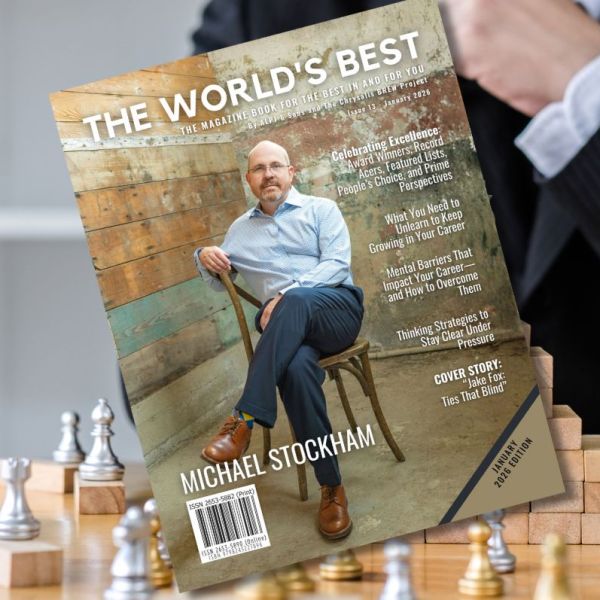





















Print and Digital Magazine


Don’t just read about greatness. Own it!

About Us
The World’s Best Magazine is a print and online publication that highlights the extraordinary. It is your passport to a universe where brilliance knows no bounds. Celebrating outstanding achievements in various fields and industries, we curate and showcase the exceptional, groundbreaking, and culturally significant. Our premier laurels, The World’s Best Awards, commend excellence through a unique process involving subject matter experts and a worldwide audience vote. Explore with us the pinnacle of human achievement and its intersection with diversity, innovation, creativity, and sustainability.
We recognise and honour the Traditional Owners of the land upon which our main office is situated. We extend our deepest respects to Elders past, present, and emerging. We celebrate the stories, culture, and traditions of Aboriginal and Torres Strait Islander Elders from all communities who also reside and work on this land.
Disclaimer: The World’s Best does not provide any form of professional advice. All views and opinions expressed in each post are the contributor’s own. Whereas we implement editorial policies and aim for content accuracy, the details shared on our platforms are intended for informational purposes only. We recommend evaluating each third-party link or site independently, as we cannot be held responsible for any results from their use. In all cases and with no exceptions, you are expected to conduct your own research and seek professional assistance as necessary prior to making any financial, medical, personal, business, or life-changing decisions arising from any content published on this site. All brands and trademarks mentioned belong to their respective owners. Your continued use of our site means you agree with all of these and our other site policies, terms, and conditions. For more details, please refer to the links below.
About | Advertise | Awards | Blogs | Contact | Disclaimer | Submissions | Subscribe | Privacy | Publications | Terms | Winners
The World’s Best: A Magazine That’s All About What’s Great | theworldsbestmagazine.com | Copyright ⓒ 2022-2026
Let’s connect
Discover more from The World's Best
Subscribe to get the latest posts sent to your email.

 The World's Best