
“I saw firsthand how a student could earn self-esteem through hard work in the pool.”
-David Farkas
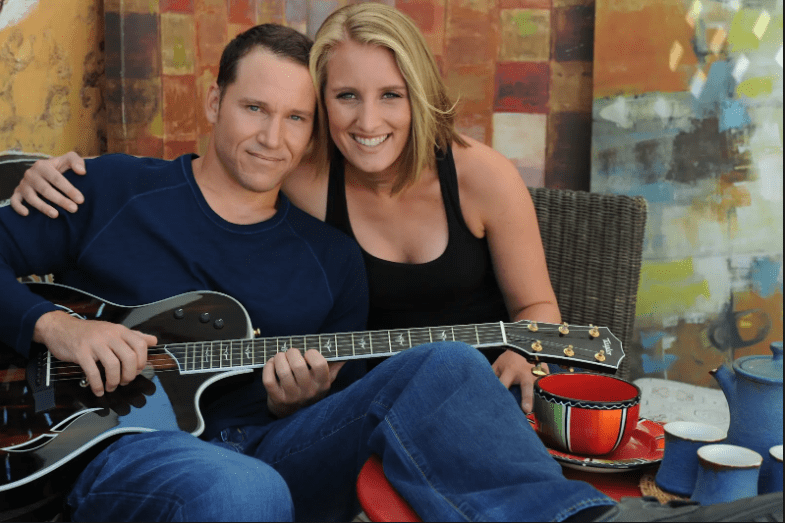
David Farkas, an actor and musician, has released his second children’s book, Delilah and the Missing Curtains: A Child’s Guide to Gratitude and Happiness, co-created with his wife and illustrator Brittany Farkas. The book received a Book Excellence Award from OneTribune Media. In this interview, Farkas discusses his transition from coaching water polo to writing children’s books, his collaborative process with Brittany, and the themes explored in their series.
David, thank you for being with us. Let’s begin by helping readers get to know you a little better—can you tell us, in your own words, who you are, what you do, what inspired your writing, and what you hope to achieve through your books?
I’ve always loved the idea of living many different types of lives. It’s what drew me to acting after I graduated college—this idea that you could be a rancher one day, then a stockbroker the next, a nice guy, a bad guy, whatever. The interesting part is that when you’re a working actor, you tend to need another job to pay the bills, and for me that other job was coaching water polo. It was a great job—I auditioned for parts during the day and coached water polo at night. It was perfect.
Slowly, the coaching part became more significant for me because I realized the impact I could have on these young kids. I saw firsthand how a student could earn self-esteem through hard work in the pool. I would often tell that student that I didn’t give that to them—they earned that self-esteem through hard work. And that’s a book right there, and one that I will be doing. So there it is: these messages that I gave to my students over 25 years in the pool, as well as lessons I learned as a working actor, as a musician, and now as a father of three kids, are slowly making their way to the pages of my books.
You and your wife Brittany have worked as a team—she as the illustrator, you as the writer. What inspired you both to transition from coaching water polo to creating books for children?
We do everything together—we always have. I love working with her, and I wouldn’t have it any other way. I remember after writing down a few of my ideas, I asked her if she would illustrate these books for me. She was hesitant at first, but she’s the best person to convey through pictures what I’m trying to get across because she knows me best.
We’re also able to have some fun with it. For example, we’re both Johnny Cash fans, so in the Delilah book, the moving company is called “Walk the Line.” She drew that on the moving company boxes—it’s not in the text.
Delilah and the Missing Curtains is centered on a powerful message about gratitude and the myth of “just one more thing” bringing happiness. Why was this the story you chose to tell first in your Child’s Guide Series?
Actually, it’s the second in our Child’s Guide Series. The first was Don’t Make Noise, Lose With Poise: A Child’s Guide to Losing. I have 4 or 5 written or almost finished, and we just picked the one that we were most excited about—and Delilah was that one.
If anyone is familiar with Dennis Prager’s Missing Tile Syndrome, they will see that Delilah is basically the Missing Tile Syndrome for kids. It’s an extremely powerful concept—this idea that if you look at your tiled ceiling, it could have every tile in place except for one, and we, as humans, focus on that one tile that’s missing. I love that idea, and we were really excited to bring it to life in a kids’ book.
As someone who has coached kids for decades, how did those experiences shape the way you approach storytelling and the emotional needs of young readers?
My coaching was not only an education in water polo, but I also got a parenting education as well. I saw firsthand what worked and what didn’t work. I saw parents interacting with their kids and how that affected them. I saw the right way to handle things, and I saw the wrong way.
Also, as a coach, you always coach players differently based on personality. Some kids you can push, and some you have to handle with subtlety—and that’s just good practice, reading kids’ faces and adjusting. It doesn’t mean you compromise your values or allow disrespect, it just means that you try to put what you’re saying in the most deliverable package—in a way that gets the best results.
I used to say my goal is to maximize the potential of my students as both people and athletes. I guess— isn’t that what all of us parents are trying to do as well?
There’s a wonderfully gentle tone in Delilah, paired with a clear moral compass. What was your approach to writing stories that guide rather than lecture—and how do you strike that balance?
I’m actually really appreciative of this question, because that’s one of the things I love about Delilah, if I’m allowed to love my own book. The gentle nature of the Ant Mom—she’s so sweet and so patient, but at the same time doesn’t really sugarcoat the truth. She tells it like it is. I love that approach.
I’m not saying I successfully do that as a parent, but that’s my goal—to do things like the Ant Mom. We just received a Book Excellence Award, and one of the things they liked about the book was that it wasn’t preachy. Like you said, it doesn’t lecture. I’m really proud of that fact.
The last thing I want to do is lecture people on the hardest things to do in life. I struggle with wanting more stuff—I struggle with all this stuff. When I would coach, I would tell the kids that when I talked to them about a life lesson, I was also talking to myself. In Delilah and in all my books, I’m really talking to myself as well as others. It’s hard to be preachy when I’m fully admitting that I’m working on this too—so in that way, it’s easy to strike that balance between lecturing and guiding. We’re all in this together.
Creating books with your spouse is a unique and beautiful thing. What’s your creative process like together, and how do you each bring your strengths to the table?
We’re working on our third book right now, and we’ve developed a pretty good little format. While I’m writing, Brittany is just listening to what I’m writing, and she pictures stuff in her head. She just likes to listen at first—over and over.
Once I’m finished writing, we send the text to a book designer, and they put together a starting point for the book and where the pictures might go. From there, my work is largely done, and it’s time for Brittany to get to work and draw her heart out.
As with any creative process, it can’t be forced—so there will be times that she draws one or two things in a couple of weeks, and then there will be times where she does almost the whole book in a weekend. We talk about picture ideas, we do brainstorming sessions—we’ll do them with our kids too. In fact, there are a couple pictures in Delilah that came from our kids. They have good ideas.
Teaching gratitude, mental toughness, and emotional wisdom is no small mission. How do you hope parents and educators use your book in conversations with children?
I hope they use it the same way I do. Once you read a book a few times, you can remember some lines—and those lines are handy when you’re out and about with your kids.
For example, one of the lines in Delilah is something like: “You can chase and chase and chase after stuff—if you’re not content with what you have, it will never be enough.” So let’s say you’re at Walmart with the kids and they start acting up about some little insignificant toy that they’ll forget about after one day—you could use that line to help make your point for you.
I’m a big believer in getting ahead of stuff—meaning introducing themes before you have to use them. If you’re reading these types of books, you can use their content later on when appropriate.
The ant family in Delilah is so relatable despite being, well, ants. Why did you choose animal characters, and how do you think that affects how children relate to the message?
I chose it purely for fun. First of all, I love ants—they are incredible, been around for millions of years. Some ant colonies infiltrate other ant colonies, some—like bullet ants—have incredibly painful stingers. It allowed us to have a lot of fun, like when the Ant Mom asks Delilah if her thorax was sore.
If your book has already received any awards or recognitions, could you tell us about them? What does that kind of recognition mean to you as a first-time author, and what do you think it affirms about your mission?
Yes, as I mentioned earlier, we just received a Book Excellence Award, and along with that was a review that was amazing. We were extremely humbled by the award, and it was totally unexpected.
I think the best part of the award was the review—because all of the things we were trying to get across in the book were laid out in that review. It affirms that we have a good message, and that I have an obligation to work hard to spread that message.
Lastly, David, what’s one value or life lesson that you personally try to model every day—and how is that reflected in your work, your family, or your coaching philosophy?
Oh, that’s a good one. I want to work hard and be productive and not quit in the face of adversity. I know you said one value—that was probably a bunch—but they kind of all go together. You get one life on this Earth, and I don’t want to sit around 30 years from now wondering what I could have done.
I used to tell the kids that I coached: if they competed hard in a game and gave it everything they had, they could walk away with their heads held high—win or lose. I want to give it all I have.
Thank you so much for reading my book and for having me. I really appreciate the opportunity, and I had a lot of fun answering these questions.
If you had to tell your life story in your own words, what would you say?

I grew up in Arizona where I was a club swimmer and then found water polo when our family moved to California. I fell in love with the sport and was a North Orange County All-Star, All-League, and All-CIF player on a team that lost in the finals of the CIF Championship. I then played at Claremont McKenna College, where I was a co-captain and an All-American Selection.
When I graduated from college I started acting on stage, television, and film. I went on to have parts in NCIS: LA, The Ghost Whisperer, Days of Our Lives, Criminal Minds, and many others.
With my wife Brittany, we released two full-length music albums. While I was acting during the day, I coached my own water polo club program at night. This led to our YouTube Channel, Shaquatics Water Polo, now with almost 3 million views.
Coaching led me to focus on teaching the important life lessons that come with sports. This led to the Child’s Guide Series and our books geared toward teaching kids values and morals in a fun way. Our first book, Don’t Make Noise Lose With Poise, came about because I wanted to teach my kids how to lose a game without throwing a fit.
It’s been a journey from water polo to music, to acting, to writing—but everything I’ve done has culminated in what I’m doing now, and I’m excited to continue to write and influence as many people as possible.
⭐⭐⭐⭐⭐
“You get one life on this earth, and I don’t want to sit around 30 years from now wondering what I could have done.”
-David Farkas
Links
- For more about David Farkas, visit his Wikipedia profile page here
- Know more about the BREW Book, Blog, and Poetry Awards here
Share Your Insights
We’d love to hear your thoughts! Share your insights in the comments:
- What values do you try to teach children through everyday moments?
- How do you handle “missing tile” thinking in your life?
- Which children’s books have sparked meaningful conversations in your home?
Alignment with the UN SDGs
- Promotes quality education through values-based storytelling (SDG 4)
- Supports good health and well-being via emotional resilience themes (SDG 3)
- Encourages responsible consumption through gratitude lessons (SDG 12)
Other Highlights

Looking for something?
Type in your keyword(s) below and click the “Search” button.
Helpful Shortcuts
More Stories















Print and Digital Magazine

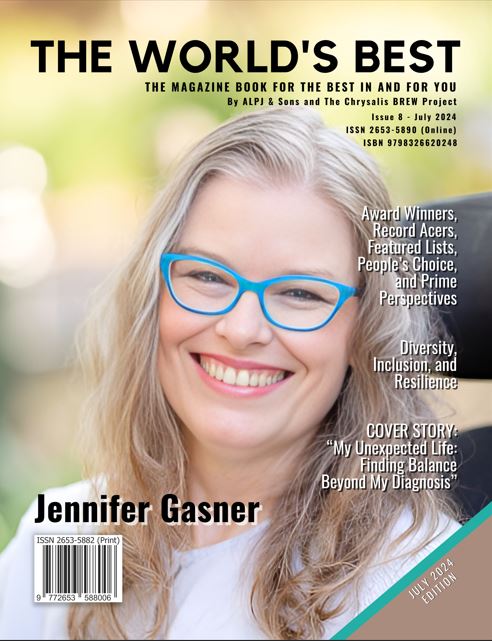
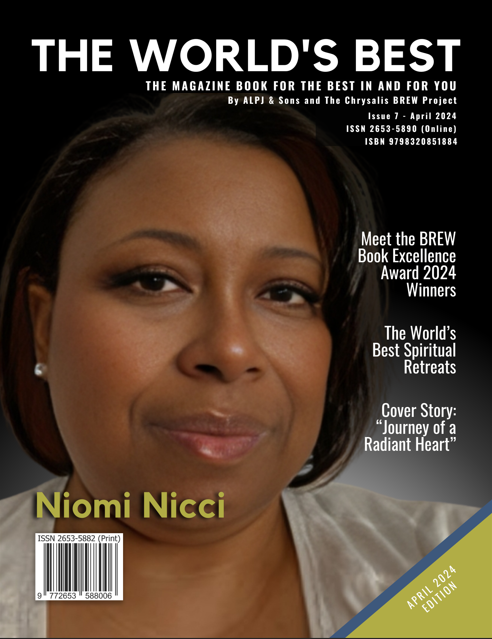
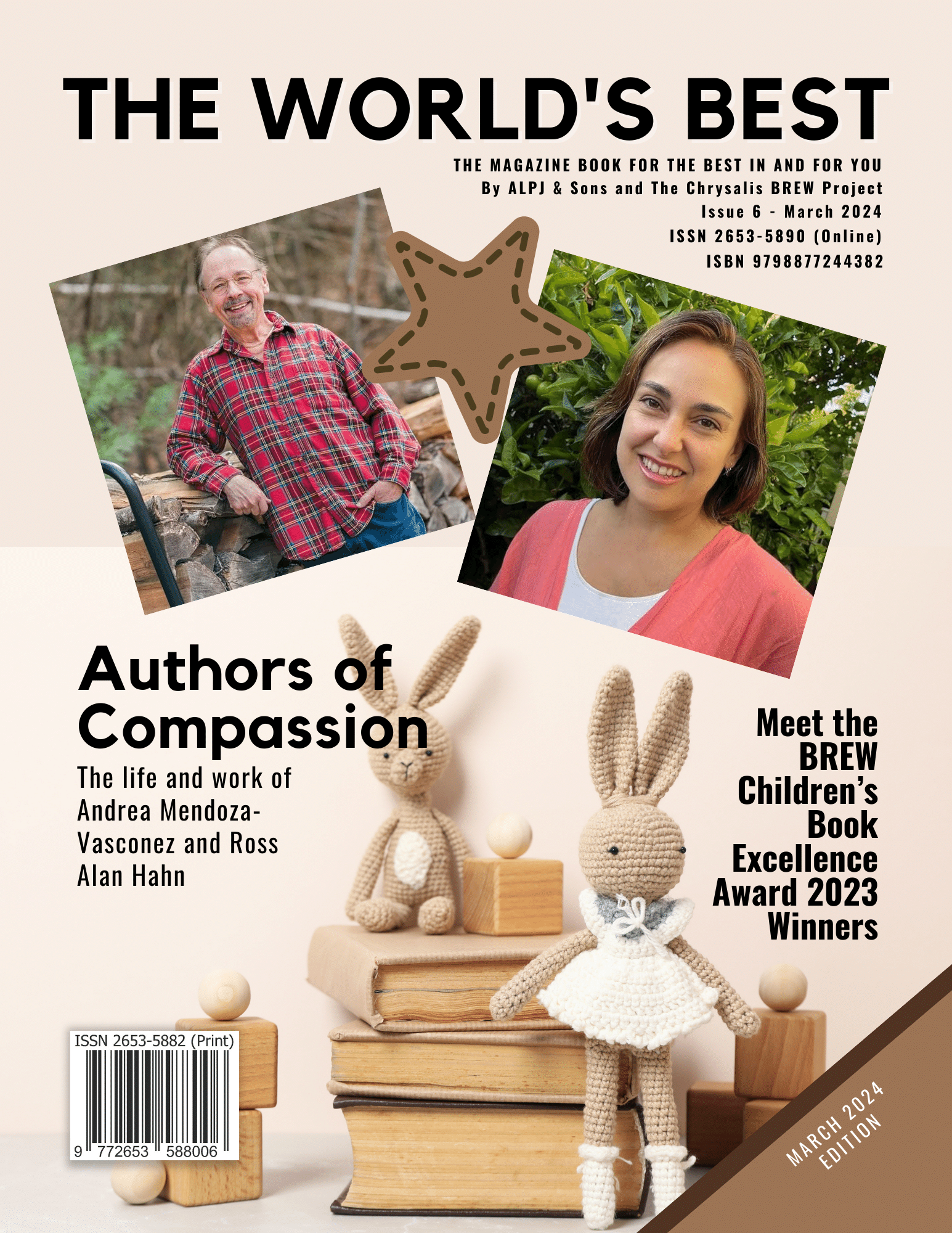
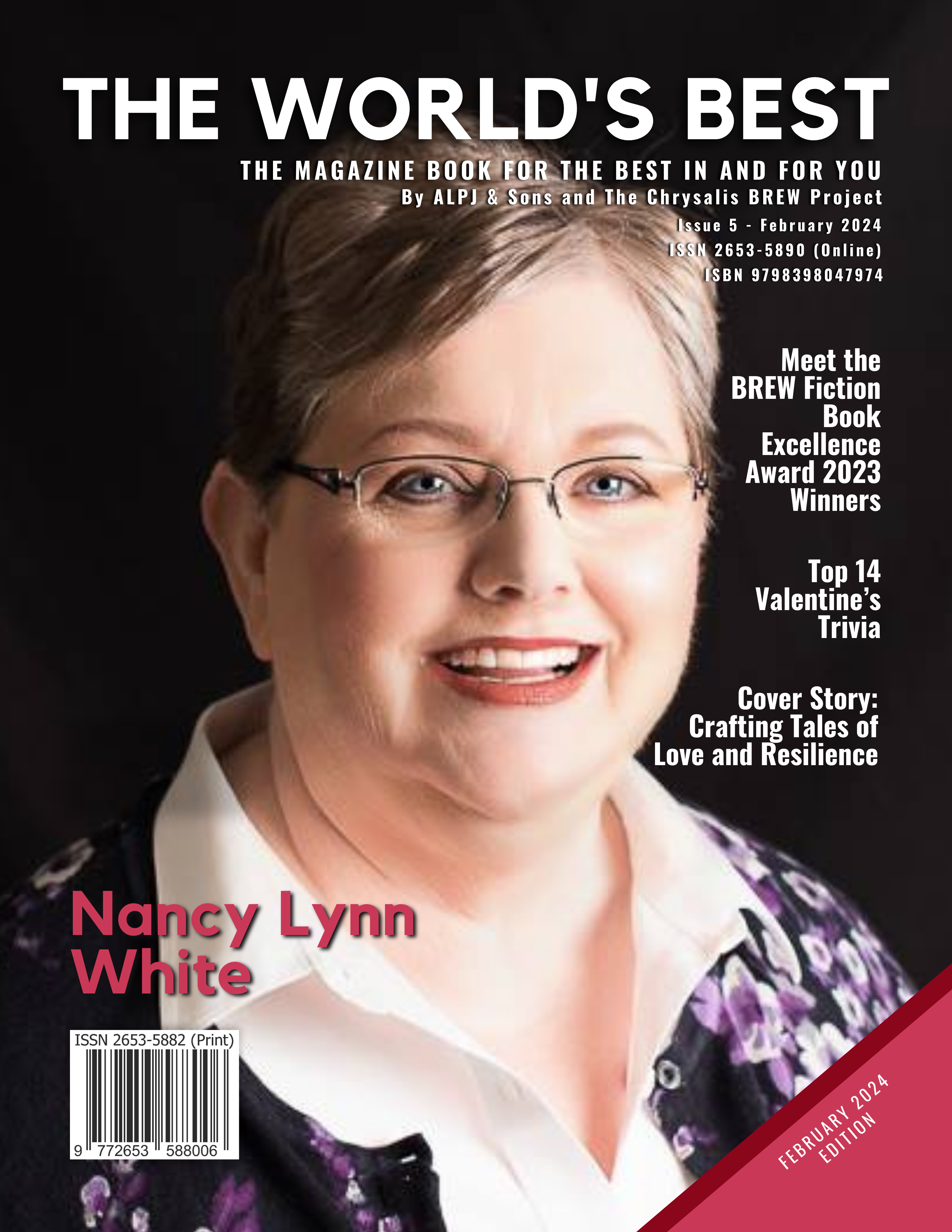

Don’t just read about greatness. Own it!

About Us
The World’s Best Magazine is a print and online publication that highlights the extraordinary. It is your passport to a universe where brilliance knows no bounds. Celebrating outstanding achievements in various fields and industries, we curate and showcase the exceptional, groundbreaking, and culturally significant. Our premier laurels, The World’s Best Awards, commend excellence through a unique process involving subject matter experts and a worldwide audience vote. Explore with us the pinnacle of human achievement and its intersection with diversity, innovation, creativity, and sustainability.
We recognise and honour the Traditional Owners of the land upon which our main office is situated. We extend our deepest respects to Elders past, present, and emerging. We celebrate the stories, culture, and traditions of Aboriginal and Torres Strait Islander Elders from all communities who also reside and work on this land.
Disclaimer: The World’s Best does not provide any form of professional advice. All views and opinions expressed in each post are the contributor’s own. Whereas we implement editorial policies and aim for content accuracy, the details shared on our platforms are intended for informational purposes only. We recommend evaluating each third-party link or site independently, as we cannot be held responsible for any results from their use. In all cases and with no exceptions, you are expected to conduct your own research and seek professional assistance as necessary prior to making any financial, medical, personal, business, or life-changing decisions arising from any content published on this site. All brands and trademarks mentioned belong to their respective owners. Your continued use of our site means you agree with all of these and our other site policies, terms, and conditions. For more details, please refer to the links below.
About | Advertise | Awards | Blogs | Contact | Disclaimer | Submissions | Subscribe | Privacy | Publications | Terms | Winners
The World’s Best: A Magazine That’s All About What’s Great | theworldsbestmagazine.com | Copyright ⓒ 2022-2026
Let’s connect
Discover more from The World's Best
Subscribe to get the latest posts sent to your email.

 The World's Best
One thought on “David Farkas on Coaching Character and Writing for the Next Generation”