
“Children are made readers on the laps of their parents,” author Emilie Buchwald once wrote—and decades of research backs her up. The stories we share in childhood shape not just vocabulary, but emotional development, empathy, and worldview. But what makes a children’s book truly memorable? Is it rhythm and rhyme, vivid imagery, or the quiet truths tucked between the lines? In this expert roundup, marketers, editors, and creatives reflect on the books that stuck with them—and why. Their insights offer a window into how simple stories can carry lasting weight, even shaping how we connect, learn, and grow across generations.
The Snowy Day Captures Childhood Wonder
“The Snowy Day” by Ezra Jack Keats holds a permanent place on my shelf. It captures a child’s sense of wonder through a lens that was rarely seen when it first came out. A young boy exploring his neighborhood in winter was not revolutionary in execution, but it was in visibility. That mattered then. It still matters now. The book speaks quietly, but it leaves a lasting impression.
The language is direct. The story structure is clean. Every page focuses on how a child thinks and feels. Peter doesn’t need a lesson or a journey. He needs space to observe, play, and be noticed. This approach respects early childhood development. It also models what adults should do more often: slow down and see the world through a child’s eyes. The book provides that window in under 300 words.
At home, this book has always been effective. My children notice different details depending on their age and mood. One day it’s the crunch of snow. Another day it’s the disappointment when the snowball disappears. These are small moments, but they are real. And that’s where the value lies. As a marketer, I look for stories that scale without losing authenticity. “The Snowy Day” achieves this. It delivers consistent emotional impact to a wide audience without overreaching. That’s not luck. That’s clarity, focus, and respect for the end user, even if the user is four years old.
Lisa Walthers, CMO, Upkid
Timeless Classics Teach Life Lessons
It is a challenging job to select the most superior children’s books, but there are a few that stand the test of time. One that first comes to mind is “The Very Hungry Caterpillar” by Eric Carle. The minimal amount of text and excellent illustrations render it a book that many young children love. It teaches children about numbers and days of the week, and addresses themes of change and development—issues that are comprehensible to youngsters and grown-ups alike. This timelessly-loved book has been invaluable and relevant since it was first published.
There is another old favorite by Maurice Sendak, “Where the Wild Things Are.” It stimulates a child’s imagination and demonstrates the extent to which it can create entire worlds in the mind. The emotional pull of the story, as Max returns home, will resonate with children who are experiencing similar feelings of independence and belongingness. The vivid and complete stories are as compelling now as they were upon initial publication.
These two books have been passed from generation to generation. They offer life lessons in patience, creativity, and emotional intelligence. These books should be selected by parents in raising a child so that they can nurture their sensitivity towards books and their surroundings. They’re not just books but life lesson books in both words and pictures.
Cory Arsic, Founder, Canadian Parent
Where the Wild Things Are Inspires Imagination
Personally, I believe “Where the Wild Things Are” by Maurice Sendak stands the test of time. I remember using it as a reference for a children’s clothing line campaign for a women’s fashion retail client. The spirit of imagination and adventure in the book still resonated with both the young and the young at heart.
Jan Van Zeeland, Deputy Editor, Dusty Mag
The Little Prince Grows with Its Readers
There’s something magical about “The Little Prince.” It speaks to children, but it lingers in your soul well into adulthood. I remember reading it as a kid and not fully grasping the deeper meaning. Years later, my nephew asked me what it meant when the fox said, “You become responsible, forever, for what you have tamed.” We ended up talking for an hour about love, friendship, and growing up. That’s the beauty of it—it grows with the reader.
The best children’s books don’t just entertain; they help kids ask big questions in small, tender ways. My advice? Read it with a child, and let their questions guide you. That’s where the true magic lies.
Danilo Miranda, Managing Director, Presenteverso
Phantom Tollbooth Teaches How to Think
If I had to pick the world’s best children’s book, hands down, it’s “The Phantom Tollbooth” by Norton Juster.
Most children’s books teach lessons. “The Phantom Tollbooth” does something sneakier—it teaches you how to think. Not what to think, not how to behave, but literally how to use your mind differently. It plants the idea that curiosity is an adventure, that boredom is a solvable puzzle, and that language and numbers aren’t boring school subjects—they’re living, breathing worlds you can jump into if you know how to look at them sideways.
The amazing thing is, it does all this without sounding like it’s teaching you anything. It’s just… fun. You’re riding through lands like Dictionopolis and Digitopolis, arguing about whether time can be wasted, battling demons like the Terrible Trivium (who tries to trap you in meaningless busywork—honestly, still relevant in work meetings today).
Most children’s books are about characters you fall in love with. “The Phantom Tollbooth” is about falling in love with ideas. That’s a much rarer and, frankly, more powerful thing. It doesn’t just captivate young readers—it rewires them a little, nudging them toward seeing the ordinary world as something brimming with invisible magic.
It definitely did that for me, and it’s a big part of why I ended up building a company obsessed with making information more accessible and alive.
Derek Pankaew, CEO & Founder, Listening.com
Sendak’s Masterpiece Reflects Children’s Inner World
Maurice Sendak’s “Where the Wild Things Are” still feels like magic to me every time I open it. With just a few hundred words, it plunges young readers into Max’s whirlwind of anger, imagination, and eventual longing for home. The spare, evocative text, paired with Sendak’s haunting, larger-than-life illustrations, gives children both the thrill of a wild adventure and the comfort of a safe return.
What makes it timeless is how honestly it reflects a child’s inner world—big feelings, monsters, and the coziness of home all in one slim volume. I first discovered it while reading to my younger cousins, and I’ve watched those same pages spark giggles, gasps, and thoughtful silences. It’s proof that the simplest stories, told with emotional truth and visual wonder, are the ones children never outgrow.
Naima Ch, Marketing Head and SEO Specialist, Morse Code Translator
Charlotte’s Web Explores Friendship and Mortality
One book that has undoubtedly left a profound impact on children’s literature and continues to enchant young readers is “Charlotte’s Web” by E.B. White. This charming tale of friendship and bravery between a pig named Wilbur and a clever spider named Charlotte illustrates complex themes like mortality and the importance of community in a manner that’s accessible to children. What makes this book a masterpiece is not just its story, but how it gently introduces children to the ideas of loss and renewal without losing that spark of hope.
“Charlotte’s Web” also thrives due to its memorable characters who are bursting with personality. From the thoughtful and caring Charlotte to the naive and sweet Wilbur, children find characters to relate to and root for. This emotional engagement paired with White’s beautiful prose cements the novel as a timeless treasure in children’s literature. It goes beyond merely being read—it’s a book that’s shared across generations, often becoming a favorite that parents excitedly pass down to their children. The legacy of this book, reinforced by its endearing narrative and moral depth, makes it not just a joy to read but a valuable lesson in empathy and friendship.
Alex Cornici, Marketing & PR Coordinator, Insuranks
The Giving Tree Exemplifies Selfless Love
My two sons love the book “The Giving Tree” by Shel Silverstein. I believe it is one of the best children’s books because it captures the innocence, love, and selflessness of childhood in a simple yet powerful way. The story follows a boy and his relationship with a generous tree that gives everything it has to make the boy happy. As he grows older, the boy takes more and more from the tree until there is nothing left but a stump.
This heartwarming tale teaches valuable lessons about gratitude, love, and kindness that resonate with readers of all ages. It is no surprise that this book has stood the test of time and continues to be beloved by generations of young readers.
David Zhang, CEO, Kate Backdrops
The Gruffalo Empowers Through Clever Storytelling
For me, it’s “The Gruffalo”—hands down. It’s simple, smart, and sneakily empowering. My daughter insisted on reading it every night for a month, and I never got bored. Why? Because it’s about thinking fast, trusting your instincts, and outsmarting bigger threats. Those are big ideas packed into a tiny mouse’s journey through the woods.
The lesson here is that storytelling doesn’t have to be deep to be meaningful. Sometimes rhyme, rhythm, and a clever plot are all you need to create a lasting memory. If you’re looking for a book that both kids and exhausted parents can enjoy again and again—this is it.
James McNally, Managing Director, SDVH [Self Drive Vehicle Hire]
Little Prince Respects Children’s Feelings
“The Little Prince” by Antoine de Saint-Exupéry feels like the best children’s book to me. It speaks to children with its simple story about a boy traveling between planets, but it also stays with you as you grow up. Every time you reread it, you find something new—about friendship, love, or seeing the world with open eyes.
The book respects children’s feelings and imagination instead of talking down to them. The drawings are simple, the words are honest, and the lessons feel real. That’s why it keeps connecting with new generations without needing to change.
Natalia Lavrenenko, UGC manager/Marketing manager, Rathly
Have Your Say
- What qualities do you think make a children’s book timeless?
- What children’s book made the biggest impact on you growing up?
- Which story do you still enjoy reading today—and why?
Alignment with the UN SDGs
- Promotes quality education through early literacy
- Encourages reduced inequalities via diverse representation
- Supports good health and well-being through emotional development
- Fosters lifelong learning and cognitive growth
Note: The views and opinions expressed in the content provided on this page are those of the individual authors and do not necessarily reflect the official policy or position of any organizations mentioned. The information provided is for educational and informational purposes only and should not be interpreted as professional advice. Readers should consult with relevant experts or professionals for guidance specific to their circumstances. The examples used are for illustrative purposes and results may vary depending on various factors. Any external links provided are for convenience, and we do not endorse or take responsibility for the content, products, or services available through these links.
⭐⭐⭐⭐⭐
Related
Verses That Transform Leadership
What poem or line quietly changes how you face big decisions or challenges? Explore this expert roundup to see how literary insights guide real-life choices and personal resilience.
Written Works That Shaped Thinking
What single insight can quietly reshape how you approach challenges, relationships, or career decisions? Explore this expert roundup to see how reflective reading can transform everyday thinking and choices.

Exploring Narrative, Healing, and the Human Mind with Verlin Darrow
Ever wondered how surviving earthquakes, outrunning tornadoes, and dodging a gun shaped a mystery writer’s mind? Discover Verlin’s extraordinary life experiences and how they feed the thrilling stories on every page.
Continue reading Exploring Narrative, Healing, and the Human Mind with Verlin Darrow

Exploring Story, Place, and Imagination with Dust Kunkel
Ever wondered how a childhood across continents and rivers becomes the fuel for storytelling? Discover how Dust Kunkel’s life shaped his novel and worldview — read the full interview to explore it.
Continue reading Exploring Story, Place, and Imagination with Dust Kunkel
Something went wrong. Please refresh the page and/or try again.
Other Highlights

Looking for something?
Type in your keyword(s) below and click the “Search” button.
Helpful Shortcuts
More Stories





















Print and Digital Magazine
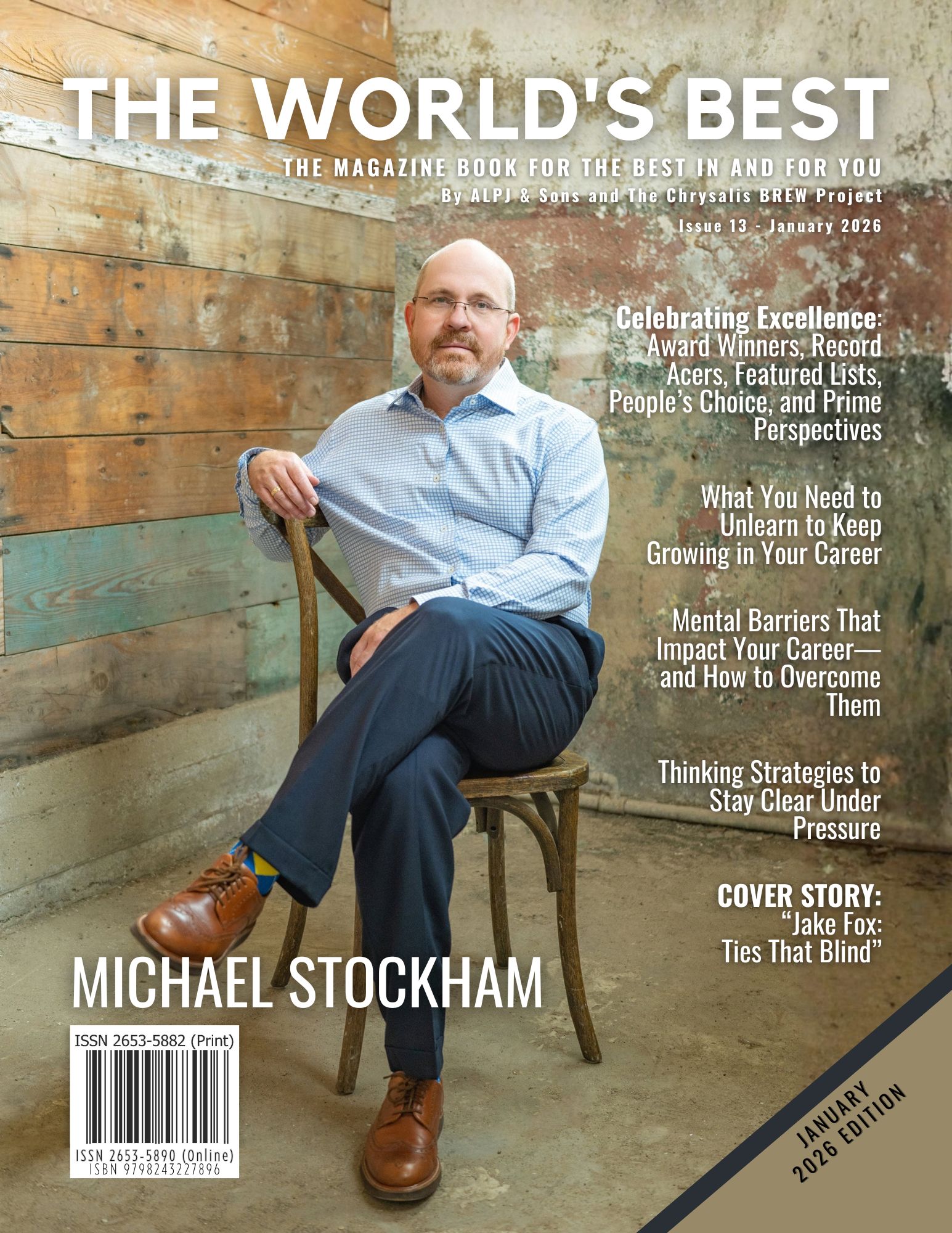
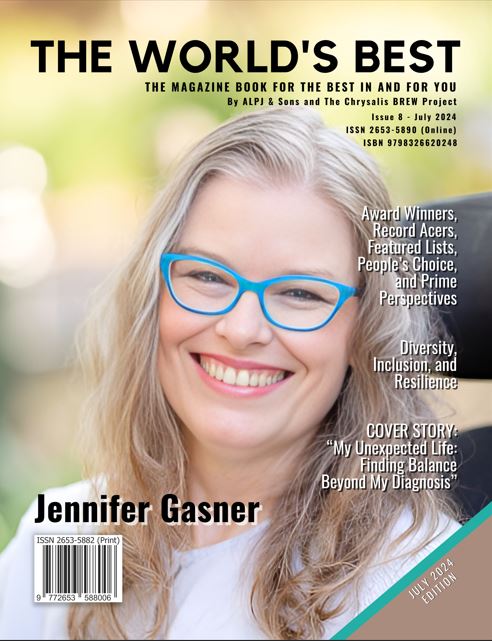
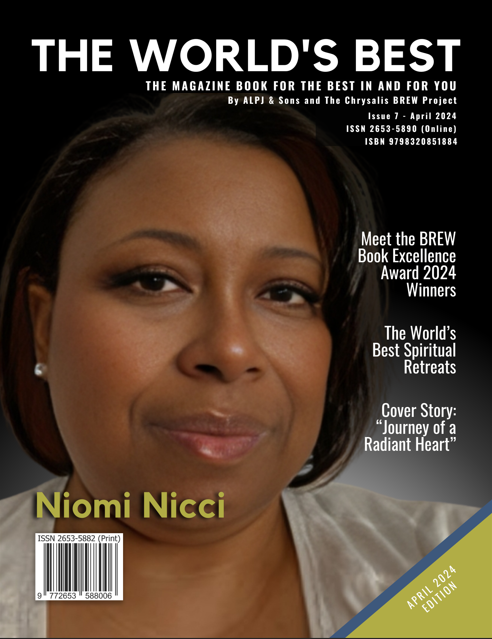
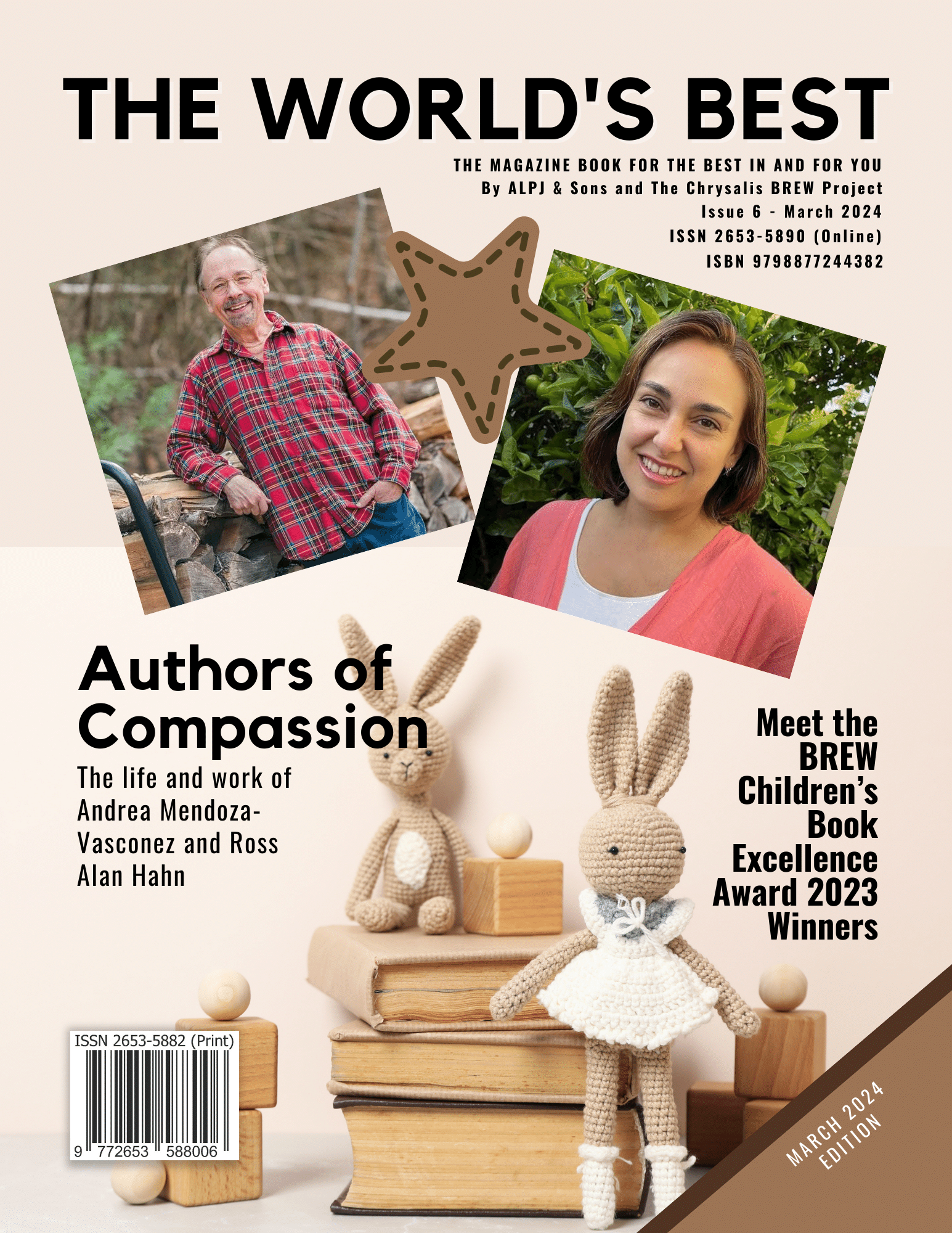
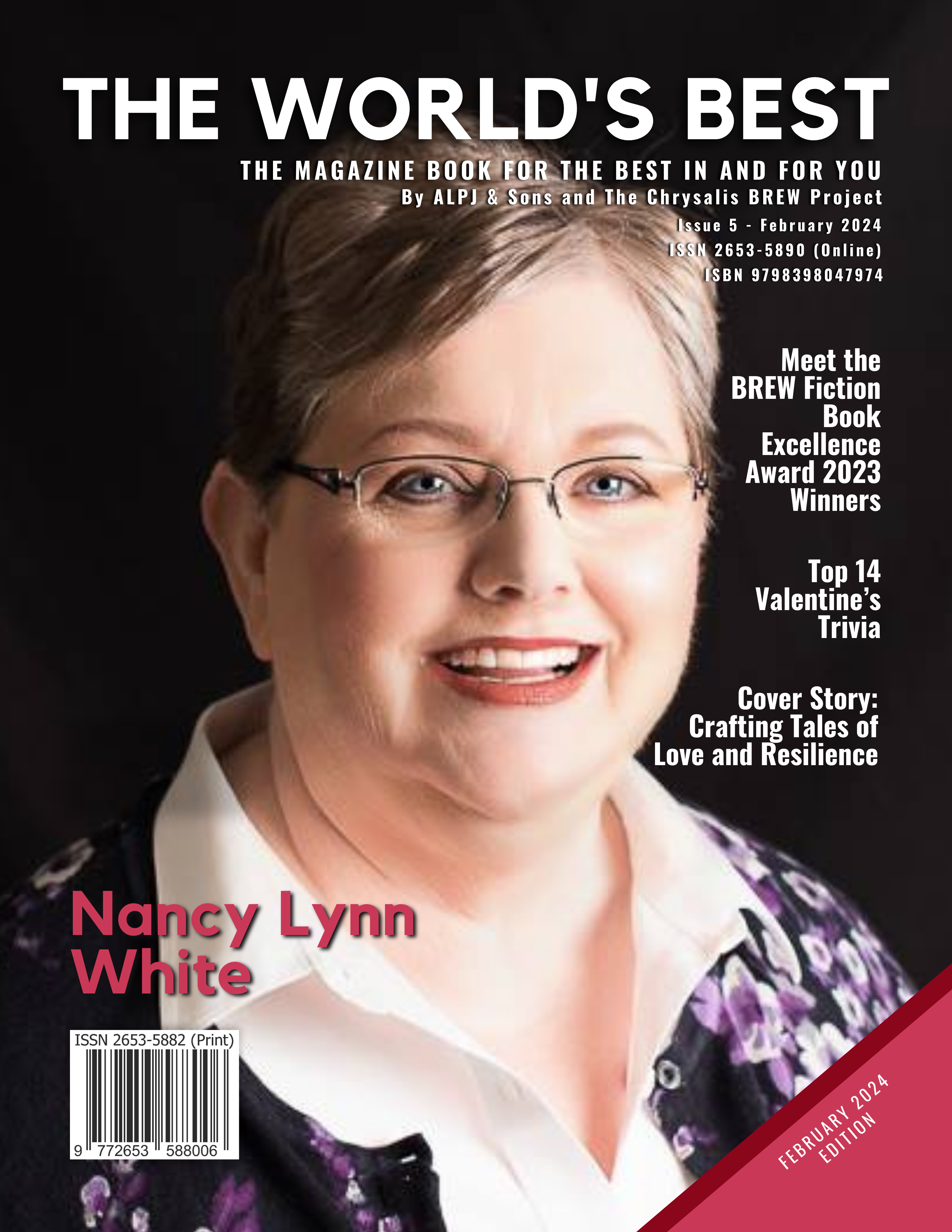

Don’t just read about greatness. Own it!

About Us
The World’s Best Magazine is a print and online publication that highlights the extraordinary. It is your passport to a universe where brilliance knows no bounds. Celebrating outstanding achievements in various fields and industries, we curate and showcase the exceptional, groundbreaking, and culturally significant. Our premier laurels, The World’s Best Awards, commend excellence through a unique process involving subject matter experts and a worldwide audience vote. Explore with us the pinnacle of human achievement and its intersection with diversity, innovation, creativity, and sustainability.
We recognise and honour the Traditional Owners of the land upon which our main office is situated. We extend our deepest respects to Elders past, present, and emerging. We celebrate the stories, culture, and traditions of Aboriginal and Torres Strait Islander Elders from all communities who also reside and work on this land.
Disclaimer: The World’s Best does not provide any form of professional advice. All views and opinions expressed in each post are the contributor’s own. Whereas we implement editorial policies and aim for content accuracy, the details shared on our platforms are intended for informational purposes only. We recommend evaluating each third-party link or site independently, as we cannot be held responsible for any results from their use. In all cases and with no exceptions, you are expected to conduct your own research and seek professional assistance as necessary prior to making any financial, medical, personal, business, or life-changing decisions arising from any content published on this site. All brands and trademarks mentioned belong to their respective owners. Your continued use of our site means you agree with all of these and our other site policies, terms, and conditions. For more details, please refer to the links below.
About | Advertise | Awards | Blogs | Contact | Disclaimer | Submissions | Subscribe | Privacy | Publications | Terms | Winners
The World’s Best: A Magazine That’s All About What’s Great | theworldsbestmagazine.com | Copyright ⓒ 2022-2026
Let’s connect
Discover more from The World's Best
Subscribe to get the latest posts sent to your email.

 The World's Best