
“Getting inside the minds of different people, understanding their motivations, highlighting the threads between the past and present… that’s what writing is all about.”
-Ana Yudin
Content Warning: This interview touches on themes of generational grief, trauma, and memory, which may be distressing for some readers. Reader discretion is advised.
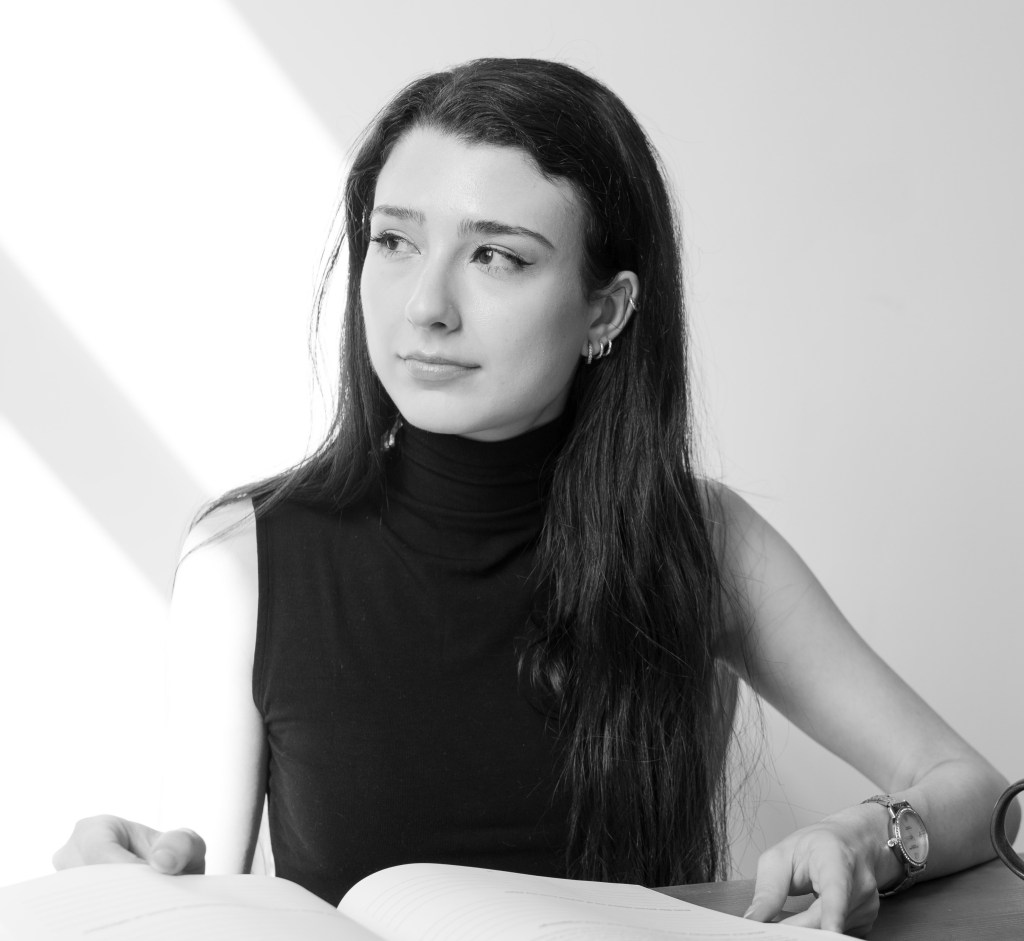
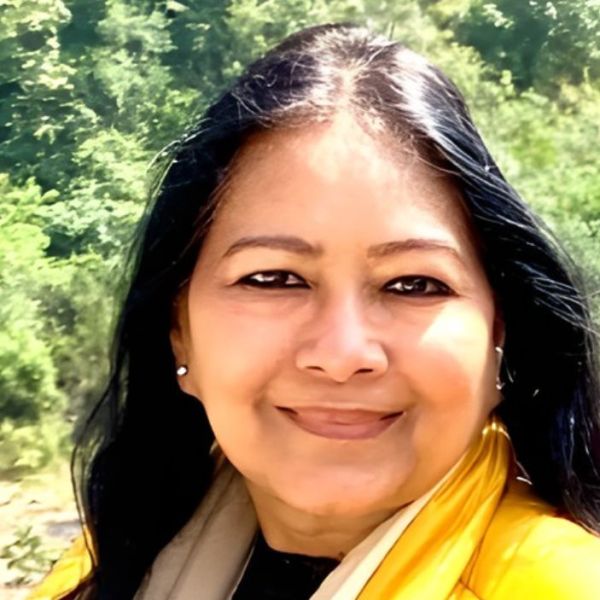
Ana, thank you for joining us today! To start, could you introduce yourself and share your journey with our readers? We’d love to hear about your background, your work, and how your experiences led you to write A Song at Dead Man’s Cove.
Absolutely! Currently, I’m a full-time author and content creator living in Europe. I run two YouTube channels, one dedicated to real-life psychology applications (Psychology with Dr. Ana) and one dedicated to books with a cozy, spooky ambiance (Book & Hearth).
Before returning to Europe to be closer to my Romanian roots, I obtained my doctorate in Clinical Psychology. As it turned out, the things I liked about clinical psychology were also the things I loved about writing—getting inside the minds of different people, understanding their motivations, highlighting the threads between the past and present… Although training for a decade to be a psychologist was fascinating work, I eventually could no longer repress my passion for writing. I shut down my clinical practice, canceled my licensure application, and started fully focusing on the creative branches of my business.
The sparks for A Song at Dead Man’s Cove kindled while I was living in Washington state. Throughout my travels across the Pacific Northwest, I heard the haunting echoes of various tragedies. A lighthouse keeper’s wife who disappeared near a place called Dead Man’s Cove. A businessman who built a fortune, not always in the most ethical of ways. A woman embroiled in a tragic love triangle. These whispers, combined with the raw beauty of the region and my own loneliness in a new place, amalgamated into A Song at Dead Man’s Cove. Additionally, I wove attachment psychology and the archetype of the engulfing mother into the story. My background in psychology definitely informs the psychological development of my characters.
A Song at Dead Man’s Cove has received early recognition and multiple prestigious awards, such as the BREW Seal of Excellence, the Bookish Reader’s Pick Award, and the Narrative Voyager Award. What does it mean to you personally to have your work acknowledged in such a way?
I was in shock when I found out. My husband and I were just getting into the car after a particularly long, hard day, when he said to me, “I got an email about your press release.”
I started to panic, because I hadn’t intended to send an email newsletter or press release that day. Once we got home and I read the announcement myself, I was slack-jawed. This was what I had been working towards for so long—by writing, reading, taking writing workshops, marketing my books, refusing to give up—and finally my investment was starting to pay off. I feel incredibly honored that A Song at Dead Man’s Cove has received a warm reception so far. All I want is for my writing to reach its intended audience, readers who enjoy atmospheric Gothic fiction. Having my writing acknowledged goes very far in helping me accomplish that goal.
Your novel explores deep themes of generational grief and memory. How did these elements come to life in your writing, and what inspired you to blend speculative fiction with these emotional concepts?
The cycle of intergenerational trauma is always on my mind. Having seen it firsthand in a clinical context, I understand how the past lives on in the present. To me, speculative elements are the perfect metaphor for this. Grief, just like supernatural creatures, tends to hide and fester in the dark. It haunts and terrifies us. It makes us doubt our sense of reality. So, mixing the psychological with the speculative made sense.
But beyond that, I’m just a spooky gal year-round. I love to make readers feel a sense of tension and dread, probably because I know what it’s like to be scared of my own shadow in real life. Processing my worst fears through writing helps me gain a sense of control. Ultimately, it helps me overcome my anxieties.
The Chrysalis BREW Project called your book’s thematic structure “melancholy but never despairing.” How do you approach balancing emotional depth and hope within your storytelling?
I see the two as inextricable. Wherever a light shines, there will be a shadow, too. Therefore, the melancholy must always be balanced out by hope. I can’t imagine writing a novel that’s entirely one or the other! That would make for a deeply unsatisfying read.
Can you walk us through the process of crafting A Song at Dead Man’s Cove? How did you shape the dual timelines and create the immersive atmosphere of the coastal town?
Of course! I began A Song at Dead Man’s Cove on a trans-Atlantic flight. I didn’t have a specific narrative in mind, but I’d been drawn to water-spirit legends for a while, so I started writing about a hotel concierge who discovers another person has vanished at a place called Dead Man’s Cove. I kept writing until the first chapter was complete. After that, I took a few months’ break from the manuscript and returned to it only once I’d joined a creative writing workshop.
In setting the atmosphere, I drew from my travels across Washington, Oregon, and British Columbia. The lobby of the Irving Hotel was inspired by the Shelburne Hotel in Seaview, Washington. Parts of its interior and exterior were also inspired by the Craigdarroch Castle in Victoria, British Columbia. The town itself was inspired by Seaside, Oregon. Dead Man’s Cove and its lighthouse were inspired by the actual Dead Man’s Cove and lighthouse in Cape Disappointment.
Regarding the dual timelines, this may earn me some tongue-lashings from fellow authors, but I didn’t craft a very specific outline. I alternated between Zarya and Josephine’s narratives until eventually they converged. I find that taking a fluid approach to writing allows me to come up with way more creative ideas than micro-planning my novels. What naturally arises in the moment usually comes from somewhere deeper inside me. Some might call it the unconscious.
Many reviews highlight the book’s “quiet tension” and “emotional focus.” How important is mood and tone to your writing process, and what do you hope readers take away from the emotional journey of your characters?
Building a sense of mood in my fiction is incredibly important to me. When I read a novel, I like to be transported to that place. Even if the setting is bleak, I want to know exactly how it feels. I’m a very sensory person; I notice tiny, beautiful details throughout the day like dust motes floating through a beam of light, or the fragrant scent of spring wafting through the air. Alchemizing that everyday beauty into words so that other people will then experience that same beauty is, frankly, what I live for.
In terms of the emotional journey of my characters, that usually depends on the particular novel’s themes. I would hope readers of A Song at Dead Man’s Cove walk away from the novel having learned something about attachment psychology. Specifically, that love cannot be taken by force. That no one can avoid intimacy forever. That kinship can be both a blessing and a curse. And that loneliness can feel like death.
As a Doctor of Psychology, how does your professional background influence your writing, especially in creating psychologically complex characters and narratives?
For starters, I love to explore a specific mental or personality disorder in each novel. With my debut novel, The Curse in Their Veins, it was Narcissistic Personality Disorder. With A Song at Dead Man’s Cove, it’s Borderline Personality Disorder. In upcoming books, I explore Postpartum Depression and Obsessive-Compulsive Disorder. My psychological background allows me to dive deep into these mental conditions.
But it goes beyond diagnostic criteria. My psychological lens is psychodynamic, meaning I pay particular attention to people’s defense mechanisms, the things they keep hidden in the unconscious, patterns between their old and current relationships, and the role of early upbringing. All of these elements set the stage for character development, relational tension, and Gothic themes. My novels also contain a great deal of Jungian symbolism. (If you’re not familiar with Carl Jung, he was one of the founding fathers of psychoanalysis, as well as a highly artistic and mystical man whose theories can be used to interpret artwork.)
In addition to your work as a novelist, you also develop journaling workbooks. How do you see these different creative outlets complementing one another, and how do they reflect your personal mission or philosophy?
Thank you for noticing that! Sometimes I feel like there are two parts of me constantly in battle—the artist who just wants to make readers feel something, and the no-nonsense professional who wants to tackle issues through concrete solutions. Fiction is the playground of the former, while self-help is the jungle gym of the latter. It may sound like the two are difficult to integrate, but I actually think it’s necessary for emotional wellbeing. We must process our feelings without trying to manipulate them, and we must at some point find a solution for the future.
I apply this philosophy when things go wrong in my own life. When something traumatic occurs, I give myself a day to cry, sulk, and complain. Then, the next day when I wake up, I grab my mental health journal and jot down everything I need to do to overcome it. I write about what I’ve learned from the experience. I organize my surroundings for a sense of clearheadedness.
I think both halves of the equation are necessary. When people veer too far into either emotional catharsis or compartmentalization, issues can come up.
A Song at Dead Man’s Cove has clearly resonated with readers. How do you envision your book impacting readers, particularly in terms of their relationship with memory and grief?
I hope my book makes readers feel seen and understood, whether they are more like Zarya or Josephine. For those who identify more with Zarya’s character, I hope the novel speaks to their grief. They miss someone who has never even existed—the healthy caregiver they were supposed to have, the one every child deserves. For those who identify more with Josephine’s character, I hope the novel put into words their feelings of emptiness and loneliness. I hope they know that they, too, deserved better. That they deserve compassion, and for someone to finally, truly see them.
Looking ahead, what can we expect from you next? Do you have any upcoming projects, themes you’re excited to explore, or new challenges you’re eager to tackle in your writing?
Yes! I currently have three other manuscripts in the works. The first one, The Splintered Parts, is a psychological thriller with speculative elements about a neuroscience student who begins to think someone—or something—is trying to steal her identity. This one is all about identity issues, since I wrote it during the time when I was transitioning careers. I hope to publish The Splintered Parts this autumn.
The next novel after that will be The Countess of Saint-Germain. If the name “The Count of Saint-Germain” rings familiar to you, then you can probably imagine which supernatural creature makes an appearance in this one… The novel is about a woman in 1700s France who desperately tries to keep her unborn child safe following a traumatic stillbirth. It’s set in a time of political turmoil, overflowing cemeteries, and vampire hysteria. Although I wrote the novel before Robert Eggers’ Nosferatu premiered, the two have a similar atmosphere.
Lastly, the most recent manuscript sitting in my drafts is The Witch Retreat. This novel is highly internal, allowing readers to peer inside the mind of an obsessive-compulsive narrator who has embarked upon a Bacchus-themed influencer retreat in Tuscany. A horned figure keeps tapping at the window of the villa, promising to help the protagonist with one of the other retreat guests who keeps giving her a hard time. The Witch Retreat grapples with scapegoating, releasing over-restraint, and what it means to embody the essence of a deity.
⭐⭐⭐⭐⭐
“Ultimately, writing gives me a sense of control over my fears, and that’s what I want to share with my readers.”
-Ana Yudin
Links
Share Your Insights
What did you think of the blend of psychology and mystery in Ana Yudin’s story?
- How did the themes of grief resonate with you?
- Which character’s journey did you relate to most?
- What part of the article made you think the most?
Leave your thoughts in the comments below!
Alignment with the UN SDGs
- 📚 Promotes quality education through psychological insight and storytelling (SDG 4)
- 💡 Encourages mental well-being and resilience (SDG 3)
- 🌍 Supports cultural heritage and gender representation in literature (SDG 5, SDG 11)
- 🧠 Advances psychological literacy and creative expression (SDG 4, SDG 3)
Other Highlights

Looking for something?
Type in your keyword(s) below and click the “Search” button.
Helpful Shortcuts
More Stories











Print and Digital Magazine

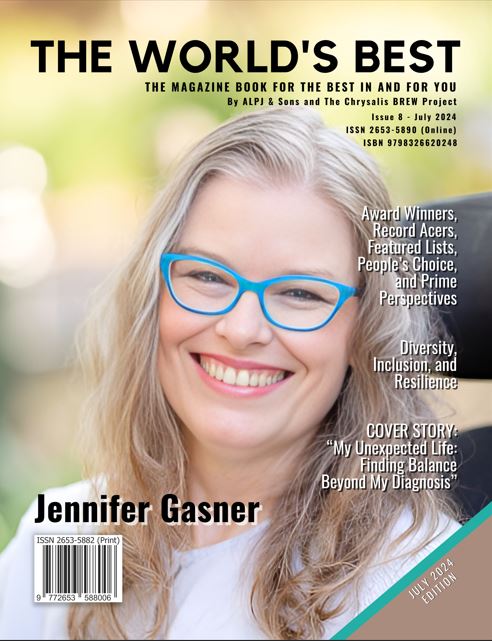
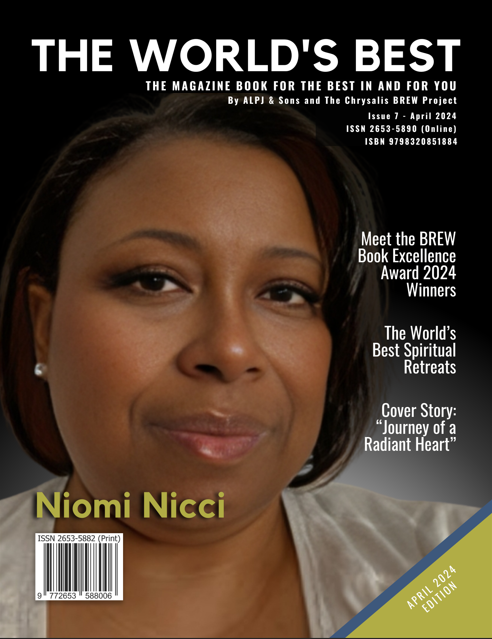
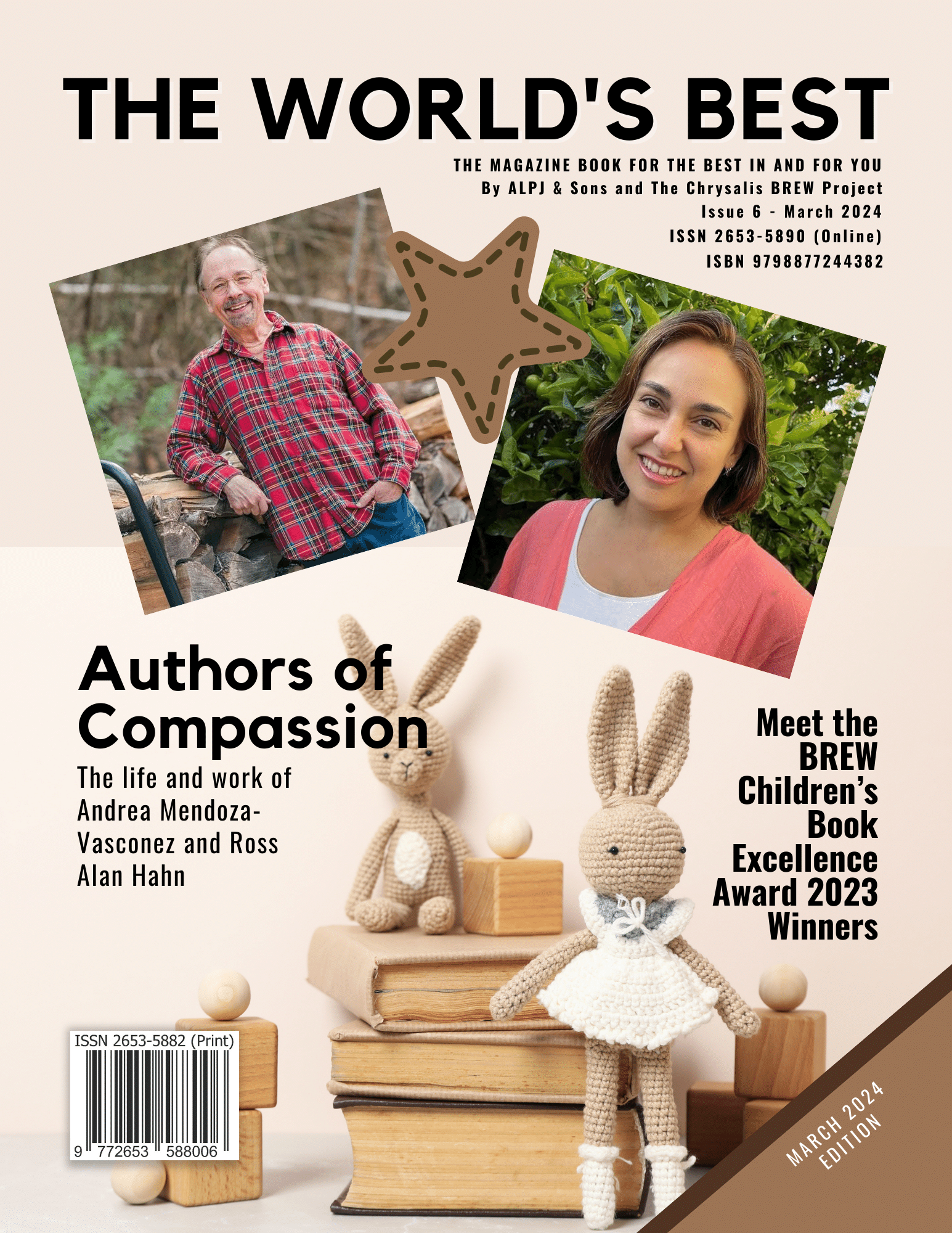
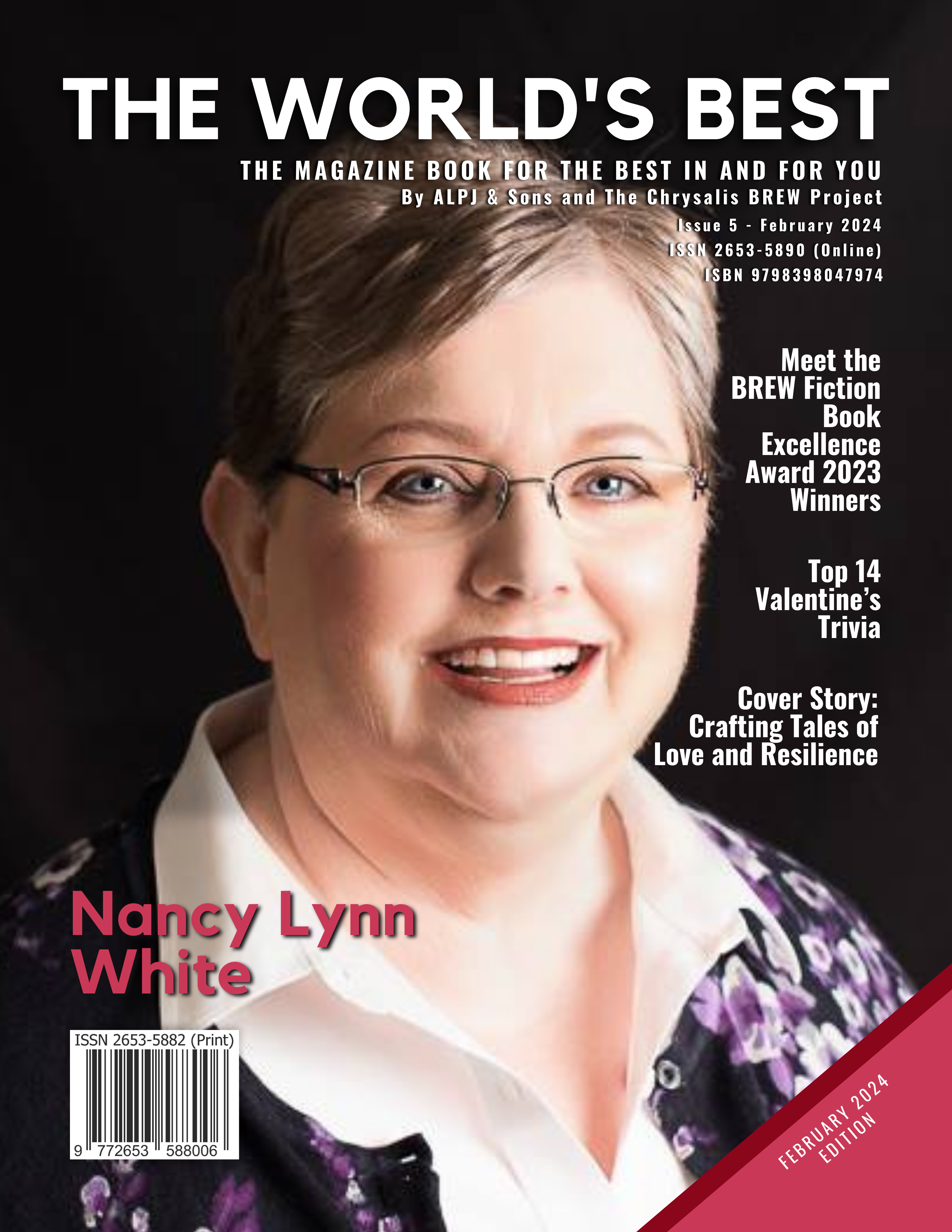


Don’t just read about greatness. Own it!

About Us
The World’s Best Magazine is a print and online publication that highlights the extraordinary. It is your passport to a universe where brilliance knows no bounds. Celebrating outstanding achievements in various fields and industries, we curate and showcase the exceptional, groundbreaking, and culturally significant. Our premier laurels, The World’s Best Awards, commend excellence through a unique process involving subject matter experts and a worldwide audience vote. Explore with us the pinnacle of human achievement and its intersection with diversity, innovation, creativity, and sustainability.
We recognise and honour the Traditional Owners of the land upon which our main office is situated. We extend our deepest respects to Elders past, present, and emerging. We celebrate the stories, culture, and traditions of Aboriginal and Torres Strait Islander Elders from all communities who also reside and work on this land.
Disclaimer: The World’s Best does not provide any form of professional advice. All views and opinions expressed in each post are the contributor’s own. Whereas we implement editorial policies and aim for content accuracy, the details shared on our platforms are intended for informational purposes only. We recommend evaluating each third-party link or site independently, as we cannot be held responsible for any results from their use. In all cases and with no exceptions, you are expected to conduct your own research and seek professional assistance as necessary prior to making any financial, medical, personal, business, or life-changing decisions arising from any content published on this site. All brands and trademarks mentioned belong to their respective owners. Your continued use of our site means you agree with all of these and our other site policies, terms, and conditions. For more details, please refer to the links below.
About | Advertise | Awards | Blogs | Contact | Disclaimer | Submissions | Subscribe | Privacy | Publications | Terms | Winners
The World’s Best: A Magazine That’s All About What’s Great | theworldsbestmagazine.com | Copyright ⓒ 2022-2026
Let’s connect
Discover more from The World's Best
Subscribe to get the latest posts sent to your email.

 The World's Best
One thought on “Ana Yudin: On Memory and Grief”