
The courage to reinvent is a trait shared by the most successful industry disruptors. These individuals and companies didn’t just follow trends; they shaped them, challenging the status quo with innovation, resilience, and vision. History has shown that breakthroughs often come from the boldest moves, the ones that push boundaries despite the risks. As business environments evolve and new challenges arise, we must ask: What drives the innovators who dare to defy conventional wisdom? How can we cultivate the courage to reinvent ourselves in our personal and professional lives? Here’s what industry experts say.
Overcoming Industry Skepticism
Disrupting an industry isn’t just about introducing a better solution—it’s about convincing people to rethink long-held beliefs. The biggest challenge I faced wasn’t proving the effectiveness of a new approach—it was getting people to let go of what they thought they already knew.
Early on, I walked into meetings with scientific data, customer testimonials, and case studies, expecting them to speak for themselves. I quickly learned that facts alone don’t change minds—people hold onto established practices because they feel safe.
One of the most frustrating moments came when presenting to a room full of industry experts. Despite having clinical evidence that supported a more effective way to enhance movement and recovery, I was met with skepticism. Some dismissed the findings outright, while others said, “If this worked, why hasn’t it been widely adopted yet?” That’s when I realized the real barrier wasn’t the effectiveness of innovation, but the comfort of familiarity.
Rather than debating, I focused on proving results in real-world applications:
- Instead of arguing with skeptics, I worked with early adopters—physical therapists, trainers, and medical professionals who were open to change. Their success stories spoke louder than any research paper.
- Live demonstrations replaced marketing talk. Once people saw the impact firsthand, their perception shifted. Seeing a hesitant athlete experience instant improvement in mobility was more powerful than any statistic.
- The results fueled organic credibility. Word-of-mouth from those who saw benefits firsthand did more than any sales pitch ever could.
Advice for Challenging the Status Quo
- Lead with evidence, but understand that trust takes time. Data is crucial, but people believe proof they can see and experience.
- Find the right advocates. Not everyone will listen, but those who do can become your biggest champions.
- Don’t waste energy convincing those who refuse to be convinced. Focus on proving value to the people who are willing to give innovation a chance.
Real disruption doesn’t happen overnight. The biggest shifts don’t come from forcing change—they come when proof becomes impossible to ignore. If you’re challenging an industry, expect resistance, but keep moving forward until the results speak for themselves.

Murray Seaton, Founder and CEO / Health & Fitness Entrepreneur, Hypervibe (Vibration Plates)
Data-Driven Innovation in SEO
Disrupting the SEO industry comes with unique challenges, largely because it’s a field steeped in longstanding, often outdated practices that are still effective in some sense. This causes people to resist change. One of the toughest hurdles legacy SEO experts encounter is moving away from conventional tactics like keyword stuffing, link farming, and superficial on-page optimization.
In the early days, many businesses were reluctant to abandon the “tried and true” methods they had relied on for years. They were accustomed to strategies that promised quick wins, even if those methods were increasingly penalized by evolving search engine algorithms. The challenge, therefore, was twofold: technically reimagining SEO and, more importantly, transforming the mindset around what truly drives long-term success in digital marketing.
To address this, I focused on building a compelling case for data-driven innovation by implementing pilot projects that combined modern techniques (like improving site architecture, optimizing content for user intent, and leveraging AI-powered analytics) in order to gather robust data demonstrating the benefits of these new strategies. Incremental wins, such as improved engagement metrics and sustainable ranking improvements, helped shift the narrative. This evidence-based approach gradually earned the trust of skeptical stakeholders and laid the groundwork for broader industry acceptance.
For those looking to challenge the status quo in SEO, my advice is to remain resilient and persistent. Stay current with the latest algorithm updates and technological advancements, and be prepared to continually educate your team and clients on why these changes matter. Emphasize clear, measurable outcomes and don’t shy away from running controlled experiments to prove your point. Remember that disruption is a gradual process, and small, consistent victories can eventually lead to significant shifts in how the industry approaches SEO.
Ultimately, the most transformative changes in SEO stem from questioning established assumptions and embracing a culture of continuous learning and adaptation. Prioritizing quality, transparency, and a deep understanding of user behavior is what really drives innovation that not only overcomes resistance but also sets the stage for a more robust, effective, and ethical digital marketing landscape.

Joe Benson, Cofounder, Eversite
Transforming Party Rentals with Quality Service
When I started my company in 2001, most companies operated the same way for decades—offering essential rentals with little emphasis on customer experience or innovation. The market was fragmented, customer service was hit-or-miss, and safety standards weren’t always consistent. I knew that to stand out, I had to change how people viewed party rentals and create an experience, not just provide equipment.
The biggest hurdle was convincing customers and competitors that a higher level of service, quality, and safety wasn’t just possible—it should be the standard. We invested in better equipment, set strict safety protocols, and built a reputation for reliability. We didn’t just rent out bounce houses; we created seamless, stress-free events. That took time, persistence, and a lot of trial and error. But people began to see the difference once we started working with major clients like the Dallas Cowboys and the Plano Balloon Festival.
My advice for anyone looking to challenge the status quo in their industry is simple: focus on what’s missing and do it better than anyone else. Don’t just compete—change the game. Customers recognize quality, and word spreads if you’re delivering a better product or service. It’s not always easy, and the industry might resist change initially, but if you stay consistent, push boundaries, and never compromise on your standards, you’ll carve out your place.

Joe Horan, Owner & CEO, Jumper Bee
Proving Small Teams Can Compete
When I set out to innovate in the online gaming space, the biggest challenge wasn’t technology—it was skepticism. Many industry veterans doubted that independent developers could compete with major studios without massive budgets. The prevailing belief was that only big corporations had the resources to build engaging, high-quality games. I knew this wasn’t true. By leveraging agile development, community-driven feedback, and cutting-edge monetization models, we proved that small teams could create blockbuster experiences.
To challenge the status quo, my advice is simple: validate your vision through execution, not opinions. The industry will always have gatekeepers who say, “That won’t work.” Don’t let their perspective define your limits. Instead, iterate rapidly, listen to your audience, and stay adaptive. Disruption isn’t about loud ideas—it’s about consistent, undeniable results.
Breaking through resistance requires resilience. There were moments when we doubted ourselves, but belief backed by action silences critics. If you’re committed to transforming an industry, let data, performance, and user engagement prove your model. Stay persistent, stay innovative, and most importantly—stay fearless.

Marin Cristian-Ovidiu, CEO, Online Games
Embracing Eco-Friendly Cleaning Methods
Our greatest challenge in disrupting the cleaning industry came from convincing both clients and staff to embrace eco-friendly cleaning methods when toxic chemicals were the established norm.
When we first introduced natural cleaning solutions, we faced significant skepticism from all sides. Property managers doubted these products could handle tough cleaning challenges, while our experienced cleaning teams were hesitant to abandon the harsh chemicals they’d used for years. The turning point came when we organized side-by-side demonstrations showing our plant-based cleaners outperforming traditional products on challenging surfaces like shower glass and kitchen grease.
The most valuable lesson from this experience was realizing that disruption requires proof, not just promises. Rather than broadly claiming our eco-friendly approach was “better,” we documented specific results with photos and client testimonials. When potential clients could see actual before-and-after transformations of homes like theirs, resistance melted away.
My advice to others challenging industry norms: invest heavily in tangible evidence that your new approach works. People resist change not because they’re stubborn, but because they fear the unknown. We found success by creating a library of case studies addressing every cleaning scenario our clients might encounter, demonstrating that our innovation wasn’t just different—it was demonstrably superior.
Most importantly, remember that disruption happens at the intersection of better results and emotional connection. Our eco-friendly methods succeeded not just because they cleaned effectively, but because they aligned with our clients’ growing environmental values. True disruption satisfies both practical needs and deeper aspirations that the status quo hasn’t addressed.

Joseph Passalacqua, Owner & CEO, Maid Sailors
Making Estate Planning Accessible
Disrupting the legal industry has been a rewarding but challenging journey. One of the most difficult challenges I faced was shifting people’s mindset around the complexity of estate planning. Traditionally, estate planning is viewed as something only necessary for the wealthy or older generations, which created a significant barrier to younger people seeking out our services.
To overcome this, we had to break down these misconceptions and make estate planning accessible and understandable for a broader audience. One approach that worked was creating educational content such as blog posts, webinars, and easy-to-digest guides, that addressed common concerns and showed the practical benefits of planning ahead. This not only boosted our website traffic by 18%, but it also led to a 12% increase in consultations from clients in their 30s and 40s.
My advice to anyone looking to challenge the status quo is to understand the deeply ingrained perceptions in your industry and find a way to educate and empower your audience. It’s not always about creating something entirely new, it’s often about changing the conversation and offering value in a way that resonates.

Oliver Morrisey, Owner, Director, Empower Wills & Estate Lawyers
Re-Educating on Solar Benefits
One of the biggest challenges in disrupting the solar industry was cutting through the noise of misinformation. For years, people were told solar was either too expensive, unreliable, or not worth the investment. Changing that mindset was about re-educating customers, businesses, and even policymakers on the long-term benefits of solar and sustainability.
The key was making solar simple, transparent, and accessible. We had to demystify the process, build trust, and show people that clean energy isn’t just for the wealthy or the eco-conscious—it’s a smart financial decision for everyone. That meant challenging outdated policies, pushing for better incentives, and proving that solar could be affordable and scalable.
My biggest advice for anyone looking to disrupt an industry is to embrace the resistance. If people are pushing back, it means you’re onto something big. Stay focused on your value, communicate it relentlessly, and don’t get caught up in the negativity. Change takes time, but the industry will eventually have to catch up if you’re solving a real problem and delivering on your promise.

Phill Stevens, Founder & CEO, Avail Solar
Proving Data-Driven PR Success
One of the most difficult challenges I faced in disrupting the PR and branding industry was breaking away from traditional PR models and proving that a data-driven, scalable approach could outperform outdated, relationship-dependent strategies. The industry has long been built on personal connections and exclusivity, and early on, I encountered resistance from those who believed PR success was solely about who you knew. I had to redefine the narrative—showing that with the right strategy, proprietary frameworks, and analytics, brands could gain massive media exposure without relying on gatekeepers.
My advice to those challenging the status quo is to prove your value with results relentlessly. Innovation is met with skepticism, but numbers don’t lie—if you can demonstrate measurable success, you’ll shift industry perceptions. Educate your audience, build credibility, and don’t be afraid to take a stand on why your approach is different. Surround yourself with people who understand your vision, and most importantly, don’t wait for permission to disrupt—create the proof that your way works and the industry will have no choice but to pay attention.

Kristin Marquet, Founder & Creative Director, Marquet Media
Specializing in Backpacker Job Market
Starting my business wasn’t merely about creating a job site—it was about disrupting the old-school methods backpackers and employers found each other in Australia. The greatest challenge? Cutting through an industry of generic job sites and word-of-mouth recruitment.
Classic job boards were for full-time professionals, and a lot of employers used bulletin boards and face-to-face referrals. Getting both backpackers and businesses to go online—and trust a specialist site—wasn’t simple.
How We Did It:
- Hyper-Specialization – Rather than competing with huge job boards, we targeted only working holiday-makers and built a concentrated, high-quality marketplace.
- Demonstrating the Value – We established credibility by providing job postings for free initially, demonstrating to employers that our site produced quality candidates.
- Listening to Users – Rather than guessing what backpackers and employers desired, we continually adjusted based on genuine feedback.
Advice for Challengers:
- Identify the industry’s pain points and address them better than anyone else.
- Take your time—disruption is a slow process. Trust takes a while to build, but once established, growth ensues.
- Educate the market. Don’t merely provide a new solution—explain why it is superior and how it will improve users.

Matthew Heyes, Founder, Backpacker Job Board
Transitioning Roofing to Digital Marketing
One of the toughest challenges we faced was moving away from traditional, word-of-mouth marketing to a more modern, digital approach. The roofing industry has always been very old-school, relying heavily on local reputation and referrals. Shifting away from that to focus on online marketing, customer reviews, and social media was a huge leap.
The real difficulty came in convincing the team and our long-time clients that this new approach would work. Many were skeptical at first, but we persisted. By consistently sharing before-and-after project photos, client testimonials, and educational content about roofing, we started building trust online. Over time, we saw a 21% increase in leads from digital channels, which was a huge win for us.
My advice to others looking to challenge the status quo is simple: Stay patient and persistent. Change takes time, and you’ll encounter plenty of resistance. But if you keep pushing, gather data to prove your point, and stay adaptable, you can shift not just your own business but possibly the entire industry.

Daniel Roberts, Chief Executive Officer, Lava Roofing
Building Trust in Digital Assets
The most difficult challenge I faced in disrupting this industry was breaking through the wall of mistrust. The digital asset space is fraught with uncertainty and a lack of confidence due to rampant fraud and user error. People are understandably cautious when it comes to sharing sensitive information about their wallets or seeking help with recovery. To overcome this, I made transparency, security, and ethical standards the foundation of my company. We embraced a meticulous verification process and state-of-the-art technology to inspire confidence in our clients.
My advice to others who want to challenge the status quo is simple: lead with integrity and constantly educate both yourself and your audience. You need to deeply understand the pain points of those you serve and focus on building solutions that truly address their needs. More importantly, never compromise on trust—it’s the currency that makes innovation possible in industries built on skepticism.

Robbert Bink, Founder, Crypto Recovers
Integrating Modern Healthcare Solutions
One of our biggest challenges in transforming healthcare technology was bridging the gap between outdated legacy systems and modern digital solutions. Many providers were reluctant to abandon familiar workflows, even when inefficiencies were obvious.
Rather than forcing a complete overhaul, we took a practical approach—developing custom integration solutions that seamlessly connected legacy systems with modern platforms. I remember working with a provider struggling to link their EHR with remote patient monitoring tools. Instead of replacing their entire system, we built a tailored middleware solution that automated data exchange, improving efficiency without disrupting daily operations.
If there’s one piece of advice I’d share with anyone trying to disrupt their industry, it’s this: start small and prove value early. Focus on solving real pain points with minimal disruption. Small wins build trust, and that trust is what ultimately drives meaningful transformation.

Riken Shah, Founder & CEO, OSP Labs
Proving Freelance Marketing’s Value
Biggest challenge? Convincing businesses that freelance and fractional marketing isn’t a gamble—it’s the future. Companies were stuck in the old-school mindset that great marketing only happens in-house. We had to prove that the best talent isn’t tied to a 9-to-5 desk and that hiring on-demand experts can actually be more efficient, more cost-effective, and, frankly, way better.
Advice for disruptors? Be relentless. People cling to “the way things have always been done,” and they won’t change just because you have a cool idea. You have to show them why the old way is broken and make switching to your solution a no-brainer. Challenge assumptions, back it up with results, and don’t waste time convincing those who refuse to evolve. The future belongs to the bold—so go shake things up.

Justin Belmont, Founder & CEO, Prose
Educating on Cloud-Based Field Management
The biggest challenge we faced in disrupting the field management space was resistance to change. The majority of companies were rooted in traditional, manual processes and were not willing to transition to cloud-based platforms. Fear of security threats, cost considerations, and the complexity of the process deterred most from adopting new SaaS technology.
In order to counter this, we focused on educating our potential clients about the long-term benefits of cloud technology—namely, instant data, agility, and lower costs. Free trials and proof of concept were also offered to allow firms to realize the value on their own terms.
My advice to other changemakers who wish to disrupt the status quo is to be patient and persistent. Disruption does not happen overnight, and you must be willing to work with resistance. Work to establish trust through education and provide clear, tangible value to your customers. You are successful when you demonstrate, step by step, the value of your solution.

Mark Tipton, CEO & Founder, Aspire
Proving AI-Driven SEO’s Effectiveness
The biggest challenge I faced in disrupting digital marketing was proving that AI-driven SEO and content tools could outperform traditional methods.
Many businesses were skeptical, stuck in outdated strategies that no longer delivered results.
Convincing clients to embrace AI automation for SEO, video marketing, and organic growth was an uphill battle.
To overcome this, I focused on data-driven case studies—showing real results instead of just talking about potential. Transparency was key; I shared failures and successes, building trust through proof.
My advice? Challenge the status quo by delivering undeniable value. Innovate, educate your audience, and stay persistent. Disruption takes time, but results always speak louder than resistance.

Anatolii Ulitovskyi, Founder, Unmiss
Overcoming Resistance to Change
Disrupting an industry is tough because people are naturally resistant to change. The hardest challenge I’ve faced is overcoming the “this is how we’ve always done it” mindset. Even if you have a great idea, getting others to take the leap is hard, especially when they’re comfortable with the status quo. But change is inevitable—just look at how quickly remote work became the norm during the pandemic. When people see the benefits, they’ll adapt.
The world is constantly changing. What worked yesterday may not work tomorrow. Take the rapid shift to remote work—just a few years ago, businesses scoffed at the idea. But when the pandemic forced change, it wasn’t just about keeping the lights on. It showed that what seemed impossible could be done.
The same principle applies in any industry. If you can create a scenario where the new way feels inevitable, you’ve cracked the code. If you introduce change gradually, then build momentum, others will start to follow. The key is showing the end result and how it outweighs the risks. If you want to challenge the status quo, keep pushing. Show the value of your idea, even if people resist at first. The world changes when the right solution meets the right moment. What this means for you is simple: stay persistent, prove the value, and others will follow.

Justin Abrams, Founder & CEO, Aryo Consulting Group
Simplifying International Shipping
Disrupting the shipping and logistics industry isn’t for the faint of heart. One of the biggest challenges we faced was changing customer expectations around international shipping. People were used to complicated processes, hidden fees, and unreliable timelines. We set out to simplify that experience, but getting customers to trust a new way of doing things took time.
The industry itself wasn’t exactly welcoming to change, either. Many traditional players had no reason to adapt because their business model worked—for them, not necessarily for the customer. We had to break through that resistance by proving that a transparent, customer-first approach wasn’t just a marketing pitch; it was the future of shipping.
My advice to anyone looking to shake up an industry is simple: don’t just be different—be better. Customers are open to change if it genuinely improves their experience. Focus on solving real problems, communicate clearly, and don’t let early resistance deter you. It takes time to shift perceptions, but they won’t go back once people see a better way. That’s how you create lasting disruption.

Wayne Mills, Head of Operations, Seven Seas Worldwide
Have Your Say
- Have you experienced a moment where reinvention led to your success?
- What’s the biggest obstacle to reinventing in your field?
- How do you think industry disruptors can inspire others to take bold steps?
Alignment with the UN SDGs
- Promotes innovation and sustainable growth (SDG 9)
- Encourages responsible consumption and production (SDG 12)
- Supports economic growth and decent work (SDG 8)
Note: The views and opinions expressed in the content provided on this page are those of the individual authors and do not necessarily reflect the official policy or position of any organizations mentioned. The information provided is for educational and informational purposes only and should not be interpreted as professional advice. Readers should consult with relevant experts or professionals for guidance specific to their circumstances. The examples used are for illustrative purposes and results may vary depending on various factors. Any external links provided are for convenience, and we do not endorse or take responsibility for the content, products, or services available through these links.
⭐⭐⭐⭐⭐
Related

Verses That Transform Leadership
What poem or line quietly changes how you face big decisions or challenges? Explore this expert roundup to see how literary insights guide real-life choices and personal resilience.

Written Works That Shaped Thinking
What single insight can quietly reshape how you approach challenges, relationships, or career decisions? Explore this expert roundup to see how reflective reading can transform everyday thinking and choices.

Exploring Narrative, Healing, and the Human Mind with Verlin Darrow
Ever wondered how surviving earthquakes, outrunning tornadoes, and dodging a gun shaped a mystery writer’s mind? Discover Verlin’s extraordinary life experiences and how they feed the thrilling stories on every page.
Continue reading Exploring Narrative, Healing, and the Human Mind with Verlin Darrow
Exploring Story, Place, and Imagination with Dust Kunkel
Ever wondered how a childhood across continents and rivers becomes the fuel for storytelling? Discover how Dust Kunkel’s life shaped his novel and worldview — read the full interview to explore it.
Continue reading Exploring Story, Place, and Imagination with Dust Kunkel
Something went wrong. Please refresh the page and/or try again.
Other Highlights

Looking for something?
Type in your keyword(s) below and click the “Search” button.
Helpful Shortcuts
More Stories


























Print and Digital Magazine

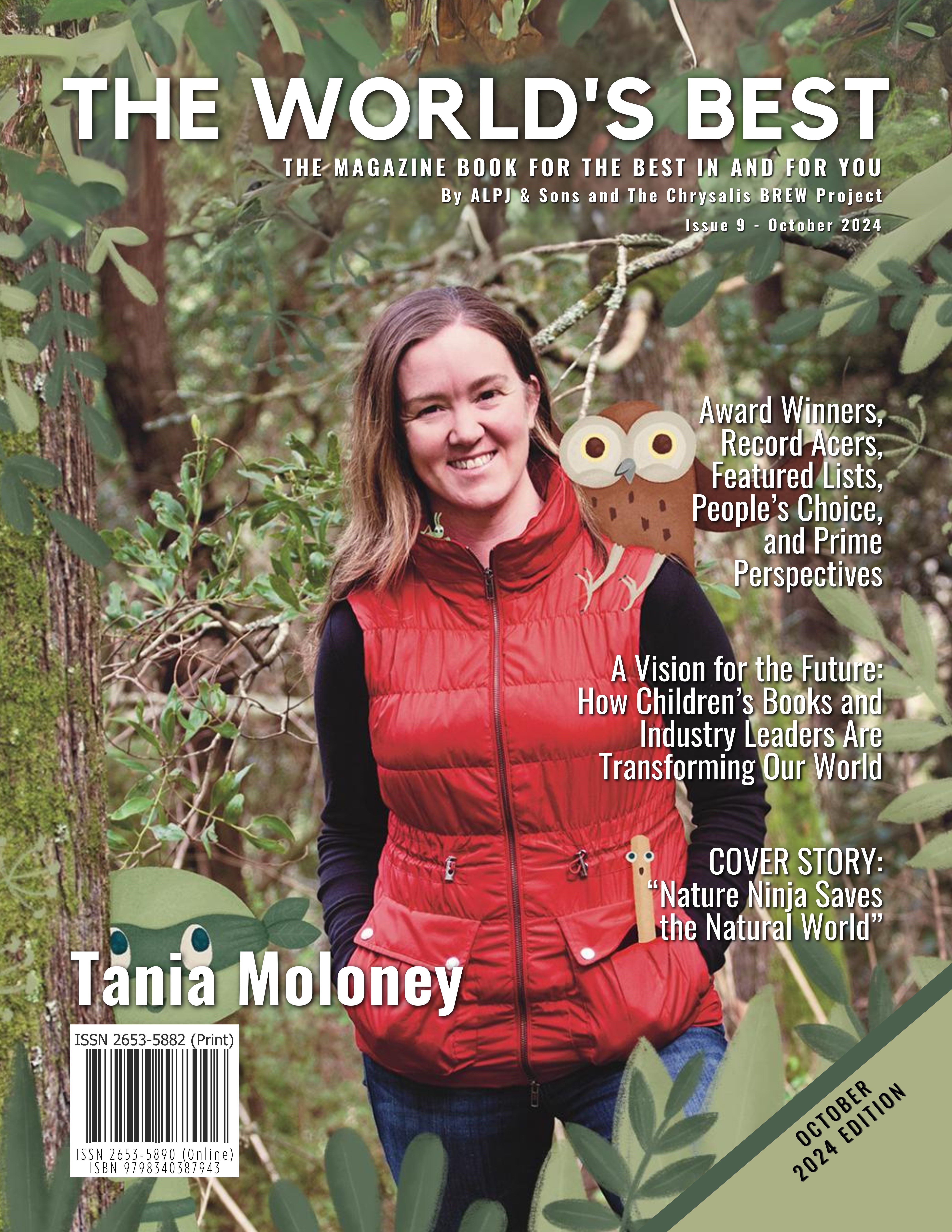
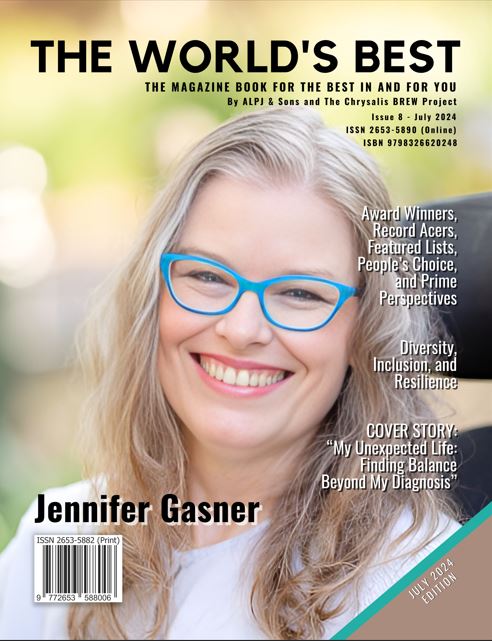
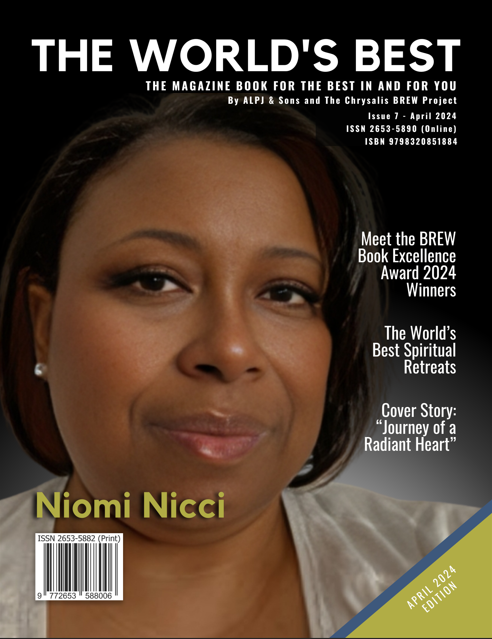

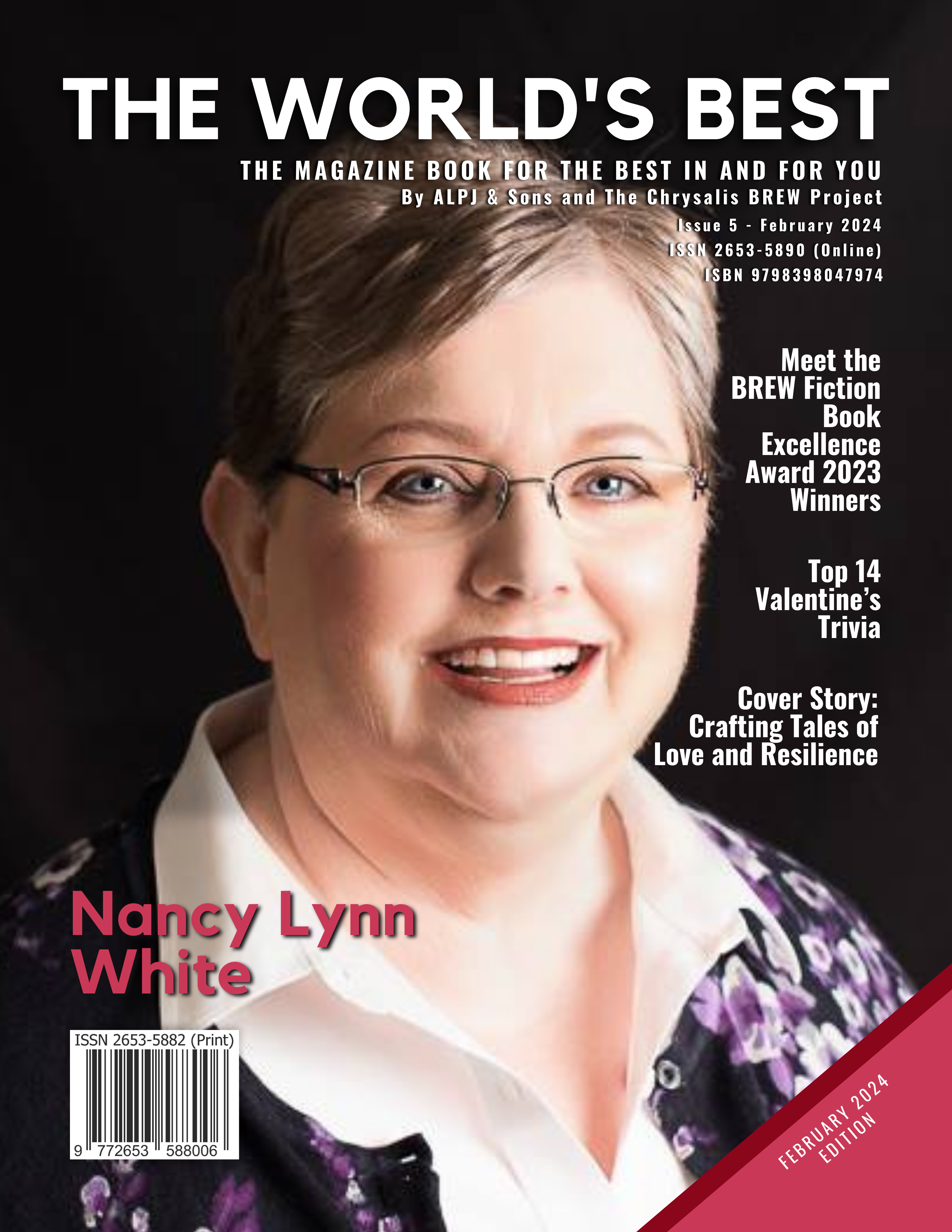


Don’t just read about greatness. Own it!

About Us
The World’s Best Magazine is a print and online publication that highlights the extraordinary. It is your passport to a universe where brilliance knows no bounds. Celebrating outstanding achievements in various fields and industries, we curate and showcase the exceptional, groundbreaking, and culturally significant. Our premier laurels, The World’s Best Awards, commend excellence through a unique process involving subject matter experts and a worldwide audience vote. Explore with us the pinnacle of human achievement and its intersection with diversity, innovation, creativity, and sustainability.
We recognise and honour the Traditional Owners of the land upon which our main office is situated. We extend our deepest respects to Elders past, present, and emerging. We celebrate the stories, culture, and traditions of Aboriginal and Torres Strait Islander Elders from all communities who also reside and work on this land.
Disclaimer: The World’s Best does not provide any form of professional advice. All views and opinions expressed in each post are the contributor’s own. Whereas we implement editorial policies and aim for content accuracy, the details shared on our platforms are intended for informational purposes only. We recommend evaluating each third-party link or site independently, as we cannot be held responsible for any results from their use. In all cases and with no exceptions, you are expected to conduct your own research and seek professional assistance as necessary prior to making any financial, medical, personal, business, or life-changing decisions arising from any content published on this site. All brands and trademarks mentioned belong to their respective owners. Your continued use of our site means you agree with all of these and our other site policies, terms, and conditions. For more details, please refer to the links below.
About | Advertise | Awards | Blogs | Contact | Disclaimer | Submissions | Subscribe | Privacy | Publications | Terms | Winners
The World’s Best: A Magazine That’s All About What’s Great | theworldsbestmagazine.com | Copyright ⓒ 2022-2026
Let’s connect
Discover more from The World's Best
Subscribe to get the latest posts sent to your email.

 The World's Best