
“Books are a uniquely portable magic,” Stephen King once wrote—and history proves him right. From Galileo’s banned treatises to the diaries that shaped social movements, books have ignited revolutions, transformed thinking, and even shifted the course of nations. Scientific studies show that reading not only builds empathy but also alters brain structure, fostering deeper understanding and memory. But what makes a book truly groundbreaking? Is it the innovation in its ideas, the courage behind its words, or its enduring impact on humanity? In this expert roundup, we explore the defining traits of the world’s most transformative literary works—one thoughtful page at a time.
Enheduanna: First Author Reshapes Written Word
When considering the world’s most groundbreaking book, one must look beyond mere words and into the transformative power of ideas. For this reason, I consider the works of Enheduanna, the world’s first known author, as the most revolutionary contribution to literature. Enheduanna, a princess, priestess, and the daughter of Sargon of Akkad—the founder of the Akkadian Empire—lived in the 23rd century BCE in ancient Mesopotamia (roughly 2285-2250 BCE). She fundamentally reshaped the concept of authorship, identity, and the written word.
Enheduanna’s significance lies not in being the first to write—older works like the Epic of Gilgamesh predate her—but in being the first to explicitly claim authorship of her work. At the end of her poetry, she proudly declared: “The compiler of the tablet (is) Enheduanna. My lord, that which has been created (here) no one has created before,” essentially stating that she “herself gave birth” to the work. This bold assertion of ownership was unprecedented, marking her as the first writer in recorded history to step into her authorship and immortalize her voice.
Her works, including hymns to the goddess Inanna, were deeply personal and reflective, blending spiritual devotion with autobiographical elements. She introduced the idea of stepping forward into one’s writing, paving the way for memoirs and personal narratives. Enheduanna’s ability to intertwine the personal with the divine and political remains groundbreaking, as she demonstrated that writing is not only a tool for recording history but also for shaping it.
Enheduanna’s legacy as a writer is especially meaningful to me, as she is part of the ancestral lineage of the people from my region. Her story, like so many others, was buried for centuries under the sands of time. Yet, the power of her words resurfaced in 1927 when British archaeologist Sir Leonard Woolley unearthed the Enheduanna disk, a calcite artifact depicting her, during excavations at the Sumerian site of Ur. This discovery reignited global recognition of her contributions, proving that the written word can transcend time and rediscover its audience across millennia.
Her bravery in claiming authorship shows the power of the written word to challenge norms, assert identity, and reshape the world—a timeless testament to the courage it takes to say, “It is I who wrote this.”
Weam Namou, Author & Filmmaker, Unique Voices in Films
‘The Gift’ Challenges Transactional Worldview
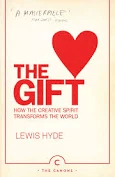
The book that profoundly impacted me was “The Gift” by Lewis Hyde. It doesn’t shout or make a sales pitch. Instead, it quietly unravels the entire logic most people are taught to live by—transaction, productivity, ownership—and replaces it with the idea of giving without expectation of return. When I first read it, I was leading a multi-million dollar initiative involving three agencies and a long roadmap. After reading just ten pages, I began questioning the entire structure. I had to put the book down twice because I felt uneasy. That’s how I knew it mattered.
What makes it bold is how it invites you to live in a way that doesn’t fit neatly into metrics. It offers no promise of reward. It simply says, “Here is another way to move through the world.” I finished it in a quiet place in Big Sur and didn’t speak for two hours afterward. Since then, I have given away nine copies. None have come back. That feels right. Some books are meant to stay in motion.
Adam Klein, Certified Integral Coach® and Managing Director, New Ventures West
‘Sapiens’ Reframes Human History and Progress
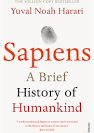
For me, “Sapiens” by Yuval Noah Harari is one of the most groundbreaking books I’ve ever read. It completely changed how I think about human history, society, and even how we define progress. Harari doesn’t just explain what happened; he questions why we believe the stories we do about money, religion, politics, and power.
What makes it bold is how it challenges deeply rooted assumptions. It forces you to step back and see how much of our world is built on shared myths, not just facts. I remember putting the book down every few chapters just to process how differently I started viewing things like capitalism or nationalism.
It’s not just a history book; it’s a lens that changes how you interpret the present. That shift in perspective is what makes it so powerful and timeless.
Georgi Petrov, CMO, Entrepreneur, and Content Creator, AIG MARKETER
‘Structure of Magic’ Revolutionizes Communication
One book that has significantly influenced my personal development is “The Structure of Magic” by John Grinder and Richard Bandler. This book presented a completely new paradigm for understanding communication and behavior. It shifted the focus from theoretical concepts to practical tools and strategies, which can be immediately applied to achieve results.
The book’s revolutionary concepts broke down traditional models and demonstrated how language and thought patterns could be employed to make lasting changes. It made it clear that how we think and talk influences our reality. It broke new ground in conventional thinking, challenging professionals to pay attention to what works, rather than relying on assumptions or guesses.
Since reading it, I’ve witnessed firsthand how adopting these principles can lead to real, measurable improvements. It helped me create my own approach to coaching and training, emphasizing structured methods that deliver tangible outcomes. This book reminds us that human development is not about following rules—it’s about discovering and applying the core principles that drive real change.
Tony Nutley, Founder & CEO, UK College of Personal Development
‘Book of Disquiet’ Exposes Entrepreneurial Truth
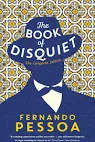
No debate: “The Book of Disquiet” by Fernando Pessoa is fragmented, borderline depressive, but brutally honest. You read it, and suddenly, you stop pretending entrepreneurship is clean and confident. It exposes every hidden contradiction, every insecure drive, every reason you say yes when you should walk away. For someone building something raw from the ground up, it gives you a mirror instead of a cheerleader.
That book gave me permission to admit when things were breaking, when vision alone could not fix logistics, when discipline meant sitting in the mud with your doubt instead of sprinting past it. It is not a startup book, which is exactly why it works. You come out clearer, not happier, just sharper. That is real.
Alexei Schaller, Founder & CEO, Bloom
‘Finite and Infinite Games’ Alters Perspectives
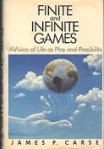
If I had to nominate one book that shattered the status quo in a way I’m still unpacking years later, it’s “Finite and Infinite Games” by James P. Carse.
It’s not a business book, not a productivity manual, not even trying to be trendy. But its central idea is like a lens that snaps everything into focus: There are two types of “games” people play in life—finite games, where you play to win, and infinite games, where you play to keep playing. The goal isn’t victory. It’s continuity, evolution, and meaning.
That concept alone made me rethink everything—how I lead, how I build, even how I approach conversations. Suddenly, chasing market share, micromanaging timelines, obsessing over quarterly OKRs…it all started to feel like winning the wrong game.
Where most books offer tactics, this one quietly asks: Are you even playing the right game?
And it’s written in this beautifully spare, almost meditative tone. You don’t read it and walk away with a checklist. You read it, close the book, and just sit there, because your mental model of the world has been quietly and permanently altered.
It’s not flashy. But it’s foundational. It reprograms your thinking from the inside out.
Derek Pankaew, CEO & Founder, Listening.com
‘Start with Why’ Prioritizes Purpose in Leadership
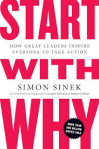
A groundbreaking book that truly challenges the status quo is “Start with Why” by Simon Sinek. This book emphasizes the importance of purpose in leadership and how it drives long-term success. It resonated with me as it shaped my approach to leadership. Instead of focusing solely on tasks or profits, I prioritize aligning with a clear purpose. This mindset shift has not only enhanced the company culture but also improved team performance. Sinek’s idea of leading with a compelling “why” aligns with our mission to empower and inspire through health and wellness.
Dr. Chad Walding, Chief Culture Officer and Co-Founder, NativePath
‘Power of Now’ Transforms Chronic Illness Approach
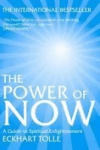
I’ve always been drawn to books that shift your internal world, not just your thinking, but your being. One of the most groundbreaking books I’ve ever read is “The Power of Now” by Eckhart Tolle.
This book quite literally fell into my lap during a time when I needed it most. It was 14 years ago, during the onset of my chronic illness diagnosis, and my internal world was chaos. I was overwhelmed mentally, emotionally, and spiritually; grappling with fear, uncertainty, and grief over the life I thought I had planned. In that moment, I wasn’t looking for a book. I was searching for something to help me hold on.
The idea that presence, not productivity, is the path to peace completely reframed how I approached my life, my illness, and my work. Before that, I often lived in the future, which comprised planning, perfecting, and sadly, pushing. But “The Power of Now” reminded me that wholeness is already here, in this moment.
Doreen Nunez, Founder & Creative Director, Mommy Rheum
Kuhn’s Book Disrupts Scientific Orthodoxy
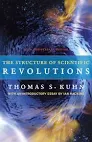
I would select “The Structure of Scientific Revolutions” by Thomas Kuhn. It dismantles the illusion of linear progress in science and reframes it as a cycle of paradigm shifts punctuated by intellectual rebellion. That premise translates directly into mental health, where outdated diagnostic models often linger for decades because of structural momentum, not clinical utility. Kuhn forces any evidence-based thinker to confront whether their “facts” are just favored theories held in place by institutional loyalty. In which case, treating the human mind demands less orthodoxy and more disruption.
The relevance is obvious. We do not chase trends. We interrogate systems. Kuhn gives permission to do just that, methodically and unapologetically. It is a rare book that pushes science to critique itself without collapsing into cynicism. That is the kind of intellectual tone we keep alive in our clinical decisions. Hope this helps, let me know if you have questions.
Louis Costello, MD, Founding Physician, Dynatech Lifestyle Mind Body Care
‘Body Keeps the Score’ Reshapes Leadership
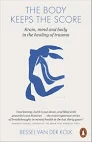
Right now I’m reading “The Body Keeps the Score” by Bessel van der Kolk, and it’s been nothing short of revolutionary.
It’s forced me to pause and look inward, but it’s also changed how I lead and interact with the people around me. The way it unpacks trauma and connects it to behavior, emotion, and even leadership is something that should be mandatory reading.
If we all had a little more self-awareness and empathy, both the workplace and the world would function a whole lot better.
Oz Rashid, Founder and CEO, MSH
‘Innovator’s Dilemma’ Redefines Business Success
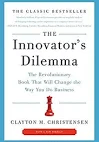
I would have to go with “The Innovator’s Dilemma” by Clayton Christensen. It’s one of those books that completely reshapes the way you think about business and innovation. The core idea—that successful companies can fail by doing everything right—really stuck with me. It challenges the status quo by showing how even the best companies can miss disruptive innovations because they focus too much on improving what they already do well.
In my own business, we’re constantly looking for ways to stay ahead of trends in the party rental space. Whether introducing new attractions or enhancing customer service, you must stay aware of what could disrupt your business model. Christensen’s insights helped me realize that being comfortable with what’s working today can leave you blind to opportunities tomorrow.
So, when I read this book, it wasn’t just about learning what’s happening in big business. It helped me think about how we can continue to evolve and create amazing experiences for our clients no matter how much the industry changes. It’s a game-changer for anyone looking to think differently about business.
Joe Horan, Owner & CEO, Jumper Bee
Frankl’s Book Challenges Adversity Approach
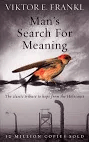
One groundbreaking book that truly stands out to me is “Man’s Search for Meaning” by Viktor Frankl. What makes it so powerful is its challenge to what motivates us as individuals, and how we find purpose in our lives, even in the most dire circumstances. Frankl, a Holocaust survivor and psychiatrist, introduces the concept of logotherapy, which focuses on finding meaning in life, even when faced with suffering. This book doesn’t just challenge the status quo in the world of psychology; it challenges all of us to rethink how we approach adversity, personal growth, and fulfillment. It’s not about what happens to us, but how we respond to it.
For those of us in adult learning, it reinforces a core principle: learning isn’t just about acquiring skills, but about cultivating a more profound sense of purpose in what we do. It’s an invitation to look beyond the surface and explore how our experiences, however difficult, can shape our growth and drive. It’s a call to understand that true development comes from within, and that’s an idea that’s as bold today as it was when Frankl first shared his experiences.
Bradford Glaser, President & CEO, HRDQ
‘War of Art’ Tackles Creative Resistance
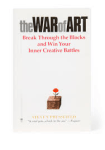
One book that stands out as truly groundbreaking for its bold ideas and unapologetic challenge to the status quo is “The War of Art” by Steven Pressfield. As an entrepreneur and creative strategist, it resonated with me on a deeply personal level. It’s not your traditional business book—it doesn’t offer a step-by-step guide to success or a blueprint for scaling a company. What it does, however, is address the internal resistance every creator, leader, and innovator faces when pushing boundaries and building something meaningful.
When I launched my business, I quickly realized that the biggest hurdles weren’t just market competition or economic shifts—it was the mental battle that came with showing up, staying consistent, and not letting fear dictate my direction. The War of Art called that resistance out. It forced me to be honest about the excuses I was making and pushed me to treat my work like a professional, not a hobbyist waiting for inspiration to strike.
What makes the book groundbreaking is its simplicity and rawness. It challenges the cultural myth that creativity and entrepreneurship are about talent or luck. Pressfield reframes it as a matter of discipline, grit, and showing up every day—especially when it’s uncomfortable. That perspective helped shape how I lead my team, how I approach risk, and how I commit to long-term goals even when short-term motivation fluctuates.
More than once, I’ve handed this book to colleagues, creatives, and even clients who were stuck in decision paralysis or questioning their path. It doesn’t hand you answers—it reminds you that the real work is in overcoming your own resistance. And that shift in mindset has had more impact on my entrepreneurial journey than any strategy book I’ve read.
In a world that constantly demands innovation, The War of Art reminds us that the first battlefield is within—and winning there changes everything.
Max Shak, Founder/CEO, nerDigital
Rohr’s ‘Falling Upward’ Flips Success Paradigm
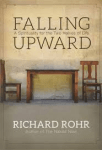
One of the most groundbreaking books I’ve read—one that truly challenges the status quo with bold, life-altering ideas—is “Falling Upward” by Richard Rohr. It flips the traditional view of success, achievement, and even spiritual growth on its head. Instead of framing life as a steady climb toward clarity and control, Rohr argues that the second half of life—what often follows failure, loss, or disruption—is where the most profound transformation happens.
What makes “Falling Upward” so bold is that it confronts the cultural obsession with constant progress and external validation. Rohr suggests that true wisdom comes not from avoiding pain but from walking through it with openness and humility. He challenges readers to see setbacks not as detours but as necessary thresholds for deeper purpose and authenticity.
This idea is deeply countercultural. In a world that prizes success, certainty, and image, “Falling Upward” invites us to embrace mystery, surrender, and the spiritual gifts of imperfection. It doesn’t offer easy answers—it offers perspective. And that perspective has quietly revolutionized the way many people, including myself, view identity, faith, and the arc of a meaningful life. It’s a book that doesn’t just inspire—it reorients.
Joe Benson, Cofounder, Eversite
‘Maverick’ Reinvents Traditional Business Models
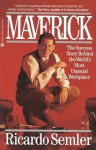
I would recommend “Maverick” by Ricardo Semler. This book challenged everything I thought business needed to be. Semler ran a factory without fixed hours, allowed employees to set their own salaries, and eliminated hierarchy. It sounded like chaos, but then you see how it works. It’s a form of factory-floor freedom that doesn’t kill productivity. I remember reading it and thinking, “Why are we still running businesses like it’s 1985?”
We tested a micro-version of this approach by letting team leads pick their own KPIs for one quarter. The result? Output didn’t decrease; it surged. Accountability increased because they owned the measure. This book isn’t some Silicon Valley fantasy. It’s gritty, raw, and tested in the real world. If you manage people and you’ve never questioned the organizational chart, read this book with a pen in hand.
Louis Georgiou, Managing Director, Essential Workwear
Christensen’s Book Dismantles Successful Companies
“The Innovator’s Dilemma” by Clayton Christensen stands out as one of the boldest books I’ve read. It doesn’t compliment success. It dismantles it. The core idea of the book—companies fail not because they do things wrong, but because they keep doing things right—is a direct challenge to traditional thinking. Businesses grow, then stagnate, because they prioritize their best customers and current profits over emerging technologies and shifting needs.
Christensen uses hard evidence. He shows how industry leaders in disk drives, retail, and manufacturing lost everything to upstarts that embraced change. These were not careless companies. They were smart, organized, and customer-focused. They failed because they didn’t adapt when early signals pointed to something new. That pattern was evident historically when IBM didn’t adapt to PCs, and it continues to play out today in digital marketing. Algorithms shift. User behavior changes. If you’re not looking ahead, you’re already behind.
This book changed how I build strategies. When rankings or ad campaigns perform well, I ask: what trend am I not seeing yet? What customer behavior is quietly replacing the old model? Success in SEO or branding is temporary. If your strategy isn’t evolving, it’s dying.
Most business books repeat ideas with new labels. “The Innovator’s Dilemma” did the opposite—it introduced a framework that forced leaders to confront hard truths. It taught me to embrace discomfort and rethink what “winning” looks like. If you’re running a business and haven’t read it, you’re likely protecting what works instead of preparing for what’s next.
Beverly Mapes, Owner, Top Of The List
‘Lean Startup’ Revolutionizes Product Development
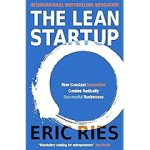
One of the books that truly excels in unapologetic thinking and a call to stretch is “The Lean Startup” by Eric Ries. It revolutionized how businesses create products and how they scale. Before this book, most businesses invested a lot of money and time coming up with mature products before they released them into the market. Ries flipped that paradigm on its head, and he advocated building a Minimum Viable Product (MVP) that one would iterate on from actual customer feedback. It’s a mentality that rewards companies for leaning into ambiguity and rapid iteration instead of waiting for something “perfect.” It’s a mentality of velocity, responsiveness, and customer feedback—those are the qualities that make success happen in today’s digital fast-moving economy.
For leaders and executives, this book shatters traditional planning, risk, and long-term strategy thinking. Failing fast, learning, and responding is not only for startups but for any business that wants to grow and innovate. “The Lean Startup” has had a profound impact across industries from technology to healthcare, making businesses repeatedly test and re-tune their plans to make sure they are reflective of customer needs and market realities. It’s a must-read for everyone in the business world today.
James Bandy, Managing Director, TriVista Digital and Technology
Freire’s Book Transforms Educational Approach
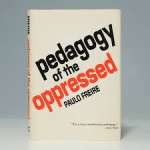
“Pedagogy of the Oppressed” by Paulo Freire. Doesn’t scream “marketing” on the surface, but it messes with how you think about systems, power, and participation. It made me stop treating education software as “delivery” and start treating it as co-creation. After that, we redesigned our teacher dashboards with actual teacher panels—weekly. Usage jumped by 39% in under two months.
Freire’s premise is: stop pretending authority has all the answers. That’s the core issue in school tech. We stopped making things for teachers and started making things with them. It’s bold, subversive, and if you apply it to business, it’ll change how you think forever. Honestly, it should be required reading for every product manager in education.
Andreea Tucan, Marketing Lead – UK & IE, Compass Education
Have Your Say
- Have you ever felt transformed after reading a particular story?
- Which book changed the way you see the world?
- What makes a book truly groundbreaking to you?
Alignment with the UN SDGs
- Promotes quality education through transformative literature (SDG 4)
- Encourages global citizenship and lifelong learning (SDG 4.7)
- Highlights cultural contributions fostering peace, justice, and strong institutions (SDG 16)
- Supports partnerships through shared literary insights (SDG 17)
Note: The views and opinions expressed in the content provided on this page are those of the individual authors and do not necessarily reflect the official policy or position of any organizations mentioned. The information provided is for educational and informational purposes only and should not be interpreted as professional advice. Readers should consult with relevant experts or professionals for guidance specific to their circumstances. The examples used are for illustrative purposes and results may vary depending on various factors. Any external links provided are for convenience, and we do not endorse or take responsibility for the content, products, or services available through these links.
⭐⭐⭐⭐⭐
Related

Written Works That Shaped Thinking
What single insight can quietly reshape how you approach challenges, relationships, or career decisions? Explore this expert roundup to see how reflective reading can transform everyday thinking and choices.

Exploring Narrative, Healing, and the Human Mind with Verlin Darrow
Ever wondered how surviving earthquakes, outrunning tornadoes, and dodging a gun shaped a mystery writer’s mind? Discover Verlin’s extraordinary life experiences and how they feed the thrilling stories on every page.
Continue reading Exploring Narrative, Healing, and the Human Mind with Verlin Darrow
Exploring Story, Place, and Imagination with Dust Kunkel
Ever wondered how a childhood across continents and rivers becomes the fuel for storytelling? Discover how Dust Kunkel’s life shaped his novel and worldview — read the full interview to explore it.
Continue reading Exploring Story, Place, and Imagination with Dust Kunkel

Imagining Humanity and Technology with Donald Firesmith
Can engineering precision and handcrafted magic wands coexist in one imagination? Discover how a futurist blends hard science fiction, AI insight, and human emotion—read the full interview to explore his journey.
Continue reading Imagining Humanity and Technology with Donald Firesmith
Something went wrong. Please refresh the page and/or try again.
Other Highlights

Looking for something?
Type in your keyword(s) below and click the “Search” button.
Helpful Shortcuts
More Stories

























Print and Digital Magazine


Don’t just read about greatness. Own it!

About Us
The World’s Best Magazine is a print and online publication that highlights the extraordinary. It is your passport to a universe where brilliance knows no bounds. Celebrating outstanding achievements in various fields and industries, we curate and showcase the exceptional, groundbreaking, and culturally significant. Our premier laurels, The World’s Best Awards, commend excellence through a unique process involving subject matter experts and a worldwide audience vote. Explore with us the pinnacle of human achievement and its intersection with diversity, innovation, creativity, and sustainability.
We recognise and honour the Traditional Owners of the land upon which our main office is situated. We extend our deepest respects to Elders past, present, and emerging. We celebrate the stories, culture, and traditions of Aboriginal and Torres Strait Islander Elders from all communities who also reside and work on this land.
Disclaimer: The World’s Best does not provide any form of professional advice. All views and opinions expressed in each post are the contributor’s own. Whereas we implement editorial policies and aim for content accuracy, the details shared on our platforms are intended for informational purposes only. We recommend evaluating each third-party link or site independently, as we cannot be held responsible for any results from their use. In all cases and with no exceptions, you are expected to conduct your own research and seek professional assistance as necessary prior to making any financial, medical, personal, business, or life-changing decisions arising from any content published on this site. All brands and trademarks mentioned belong to their respective owners. Your continued use of our site means you agree with all of these and our other site policies, terms, and conditions. For more details, please refer to the links below.
About | Advertise | Awards | Blogs | Contact | Disclaimer | Submissions | Subscribe | Privacy | Publications | Terms | Winners
The World’s Best: A Magazine That’s All About What’s Great | theworldsbestmagazine.com | Copyright ⓒ 2022-2026
Let’s connect
Discover more from The World's Best
Subscribe to get the latest posts sent to your email.

 The World's Best