
How do we ensure that groundbreaking discoveries reach the right audience in an age dominated by data? Scientific and technological innovations often remain abstract or inaccessible without effective communication. It’s not enough to present cold facts or complex jargon; the key to engaging a broad audience lies in storytelling. Studies show that humans remember information better when it’s framed as a narrative, sparking emotional connections and making even the most intricate ideas relatable. As Albert Einstein once said, “If you can’t explain it simply, you don’t understand it well enough.” This expert roundup explores the power of storytelling in transforming complex ideas into compelling, accessible narratives.
Transform Raw Data Into Resonating Narratives
Storytelling is the heartbeat of science and innovation since it transforms raw data and complex theories into narratives that resonate, inspire, and ultimately drive change. In our field, where ideas can often feel abstract or inaccessible, a well-crafted story provides context and meaning. It bridges the gap between intricate research and everyday understanding, allowing diverse audiences to grasp the “why” behind the breakthroughs.
We’ve seen firsthand how a human touch elevates the way we communicate. While technology, including AI, can generate facts and figures, it’s the nuanced storytelling of a highly skilled copywriter that adds personality and warmth to our message. Humans excel at weaving emotion and relatability into stories, all qualities that automated systems still struggle to emulate. The unique ability to capture subtlety, humor, and empathy makes human storytelling an invaluable asset, especially when explaining complex scientific and innovative concepts.
One crucial tip for experts looking to communicate their ideas more effectively is to use relatable analogies and everyday language. Instead of relying solely on technical jargon, try to draw comparisons with familiar experiences. For instance, consider comparing a complex data network to a bustling city with interconnected roads and neighborhoods, where each pathway represents a flow of information. This not only simplifies the concept but also invites the audience to visualize and connect with the idea on a personal level.
In practice, this means taking a step back from the minutiae of technical details and asking yourself: “How does this work impact the world in a tangible way?” By focusing on the practical implications and human benefits, you create a narrative that goes beyond the numbers. It’s about showing how innovation improves lives, fosters collaboration, or solves real-world problems.
Ultimately, the goal is to ensure that your message is both informative and memorable. A compelling story in science and innovation does more than just convey data, but rather it sparks curiosity, builds understanding, and encourages engagement. When you embrace analogies and everyday language, you can transform complex ideas into stories that truly resonate, proving that while AI may process information at lightning speed, it’s the human touch that makes a lasting impact.

Joe Benson, Cofounder, Eversite
Make It Personal To Connect
One of the best ways experts can communicate better? Make it personal. Don’t just explain how something works—show why it matters. If people can’t see how it connects to their lives, they’ll tune out.
Instead of diving straight into technical details, ground your idea in something familiar. Quantum computing? Imagine walking into the world’s largest library, with billions of books stacked to the ceiling. Instead of spending years searching for the right page, a quantum librarian instantly hands you the exact sentence you need. AI in supply chains? Think about that one item you need—your favorite coffee brand, your kid’s must-have school supplies, or the medication you rely on. Now imagine a system so smart, it predicts what you’ll need before you do, ensuring it’s always on the shelf, exactly when you need it.
People don’t remember stats; they remember stories. And when they feel something first, they’ll want to understand the science behind it. That’s how ideas spread—not through data dumps, but through human connection.
Because the real power of science and innovation isn’t just in what it does—it’s in who it helps, how it changes lives, and why it matters. Move people. Make them see it, feel it, and believe in it. The numbers might impress them, but the story is what they’ll never forget.

Sylvie Di Giusto, Keynote Speaker & Author, Sylvie di Giusto
Bridge The Gap With Clear Narratives
Storytelling bridges the gap between complex science and public understanding. Data alone doesn’t drive engagement—narratives do. People connect with stories, not statistics. When experts translate their findings into relatable examples, they make innovation accessible. Without storytelling, breakthroughs remain locked behind jargon, limiting impact. A clear narrative can secure funding, drive adoption, and inspire future research. Look at how renewable energy companies frame climate solutions. They don’t list efficiency percentages; they show real people benefiting from clean power. That shift makes ideas stick.
One tip: simplify without oversimplifying. Experts often assume audiences need every detail. They don’t. Prioritize explaining the “why” before addressing the “how”. Explain why a discovery matters first. Use analogies rooted in everyday experiences. A physicist explaining quantum mechanics might compare it to a coin spinning on a table—both heads and tails exist until the motion stops. This approach keeps accuracy intact while increasing comprehension.
Think about Steve Jobs unveiling the iPhone. He didn’t start with specifications. He started with a vision: “An iPod, a phone, and an internet communicator.” That clarity transformed a tech launch into a cultural shift. Science and innovation deserve the same approach. Speak in a way that resonates beyond industry insiders. If a 12-year-old or a busy executive can grasp the core idea, the message is strong.

Alec Loeb, VP of Growth Marketing, EcoATM
Start With The Problem
Education and innovation are meaningless if people don’t understand them. The best stories in science are the ones that make a concept feel real. If we want schools to see how AI improves student engagement, we don’t throw statistics at them. We tell them how a struggling student in Melbourne received real-time feedback through our platform and improved their grades within a term. That sticks with people.
Here’s the trick: start with the problem. People engage when they see a challenge they recognize. If I say, “Teachers spend 6 hours a week chasing absent students,” every educator listening will nod. Then, I explain how automated attendance alerts cut that time to 30 minutes. The more familiar the problem, the more compelling the solution. Numbers help, but stories convince.

Andreea Tucan, Marketing Lead – UK & IE, Compass Education
Bridge Discovery And Impact With Stories
Storytelling matters in science and innovation for one important reason: storytelling is the bridge between discovery and impact. Science thrives on data, but facts alone rarely inspire action. Stories create emotional connections, making complex ideas relatable and meaningful.
Humans think in stories, not equations. Many times, people remember narratives better than numbers. A climate model is abstract until framed through a family losing their home to rising seas. A strong narrative structures information, making it digestible. Stories also build trust and communicate urgency. Breakthroughs don’t change the world unless people can understand them, and then adopt them.
One tip for communicating complex ideas is the “What, So What, Now What” Framework. An example of this would be:
- What? (Clear idea) – “A new AI detects early-stage cancer with 95% accuracy.”
- So What? (Why it matters) – “It could save millions of lives through earlier treatment.”
- Now What? (Call to action) – “With funding, hospitals could use it within five years.”
This type of methodology makes storytelling a powerful tool that turns knowledge into impact.

Lia Munson, Co-Founder, Resilient Stories
Focus On Human Impact
People connect with stories, not just data. Science and innovation can be complex, but if you strip away the jargon and focus on the human impact, people listen. We don’t just talk about titanium implants and advanced procedures. We tell the story of a patient who walked in hiding their smile and left with a new sense of confidence. That transformation is what sticks.
One tip for making complex ideas more accessible is to use analogies people already understand. Instead of explaining dental implants with technical terms, I compare them to replacing a missing tile in a floor where it looks, feels, and functions the same as the rest. That simple shift helps patients grasp the concept without feeling overwhelmed. Whether you’re talking about cutting-edge technology or medical advancements, grounding the idea in something familiar makes all the difference. People may forget the science, but they’ll remember the story.

Odellé Joubert, Chief Operating Officer, Dentaly Go
Use Metaphors And Analogies
In the fast-paced world of IT and technological innovation, we often get caught up in the technical details—the algorithms, the code, the intricate systems. Yet, behind every breakthrough, every line of code, and every innovative solution lies a human story. Storytelling is the bridge that connects complex scientific and technological concepts to the wider world, making them relatable, understandable, and, ultimately, impactful. It transforms a dry technical manual into a compelling narrative of progress. It can also distinguish between a user, donor, administrator, or government official to accept or reject any proposed technology solution.
Why is storytelling so vital in this domain? It’s simple: humans are wired for stories. We’ve used narratives for millennia to pass down knowledge, share experiences, and make sense of the world. Scientific and technological advancements, at their core, are about improving human lives and solving problems. Storytelling puts these advancements into a human context, making them resonate with people on an emotional level. A news report might highlight the dangers of phishing, ransomware attacks, or data breaches. Still, when individuals or businesses tell their stories of how inevitable cyberattacks or a specific technology impacted them, this helps paint a vivid picture that makes any of them stick with the audience.
One of the biggest challenges for IT experts is communicating complex ideas to a non-technical audience. A simple yet effective tip is to use analogies and metaphors. Think of it like translating a foreign language. You’re taking something unfamiliar and explaining it in terms of something familiar. For example, instead of diving into the technical intricacies of cloud computing, you could explain it as renting a storage space instead of buying a whole warehouse. Or, when describing the concept of encryption, you could use the analogy of a locked box with a secret key.
Effectively communicating complex concepts enhances collaboration, bridging the gap between technical teams, stakeholders, and end-users. This shared understanding fosters smoother project execution and better alignment with business objectives. When stakeholders can visualize the impact of technology through stories, they are more likely to invest in and adopt new solutions. For instance, presenting the story of how a particular software optimized a supply chain can resonate more than just listing its features.

Steve Fleurant, CEO, Clair Services
Explain The Importance Of Storytelling
By using stories, scientists can connect with their audience on an emotional level, making it easier for people to understand, retain, and engage with complex concepts. One practical tip for experts is to use metaphors and analogies. Imagine each scientific topic as a charging cable and the audience as the electronic device you want to charge. You need to plug the charging cable into the wall, but sometimes it looks like a USB-C and other times like a Lightning cable. Metaphors and analogies act like a universal charging block that can connect to any type of cable, ensuring the job gets done. Using these techniques helps bridge the gap between technical language and everyday experiences, making complex ideas accessible to a broader audience.

Michelle Babcock, Creative Director, Hello Human Media
Focus On The Why Behind Research
As a marketer, I believe storytelling is a crucial part of any industry. Many people assume that science-focused industries don’t require much storytelling but that’s arguably one of the most important aspects. Take medicine for example, you could discover the cure for a disease but if nobody knows about it, nobody will use it, and it won’t be effective in curing that disease.
The same goes for technical innovations. If you know how to create quantum computing but you don’t have the financial resources to achieve it, you must use storytelling to raise funding and investment. If you can’t properly explain why dedicating millions of dollars and years of experience to quantum computing will directly benefit society and more importantly, the investor’s life, then you won’t be able to do the R&D work that is needed.
There’s a reason why people say “a picture speaks a thousand words”. It’s because it’s true. Verbal or written communication can only get you so far especially when it comes to complex ideas. People lose interest quickly and can get lost in your words. This is particularly important when communicating to a broad audience who may have no prior knowledge of what you’re talking about. My advice is to use analogies and relate the concept to something most people are familiar with, then use visuals to demonstrate the impact this science or innovation will have (think Crash Course YouTube channel).
I think it’s also important to note that people respond with more urgency when they feel they are losing something. Explain what NOT having this science or innovation will mean for people. And of course, whenever possible, tap into human emotions. Not only will this engage your audience and help them remember the information, but it will also make them feel personally invested in the project.

Ana O’Neill, Account Executive, Featured
Make Complex Ideas Relatable
Depending on your age range, you might be able to think back to science classes in school and remember the most exciting of days—when the teacher would bring out a big TV and put on an episode of Bill Nye the Science Guy. There’s a reason that show was as popular as it was among this age group—science and innovation thrive on storytelling because people connect with narratives more than raw data.
An entertaining and compelling story can turn a niche scientific advancement into a global movement, which we saw most recently with the climate science activist and, at the time, high school student Greta Thunberg. My advice for experts is to always focus on the “why” behind their research—why are you researching, why should anyone care? Technical details should be in the appendix, rather than at the forefront.

Kate Kandefer, CEO, SEOwind
Use Analogies To Simplify Concepts
Storytelling is essential in science and innovation because it makes complex ideas relatable and memorable. Using narratives helps bridge the gap between technical jargon and real-world relevance. A compelling story can turn abstract concepts into something people can visualize and connect with emotionally, making it easier to understand why a particular innovation matters. This approach transforms dry data into messages that resonate deeply with the audience’s everyday experiences, grabbing their attention and sparking their curiosity.
To communicate effectively, experts should focus on the art of analogy. Comparing complex scientific ideas to everyday experiences simplifies understanding. Imagine explaining artificial intelligence as teaching a toddler: it learns behavior from examples and improves over time. An analogy paints a vivid picture, making technical subjects far less intimidating. When people grasp a concept through familiar comparisons, they’re not only learning but also engaging with the subject in a more meaningful way.

Matthew Franzyshen, Business Development Manager, Ascendant Technologies, Inc.
Have Your Say
- Have you ever found it hard to grasp a concept because it wasn’t explained through a relatable narrative?
- How do you think storytelling can make complex ideas more accessible?
- What’s your favourite example of a scientific or tech breakthrough communicated through a compelling story?
Alignment with the UN SDGs
- SDG 4: Quality Education – Enhances understanding through storytelling, making complex concepts accessible.
- SDG 9: Industry, Innovation, and Infrastructure – Promotes communication of technological and scientific advancements.
- SDG 10: Reduced Inequalities – Bridges knowledge gaps, fostering inclusivity in innovation.
Note: The views and opinions expressed in the content provided on this page are those of the individual authors and do not necessarily reflect the official policy or position of any organizations mentioned. The information provided is for educational and informational purposes only and should not be interpreted as professional advice. Readers should consult with relevant experts or professionals for guidance specific to their circumstances. The examples used are for illustrative purposes and results may vary depending on various factors. Any external links provided are for convenience, and we do not endorse or take responsibility for the content, products, or services available through these links.
⭐⭐⭐⭐⭐
Related

Exploring Story, Place, and Imagination with Dust Kunkel
Ever wondered how a childhood across continents and rivers becomes the fuel for storytelling? Discover how Dust Kunkel’s life shaped his novel and worldview — read the full interview to explore it.
Continue reading Exploring Story, Place, and Imagination with Dust Kunkel

Imagining Humanity and Technology with Donald Firesmith
Can engineering precision and handcrafted magic wands coexist in one imagination? Discover how a futurist blends hard science fiction, AI insight, and human emotion—read the full interview to explore his journey.
Continue reading Imagining Humanity and Technology with Donald Firesmith

Charting Tomorrow’s Medicine: A Conversation with Dr Pietro Emanuele Garbelli
What happens when a doctor decides medicine needs a blueprint as much as a stethoscope? This interview explores that question—revealed through experience, ethics, and the future of care.
Continue reading Charting Tomorrow’s Medicine: A Conversation with Dr Pietro Emanuele Garbelli

Richard Scott Sacks on Travel, Language, and Writing Fiction from Global Encounters
Have you ever wondered how encountering global upheaval can shape a novel? This interview explores one writer’s real journeys and the questions that inspired his fiction—read on to discover how it unfolded.
Continue reading Richard Scott Sacks on Travel, Language, and Writing Fiction from Global Encounters
Something went wrong. Please refresh the page and/or try again.
Other Highlights

Looking for something?
Type in your keyword(s) below and click the “Search” button.
Helpful Shortcuts
More Stories





























Print and Digital Magazine

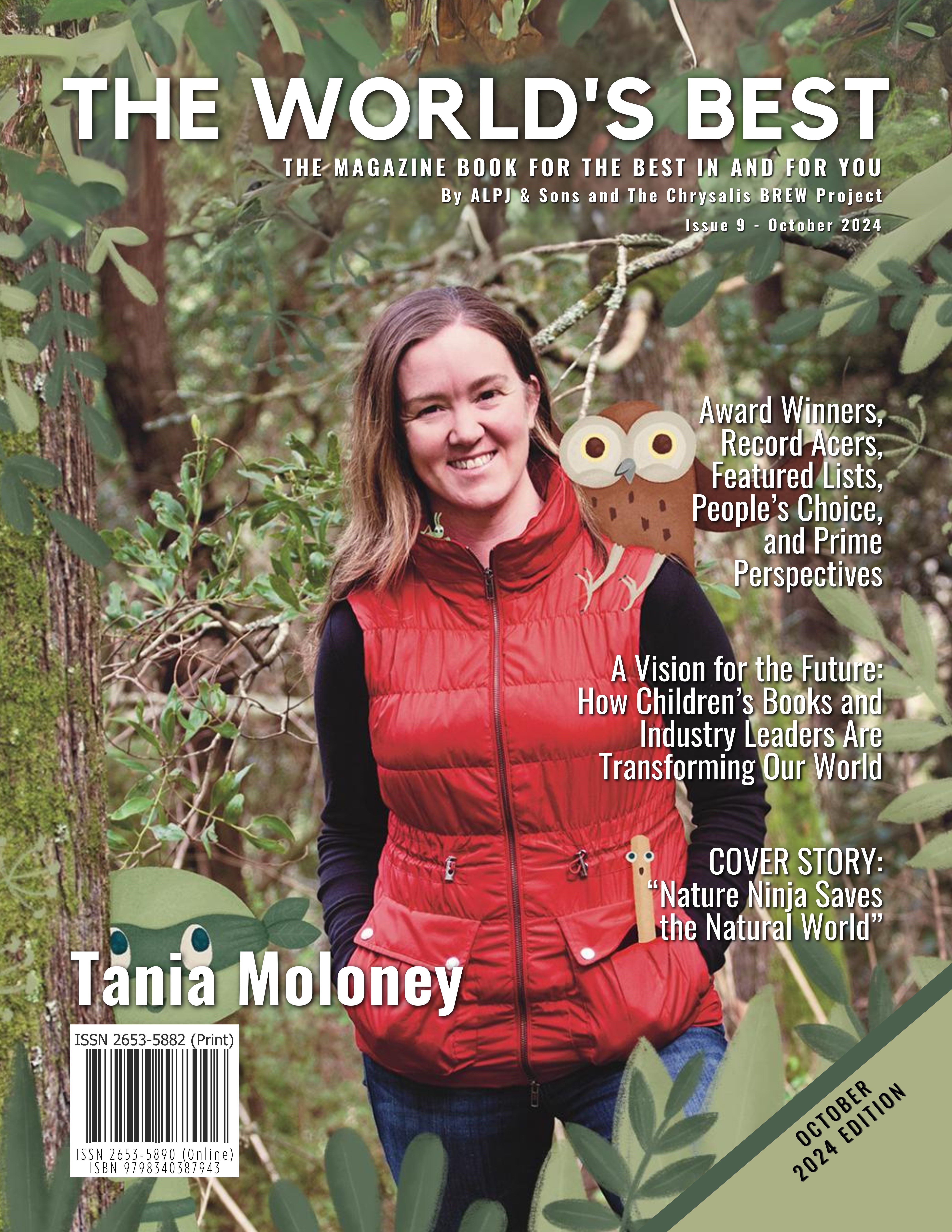

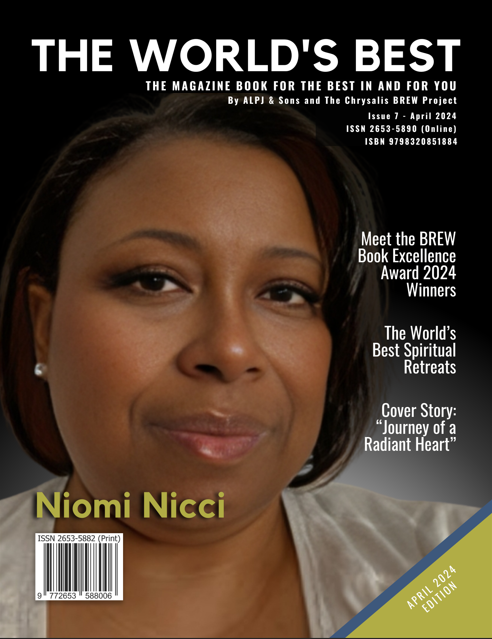

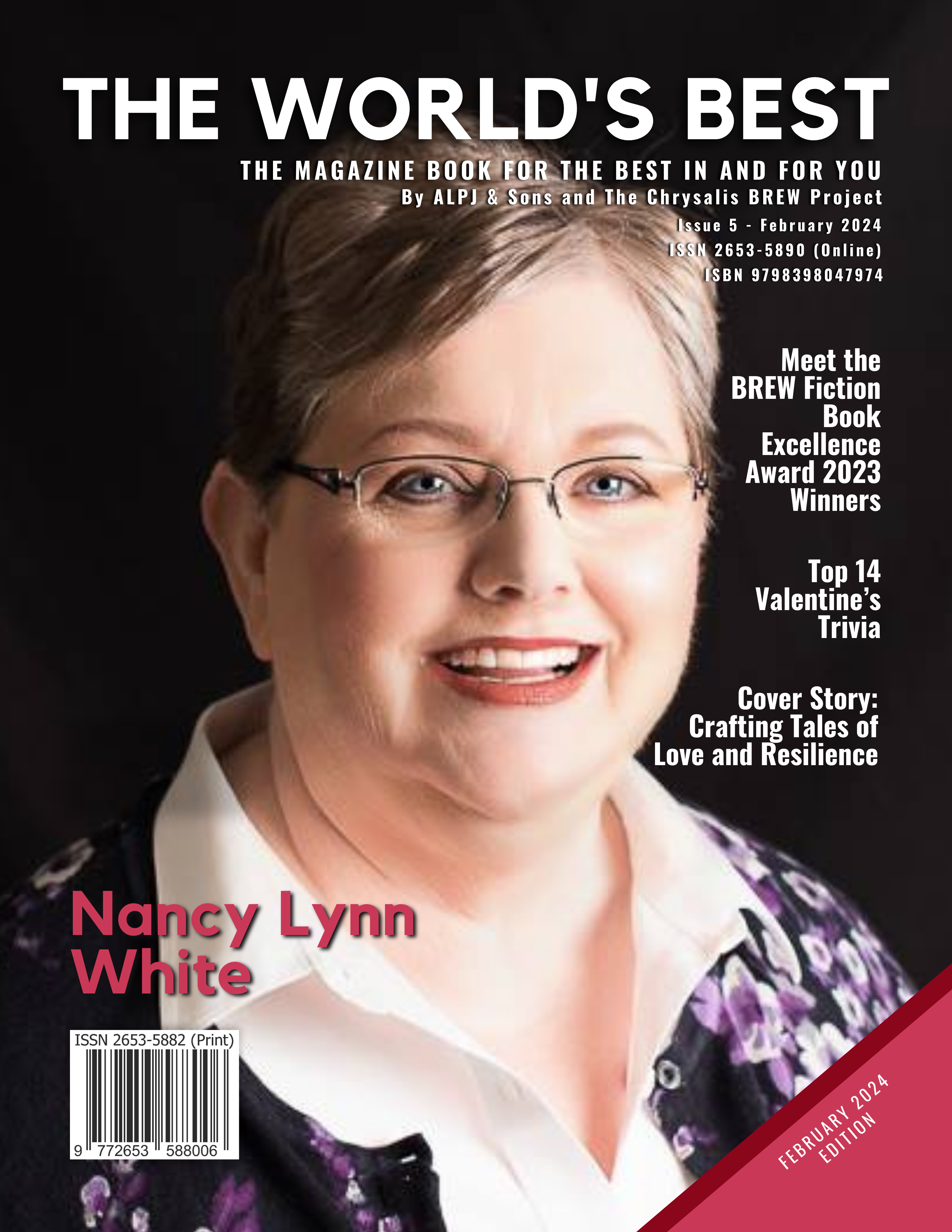
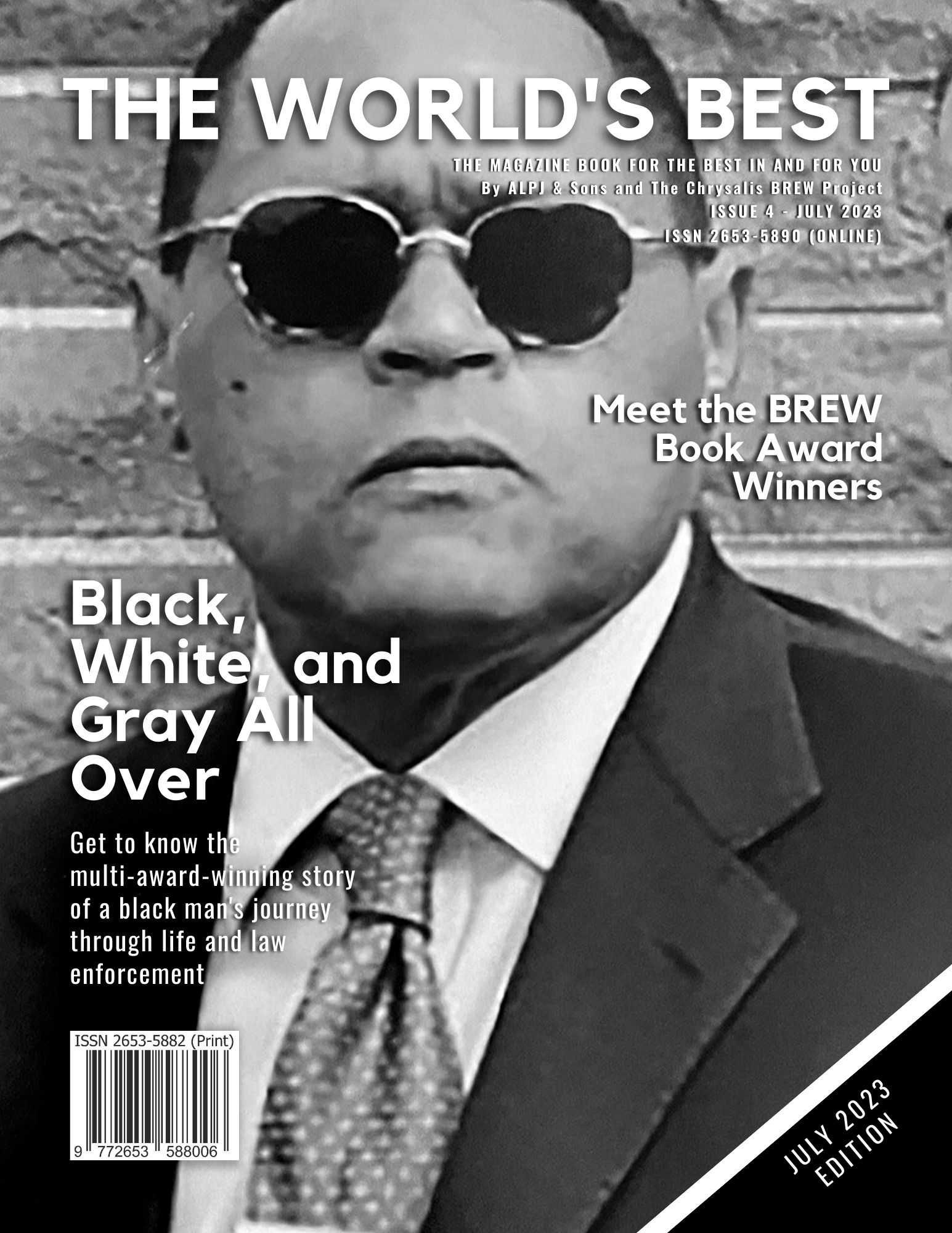


Don’t just read about greatness. Own it!

About Us
The World’s Best Magazine is a print and online publication that highlights the extraordinary. It is your passport to a universe where brilliance knows no bounds. Celebrating outstanding achievements in various fields and industries, we curate and showcase the exceptional, groundbreaking, and culturally significant. Our premier laurels, The World’s Best Awards, commend excellence through a unique process involving subject matter experts and a worldwide audience vote. Explore with us the pinnacle of human achievement and its intersection with diversity, innovation, creativity, and sustainability.
We recognise and honour the Traditional Owners of the land upon which our main office is situated. We extend our deepest respects to Elders past, present, and emerging. We celebrate the stories, culture, and traditions of Aboriginal and Torres Strait Islander Elders from all communities who also reside and work on this land.
Disclaimer: The World’s Best does not provide any form of professional advice. All views and opinions expressed in each post are the contributor’s own. Whereas we implement editorial policies and aim for content accuracy, the details shared on our platforms are intended for informational purposes only. We recommend evaluating each third-party link or site independently, as we cannot be held responsible for any results from their use. In all cases and with no exceptions, you are expected to conduct your own research and seek professional assistance as necessary prior to making any financial, medical, personal, business, or life-changing decisions arising from any content published on this site. All brands and trademarks mentioned belong to their respective owners. Your continued use of our site means you agree with all of these and our other site policies, terms, and conditions. For more details, please refer to the links below.
About | Advertise | Awards | Blogs | Contact | Disclaimer | Submissions | Subscribe | Privacy | Publications | Terms | Winners
The World’s Best: A Magazine That’s All About What’s Great | theworldsbestmagazine.com | Copyright ⓒ 2022-2026
Let’s connect
Discover more from The World's Best
Subscribe to get the latest posts sent to your email.

 The World's Best