
“Imagination is more important than knowledge. For knowledge is limited, whereas imagination embraces the entire world, stimulating progress, giving birth to evolution.”
– Albert Einstein
According to the Merriam-Webster dictionary, innovation refers to “the introduction of something new” or “a new idea, method, or device”. Innovation is the driving force of any industry. Nothing is ever constant. A new idea or a simple change can completely turn around a field. The transformative power of innovation is indeed undeniable. Innovation is key to the growth and competitiveness of any industry. In fact, an innovative idea or device has a lasting impact on the broader world as well.
Let us look at a number of innovations that have reshaped various industries.
Prioritize User-Focused Content
The most groundbreaking shift in SEO is Google’s increasing reliance on AI and user intent rather than traditional keyword-based ranking. This is a pretty contentious topic among SEO experts right now, and I don’t think that will change in the near future. SGE makes search engines prioritize context, meaning businesses must focus more on high-quality, authoritative content rather than keyword stuffing. This shift challenges marketers to think beyond algorithms and create content that truly serves users. At the same time, however, it means that traditional SEO strategies that relied on technical optimization alone are becoming obsolete—content marketing must now incorporate storytelling, brand authority, and engagement to remain competitive.

Kate Kandefer, CEO, SEOwind
Adapt To AI-Driven Search
SEO is shifting beneath my feet, and I can feel it. Traffic and clicks are gone. They’re not the benchmarks they used to be. Instead, I see brand searches and visibility on large language models (LLMs) taking over. And honestly, that’s a bit unsettling. The strategies I once relied on suddenly feel fragile, making me question their effectiveness. With AI-driven search evolving at breakneck speed, I know I need to rethink my entire approach to staying visible online.

Bhavik Sarkhedi, Founder & Content Lead, Ohh My Brand
Embrace AI And Social Media
In my industry of marketing, particularly SEO, AI tools and social media are increasingly changing how people search online. Fewer people are searching on Google and instead on platforms like TikTok and ChatGPT. This is hurting the effectiveness of traditional organic SEO strategies and forcing SEOs to adapt their approach to continue to help their clients stay competitive. In addition, Google’s new AI Overviews push down standard search results, further hurting businesses’ online visibility, along with some major recent algorithm updates that have left many small businesses no longer to be found in the search results. Many are saying that SEO has changed more recently than it ever has before.

Lauren Galvez, SEO Consultant, laurengalvez.com
Innovate To Combat Tariffs
I’ve been in the dropshipping space for years. Tariffs are the neverending boogeyman for many people in this space. At the end of the day, you innovate or die. It’s not the greatest business model to begin with, but with some creativity and possibly importing more stock into the country in local 3PL warehouses, some or much of it can be mitigated.
As always, many people simply throw in the towel when things get tough, but that’s when the real determined entrepreneurs succeed the most.

Mike Bonadio, Owner, Mike Bonadio
Redefine Creativity With AI
The rapid evolution of generative AI and how it’s redefining the creative process. Marketing has relied on human creativity, intuition, and painstaking iteration for years. Now, AI is changing that at an unprecedented pace. It’s about fundamentally altering how we approach content creation, personalization, and strategy.
Traditionally, brands invested heavily in hiring teams of copywriters, designers, and strategists to brainstorm and produce content. The process was time-consuming, expensive, and often limited by bandwidth. AI is challenging that by making high-quality content scalable in ways we’ve never seen before. It’s enabling businesses—big and small—to produce compelling, conversion-driven marketing assets in seconds, not weeks.
The biggest challenge to traditional thinking? The belief that AI-generated content lacks authenticity or creativity. That’s an outdated mindset. When used effectively, AI is a powerful collaborator, not a replacement for human creativity. It can generate ideas, test variations, and optimize messaging faster than any human team ever could. But the magic still happens when marketers use AI as a tool, refining and guiding it to align with their brand voice and strategy.
This shift is forcing companies to rethink their workflows. Marketers who embrace AI aren’t just working faster—they’re working smarter, testing more ideas, and making data-driven decisions at scale. The result? More efficient marketing, better-performing campaigns, and a competitive advantage that simply didn’t exist a few years ago. Those who resist AI out of fear or skepticism risk falling behind, while those who integrate it effectively are redefining what’s possible.

Josh Bluman, Co-Founder, Hoppy Copy
Adopt Proactive Cybersecurity
One of the biggest shifts in tech and cybersecurity right now is the growing role of artificial intelligence in both protecting and attacking systems. AI is helping organizations detect and respond to threats faster than ever, moving security from a reactive approach to one that can predict and prevent attacks. The old way of relying on fixed rules and manual monitoring is no longer enough. At the same time, cybercriminals are using AI to make their attacks more sophisticated, which means businesses have to stay ahead with smarter, more adaptive defenses. It’s changing how we think about security—less about reacting after an attack and more about staying one step ahead.
Another major change is how security is no longer just about protecting a single network or office. With cloud systems, remote work, and interconnected devices everywhere, the idea of a traditional security perimeter doesn’t work anymore. Companies have to build security into every part of their technology instead of treating it as something extra. That means stronger identity protections, real-time threat detection, and automated responses to stop attacks before they cause damage. The focus now is on creating security that moves with us, keeping businesses and individuals safe in a world where threats are constantly evolving.

Oliver Aleksejuk, Managing Director, Techcare
Control Energy Independently
The rise of energy independence through advanced battery storage and microgrid technology. For years, solar was mostly about cutting utility costs and reducing carbon footprints. Now, it’s about control—giving businesses and homeowners the ability to generate, store, and manage their power without relying entirely on the grid. That’s a fundamental change in how people think about energy.
Traditionally, the power grid was a one-way street. Utilities generated electricity, and customers used it. Solar disrupted that model by allowing people to produce their power, but storage technology wasn’t efficient enough to make complete independence practical. That’s changing fast. With breakthroughs in lithium-iron-phosphate batteries, AI-driven energy management, and scalable microgrids, we’re seeing companies, communities, and even entire industries rethink their approach to energy. Instead of relying on centralized power plants, businesses can now build their self-sustaining energy systems, dramatically reducing costs and exposure to grid failures.
This shift challenges the traditional idea that energy is something you buy from a big utility. Instead, it’s becoming something you own, control, and optimize. It also forces utilities to adapt, from simply selling electricity to managing a more dynamic, decentralized energy ecosystem. That’s why we’re seeing pushback in some areas—legacy systems don’t like disruption. But the momentum is undeniable.
We’re not just installing panels—we’re helping businesses future-proof their energy needs. With solar-plus-storage solutions, companies aren’t just saving money; they’re building resilience, protecting themselves against rising energy costs, and ensuring they have power when needed. That’s where the industry is headed, happening faster than most people realize.

Phill Stevens, Founder & CEO, Avail Solar
Integrate AI Into Marketing
The most groundbreaking shift in the marketing industry right now is the rapid advancement of AI-driven automation, particularly in content creation, advertising, and audience insights.
AI tools like ChatGPT, Midjourney, and Synthesia can generate copy, images, and videos at a scale never seen before.
Challenge: Marketers traditionally relied on creative teams to produce unique, high-quality content. Now, AI can produce content in seconds, forcing agencies to rethink what “original” creativity means and how to add human value beyond automation.
AI-driven media buying algorithms optimize campaigns in real time, removing much of the manual work. Predictive analytics anticipate customer behavior, replacing intuition with data-driven precision.
Challenge: Marketers used to rely on A/B testing and audience segmentation. AI-driven systems now handle this, forcing agencies to focus on strategy, brand positioning, and storytelling rather than campaign execution.
Platforms like ChatGPT, Google’s SGE (Search Generative Experience), and Perplexity AI are shifting how people search for information, moving away from traditional Google search results.
Challenge: Businesses that relied on traditional SEO and keyword strategies must now focus on conversational search, AI-generated content ranking, and direct brand authority.
Algorithms now create and boost content dynamically based on emerging trends rather than just engagement. AI-powered influencers and virtual avatars are gaining real-world brand deals, competing with human content creators.
Challenge: Traditional social media strategies focused on human-driven engagement, but we now need to integrate AI-assisted social listening, AI-generated video, and synthetic influencers into their marketing.
Agencies that fail to integrate AI into their workflows will struggle to keep up with competitors who automate content, media buying, and analytics.
The value of human creativity and brand storytelling will be a differentiator—marketers must blend AI efficiencies with authenticity.
Marketing is no longer just about creating campaigns—it’s about designing AI-powered brand ecosystems that adapt, learn, and engage dynamically.

Yvette Adams, Founder/Partner, The Creative Collective
Value Emotional Intelligence
The industry has long operated on rigid hierarchies and outdated leadership models that undervalue emotional intelligence. The shift we’re witnessing challenges that by placing greater emphasis on psychological safety, communication, and adaptability. Leaders and teams are beginning to understand that sustainable success isn’t just about eliminating waste and streamlining processes but also how people think, interact, and manage stress under pressure.
We apply Lean principles beyond just workflow optimization. We integrate emotional intelligence coaching into our consulting approach because the most effective leaders understand their teams on a deeper level. A construction project isn’t just a series of tasks—it’s a network of relationships. Cultivating self-awareness and emotional resilience within that network creates environments where innovation, collaboration, and efficiency naturally thrive.
This challenges traditional thinking because it forces organizations to rethink how they measure productivity. Instead of just looking at hard metrics like time and cost, we’re helping clients recognize the value of a workforce that is engaged, mentally resilient, and emotionally intelligent. That’s where the industry is headed, and those who embrace it will be the ones who stay ahead.

Andrew Moore, Director, Rubicon Wigzell Limited
Address Bias In Hiring
In HR and recruiting, one of the most transformative changes is the heightened scrutiny of bias in hiring. While AI-driven systems promise objective, data-driven decisions, they also expose deep-seated biases within traditional hiring practices. It’s become clear that seemingly neutral criteria may, in fact, reinforce existing inequalities shaped by past data and the way these systems were trained. Moreover, candidates are now questioning whether their rejections were fair—was it a human decision, or was it an AI system failing to connect the dots between a résumé and a job posting?
To some workers, the damage was already done. Now, businesses can no longer ignore disparities—if their AI system rejects female applicants at a higher rate or favors candidates from specific universities, the data will reveal it. Also, AI-driven insights challenge the “culture fit” approach, shifting the focus toward “culture add”—seeking candidates who bring fresh perspectives, diverse backgrounds, and innovative problem-solving approaches.

Nina Paczka, Career Expert & Community Manager, MyPerfectResume
Embrace Hyper-Personalization
Hyper-personalization of the user experience transforms the website and pop-up personalization industry, forcing companies to rethink their approaches. Artificial intelligence helps to do this quickly and specifically for each individual. For example, pop-ups used to be static, responding to metrics such as time spent on the page, clicks to the cart, and so on. Now, AI analyzes user behavior in real time and even predicts intent and the next click. It adapts and improves the site experience.
For marketing, this means better engagement and more traffic that converts. But it also means a dynamic interaction between marketers and AI that you need to be prepared for. Testing a few static templates or generic messages is not enough. Companies should start learning about the latest AI models for marketing now to keep their audience’s attention.

Taras Talimonchuk, CMO, Claspo
Integrate Smart Home Tech
The biggest change happening in our industry right now is the rapid rise of smart home technology and how it’s shifting the role of electricians. Five years ago, most of our work was standard wiring, lighting, and switchboard upgrades. Now, over 42.8% of our new job requests involve smart systems, things like automated lighting, security setups, and energy monitoring.
This shift challenges traditional thinking because it’s no longer just about installation; it’s about integration. In the past, an electrician’s job ended once the power was connected. Now, customers expect us to sync their lighting with their voice assistants, program schedules through an app, and troubleshoot software as much as hardware. Last year, we had to turn down 17.3% of smart home requests simply because we weren’t fully trained in those systems. That was a wake-up call, and we’ve since started upskilling our team.
Electricians who resist this change will fall behind. Customers don’t just want power, they want seamless control over their homes. The industry is shifting from traditional wiring to tech-driven solutions, and those who adapt will dominate the market.

Jason Rowe, Founder & Electrician, Hello Electrical
Embrace Subconscious Coaching
The most groundbreaking shift happening in the coaching industry right now is manifestation and tapping into the subconscious mind. It challenges the client’s way of thinking about traditional coaching and motivation. Integrating manifesting techniques and laws of attraction has been the groundbreaking movement for decades, although not traditionally recognized in coaching. It challenges coaches and clients to look deeper—inward for more effective transformation. Studies on the mind have proven this concept to be factual. Neurological testing has evolved tremendously in recent years and advanced studies and information prove this concept to be true.

Felisha Ramirez, Mindset Coach, Felisha Ramirez LLC
Prioritize Device Reuse
The industry is moving toward a circular economy that prioritizes reusing devices over discarding them. Traditional models view electronics as disposable–used once, then thrown away. This mindset fuels e-waste, which grows by millions of tons every year. The challenge is breaking the habit of replacement over reuse. Consumers expect convenience. They want instant upgrades, not repair or recycling. Automation and AI-driven kiosks change the game. At EcoATM, recycling is as simple as trading in a phone at a store. No shipping. No waiting. Our kiosks use AI to assess a device in seconds, offering instant payment. This removes friction from the process. The old model relied on buyback programs buried in websites or trade-ins requiring human intervention.
Our approach meets people where they are, making sustainability the easiest choice. This shift forces retailers and manufacturers to rethink their role. Brands profit from selling new devices. Now, they must consider lifecycle management. Companies that ignore this lose customers who demand greener solutions. Those who adapt gain loyalty and unlock new revenue from refurbished sales. The biggest challenge is changing consumer behavior. Most people don’t realize the value of their old devices. Education and accessibility are key. By integrating AI with consumer habits, reuse becomes the norm, not the exception. The industry must decide whether to cling to old models or evolve with the demand for sustainability.

Alec Loeb, VP of Growth Marketing, EcoATM
Transition To Sustainable Fuel
The most significant shift we are witnessing is the swift in sustainable aviation. Our entire operational foundation is under threat as the sector undergoes a significant transition away from reliance on fossil fuels and toward renewable energy sources. Today, aviation strives toward sustainable flight. Airports must now design for hydrogen tanks and charging stations rather than just fuel depots as electric and hydrogen aircraft take off.
Our industry usually moves cautiously, testing changes for years, but we can no longer wait. Bold action must replace slow progress. New economics upend our plans. Carbon taxes will soon make jet fuel more expensive than cleaner options. This changes how we invest in our fleets. We now hunt different talents. Tech engineers with battery and software skills matter more than traditional mechanical experts.
At the moment, regulators create frameworks that strike a balance between safety and speed. Businesses who adopt this complete rethinking of aviation will succeed. Those with outdated ideas will fail. Aviation companies that look beyond fossil fuels and reimagine what flying means will be the ones of the future.

Dean Rotchin, CEO and Founder, Blackjet
Embrace Green Roofing Tech
The roofing industry is evolving with the arrival of green and energy-efficient technologies. Asphalt shingles’ popularity is being overtaken by new-age products like solar-integrated roofs and cool roofs. These save energy, lower utility bills, and increase roof longevity. The trend compels contractors to redesign conventional installations and receive specialized training.
Homeowners no longer view roofs as a simple barrier. They now demand durability, energy efficiency, and long-term cost savings. Solar-shingle integrated ones, for example, generate electricity but are streamlined in appearance. Cool roofs reflect sunlight, keeping heat off and lowering the cost of cooling. These innovations break the industry’s reliance on traditional materials that require constant replacement.
The second shift is using drones and artificial intelligence to perform inspections. Old-style inspections require physical visits to roofs, enhancing safety costs and man hours. Drones can identify specific damage within minutes, with AI examining data to find early faults. This calls the argument into question that roofs must be assessed by hand, prompting companies to switch to tech-solution-based.
The largest challenge is changing the minds of customers and contractors. They are slow to abandon traditional materials for fear of increased costs. Long-term savings far exceed initial investment. Roofing is not simply protection anymore—it’s efficiency, sustainability, and making informed decisions. Companies that do not adapt risk falling behind in a fast-changing industry.

Shantell Moya, Business Owner, Roof Republic
Utilize Versatile Med Carts
The healthcare industry is undergoing a remarkable transformation, and at the forefront of this change are mobile medical carts—once seen as a simple solution, now evolving into indispensable tools for modern healthcare settings.
Our hands-on experience in designing and creating these carts has shown just how vital they’ve become. Originally, each cart was designed for a specific medical task—such as a crash cart, anesthesia cart, or endoscopy cart. But our mobile carts are far more versatile. They start with a base cart, which can be tailored to accommodate the unique needs of different medical specialties using customizable drawer sizes, shelves, hooks, and accessories to hold a wide variety of equipment. The flexibility of being able to reconfigure any cart for a needed purpose allows healthcare professionals to provide specialized care wherever it’s needed, from the ICU and emergency room to patient wards. Their interchangeable accessories that make them adaptable to any task at hand.
Security and inventory management have also seen significant advancements. Gone are the days of traditional key locks that could easily be misplaced. Today’s carts are equipped with digital access controls, allowing staff to unlock them with a simple scan of their employee ID. Connected to the cloud, the system tracks the cart’s location, identifies the employee accessing it, and logs what’s been removed. Real-time alerts notify staff when supplies need replenishing, ensuring that inventory management is seamless and efficient.
Improving patient safety and infection control has also been a key focus in the design of modern medical carts. These carts are engineered to minimize medication errors by ensuring that the right medications are delivered at the right times. With secure compartments, clear labeling, and organized layouts, they help prevent mix-ups, even in high-pressure environments. Some carts are specifically designed for easy sanitization, reducing the risk of cross-contamination between uses.
Ultimately, the mobility and versatility of modern medical carts have the potential to transform hospital operations, enabling healthcare providers to streamline processes and focus more on patient care, rather than worrying about security, inventory control, or cart configuration.

Miles Mullins, Product Strategist, InnerSpace Healthcare
Have Your Say
Alignment with the UN SDGs
- SDG 12: Encourages responsible consumption and production
- SDG 9: Promotes sustainable business practices and innovation
- SDG 8: Fosters inclusive economic development
- SDG 13: Highlights environmental impact awareness
- SDG 17: Strengthens partnerships for sustainable progress
⭐⭐⭐⭐⭐
Disclaimer: The information in this article is for general knowledge and should not replace tailored expert advice. For legal, cybersecurity, or HR-related decisions, consult with a qualified professional.
Related

Verses That Transform Leadership
What poem or line quietly changes how you face big decisions or challenges? Explore this expert roundup to see how literary insights guide real-life choices and personal resilience.

Written Works That Shaped Thinking
What single insight can quietly reshape how you approach challenges, relationships, or career decisions? Explore this expert roundup to see how reflective reading can transform everyday thinking and choices.

Exploring Narrative, Healing, and the Human Mind with Verlin Darrow
Ever wondered how surviving earthquakes, outrunning tornadoes, and dodging a gun shaped a mystery writer’s mind? Discover Verlin’s extraordinary life experiences and how they feed the thrilling stories on every page.
Continue reading Exploring Narrative, Healing, and the Human Mind with Verlin Darrow
Exploring Story, Place, and Imagination with Dust Kunkel
Ever wondered how a childhood across continents and rivers becomes the fuel for storytelling? Discover how Dust Kunkel’s life shaped his novel and worldview — read the full interview to explore it.
Continue reading Exploring Story, Place, and Imagination with Dust Kunkel
Something went wrong. Please refresh the page and/or try again.
Other Highlights

Looking for something?
Type in your keyword(s) below and click the “Search” button.
Helpful Shortcuts
More Stories



























Print and Digital Magazine





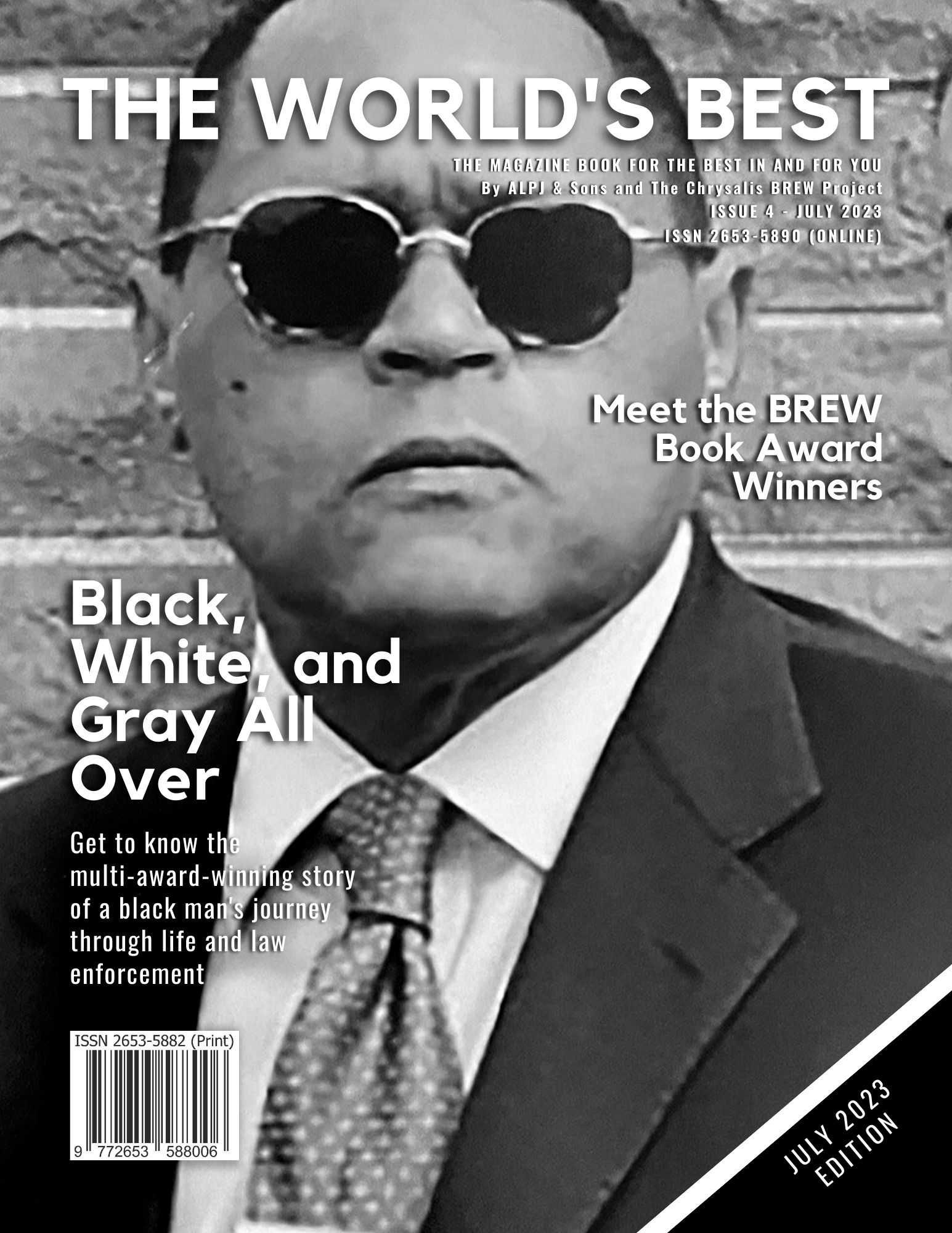



Don’t just read about greatness. Own it!

About Us
The World’s Best Magazine is a print and online publication that highlights the extraordinary. It is your passport to a universe where brilliance knows no bounds. Celebrating outstanding achievements in various fields and industries, we curate and showcase the exceptional, groundbreaking, and culturally significant. Our premier laurels, The World’s Best Awards, commend excellence through a unique process involving subject matter experts and a worldwide audience vote. Explore with us the pinnacle of human achievement and its intersection with diversity, innovation, creativity, and sustainability.
We recognise and honour the Traditional Owners of the land upon which our main office is situated. We extend our deepest respects to Elders past, present, and emerging. We celebrate the stories, culture, and traditions of Aboriginal and Torres Strait Islander Elders from all communities who also reside and work on this land.
Disclaimer: The World’s Best does not provide any form of professional advice. All views and opinions expressed in each post are the contributor’s own. Whereas we implement editorial policies and aim for content accuracy, the details shared on our platforms are intended for informational purposes only. We recommend evaluating each third-party link or site independently, as we cannot be held responsible for any results from their use. In all cases and with no exceptions, you are expected to conduct your own research and seek professional assistance as necessary prior to making any financial, medical, personal, business, or life-changing decisions arising from any content published on this site. All brands and trademarks mentioned belong to their respective owners. Your continued use of our site means you agree with all of these and our other site policies, terms, and conditions. For more details, please refer to the links below.
About | Advertise | Awards | Blogs | Contact | Disclaimer | Submissions | Subscribe | Privacy | Publications | Terms | Winners
The World’s Best: A Magazine That’s All About What’s Great | theworldsbestmagazine.com | Copyright ⓒ 2022-2026
Let’s connect
Discover more from The World's Best
Subscribe to get the latest posts sent to your email.

 The World's Best